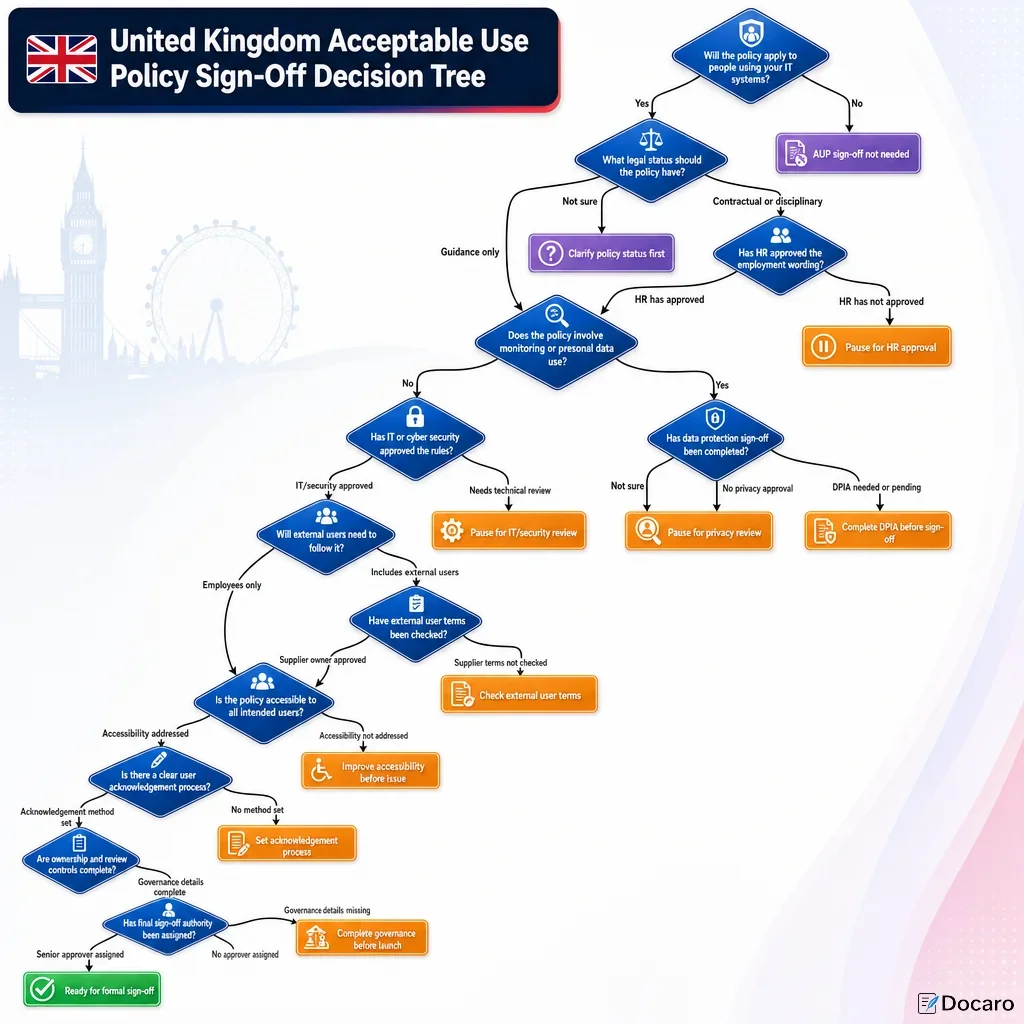
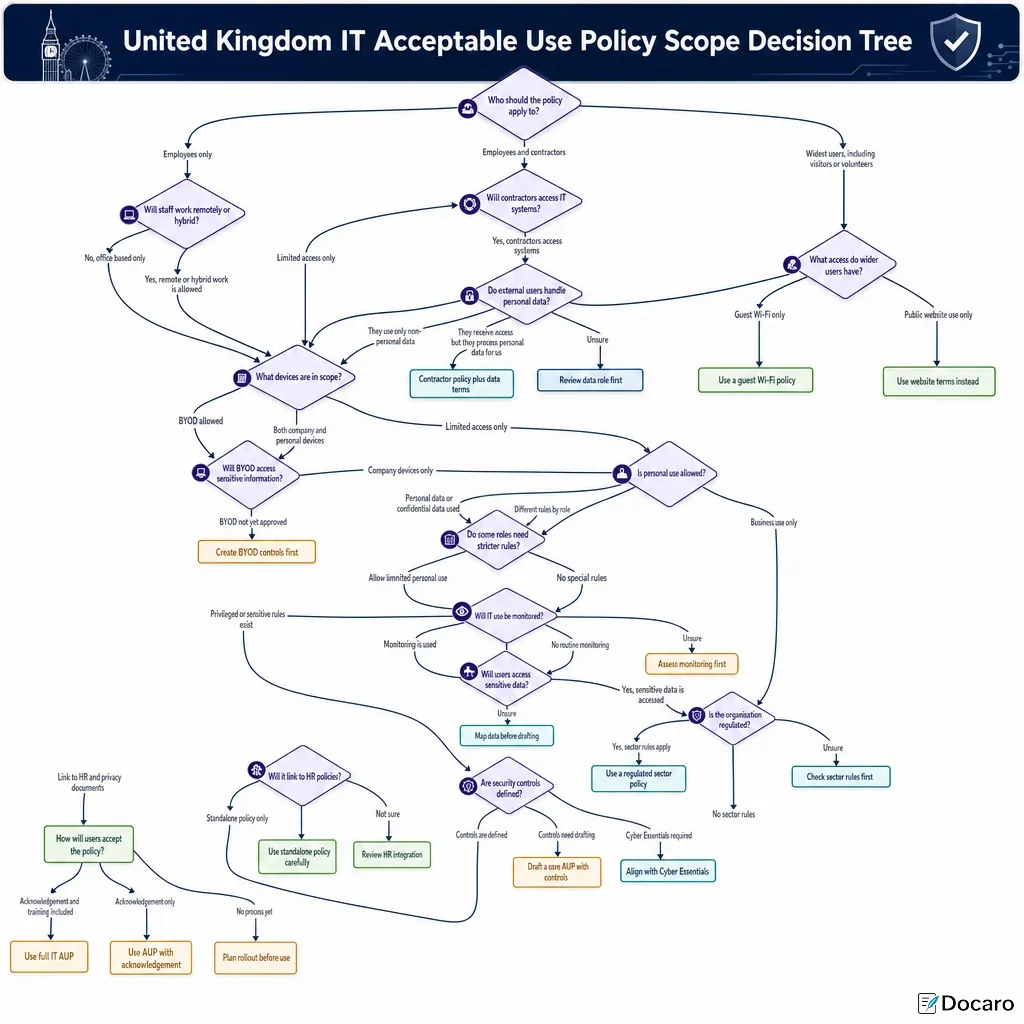
United Kingdom IT Acceptable Use Policy Scope Decision Tree
Who should the policy apply to?
Why Is The Scope Of A UK IT Acceptable Use Policy Important?
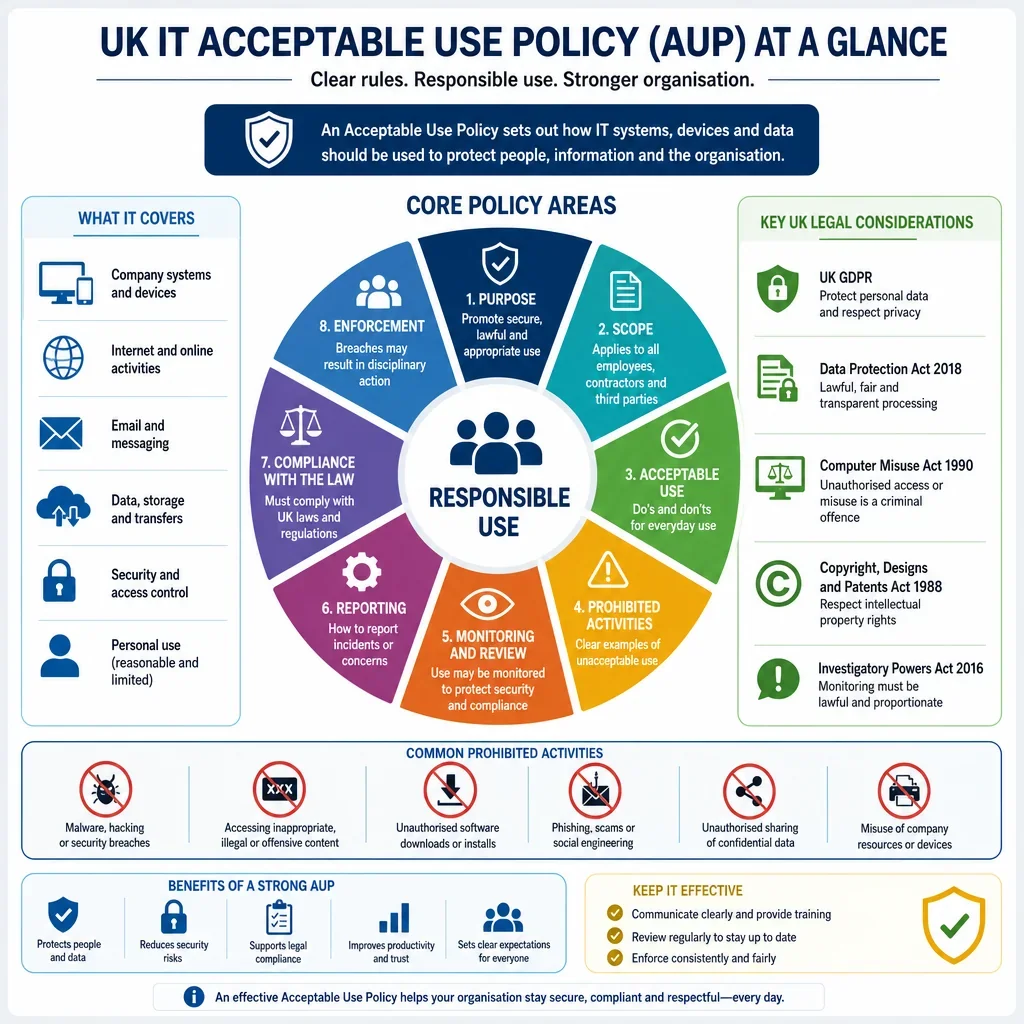
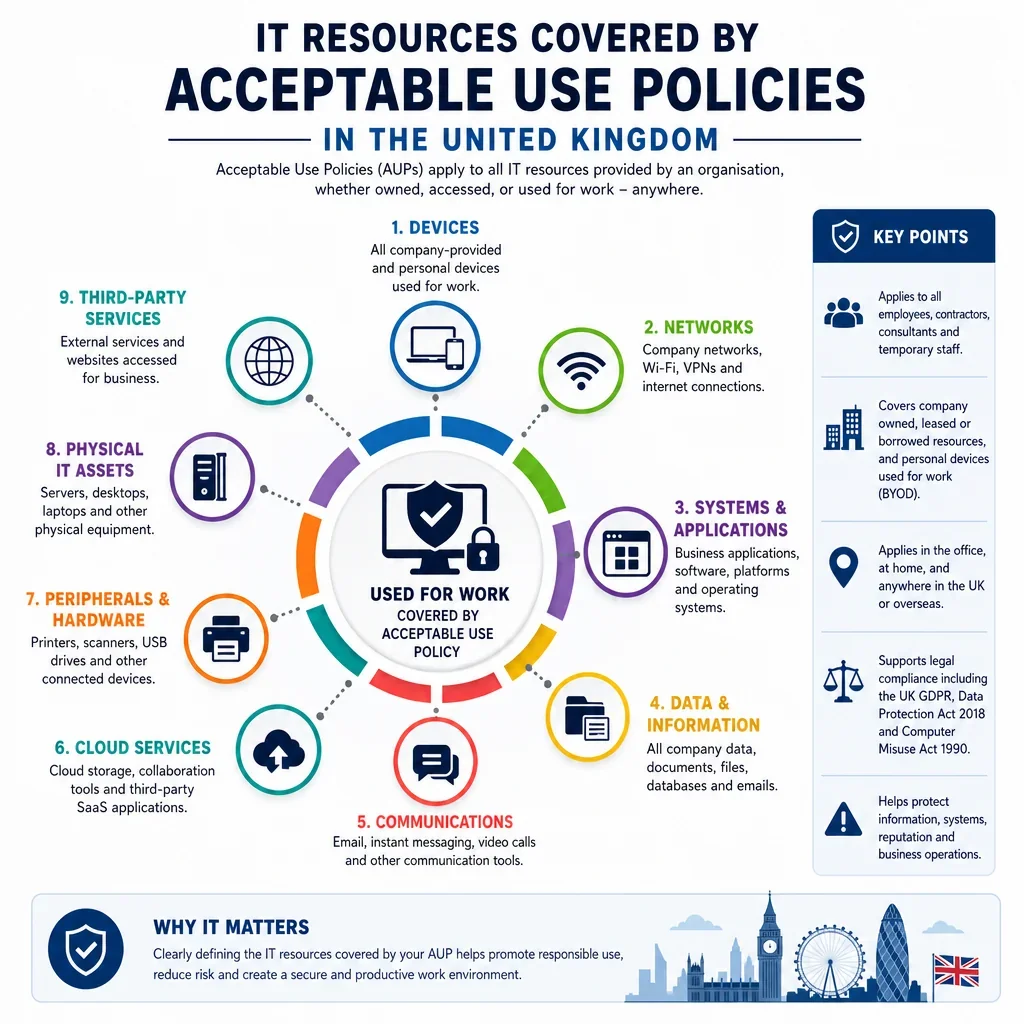
Choosing the right scope for an IT acceptable use policy helps a UK organisation set clear rules for how people use its devices, networks, accounts, software, email, internet access, cloud services, and data. A policy that is too narrow may miss contractors, hybrid workers, volunteers, or personal devices. A policy that is too broad may create confusing obligations that are difficult to apply.
How Does A Clear Acceptable Use Policy Reduce UK Cyber Risk?
Clear rules help users understand what is allowed and what is prohibited. This is especially important for passwords, multi-factor authentication, phishing, downloads, removable media, personal devices, cloud storage, and incident reporting. The UK National Cyber Security Centre recommends practical controls and staff awareness as part of good cyber security governance.
Why Does UK Data Protection Law Affect Acceptable Use Policies?
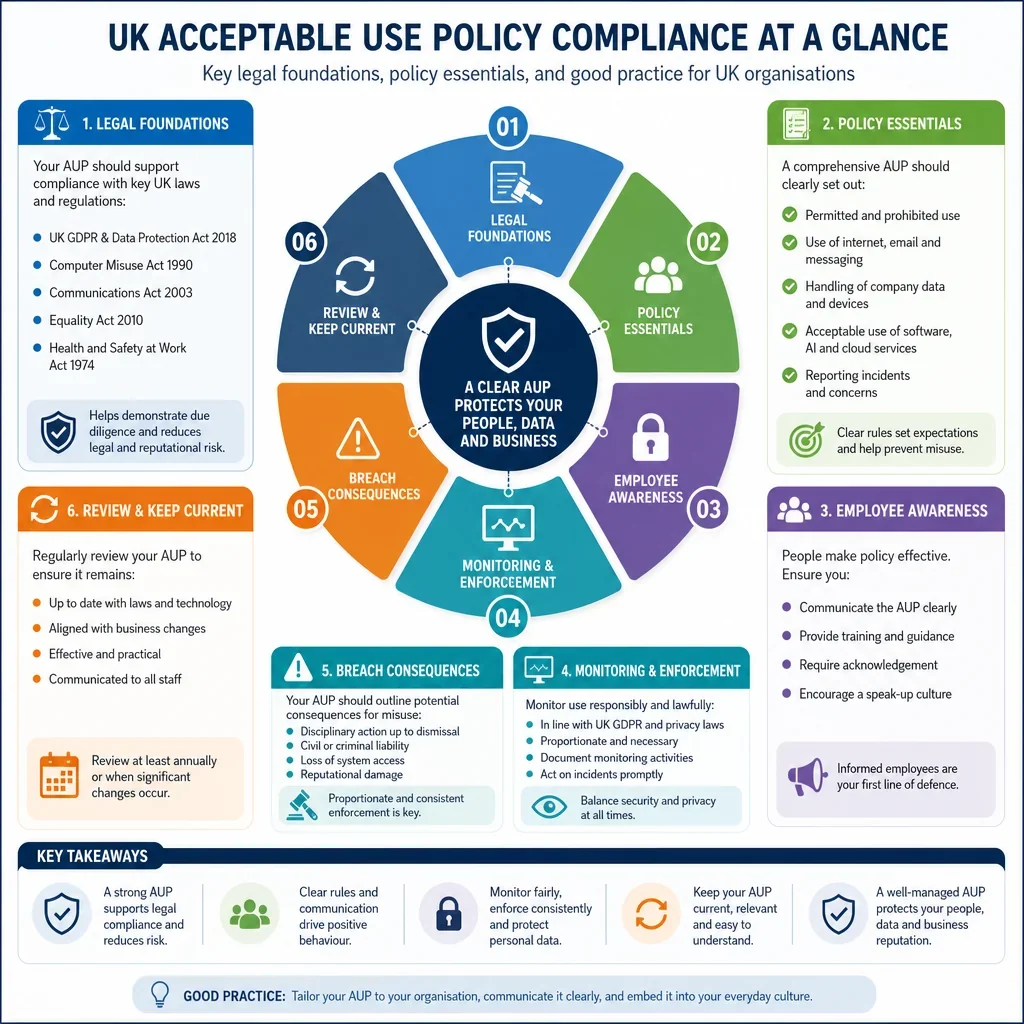
Many IT systems contain personal data, HR records, customer details, or confidential business information. Under the UK GDPR and Data Protection Act 2018, organisations must use appropriate security and be transparent where worker monitoring is carried out. The Information Commissioner’s Office provides guidance on monitoring workers and handling employment data.
What Happens If Contractors Or BYOD Are Missed?
Contractors and personally owned devices often create the biggest scope gaps. If they are not covered, the organisation may lack clear rules on confidentiality, access control, device security, remote wiping, offboarding, and reporting loss or misuse. This can increase the risk of data breaches and disputes about responsibility.
How Can The Right Scope Support Enforcement?
An acceptable use policy should fit with employment contracts, staff handbooks, disciplinary procedures, privacy notices, and information security policies. In the United Kingdom, employers should also consider fairness, proportionality, and transparency when monitoring IT use. A properly scoped policy is easier to explain, acknowledge, train on, and enforce consistently.
- Include all users who can access internal systems or data.
- Address remote work and BYOD where they are allowed.
- Reflect UK GDPR requirements for personal data and monitoring.
- Align with cyber controls such as NCSC guidance and Cyber Essentials.
- Connect to HR processes where misuse may lead to disciplinary action.
FAQs
You Might Also Be Interested In