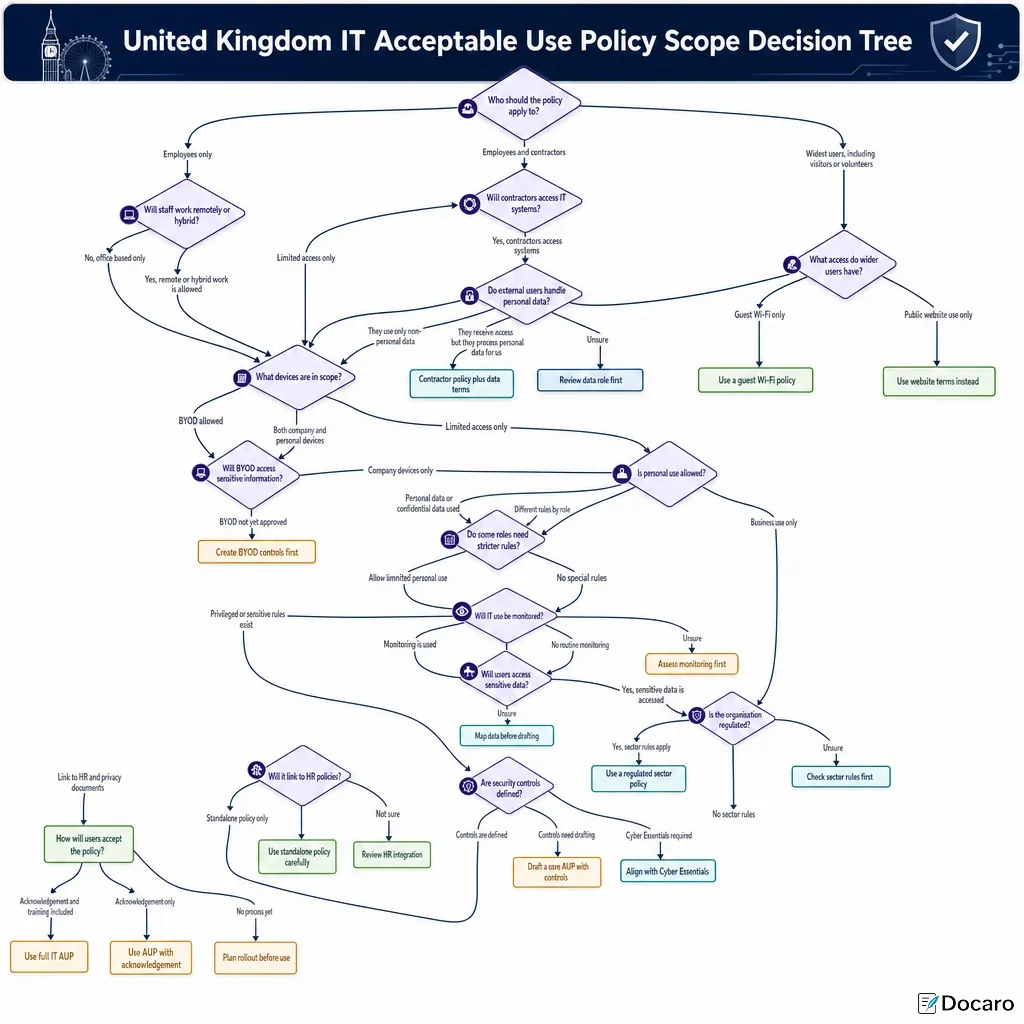
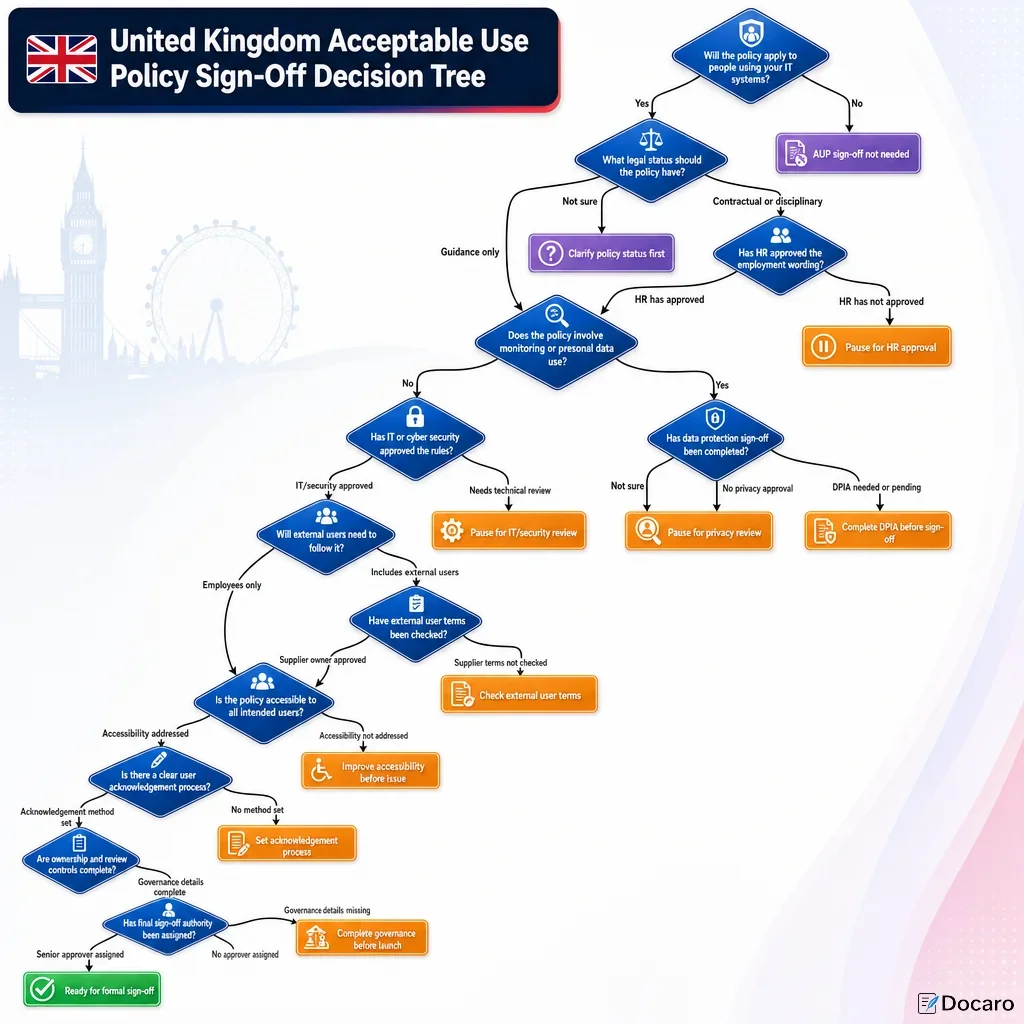
United Kingdom Acceptable Use Policy Sign-Off Decision Tree
Will the policy apply to people using your IT systems?
Why Is Acceptable Use Policy Sign-Off Important In The UK?
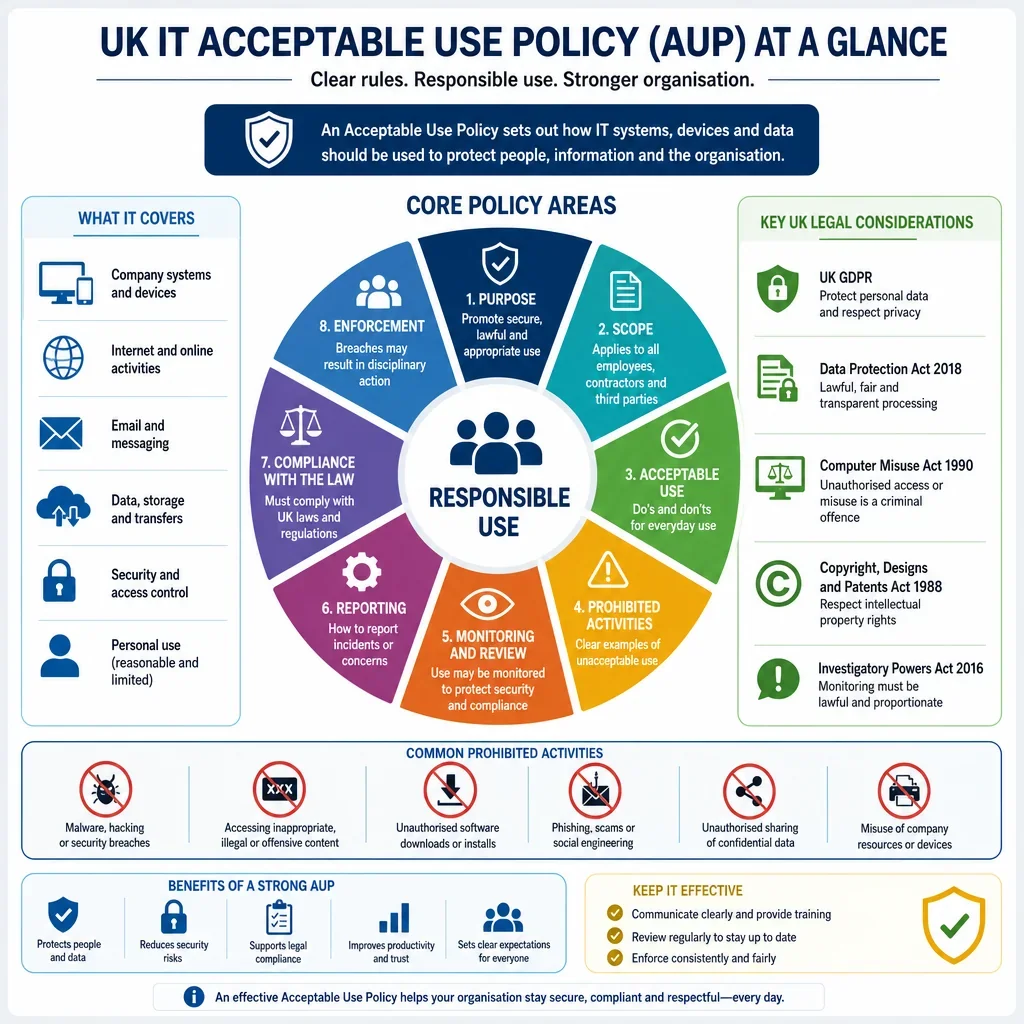
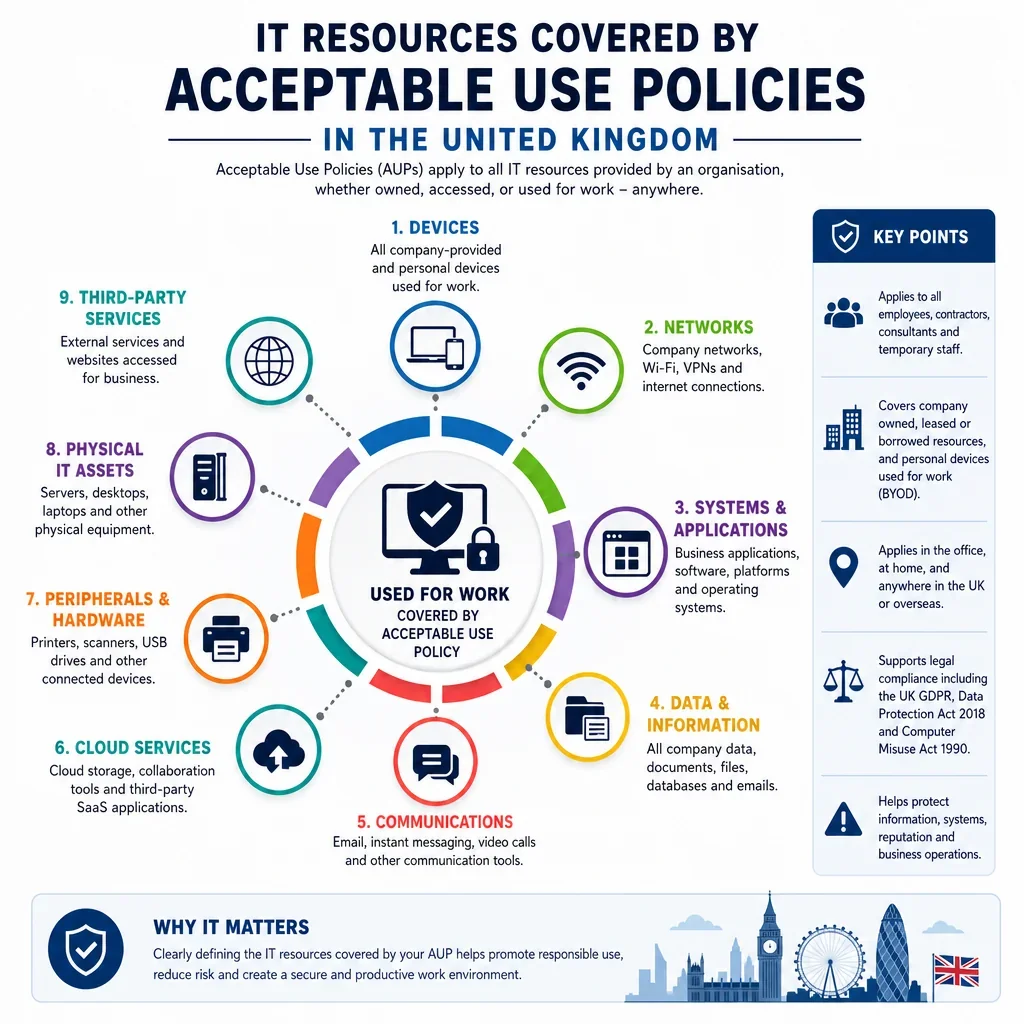
A UK Acceptable Use Policy sets the rules for how employees, contractors and other users may use business systems, email, internet access, devices and data. Getting the sign-off route right helps ensure the policy is enforceable, proportionate and aligned with UK employment, data protection and cyber security expectations.
How Does Proper Sign-Off Reduce Legal And Employment Risk?
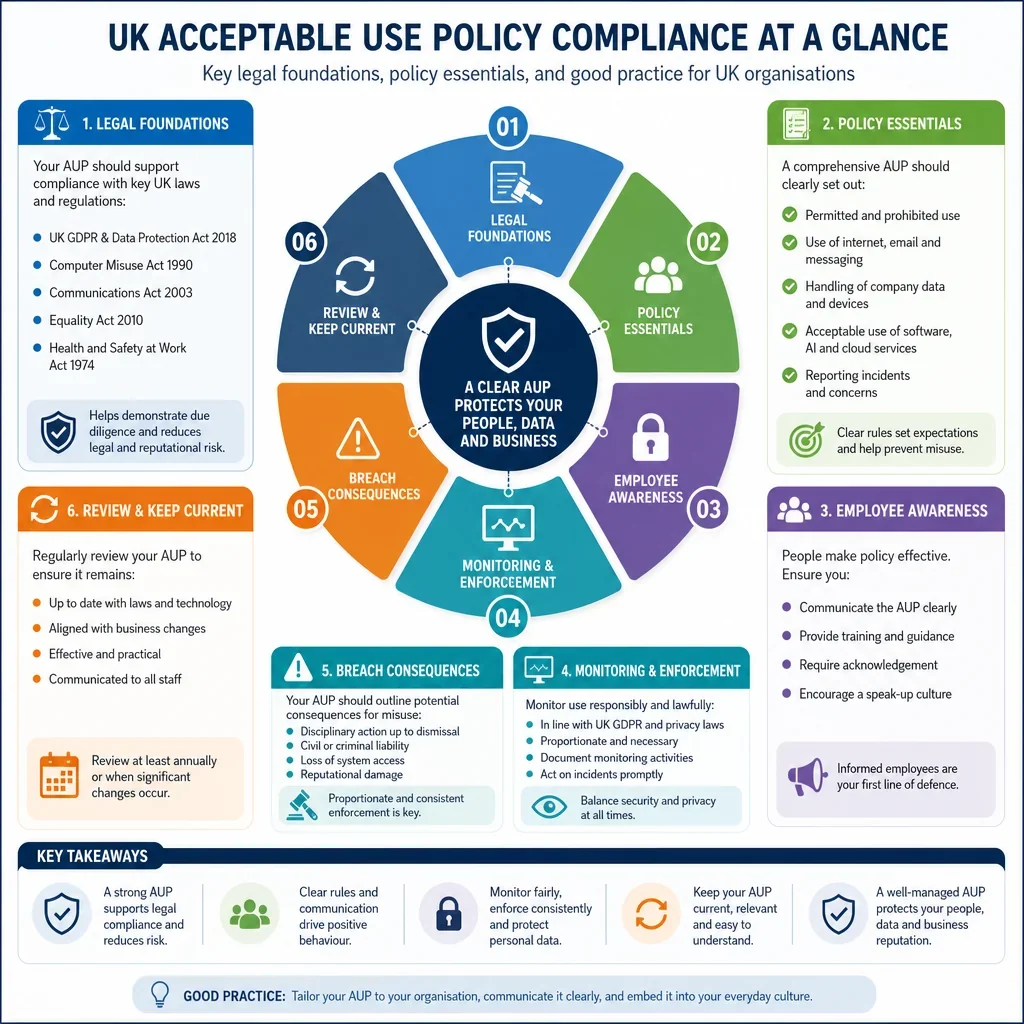
If an Acceptable Use Policy may support disciplinary action, it should fit with employment contracts, staff handbooks and fair procedures. HR review helps avoid unclear rules, inconsistent enforcement and disputes about whether users were properly told what was expected.
Why Does Data Protection Review Matter For Monitoring?
Many IT policies mention monitoring, logging, email review or device management. In the UK, this can involve personal data and worker privacy. A privacy review helps confirm that monitoring is transparent, necessary and proportionate under the UK GDPR and Data Protection Act 2018.
How Can The Policy Improve Cyber Security?
Technical sign-off helps ensure the rules reflect real systems and recognised security practice. Clear requirements on passwords, MFA, software, remote access, removable media and incident reporting can reduce the risk of data breaches, malware and unauthorised access.
What Should A Good Sign-Off Process Include?
- HR approval where the policy affects staff duties or discipline.
- Privacy approval where monitoring or personal data is involved.
- IT or security approval to confirm the rules are practical and effective.
- Supplier or contract review where contractors or third parties are covered.
- User acknowledgement so acceptance can be evidenced.
- Version control and review dates to keep the policy current.
For further context, see guidance from the Information Commissioner\'s Office, Acas and the National Cyber Security Centre.
FAQs
You Might Also Be Interested In