UK Acceptable Use Policy Compliance Considerations
Compliance Topic | Relevance to Policy | Implementation Method | Compliance Sensitivity | Related Documents |
|---|---|---|---|---|
Data protection | ||||
Lawful, fair and transparent processing | Employee IT rules may involve processing personal data such as logs, emails and browsing records. | Policy wording Employee notice | High | Employee privacy notice, monitoring notice, data protection policy. |
Data protection, Communications monitoring | ||||
Lawful basis for monitoring and IT logs | Monitoring, security logs and access records need a lawful basis before personal data is collected. | Employee notice Record keeping Management approval | High | Legitimate interests assessment, DPIA, employee privacy notice. |
Special category data in communications | Emails, web history or chat content may reveal health, union, religion or other sensitive data. | Policy wording Employee notice Technical control | High | Special category data policy, monitoring notice, DPIA. |
Data minimisation in IT monitoring | Logs and monitoring should be limited to what is necessary for security or business purposes. | Policy wording Technical control Record keeping | High | Monitoring policy, retention schedule, security logging standard. |
Data protection, Records management | ||||
Retention of monitoring logs | IT logs and misuse investigation records should not be kept for longer than needed. | Policy wording Record keeping Technical control | Medium | Data retention policy, investigation procedure, deletion schedule. |
Data protection, Information security | ||||
Security of personal data | Users must handle systems and personal data securely to reduce unauthorised access or disclosure. | Policy wording Training Technical control | High | Information security policy, access control policy, cyber incident plan. |
Personal data breach reporting | Users should promptly report lost devices, misdirected emails and suspected account compromise. | Policy wording Training Record keeping | High | Data breach procedure, incident response plan, reporting form. |
Data protection, Communications monitoring | ||||
DPIA for intrusive monitoring | High-risk monitoring, such as systematic activity tracking, may require a documented DPIA. | Record keeping Management approval Employee notice | High | DPIA template, monitoring policy, risk assessment procedure. |
Data protection, Records management | ||||
Accountability for monitoring decisions | Organisations should evidence why monitoring and IT restrictions are necessary and proportionate. | Record keeping Management approval | Medium | ROPA, LIA, DPIA, governance approvals. |
Communications monitoring, Employment practices, Data protection | ||||
Worker transparency about monitoring | Employees should be told what IT activity is monitored, why, how and for how long. | Employee notice Policy wording Training | High | Monitoring notice, employee privacy notice, staff handbook. |
Communications monitoring | ||||
Interception of communications | Monitoring emails, calls or messages may engage interception rules and should be carefully authorised. | Policy wording Management approval Employee notice | High | Communications monitoring policy, lawful interception procedure. |
Lawful business monitoring of communications | Employers may monitor certain communications for defined business purposes if users are informed. | Employee notice Policy wording Management approval | High | Monitoring notice, telecoms use policy, call recording procedure. |
Communications monitoring, Employment practices | ||||
Respect for private life and correspondence | Monitoring personal communications at work should be necessary, proportionate and clearly notified. | Employee notice Policy wording Management approval | High | Monitoring policy, privacy notice, disciplinary procedure. |
Employment practices | ||||
Disciplinary consequences of IT misuse | The policy should state that serious misuse may lead to disciplinary action or dismissal. | Policy wording Training | Medium | Disciplinary policy, staff handbook, employment contract. |
Employment practices, Records management | ||||
Fair handling of IT misconduct allegations | IT misuse investigations should follow fair process and keep appropriate evidence records. | Record keeping Management approval Policy wording | Medium | Investigation procedure, disciplinary procedure, evidence handling guidance. |
Employment practices, Communications monitoring | ||||
Harassment and discriminatory IT use | Email, messaging and social platforms should not be used for harassment or discriminatory conduct. | Policy wording Training | High | Equality policy, anti-harassment policy, social media policy. |
Preventing sexual harassment via IT systems | Work messaging, email and collaboration tools can be channels for harassment that employers must address. | Policy wording Training Management approval | High | Anti-harassment policy, reporting procedure, disciplinary policy. |
Confidentiality, Information security | ||||
Confidential business information | Users should not disclose confidential information through email, cloud services or public tools. | Policy wording Training Technical control | High | Confidentiality agreement, NDA, information classification policy. |
Protection of trade secrets | IT rules should restrict unauthorised copying, sharing or exporting commercially sensitive know-how. | Policy wording Technical control Training | High | Information classification policy, NDA, leaver process. |
Information security, Employment practices | ||||
Unauthorised access to computer systems | Employees should be prohibited from accessing systems, accounts or data without authorisation. | Policy wording Training Technical control | High | Access control policy, disciplinary policy, privileged access procedure. |
Information security | ||||
Malware and system interference | Users should not introduce malware, disable security tools or damage systems or data. | Policy wording Technical control Training | High | Malware protection standard, incident response plan, security policy. |
Information security, Asset management | ||||
Password and authentication rules | Users need clear rules on password secrecy, sharing, password managers and account protection. | Policy wording Technical control Training | High | Access control policy, password standard, MFA procedure. |
Information security | ||||
Multi-factor authentication use | Users should use MFA where required and not bypass or weaken authentication controls. | Technical control Policy wording Training | High | MFA standard, access control policy, remote access procedure. |
Phishing and suspicious email reporting | Employees should verify suspicious messages and report phishing attempts promptly. | Training Policy wording Technical control | Medium | Cyber awareness training, incident response plan, email security standard. |
Information security, Asset management | ||||
Unauthorised software installation | Unapproved software can create malware, licensing and data leakage risks. | Policy wording Technical control Management approval | Medium | Software asset policy, procurement procedure, application allowlist. |
Asset management, Information security | ||||
Software licensing compliance | Users should not install pirated, unlicensed or personally licensed software on business systems. | Policy wording Record keeping Technical control | Medium | Software asset register, procurement policy, licence management process. |
Information security, Employment practices | ||||
Copyright-infringing downloads and sharing | Users should not use company systems for unlawful copying, streaming or file sharing. | Policy wording Training Technical control | Medium | IP policy, disciplinary policy, web filtering standard. |
Employment practices, Information security | ||||
Illegal or offensive online material | The policy should ban using work systems for illegal, obscene, abusive or extremist material. | Policy wording Technical control Training | High | Disciplinary policy, safeguarding policy, web filtering procedure. |
Extremist material and Prevent duty | Relevant public bodies and education providers should restrict access to extremist material on systems. | Policy wording Technical control Training | High | Prevent policy, safeguarding policy, web filtering standard. |
Information security, Asset management | ||||
Remote working security | Remote users need rules on secure networks, device storage, privacy and reporting loss. | Policy wording Training Technical control | Medium | Remote working policy, homeworking risk assessment, VPN procedure. |
Information security, Asset management, Data protection | ||||
Bring your own device use | Personal devices accessing work data need rules on enrolment, security, separation and wiping. | Policy wording Technical control Employee notice | High | BYOD policy, mobile device management procedure, privacy notice. |
Lost or stolen devices | Prompt loss reporting helps containment, remote wipe and personal data breach assessment. | Policy wording Training Record keeping | High | Asset register, incident response plan, data breach procedure. |
Information security, Asset management | ||||
Removable media use | USB drives and external media should be restricted, encrypted or approved before use. | Technical control Policy wording Management approval | Medium | Removable media policy, encryption standard, asset register. |
Information security, Data protection | ||||
Encryption of devices and portable data | Encryption reduces harm if laptops, phones or removable media containing data are lost. | Technical control Policy wording | High | Encryption standard, mobile device policy, data breach procedure. |
Information security, Confidentiality, Data protection | ||||
Cloud storage and file sharing | Users should use approved cloud services and avoid public links or personal storage accounts. | Policy wording Technical control Training | High | Cloud policy, data classification policy, supplier risk process. |
Information security | ||||
Public Wi-Fi and network use | Users should protect work connections on untrusted networks, normally through approved secure access. | Policy wording Technical control Training | Medium | Remote access procedure, VPN standard, travel security guidance. |
Employment practices, Confidentiality, Communications monitoring | ||||
Work-related social media use | Employees need rules on representing the business, confidentiality and inappropriate online conduct. | Policy wording Training | Medium | Social media policy, communications policy, disciplinary policy. |
Information security, Confidentiality, Communications monitoring | ||||
Email use and business communications | Email rules help prevent misdirected messages, phishing, data leaks and inappropriate content. | Policy wording Training Technical control | Medium | Email policy, data breach procedure, records retention policy. |
Information security, Employment practices | ||||
Internet use and web filtering | Rules should define permitted browsing, blocked content, personal use and security expectations. | Policy wording Technical control Employee notice | Medium | Web filtering standard, monitoring notice, disciplinary policy. |
Employment practices, Communications monitoring | ||||
Limited personal use of IT systems | If personal use is allowed, boundaries and monitoring expectations should be clear. | Policy wording Employee notice | Medium | Staff handbook, monitoring notice, disciplinary procedure. |
Information security, Asset management, Data protection | ||||
Least privilege and access rights | Users should only access systems and data needed for their role and authorised tasks. | Technical control Policy wording Record keeping | High | Access control policy, joiner-mover-leaver process, role matrix. |
Information security, Asset management | ||||
Privileged account use | Administrator accounts need stricter use, logging and approval to prevent major security incidents. | Technical control Management approval Record keeping | High | Privileged access policy, admin account register, audit logging standard. |
Information security, Asset management, Records management | ||||
Joiner, mover and leaver access changes | Access should be granted, changed and removed promptly as roles change or employment ends. | Record keeping Technical control Management approval | High | JML process, HR onboarding, leaver checklist, access review procedure. |
Asset management, Information security, Records management | ||||
Return and disposal of IT assets | Users should return equipment and ensure data-bearing media is securely handled at end of use. | Policy wording Record keeping Technical control | Medium | Asset register, leaver process, secure disposal procedure. |
Records management | ||||
Business records in email and collaboration tools | Users should save important business records outside transient chats or personal mailboxes. | Policy wording Training Record keeping | Medium | Records management policy, retention schedule, document management procedure. |
Litigation hold for electronic records | Users may need to preserve relevant emails, files and messages during disputes or investigations. | Policy wording Record keeping Management approval | Medium | Legal hold procedure, records retention policy, investigation procedure. |
Freedom of Information records | Public authorities should manage work emails and files because they may be disclosable records. | Policy wording Training Record keeping | Medium | FOI procedure, records management policy, retention schedule. |
Environmental information records | Relevant authorities should retain and manage electronic environmental information for access requests. | Record keeping Policy wording Training | Low | EIR procedure, records management policy, retention schedule. |
Data protection, Communications monitoring | ||||
Electronic marketing communications | Employees sending marketing emails or texts must follow consent, opt-out and suppression rules. | Policy wording Training Record keeping | High | Marketing compliance policy, CRM procedure, suppression list process. |
Cookies and tracking technologies | Internal portals or monitoring tools using tracking may require notices and consent analysis. | Employee notice Policy wording Technical control | Medium | Cookie notice, employee privacy notice, monitoring notice. |
Data protection, Information security | ||||
International transfers through IT services | Cloud, support and remote access tools may transfer personal data outside the UK. | Management approval Policy wording Record keeping | High | Supplier due diligence, transfer risk assessment, data processing agreements. |
Data protection, Information security, Asset management | ||||
Use of IT service providers as processors | Acceptable tools should be approved where vendors process personal data on the organisation's behalf. | Management approval Record keeping Policy wording | High | Supplier onboarding, DPA register, approved applications list. |
Data protection, Confidentiality, Information security | ||||
Use of generative AI tools | Users should not paste personal data, confidential information or code into unapproved AI tools. | Policy wording Training Technical control | High | AI use policy, data protection policy, confidentiality policy. |
Information security, Data protection | ||||
Screen locking and unattended devices | Unattended logged-in devices can expose personal, confidential or business-critical information. | Policy wording Technical control Training | Medium | Information security policy, clean desk policy, device standard. |
Information security, Asset management | ||||
Security updates and patching | Users should not delay, disable or interfere with required security updates. | Technical control Policy wording Training | Medium | Patch management policy, device management standard, change process. |
Information security, Records management, Communications monitoring | ||||
Audit logging and log integrity | Users should know that security logs may be kept and must not be tampered with. | Policy wording Technical control Employee notice | High | Logging standard, monitoring notice, incident response plan. |
Employment practices, Records management, Information security | ||||
Policy acknowledgement and training records | Keeping acknowledgement records helps evidence that users knew the IT rules and risks. | Training Record keeping | Medium | Training register, staff handbook acknowledgement, induction checklist. |
Records management, Communications monitoring | ||||
Regulated communications recordkeeping | FCA-regulated firms may need rules on approved channels and retention of business communications. | Policy wording Technical control Record keeping | High | Communications policy, regulated records policy, mobile messaging procedure. |
Confidentiality, Data protection, Information security | ||||
Patient and health information confidentiality | Health and care users need strict rules on accessing, sharing and discussing patient information. | Policy wording Training Technical control | High | Confidentiality policy, clinical systems access policy, IG training. |
Information security, Confidentiality, Data protection | ||||
Payment card data handling | Users should not store or transmit card data through unapproved emails, chats or files. | Policy wording Training Technical control | High | PCI DSS procedure, payment handling policy, data classification policy. |
Information security, Asset management | ||||
ISO 27001 acceptable use alignment | ISO-aligned organisations should define acceptable use of information and associated assets. | Policy wording Record keeping Management approval | Medium | ISMS policies, asset management policy, information security risk register. |
Cyber Essentials user controls | Acceptable use should support secure configuration, access control, malware protection and updates. | Technical control Policy wording Record keeping | Medium | Cyber Essentials evidence, patch policy, access control standard. |
Information security, Employment practices | ||||
Unauthorised security testing | Employees should not scan, probe or test systems unless formally authorised. | Policy wording Management approval Training | High | Penetration testing policy, change management, security testing approval process. |
Data protection, Records management, Communications monitoring | ||||
Access requests for monitoring records | Monitoring logs and investigation files may be requested by workers as personal data. | Record keeping Policy wording | Medium | SAR procedure, retention policy, monitoring records register. |
Information security, Asset management | ||||
Account sharing prohibition | Shared accounts weaken accountability and make misuse investigations harder. | Policy wording Technical control Training | Medium | Access control policy, password standard, audit logging policy. |
Information security, Confidentiality, Data protection | ||||
Personal email and storage accounts | Sending work data to personal accounts increases loss, access and retention risks. | Policy wording Technical control Training | High | Data classification policy, email policy, cloud storage policy. |
Confidentiality, Information security, Records management | ||||
Information classification and handling | Users need handling rules for public, internal, confidential and restricted information. | Policy wording Training Technical control | Medium | Information classification policy, records policy, data loss prevention rules. |
Information security, Confidentiality, Data protection | ||||
Data loss prevention controls | Users should understand restrictions on copying, forwarding, uploading or printing sensitive data. | Technical control Policy wording Employee notice | High | DLP standard, information classification policy, monitoring notice. |
Information security, Data protection, Records management | ||||
Printing and physical copies | Printing from IT systems can expose personal or confidential information if unmanaged. | Policy wording Technical control Training | Medium | Clear desk policy, secure printing procedure, records disposal policy. |
Information security, Records management, Asset management | ||||
Saving work data in approved locations | Users should store work files where backups, retention and access controls apply. | Policy wording Training Technical control | Medium | Backup policy, records management policy, cloud storage standard. |
Confidentiality, Information security | ||||
Restricted exports and sanctioned parties | Some technical data, software or communications may require controls before sharing externally. | Policy wording Training Management approval | High | Export control policy, sanctions procedure, external sharing approval process. |
Employment practices, Confidentiality | ||||
Whistleblowing and protected disclosures | Confidentiality and monitoring rules should not prevent lawful protected disclosures. | Policy wording Training Employee notice | Medium | Whistleblowing policy, confidentiality policy, investigation procedure. |
Information security, Employment practices | ||||
Insider threat and suspicious behaviour | Users should report suspicious access, unusual data transfers or attempts to bypass controls. | Training Policy wording Management approval | Medium | Insider threat process, incident response plan, HR investigation procedure. |
Communications monitoring, Records management, Confidentiality | ||||
Collaboration and instant messaging tools | Chats can contain business records, personal data and confidential information requiring controls. | Policy wording Training Technical control | Medium | Collaboration tools policy, records policy, monitoring notice. |
Communications monitoring, Data protection, Confidentiality | ||||
Video meetings and recordings | Meetings and recordings may expose personal, confidential or commercially sensitive information. | Policy wording Employee notice Technical control | Medium | Video conferencing policy, recording notice, records retention policy. |
What Should A UK Acceptable Use Policy Cover For Compliance?
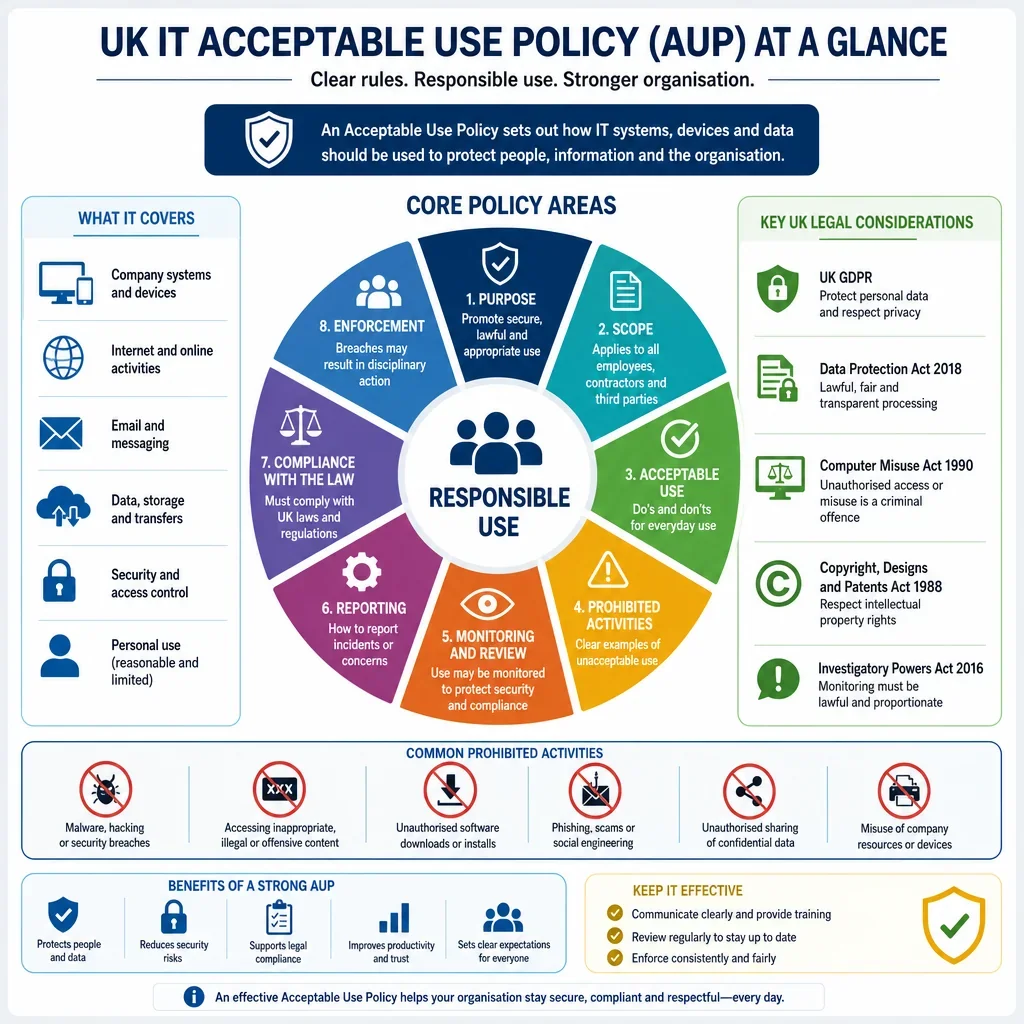
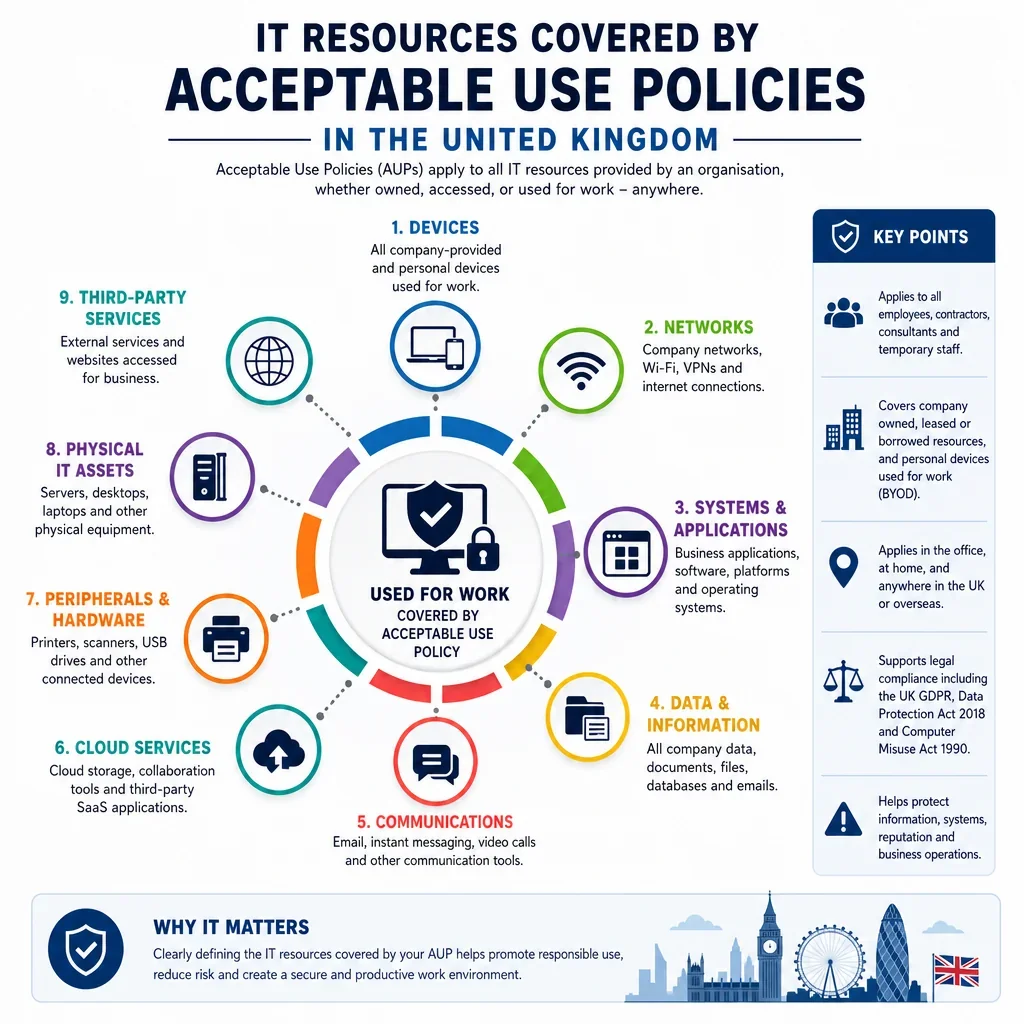
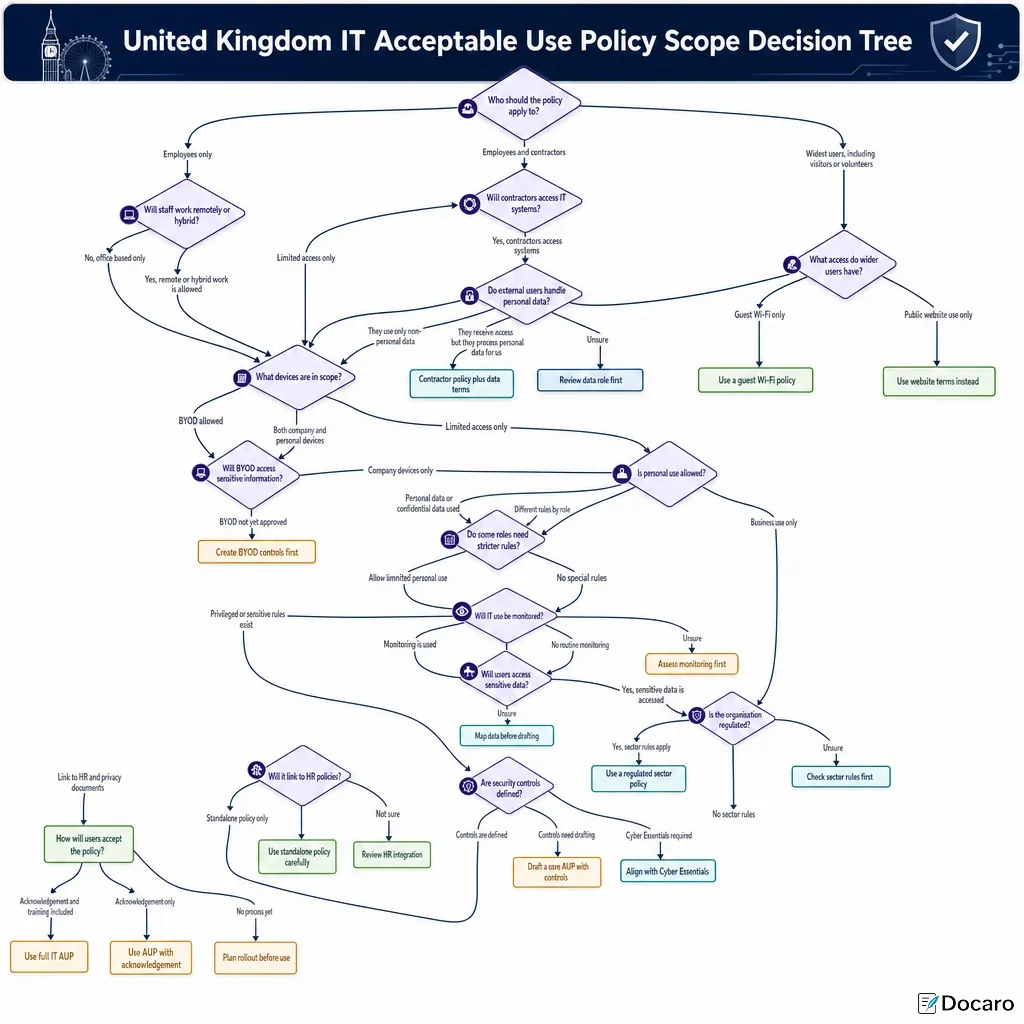
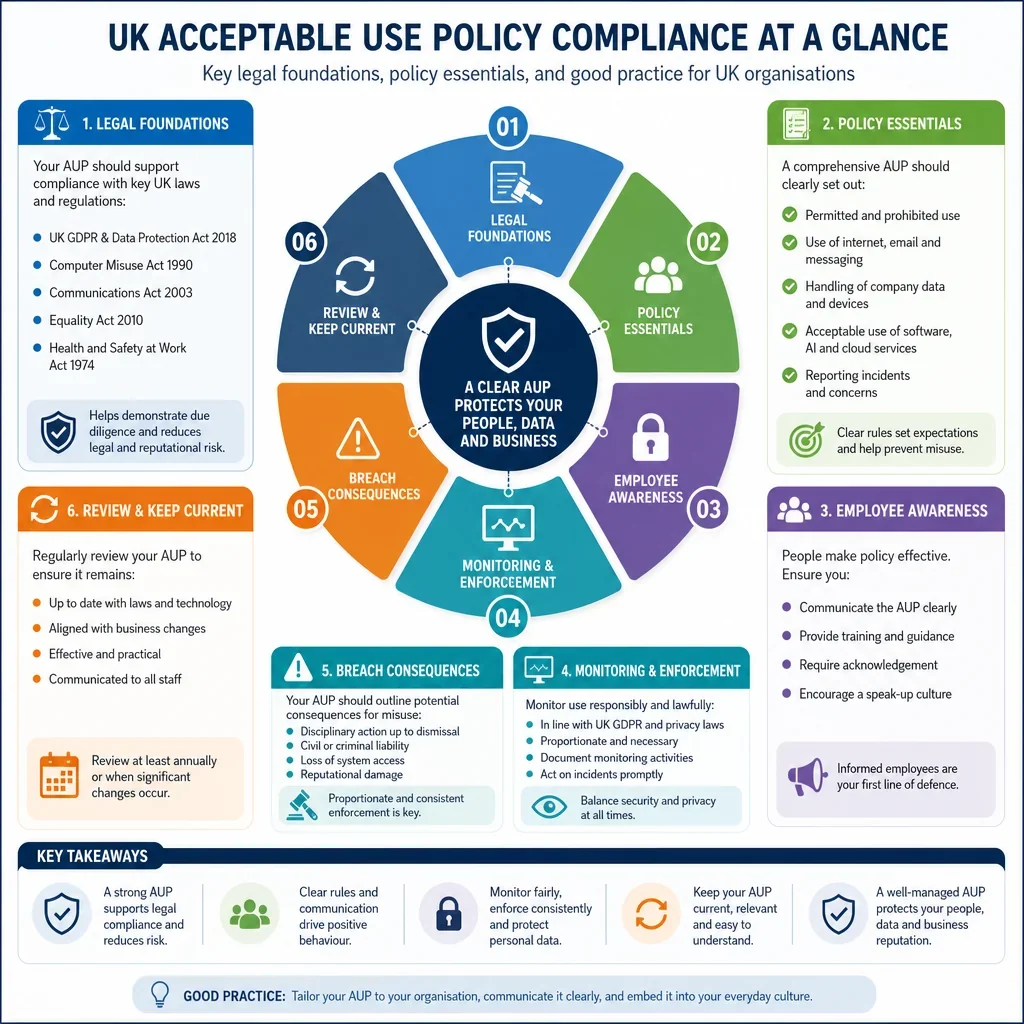
A UK Acceptable Use Policy should do more than list prohibited IT behaviour. It should align employee technology use with UK GDPR, the Data Protection Act 2018, employment law, monitoring rules, information security expectations and records management duties.
When Is Employee Monitoring Lawful In The UK?
Monitoring is most sensitive where emails, web use, device activity or communications may reveal personal data. Employers should give clear notice, identify a lawful basis, assess proportionality, and consider a data protection impact assessment where monitoring is intrusive or high risk.
Why Should Personal Use Be Addressed Clearly?
UK employers commonly allow limited personal use of devices, email or internet access, but the policy should state boundaries, explain that misuse may lead to disciplinary action, and avoid creating an expectation of privacy that conflicts with lawful monitoring notices.
Which Related Policies Should Be Aligned?
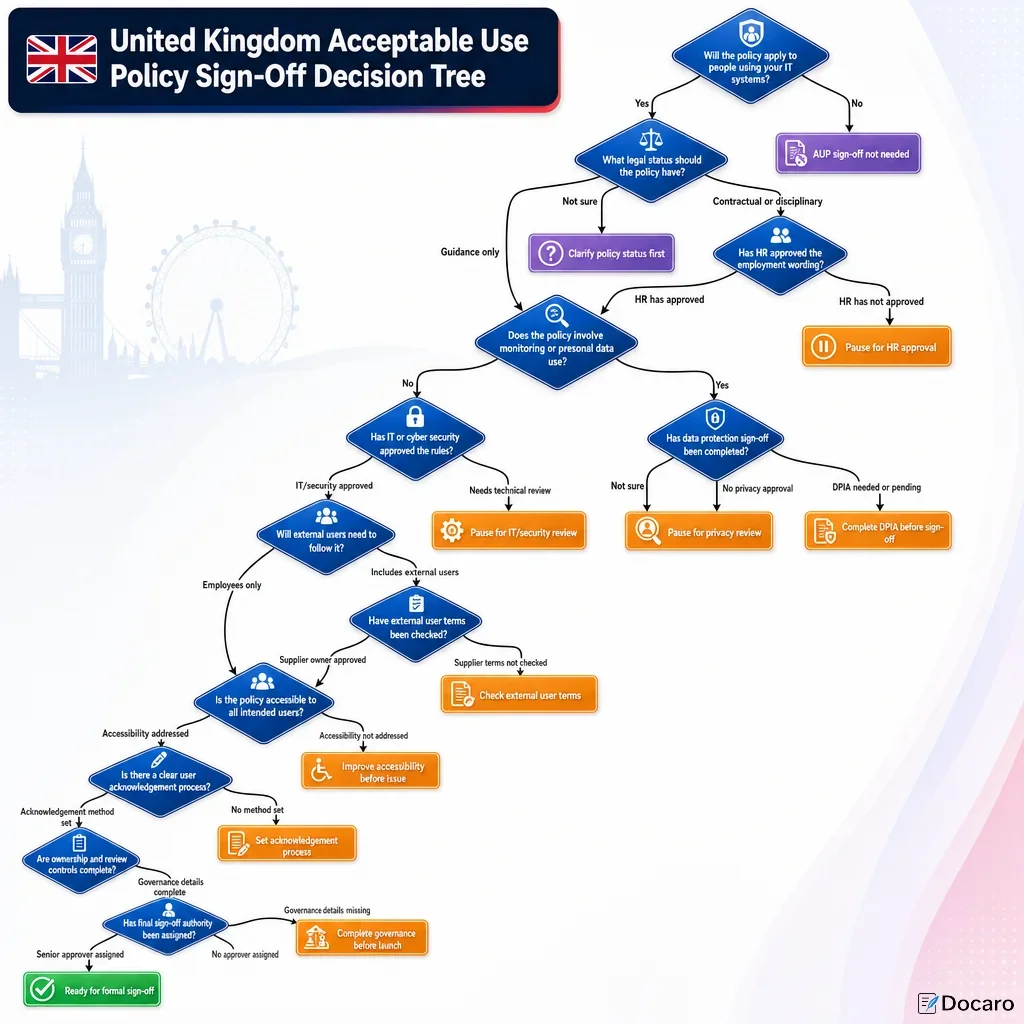
The Acceptable Use Policy should be consistent with the privacy notice, employee monitoring notice, disciplinary procedure, information security policy, remote working policy, bring your own device policy, data retention policy, incident response plan and social media policy.
What Are The Highest-Risk Areas?
- Data protection: personal data, special category data, access controls, transfers and breach reporting need precise rules.
- Communications monitoring: monitoring must be transparent, necessary and proportionate under UK GDPR and workplace privacy expectations.
- Information security: password use, MFA, malware, phishing, removable media and unauthorised software should be backed by technical controls.
- Employment practices: misuse should link to disciplinary rules, equality duties and employee consultation where required.
FAQs
You Might Also Be Interested In