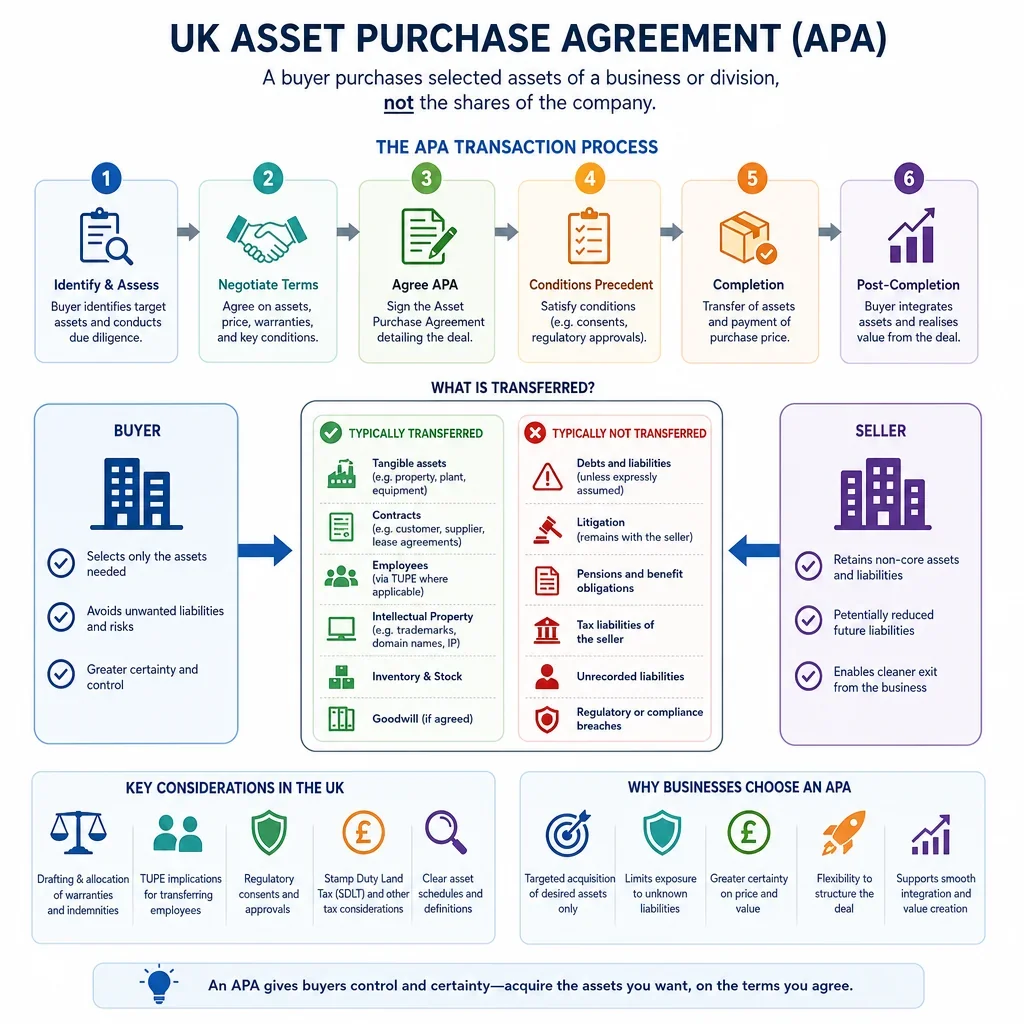
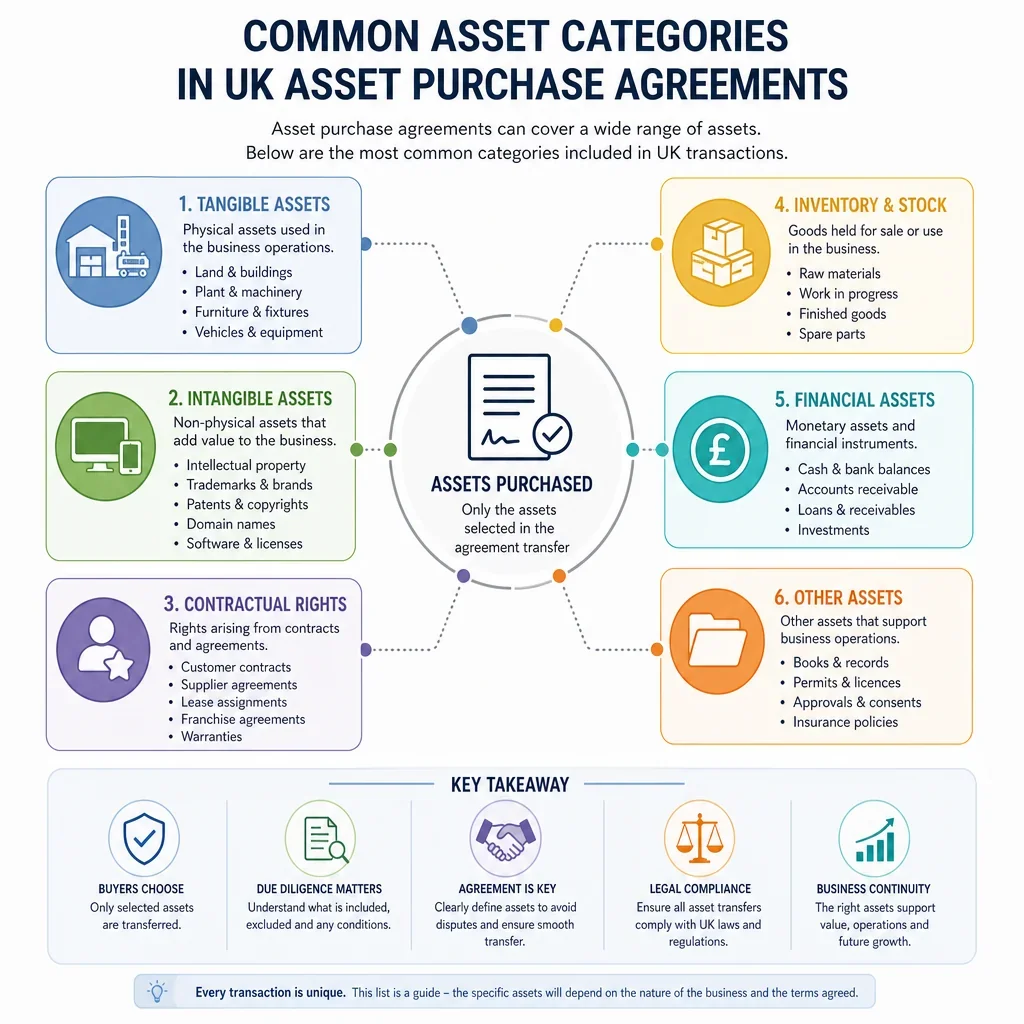
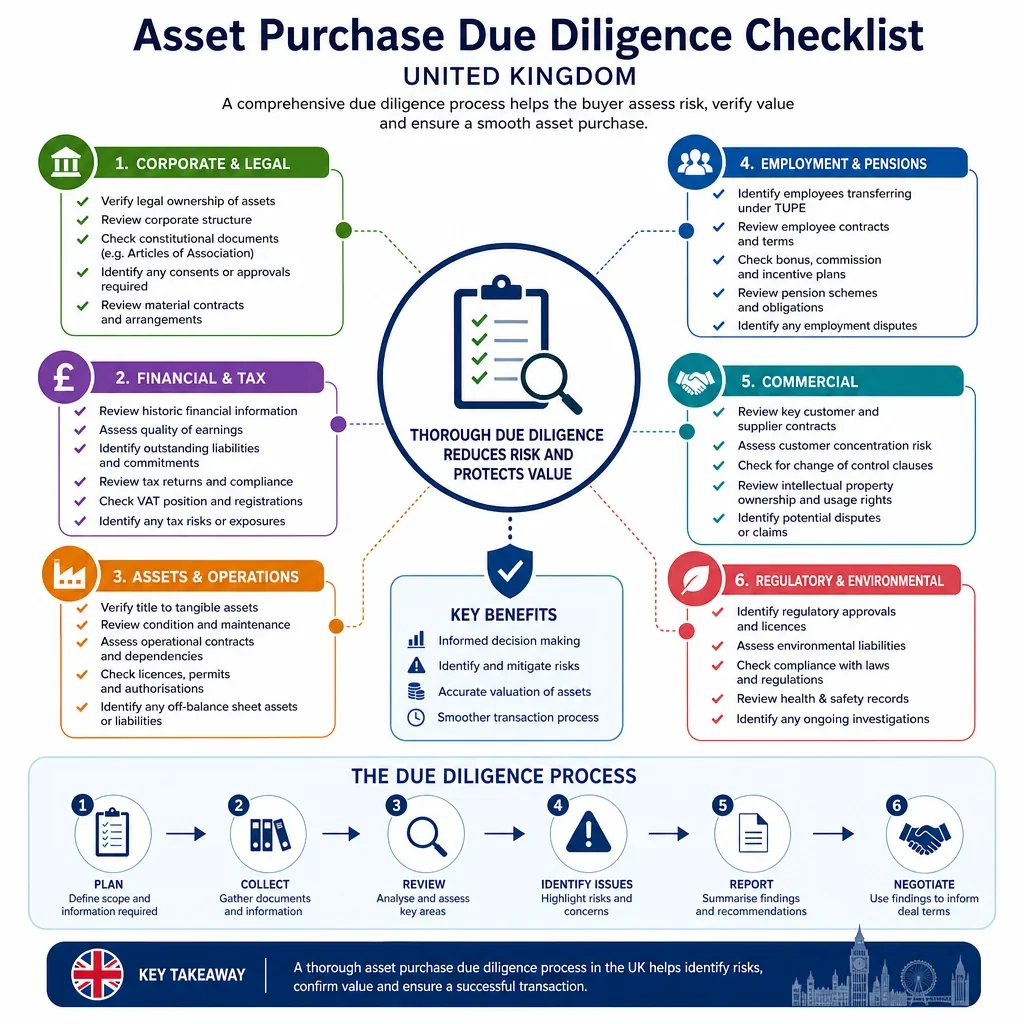
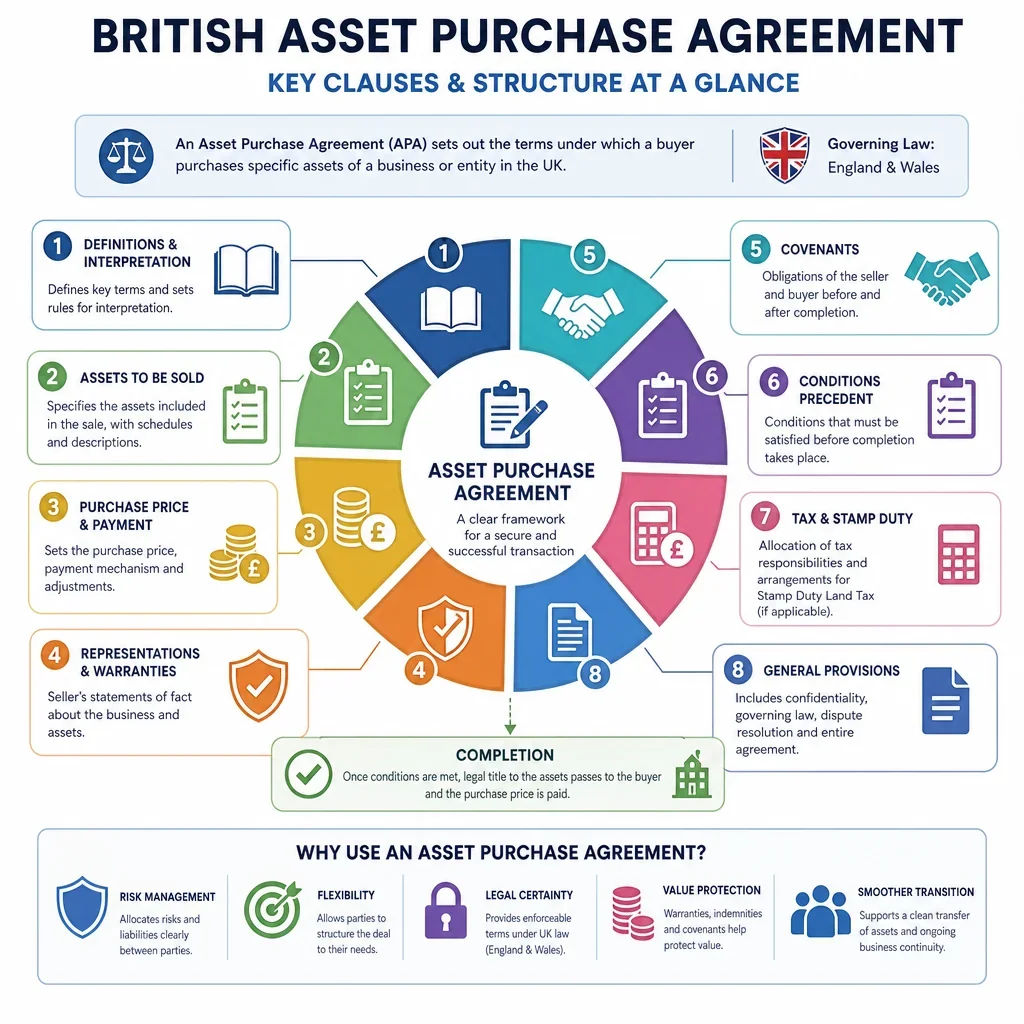
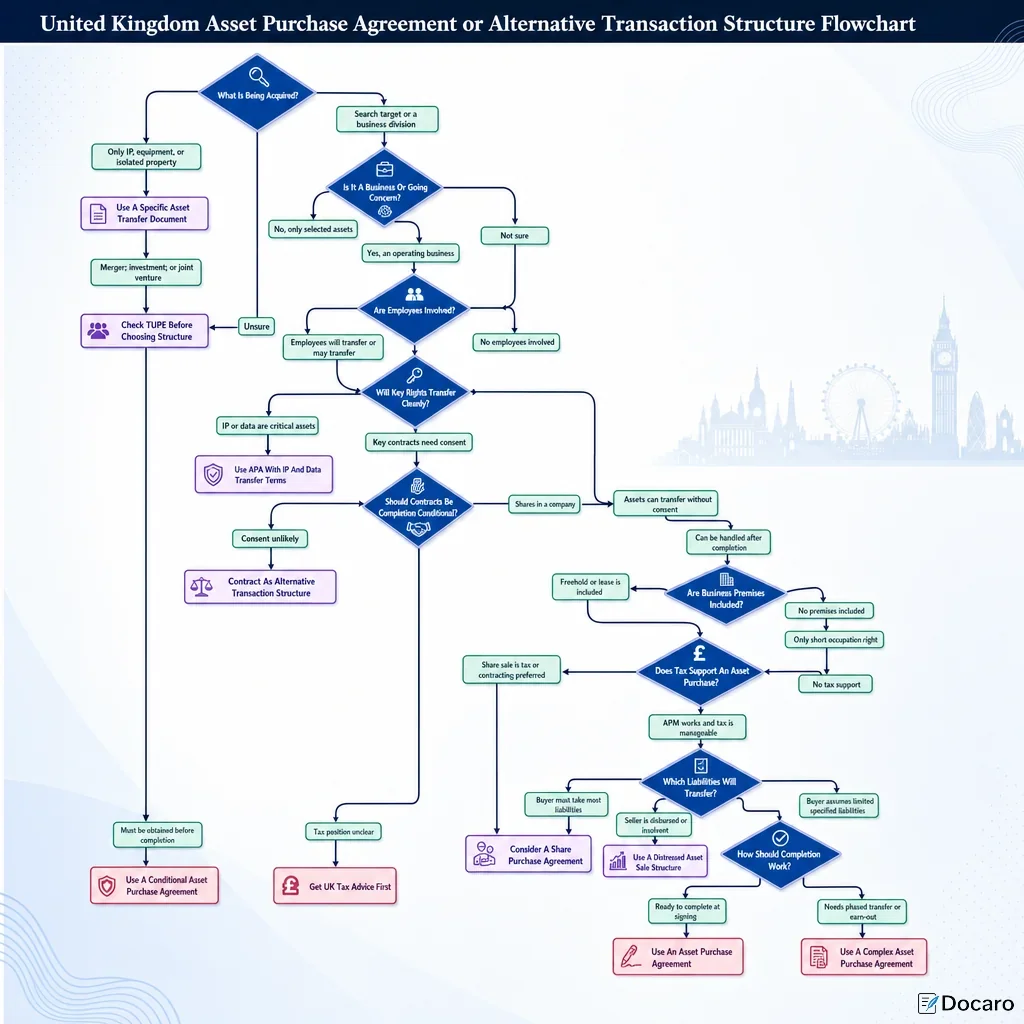
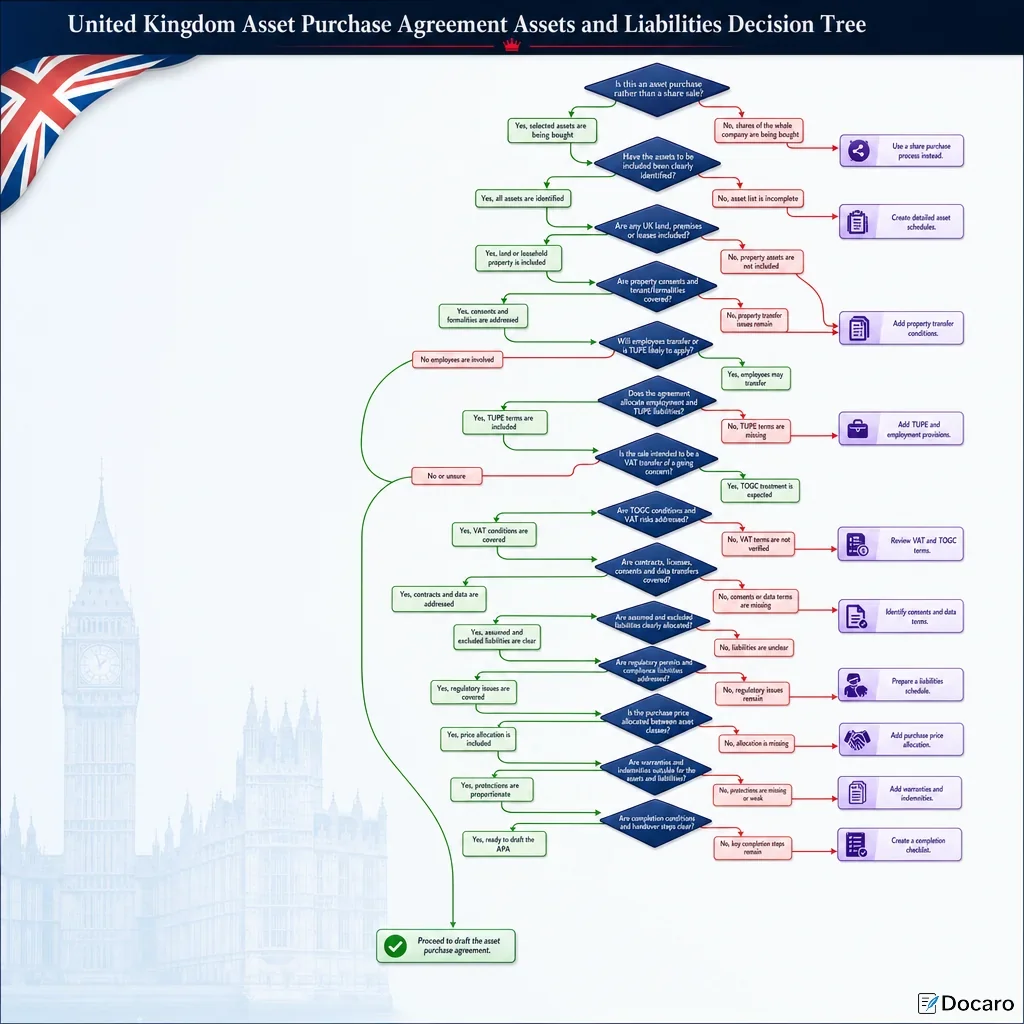
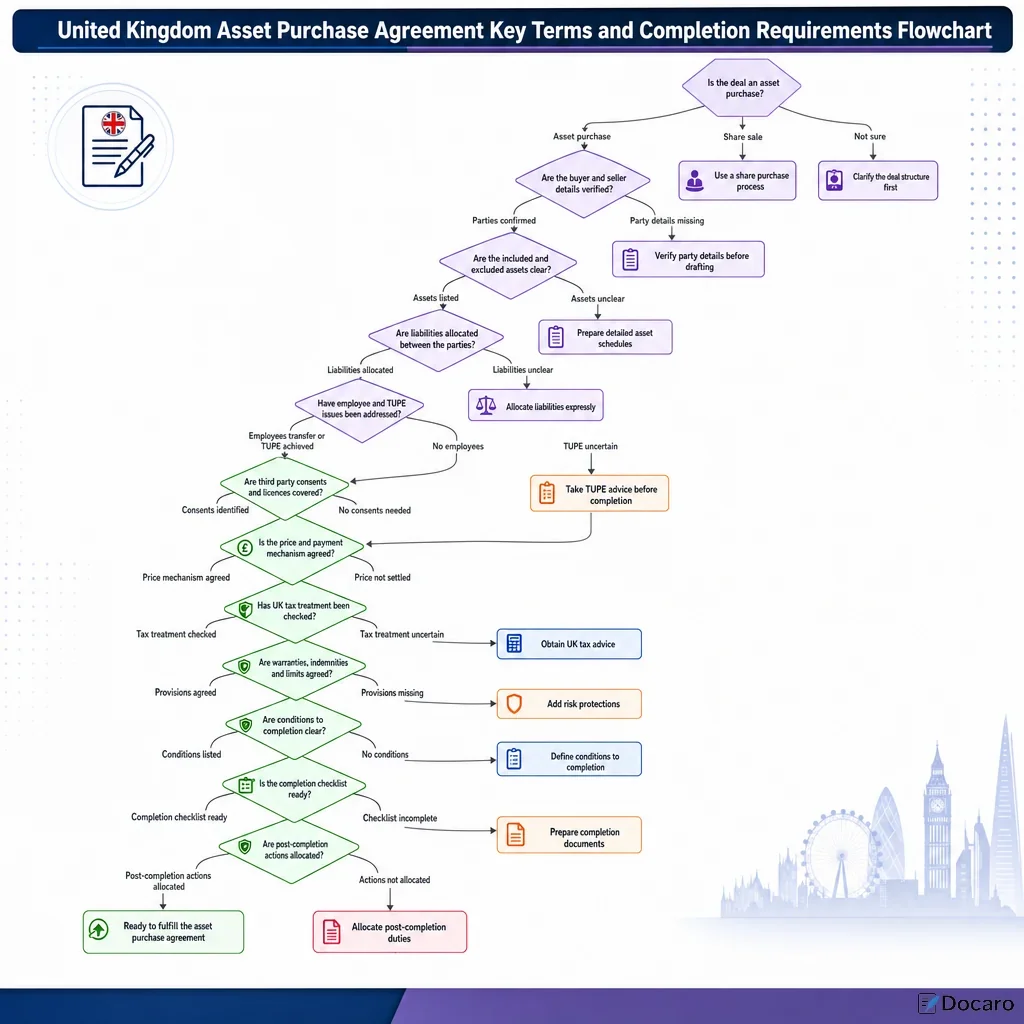
United Kingdom Asset Purchase Agreement Key Terms And Completion Requirements Flowchart
Is the deal an asset purchase?
Why Is An Asset Purchase Agreement Important In The UK?
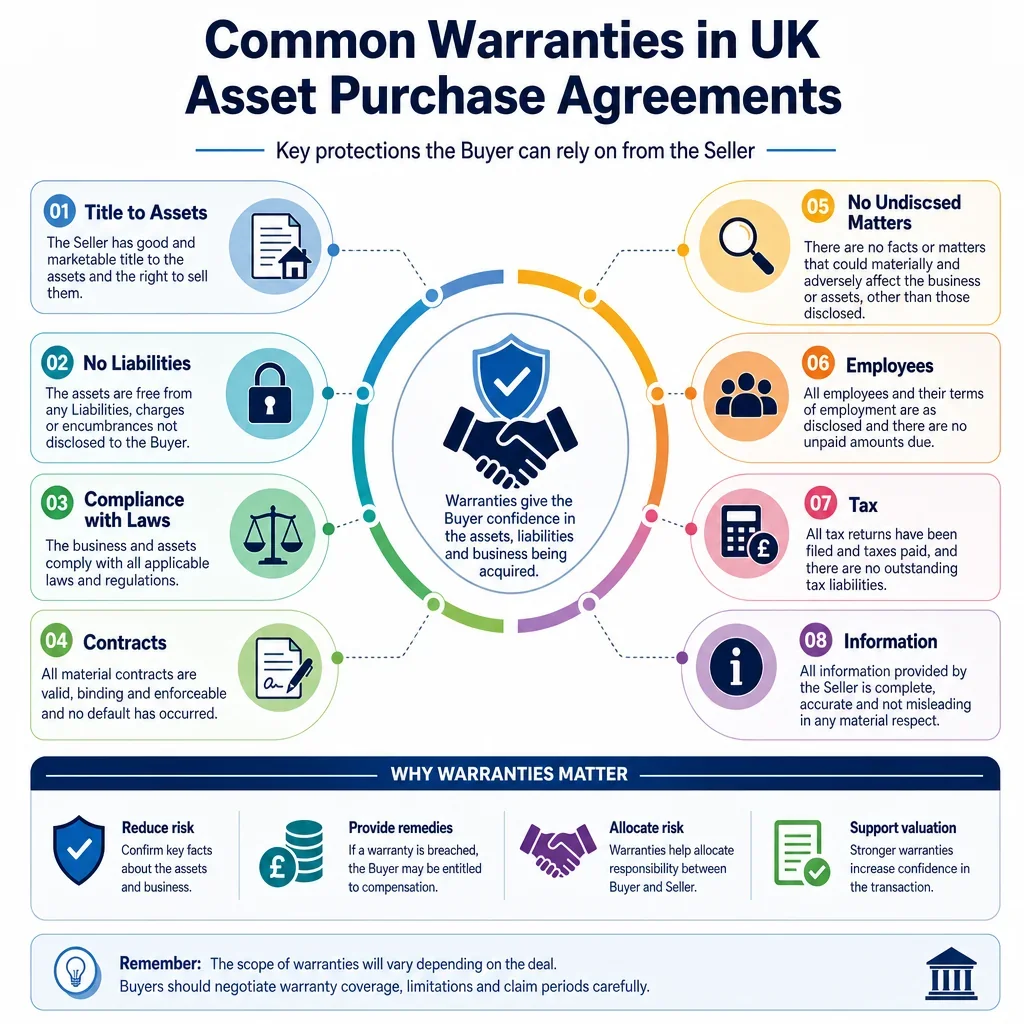
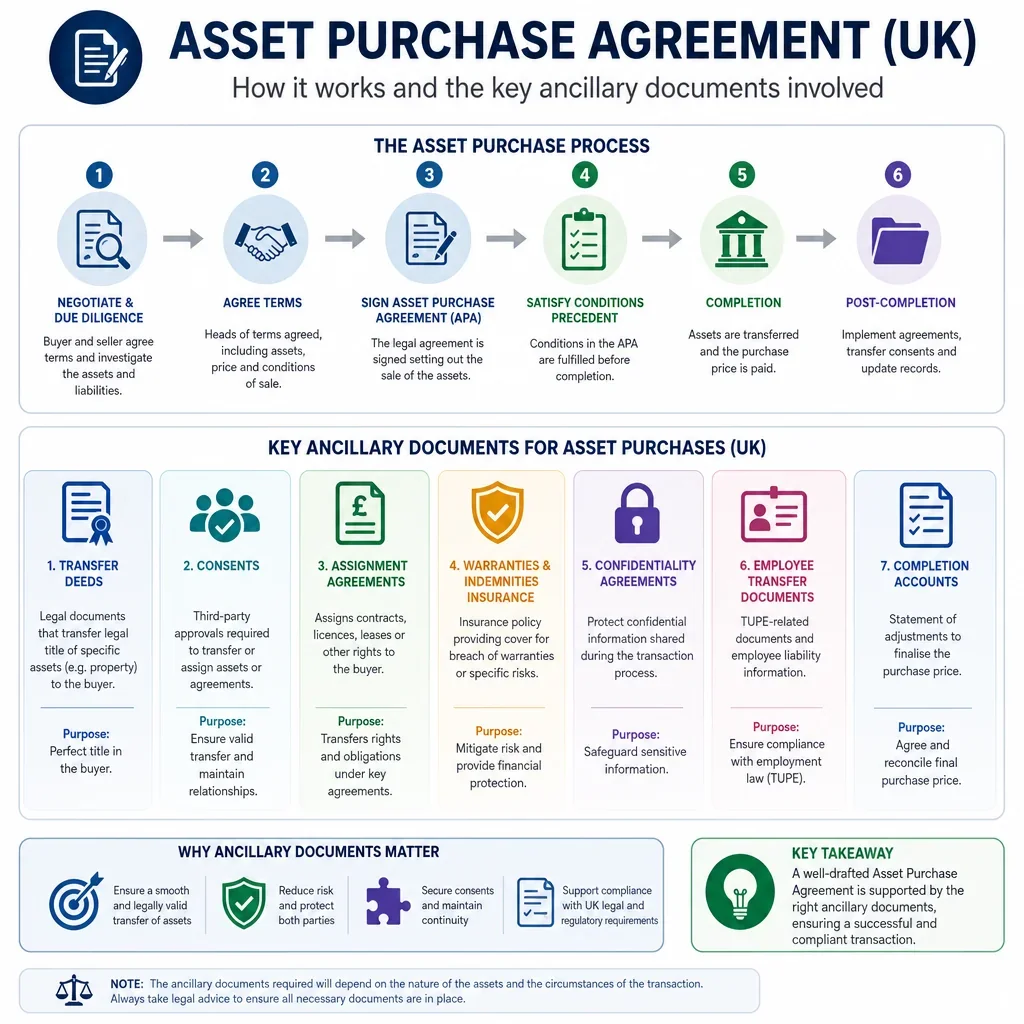
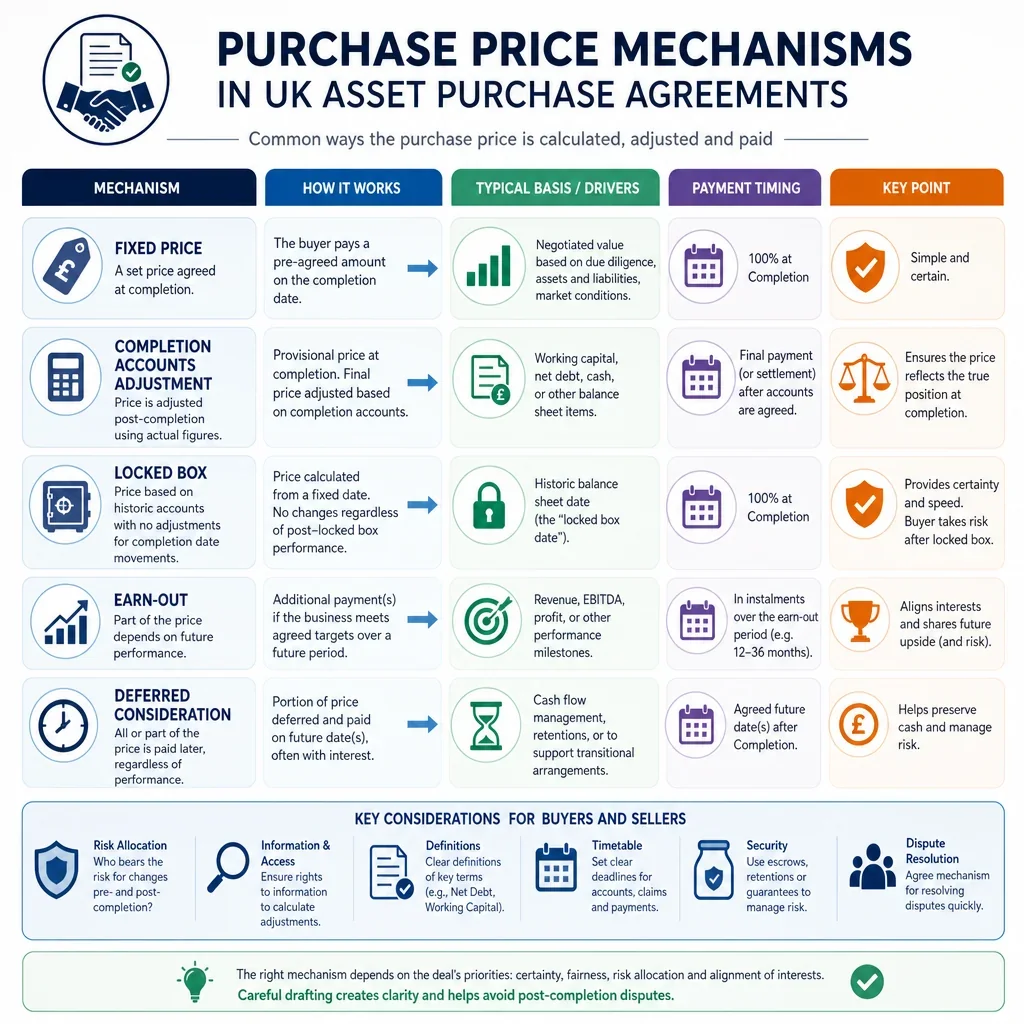
An asset purchase agreement records exactly which business assets are being sold, which liabilities are assumed, how the price is paid, and what must happen at completion. In the United Kingdom, getting these terms right is important because employees, tax, leases, licences, data, intellectual property and third party contracts may each have separate legal requirements.
What Can Go Wrong If The Wrong Terms Are Used?
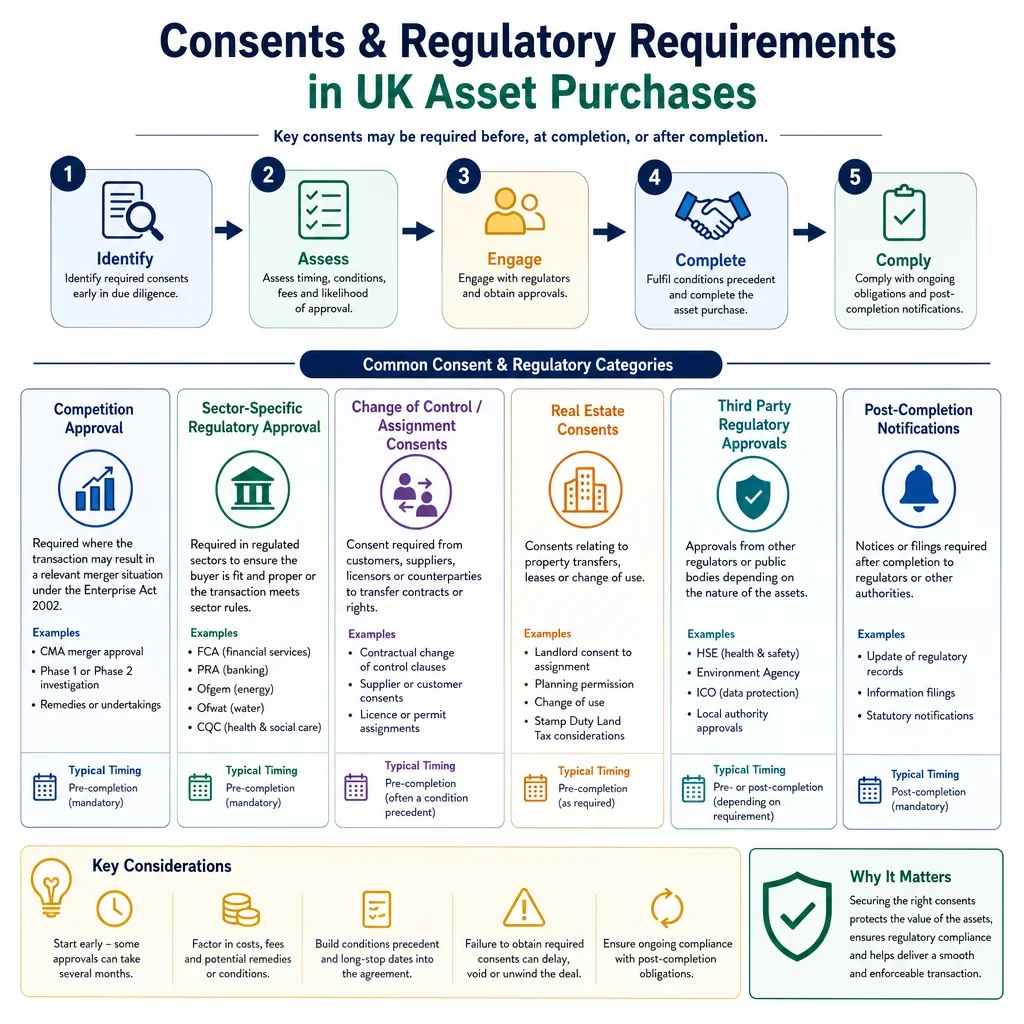
- Assets may not transfer properly, especially land, intellectual property, vehicles, regulated licences or contracts requiring consent.
- Unexpected liabilities may arise, including employee liabilities under TUPE, tax exposures, customer claims or disputes with creditors.
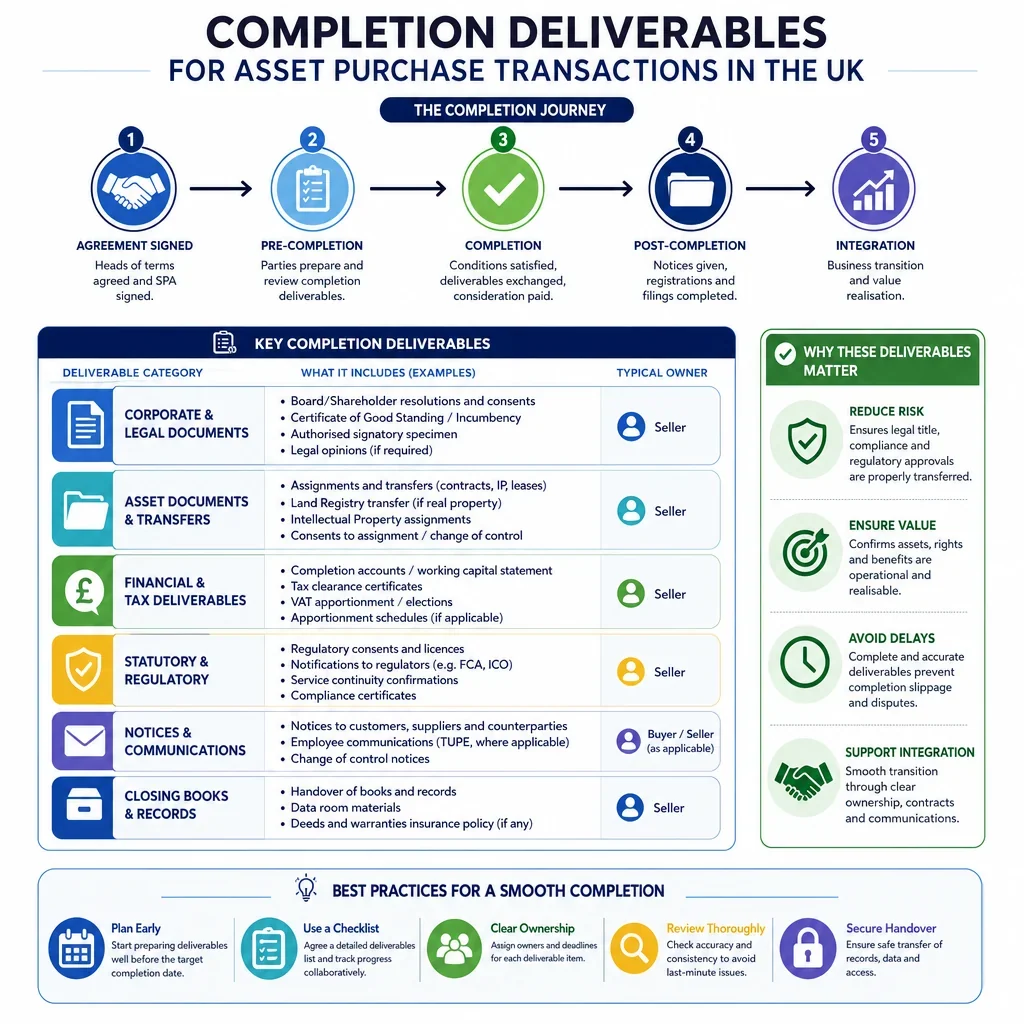
- Completion may be delayed if consents, payment evidence, assignments, notices or handover documents are missing.
- Tax costs may change if VAT, transfer of a going concern treatment, SDLT or capital allowances are not checked before signing.
How Does A Clear Completion Process Help?
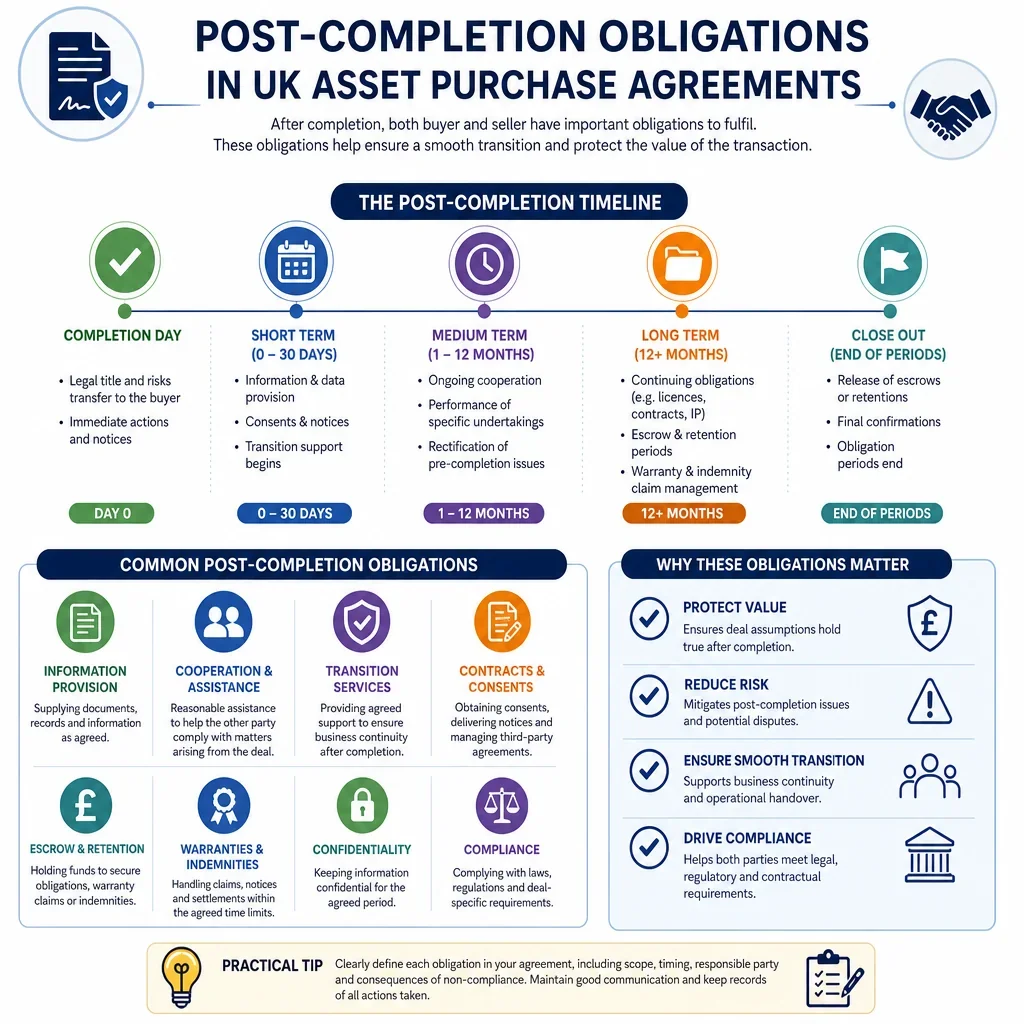
A clear completion process gives the buyer and seller a practical checklist for signatures, payments, deliveries, notices and post-completion filings. It reduces uncertainty and helps ensure the buyer can operate the business immediately after completion.
When Should You Get Professional Advice?
Professional UK legal or tax advice is especially important where the transaction involves employees, property, regulated activities, complex tax treatment, material liabilities or valuable intellectual property. Official guidance from GOV.UK, ACAS and HMRC can help identify issues, but it should not replace advice on a specific transaction.
FAQs
You Might Also Be Interested In