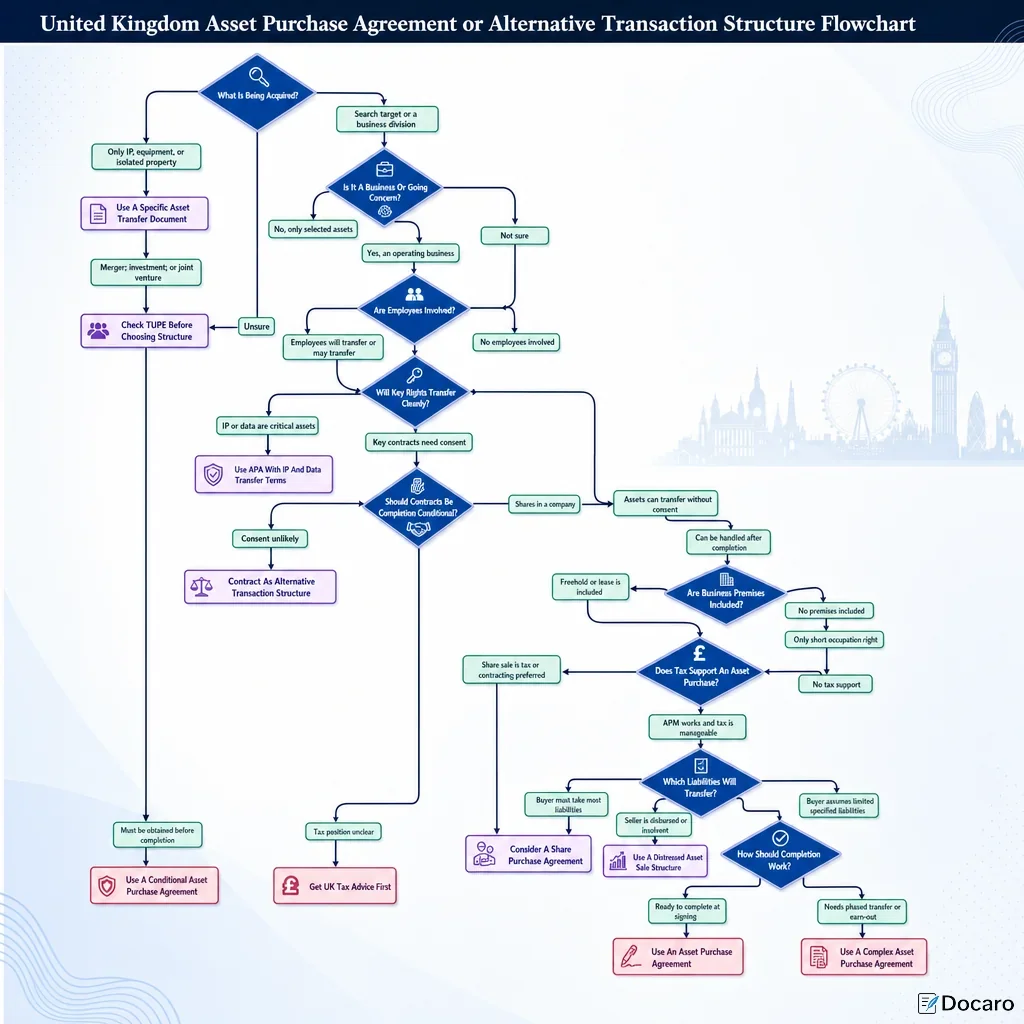
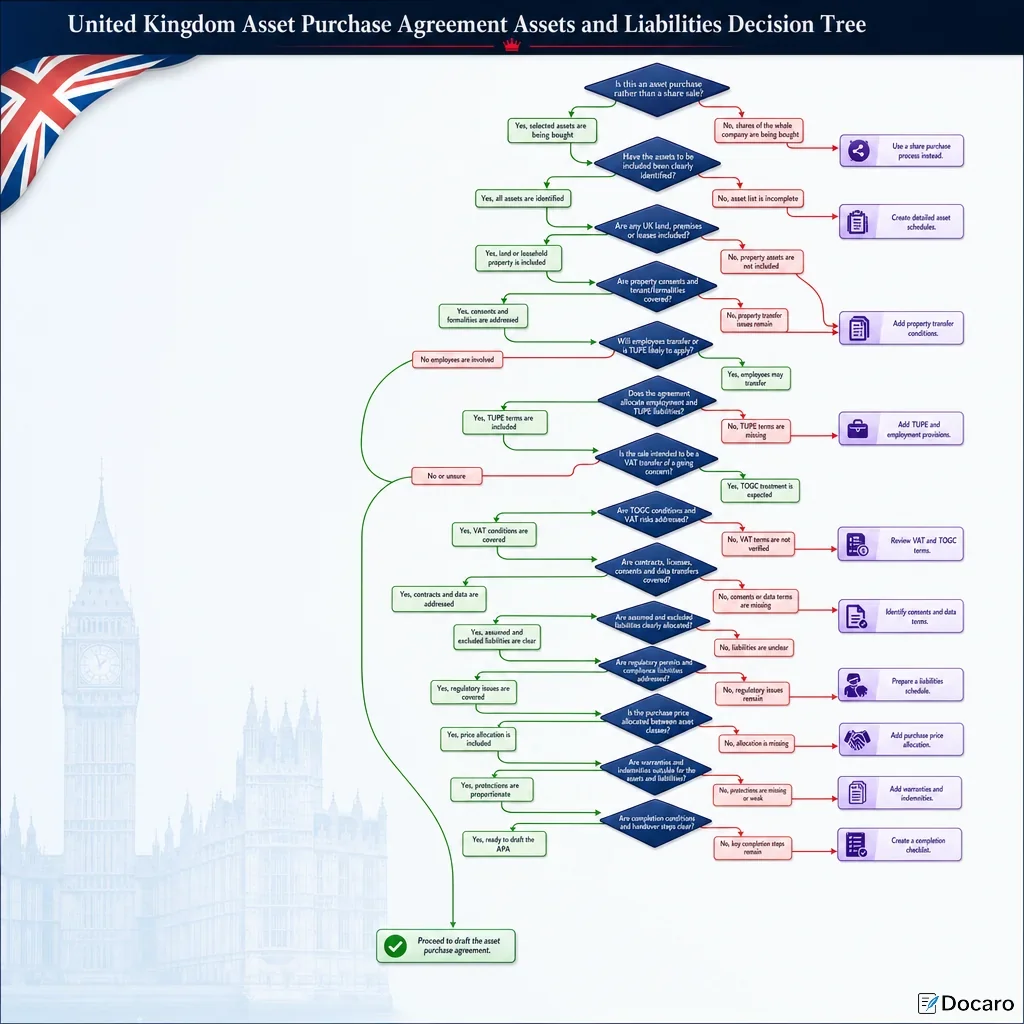
United Kingdom Asset Purchase Agreement Assets And Liabilities Decision Tree
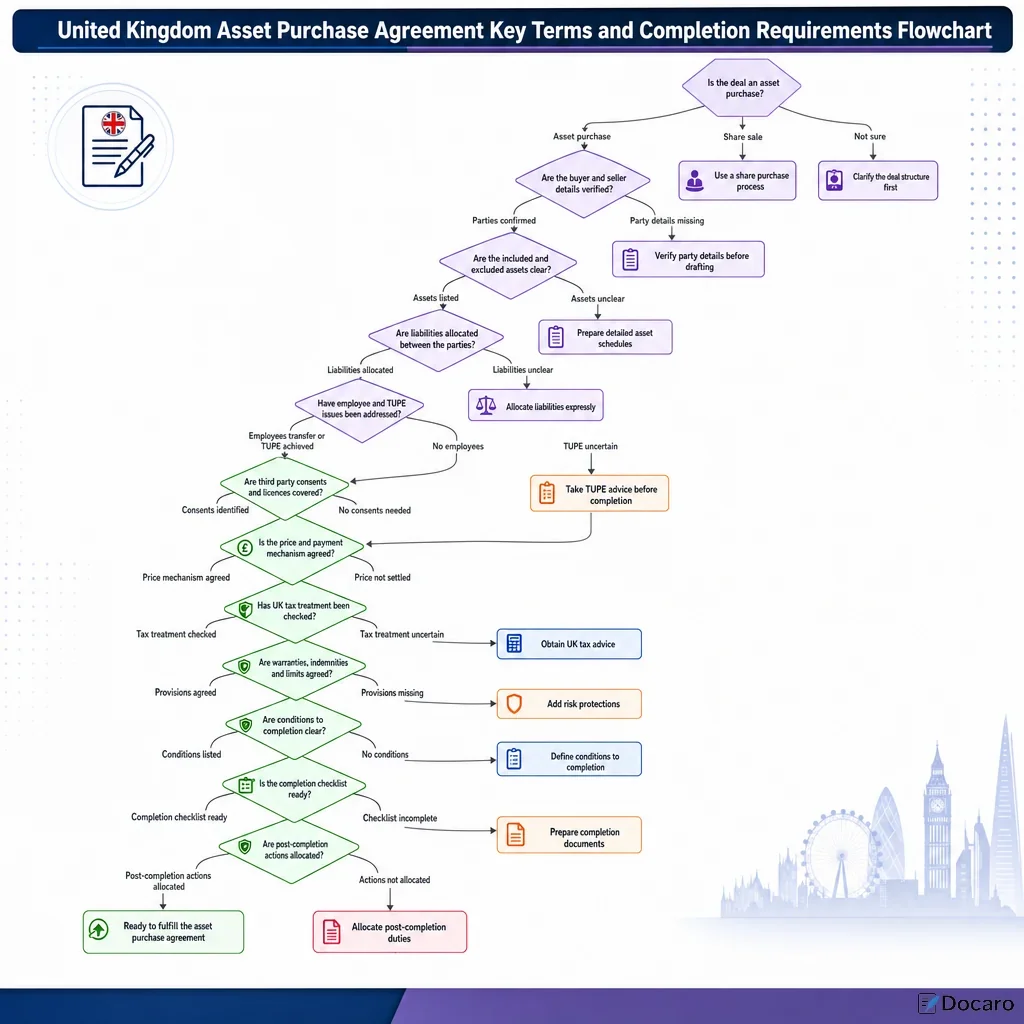
Is this an asset purchase rather than a share sale?
Why Is Asset And Liability Allocation Important In A UK Asset Purchase Agreement?
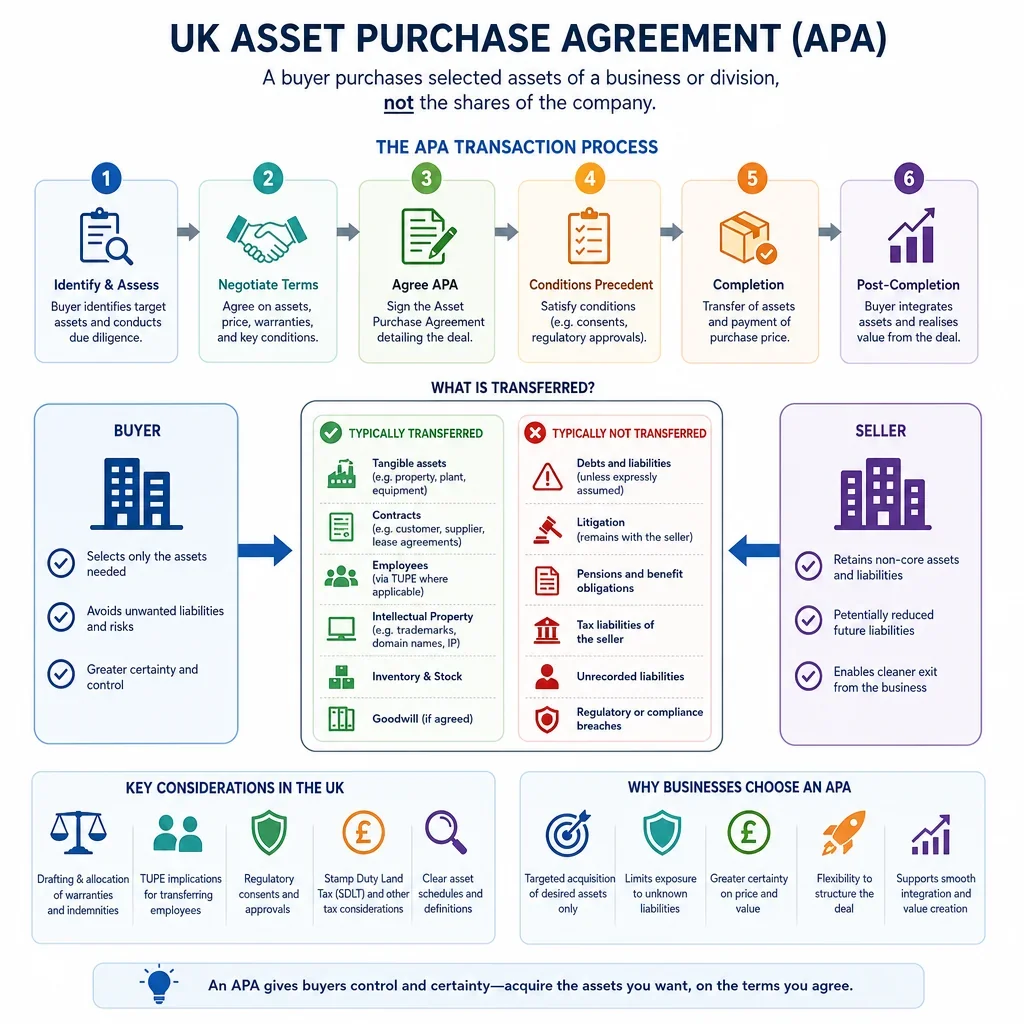
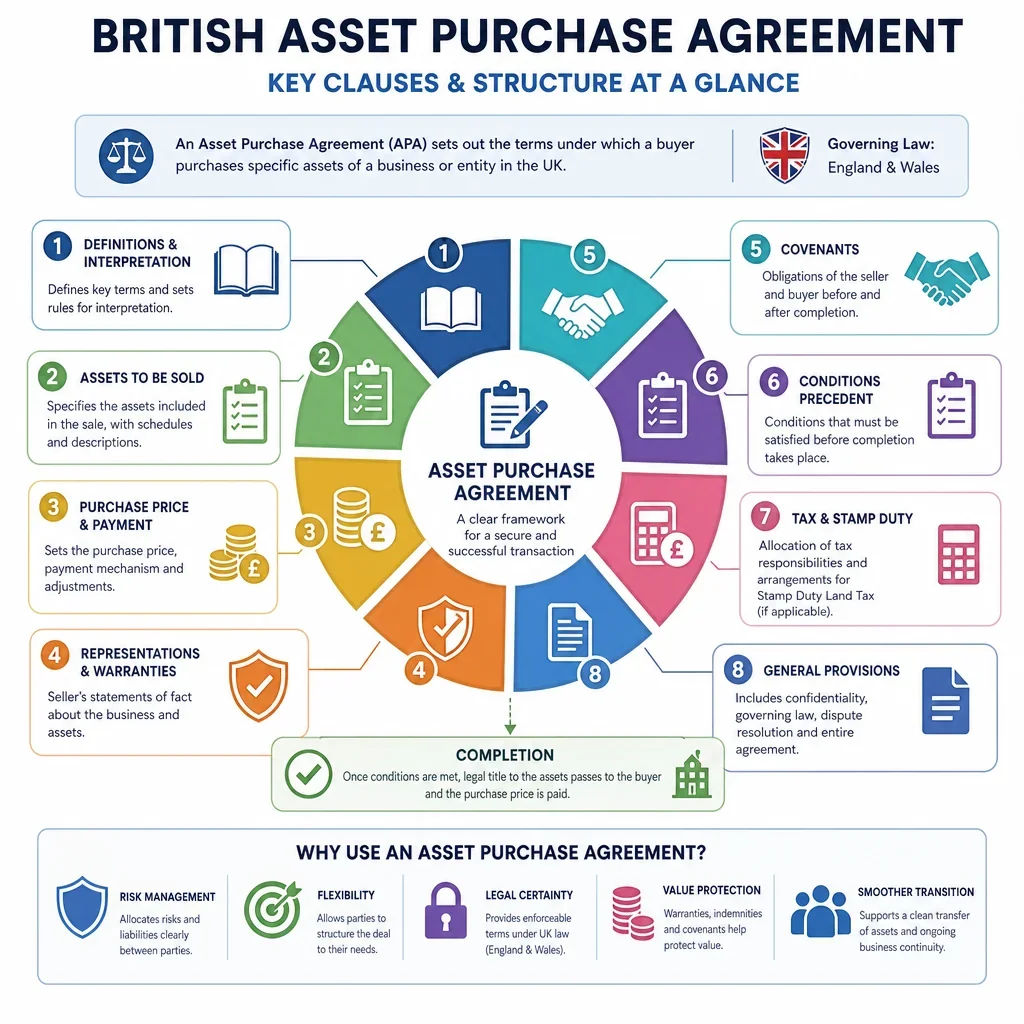
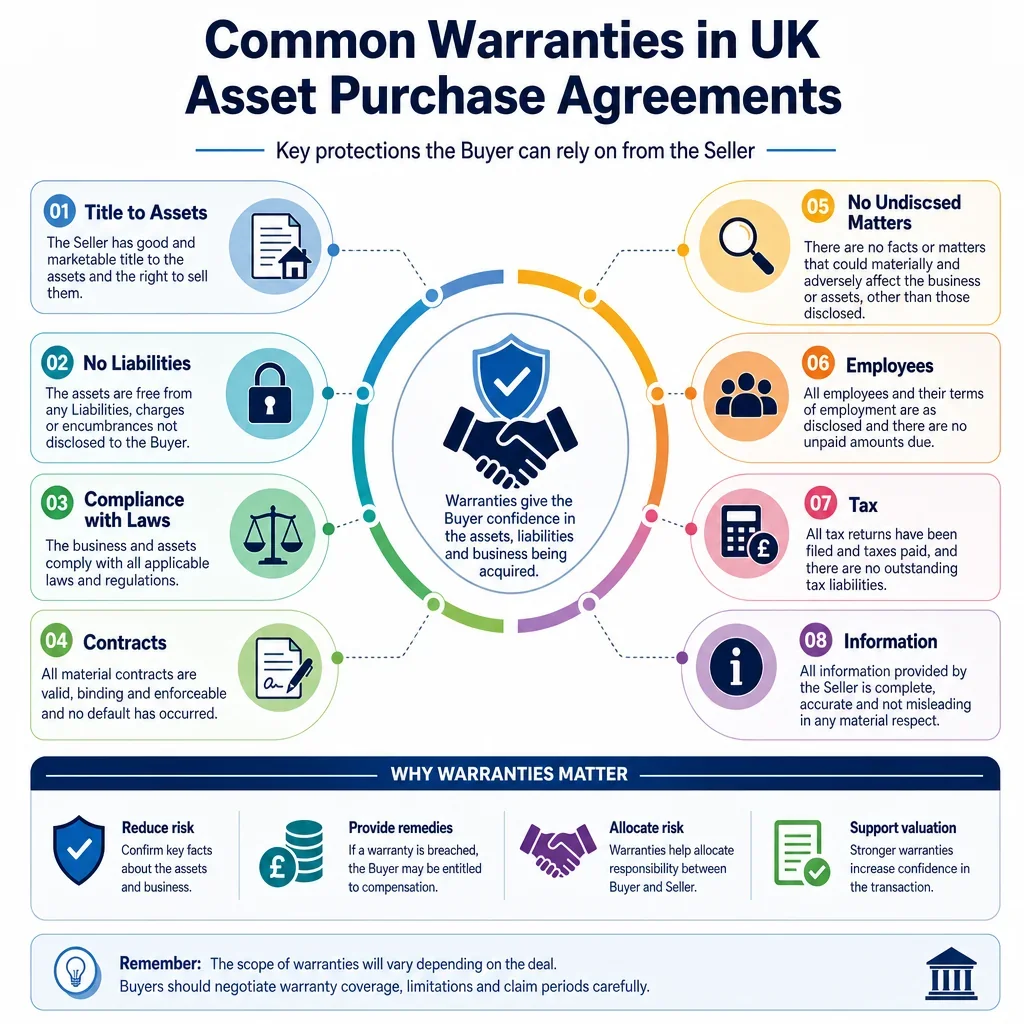
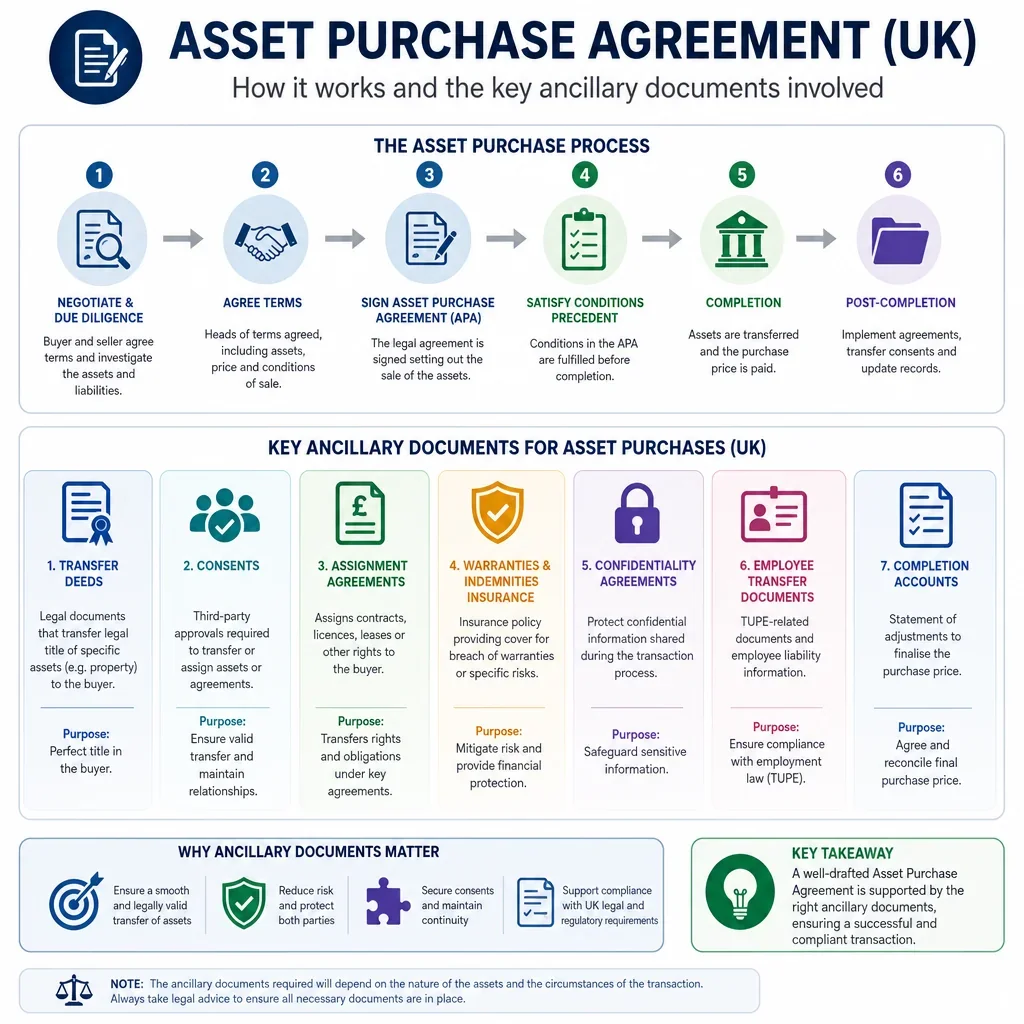
An asset purchase agreement lets a buyer choose specific business assets rather than buying the company itself. In the United Kingdom, that choice is only effective if the agreement clearly identifies the assets, liabilities, consents, tax treatment and completion steps. Poor drafting can leave the buyer without key assets or unexpectedly responsible for debts, employees, tax, or regulatory problems.
What Can Go Wrong If The Assets Are Not Clearly Listed?
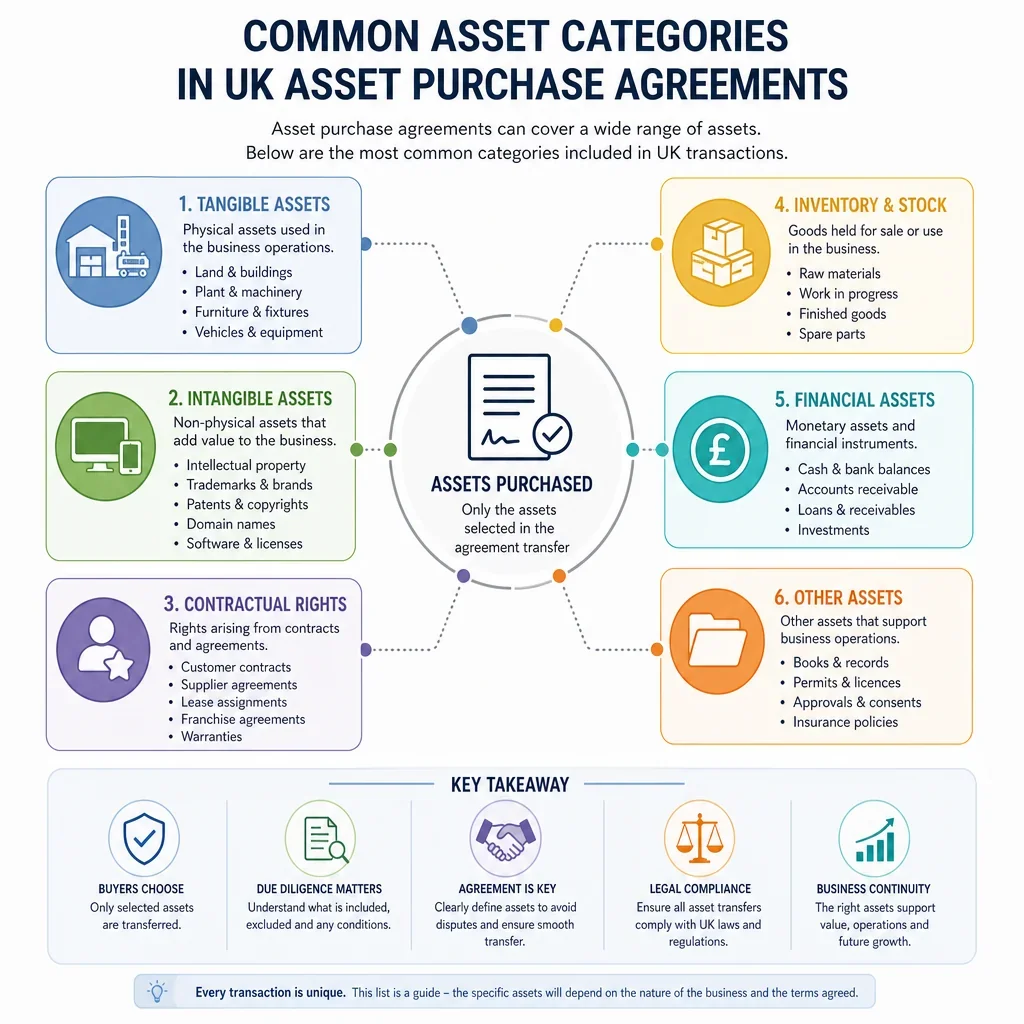
If assets are described too broadly, the parties may later dispute whether items such as goodwill, stock, customer data, software, domain names, equipment or intellectual property were included. A clear schedule reduces uncertainty and helps the buyer continue trading after completion.
Why Do UK Liabilities Need Special Attention?
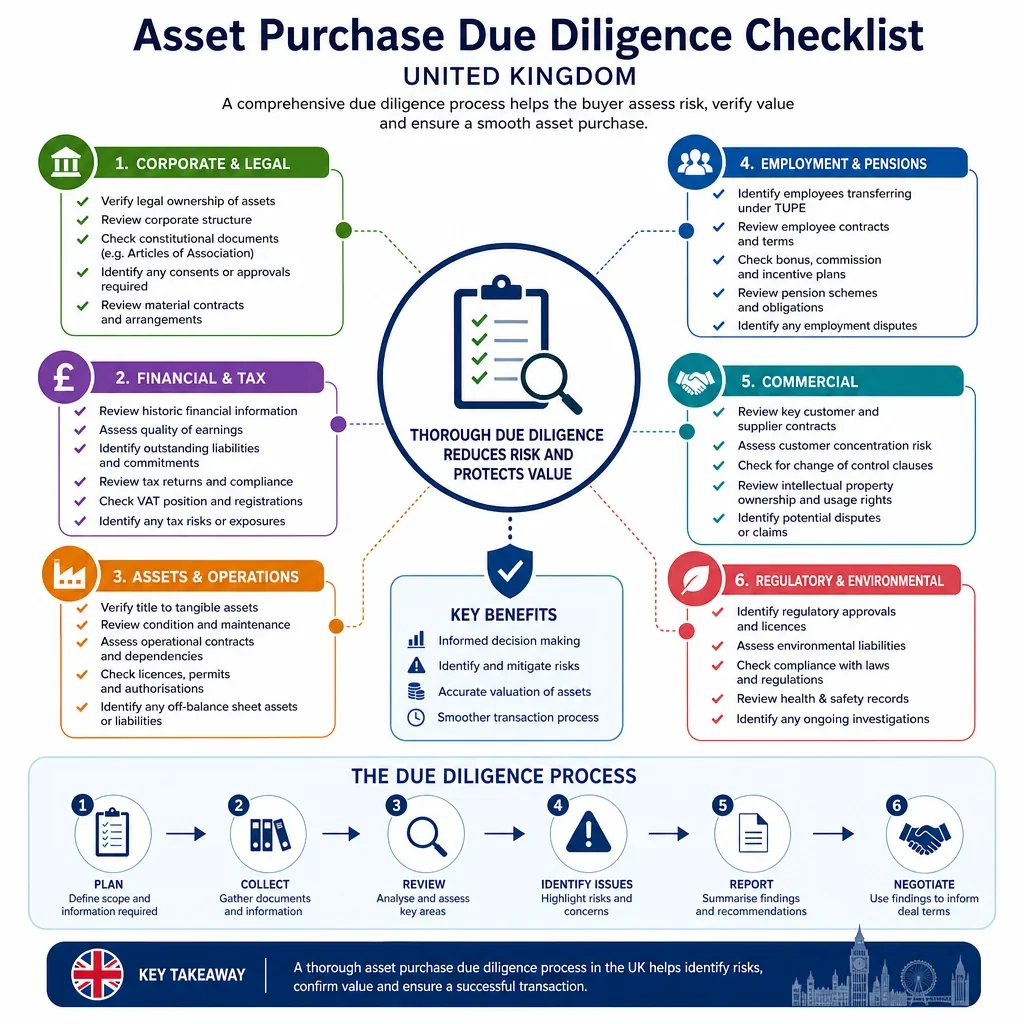
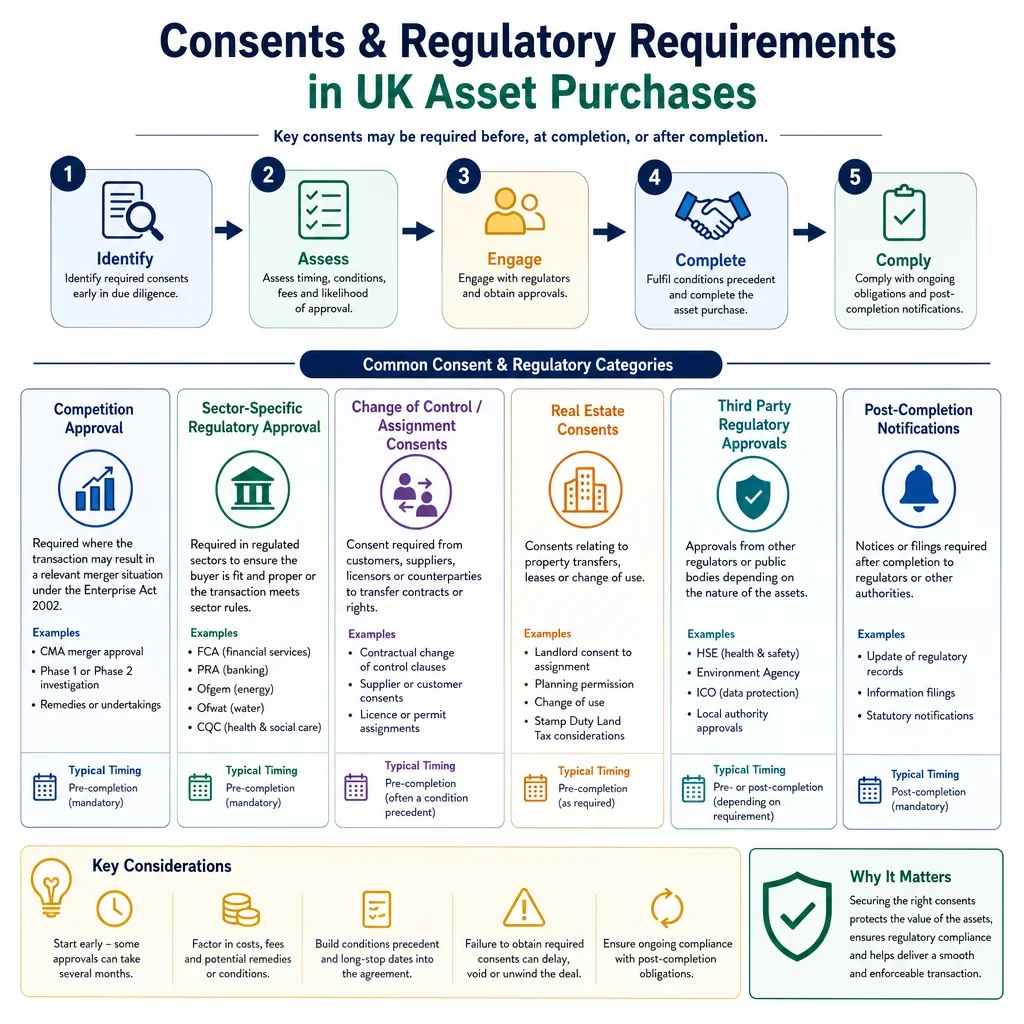
In an asset sale, liabilities do not always move automatically, but some obligations can transfer by law or commercial effect. TUPE may transfer employees and related employment liabilities, contracts may require third-party consent, and regulatory obligations may affect whether the business can operate lawfully.
How Do Tax And VAT Decisions Affect The Deal?
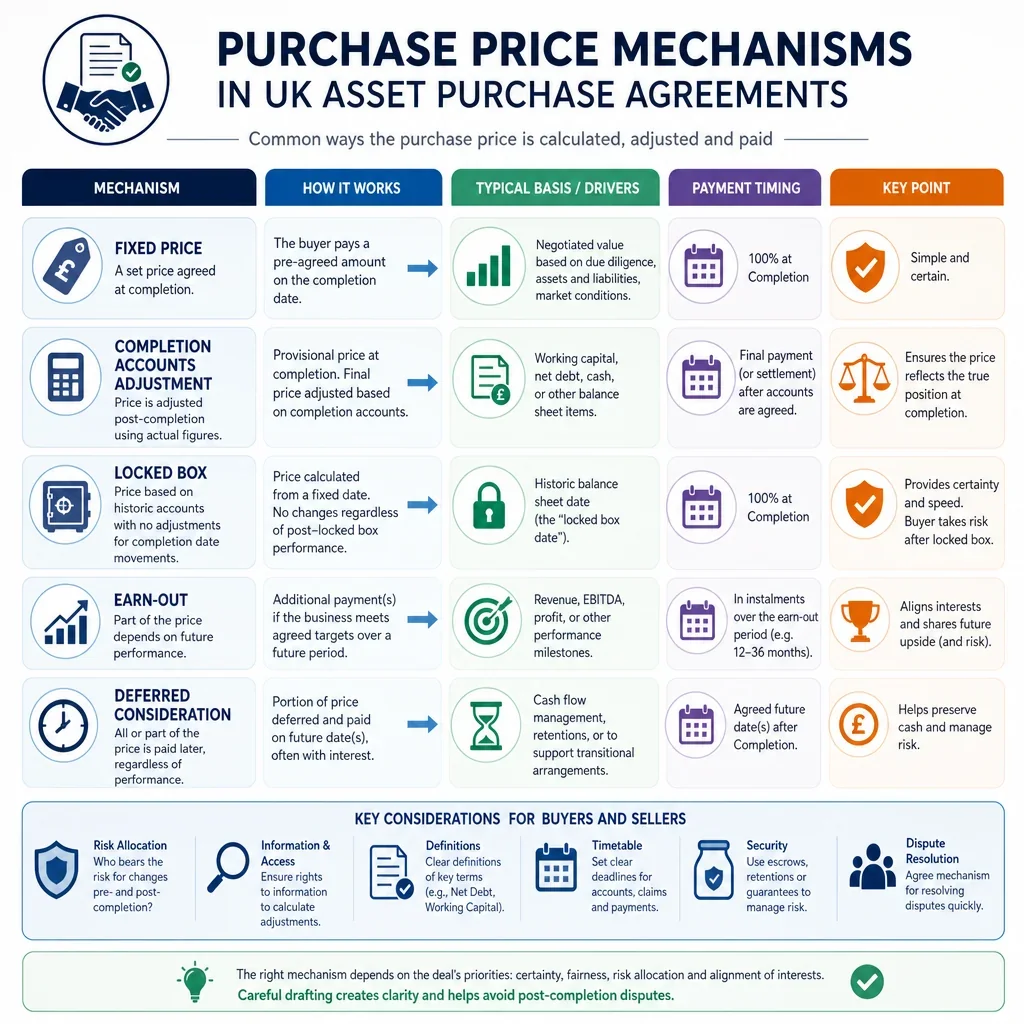
UK tax treatment can materially affect the price and cash flow of the transaction. VAT transfer of a going concern rules, capital allowances, land transaction taxes and price allocation should be considered before signing. HMRC guidance on transfers of a going concern is especially important where a trading business is sold.
What Should A Good UK APA Decision Process Cover?
- Included assets, excluded assets and title evidence.
- Assumed liabilities and liabilities retained by the seller.
- Employees, TUPE, pensions and consultation duties.
- Contracts and licences, including assignments, novations and consents.
- VAT and tax, including TOGC treatment and price allocation.
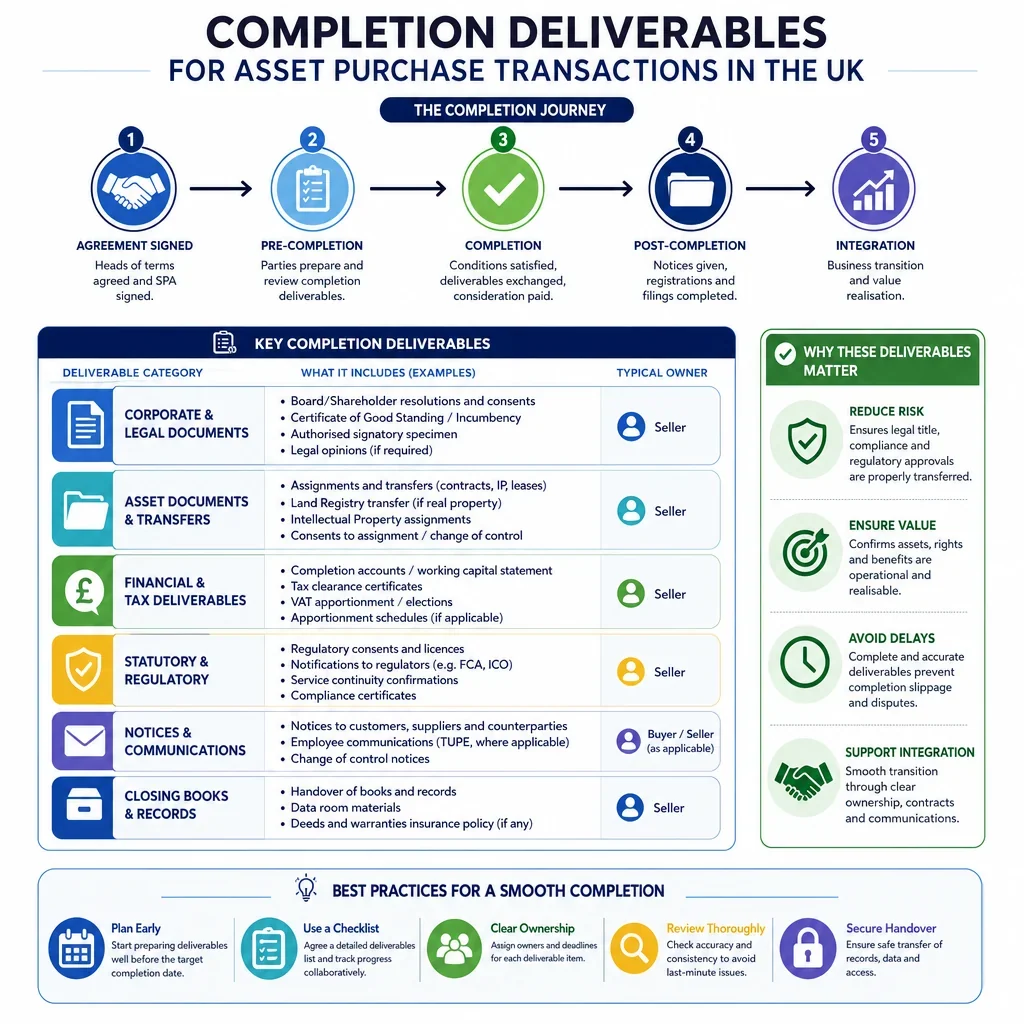
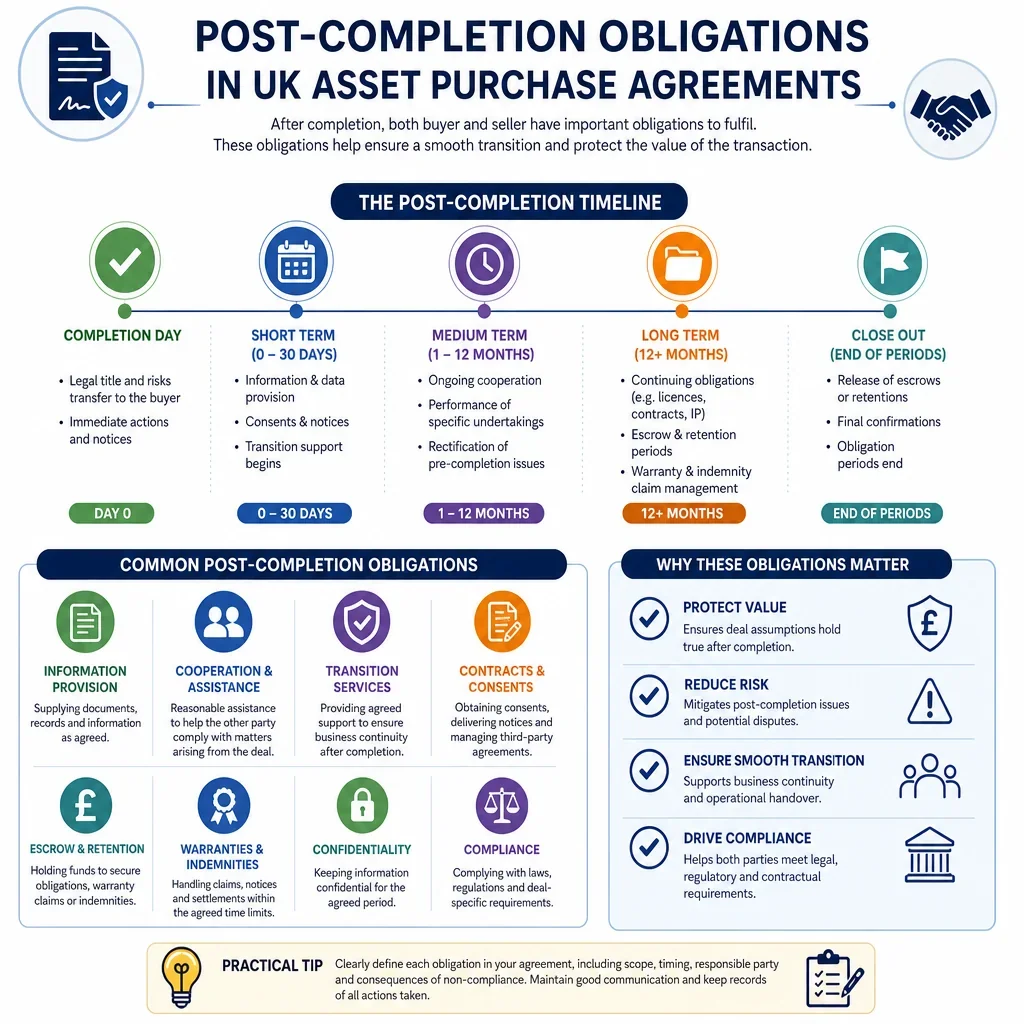
- Completion steps, including handover, approvals and post-completion support.
Making these decisions correctly helps create a practical UK asset purchase agreement that reflects the commercial deal and reduces the risk of disputes after completion.
FAQs
You Might Also Be Interested In