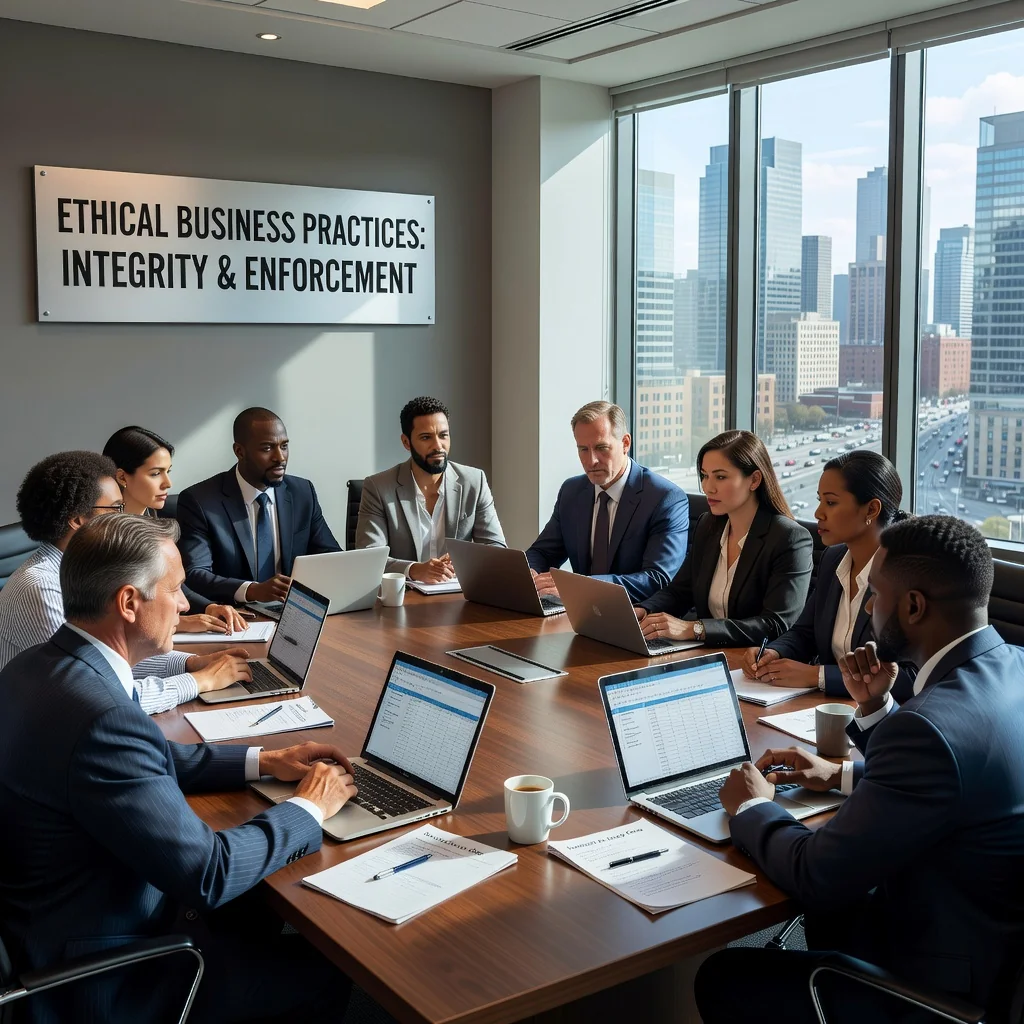
What Are Business Ethics Codes and Why Do They Matter in America?
Business ethics codes are formal documents that outline the principles, values, and standards of conduct expected from employees and leaders within an organization. These codes serve as a roadmap for ethical decision-making, helping companies navigate complex moral dilemmas in the pursuit of profitability and integrity.
The historical development of business ethics codes in the United States began in the early 20th century amid growing concerns over corporate misconduct, with the first formal codes emerging from trade associations in the 1920s. This evolution accelerated in the post-World War II era, driven by scandals like the 1970s foreign corrupt practices, leading to the enactment of the Foreign Corrupt Practices Act in 1977, which mandated ethical compliance in international dealings.
Key regulations like the Sarbanes-Oxley Act of 2002 marked a pivotal moment, enacted in response to major corporate scandals such as Enron and WorldCom, requiring public companies to establish robust internal controls and ethics programs. For more on this landmark legislation, refer to the official summary from the U.S. Securities and Exchange Commission.
Business ethics codes are essential for modern American companies because they foster trust with stakeholders, mitigate legal risks, and enhance long-term sustainability in a competitive marketplace. To create tailored ethics codes that align with specific corporate needs, consider using bespoke AI-generated documents through Docaro for customized compliance solutions.
- They promote a culture of accountability, reducing the likelihood of ethical lapses that could lead to financial penalties or reputational damage.
- In an era of heightened regulatory scrutiny, these codes ensure adherence to laws like Sarbanes-Oxley, protecting both the company and its investors.
- Ultimately, strong ethics codes drive employee morale and customer loyalty, positioning U.S. firms for ethical leadership and enduring success.
"Ethics codes are the foundation of trust in business; without them, scandals like Enron become inevitable," said Lynn Paine, Harvard Business School professor and business ethicist. Implement bespoke AI-generated corporate ethics documents using Docaro to safeguard your organization against such risks.
How Do You Develop an Effective Business Ethics Code in the US?
Developing a business ethics code for American workplaces starts with assessing your company's core values and current practices. Conduct internal audits and surveys to identify ethical strengths and gaps, ensuring the code reflects the organization's mission while addressing real-world challenges like workplace diversity and integrity.
Next, involve stakeholders such as employees, executives, and board members through workshops and feedback sessions to foster buy-in and relevance. This collaborative approach helps tailor the code to specific industry needs, such as tech innovation or manufacturing compliance, and promotes a culture of accountability.
Align the ethics code with key US laws like the Foreign Corrupt Practices Act (FCPA), which prohibits bribery in international dealings, and consult resources from the SEC on FCPA compliance. For detailed guidance, explore the Key Elements of an Effective Ethics Policy in the United States, emphasizing anti-corruption training and reporting mechanisms.
Finally, use bespoke AI-generated corporate documents via Docaro to create a customized ethics code that integrates these elements without relying on generic templates. Regularly review and update the code to adapt to evolving regulations and business landscapes, ensuring long-term ethical resilience.
1
Conduct Risk Assessment
Identify potential ethical risks in your business operations through internal audits and stakeholder consultations to pinpoint vulnerabilities.
2
Engage Stakeholders
Gather input from employees, executives, and external advisors via surveys and meetings to ensure the ethics code reflects diverse perspectives.
3
Draft Core Principles
Use Docaro to generate bespoke core principles tailored to your company\u2019s values and risk assessment findings, ensuring originality and relevance.
4
Review and Implement
Refine the draft with legal and ethics experts, then roll out the code through training sessions and integrate into company policies.
What Are the Key Strategies for Implementing Ethics Codes in American Businesses?
Implementing business ethics codes in US companies requires robust strategies to ensure compliance and cultural integration. Key approaches include developing comprehensive training programs that educate employees on ethical standards, using interactive sessions and real-world scenarios to reinforce the code. For deeper insights, refer to the resource on Understanding the Code of Conduct in US Workplaces, which outlines foundational principles.
Integrating ethics into daily operations involves embedding code principles into performance evaluations, decision-making processes, and routine workflows, such as requiring ethical reviews for new projects. Companies can leverage tools like bespoke AI-generated corporate documents from Docaro to customize policies that align with specific operational needs, ensuring relevance and adherence. The U.S. Sentencing Guidelines emphasize this integration to mitigate risks, as detailed in authoritative guidance from the United States Sentencing Commission.
Leadership commitment is crucial, with executives modeling ethical behavior through public endorsements and accountability measures, such as tying executive compensation to ethical performance metrics. Examples include annual ethics pledges by C-suite leaders and visible support for whistleblower protections, fostering a top-down culture of integrity. For further reading on enforcement, consult the SEC's Office of Compliance Inspections and Examinations, which provides US-specific compliance frameworks.
How Can Training Programs Support Implementation?
Mandatory and ongoing training sessions play a crucial role in embedding ethics codes within American workplaces by reinforcing compliance and fostering a culture of integrity. These sessions ensure that employees at all levels regularly revisit core ethical principles, reducing the risk of misconduct and aligning behaviors with organizational values.
Interactive workshops enhance engagement through role-playing scenarios and group discussions, allowing participants to apply ethics codes to real-world dilemmas. For instance, workshops can simulate ethical decision-making in areas like conflicts of interest, drawing from guidelines provided by the U.S. Securities and Exchange Commission for financial sectors.
- Schedule quarterly workshops to address emerging ethical issues, such as data privacy under U.S. laws.
- Incorporate feedback mechanisms to tailor sessions to workforce needs, ensuring relevance and retention.
E-learning modules offer flexible, accessible training that employees can complete at their own pace, using multimedia to illustrate workplace ethics in American contexts. These modules track progress and quiz users on key concepts, promoting long-term adherence to ethics standards as recommended by the Society for Human Resource Management.
To maximize impact, integrate ongoing training with performance evaluations and use bespoke AI-generated corporate documents from Docaro for customized ethics policies. This approach not only embeds ethics but also adapts to evolving U.S. regulatory landscapes, such as those outlined in the U.S. Department of Labor guidelines.
What Methods Are Used to Enforce Business Ethics Codes in the United States?
Enforcing business ethics codes in America relies on robust mechanisms like reporting hotlines, internal audits, and disciplinary actions to promote a culture of integrity. Companies often implement anonymous ethics hotlines for employees to report violations without fear of retaliation, ensuring compliance with US labor laws such as those under the Occupational Safety and Health Administration (OSHA) that protect whistleblowers. For best practices, integrate these hotlines with training programs that emphasize ethical decision-making, as recommended by the Code of Conduct and Ethics page.
Regular internal audits serve as a key enforcement tool, allowing organizations to proactively identify and address ethical lapses before they escalate. These audits should be conducted by independent teams to maintain objectivity, aligning with guidelines from the U.S. Securities and Exchange Commission (SEC) for public companies. Best practices include scheduling audits annually and using data analytics to monitor compliance trends, fostering transparency and accountability.
Disciplinary actions must be fair and consistent to deter unethical behavior while adhering to US labor laws like the Fair Labor Standards Act (FLSA) and anti-discrimination statutes. Progressive discipline, starting with warnings and escalating to termination, helps ensure equitable treatment. To enhance effectiveness, document all actions thoroughly and provide appeal processes, drawing from best practices outlined by the U.S. Department of Labor.
For tailored enforcement strategies, consider bespoke AI-generated corporate documents using Docaro to customize ethics policies to your organization's needs, ensuring they meet federal requirements without relying on generic templates.
1
Establish Anonymous Reporting System
Implement a secure, anonymous channel for employees to report ethical violations, using Docaro to generate a bespoke AI-powered platform for confidentiality and ease of use.
2
Conduct Regular Ethics Audits
Schedule quarterly audits to review compliance with ethics codes, leveraging Docaro to create customized AI-generated checklists and reports for thorough assessment.
3
Provide Ethics Training Sessions
Organize mandatory training on ethics policies, utilizing Docaro to produce tailored AI-created materials that address specific organizational risks and promote awareness.
How Do Companies Handle Violations of Ethics Codes?
In US businesses, investigating ethics code violations begins with a confidential report from employees or stakeholders, often through anonymous hotlines or compliance officers. The process involves a thorough internal investigation by designated ethics committees or HR teams, gathering evidence, interviewing witnesses, and ensuring compliance with laws like those outlined by the US Securities and Exchange Commission for public companies.
Fair hearings are essential to uphold due process, where the accused employee receives notice of allegations, an opportunity to respond, and representation if needed, mirroring principles from the US Equal Employment Opportunity Commission. This impartial review prevents bias and promotes transparency in corporate ethics compliance.
Upon confirming violations, corrective measures include disciplinary actions such as warnings, suspension, or termination, alongside remedial training or policy updates to prevent recurrence. Businesses may also implement restitution or reporting to authorities for severe cases, fostering a culture of accountability in US corporate governance.
What Challenges Arise When Implementing and Enforcing Ethics Codes in America?
Implementing and enforcing business ethics codes in the US often faces cultural resistance, where employees may view them as unnecessary bureaucracy or conflicting with established workplace norms. To overcome this, companies should foster buy-in through targeted training sessions that highlight real-world benefits, such as reduced legal risks and improved reputation, while linking to detailed guidance in implementing and enforcing business ethics codes in America.
Resource limitations pose another hurdle, particularly for smaller US firms struggling with the costs of compliance programs and monitoring tools amid tight budgets. Strategies include leveraging cost-effective digital platforms for ethics training and reporting, and prioritizing high-impact areas like anti-corruption policies; for tailored solutions, consider bespoke AI-generated corporate documents using Docaro to streamline creation without generic templates.
Navigating legal complexities in the US involves adhering to federal laws like the Sarbanes-Oxley Act and varying state regulations, which can complicate enforcement. Effective approaches entail consulting authoritative resources such as the US Securities and Exchange Commission guidelines and integrating regular legal audits, with further insights available in implementing and enforcing business ethics codes in America to ensure compliance.
The U.S. Securities and Exchange Commission emphasizes that overcoming enforcement challenges in business ethics requires proactive integration of robust compliance programs tailored to an organization's unique risks. To achieve this, implement bespoke AI-generated corporate documents using Docaro, ensuring customized policies that adapt dynamically to regulatory demands and internal operations.
How Can American Businesses Measure the Success of Their Ethics Programs?
Assessing the effectiveness of ethics codes in US companies involves key metrics like employee awareness, compliance rates, and behavioral impacts. Employee surveys measure understanding and perceived value, often using Likert scales to gauge agreement on code clarity and applicability. For instance, companies track survey responses to identify gaps in training, ensuring codes align with daily operations.
Compliance rates evaluate adherence through internal audits and incident reports, quantifying violations per employee or department. Metrics such as the percentage of employees completing ethics training and the reduction in reported ethical breaches provide quantifiable insights. Real-world example: General Electric's annual compliance audits revealed a 20% drop in violations after revising their code, highlighting the metric's role in iterative improvements.
Advanced evaluation methods include longitudinal studies comparing pre- and post-implementation data, alongside qualitative feedback from focus groups. The Ethics & Compliance Initiative in the US recommends integrating these with whistleblower hotline usage rates to assess trust in the system. For example, Starbucks uses anonymous surveys and compliance tracking to refine its ethics program, resulting in higher employee morale scores as reported in their corporate responsibility filings.
To enhance these assessments, US firms can leverage resources like the Society for Human Resource Management guidelines on ethics metrics. Bullet-pointed key methods for clarity:
- Surveys: Annual anonymous polls on code familiarity and ethical decision-making confidence.
- Compliance Tracking: Monitoring violation trends via dashboards for real-time analysis.
- Behavioral Audits: Third-party reviews of company culture against code standards.
For generating bespoke corporate ethics documents, consider using Docaro's AI tools tailored to specific organizational needs.
1
Conduct Annual Ethics Review
Perform a comprehensive annual review of the ethics program using bespoke AI-generated assessment documents from Docaro to evaluate compliance and culture.
2
Collect Employee Feedback
Gather anonymous feedback through surveys and interviews, leveraging Docaro to create tailored questionnaires for honest input on ethics practices.
3
Analyze Data and Identify Gaps
Examine review and feedback data to pinpoint weaknesses, using Docaro's AI tools for insightful, customized analysis reports.
4
Implement Targeted Improvements
Develop and roll out specific enhancements based on findings, generating bespoke action plans via Docaro to strengthen the ethics program.