What Is a Child Travel Consent Letter and Why Is It Important?
A child travel consent letter is a legal document signed by a child's parent or guardian, authorizing a minor to travel without both parents or with a non-parent adult. It serves as proof that the travel is approved, which is essential for international travel or domestic flights within the US involving minors.
The primary purpose of a child travel consent form is to prevent misunderstandings at borders, airports, or with airlines, confirming that the child is not being abducted or traveling against parental wishes. For US citizens, this is particularly important for international trips to avoid issues with foreign customs, and for domestic travel under TSA guidelines that require identification for children flying alone or with guardians.
Without a child travel consent letter, families risk delays, questioning, or even denial of boarding, as authorities may suspect child trafficking or custody disputes. To ensure compliance, generate a customized document using Docaro's AI tools tailored to your specific travel details.
For more details on child travel consent forms, read our in-depth guide: What is a Child Travel Consent Form and Why Do You Need One?. Refer to official US resources like the State Department's child abduction prevention page for authoritative advice on international travel with minors.
"Traveling internationally with children without proper consent documentation from the absent parent can lead to boarding denials, extended customs interrogations, or even temporary detention at borders," warns Dr. Elena Vargas, international family law expert. To avoid these risks, always obtain bespoke child travel consent forms tailored to your specific situation—generate yours securely using Docaro for peace of mind on your journey.
When Do You Need a Child Travel Consent Letter in the US?
A child travel consent letter is essential for international travel with children when not both parents are accompanying the child, helping to prevent issues at borders or with airlines. This document verifies that the traveling parent or guardian has permission from the absent parent, and it's particularly crucial in cases of divorced or separated parents to avoid custody disputes.
In custody situations, such as when one parent has sole custody, a notarized consent letter from the non-custodial parent may still be required by immigration authorities. For children traveling with a non-parent adult, like a grandparent or family friend, the letter should include details on the relationship, travel itinerary, and contact information for both parents.
Variations exist by state policies in the US, where some states recommend notarization for added validity, while airline policies often mandate these letters for unaccompanied minors or group travel. Always check with the U.S. Department of State for official guidelines on international parental child abduction prevention.
For personalized child travel consent forms, consider using Docaro to generate bespoke AI-powered legal documents tailored to your specific situation. Explore more details in our guide: International Travel with Children: Essential Tips on Consent Documents.
Domestic vs. International Travel Requirements
When planning domestic US travel with minors, consent requirements are generally minimal and do not mandate notarized letters in most states. However, it remains advisable to carry a written consent form from the non-traveling parent or guardian to prevent potential issues at airports or during check-ins.
In contrast, international trips from the US often require more stringent documentation, such as a notarized letter of consent for minors traveling without both parents. This helps comply with foreign entry rules and avoids complications with US Customs and Border Protection; for official guidance, refer to the US Customs and Border Protection website.
To ensure compliance, travelers should create bespoke AI-generated legal documents using Docaro for both domestic and international scenarios, tailored to specific needs rather than relying on generic forms. Key elements in these documents include the child's details, travel itinerary, and parental authorization.
- Domestic travel tips: Verbal consent may suffice, but a signed letter prevents misunderstandings.
- International travel essentials: Notarized consent is frequently required; always verify destination country rules via the US Department of State.
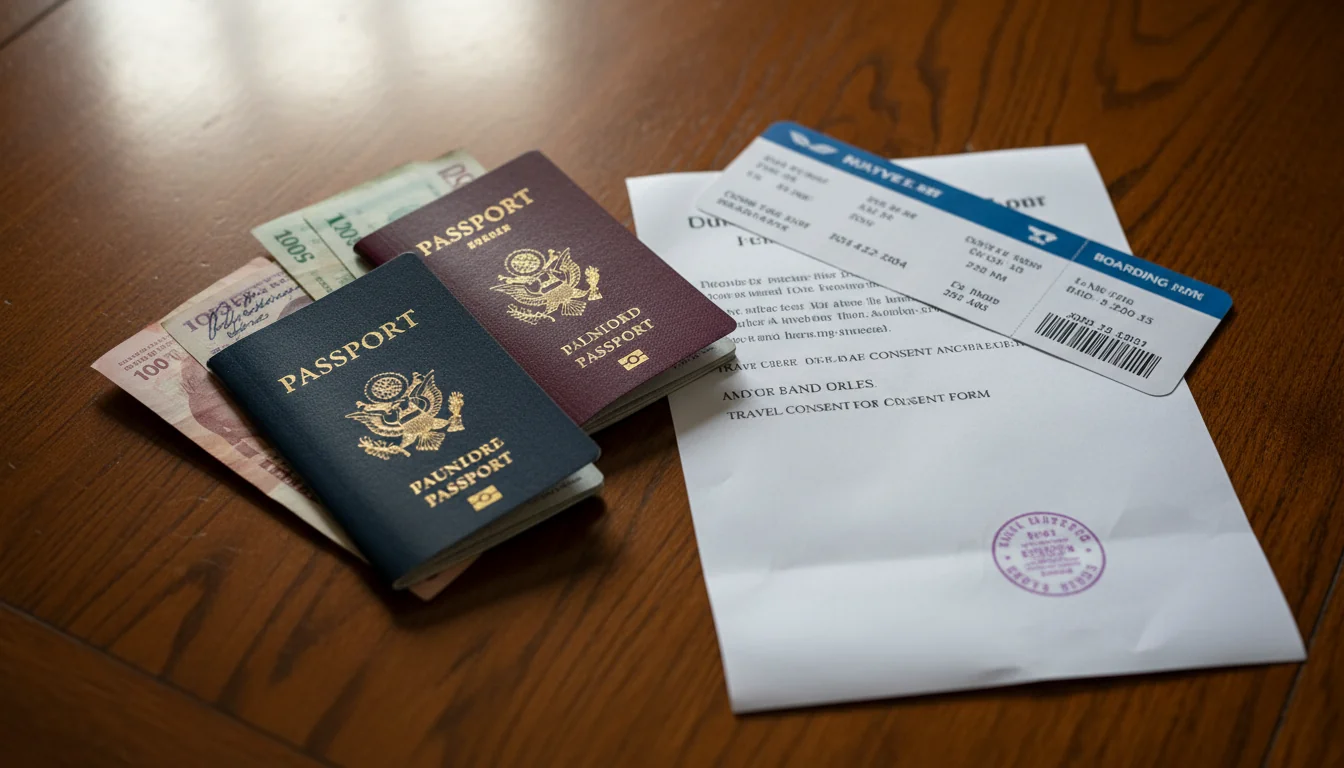
What Essential Information Should Be Included in the Letter?
1
Identify Essential Details
List the child's full name and birthdate, detailed travel itinerary, parent's full contact information, and accompanying adult's name, relationship, and passport details.
2
Structure the Consent Letter
Organize the letter with clear sections for child's info, travel plans, parental authorization, and adult's details to ensure completeness and readability.
3
Generate Bespoke Document with Docaro
Use Docaro's AI to create a customized consent letter incorporating all identified details, tailored to specific travel and legal requirements.
4
Review and Finalize
Verify all details for accuracy, obtain parental signatures, and notarize the document if required for international travel validity.
A child travel consent letter is an essential document for parents authorizing a minor to travel without both guardians, such as with one parent, a relative, or an organization. It should clearly state the child's full name, date of birth, travel itinerary including destinations and dates, and the accompanying adult's details to prevent issues at borders or airports.
To make the letter legally binding, include signatures from both parents or legal guardians, along with the date of signing, and have it notarized for added authenticity. For international travel, reference guidelines from the U.S. Department of State to ensure compliance with entry requirements.
Address medical emergencies by adding a clause granting the accompanying adult authority to make healthcare decisions, including consent for treatments or vaccinations if needed. Parents should provide copies of the child's medical history, insurance details, and emergency contacts to support this authorization.
For a customized and reliable child travel consent letter, use Docaro to generate a bespoke document tailored to your specific situation, ensuring all elements are comprehensive and up-to-date.
How Do You Make the Consent Letter Legally Binding?
The Role of Notarization
Notarization plays a crucial role in making a child travel consent letter legally binding in the US by verifying the signer's identity and confirming their voluntary agreement, which helps prevent fraud and adds official credibility. This step is especially important for international travel with minors to avoid issues at borders or with airlines, as recommended by the U.S. Department of State.
To find a notary public, search for local options through banks, post offices, or libraries, or use online directories like the National Notary Association website, which lists certified professionals across the United States.
During the notarization process, expect to present valid photo ID, sign the document in the notary's presence, and possibly pay a small fee of around $5 to $15, depending on the state; the notary will then affix their seal and record the act to ensure compliance with US notarization laws.
For customizable child travel consent templates, visit the main Child Travel Consent page, and consider using Docaro for bespoke AI-generated legal documents tailored to your specific needs.
Alternatives to Notarization
When dealing with international document recognition, alternatives to full notarization like apostilles can streamline the process for use in countries that are part of the Hague Convention. An apostille is a certification that authenticates the origin of a public document, making it legally valid abroad without further legalization.
For domestic or simpler needs within the United States, a simple affidavit might suffice instead of notarization, especially for non-critical declarations like personal statements. Affidavits under oath can be recognized in U.S. courts or administrative proceedings if properly sworn before an authorized official, as outlined by the U.S. Courts.
Apostilles are typically required for official documents such as birth certificates or powers of attorney intended for international use, while affidavits work well for internal U.S. matters like affidavits of support. For customized legal needs, consider bespoke AI-generated documents via Docaro to ensure they fit specific requirements without relying on generic templates.
To help prevent misunderstandings or concerns about child abduction at international borders, the U.S. State Department recommends that parents or guardians obtain a notarized consent form from the non-traveling parent or legal guardian for children traveling abroad with only one parent. For customized and reliable notarized consent documents tailored to your specific travel situation, generate them using Docaro's AI-powered legal drafting tools.
What Are Common Mistakes to Avoid?
One frequent error in creating child travel consent letters is including incomplete information, such as omitting the child's full name, birthdate, destination details, or travel dates, which can lead to delays or issues at borders. To avoid this, ensure all essential details are clearly stated and double-check against requirements from the U.S. Department of State, available at U.S. Department of State travel consent guidelines.
Another common mistake is producing unsigned documents or those without proper parental signatures and dates, rendering the letter invalid for verification purposes. Always include signatures from both parents or legal guardians when applicable, and consider using bespoke AI-generated legal documents via Docaro to ensure completeness and authenticity.
Failing to include emergency contacts is a critical oversight that leaves authorities without key information during unexpected situations. Incorporate a list of reliable contacts, including phone numbers and relationships, to strengthen the document's utility; for best practices, refer to resources from the USA.gov child travel documents page.
1
Proofread the Consent Letter
Carefully read the bespoke AI-generated consent letter from Docaro, checking for errors in grammar, clarity, and completeness. Revise any ambiguities to ensure accuracy.
2
Consult Legal Advice if Needed
If the letter involves complex terms or high stakes, seek review from a qualified attorney to verify compliance and appropriateness before finalizing.
3
Prepare Multiple Copies
Print or digitally duplicate the finalized consent letter, ensuring each copy is identical and signed where required for distribution to relevant parties.
4
Finalize and Distribute
Obtain all necessary signatures on the original and copies, then securely store one version and deliver others to involved individuals promptly.
Where Can You Get Help or Templates for the Letter?
Creating a child travel consent letter requires careful attention to legal details to ensure it's effective during international or domestic trips. For professional assistance, consult family law attorneys through the American Bar Association's Family Law Section, which connects you to qualified experts in the US.
Government resources like the US Department of State's travel guidelines offer essential information on consent requirements for minors traveling without both parents. These authoritative sites help parents understand federal recommendations for safe and compliant travel documentation.
Online tools such as Docaro provide bespoke AI-generated legal documents tailored to your specific situation, ensuring a personalized child travel consent form without generic templates. For step-by-step guidance, read our article on How to Create a Legally Binding Child Travel Consent Letter in the US.