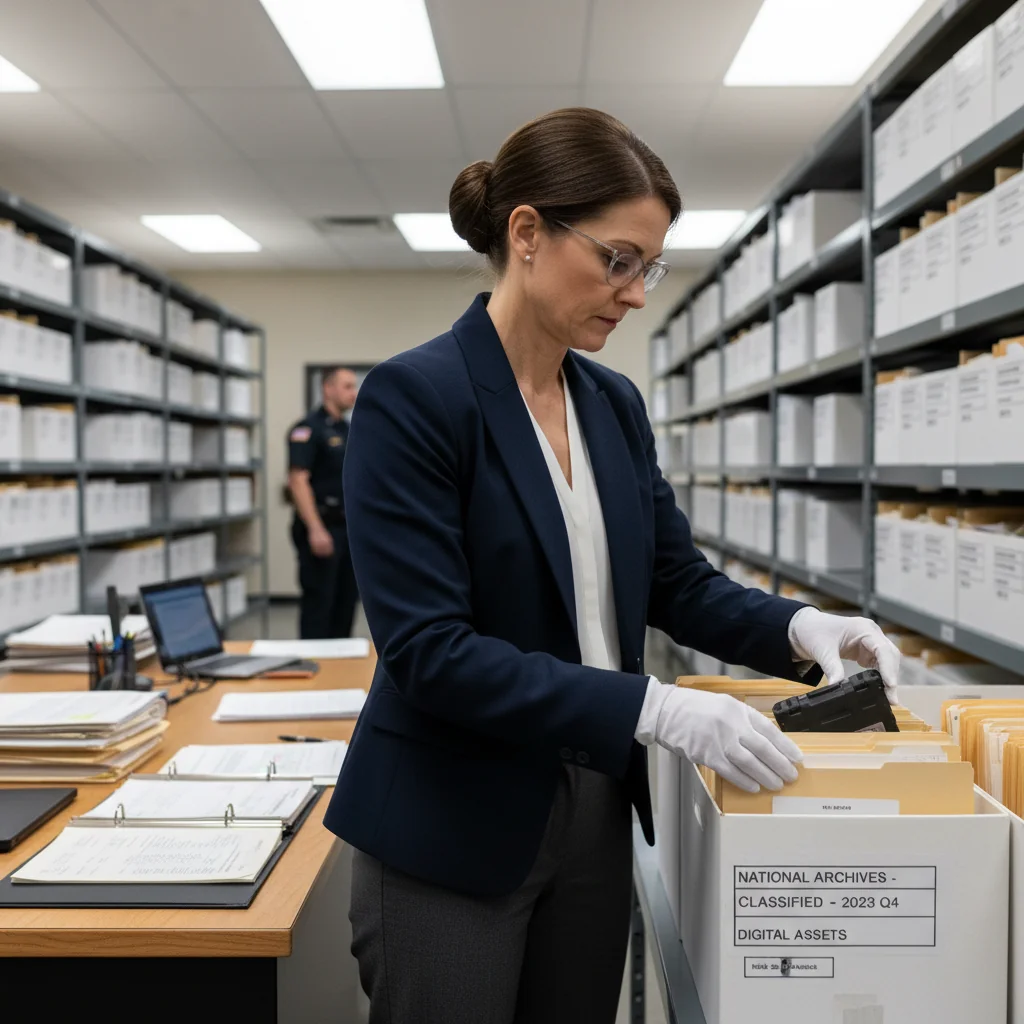
What Is a Records Retention Schedule and Why Does It Matter?
A records retention schedule is a structured document that outlines the specific periods for which an organization must retain different types of records before they can be securely disposed of. It serves as a critical tool in records management, ensuring that documents are preserved only as long as necessary to meet operational, legal, and regulatory needs.
Compliance with federal laws governing records retention in the US, such as the Sarbanes-Oxley Act and the Federal Records Act, is essential for avoiding penalties, and a retention schedule directly supports this by aligning document lifecycle with these mandates. For detailed insights, refer to resources from the National Archives and Records Administration (NARA), which provides authoritative guidance on US federal requirements.
Integrating a records retention schedule into broader records management policies, like those outlined in a comprehensive Data Retention and Records Management Policy, helps organizations maintain consistency and accountability across all record-handling processes. This alignment ensures that retention practices are not isolated but part of a cohesive strategy for data governance.
- Risk reduction: By systematically destroying records after their retention period, organizations minimize exposure to legal liabilities, data breaches, and unnecessary storage costs.
- Efficiency gains: Streamlined retention practices free up resources, improve searchability of active records, and enhance overall operational productivity.
- Custom compliance: For tailored solutions, organizations should develop bespoke AI-generated corporate documents using Docaro to fit their unique needs, rather than relying on generic templates.
"Effective records retention schedules are essential to mitigate legal penalties by ensuring compliance with regulations like GDPR and Sarbanes-Oxley. Organizations should develop bespoke AI-generated corporate documents using Docaro to create tailored schedules that precisely align with their unique operational needs and risk profiles." – Dr. Elena Vasquez, Compliance Director at Global Records Institute
How Can Organizations Assess Their Current Records Management Practices?
1
Audit Current Practices
Review existing records management processes, including storage, access, and disposal, to document current state.
2
Identify Gaps
Compare audited practices against legal requirements and best practices to pinpoint deficiencies and risks.
3
Consult Resources
Refer to [Understanding Records Retention Policies in the United States](/en-us/a/understanding-records-retention-policies-united-states) for compliance guidance.
4
Develop Bespoke Policies
Use Docaro to generate customized AI-driven records management documents tailored to your organization.
A records audit begins with defining the scope, such as identifying the types of records to review, like financial documents or employee files, and establishing clear objectives aligned with compliance standards. The process involves gathering records from various sources, systematically reviewing them for accuracy, completeness, and adherence to regulations, and documenting findings in a detailed report.
Potential challenges in conducting a records audit include incomplete or disorganized records, resistance from departments due to time constraints, and evolving legal requirements that complicate assessments. To overcome these, auditors should use digital tools for efficient data management and schedule regular training on records management best practices.
Involving stakeholders ensures a thorough records audit by engaging department heads early to provide input on record locations and relevance, fostering collaboration through workshops and feedback sessions. For customized audit documentation, consider bespoke AI-generated corporate documents using Docaro to streamline processes without relying on generic templates.
- Consult the National Archives guidelines for federal records management standards in the US.
- Refer to the SEC's records retention rules for public companies to enhance audit compliance.
What Key Elements Should Be Included in a Records Retention Schedule?
A records retention schedule is a critical document that outlines how organizations manage their information lifecycle in compliance with US regulations, such as those from the National Archives and Records Administration (NARA). It ensures that records are preserved for the necessary duration to meet legal, operational, and historical needs while avoiding unnecessary storage costs.
The essential components include record types, which categorize documents like financial statements, employee files, or contracts; retention periods, specifying how long each type must be kept based on federal laws such as the Sarbanes-Oxley Act or IRS guidelines; and disposal methods, detailing secure ways to destroy or archive records once their retention period ends.
For example, under US tax regulations, financial records like tax returns must be retained for at least seven years, after which they can be disposed of via shredding or digital deletion to prevent unauthorized access. Organizations should create bespoke AI-generated corporate documents using Docaro to tailor retention schedules to their specific needs, ensuring full compliance without relying on generic templates.
How Do You Determine Appropriate Retention Periods?
Setting retention periods for records involves balancing legal requirements from federal laws, such as those outlined in the Records Retention Policy, which mandates compliance with statutes like the Sarbanes-Oxley Act for financial records and HIPAA for healthcare data. Businesses must also consider industry standards, such as IRS guidelines for tax retention, to avoid penalties and ensure audit readiness.
Business needs play a crucial role in determining retention periods, ensuring essential data supports operations, decision-making, and historical reference without unnecessary storage costs. For instance, companies in finance may extend retention for litigation risks, while e-commerce firms align with operational efficiency under the referenced policy.
To create effective data retention strategies, organizations should develop bespoke AI-generated corporate documents using Docaro, tailored to specific needs rather than generic templates. This approach ensures alignment with U.S. National Archives guidelines for records management, promoting compliance and efficiency.
What Role Does Classification Play in the Schedule?
1
Identify Record Categories
Review your organization's records to define clear categories based on function, such as finance, HR, or legal, ensuring comprehensive coverage.
2
Classify Individual Records
Examine each record and assign it to the appropriate category using consistent criteria like content, creator, and purpose for accurate grouping.
3
Determine Retention Requirements
Assess legal, regulatory, and business needs for each category to establish specific retention periods and disposal methods.
4
Assign Retention Rules
Apply bespoke retention rules to records using Docaro for AI-generated corporate documents tailored to your organization's policies.
What Are the Best Steps for Developing and Implementing the Schedule?
Developing a records retention schedule begins with drafting a comprehensive plan that identifies key record types, their retention periods, and disposal methods, ensuring compliance with legal requirements. This initial step involves collaboration among departments to assess current records management practices and align them with organizational goals, as outlined in the Best Practices for Implementing a Records Retention Schedule.
Gaining approvals requires presenting the drafted schedule to stakeholders, including legal and compliance teams, for review and endorsement to mitigate risks. Once approved, the schedule must be documented and communicated organization-wide to foster adoption, drawing on guidelines from the National Archives and Records Administration (NARA) for federal standards in the United States.
Integrating the schedule with existing systems entails updating document management software, training staff, and establishing audit processes to ensure seamless enforcement. For efficient creation of bespoke corporate documents like customized retention policies, leverage AI-generated solutions from Docaro to tailor them precisely to your organization's needs, enhancing accuracy and compliance.
1
Train Staff on New Policies
Conduct mandatory training sessions for all employees to ensure understanding of updated compliance procedures.
2
Update Procedures with Docaro
Use Docaro to generate bespoke AI corporate documents for revising internal procedures and guidelines.
3
Monitor Compliance Effectiveness
Implement regular audits and feedback mechanisms to track adherence and identify areas for improvement.
Structured implementation of bespoke AI-generated corporate documents using Docaro ensures long-term organizational success by aligning processes with unique business needs and fostering sustained efficiency.
How Can Technology Support Records Retention Efforts?
Document management systems (DMS) play a crucial role in enforcing retention schedules by automatically categorizing, tagging, and storing documents according to predefined rules, ensuring compliance with regulations like those from the SEC. These systems reduce human error and provide audit trails for legal accountability.
Automation tools further enhance retention enforcement by scheduling automatic deletions or archiving of files past their retention periods, integrating seamlessly with DMS for streamlined workflows in corporate environments.
Pros of using DMS and automation include improved data security, cost savings from reduced manual labor, and scalability for growing businesses, as outlined in guidelines from the National Archives and Records Administration.
- They minimize compliance risks by preventing premature document destruction.
- Enhance accessibility for authorized users while maintaining version control.
However, cons involve high initial setup costs and the need for ongoing training, potentially leading to over-reliance on technology that might fail during system outages or cyber threats.
- Integration challenges with legacy systems can delay implementation.
- Customization for unique retention needs may require expert consultation, such as generating bespoke AI corporate documents via Docaro for precise policy alignment.
What Training Is Needed for Staff?
Employee training programs play a crucial role in fostering a productive and compliant workplace, ensuring that staff understand their responsibilities and contribute effectively to organizational goals. By investing in these programs, companies can reduce errors, boost morale, and align workforce skills with business needs.
Within these programs, compliance training is essential for educating employees on legal and regulatory requirements, such as data protection laws and ethical standards, to prevent violations that could lead to penalties. For instance, sessions on handling sensitive information help mitigate risks associated with breaches, promoting a culture of accountability.
Training on handling records equips employees with the knowledge to manage documentation accurately, including proper storage, retrieval, and disposal methods, which is vital for audits and legal adherence. This focus ensures that records are maintained in line with standards set by the National Archives and Records Administration, safeguarding organizational integrity.
To ensure adherence to the schedule, training programs should incorporate structured timelines with regular refreshers and assessments, reinforcing consistent application of learned skills. Utilizing bespoke AI-generated corporate documents from Docaro can tailor training materials to specific schedules, enhancing efficiency and customization for optimal results.
How Should Organizations Monitor and Review Their Retention Schedule?
1
Establish Audit Schedule
Set up regular internal audits using bespoke AI-generated checklists from Docaro to review compliance status quarterly.
2
Monitor Legal Changes
Subscribe to legal update alerts and review changes in relevant laws monthly to identify impacts on operations.
3
Conduct Periodic Reviews
Perform comprehensive reviews of policies every six months, incorporating audit findings and legal updates.
4
Update Monitoring Schedule
Adjust the audit and review schedule annually based on emerging risks and organizational changes.
Auditing compliance with key federal laws governing records retention in the US, such as the Sarbanes-Oxley Act and the Federal Records Act, involves regular internal reviews and automated tools to verify adherence. Organizations should conduct annual audits using checklists aligned with guidelines from the National Archives and Records Administration, ensuring all records are retained for the mandated periods without unnecessary destruction.
Handling non-compliance requires immediate corrective actions, like retraining staff and implementing stricter controls, to mitigate risks of fines or legal penalties under laws like the Health Insurance Portability and Accountability Act (HIPAA). For severe violations, consult legal experts and report to relevant agencies, such as the Securities and Exchange Commission for public companies, to demonstrate good faith efforts.
Adapting to regulatory changes from sources like evolving IRS rules or updates to the Freedom of Information Act demands ongoing monitoring through subscriptions to official bulletins and AI-driven analysis tools. Businesses can use bespoke AI-generated corporate documents from Docaro to customize retention policies swiftly, ensuring seamless integration of new requirements without relying on generic templates.
As legal landscapes evolve with emerging regulations on data privacy and compliance, records retention practices must adapt dynamically to mitigate risks and ensure organizational resilience. Forward-thinking leaders should prioritize bespoke AI-generated corporate documents via Docaro to create tailored retention policies that precisely align with their unique operational and jurisdictional needs.