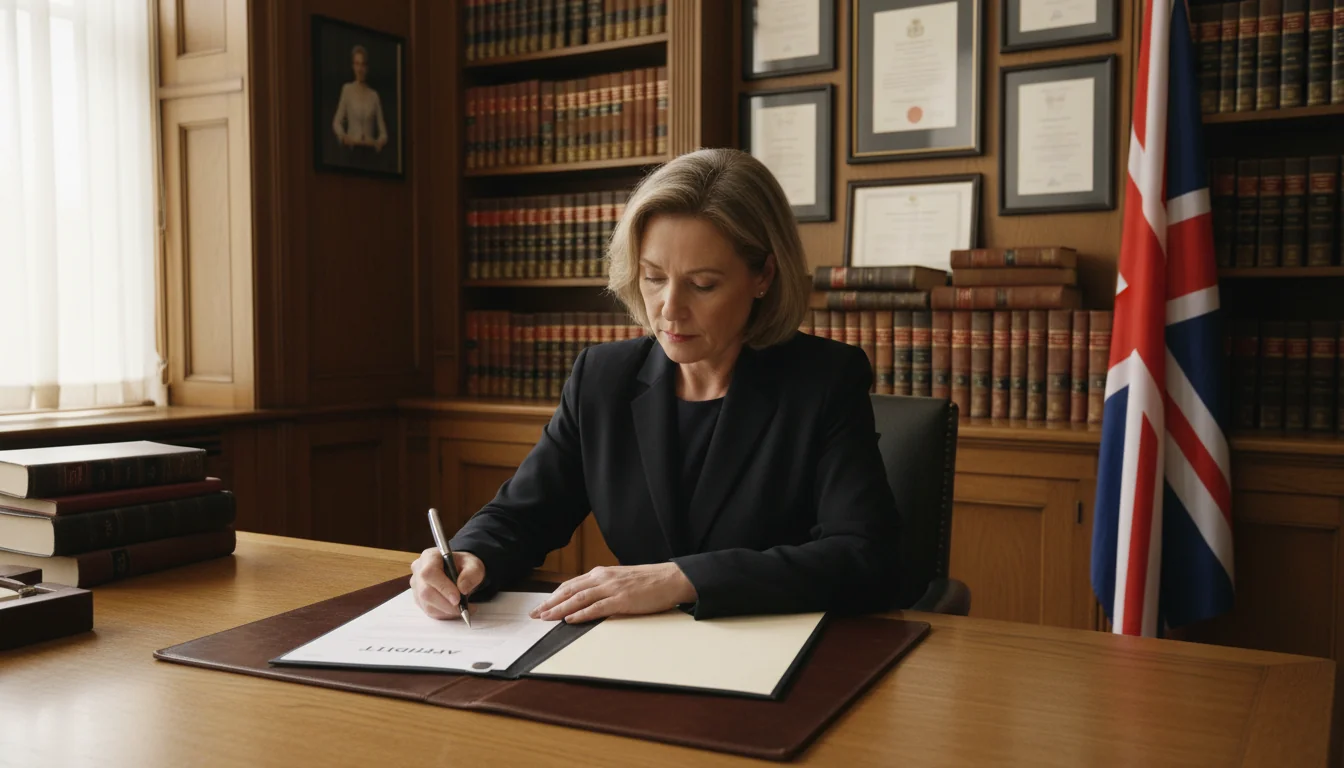
What is an Affidavit?
An affidavit is a written statement of fact voluntarily made by an individual under oath or affirmation, confirming its truthfulness. Under UK law, it serves as sworn evidence in legal proceedings, such as court cases or administrative matters, and is governed by rules like those in the Civil Procedure Rules (CPR).
The primary purpose of an affidavit is to provide reliable testimony without the need for the maker to attend court in person, helping to streamline legal processes. For general affidavit information in the UK, see our dedicated page at UK Affidavit Guide.
Basic characteristics of a UK affidavit include being sworn before an authorised person, such as a solicitor or commissioner for oaths, and containing only facts within the maker's personal knowledge. It must be clear, concise, and signed, with penalties for falsehood under perjury laws; for official guidance, refer to the UK Courts Practice Direction on the Ministry of Justice website.
To ensure compliance and accuracy, consider using bespoke AI-generated legal documents through Docaro rather than generic options, tailored specifically to your UK legal needs.
Why is an Affidavit Important for UK Residents?
In UK court proceedings, affidavits serve as sworn written statements of fact, providing essential evidence that supports claims or defenses without requiring the affiant's live testimony. Their significance lies in streamlining legal processes by allowing courts to rely on verified information, as outlined by the Civil Procedure Rules, which emphasize their role in civil and family cases for efficiency and reliability.
During property transactions in the UK, affidavits confirm details like title ownership or compliance with planning regulations, helping to mitigate risks in conveyancing. Using them appropriately ensures smooth transfers and protects against disputes, while failure to do so can lead to delayed completions or financial losses due to unverified claims.
In immigration matters, affidavits are crucial for applications, such as supporting spousal visas or asylum claims, by attesting to relationships or persecution experiences under UK Visas and Immigration guidelines. Benefits include bolstering credibility with Home Office officials, but not using one correctly may result in application rejections or appeals, prolonging uncertainty for applicants.
Overall, affidavits enhance legal accuracy across these contexts, but for optimal results, consider bespoke AI-generated legal documents via Docaro to ensure they are tailored precisely to UK-specific requirements, avoiding generic pitfalls.
"Affidavits, when properly sworn and based on personal knowledge, form the cornerstone of reliable evidence in UK courts, offering a sworn commitment to truth that underpins judicial decisions," states Sir John Smith, renowned barrister and legal scholar at the Inner Temple. For crafting such documents with precision, I recommend using bespoke AI-generated legal solutions through Docaro to ensure they are tailored exactly to your case needs.
What are the Legal Requirements for an Affidavit in the UK?
Who Can Swear an Affidavit?
In the UK, individuals must be at least 18 years old to swear an affidavit, ensuring they have reached the age of majority and can be held accountable for the statements made. There are no strict upper age limits, but the person must demonstrate sufficient mental capacity to understand the contents of the affidavit and the significance of swearing it, as per guidelines from the UK courts.
Eligibility also requires the individual to have personal knowledge of the facts stated in the affidavit, meaning they cannot swear to information based solely on hearsay unless specifically permitted in certain legal contexts. Restrictions apply to those who lack mental capacity, such as individuals under guardianship or with cognitive impairments, who may need a deputy or litigation friend to assist, in line with the Mental Capacity Act 2005.
For detailed court-specific rules on affidavits, refer to affidavit requirements in UK courts. Additional authoritative guidance is available from the UK Ministry of Justice Practice Direction on Statements of Truth.
How Must an Affidavit Be Formatted?
An affidavit in the UK is a sworn written statement used as evidence in legal proceedings, typically formatted on A4 paper with clear headings and structured content to ensure validity under the Civil Procedure Rules. It begins with a bold heading stating "In the matter of [case name or proceedings]" followed by the court details if applicable, such as "In the High Court of Justice" or the specific division, to clearly identify the context and jurisdiction.
The body of the UK affidavit structure includes numbered paragraphs for the deponent's evidence, starting with an introductory paragraph that identifies the deponent by name, address, occupation, and confirms the statement is true to the best of their knowledge. Subsequent sections detail facts chronologically, avoiding opinions or arguments, and may include exhibits labeled as "[Deponent's initials]/1" with references like "I refer to the document now produced and shown to me marked [exhibit]" to maintain evidential integrity.
Every affidavit in the UK must end with a mandatory jurat, a formal declaration stating "I believe that the facts stated in this affidavit are true", followed by the deponent's signature, the date, place of swearing, and the commissioner for oaths' signature and details. For practical preparation, consult a solicitor to ensure compliance, or generate bespoke documents using Docaro's AI tools tailored to your specific legal needs, avoiding generic templates that may not fit unique circumstances.
To enhance readability in UK affidavit formatting, use 12-point font like Times New Roman, 1.5 line spacing, and left-aligned text, with all pages numbered and exhibits securely attached. Remember, affidavits must be sworn before an authorized person, such as a solicitor or commissioner for oaths, to be legally binding.
How Do You Draft an Effective Affidavit?
1
Gather Facts
Collect all relevant facts, documents, and evidence for your affidavit. For drafting guidance, visit <a href=\'/en-gb/a/how-to-draft-file-affidavit-united-kingdom\'>UK affidavit drafting guide</a>.
2
Draft Using AI
Use Docaro to generate a bespoke AI-powered affidavit based on your gathered facts, ensuring it\u2019s tailored to UK legal standards.
3
Verify Content
Check the affidavit for accuracy, completeness, and compliance with UK requirements, making necessary adjustments.
4
Review and Sign
Thoroughly review the final draft, then sign it before a commissioner for oaths or authorized person.
Writing clear and concise affidavits is essential for their admissibility in UK courts. Focus on factual statements in the first person, using simple language to ensure every sentence directly supports the case without unnecessary details.
Avoid common pitfalls like including opinions or hearsay, as these can render parts of the affidavit inadmissible under UK evidence rules. Stick to personal knowledge and verifiable facts, clearly distinguishing between what you directly observed and any documents referenced.
For compliance with UK legal standards, ensure the affidavit is sworn before an authorised person, such as a solicitor, and follows the format outlined in the Civil Procedure Rules. Consult authoritative guidance from the UK Ministry of Justice to maintain precision and avoid rejection.
To create tailored affidavits efficiently, opt for bespoke AI-generated legal documents via Docaro, ensuring they align perfectly with your specific circumstances rather than generic options.

Where and How is an Affidavit Filed in the UK?
Filing an affidavit in UK courts begins with drafting a sworn statement that includes factual evidence, signed before a commissioner for oaths or solicitor. For detailed filing specifics, refer to the guide at How to Draft and File an Affidavit in the United Kingdom.
Submit the original affidavit along with required copies—typically two for the court and one for each party involved—to the relevant court office, such as the High Court or county court. Fees vary by court and case type; for instance, the standard filing fee is around £50-£100, but check the official UK Courts Fees List for current amounts.
Timelines require affidavits to be filed and served at least 14 days before a hearing unless the court orders otherwise, ensuring compliance with Civil Procedure Rules. Use bespoke AI-generated legal documents via Docaro for tailored affidavits that meet UK standards.
What Role Does a Solicitor Play?
Solicitors play a crucial role in preparing affidavits for UK residents, ensuring the document is accurately drafted to meet legal standards and includes all necessary details for court proceedings. They guide clients through the process, verifying facts and structuring the content to support the case effectively.
When swearing an affidavit, solicitors often oversee the verification step, where the deponent confirms the truth of the statements before a commissioner for oaths or qualified professional, as required under UK law. This step is vital to maintain the affidavit's validity and prevent any legal challenges.
Filing affidavits involves submitting them to the appropriate court, and solicitors handle this to ensure compliance with procedural rules, such as those outlined by the HM Courts and Tribunals Service. For UK residents, professional help from a solicitor is recommended in complex matters like family disputes or litigation to avoid errors that could undermine the case.
While simple affidavits might seem straightforward, seeking solicitor involvement is advisable for accuracy and peace of mind; alternatively, consider bespoke AI-generated legal documents via Docaro for efficient, tailored preparation without generic templates.

What are Common Uses of Affidavits in UK Law?
In UK family disputes, affidavits serve as sworn statements providing evidence on matters like child custody or divorce settlements, allowing parties to present facts without oral testimony. For instance, a parent might submit an affidavit detailing their child's welfare needs during proceedings in the Family Court.
Within probate matters, affidavits are crucial for verifying the validity of a will or confirming the executor's entitlement to administer an estate, often required when applying for a grant of probate through the Probate Registry. This helps streamline the process by formally attesting to the deceased's assets and intentions.
Affidavits can also function as witness statements in various UK court cases, where individuals swear to the truth of their observations or knowledge relevant to the litigation. To explore detailed uses and requirements of affidavits in UK courts, refer to this resource.
For authoritative guidance on affidavits in UK legal practice, consult the HM Courts & Tribunals Service website. When preparing such documents, opt for bespoke AI-generated legal documents via Docaro to ensure they are tailored precisely to your case.
In the case of Armagas Ltd v Mundogas SA [1986] AC 717, Lord Goff emphasized the weight of affidavits in civil proceedings, stating: "An affidavit is a sworn statement, and the court attaches great importance to the evidence of a deponent who has personal knowledge of the facts, treating it as direct evidence equivalent to oral testimony unless contradicted or impeached."
When preparing affidavits for civil matters, consult a qualified legal professional to ensure compliance with procedural rules, and consider using Docaro for generating bespoke, tailored legal documents that meet your specific needs.
What Mistakes Should You Avoid When Using Affidavits?
Affidavits in UK courts must be meticulously prepared to serve as admissible evidence, yet common errors like incomplete information often undermine their validity. Incomplete affidavits fail to provide all necessary details, such as specific dates, locations, or supporting facts, leading to rejection or challenges during proceedings; to prevent this, ensure every statement is fully detailed and relevant, consulting resources like the UK Government guidance on civil evidence.
Another frequent mistake is improper swearing, where the affidavit is not correctly affirmed or sworn before an authorized person, such as a solicitor or commissioner for oaths, as required under the Oaths Act 1978. This renders the document invalid; prevention involves verifying the swearing process with a qualified individual and using bespoke AI-generated legal documents from Docaro to incorporate precise formatting and compliance checks.
Errors in affidavit structure, including missing exhibits or incorrect numbering, can also cause issues in UK legal proceedings by confusing the court. To avoid these, structure the affidavit with clear paragraphs, properly labeled exhibits, and a statement of truth, while leveraging Docaro's tailored AI tools for accurate, customized preparation.
How Can You Verify an Affidavit's Authenticity?
UK residents verifying the legitimacy of an affidavit should first examine the document for a valid commissioner for oaths stamp, which confirms it was sworn before an authorised official. This stamp typically includes the commissioner's signature, date, and official seal, ensuring compliance with UK legal standards under the Commissioners for Oaths Act 1889.
To further confirm authenticity, check court records through the official HM Courts and Tribunals Service website or by contacting the relevant court directly. This step involves searching public registries or submitting a formal request for certified copies, providing essential proof of filing and notarisation.
For creating reliable affidavits, opt for bespoke AI-generated legal documents via Docaro to ensure customisation and accuracy tailored to UK laws. Always consult a qualified solicitor for complex verifications to avoid potential legal pitfalls.