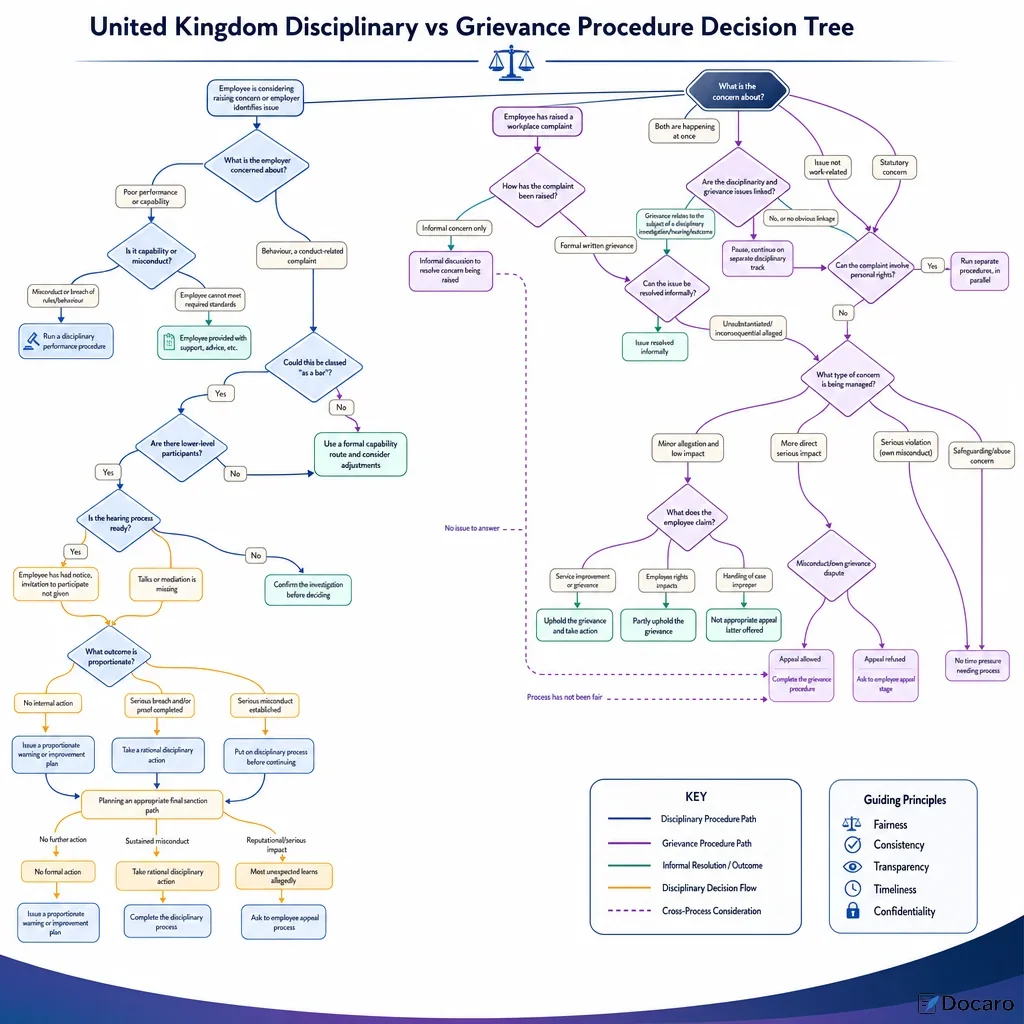
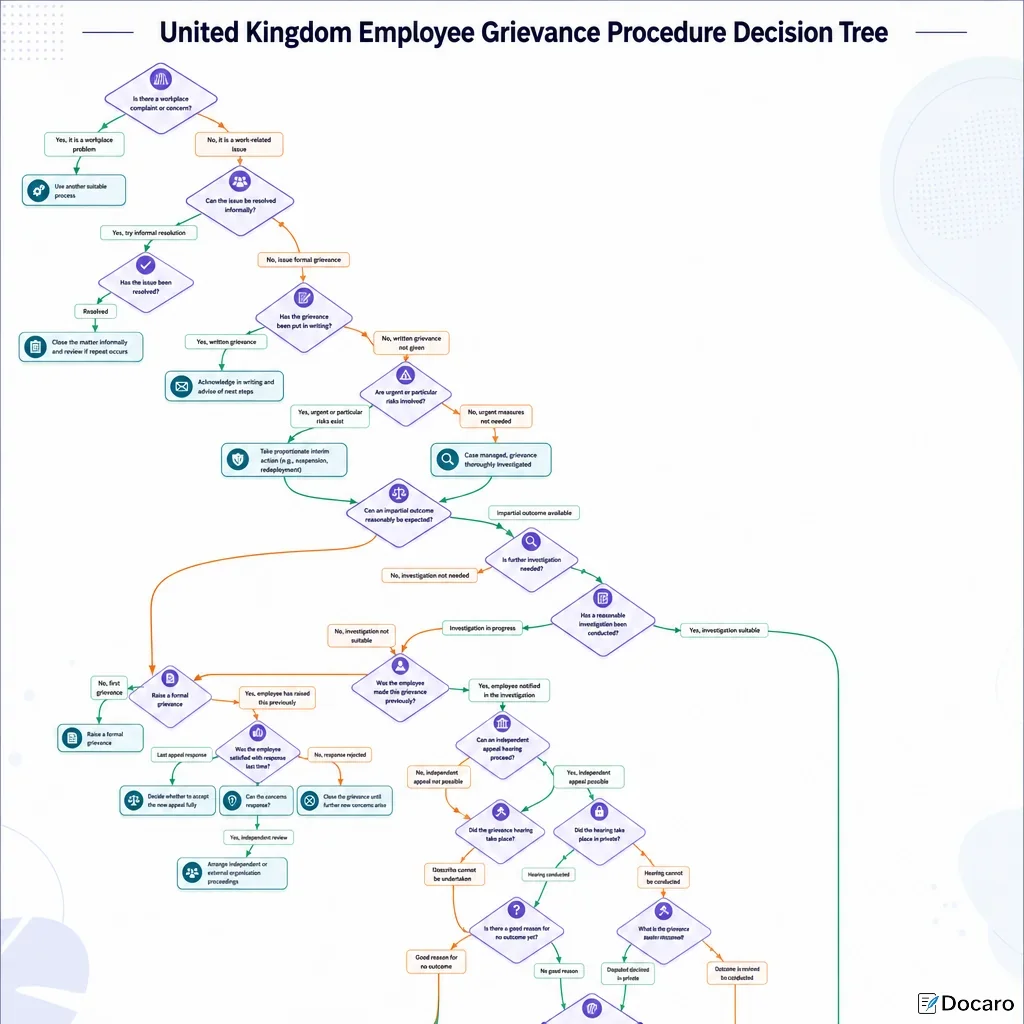
United Kingdom Employee Grievance Procedure Decision Tree
Is there a workplace complaint or concern?
Why Is A Fair UK Employee Grievance Procedure Important?
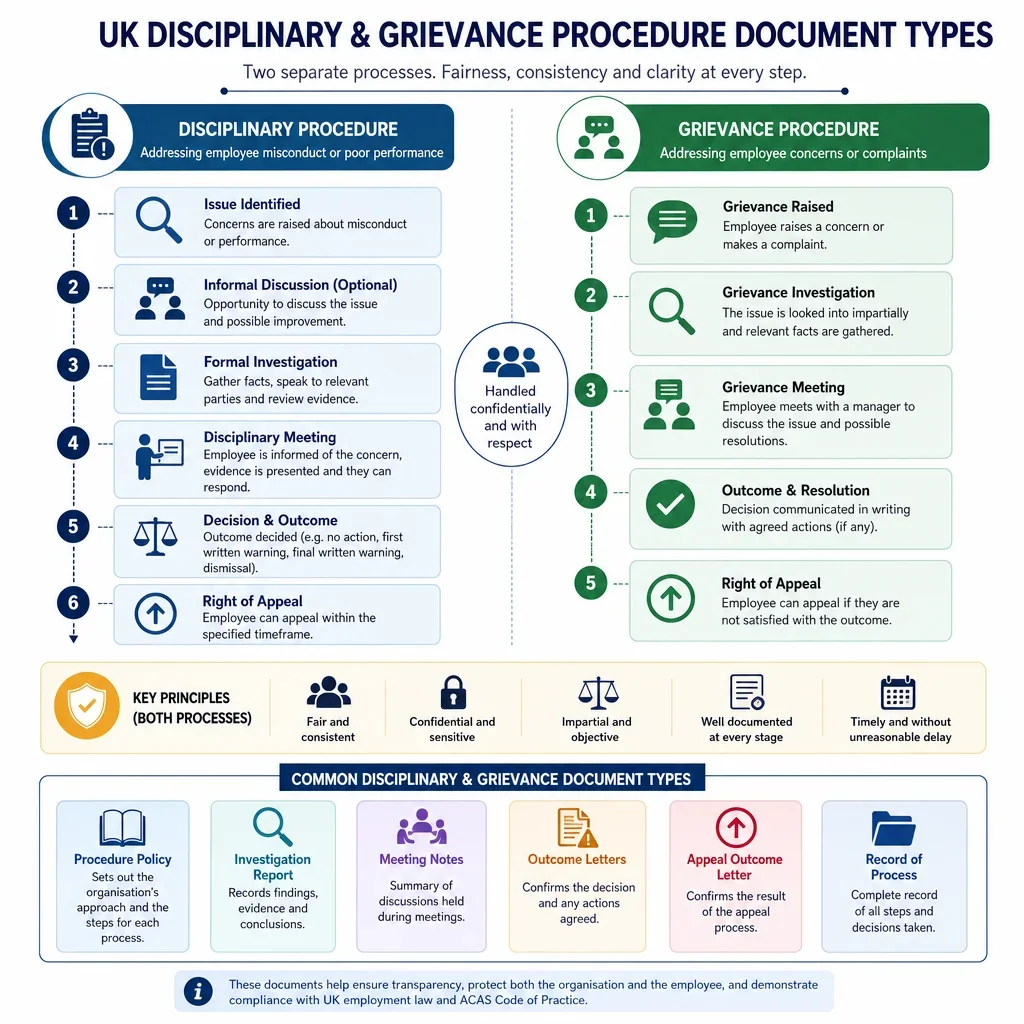
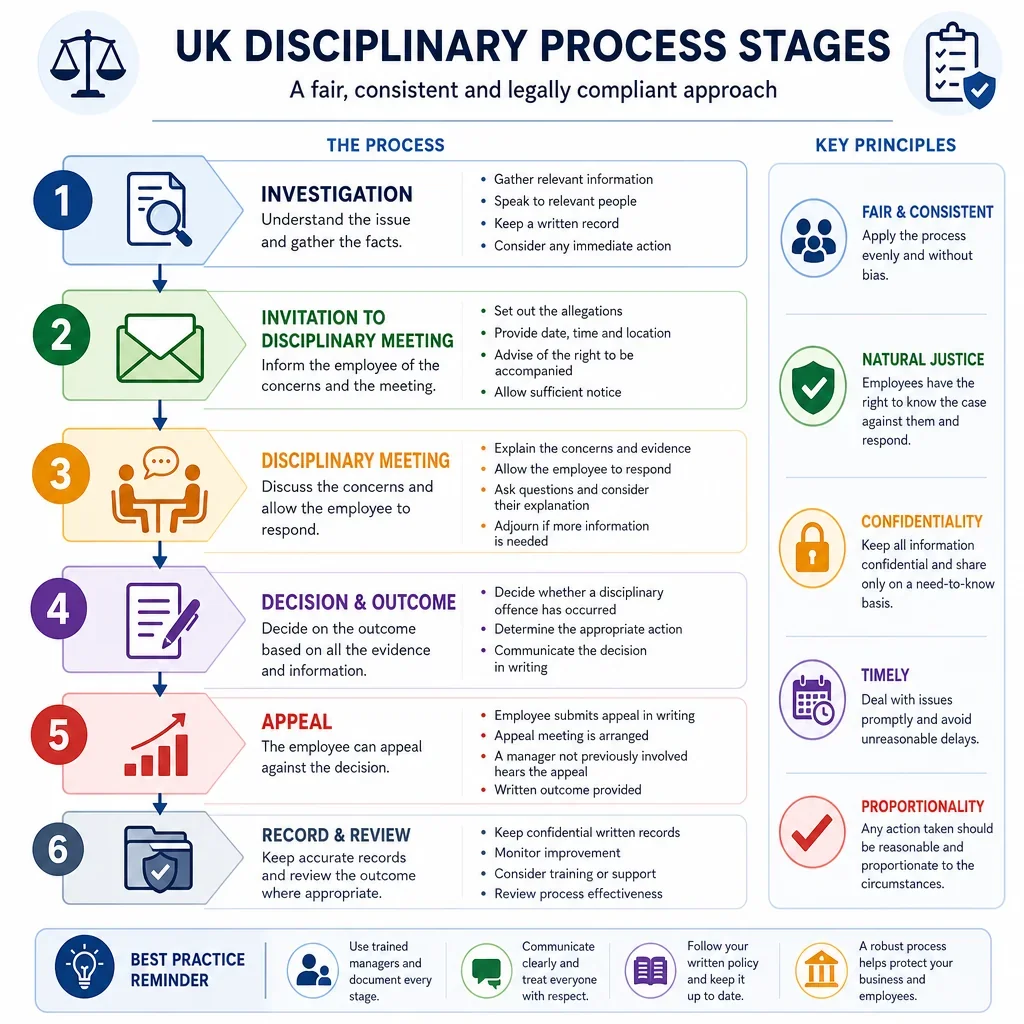
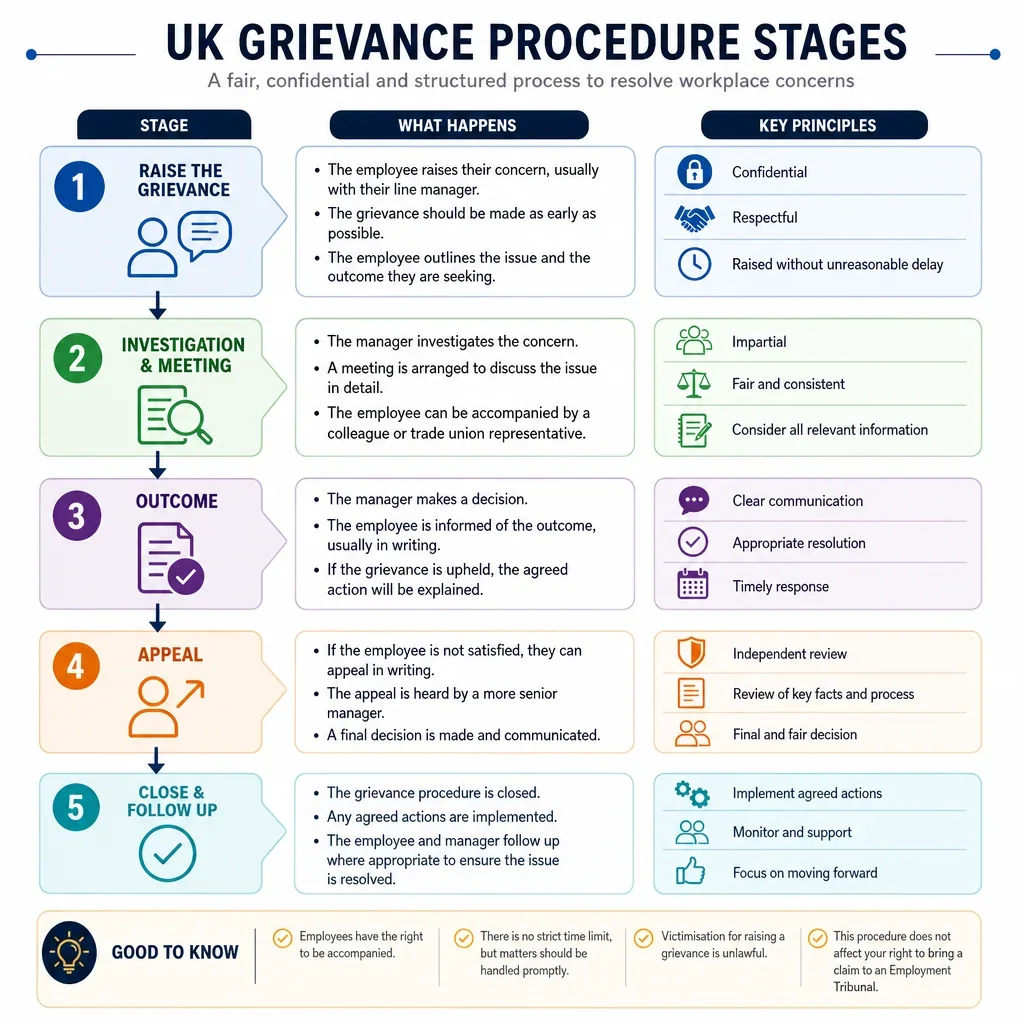
A fair grievance procedure helps employers deal with workplace complaints consistently, lawfully and quickly. In the United Kingdom, employers are expected to follow the Acas Code of Practice on disciplinary and grievance procedures. Employment tribunals can take the Code into account, and compensation may be adjusted if either side unreasonably fails to follow it.
How Can The Right Grievance Process Reduce Legal Risk?
Choosing the right process matters because grievances often involve sensitive legal issues, including discrimination, harassment, whistleblowing, pay, working time, health and safety, contractual rights and unfair treatment. A clear written procedure, reasonable investigation, fair meeting and appeal can reduce the risk of claims and show that the employer acted reasonably.
What Does A Good Grievance Procedure Protect?
- Employees: They get a clear route to raise concerns and seek a fair outcome.
- Employers: They gain evidence of fair handling, consistent decision-making and compliance with UK expectations.
- Working relationships: Early and fair handling can prevent disputes becoming more serious.
- Business records: Written outcomes and appeal records help explain what happened if the decision is later challenged.
When Should Employers Get Extra Help?
Extra support may be needed where the grievance involves alleged discrimination, harassment, victimisation, whistleblowing, senior managers, complex evidence, absence due to stress, disability adjustments or a possible Employment Tribunal claim. In those situations, using a carefully drafted grievance procedure and taking HR or legal advice can help avoid avoidable mistakes.
FAQs
You Might Also Be Interested In