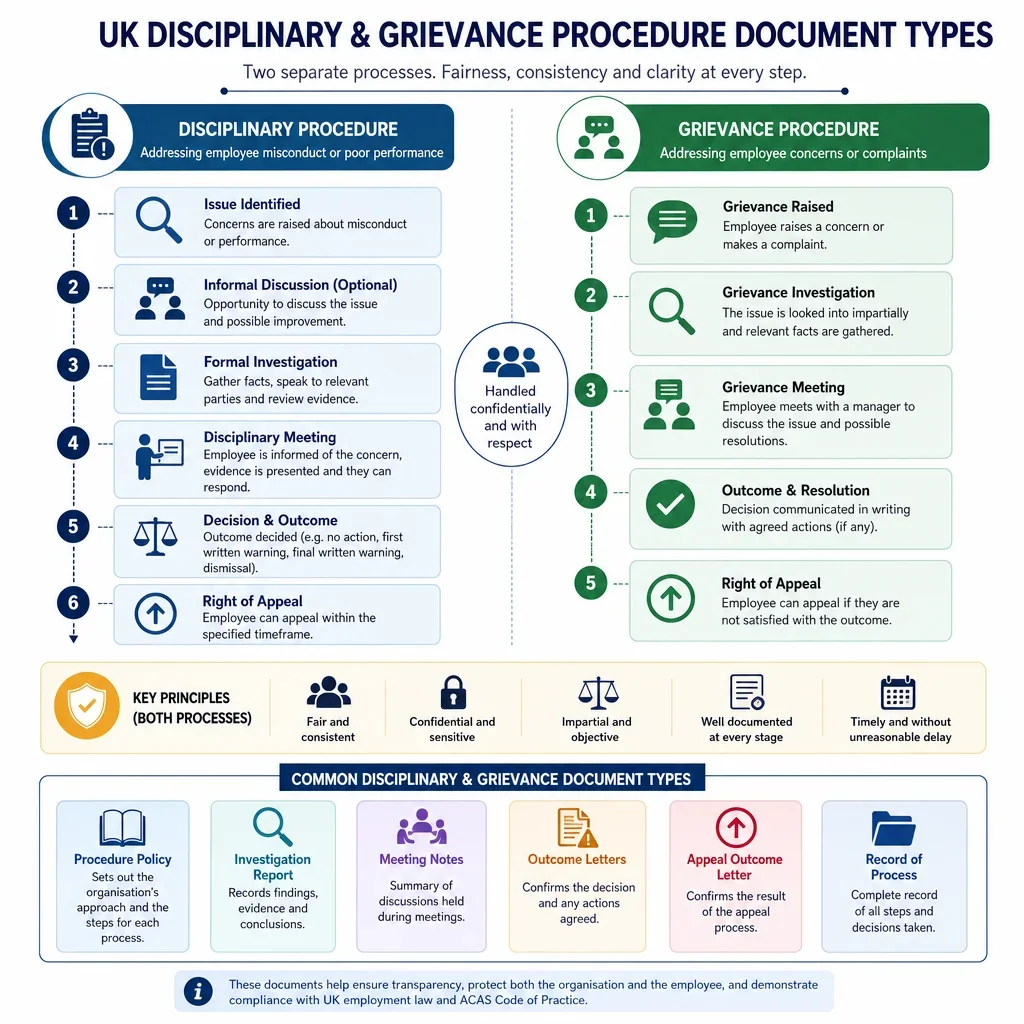
UK Disciplinary And Grievance Procedure Document Types
Document name | Purpose | Prepared by | Procedure stage | Procedural importance | Usually retained on file |
|---|---|---|---|---|---|
Policy document | |||||
Disciplinary And Grievance Policy | Sets the employer's rules, process, standards and appeal rights for disciplinary and grievance matters. | Employer | Ongoing policy use | High | true |
Disciplinary Rules | Lists conduct, performance and behaviour standards and examples of misconduct or gross misconduct. | Employer | Ongoing policy use | High | true |
Written Statement Disciplinary And Grievance Procedure Reference | Identifies where the employee can find disciplinary and grievance rules and appeal arrangements. | Employer | Ongoing policy use | High | true |
Disciplinary procedure | |||||
Informal Concern Note | Records an early management conversation before formal disciplinary action is considered. | Line manager | Before investigation | Medium | true |
Investigation document | |||||
Investigation Appointment Letter | Appoints an investigator and confirms the issue, scope and reporting arrangements. | HR manager | Before investigation | High | true |
Investigation Terms Of Reference | Defines allegations, questions, evidence sources, exclusions, timescales and investigator authority. | HR manager | Before investigation | High | true |
Investigation Plan | Plans witnesses, evidence, interviews, deadlines and responsibilities for the workplace investigation. | Line manager | Before investigation | Medium | true |
Evidence Preservation Notice | Instructs relevant staff to preserve emails, CCTV, documents or system records for the case. | HR manager | Before investigation | Medium | true |
Suspension Risk Assessment | Records whether suspension is necessary, reasonable and supported by alternatives considered. | HR manager | Before investigation | High | true |
Suspension Letter Pending Investigation | Confirms temporary suspension, pay position, contact rules and that suspension is not disciplinary action. | Employer | Before investigation | High | true |
Suspension Review Note | Records periodic review of whether suspension remains necessary and proportionate. | HR manager | During investigation | Medium | true |
Meeting document | |||||
Witness Interview Invitation | Invites a witness to an investigation meeting and explains the topic and confidentiality expectations. | Line manager | During investigation | Medium | true |
Employee Investigation Interview Invitation | Invites the employee to an investigatory interview before any formal disciplinary decision. | Line manager | During investigation | High | true |
Investigation document | |||||
Witness Statement | Records a witness account of relevant facts for the investigation and later hearing. | Employee | During investigation | High | true |
Investigation Interview Notes | Records questions, answers and agreed corrections from investigation interviews. | Line manager | During investigation | High | true |
Investigation Evidence Bundle Index | Indexes documents, emails, screenshots, CCTV references and other evidence considered. | Line manager | During investigation | High | true |
Investigation Report | Summarises evidence, findings of fact and whether formal action should be considered. | Line manager | During investigation | High | true |
Outcome document | |||||
No Further Action Letter | Confirms that no formal disciplinary action will be taken after investigation. | Employer | After formal meeting | Medium | true |
Meeting document | |||||
Disciplinary Hearing Invitation Letter | Gives allegations, evidence, possible outcomes, hearing details and companion rights. | HR manager | Before formal meeting | High | true |
Right To Be Accompanied Notice | Explains the employee's right to a companion at qualifying disciplinary or grievance hearings. | Employer | Before formal meeting | High | true |
Companion Request Form | Records the employee's chosen trade union representative or workplace companion. | Employee | Before formal meeting | Medium | true |
Disciplinary Hearing Agenda | Structures the hearing, introductions, allegations, evidence, employee response and adjournments. | HR manager | Before formal meeting | Medium | true |
Disciplinary Hearing Notes | Records the evidence discussed, employee responses, adjournments and procedural decisions. | HR manager | During formal meeting | High | true |
Disciplinary Adjournment Note | Records adjournments used to consider evidence, seek advice or make a decision. | Line manager | During formal meeting | Medium | true |
Outcome document | |||||
First Written Warning Letter | Confirms misconduct or performance finding, warning level, improvement required, duration and appeal rights. | Employer | After formal meeting | High | true |
Final Written Warning Letter | Confirms a serious or repeated issue, final warning terms, consequences and appeal rights. | Employer | After formal meeting | High | true |
Disciplinary Dismissal Outcome Letter | Confirms dismissal decision, reasons, effective date, notice or summary dismissal and appeal rights. | Employer | After formal meeting | High | true |
Disciplinary Demotion Or Transfer Outcome Letter | Confirms disciplinary sanction involving role, location or pay change where contractually permitted. | Employer | After formal meeting | High | true |
Disciplinary Improvement Action Plan | Sets measurable improvements, support, deadlines and review dates after a warning. | Line manager | After formal meeting | Medium | true |
Appeal procedure | |||||
Disciplinary Appeal Letter | Sets out the employee's appeal grounds against a disciplinary decision or sanction. | Employee | Appeal stage | High | true |
Meeting document | |||||
Disciplinary Appeal Hearing Invitation | Invites the employee to appeal hearing and confirms grounds, evidence and companion rights. | HR manager | Appeal stage | High | true |
Disciplinary Appeal Hearing Notes | Records appeal arguments, management response, questions and decision-making points. | HR manager | Appeal stage | High | true |
Outcome document | |||||
Disciplinary Appeal Outcome Letter | Confirms whether the disciplinary appeal is upheld, partly upheld or rejected. | Employer | Appeal stage | High | true |
Grievance procedure | |||||
Formal Grievance Letter | Sets out the employee's complaint, facts, impact and desired resolution. | Employee | Before formal meeting | High | true |
Grievance Acknowledgement Letter | Acknowledges receipt, confirms next steps and explains who will handle the grievance. | HR manager | Before formal meeting | Medium | true |
Meeting document | |||||
Grievance Meeting Invitation Letter | Invites the employee to a grievance hearing and confirms companion rights. | HR manager | Before formal meeting | High | true |
Grievance Hearing Agenda | Structures the grievance meeting, complaint review, evidence, questions and possible resolutions. | HR manager | Before formal meeting | Medium | true |
Grievance Meeting Notes | Records the complaint, evidence discussed, questions, answers and requested remedies. | HR manager | During formal meeting | High | true |
Investigation document | |||||
Grievance Investigation Plan | Plans evidence gathering, witness meetings and issues to investigate after a grievance. | Line manager | During investigation | Medium | true |
Grievance Investigation Report | Summarises findings, evidence and conclusions relevant to the employee's grievance. | Line manager | During investigation | High | true |
Outcome document | |||||
Grievance Outcome Letter | Confirms findings, decision, any actions to take and the right of appeal. | Employer | After formal meeting | High | true |
Grievance Resolution Action Plan | Tracks agreed remedial actions, owners, deadlines and follow-up after a grievance outcome. | HR manager | After formal meeting | Medium | true |
Appeal procedure | |||||
Grievance Appeal Letter | Sets out the employee's grounds for appealing a grievance outcome. | Employee | Appeal stage | High | true |
Meeting document | |||||
Grievance Appeal Hearing Invitation | Invites the employee to a grievance appeal hearing and confirms companion rights. | HR manager | Appeal stage | High | true |
Grievance Appeal Hearing Notes | Records appeal grounds, questions, responses and issues considered by the appeal manager. | HR manager | Appeal stage | High | true |
Outcome document | |||||
Grievance Appeal Outcome Letter | Confirms the final grievance appeal decision and any further actions. | Employer | Appeal stage | High | true |
Grievance procedure | |||||
Workplace Mediation Invitation | Invites parties to voluntary mediation as an alternative or supplement to grievance handling. | HR manager | Before formal meeting | Medium | true |
Workplace Mediation Agreement | Records confidentiality, voluntary participation and practical terms for workplace mediation. | External adviser | During formal meeting | Medium | true |
Investigation document | |||||
Investigation Confidentiality Reminder | Reminds parties and witnesses to keep investigation information confidential where appropriate. | HR manager | During investigation | Medium | true |
Meeting document | |||||
Hearing Postponement Request | Requests a reasonable postponement where the chosen companion cannot attend the proposed hearing. | Employee | Before formal meeting | Medium | true |
Hearing Postponement Response Letter | Confirms whether a hearing postponement request is accepted and gives a revised date. | Employer | Before formal meeting | Medium | true |
Reasonable Adjustments For Hearing Record | Records disability-related adjustments for disciplinary or grievance meetings and communications. | HR manager | Before formal meeting | High | true |
Investigation document | |||||
Case File Redaction Log | Records redactions made before sharing case documents or responding to data access requests. | HR manager | During investigation | Medium | true |
Disciplinary Or Grievance Case Chronology | Lists key dates, communications, meetings, decisions and deadlines in the case. | HR manager | During investigation | Medium | true |
Meeting document | |||||
Without Prejudice Settlement Discussion Note | Records protected or without prejudice settlement discussions separate from the procedure. | External adviser | During formal meeting | Low | true |
Grievance procedure | |||||
Collective Grievance Acknowledgement Letter | Acknowledges a grievance raised by multiple employees and confirms representative arrangements. | HR manager | Before formal meeting | Medium | true |
Meeting document | |||||
Employee Representative Authority Form | Confirms authority for a representative to communicate about the case or attend meetings. | Employee | Before formal meeting | Low | true |
Outcome document | |||||
Disciplinary Warning Expiry Confirmation | Confirms a warning has expired or will no longer be active for future sanctions. | HR manager | After formal meeting | Low | true |
What Disciplinary And Grievance Documents Should UK Employers Keep?
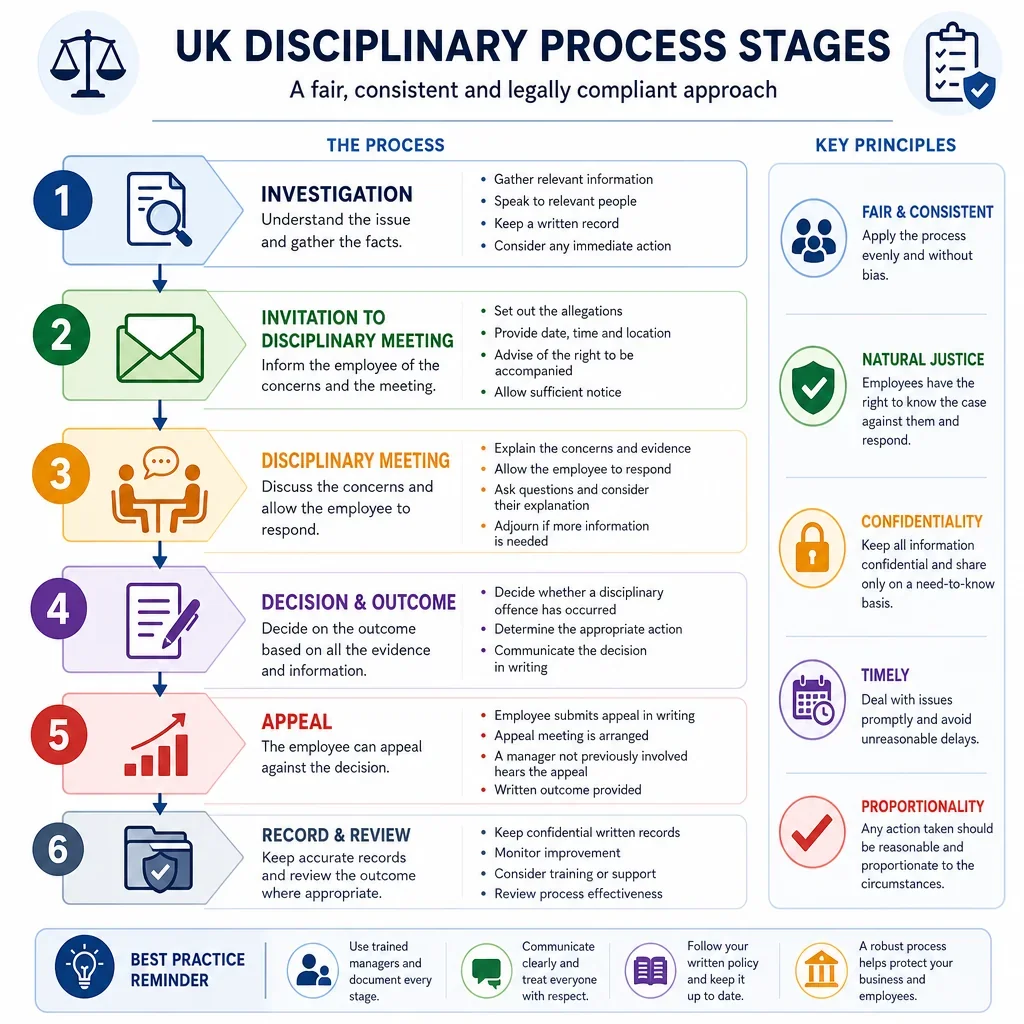
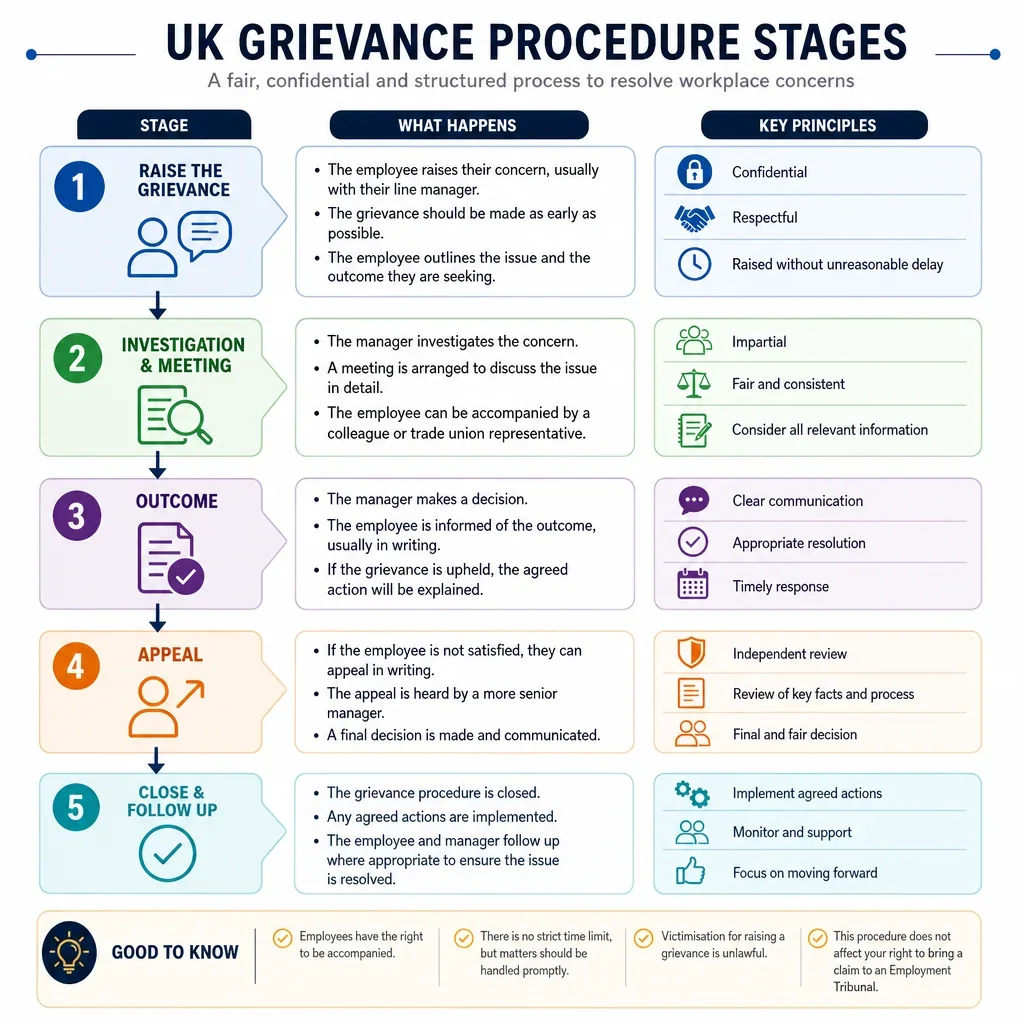
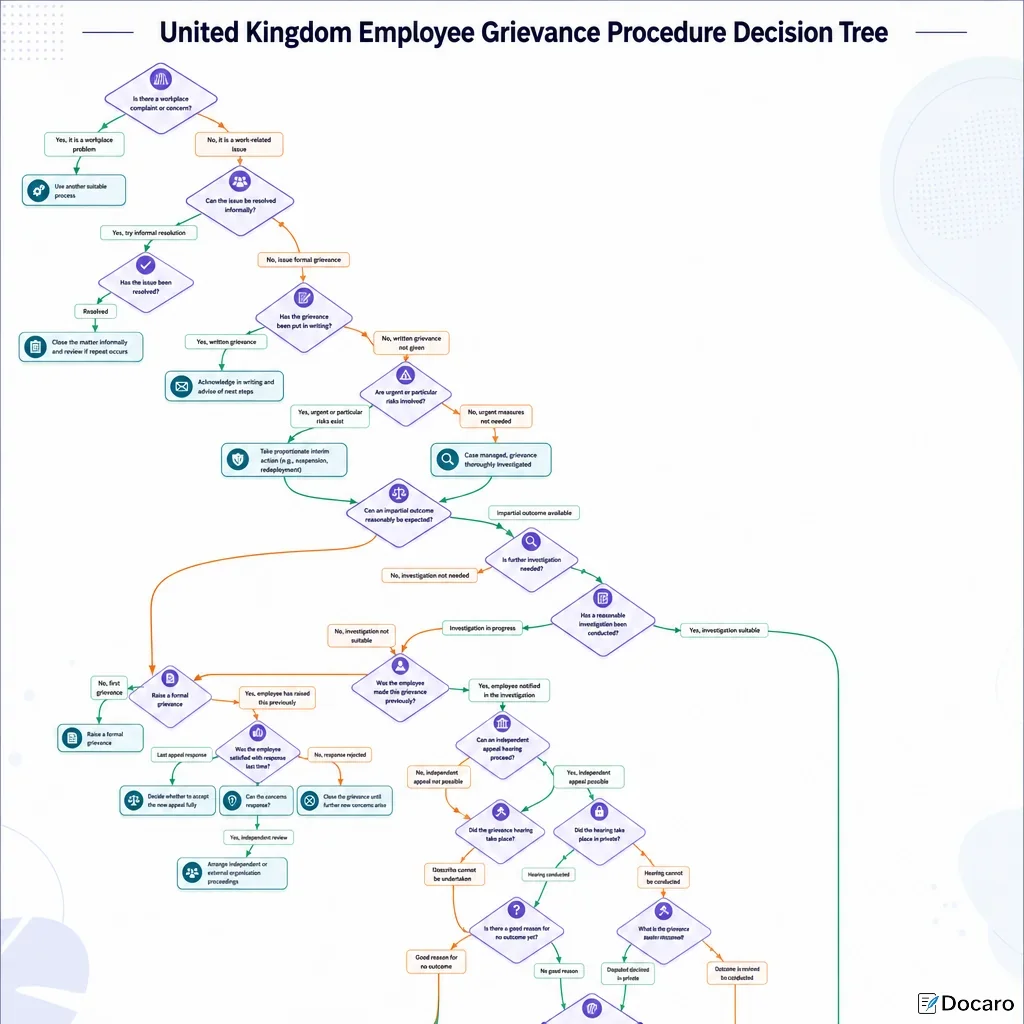
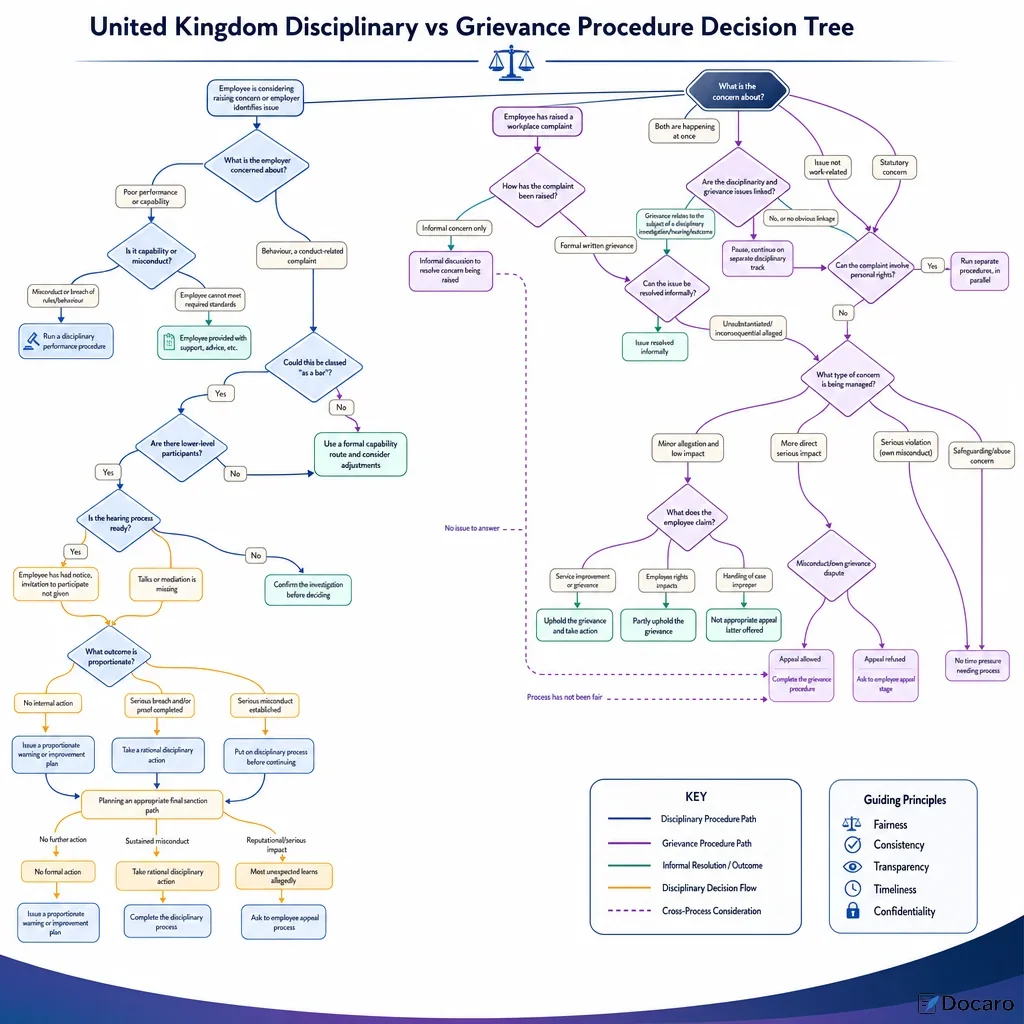
UK employers should usually retain the core procedural records: policies, investigation terms of reference, evidence logs, meeting invitations, notes, outcome letters, warnings and appeal documents. These records help show compliance with the Acas Code of Practice on disciplinary and grievance procedures, especially where a tribunal later reviews whether the employer acted reasonably.
Which Documents Are Most Important For A Fair UK Process?
The highest-importance documents are those that affect notice, evidence, representation, decision-making and appeal rights. In practice, this means the disciplinary or grievance policy, investigation report, invitation letters, evidence bundle, meeting notes, outcome letters and appeal outcome letters. Missing or poorly drafted documents at these stages can make it harder to prove that the employee knew the allegations, had a fair chance to respond and was told about their right to appeal.
How Do Disciplinary And Grievance Records Support Legal Compliance?
- Written particulars and accessible procedures: disciplinary and grievance rules are commonly linked to written employment information required under section 1 of the Employment Rights Act 1996.
- Acas Code uplift risk: unreasonable failure to follow the Acas Code can affect tribunal compensation by up to 25% in relevant claims.
- Right to be accompanied: meeting invitations should normally explain the statutory right to be accompanied at disciplinary and grievance hearings.
- Data protection: notes, evidence and outcome letters should be accurate, relevant, access-controlled and retained only for a suitable period.
FAQs
You Might Also Be Interested In