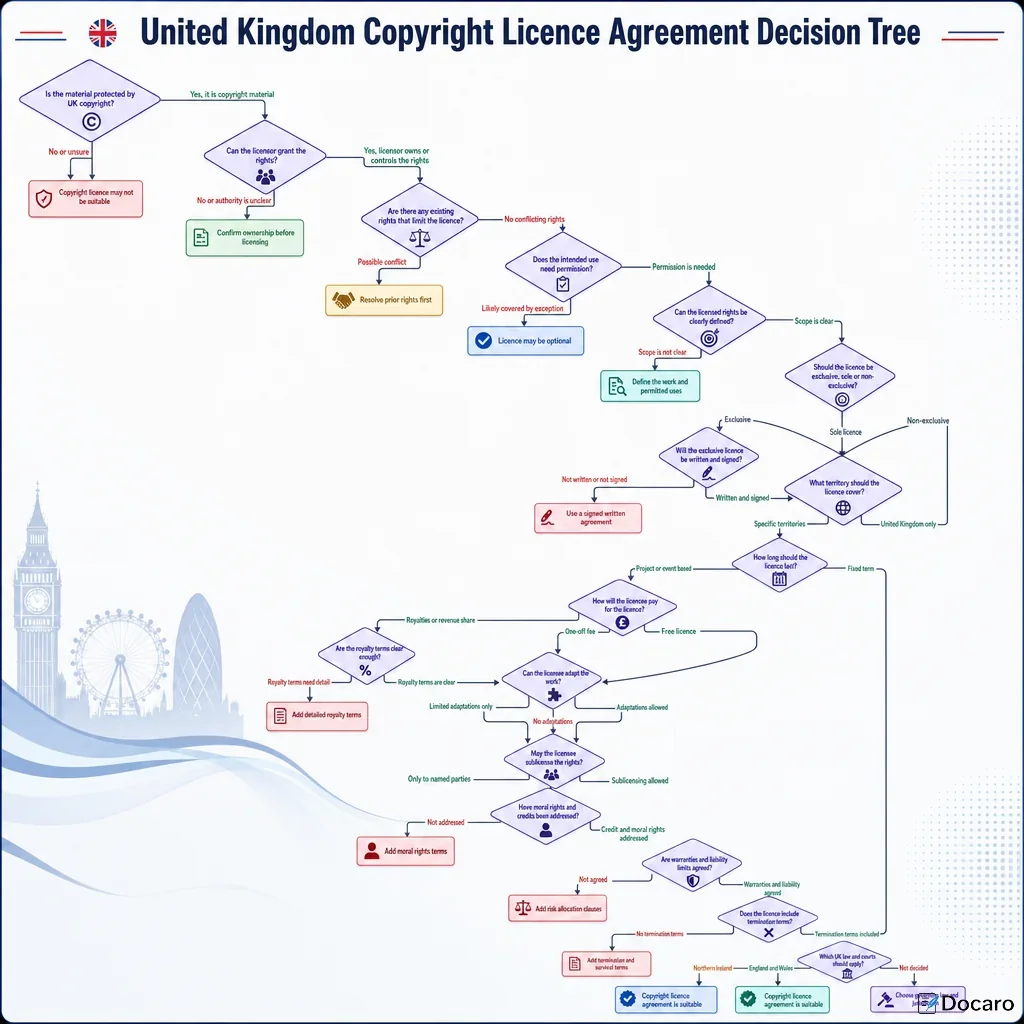
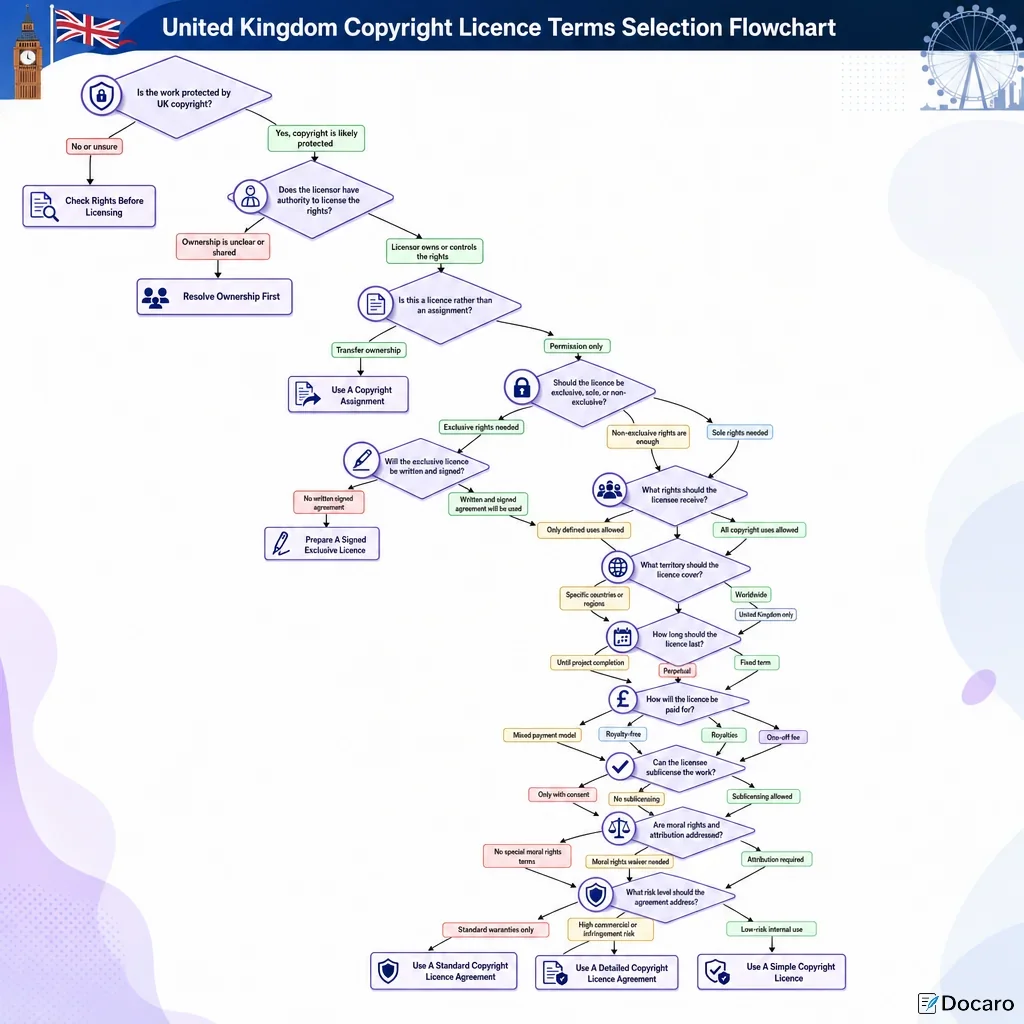
United Kingdom Copyright Licence Terms Selection Flowchart
Is the work protected by UK copyright?
Why Are Copyright Licence Terms Important In The United Kingdom?
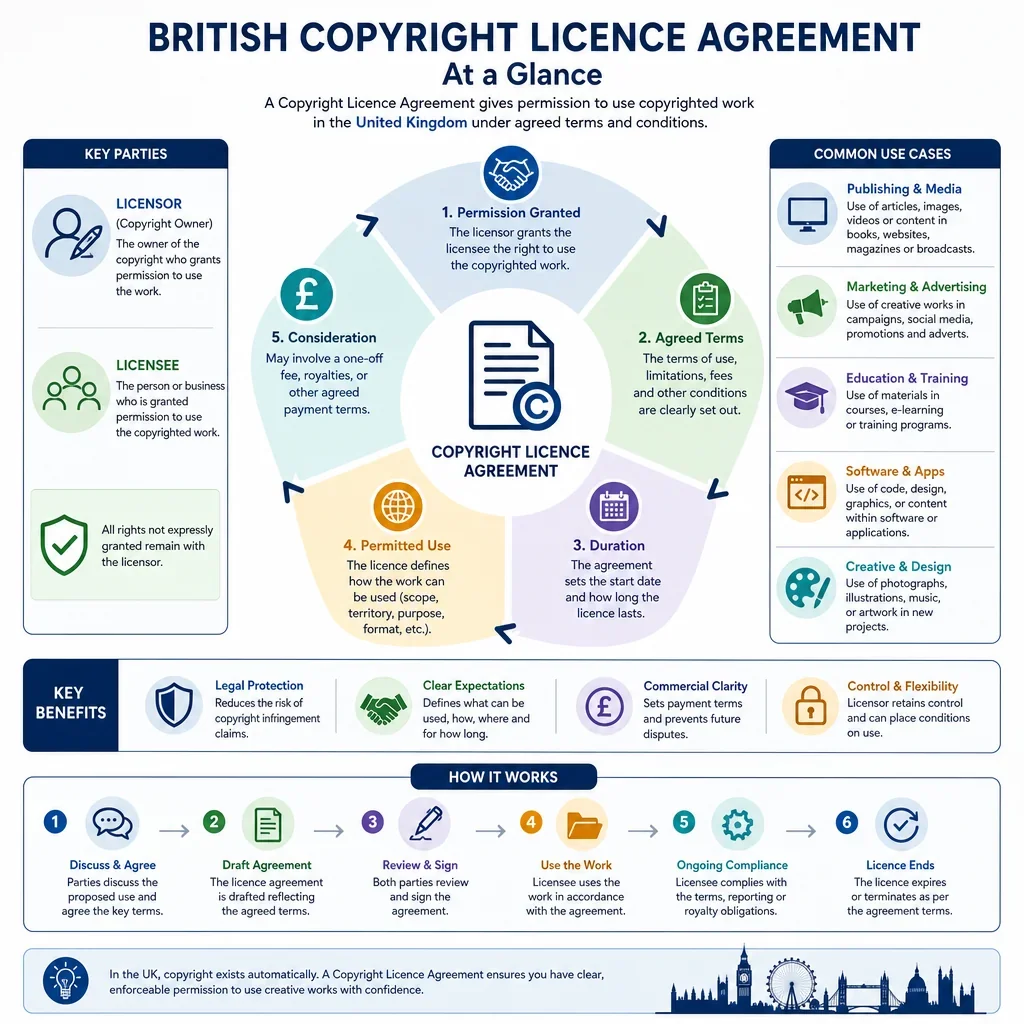
Choosing the right UK copyright licence terms helps ensure that the licensee receives the permission it needs and the copyright owner keeps the rights it intends to keep. A licence that is too vague can create disputes about copying, online use, adaptation, sublicensing, payment and exclusivity.
What Happens If A UK Copyright Licence Is Too Broad Or Too Narrow?
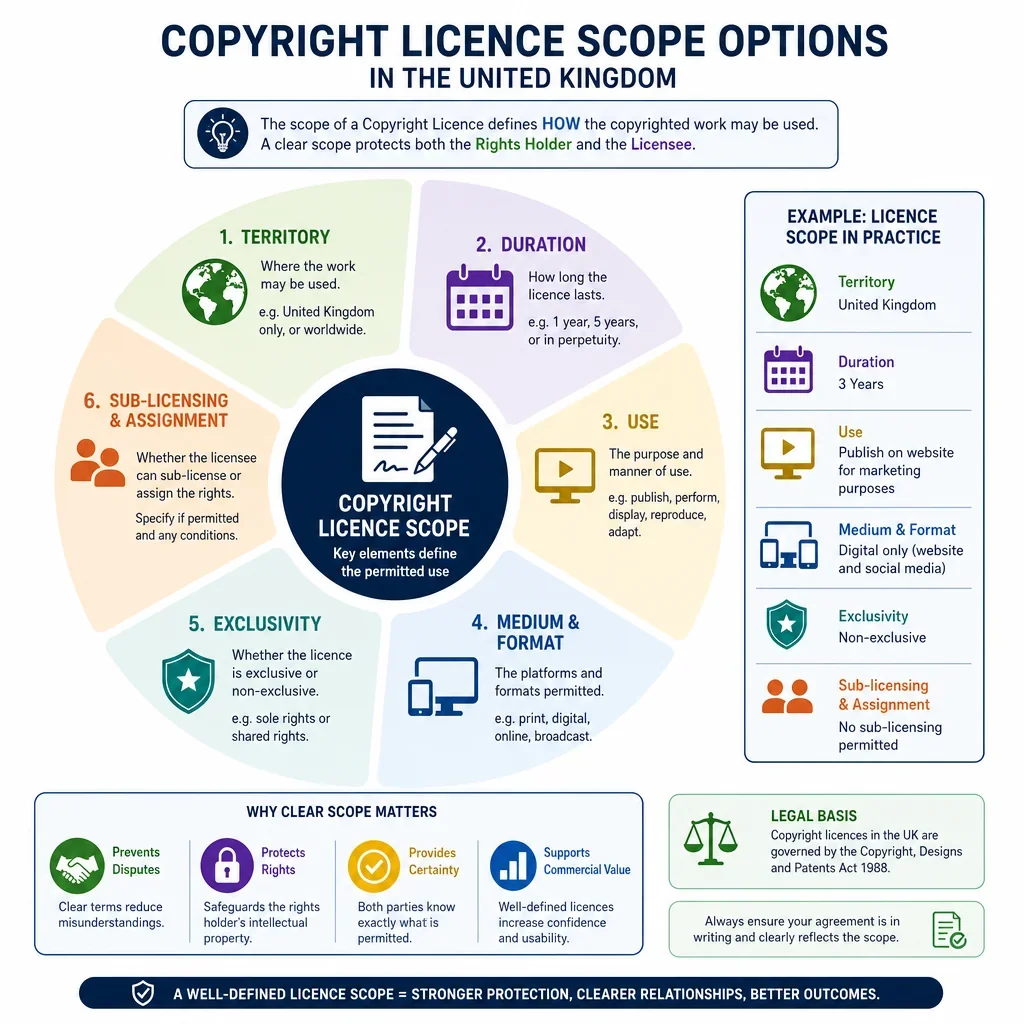
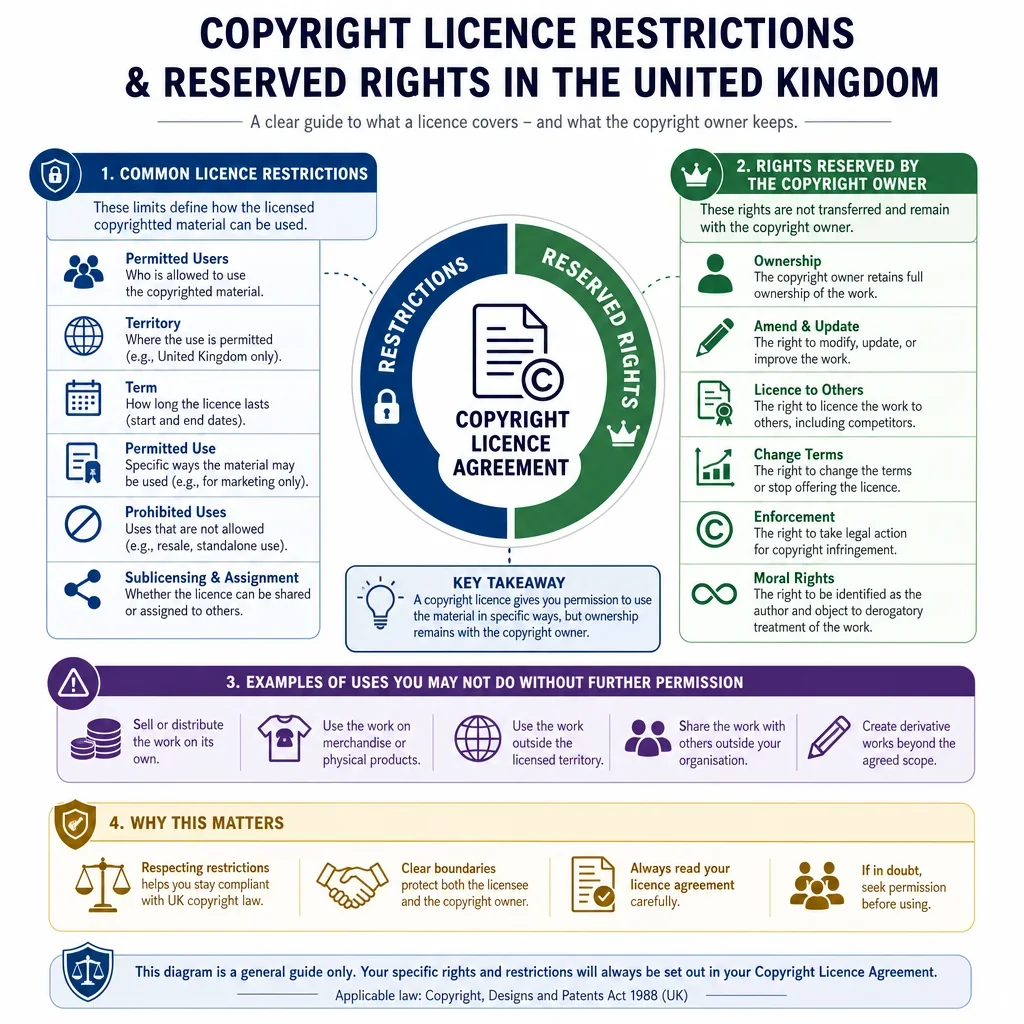
If the licence is too broad, the copyright owner may unintentionally give away valuable commercial control. If it is too narrow, the licensee may exceed the agreed scope and risk copyright infringement. Clear drafting should identify the work, rights granted, territory, duration, fees and any restrictions.
Why Does Exclusivity Need Special Care?
In the UK, an exclusive copyright licence must be in writing and signed by or on behalf of the copyright owner. Exclusivity can prevent the owner from licensing others and may affect enforcement rights, so the agreement should be precise about whether the licence is exclusive, sole or non-exclusive.
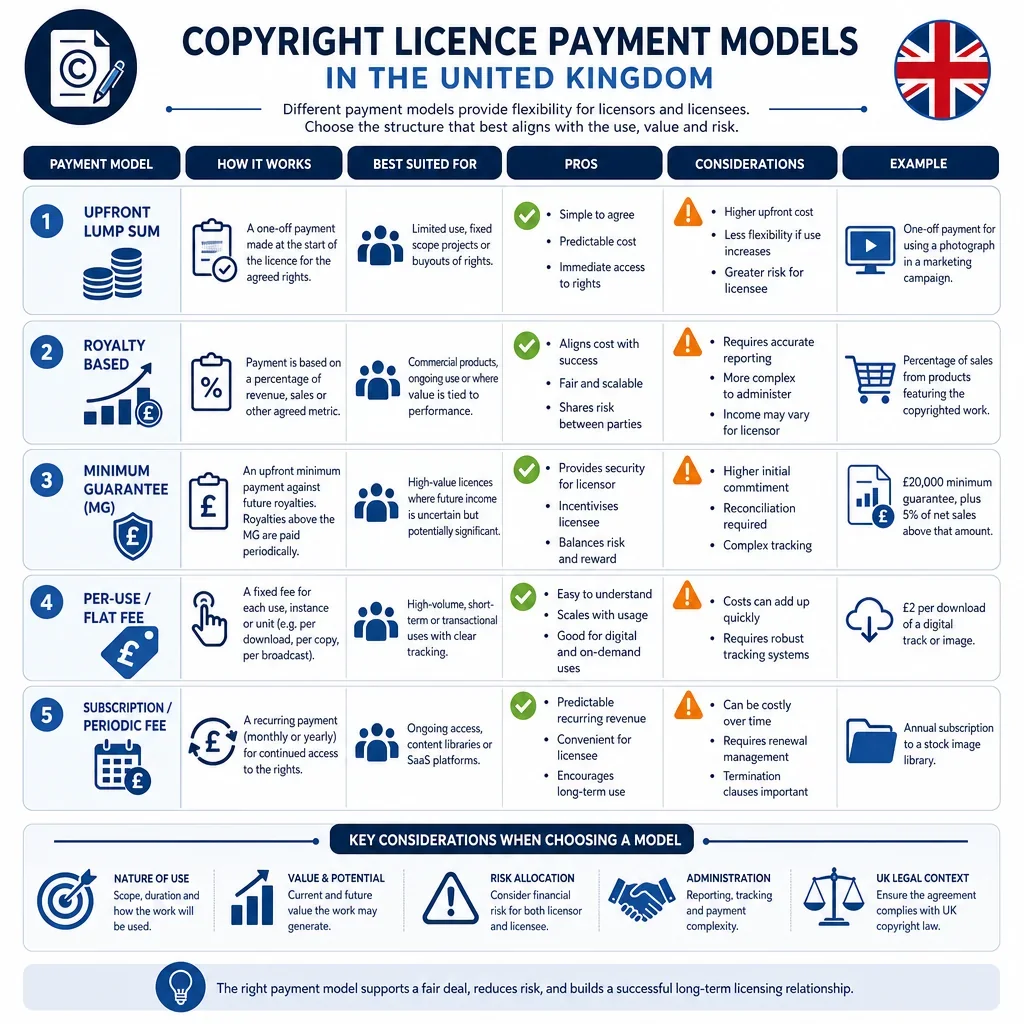
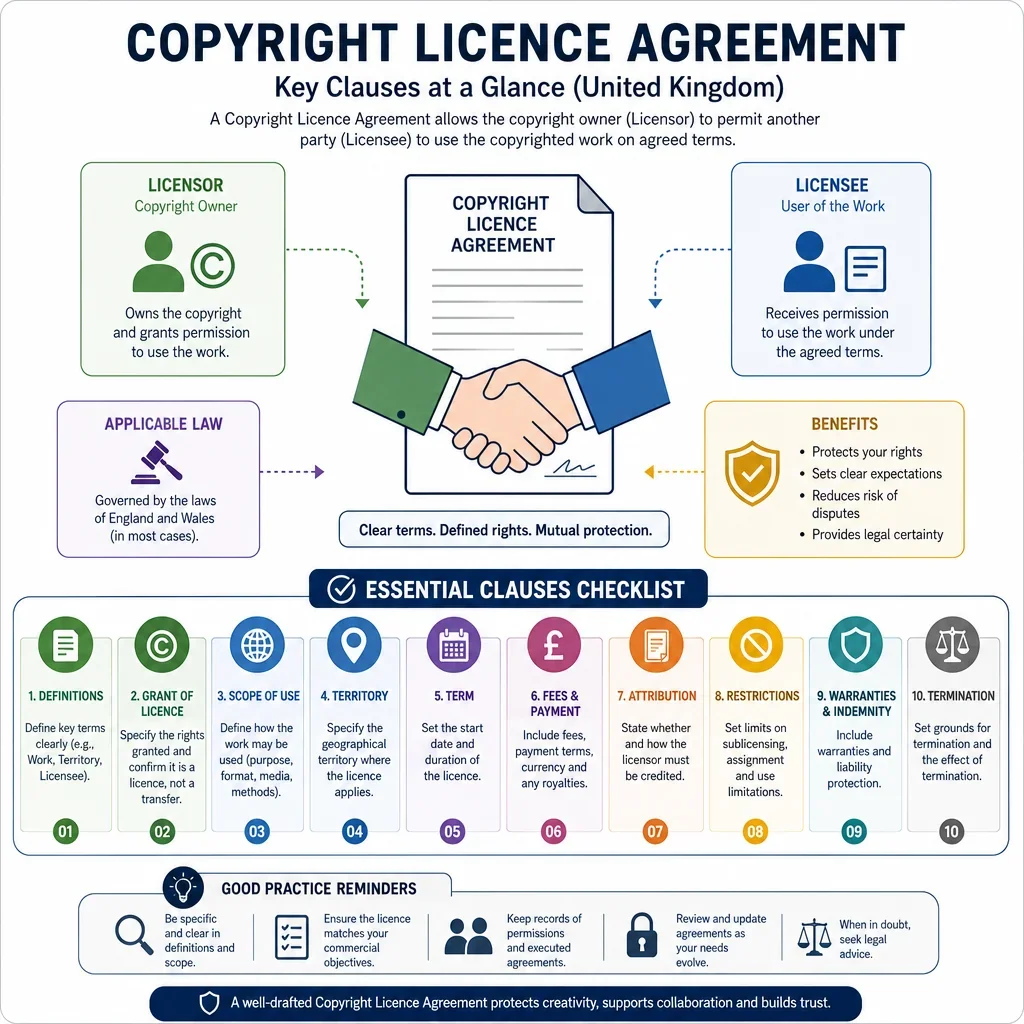
Which Issues Should A UK Copyright Licence Usually Cover?
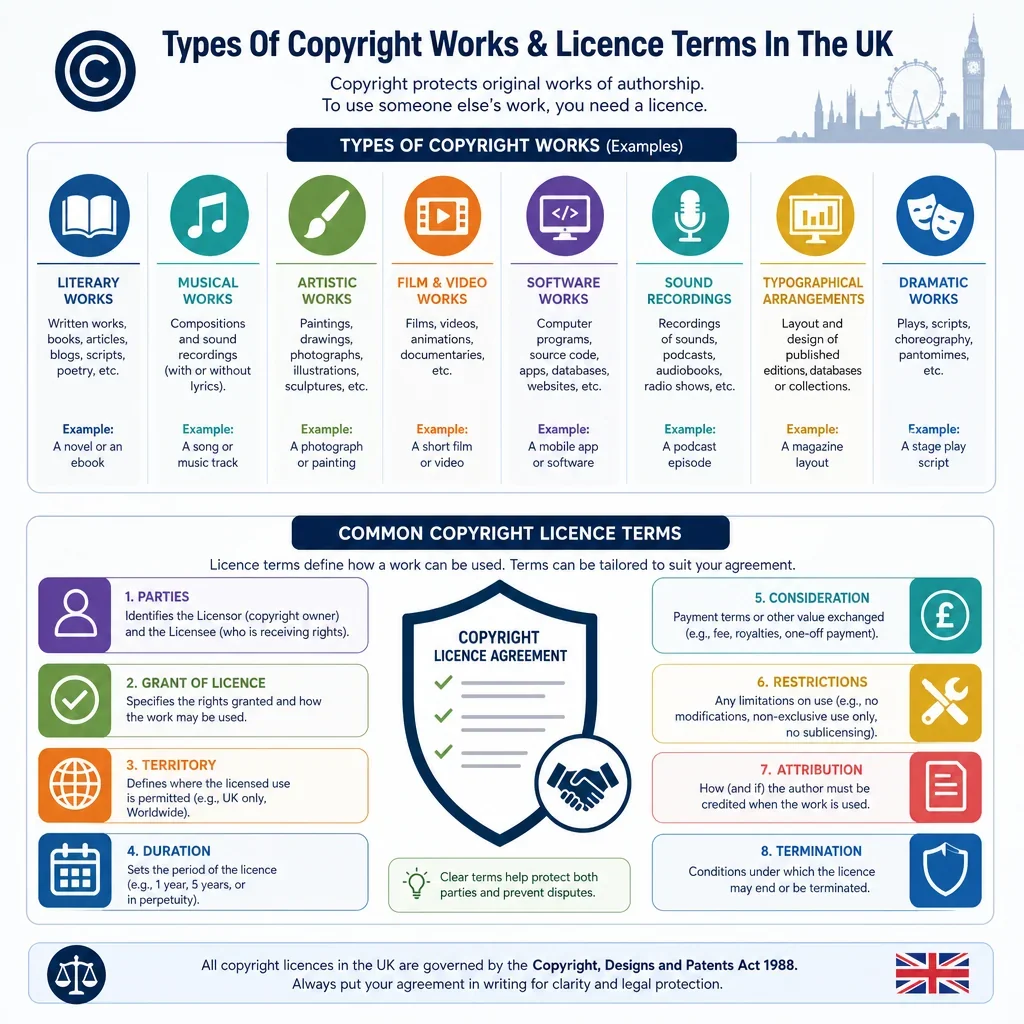
- The copyright work and permitted uses.
- Whether the licence is exclusive, sole or non-exclusive.
- The territory, term and termination rights.
- Fees, royalties, VAT, reporting and audit rights.
- Sublicensing, assignment and use by affiliates or contractors.
- Moral rights, attribution and approval of changes.
- Warranties, indemnities and liability limits.
For official guidance, see the UK Intellectual Property Office information on licensing intellectual property and copyright.
FAQs
You Might Also Be Interested In