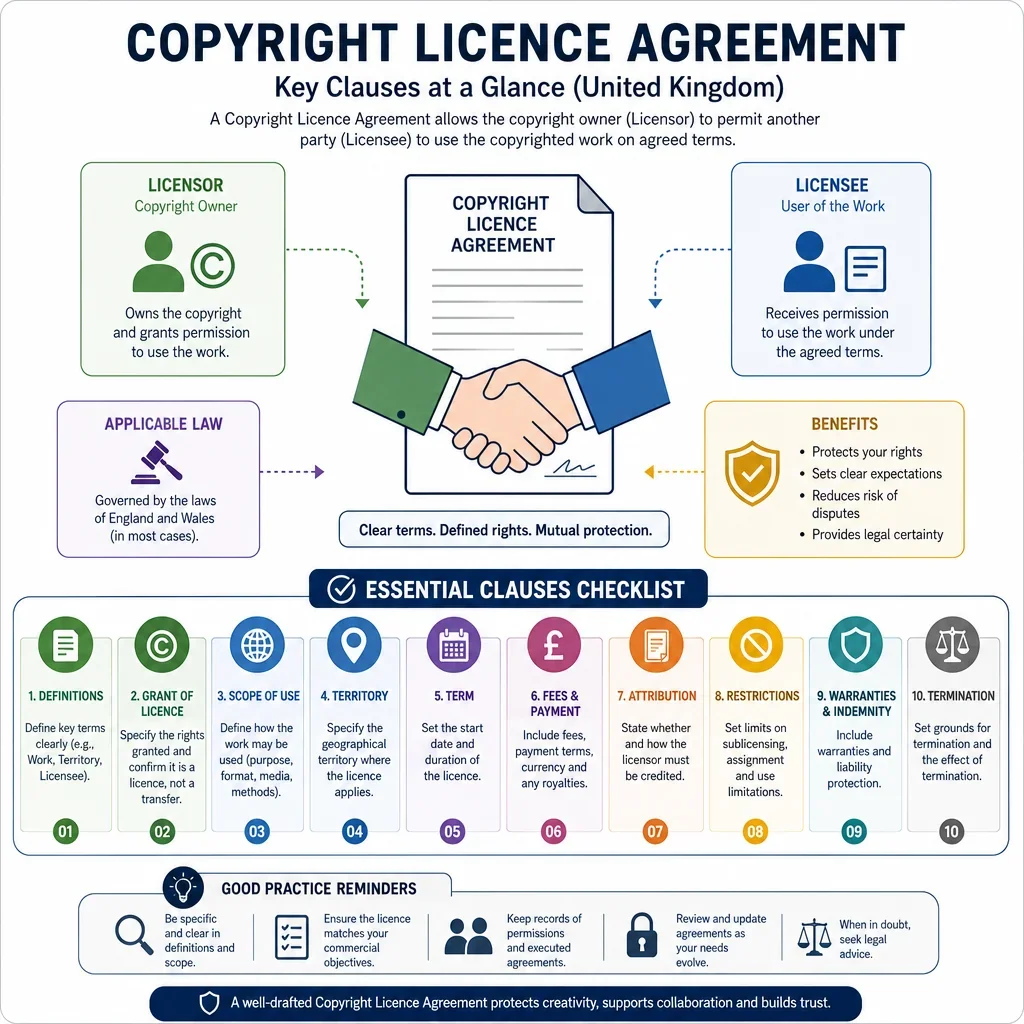
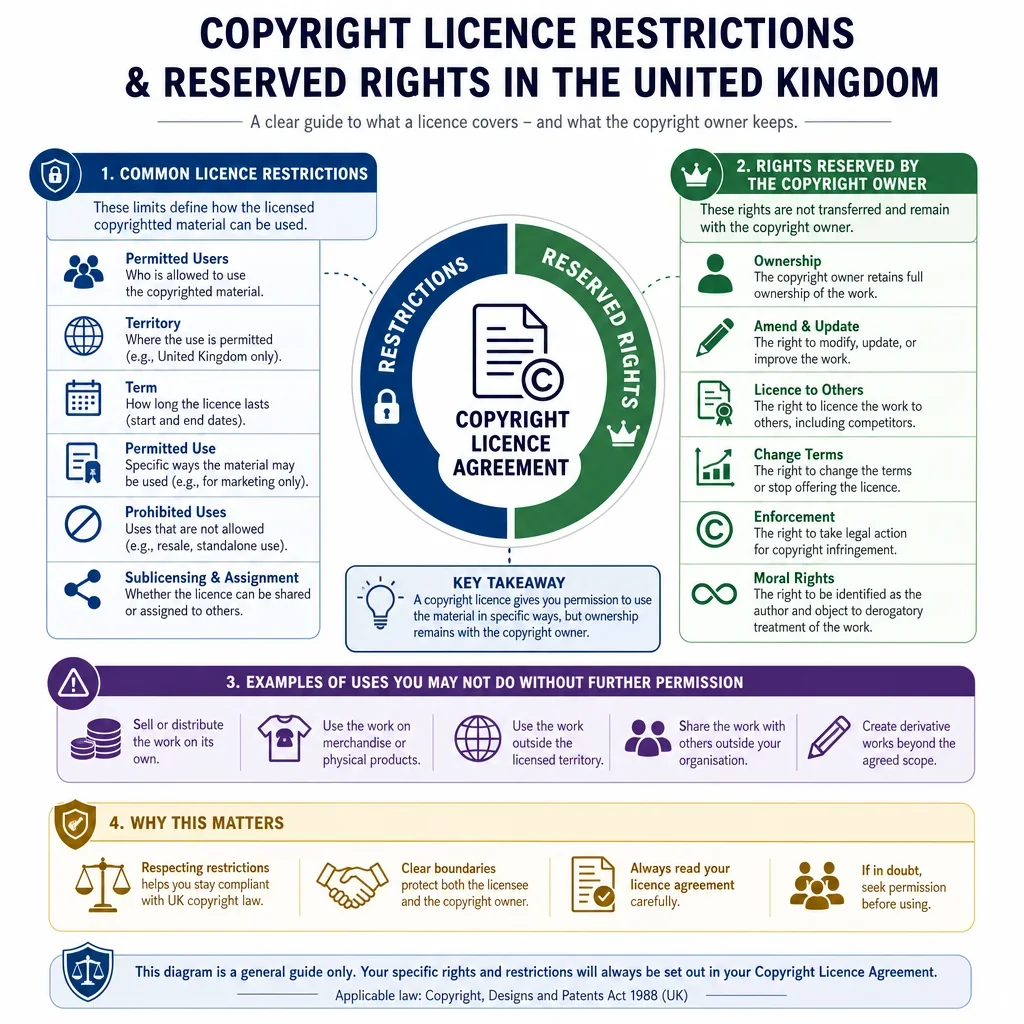
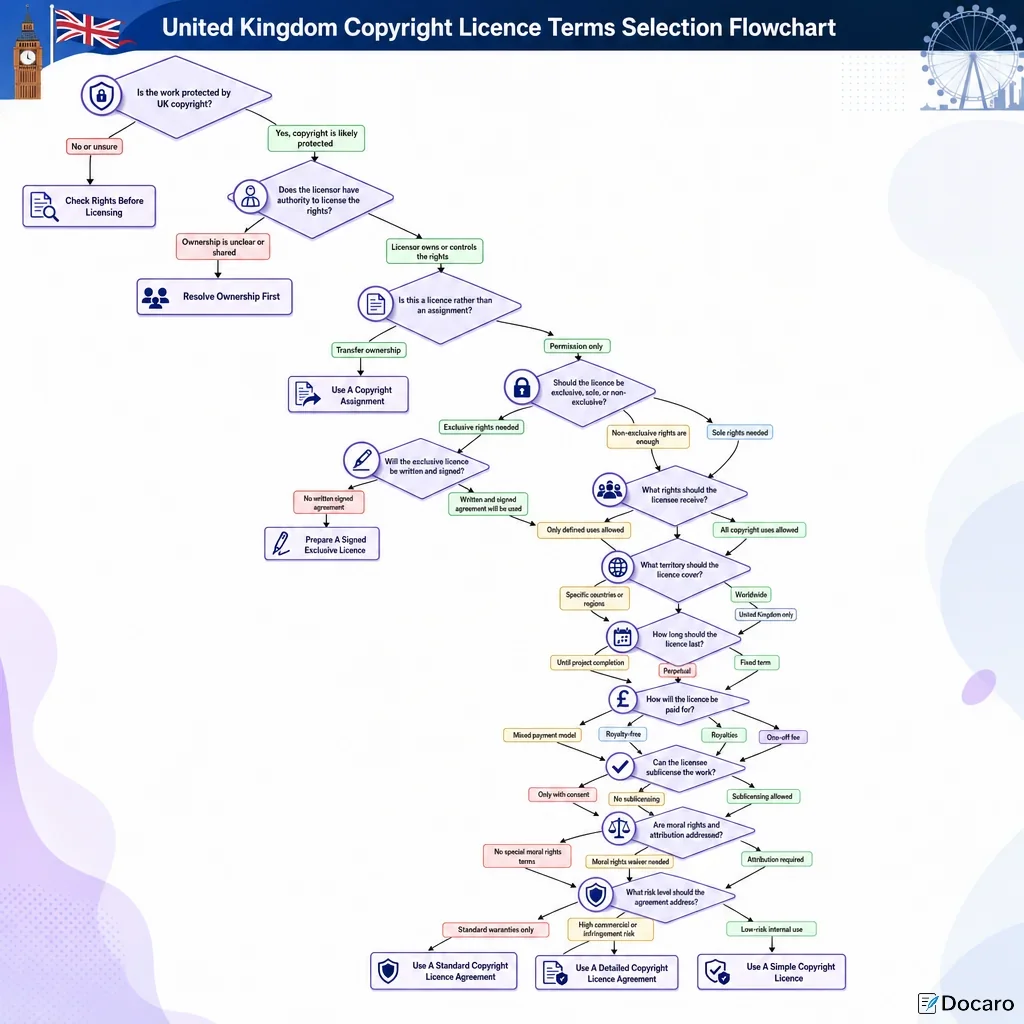
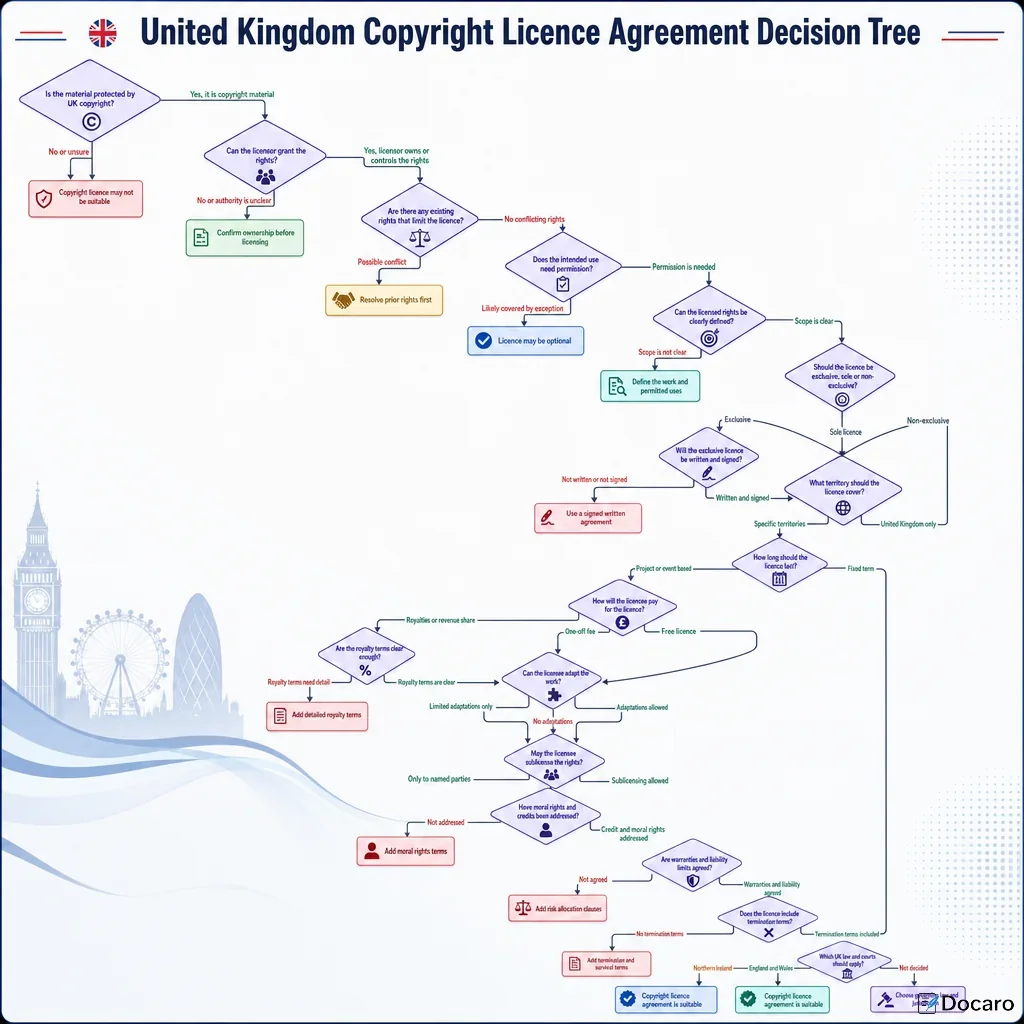
United Kingdom Copyright Licence Agreement Decision Tree
Is the material protected by UK copyright?
Why Is A UK Copyright Licence Agreement Important?
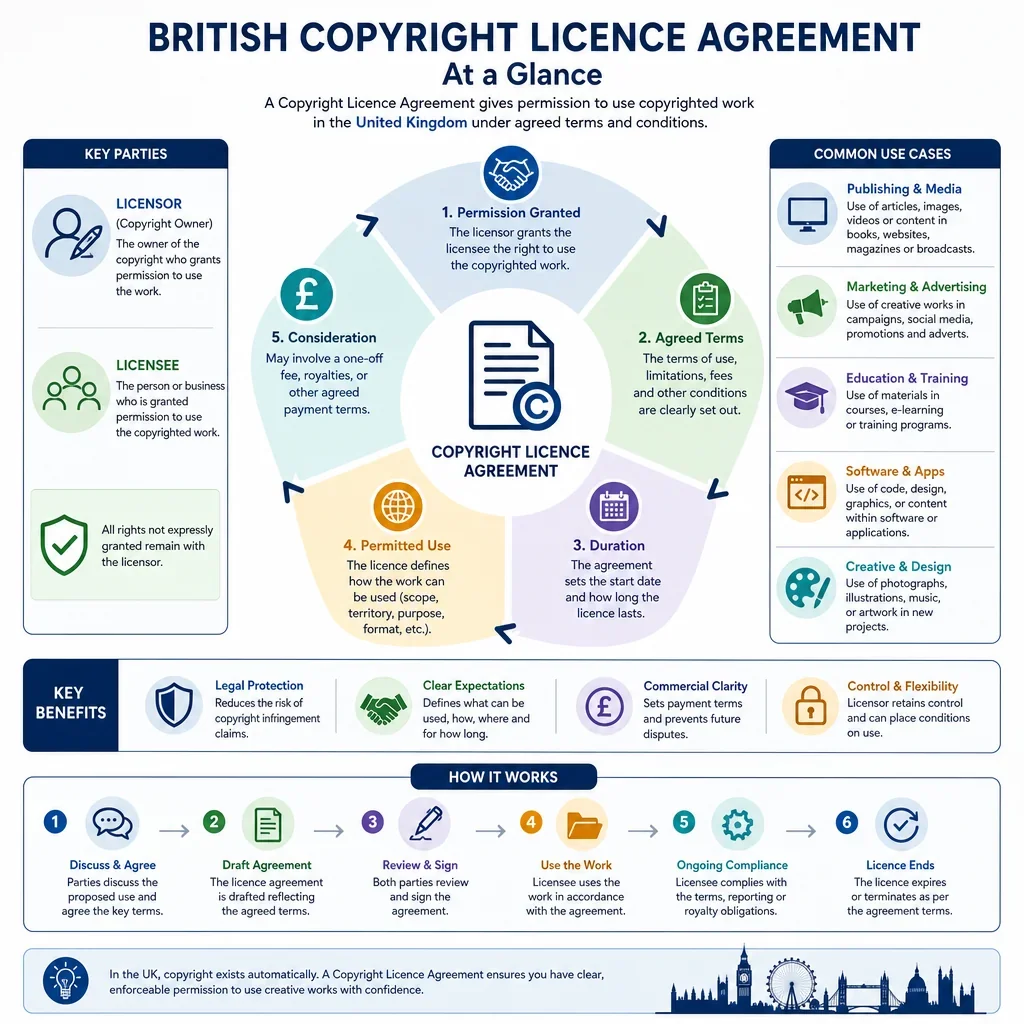
A copyright licence agreement helps a copyright owner give another person permission to use protected work while keeping ownership. In the United Kingdom, unclear permission can lead to infringement claims, unpaid royalties, takedown requests, loss of exclusivity and disputes about who may use the work.
What Happens If The Licence Scope Is Wrong?
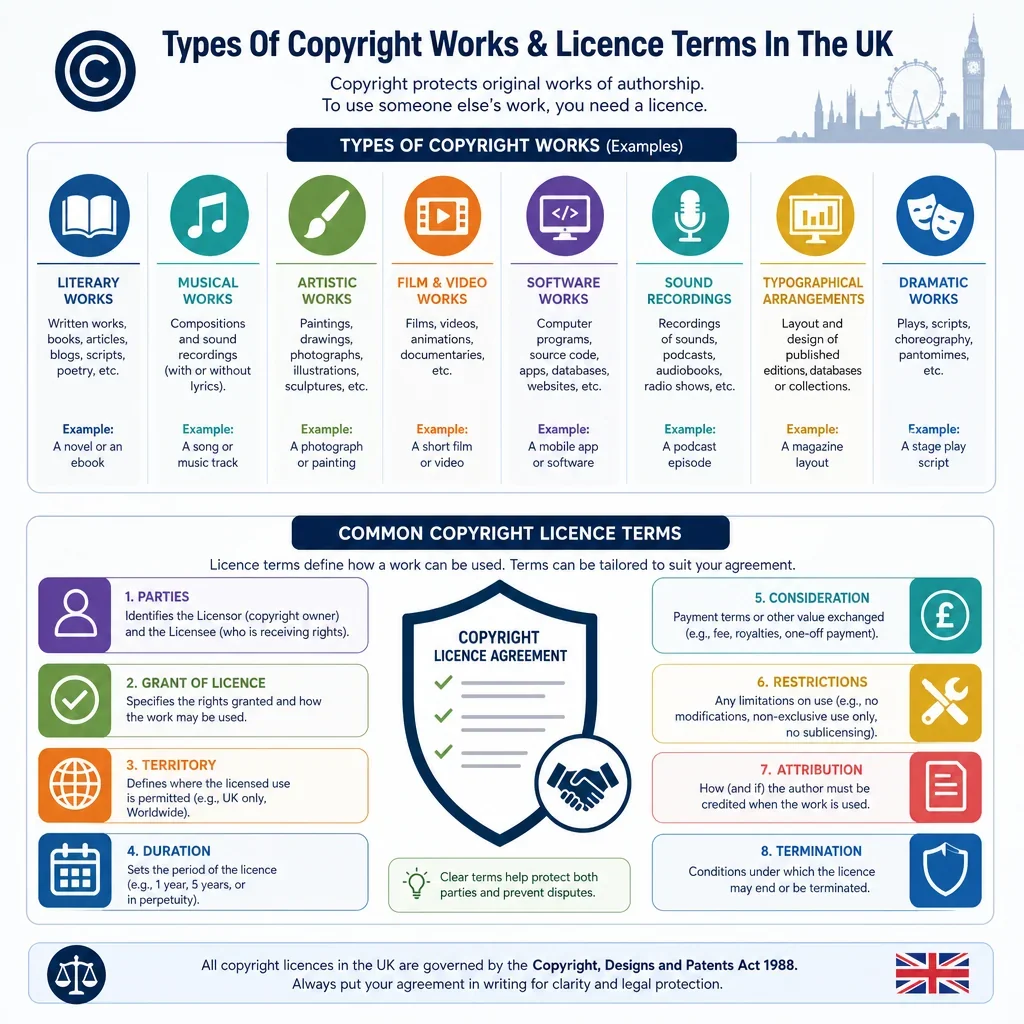
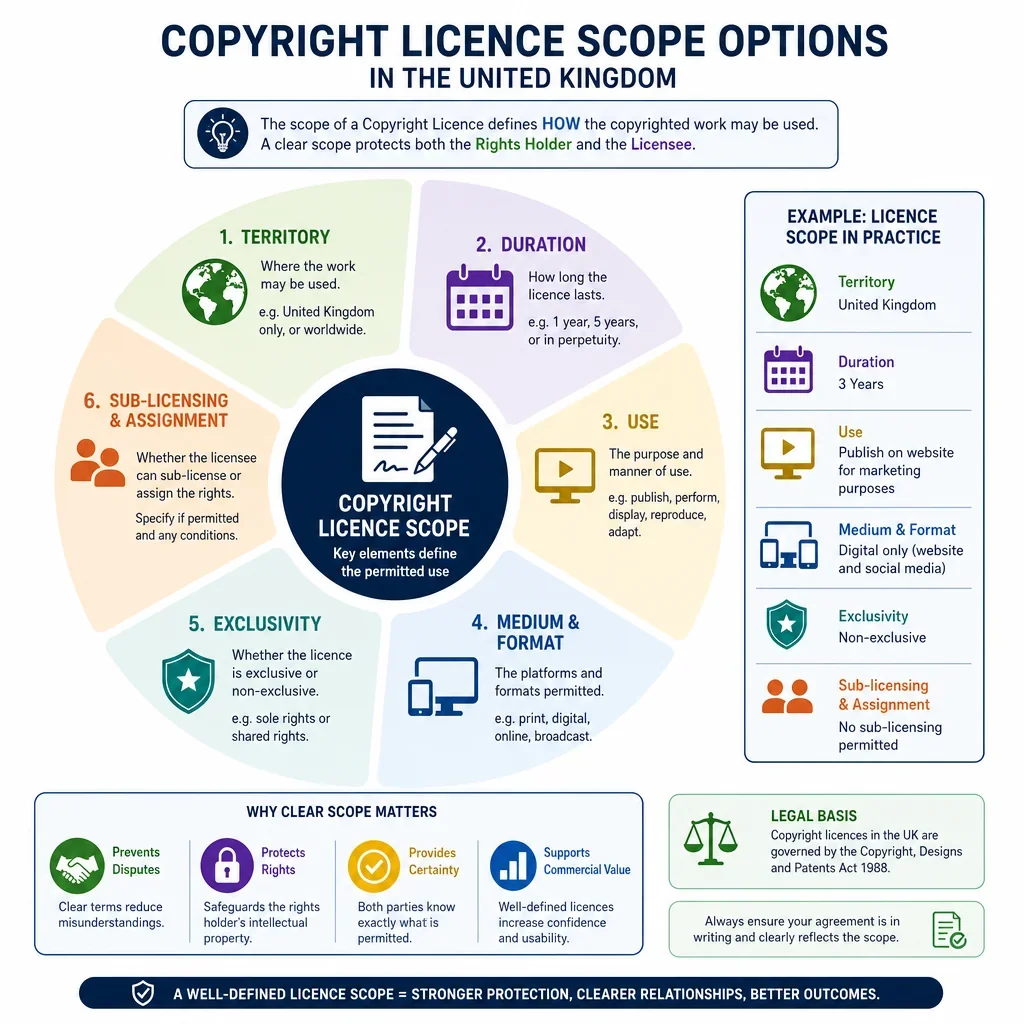
The licence should clearly define the work, permitted uses, territory, duration and whether the licence is exclusive, sole or non-exclusive. If the scope is too wide, the owner may give away more control than intended. If it is too narrow, the licensee may be unable to use the work for its planned purpose.
Why Does Exclusivity Need Extra Care In The UK?
An exclusive copyright licence is a powerful right because it can stop others, and sometimes the owner, from using the licensed rights. Under UK copyright law, an exclusive licence must be in writing and signed by or on behalf of the copyright owner. See the Copyright, Designs and Patents Act 1988.
What UK Issues Should The Agreement Cover?
- Ownership: confirm the licensor owns or controls the copyright.
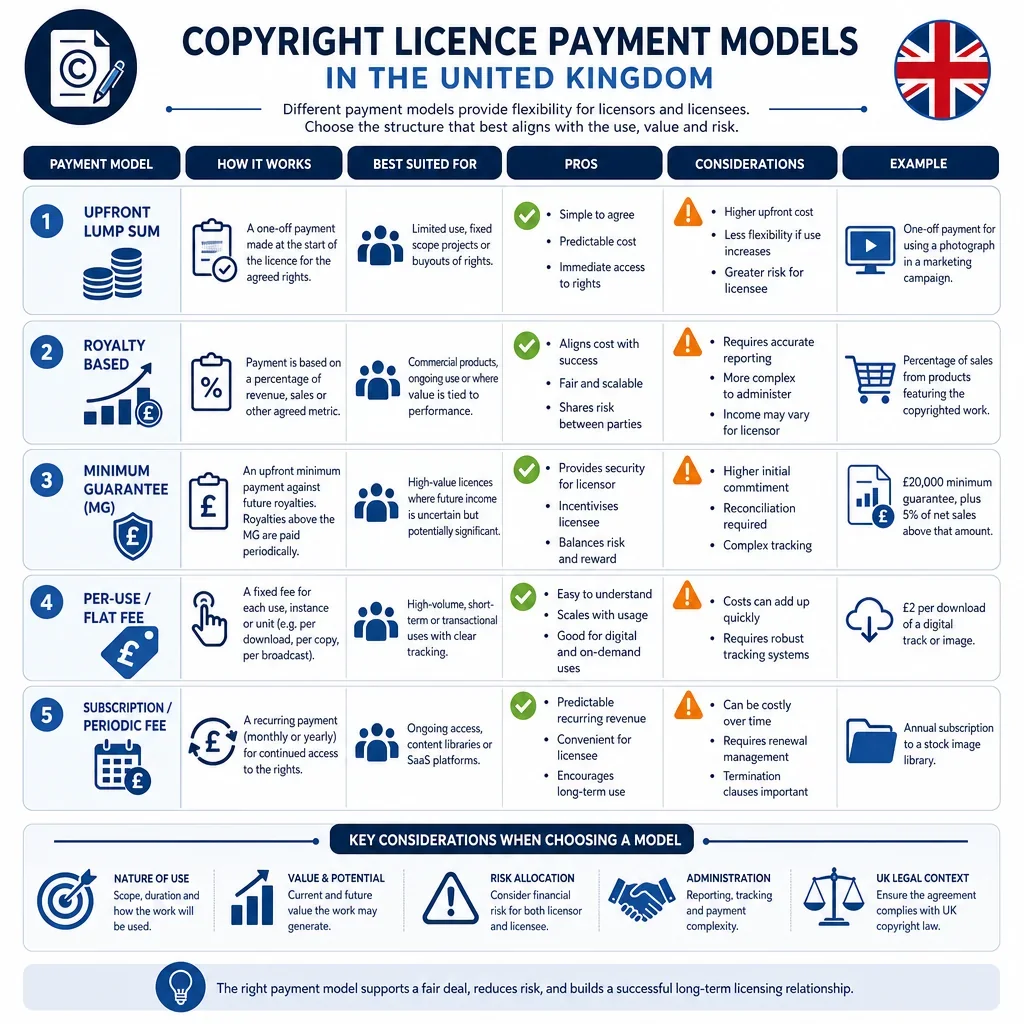
- Payment: set out fees, royalties, VAT, invoices and audit rights.
- Moral rights: address credit, integrity and any waiver or consent.
- Adaptations: state whether edits, translations or derivative works are allowed.
- Termination: explain how rights end and what happens to existing uses.
- Governing law: choose England and Wales, Scotland or Northern Ireland as appropriate.
Using the right licence structure protects both parties and makes the commercial arrangement easier to enforce in the United Kingdom.
FAQs
You Might Also Be Interested In