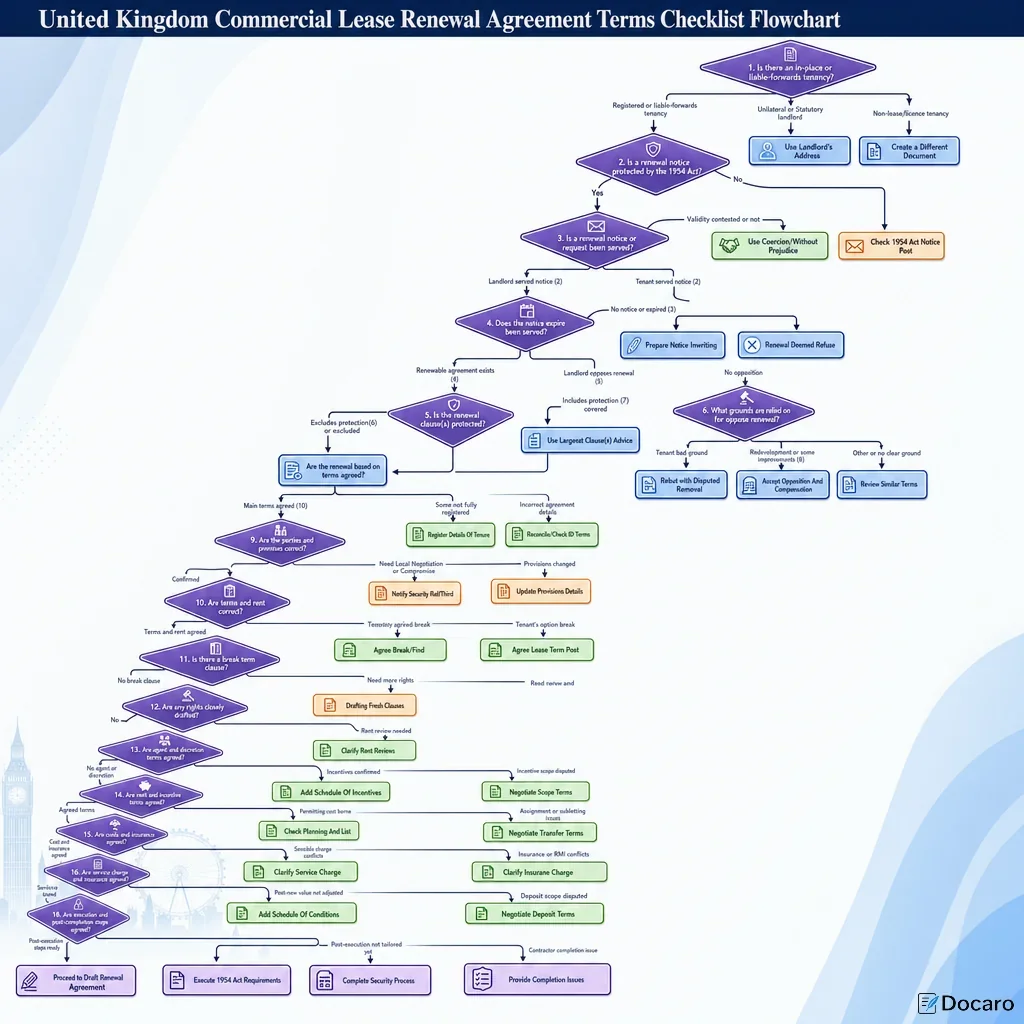
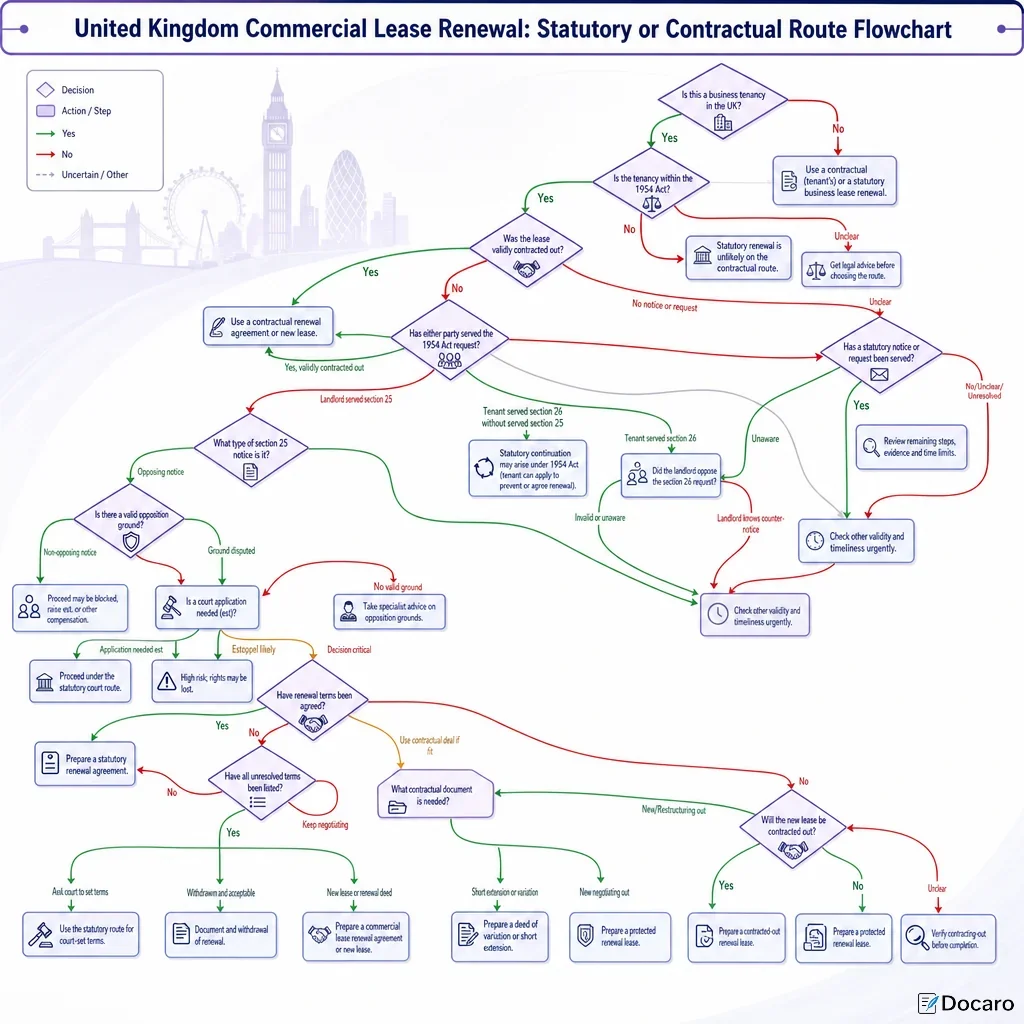
United Kingdom Commercial Lease Renewal: Statutory Or Contractual Route Flowchart
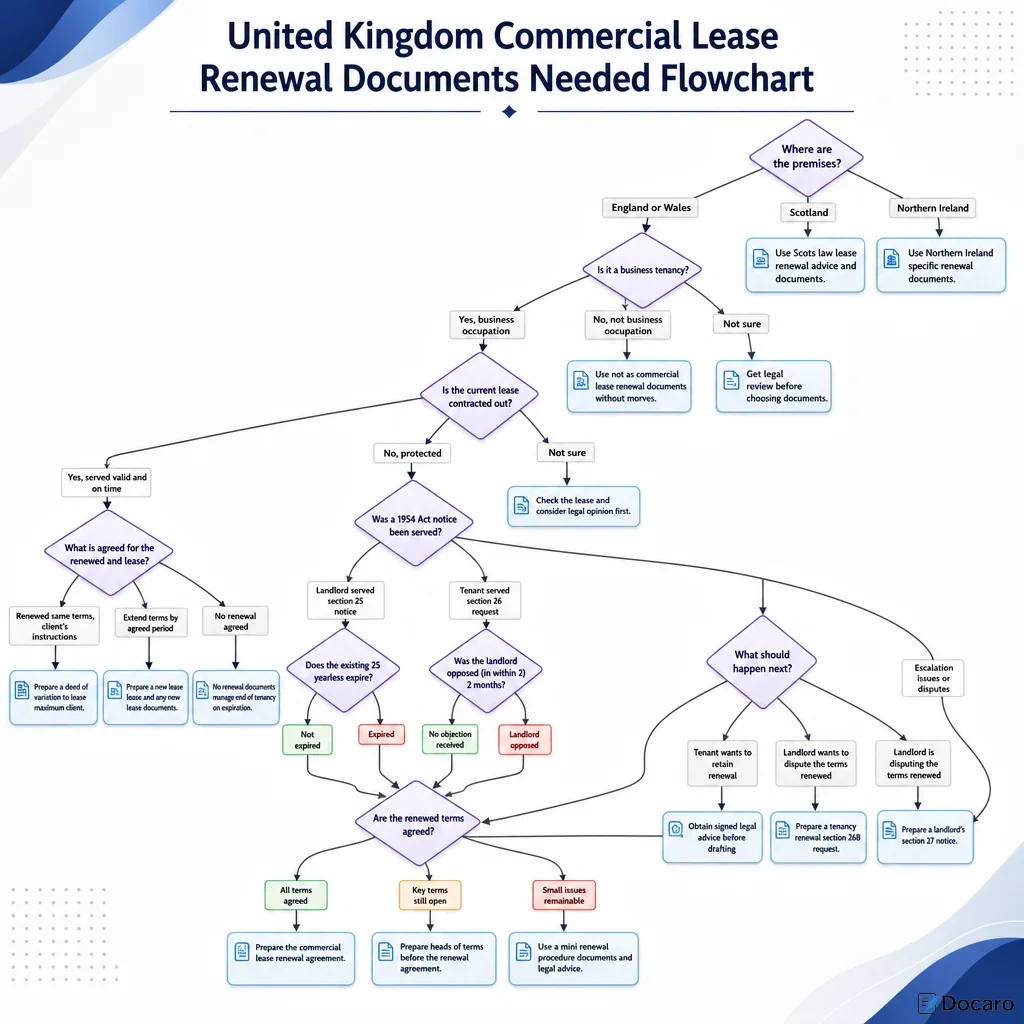
Is this a business tenancy in the UK?
Why Is The Right Commercial Lease Renewal Route Important In The UK?
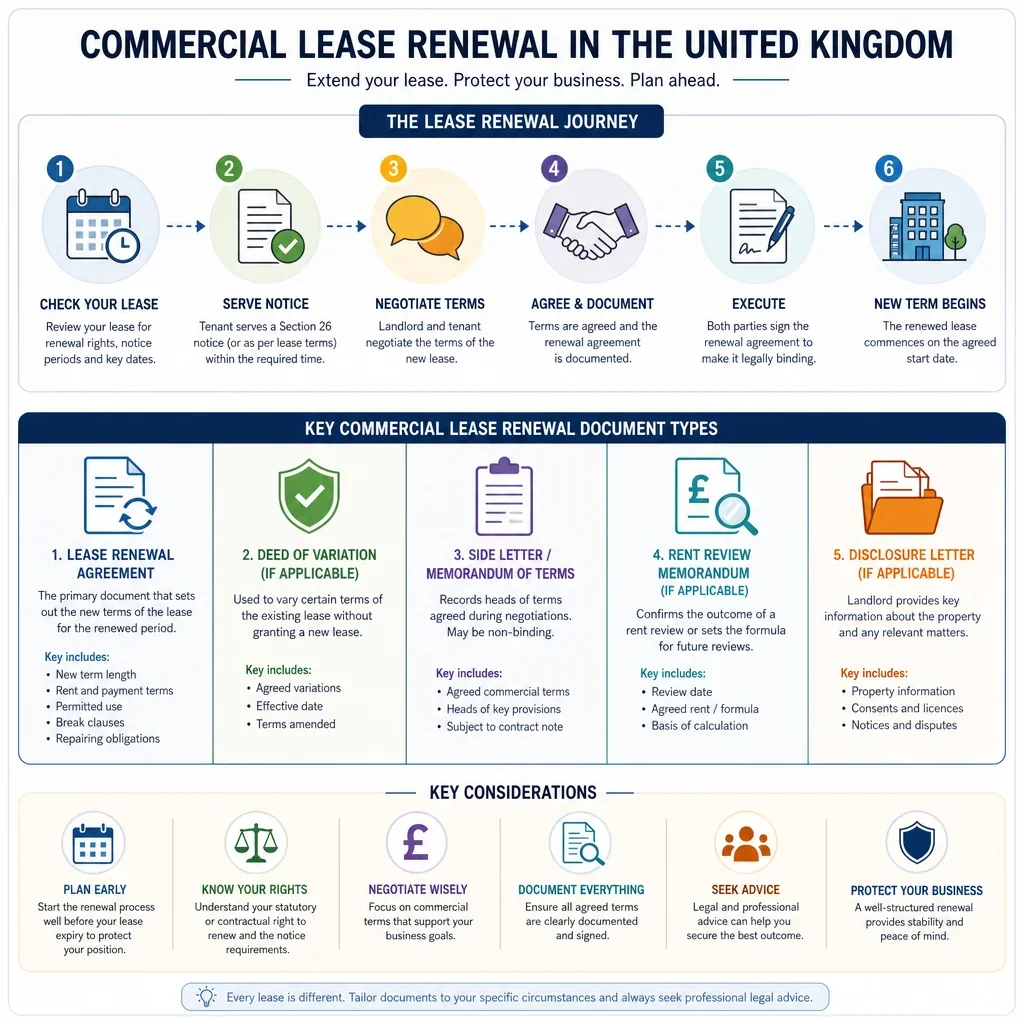
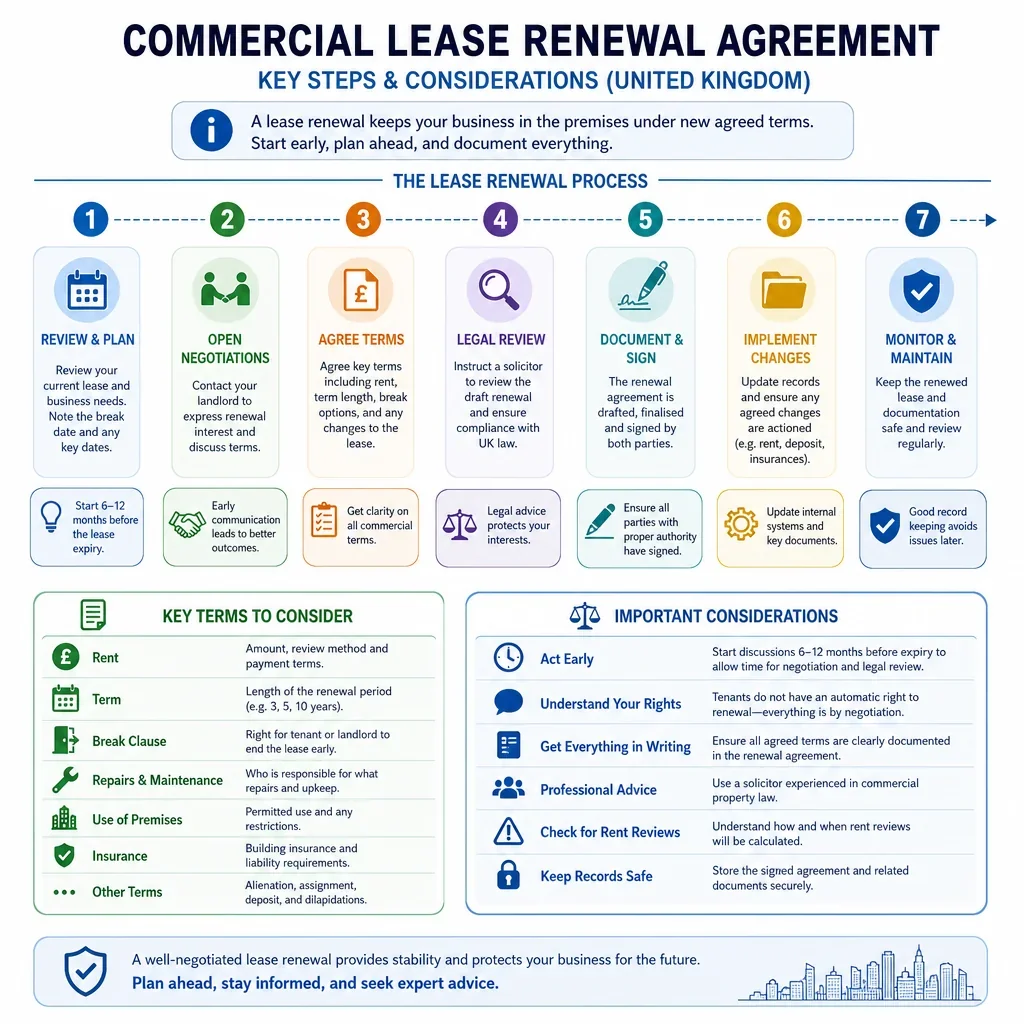
Choosing between the statutory route and the contractual route affects whether a business tenant has security of tenure, whether the lease continues after expiry, and what documents are needed for a valid renewal.
Does The Landlord And Tenant Act 1954 Apply?
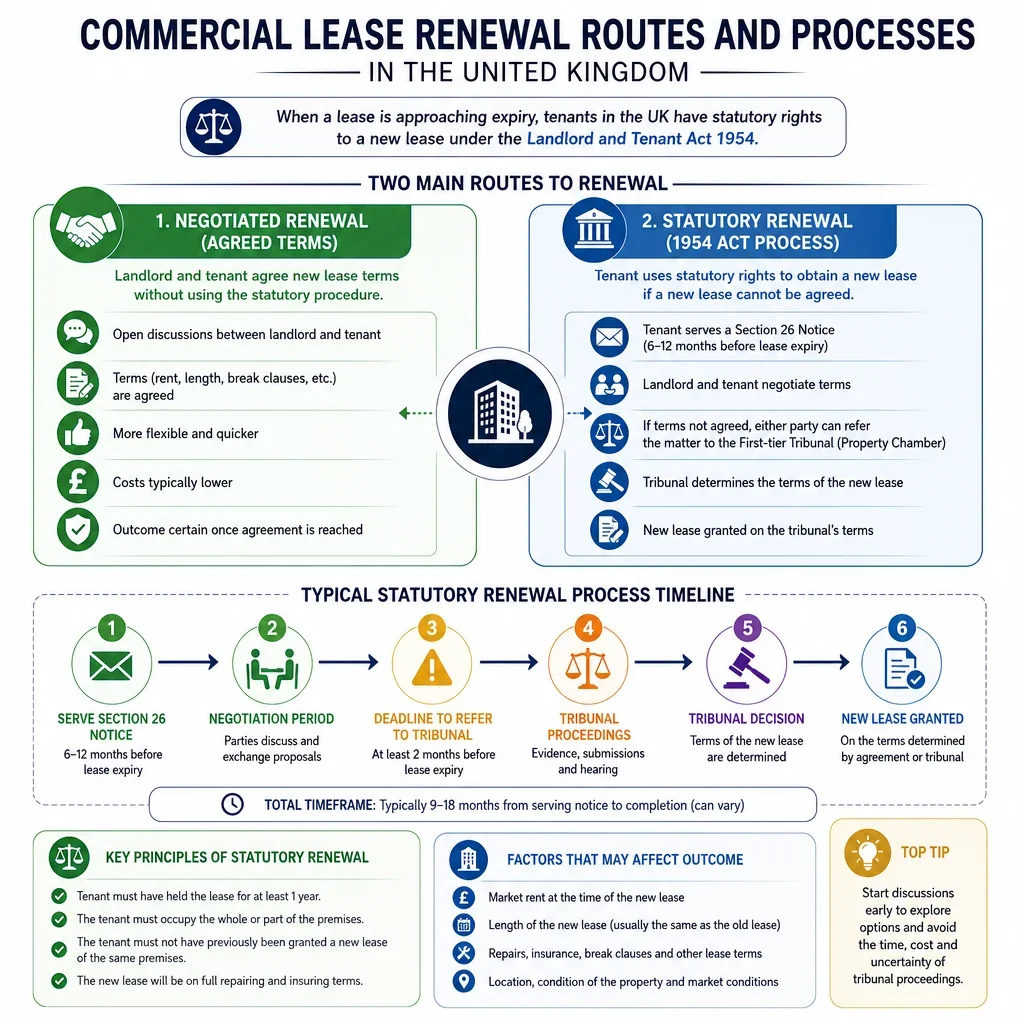
In England and Wales, many business tenants have renewal rights under Part II of the Landlord and Tenant Act 1954. If the lease is protected, the tenancy may continue after the contractual end date until it is ended or renewed using the statutory process.
What Happens If The Lease Was Contracted Out?
If the lease was validly contracted out, the tenant usually cannot rely on statutory renewal rights. The parties normally need a commercial lease renewal agreement, new lease, deed of variation, or other contractual document.
Why Do Notices And Deadlines Matter?
Section 25 notices, section 26 requests, counter-notices, and court application deadlines can decide whether renewal rights are preserved or lost. Missing a deadline can create serious consequences for both landlord and tenant.
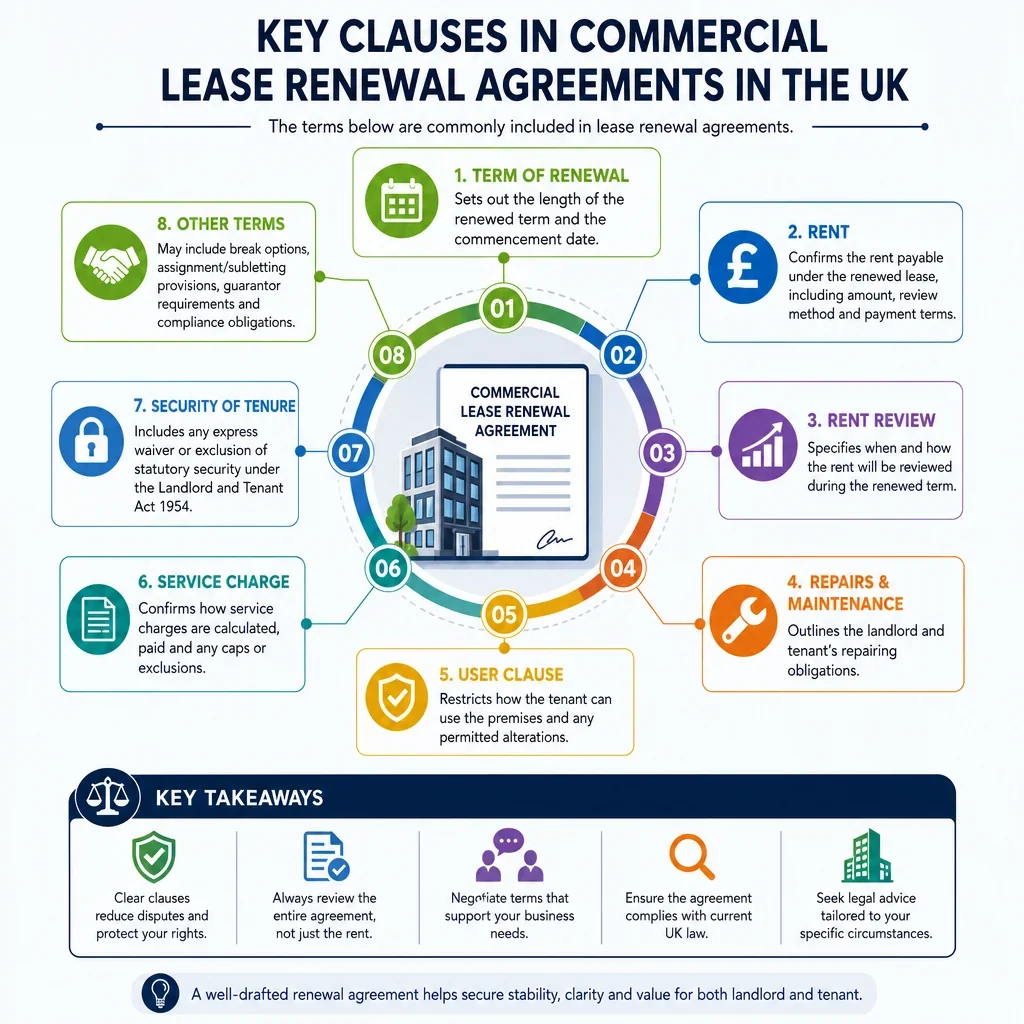
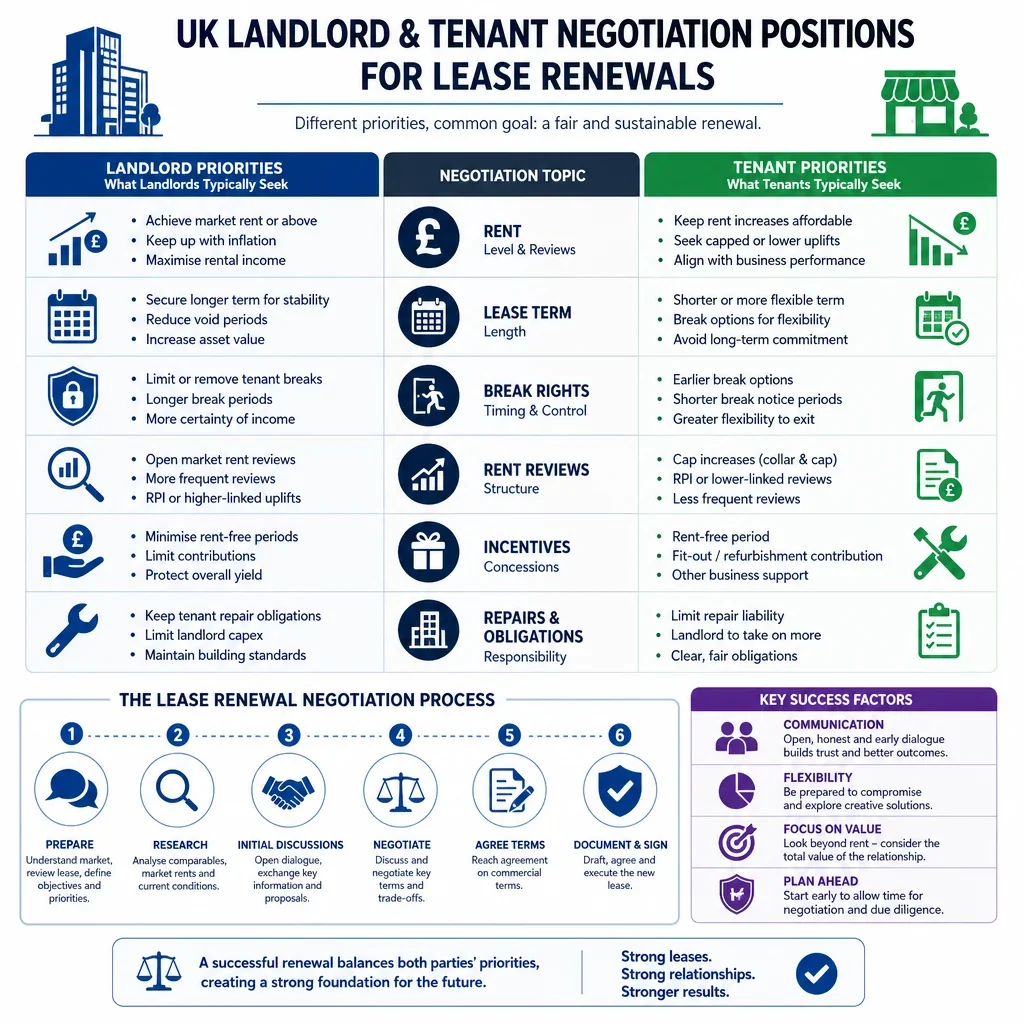
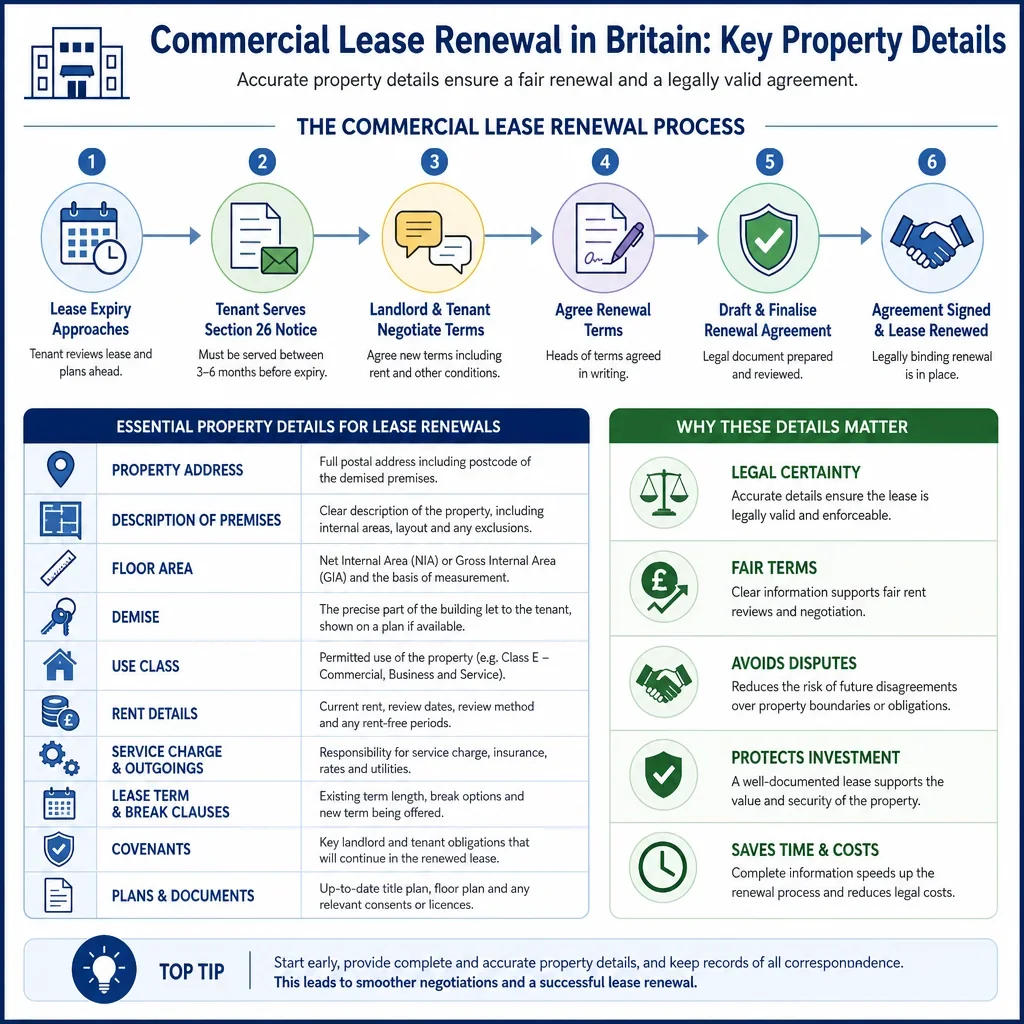
What Should A Renewal Document Cover?
- Rent, rent review, and service charge.
- Lease term, break rights, and expiry date.
- Repairs, alterations, use, assignment, and underletting.
- Guarantors, deposits, superior landlord consent, and lender consent.
- Registration and Stamp Duty Land Tax issues where relevant.
Getting the route right helps ensure the renewal document matches the parties' legal position and reduces the risk of disputes, invalid notices, unexpected security of tenure, or loss of business premises.
FAQs
You Might Also Be Interested In