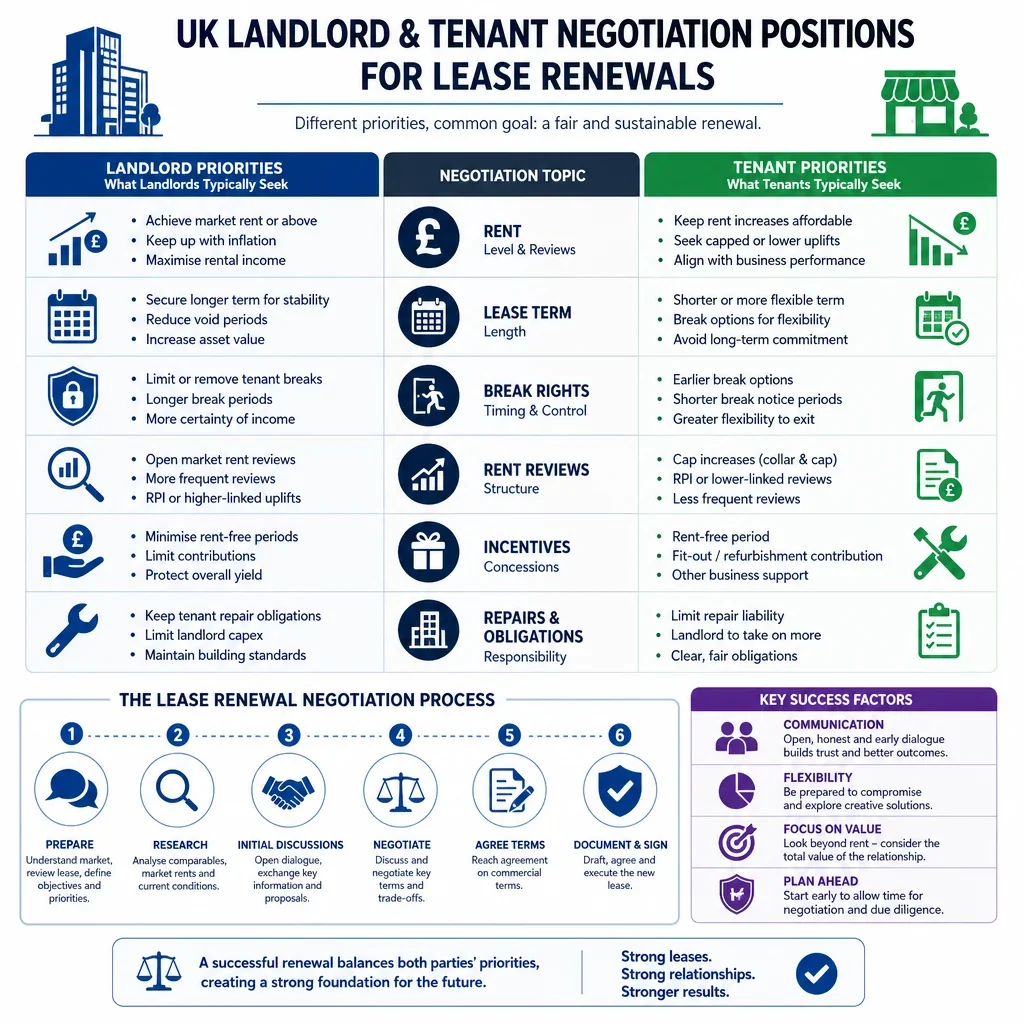
United Kingdom Landlord And Tenant Negotiation Positions For Lease Renewals
Negotiation Issue | Typical Landlord Position | Typical Tenant Position | Commercial Importance | Typical Outcome | Resolution Notes |
|---|---|---|---|---|---|
Rent | |||||
Open market renewal rent | Market rent based on best comparable evidence and no discount for occupation history. | Lower rent reflecting current market weakness, fit-out disruption and premises limitations. | High | Depends on market conditions | Often resolved by valuation evidence, comparables and concessions such as rent-free or stepped rent. |
Section 34 rent assumptions | Apply statutory open market basis with favourable assumptions and strong comparables. | Exclude tenant goodwill and improvements where statute permits. | High | Often balanced | Parties should align valuation instructions with the 1954 Act rent assumptions. |
Renewal rent-free period | No rent-free period, or only a short incentive for agreed works. | Rent-free period equivalent to market letting incentives for comparable premises. | High | Depends on market conditions | Often agreed as a headline rent with rent-free months documented in the lease or side letter. |
Stepped rent on renewal | Immediate full market rent from completion. | Gradual increases to manage cash flow after renewal costs. | Medium | Often balanced | Compromise may phase rent over 6 to 24 months while preserving headline value. |
Turnover rent element | Base rent plus turnover top-up with detailed reporting rights. | Lower base rent and limited turnover definitions, exclusions and audit burden. | Medium | Depends on market conditions | Common in retail and leisure where parties share trading risk and upside. |
Monthly rather than quarterly rent | Quarterly rent in advance on usual quarter days. | Monthly rent in advance to improve cash flow. | Medium | Depends on market conditions | Monthly payment may be accepted for strong tenants or where market demand is weak. |
VAT treatment of rent | Reserve right to charge VAT if the property is opted to tax. | Certainty on VAT status and protection if unable to recover VAT. | High | Usually landlord-friendly | Lease normally requires VAT payment where lawfully chargeable tenant checks recovery position. |
Interest on late rent | High contractual default interest from due date until payment. | Moderate rate with grace period before interest accrues. | Medium | Usually landlord-friendly | Often set above base rate with a short grace period for administrative delay. |
Term length | |||||
Length of renewed lease term | Longer term for income security and asset value. | Shorter term to preserve flexibility. | High | Often balanced | Compromise often combines a medium term with tenant break options. |
Court-imposed renewal term limit | Seek commercially agreed term outside court uncertainty where possible. | Use statutory framework to resist an excessive proposed term. | High | Often balanced | Under the 1954 Act, the court may grant a term up to 15 years. |
Security of tenure on renewal | Contract out where possible to regain possession control at expiry. | Retain 1954 Act protection and statutory renewal rights. | High | Depends on market conditions | Contracting out requires the statutory warning notice and tenant declaration procedure. |
Renewal commencement date | New term starts immediately after old lease expires or from agreed completion date. | Avoid overlap, back rent surprises or unintended interim liability. | Medium | Often balanced | Dates should align with interim rent, rent-free periods and statutory renewal steps. |
Rent | |||||
Interim rent before renewal completes | Seek interim rent close to proposed market rent. | Maintain existing rent or reduce it if market has fallen. | High | Depends on market conditions | Can materially affect arrears or credits where renewal negotiations take months. |
Break clause | |||||
Tenant break option | No break, or break only after a minimum committed term. | Flexible rolling or fixed-date break with few conditions. | High | Often balanced | Common compromise is a fixed tenant break after year 3 or 5 on notice. |
Break notice period | Long notice period to allow reletting planning. | Short notice period to preserve agility. | Medium | Usually landlord-friendly | Six months is common, but the period should match business planning needs. |
Break condition for rent payment | Break valid only if all sums are paid in full. | Condition limited to principal annual rent due before break date. | High | Usually landlord-friendly | Tenants should avoid broad conditions covering disputed service charge or minor interest. |
Vacant possession break condition | Require vacant possession and full compliance with lease covenants. | Replace with giving up occupation and leaving no continuing occupiers. | High | Often balanced | Precise wording is critical because leftover items can jeopardise break effectiveness. |
Landlord redevelopment break | Reserve break right for redevelopment, sale or estate management. | No landlord break, or only with compensation and long notice. | High | Usually landlord-friendly | If accepted, tenant may seek relocation rights, compensation or rent discount. |
Repair obligations | |||||
Full repairing obligation | Full repairing and insuring obligation for all demised premises. | Limit repair to current condition and exclude inherent defects. | High | Usually landlord-friendly | Schedule of condition is the usual tenant protection for poor existing condition. |
Schedule of condition cap | No condition cap, or cap limited to specific defects only. | Repair and yielding-up limited by photographic schedule of condition. | High | Often balanced | Best resolved by a detailed dated schedule annexed to the renewal lease. |
Inherent and latent defects | Tenant repairs all defects once they affect the premises. | Exclude defects caused by design, construction or landlord retained structure. | High | Depends on market conditions | Common compromise excludes structural latent defects unless caused by tenant works. |
Terminal dilapidations liability | Preserve full claim for disrepair, reinstatement and loss. | Cap exposure and settle historic dilapidations at renewal. | High | Often balanced | Renewal may include waiver, reservation or agreed works list for prior disrepair. |
Internal and external decoration cycle | Regular decoration cycle and final decoration before expiry. | Longer intervals and no final redecoration if recently completed. | Medium | Often balanced | Intervals can be adjusted for lease length, premises type and actual condition. |
Reinstatement of alterations at expiry | Right to require full reinstatement of all tenant alterations. | No reinstatement unless landlord gives timely notice and alterations reduce value. | High | Usually landlord-friendly | Often resolved by notice deadline and excluding agreed beneficial alterations. |
Compliance with statutory requirements | Tenant complies with laws affecting occupation and use. | Landlord handles structure, common parts and pre-existing non-compliance. | High | Often balanced | Allocate duties by control: tenant premises, landlord structure and common parts. |
Service charge | |||||
Service charge cap | No cap to preserve full recovery of estate costs. | Annual cap or fixed service charge to control occupancy costs. | High | Depends on market conditions | Caps may exclude insurance, utilities, rates and exceptional compliance costs. |
Service charge exclusions | Broad recovery for management, repair, compliance and estate services. | Exclude capital improvements, initial defects, landlord finance costs and void costs. | High | Often balanced | Use express exclusions and RICS service charge principles as drafting reference. |
Service charge accounts and audit rights | Provide annual summary without extensive tenant challenge rights. | Detailed accounts, budgets, certificates and challenge rights. | Medium | Often balanced | Agree certification process, objection window and access to supporting documents. |
Reserve or sinking fund contributions | Recover forward funding for major works and plant replacement. | No reserve fund, or refund for unused contributions at expiry. | Medium | Usually landlord-friendly | Compromise may restrict funds to specified works with transparent accounting. |
Management fee level | Recover market management fees and administration costs. | Cap or benchmark management fees against actual services provided. | Medium | Often balanced | Fees may be capped as a percentage of service charge or fixed annually. |
Recovery of capital improvements | Recover improvements that reduce costs, comply with law or modernise the estate. | Pay only repair, not landlord investment or asset enhancement costs. | High | Often balanced | Allow recovery only where reasonable, amortised and tenant benefits during the term. |
Alterations | |||||
Internal non-structural alterations | Consent required for all alterations, with plans and reinstatement rights. | Free right for non-structural internal works after notice. | Medium | Usually tenant-friendly | Often permitted with prior notice, method statements and no structural impact. |
Structural alterations | Absolute prohibition or strict consent control. | Consent not to be unreasonably withheld for necessary business works. | High | Usually landlord-friendly | Landlords rarely allow structural works without detailed licence and reinstatement security. |
Consent for tenant improvements | Control improvements and impose reasonable conditions. | Rely on reasonableness principles for improvement consent. | Medium | Often balanced | Section 19 Landlord and Tenant Act 1927 affects qualified consent clauses for improvements. |
Signage and branding rights | Strict estate signage rules and landlord approval. | Clear right to display trading name and brand signage. | Medium | Usually tenant-friendly | Agree permitted zones, design standards, planning compliance and removal at expiry. |
Renewal fit-out works | Tenant funds works and obtains all consents before starting. | Landlord contribution, rent-free period and simplified approvals. | High | Depends on market conditions | May be documented in an agreement for lease or licence for alterations. |
Assignment and underletting | |||||
Assignment of whole premises | Consent required with financial tests and authorised guarantee agreement. | Consent not to be unreasonably withheld and limited conditions. | High | Often balanced | Lease should specify objective consent conditions and timing for landlord response. |
Reasonableness of alienation consent | Retain ability to refuse unsuitable assignees or impose conditions. | Prompt written decision and no unreasonable delay or refusal. | High | Often balanced | The 1988 Act imposes duties where consent is not to be unreasonably withheld. |
Authorised guarantee agreement | Require outgoing tenant to guarantee assignee until next assignment. | AGA only where assignee is financially weak or required by statute. | High | Usually landlord-friendly | AGA requirements must comply with the Landlord and Tenant Covenants Act 1995. |
Underletting of whole premises | Permit only with consent, at open market rent and on approved form. | Freedom to underlet whole to manage surplus space. | Medium | Often balanced | Common controls include no premium, direct covenant and no security of tenure for undertenant. |
Underletting part of premises | Prohibit underletting part to avoid management complexity. | Permit underletting of defined parts for flexible occupation. | Medium | Usually landlord-friendly | If allowed, lease should define permitted parts, access, services and cost sharing. |
Group company sharing | Permit only while companies remain in same group and no tenancy is created. | Broad sharing rights for group companies and business collaborators. | Medium | Usually tenant-friendly | Usually allowed on notice, with tenant remaining fully liable. |
Concession or franchise occupation | Prohibit third-party occupation without consent. | Allow branded concessions or franchise operators supporting trade. | Medium | Depends on market conditions | Retail and leisure tenants may negotiate named concessions with turnover reporting controls. |
Use of premises | |||||
Permitted use wording | Narrow use to protect tenant mix, planning and asset strategy. | Broad use within planning class and ancillary uses. | High | Usually tenant-friendly | Draft use by reference to actual trading and planning constraints, not obsolete wording. |
Planning use compliance | Tenant responsible for ensuring its use has planning permission. | Landlord warrants existing use is lawful and supplies planning information. | High | Often balanced | Check Use Classes Order position and any planning conditions before completion. |
Exclusive use or non-compete rights | Avoid exclusivity that restricts estate lettings. | Protect trade by restricting competing occupiers nearby. | Medium | Usually landlord-friendly | If agreed, exclusivity is usually narrow, time-limited and subject to existing lettings. |
Trading hours obligation | Mandatory opening hours to maintain estate footfall. | Operational discretion and closures for staffing, stocktake or low demand. | Medium | Depends on market conditions | Shopping centre leases often keep core hours with exceptions for genuine disruption. |
Nuisance and prohibited activities | Broad restrictions on nuisance, illegal use, noise, smells and hazardous materials. | Restrictions limited so ordinary trading is not blocked. | Medium | Usually landlord-friendly | Draft carve-outs for normal business operations, subject to legal compliance. |
Change of use consent | Consent required and may consider estate mix and planning risk. | Consent not to be unreasonably withheld for comparable lawful uses. | Medium | Often balanced | Renewal can modernise use clauses to reflect broader planning flexibility. |
Rent review | |||||
Upward-only rent review | Upward-only open market reviews to protect income. | Upward and downward reviews or fixed increases only. | High | Usually landlord-friendly | Still common in England and Wales, but negotiability depends heavily on market conditions. |
Index-linked rent review | Indexation with collar and no downward movement. | Cap increases and allow downward movement or low collar. | High | Often balanced | Agree index, base date, cap, collar and replacement index mechanism. |
Fixed rent increases | Pre-agreed uplifts giving predictable income growth. | Modest fixed uplifts below expected market growth. | Medium | Often balanced | Useful for short renewals where valuation disputes would be disproportionate. |
Rent review frequency | Frequent reviews to capture market growth. | No review on short term, or longer review intervals. | Medium | Depends on market conditions | Five-yearly reviews are common on longer leases short leases may have none. |
Rent review assumptions and disregards | Assume full compliance, open market letting and broad permitted use. | Disregard tenant improvements, goodwill and occupation-specific value. | High | Often balanced | Small wording differences can materially affect valuation, so align with rent strategy. |
Rent review dispute mechanism | Expert determination by experienced surveyor with costs discretion. | Clear procedure, timetable and fair cost allocation. | Medium | Often balanced | Specify expert or arbitrator, appointing body and whether reasons are required. |
Rent review cap and collar | Collar protects minimum uplift cap only if commercially necessary. | Cap increases and avoid collars that guarantee uplifts. | High | Depends on market conditions | Caps are common for indexed reviews and useful for budgeting risk. |
Security deposit | |||||
Rent deposit amount | Three to twelve monthsu0027 rent depending on covenant strength. | Lowest possible deposit or none after good payment history. | High | Depends on market conditions | Renewal is a chance to reduce deposit if tenant has strong accounts and no arrears. |
Rent deposit release triggers | Retain deposit for whole term unless tenant financials improve materially. | Automatic release after clean payment record or profit test. | Medium | Often balanced | Use objective triggers such as audited net profits or no default for a set period. |
Deposit top-up after withdrawal | Immediate top-up after any withdrawal or rent increase. | Top-up only for undisputed sums and within reasonable period. | Medium | Usually landlord-friendly | Specify notice, cure period and whether review increases require extra deposit. |
Interest on rent deposit | Interest belongs to landlord or is applied administratively. | Interest credited to tenant after bank charges. | Low | Often balanced | Deposit deed should state account type, interest entitlement and tax treatment. |
Deposit insolvency protection | Hold deposit as stakeholder or charge-backed security with broad withdrawal rights. | Segregated account and clear trust or charge structure. | Medium | Usually landlord-friendly | A separate rent deposit deed should define ownership, security and insolvency treatment. |
Guarantor obligations | |||||
Personal guarantor requirement | Require personal guarantees for small companies or weak covenant tenants. | Avoid personal liability or cap it tightly. | High | Usually landlord-friendly | Cap guarantee by amount, time period or specific obligations where possible. |
Parent company guarantee | Parent guarantee from financially stronger group company. | No guarantee if tenant entity has adequate covenant strength. | High | Depends on market conditions | May replace a cash deposit where parent accounts satisfy landlord checks. |
Cap on guarantor liability | Uncapped guarantee of all tenant liabilities. | Cap liability to rent, service charge or fixed monetary amount. | High | Often balanced | Caps can reduce guarantor risk while preserving landlord security for core sums. |
Duration of guarantee | Guarantee lasts for full term and any authorised guarantee period. | Release after accounts improve, assignment or specified clean payment period. | High | Usually landlord-friendly | Release provisions should align with 1995 Act rules and any assignment structure. |
Replacement guarantor on assignment | Require new guarantor if assignee covenant is inadequate. | Replacement security only where objectively necessary. | Medium | Usually landlord-friendly | Objective financial thresholds reduce disputes over whether extra security is reasonable. |
What Matters Most In A UK Commercial Lease Renewal?
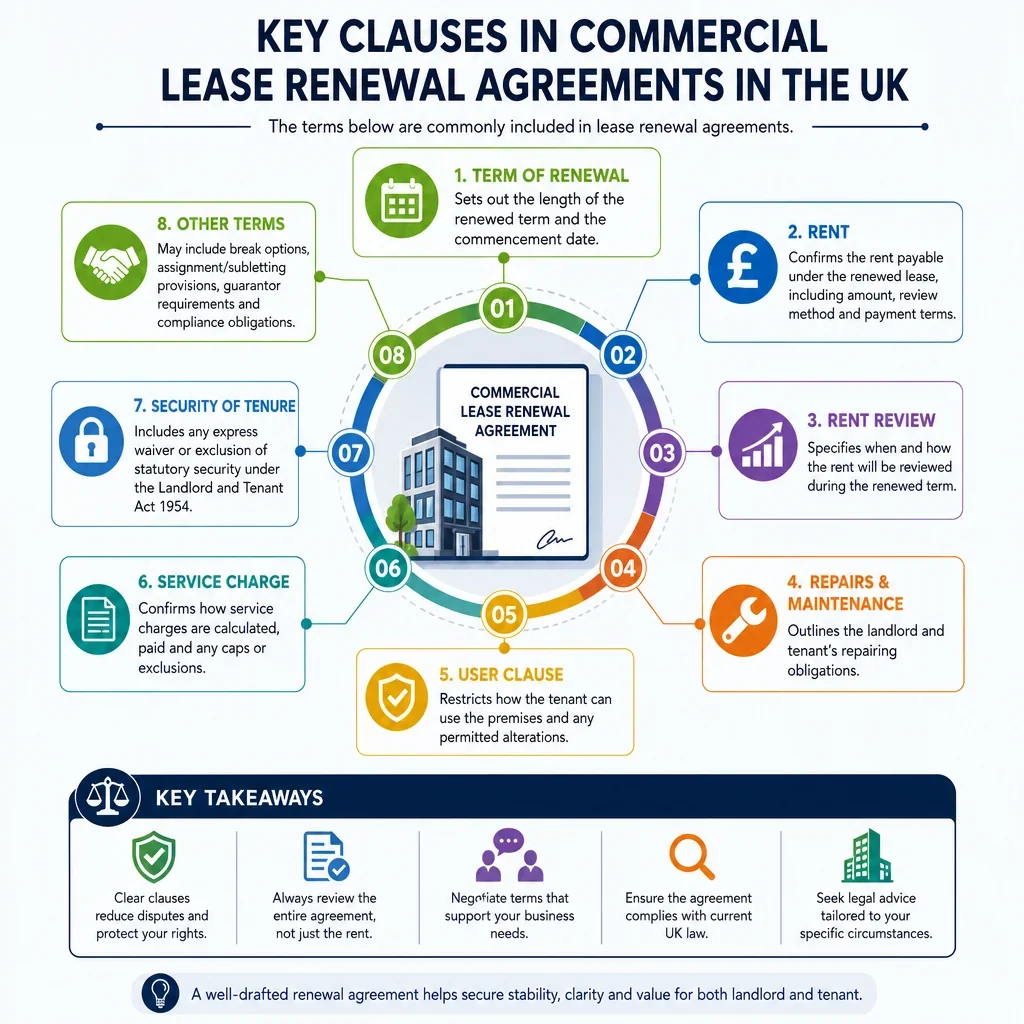
Rent, repairing liability, break rights, service charge controls and alienation rights are usually the highest-value negotiation points. A tenant renewing in a weaker market will often push for rent-free incentives, caps on service charge, flexible break rights and limits on full repairing liability. A landlord will usually focus on preserving income, retaining control of the building and avoiding open-ended concessions.
How Does The Landlord And Tenant Act 1954 Affect Renewal Negotiations?
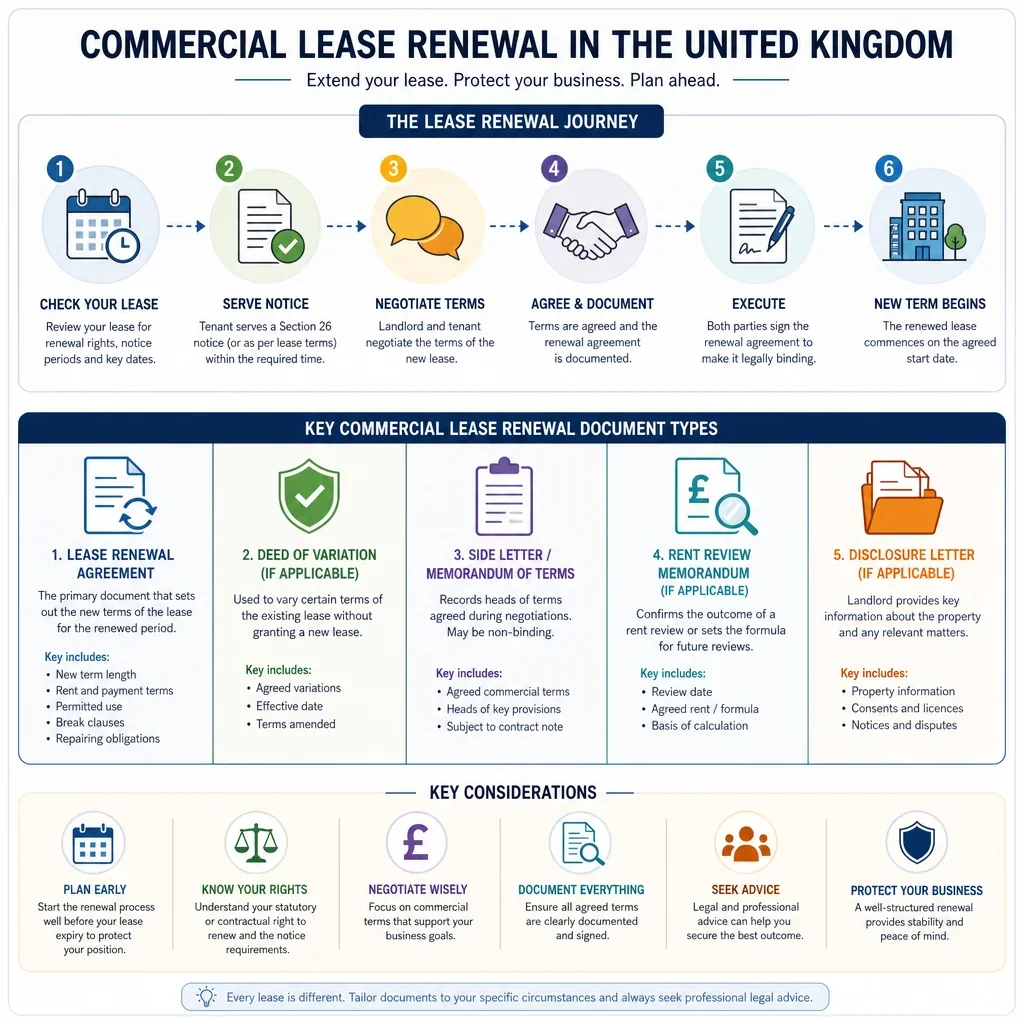
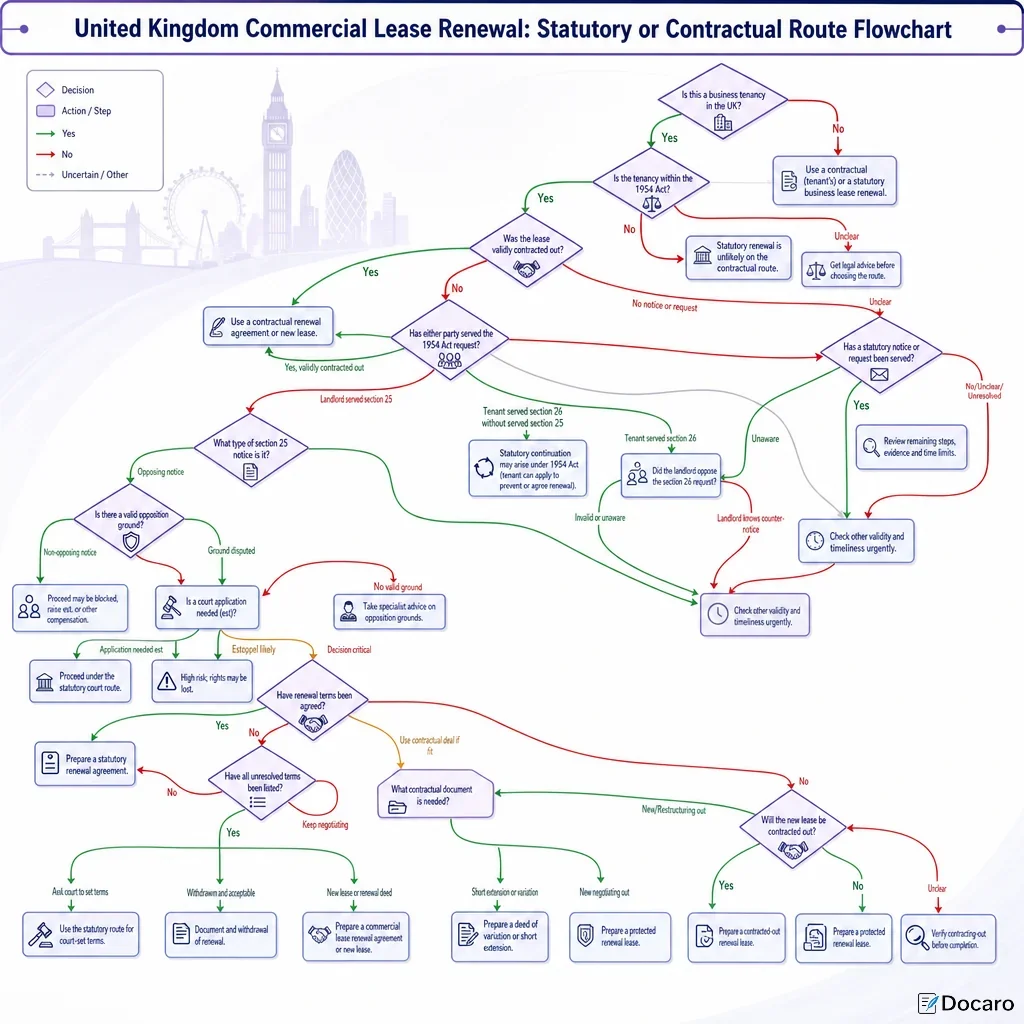
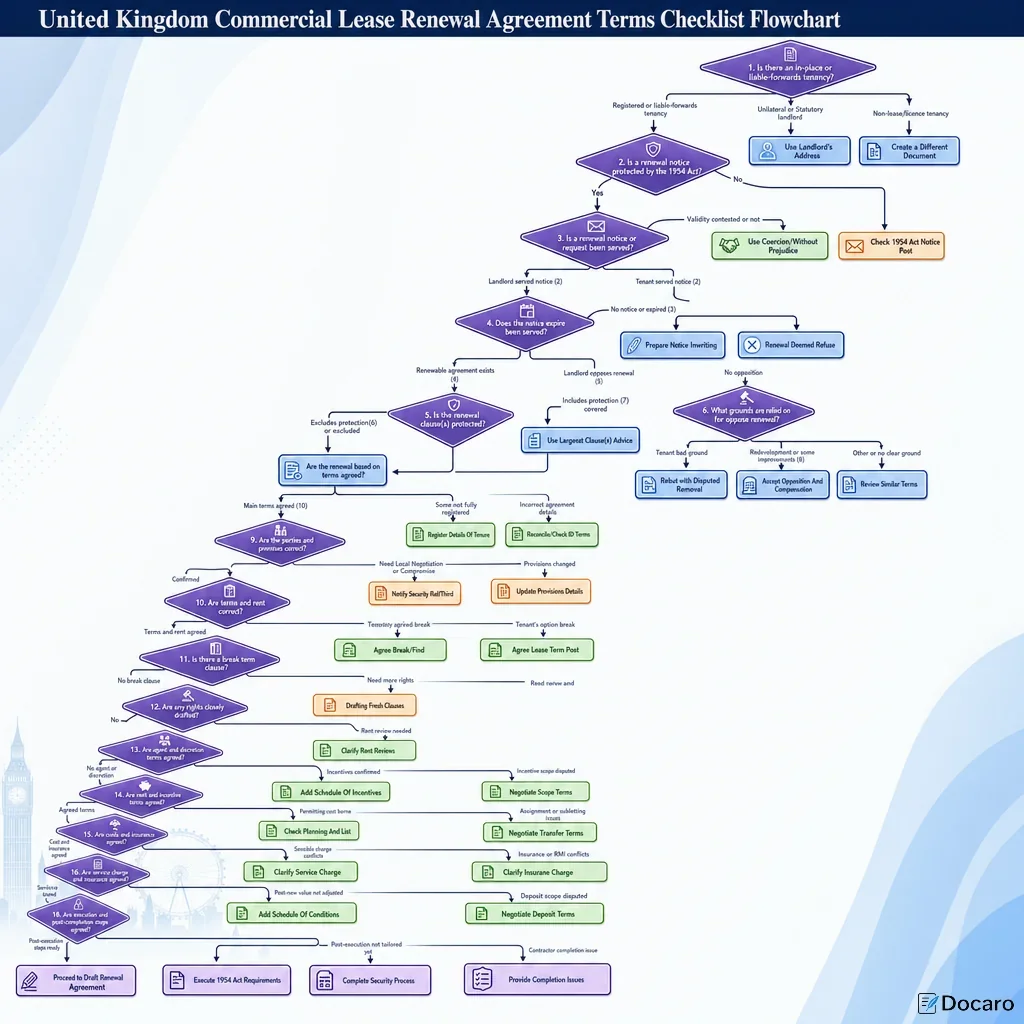
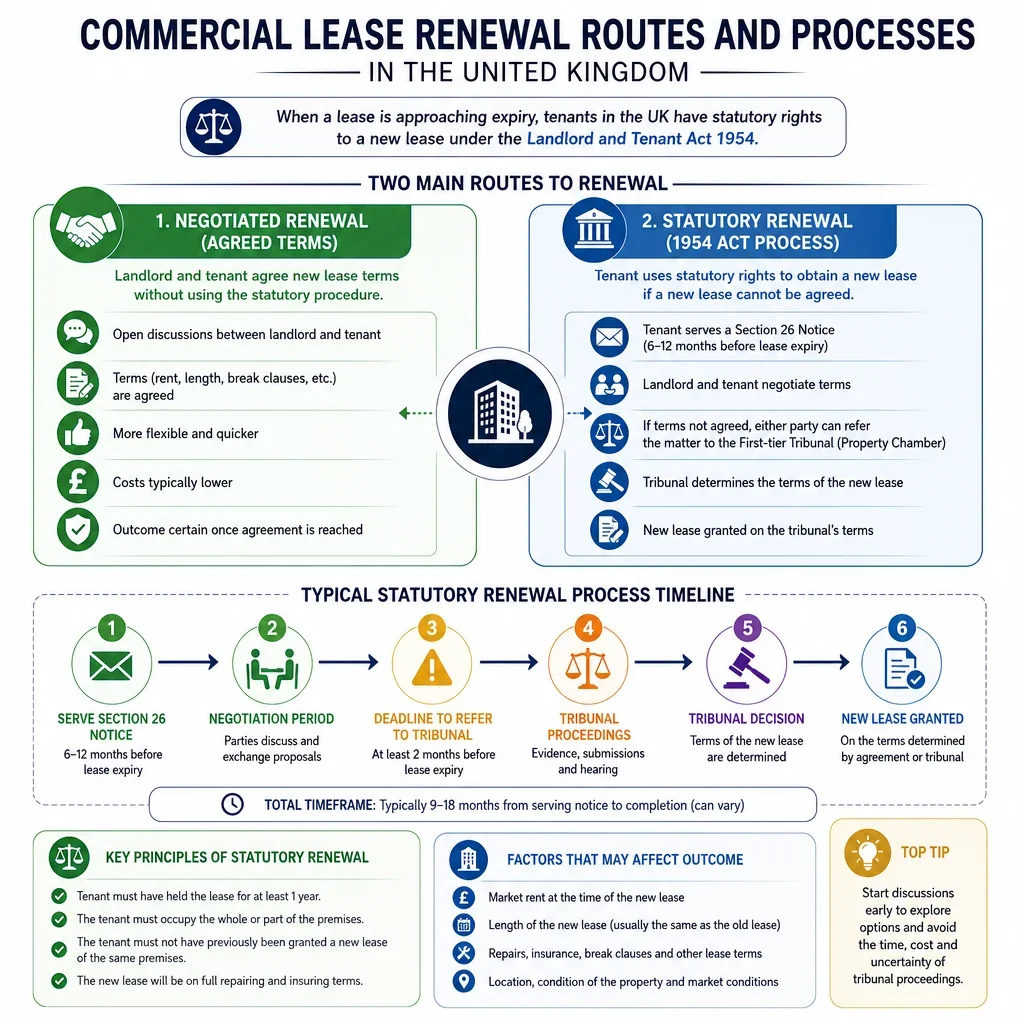
Where a business tenancy has security of tenure under the Landlord and Tenant Act 1954, the tenant may have a statutory route to a new tenancy unless the landlord can rely on a statutory ground of opposition. This affects leverage: terms may ultimately be determined by the court if not agreed, but parties commonly settle commercially to avoid cost, delay and valuation risk.
Which Renewal Terms Are Usually Tenant-Friendly?
Tenant-friendly outcomes are most common for operational flexibility, such as permitted use wording, signage, internal non-structural alterations and reasonable assignment or underletting rights. However, these are normally tied to landlord consent controls, reinstatement obligations and requirements that assignees or undertenant covenants are financially acceptable.
Which Renewal Terms Are Usually Landlord-Friendly?
Landlord-friendly positions usually prevail on rent payment certainty, protection against unlawful use, compliance with statute, insurance rent recovery, controls on structural alterations and preservation of guarantor or deposit support. Tenants should check whether these obligations are proportionate to the renewed premises and not wider than necessary.
How Should Parties Use This Data When Preparing A Lease Renewal Agreement?
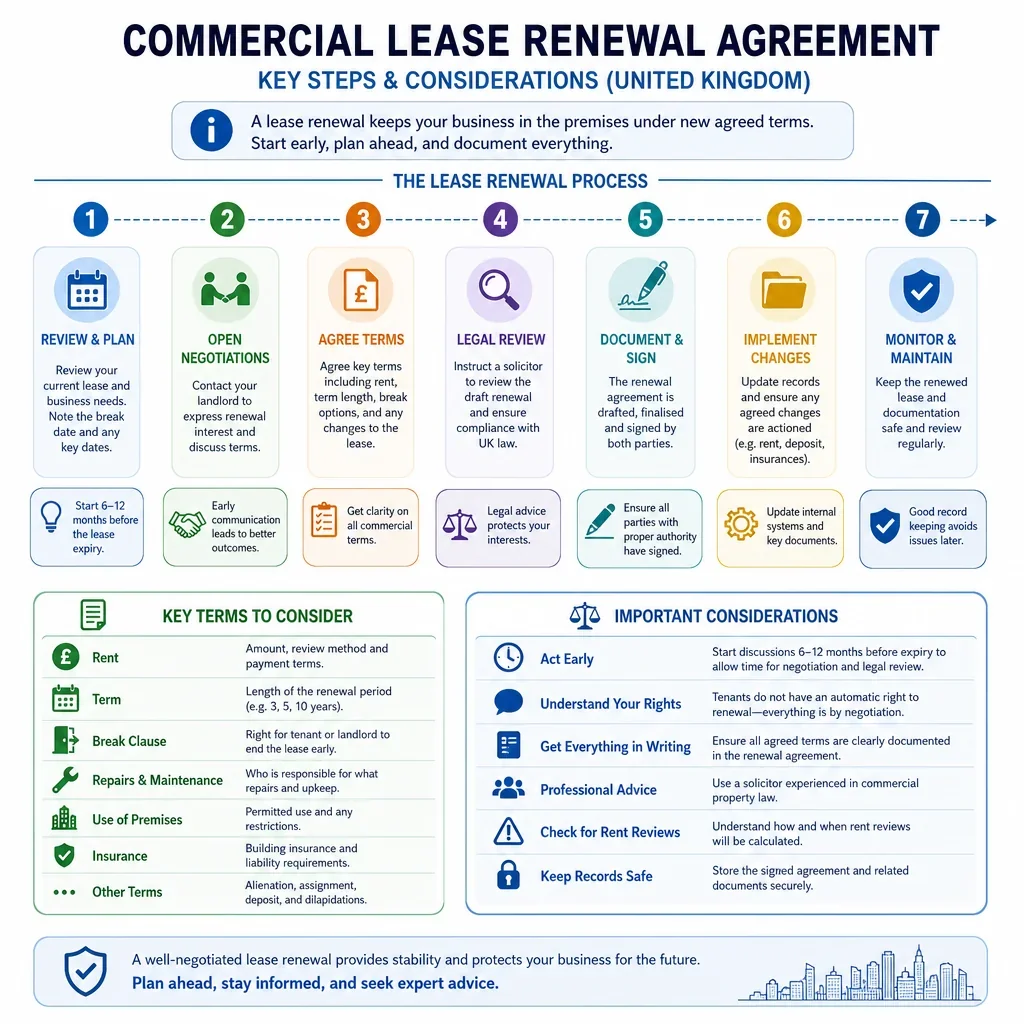
- Prioritise high-value clauses first: rent, repair, service charge, rent review and break conditions normally drive the economics of the renewal.
- Record concessions clearly: rent-free periods, stepped rent, caps, side letters and break conditions should be drafted precisely to avoid disputes.
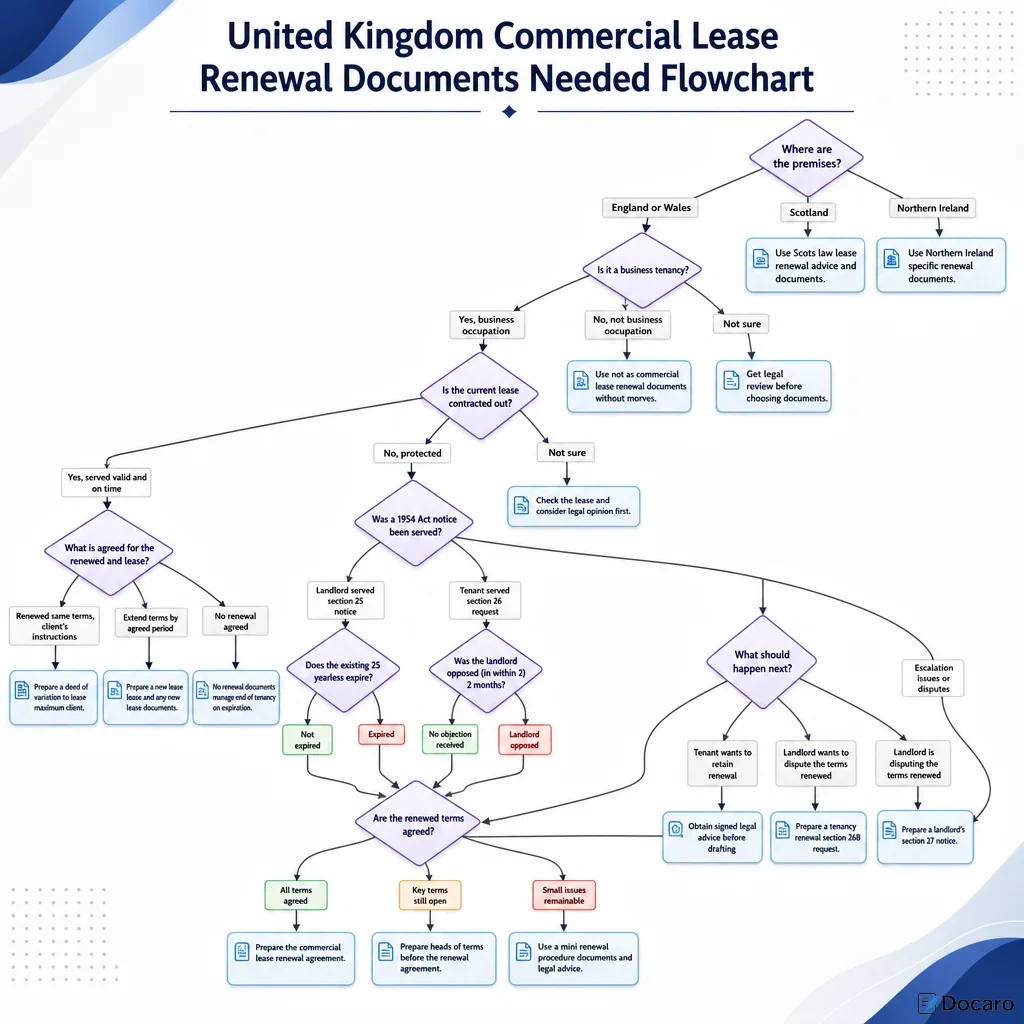
- Check statutory status early: whether the tenancy is protected or contracted out under the 1954 Act materially changes negotiating leverage and timing.
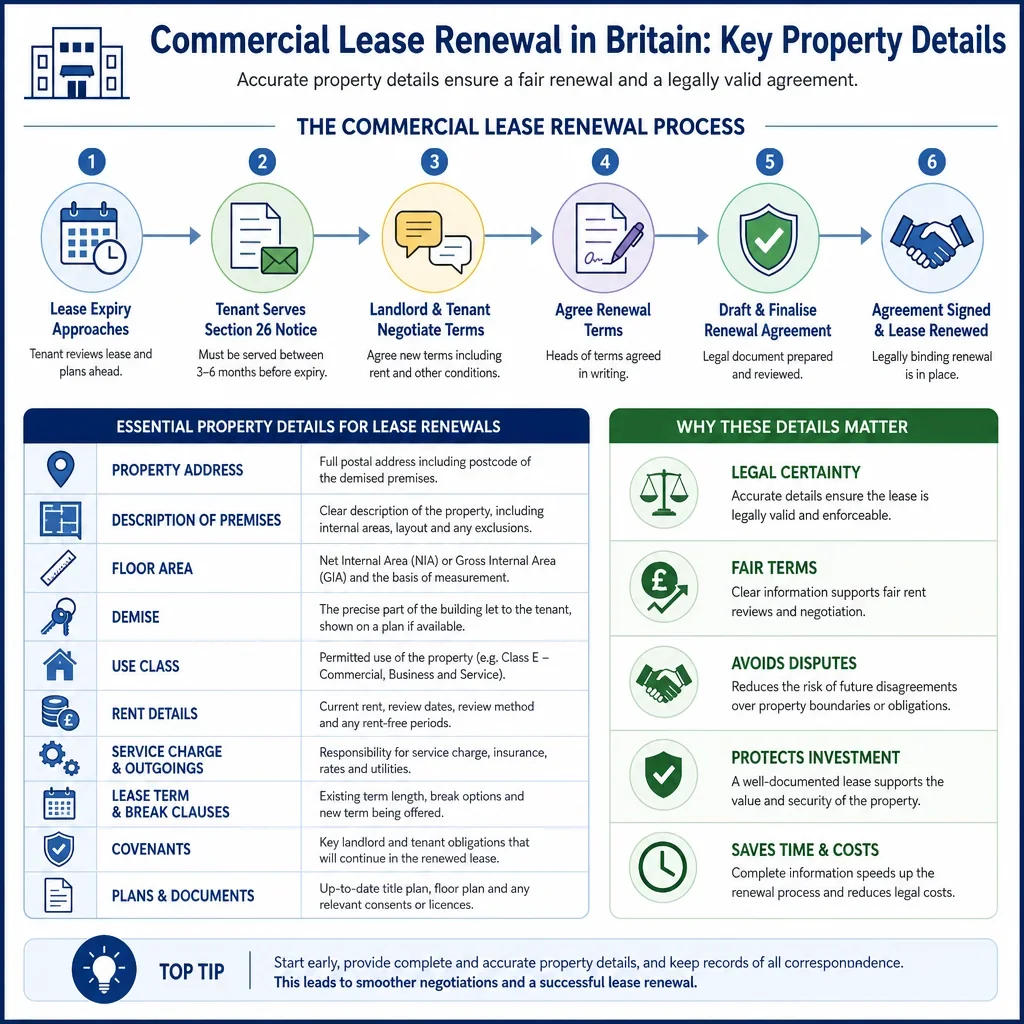
- Align the lease with current operations: use, alterations, underletting and ESG clauses should reflect how the tenant actually occupies the premises.
FAQs
You Might Also Be Interested In