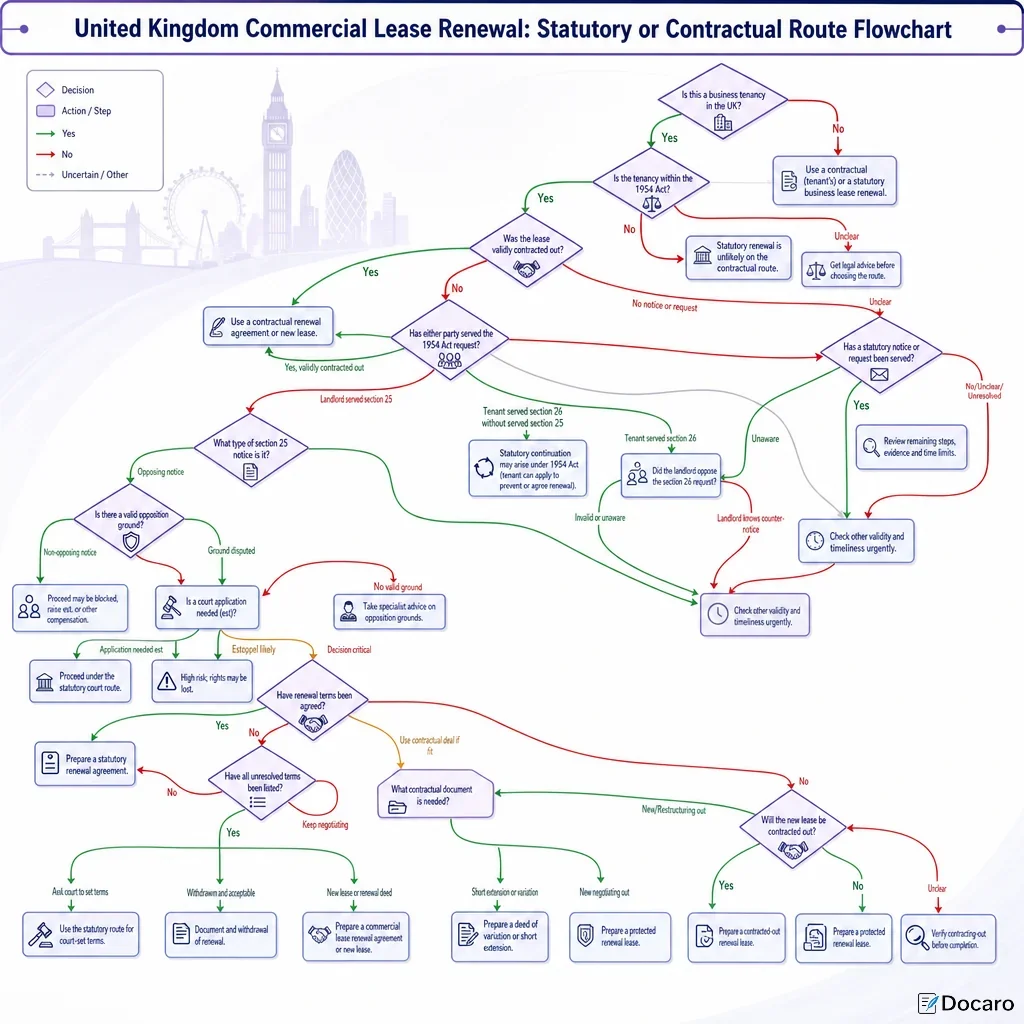
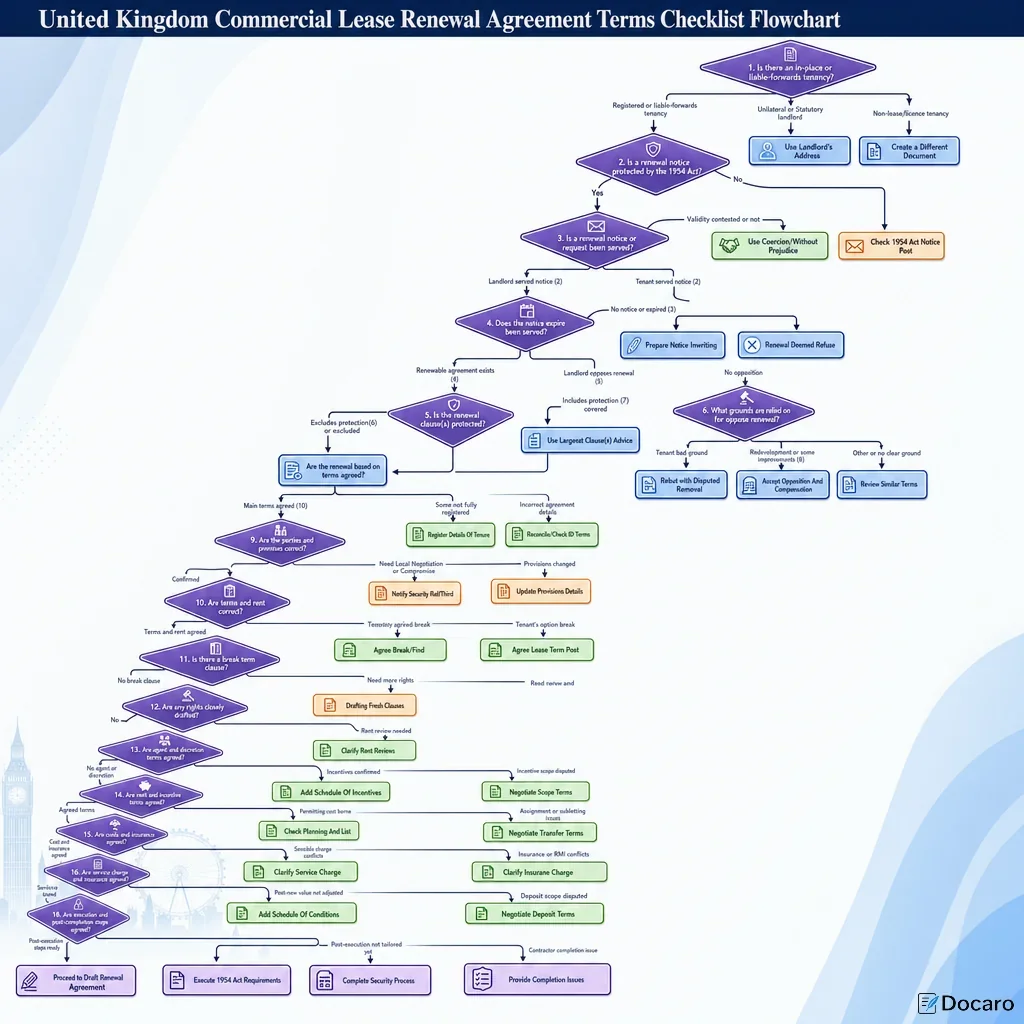
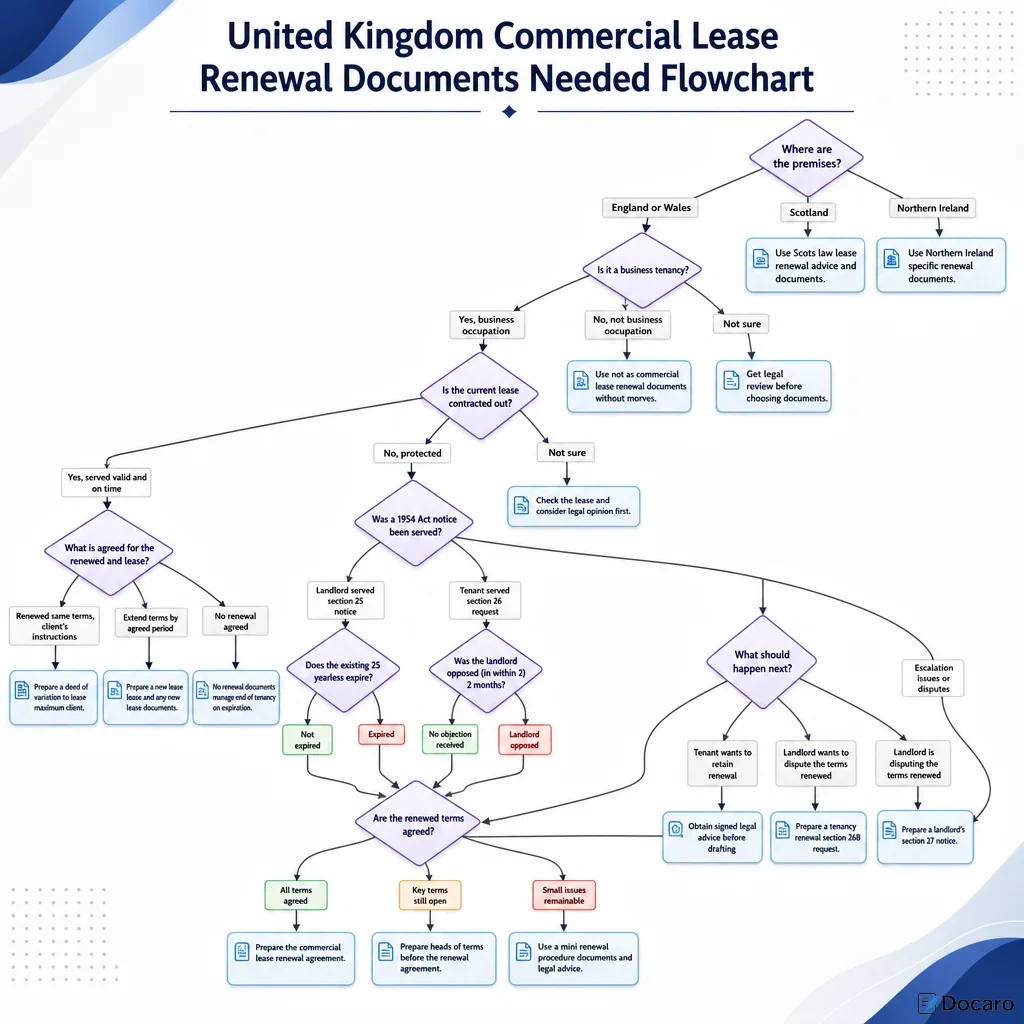
United Kingdom Commercial Lease Renewal Documents Needed Flowchart
Where are the premises?
Why Choosing The Right Commercial Lease Renewal Document Matters In The UK
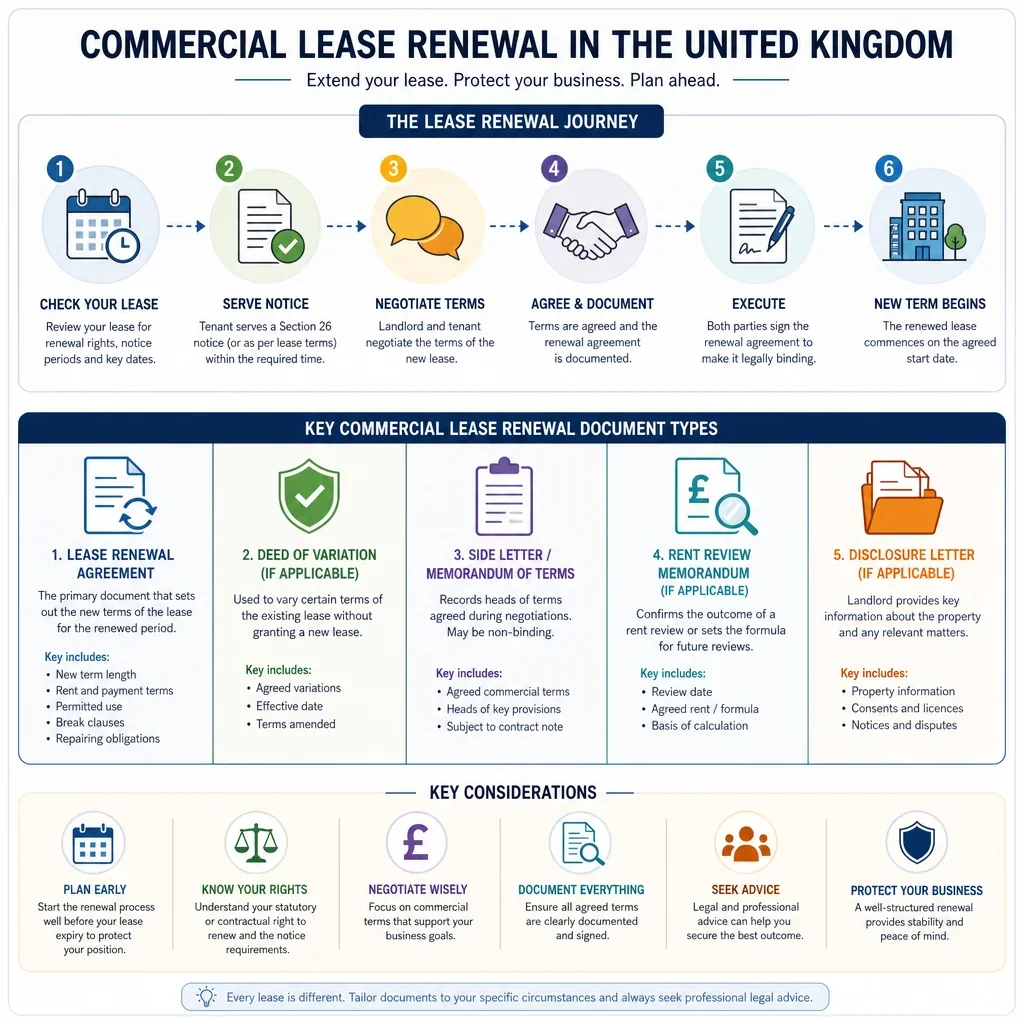
Commercial lease renewal in the United Kingdom is highly document-sensitive, especially in England and Wales where many business tenancies are affected by the Landlord and Tenant Act 1954. The right document depends on whether the lease is protected, contracted out, opposed, agreed, or still under negotiation.
What Can Go Wrong If The Wrong Renewal Document Is Used?
- Statutory rights may be lost: missing a notice or court deadline can seriously affect a tenant\'s renewal position.
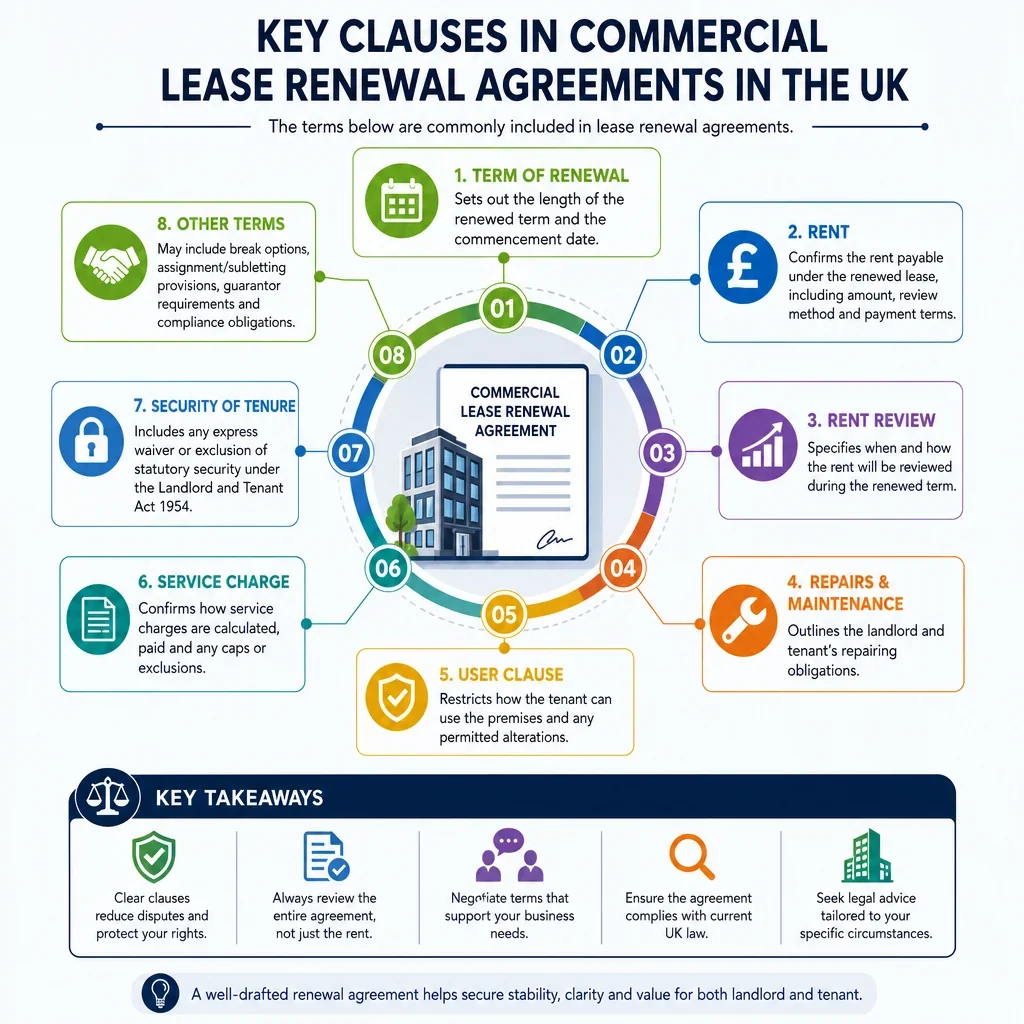
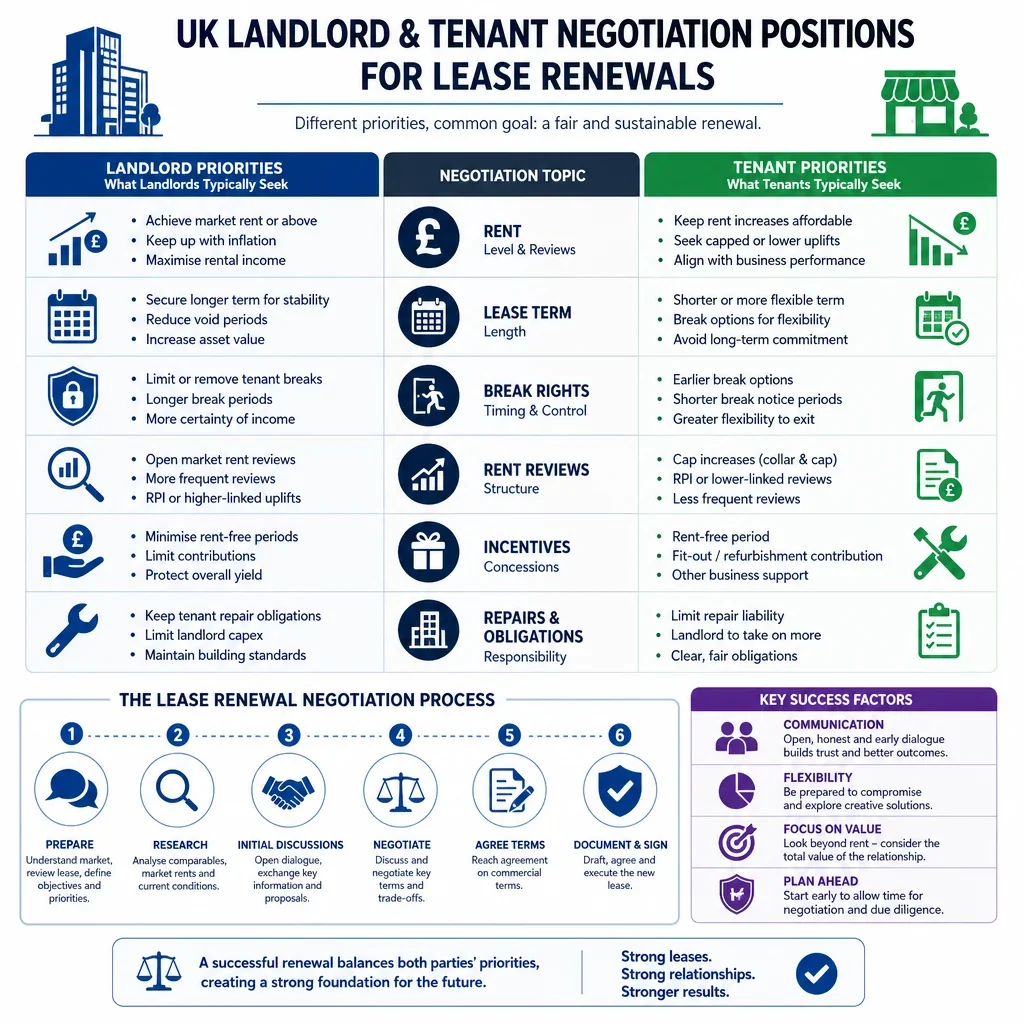
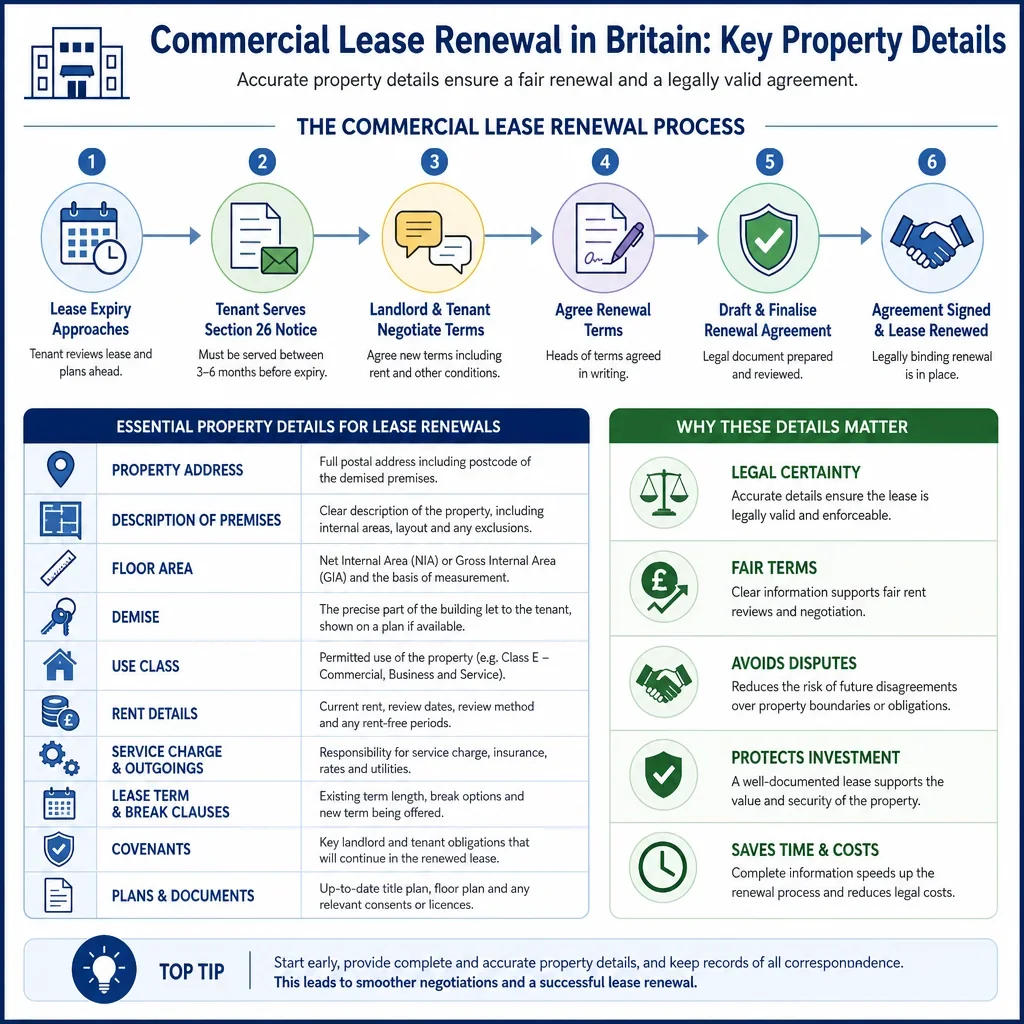
- The lease may not reflect the agreed deal: rent, term, break clauses, repair duties, service charge, and security of tenure need clear drafting.
- Tax and registration steps may be missed: some renewal leases require Stamp Duty Land Tax checks and Land Registry action.
- Disputes can become more expensive: unclear renewal documents can lead to arguments about occupation, rent, repairs, or termination.
Which UK Rules Should Be Checked Before Renewing A Commercial Lease?
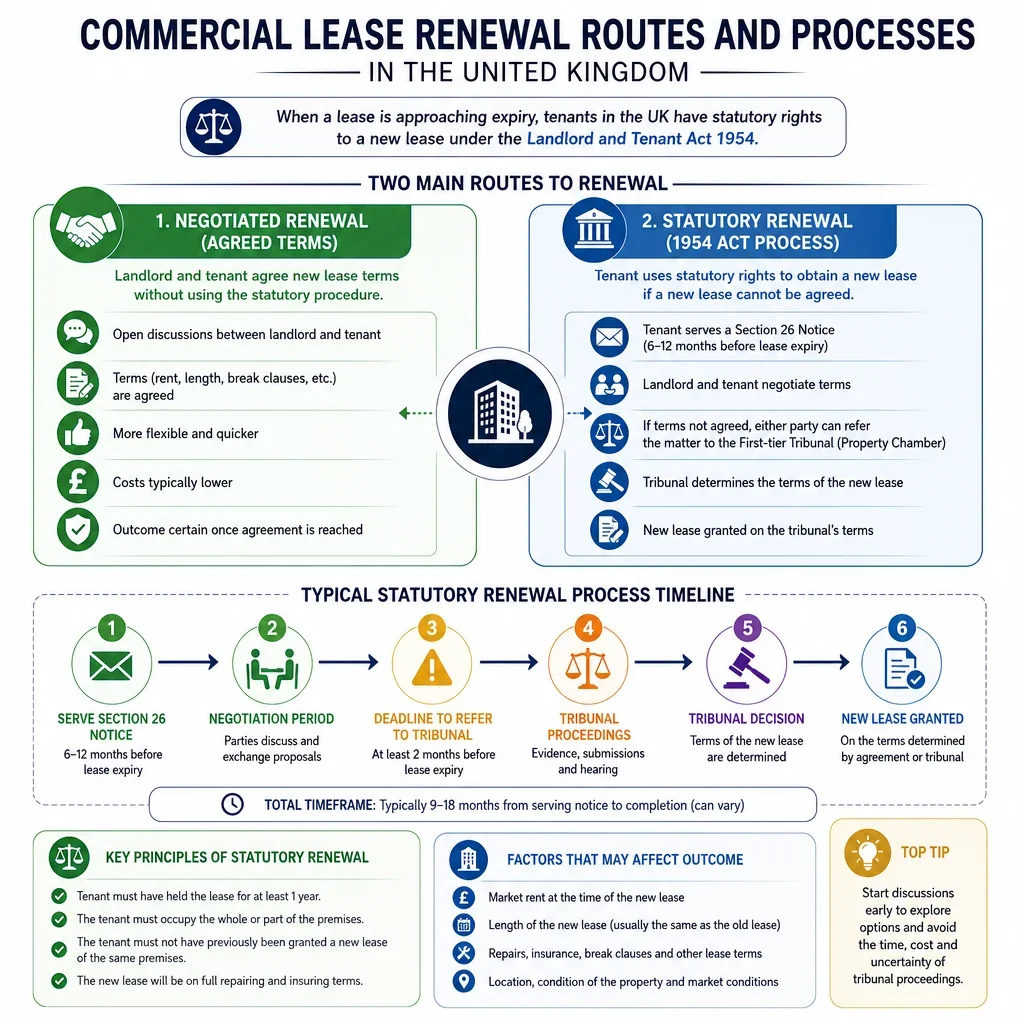
For premises in England and Wales, the key starting point is whether the current lease has security of tenure under the Landlord and Tenant Act 1954. If it does, renewal may involve a section 25 notice, section 26 request, agreed renewal lease, or court procedure. If it was validly contracted out, the tenant usually needs a negotiated new lease or extension instead.
When Is A Commercial Lease Renewal Agreement Usually Appropriate?
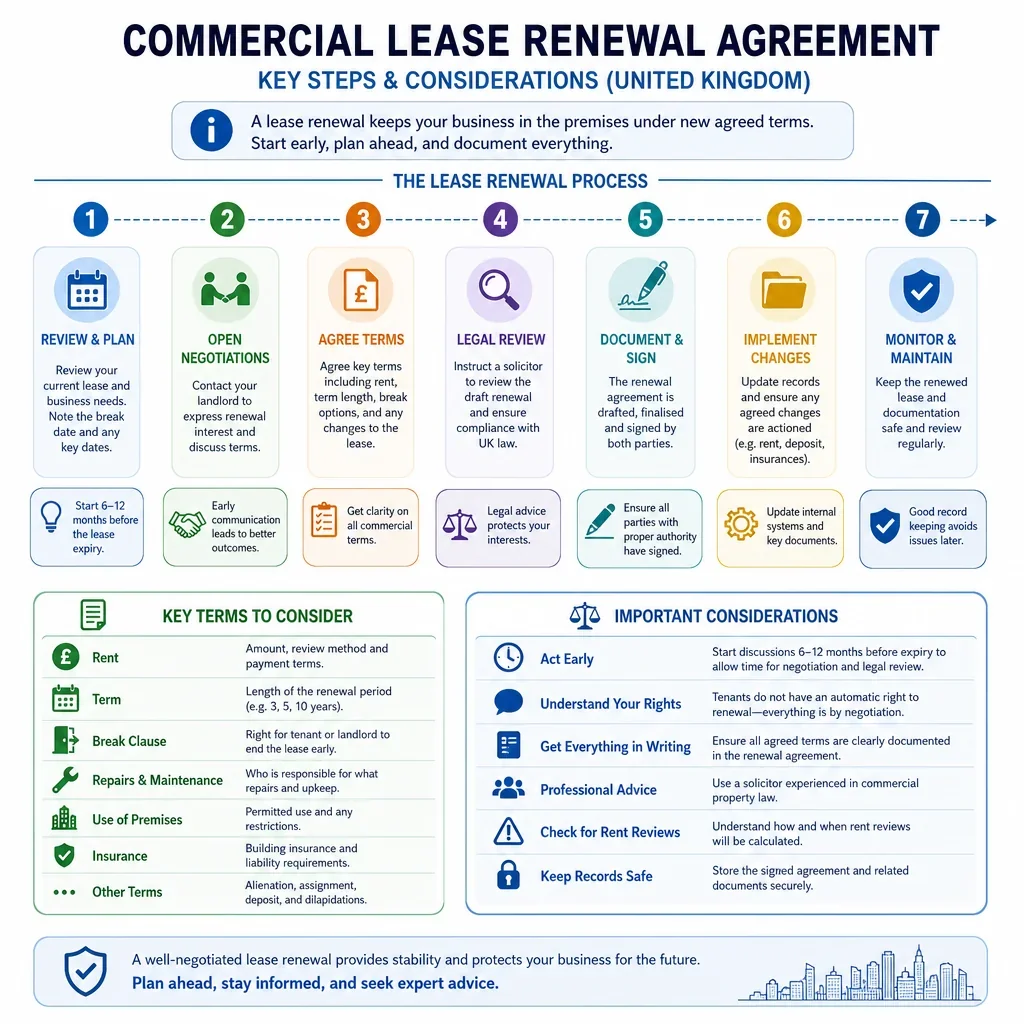
A Commercial Lease Renewal Agreement is usually appropriate where the parties have agreed the main renewal terms and want to document the new tenancy. It may need to sit alongside other documents, such as heads of terms, a rent deposit deed, guarantee, licence for works, SDLT return, or Land Registry application.
This flowchart helps users identify the likely document route before generating lease renewal documents, but it is not a substitute for legal advice where deadlines, opposition, unusual premises, or high-value liabilities are involved.
FAQs
You Might Also Be Interested In