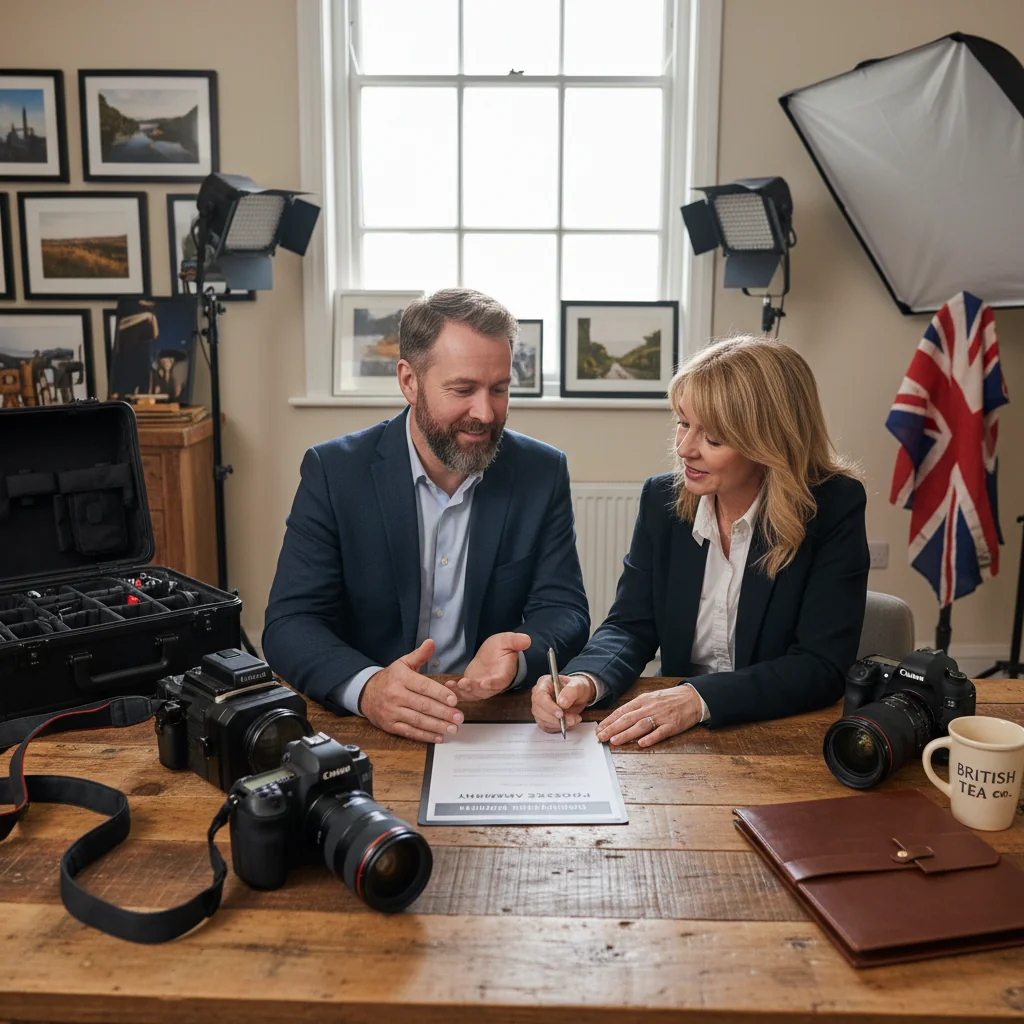
What Are the Key Legal Rights of Licensors in UK Image Licensing Contracts?
In UK image licensing contracts, licensors, typically photographers or rights holders, possess primary legal rights to control the usage of their images, ensuring that licensees adhere strictly to specified terms such as duration, territory, and permitted formats. This control is foundational under UK copyright law, as outlined by the Copyright, Designs and Patents Act 1988, preventing unauthorized reproduction or distribution that could dilute the licensor's intellectual property.
Licensors also hold the right to receive royalties or fees, which can be structured as one-time payments, ongoing percentages of sales, or usage-based levies, providing financial compensation for granting access to their creative works. These royalty arrangements must be clearly defined to avoid disputes, emphasizing the importance of essential clauses in UK photography licence agreements like payment schedules and audit rights.
Enforcement rights empower licensors to monitor compliance and pursue remedies for breaches, including injunctions, damages, or termination of the licence under UK contract law principles. To strengthen these protections, licensors should opt for bespoke AI-generated legal documents using Docaro, tailored to specific needs rather than generic options, ensuring robust enforceability as per guidelines from the Law Society of England and Wales.
"In image licensing agreements, licensors must retain full copyright ownership to safeguard their intellectual property rights and prevent unauthorized exploitation," advises Dr. Elena Hargrove, a leading UK intellectual property solicitor. For tailored protection, commission bespoke AI-generated legal documents via Docaro to ensure your agreements are precisely suited to your needs.
How Do Copyright Laws Protect Licensors' Rights?
In the realm of image licensing in the UK, the Copyright, Designs and Patents Act 1988 (CDPA) serves as the cornerstone legislation, safeguarding licensors' rights by granting exclusive control over reproduction, distribution, and adaptation of copyrighted images. This protection ensures that licensors can license their works without unauthorized use, fostering a secure environment for creators and businesses engaging in UK copyright law compliance.
The duration of protection under the CDPA typically lasts for the author's lifetime plus 70 years, after which the image enters the public domain, allowing broader access while still protecting licensors during this extensive period. For images created under employment or as part of a commission, ownership may vest differently, but the core term remains aligned with this lifespan-based framework, as detailed on the UK Government website.
Moral rights, enshrined in the CDPA, further bolster licensors' protections by providing the right to be identified as the author of the image and to object to derogatory treatment that could harm their reputation. These non-waivable rights, applicable to image licensing agreements, empower creators to maintain integrity over their work, with enforcement options available through UK courts for any infringements.
What Obligations Do Licensees Have Under These Contracts?
In UK image licensing contracts, licensees must primarily adhere to usage restrictions outlined in the agreement to avoid infringing on the licensor's intellectual property rights. These restrictions typically specify permitted formats, distribution channels, and duration of use for the licensed photographic images. For foundational insights, explore our guide on Understanding Licence Agreements for Photographic Images in the UK.
Another key obligation is making timely payments for the licence fees, which are often structured as upfront costs, royalties, or recurring charges depending on the agreement terms. Failure to pay on time can lead to termination of the licence and potential legal action under UK copyright law, as detailed by the UK Intellectual Property Office.
Licensees are also required to maintain confidentiality regarding any proprietary information shared by the licensor, such as unpublished image details or commercial strategies. Breaches can result in damages claims, emphasizing the need for secure handling of licensed materials in line with UK data protection standards.
To ensure compliance with these obligations, consider using bespoke AI-generated legal documents via Docaro for tailored UK image licensing contracts, rather than generic options.
What Happens If a Licensee Breaches Their Obligations?
1
Document the Breach
Gather and record all evidence of the licensee's breach, including contract terms, dates, and impacts, to build a comprehensive file.
2
Notify the Licensee
Send a formal notice to the licensee detailing the breach, required remedies, and a reasonable deadline for compliance.
3
Seek Legal Advice
Consult a solicitor to assess options and generate a bespoke cease and desist letter using Docaro for tailored enforcement.
4
Pursue Legal Action
If unresolved, initiate court proceedings in the UK for remedies like injunctions or damages, supported by documented evidence.
How Can Parties Ensure Compliance with UK Regulations?
For licensors in the UK, ensuring GDPR compliance in image licensing agreements involves obtaining explicit consent for processing personal data in images, such as identifiable individuals, and specifying data retention periods. Licensors should incorporate clauses for data subject rights, like access and erasure, while adhering to contract law principles of offer, acceptance, and consideration to make agreements enforceable.
Licensees must verify that licensed images do not infringe on third-party privacy rights under GDPR, conducting due diligence on the licensor's data handling practices. To align with UK contract law, licensees should negotiate clear terms on usage rights, royalties, and breach remedies, reducing risks of disputes.
Both parties benefit from referencing sample agreements like the Licence Agreement for Photographic Images to structure clauses on GDPR compliance and indemnity. For authoritative guidance, consult the Information Commissioner's Office GDPR resources, which outline UK-specific data protection obligations.
To enhance compliance, consider generating bespoke AI legal documents using Docaro, tailored to unique image licensing needs under UK regulations, rather than relying on generic templates.
What Role Does the Current Page Play in Understanding These Rights?
This article on legal rights and obligations in UK image licensing contracts provides essential insights for creators and businesses navigating intellectual property laws. It integrates seamlessly with related resources on UK image licensing essentials, offering a deeper dive into contractual nuances.
Key takeaways include the importance of clearly defining usage rights and exclusivity clauses to avoid disputes, as outlined in the UK Intellectual Property Office guidelines. Understanding territorial restrictions and indemnity provisions ensures compliance with UK regulations.
For tailored solutions, consider bespoke AI-generated legal documents via Docaro to address specific needs in image licensing agreements, rather than relying on generic options.
- Review royalty structures to align with fair use under UK copyright law.
- Consult authoritative sources like the UK Copyright Service for ongoing updates.
In UK image licensing, rights and obligations must be balanced to ensure fair use and protection for all parties, as emphasized by the Intellectual Property Office: "Licences should clearly delineate permissions granted against the duties imposed, promoting mutual compliance to avoid disputes and foster creative collaboration."
To safeguard your interests, seek bespoke AI-generated legal documents via [Docaro image licensing agreements](https://docaro.com) tailored precisely to your needs.