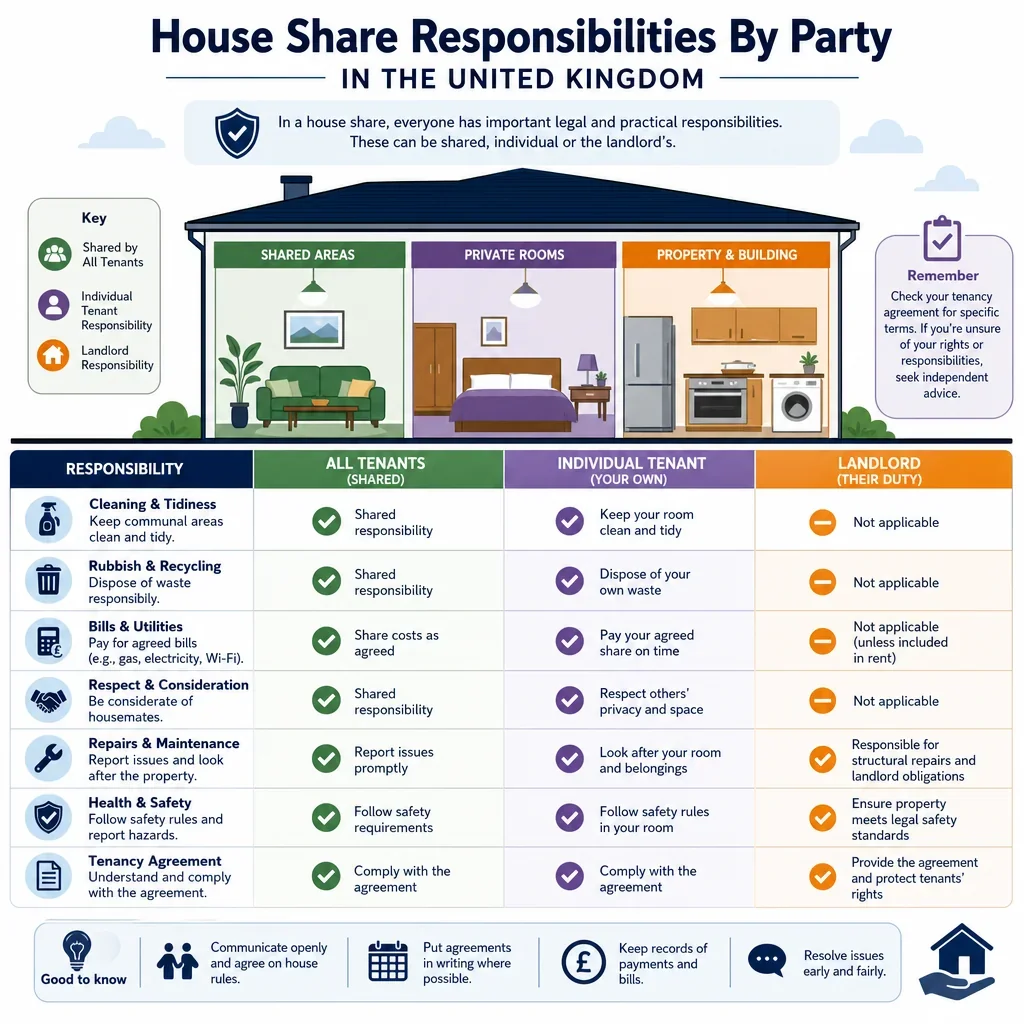
House Share Responsibilities By Party In The United Kingdom
Responsibility | Responsibility Category | Description | Agreement Notes |
|---|---|---|---|
Tenant | |||
Paying rent on time | Financial | Tenant must pay the agreed rent by the due date, including any agreed share in a joint tenancy. | State rent amount, due date, payment method, account details, arrears procedure and whether liability is joint or individual. |
Council tax payment | Financial | Occupiers usually pay council tax unless the property type or agreement makes the landlord liable. | State who registers with the council, pays council tax, claims discounts and reimburses other occupiers if one person pays. |
Paying gas, electricity and water bills | Financial | Housemates usually share utilities unless bills are included in the rent. | Specify included bills, excluded bills, payment shares, meter readings, supplier changes and repayment deadlines. |
Household | |||
Broadband, TV and streaming accounts | Financial | Housemates decide who contracts for optional services and how costs are shared. | Record account holder, monthly contributions, cancellation rules and liability for early termination fees. |
Tenant | |||
TV licence | Financial | Tenants may need a TV licence if watching or recording live TV or using BBC iPlayer. | State that tenants are responsible for any TV licence needed for their use or shared household use. |
Paying the tenancy deposit | Financial | Tenant pays any agreed deposit before or at the start of the tenancy, subject to legal limits in England. | State deposit amount, permitted deductions, scheme details and how deductions are apportioned in a shared house. |
Landlord | |||
Protecting the tenancy deposit | Administration | Landlord must protect an assured shorthold tenancy deposit in an approved scheme and provide prescribed information. | Identify the deposit scheme, deadline for protection, prescribed information and process for return or dispute. |
Both Landlord and Tenant | |||
Handling any holding deposit | Financial | Holding deposits in England are restricted and must be repaid or applied according to the Tenant Fees Act rules. | State amount, deadline for agreement, when it is refundable and when it may be retained. |
Landlord | |||
Avoiding prohibited tenant fees | Financial | Landlords and agents in England must not charge tenants prohibited fees outside permitted payments. | List only permitted payments, such as rent, deposit, holding deposit, utilities, default fees and agreed variation fees where lawful. |
Both Landlord and Tenant | |||
Late rent interest or default charges | Financial | In England, default fees are limited and must fit the Tenant Fees Act rules. | Include only lawful default charges, with clear trigger, amount and evidence requirements. |
Check-in inventory and condition report | Administration | Parties should record room contents, communal items, meter readings, keys and existing damage at move-in. | Attach inventory, require comments within a set period and state it will be used for deposit deductions. |
Keeping payment records | Administration | Both sides should keep records of rent, deposits, bills and reimbursements to avoid disputes. | Require bank transfer references, receipts on request and shared records for communal bills. |
Tenant | |||
Using the property in a tenant-like manner | Property Care | Tenant should do minor everyday tasks such as changing bulbs, keeping drains clear and avoiding careless damage. | List examples of normal tenant-like duties without shifting statutory repair obligations to tenants. |
Avoiding damage to the property | Property Care | Tenants must avoid deliberate, negligent or careless damage by themselves, guests or invitees. | State tenants are liable for damage beyond fair wear and tear, including damage caused by visitors. |
Landlord | |||
Allowing for fair wear and tear | Financial | Landlord should not deduct from the deposit for ordinary deterioration caused by normal use. | State that deductions may cover loss or damage but not fair wear and tear or betterment. |
Household | |||
Cleaning shared areas | Property Care | Housemates should keep kitchens, bathrooms, halls and lounges clean and hygienic between professional cleans, if any. | Include a cleaning rota, minimum standards, consequences for repeated failure and rules for shared supplies. |
Tenant | |||
Cleaning own bedroom | Property Care | Each tenant should keep their own room clean, ventilated and free from avoidable pest or mould risks. | Require tenants to maintain private rooms in a clean condition and allow inspection on proper notice. |
Household | |||
Putting out rubbish and recycling | Property Care | Housemates should use the correct bins and put them out and back on local collection days. | Set a bin rota, require proper recycling and make tenants responsible for fines caused by misuse. |
Tenant | |||
Preventing pests from poor housekeeping | Property Care | Tenants should store food properly, remove waste and avoid conduct that causes infestation. | State tenants must report pests quickly and may be liable where infestation is caused by poor hygiene. |
Landlord | |||
Dealing with pests caused by disrepair | Property Care | Landlord may be responsible where pests enter because of structural defects or disrepair. | Require prompt pest reporting and reserve landlord responsibility for infestations linked to defects or disrepair. |
Both Landlord and Tenant | |||
Managing condensation and ventilation | Property Care | Tenants should ventilate and heat reasonably landlords must address damp and mould linked to defects or unsafe conditions. | Include tenant ventilation duties and a clear repair reporting route for damp, leaks and mould. |
Tenant | |||
Reporting repairs promptly | Property Care | Tenant should tell the landlord or agent quickly about defects, leaks, hazards or broken fixtures. | Provide reporting contact details, emergency procedure and duty to mitigate damage where safe. |
Landlord | |||
Keeping structure and exterior in repair | Property Care | Landlord is generally responsible for repair of the structure, exterior, drains, gutters and external pipes. | Confirm statutory repair duties and require tenants to report defects and allow access for works. |
Repairing water, gas, electricity and sanitation installations | Property Care | Landlord must keep installations for water, gas, electricity, sanitation and space or water heating in repair. | State landlord repair duties and tenant obligation not to misuse installations. |
Maintaining heating and hot water systems | Property Care | Landlord is responsible for keeping space heating and water heating installations in proper repair and working order. | Set emergency reporting rules for loss of heating or hot water and access arrangements for engineers. |
Tenant | |||
Minor maintenance tasks | Property Care | Tenants usually handle small everyday tasks such as replacing bulbs, batteries and unblocking sinks they have blocked. | List minor tasks expected from tenants, excluding repairs that law places on the landlord. |
Landlord | |||
Maintaining landlord-supplied appliances | Property Care | Landlord should repair or replace supplied appliances if the tenancy says they are included, subject to misuse. | List supplied appliances, repair procedure and tenant liability for misuse or accidental damage. |
Tenant | |||
Maintaining tenant-owned appliances | Safety | Tenants are responsible for their own appliances and should not use unsafe or overloaded equipment. | Require portable appliances brought by tenants to be safe, undamaged and used according to manufacturer instructions. |
Basic garden upkeep | Property Care | Tenants may be expected to keep gardens tidy if the tenancy gives them garden use and tools are available. | Specify mowing, weeding, watering, waste removal, tool provision and any areas excluded from tenant responsibility. |
Landlord | |||
Tree surgery and major garden works | Property Care | Landlord usually handles specialist or structural garden works, such as unsafe trees or boundary repairs. | Exclude major landscaping, tree works and fence repairs from ordinary tenant garden duties unless specifically agreed. |
Tenant | |||
Allowing access for inspections and repairs | Administration | Tenant should allow reasonable access on notice so the landlord can inspect or carry out repairs. | State minimum notice, access hours, emergency access and procedure for arranging contractor visits. |
Landlord | |||
Respecting tenant quiet enjoyment | Conduct | Landlord must not harass tenants or enter private rooms without proper notice or lawful reason. | Include access notice rules, emergency exceptions and confirmation that tenants have peaceful occupation. |
Tenant | |||
Keys, fobs and access devices | Administration | Tenants must keep keys safe, not copy them without permission and return them at the end. | State number of keys issued, replacement costs where lawful, copying restrictions and return deadline. |
Both Landlord and Tenant | |||
Changing locks | Safety | Locks should not be changed without agreement except in urgent safety situations, and the landlord may need access keys. | Require written consent for lock changes and prompt provision of keys, subject to safety and legal rights. |
Household | |||
Securing doors and windows | Safety | Housemates should lock external doors and windows and avoid letting unauthorised people into the property. | Set rules for locking up, lost keys, shared access codes and reporting security faults immediately. |
Landlord | |||
Annual gas safety check | Safety | Landlord must arrange annual gas safety checks by a Gas Safe registered engineer where gas appliances are provided. | Require access for gas checks and provide tenants with the latest gas safety record. |
Providing gas safety record | Administration | Landlord must give tenants a copy of the gas safety record within the required timeframe. | Record how and when the gas safety record will be supplied and acknowledged. |
Electrical installation safety checks | Safety | Private landlords in England must have electrical installations inspected and tested at least every five years. | Require access for electrical inspections and provide the electrical safety report where required. |
Installing smoke alarms | Safety | Landlord must ensure required smoke alarms are installed in rented homes in England. | State alarm locations and landlord responsibility for installation and checks at the start of tenancy. |
Installing carbon monoxide alarms | Safety | Landlord must provide carbon monoxide alarms in rooms with fixed combustion appliances, subject to the regulations. | List rooms requiring carbon monoxide alarms and state reporting process if an alarm is missing or faulty. |
Tenant | |||
Testing smoke and carbon monoxide alarms during tenancy | Safety | After move-in, tenants should test alarms regularly and report faults or low batteries promptly. | Require monthly testing, battery replacement where appropriate and immediate reporting of faults. |
Both Landlord and Tenant | |||
Maintaining fire doors and escape routes | Safety | Landlord must manage fire safety duties tenants must not obstruct exits, wedge fire doors or damage fire equipment. | Prohibit wedging fire doors, blocking corridors or tampering with alarms, and require immediate fault reporting. |
Landlord | |||
HMO fire safety precautions | Safety | HMO managers must maintain fire precautions, escape routes and shared facilities to required standards. | State tenant duties to cooperate with HMO fire rules and report defects, without reducing landlord management duties. |
Obtaining any required HMO licence | Administration | Landlord must obtain a mandatory or local HMO licence where the shared house meets licensing criteria. | Include landlord confirmation of licence status and tenant duty not to exceed permitted occupier numbers. |
Both Landlord and Tenant | |||
Avoiding overcrowding | Safety | The property must not be occupied beyond lawful or licensed limits tenants should not move in extra occupiers. | State permitted occupiers, bedroom allocation and ban on additional residents without written consent. |
Landlord | |||
Keeping the home fit for human habitation | Safety | Landlord must ensure the dwelling is fit for habitation at the start and throughout the tenancy, subject to statutory rules. | Do not exclude fitness duties include repair reporting and emergency contact arrangements. |
Providing an Energy Performance Certificate | Administration | Landlord must usually provide a valid EPC when letting a property, unless an exemption applies. | Record EPC rating, date provided and any valid exemption if applicable. |
Providing the How to Rent guide | Administration | For many assured shorthold tenancies in England, landlord must give the current How to Rent guide. | State the guide was provided, format used and date of service. |
Carrying out Right to Rent checks | Administration | Landlords in England must check adult occupiers have the right to rent before granting occupation. | Require tenants and permitted occupiers to provide documents or share codes before occupation. |
Handling tenant personal data | Administration | Landlord or agent must handle tenant personal data lawfully, securely and for proper tenancy purposes. | Include or link to a privacy notice explaining identity checks, references, rent records and contractor access data. |
Tenant | |||
Following house rules | Conduct | Tenants must follow agreed rules for shared living, provided they are fair and consistent with tenancy rights. | Attach house rules covering cleaning, noise, guests, smoking, bins, shared items and dispute resolution. |
Keeping noise reasonable | Conduct | Tenants should avoid excessive noise that disturbs housemates, neighbours or causes statutory nuisance complaints. | Set quiet hours, party rules, music limits and escalation steps for repeated disturbance. |
Avoiding antisocial behaviour | Conduct | Tenants and their guests must not harass, threaten, abuse or seriously disturb housemates, neighbours or the landlord. | Define unacceptable behaviour and state that serious or repeated breach may lead to enforcement action. |
Not using the property for illegal activity | Conduct | Tenants must not use the property for crime, drug production, unlawful business or other illegal purposes. | Prohibit illegal use and require tenants to ensure guests also comply. |
Managing visitors and overnight guests | Conduct | Tenants may have reasonable visitors but should not create nuisance, overcrowding or unauthorised occupation. | Set guest limits, overnight rules, responsibility for visitor damage and consent requirement for long stays. |
Subletting or taking in lodgers | Administration | Tenants should not sublet, assign or take in lodgers without consent if the agreement restricts it. | State whether subletting, assignment or lodgers are prohibited or require prior written consent. |
Both Landlord and Tenant | |||
Arranging replacement housemates | Administration | If a tenant wants to leave early, the agreement should control how a replacement is approved and documented. | Set consent process, referencing, deed of assignment or new agreement, costs where lawful and deposit apportionment. |
Tenant | |||
Keeping pets | Conduct | Tenants should obtain any required consent before keeping pets and prevent damage, odour, noise or allergy issues. | State pet consent rules, cleaning obligations, damage liability and any reasonable conditions. |
Smoking and vaping rules | Conduct | Tenants must follow any no-smoking rules and avoid smoke damage, odour and fire risk. | State whether smoking or vaping is banned indoors, permitted outside only, and liability for cleaning or damage. |
Using candles, heaters and fire-risk items safely | Safety | Tenants should avoid unsafe candles, overloaded sockets, unattended cooking and unapproved portable heaters. | Ban or restrict high-risk items and require compliance with fire safety instructions. |
Household | |||
Kitchen and cooking safety | Safety | Housemates should keep cooking areas clean, avoid unattended cooking and use appliances safely. | Include kitchen cleaning, safe cooking rules and duty to report faulty cookers, extractors or sockets. |
Shared food storage and hygiene | Property Care | Housemates should keep fridges, cupboards and food preparation areas hygienic and avoid taking others' food. | Set fridge space, labelling, expired food disposal and rules for shared basics. |
Tenant | |||
Alterations, decorating and fixtures | Property Care | Tenants should not redecorate, drill, install fixtures or alter rooms without permission if the agreement restricts it. | Require written consent for alterations and state reinstatement and damage repair obligations. |
Household | |||
Care of shared furniture and furnishings | Property Care | Housemates should use shared furniture properly and report damage or safety issues. | List communal furniture in the inventory and explain shared liability where the responsible person cannot be identified. |
Landlord | |||
Providing fire-safe upholstered furniture | Safety | Landlord-supplied upholstered furniture must comply with fire safety requirements unless an exemption applies. | List landlord furniture and prohibit tenants from removing fire labels or adding unsafe communal furniture. |
Maintaining lighting in shared areas | Safety | Landlord should keep fixed lighting installations in communal areas safe and in repair tenants report faults. | State who replaces bulbs in shared areas and how electrical lighting faults are reported. |
Household | |||
Keeping hallways and stairs clear | Safety | Housemates should not store bikes, shoes, rubbish or furniture where they block escape routes. | Ban storage in corridors and stairs and allow removal of items blocking escape routes. |
Tenant | |||
Bicycle and scooter storage | Conduct | Tenants should store bikes or scooters only in permitted areas and not obstruct access or damage walls. | Identify permitted storage areas and prohibit charging or storage that creates fire or obstruction risks. |
Charging e-bikes and lithium batteries safely | Safety | Tenants should charge lithium batteries safely, avoid damaged chargers and not block escape routes. | Set charging rules, approved locations and ban charging in escape routes or unattended overnight if required. |
Parking and driveway use | Conduct | Tenants must use only allocated parking spaces and avoid blocking neighbours, access or emergency routes. | State parking spaces, permits, visitor parking and responsibility for fines or towing charges. |
Both Landlord and Tenant | |||
Buildings and contents insurance | Financial | Landlord usually insures the building tenants usually insure their own belongings. | Clarify that landlord insurance does not cover tenant possessions and prohibit conduct that invalidates insurance. |
Landlord | |||
Ensuring permission to let | Administration | Landlord should have any mortgage, freeholder or insurance consent needed to let the property as a house share. | Include landlord warranty that they have authority to grant the tenancy. |
Both Landlord and Tenant | |||
Giving notice to end the tenancy | Administration | Notice rules depend on whether the tenancy is fixed-term, periodic, joint or room-only. | State fixed term, break clause, periodic notice requirements and effect of one joint tenant giving notice. |
Landlord | |||
Using the proper legal eviction process | Administration | Landlord must use the correct notice and court process to evict most residential tenants. | State that possession requires lawful notice and process do not include unlawful self-help eviction terms. |
Avoiding harassment and unlawful eviction | Conduct | Landlord must not force tenants out, cut services, change locks unlawfully or harass occupiers. | Confirm landlord will follow lawful access, notice and possession procedures. |
Tenant | |||
End-of-tenancy cleaning | Property Care | Tenant should return their room and shared areas to the required cleanliness standard, allowing for fair wear and tear. | Set cleaning standard by reference to the inventory, not a mandatory paid professional cleaning fee if unlawful. |
Removing belongings at move-out | Administration | Tenant must remove personal items, food, rubbish and furniture they brought when leaving. | State deadline for removal and process for dealing with abandoned goods after notice. |
Household | |||
Final meter readings and bill settlement | Financial | Housemates should record final readings and settle outstanding utilities when someone leaves or the tenancy ends. | Require dated meter photos, final account statements and reimbursement within a set number of days. |
Resolving housemate disputes | Conduct | Housemates should raise issues early about cleaning, noise, bills or guests before disputes escalate. | Include a staged process: informal discussion, written complaint, landlord or agent involvement, then formal remedies. |
Joint and several liability under a joint tenancy | Financial | In a joint tenancy, each tenant may be liable for all rent and obligations, not just their personal share. | Clearly state whether liability is joint and several, and how housemates split payments internally. |
Both Landlord and Tenant | |||
Room-only tenancy responsibilities | Administration | Where each tenant rents only a room, rent and deposits are usually individual and landlord control of common parts is greater. | Define the exclusive room, shared areas, individual rent, individual deposit and common-area rules. |
Landlord | |||
Managing common parts in room lets | Property Care | In many room-only HMOs, landlord or manager retains responsibility for the condition and safety of common parts. | State landlord access and management rights for shared areas and tenant duty to keep them clean after use. |
Both Landlord and Tenant | |||
Complying with HMO licence conditions | Administration | Landlord must comply with licence conditions tenants should not breach occupancy, waste or safety rules linked to the licence. | Attach relevant tenant-facing licence conditions, especially occupancy, waste, fire safety and anti-social behaviour terms. |
Using the agreed communication route | Administration | Parties should use agreed contacts for rent, repairs, emergencies, notices and housemate issues. | List landlord, agent, emergency repair contact, email for notices and expected response times. |
Serving formal notices correctly | Administration | Formal notices must be served using the method and address allowed by the tenancy and law. | State permitted notice methods, service address, email consent if used and deemed service timing. |
Landlord | |||
Providing a landlord address for notices | Administration | Landlord must provide an address in England or Wales where tenants can serve notices. | Include the landlord's section 48 notice address and update it if it changes. |
Providing landlord name and address information | Administration | Tenant can request the landlord's name and address from the person demanding rent. | Include landlord identity and contact details to reduce uncertainty in a managed house share. |
Both Landlord and Tenant | |||
Responding to leaks and floods | Safety | Tenants should report leaks immediately and take safe steps to limit damage landlord arranges necessary repairs. | Provide stopcock location, emergency contact and duty to notify landlord immediately of leaks or flooding. |
Winter precautions and frozen pipes | Property Care | Tenants should use heating reasonably in cold weather landlord should maintain insulation and heating installations. | Require minimum heating or reporting if away in winter, subject to affordability and landlord repair duties. |
Household | |||
Buying shared household supplies | Financial | Housemates may share costs for cleaning products, toilet paper, bin bags and other communal supplies. | Set contribution amount, purchasing rota or shared kitty and what items are included. |
Cleaning ovens, fridges and washing machines | Property Care | Housemates should keep shared appliances clean and report faults or leaks promptly. | Include appliance cleaning rota and ban misuse, overloading or unsafe repairs by tenants. |
Handling post and deliveries | Conduct | Housemates should not open, hide or dispose of others' post and should collect parcels promptly. | Set rules for post areas, parcel acceptance and forwarding post after move-out. |
Tenant | |||
Working from home or business use | Conduct | Ordinary remote work may be allowed, but tenants should not run a disruptive or unlawful business from the property. | Allow ordinary home working but require consent for business use involving visitors, signage, stock, nuisance or insurance risk. |
Reasonable use of included utilities | Financial | Where bills are included, tenants should use utilities reasonably and avoid wasteful or excessive consumption. | Define fair usage, excluded high-consumption items and procedure if usage becomes excessive. |
Landlord | |||
Rent increases | Financial | Landlord must increase rent only as allowed by the tenancy agreement or statutory procedure. | State fixed-term rent, review clause, notice method and any statutory rent increase procedure. |
Both Landlord and Tenant | |||
Guarantor obligations | Financial | If required, guarantor liability should be clearly documented and understood before the tenancy starts. | Use a separate signed guarantor agreement stating scope, duration and whether liability covers joint tenants. |
Tenant | |||
Providing accurate application information | Administration | Tenant should provide truthful identity, income, reference and occupier information before the tenancy is granted. | State that false or misleading information may affect the tenancy application or remedies available. |
Household | |||
Shared bathroom hygiene | Property Care | Housemates should clean bathrooms after use, prevent blockages and report leaks, mould or broken fittings. | Include bathroom cleaning rota, ventilation rules and ban disposal of unsuitable items down toilets or drains. |
Tenant | |||
Avoiding drain and toilet blockages | Property Care | Tenants should not put fat, wipes, sanitary products or unsuitable items down sinks or toilets. | State tenants may be liable for blockages caused by misuse, with shared liability if the person responsible is unknown. |
Landlord | |||
Maintaining shared kitchens and bathrooms in HMOs | Property Care | HMO managers must keep shared facilities and appliances in proper repair, clean condition and working order as required. | Confirm landlord management duties and tenant duty to clean after use and report faults. |
Displaying HMO manager contact details | Administration | HMO manager must display their name, address and telephone number in the property where required. | State where manager details are displayed and how tenants should report urgent issues. |
Providing waste disposal facilities in HMOs | Property Care | HMO manager must provide suitable refuse storage and disposal arrangements under management regulations. | Identify bin storage areas and tenant duties to use facilities properly and follow collection rules. |
Tenant | |||
Using HMO waste facilities properly | Property Care | HMO occupiers must comply with manager instructions for refuse storage and disposal. | Require tenants to use bins correctly and not leave rubbish in common parts or outside permitted areas. |
Landlord | |||
Meeting minimum energy efficiency standards | Safety | Landlord must not usually let a sub-standard domestic property unless a valid exemption applies. | Record EPC rating and any lawful exemption do not pass MEES compliance costs to tenants unlawfully. |
Avoiding unlawful discrimination | Conduct | Landlords and agents must not unlawfully discriminate when advertising, selecting tenants or managing the tenancy. | Use neutral criteria for room allocation, rules and enforcement, and consider reasonable adjustments where required. |
Tenant | |||
Paying for repairs caused by tenant breach | Financial | Tenant may be liable for reasonable repair costs caused by misuse, negligence or breach by the tenant or their guests. | State evidence, quotes, fair wear and tear limits and how shared damage is apportioned if responsibility is unclear. |
Landlord | |||
Responding to repair requests within a reasonable time | Property Care | Landlord should deal with reported repairs within a reasonable time, with urgent hazards handled faster. | Set target response times for emergency, urgent and routine repairs without limiting statutory duties. |
Emergency access | Safety | Landlord may need immediate access in genuine emergencies such as fire, flood, gas leak or serious hazard. | Define emergency circumstances and require landlord to notify tenants as soon as practicable after emergency entry. |
Who Is Usually Responsible For What In A UK House Share?
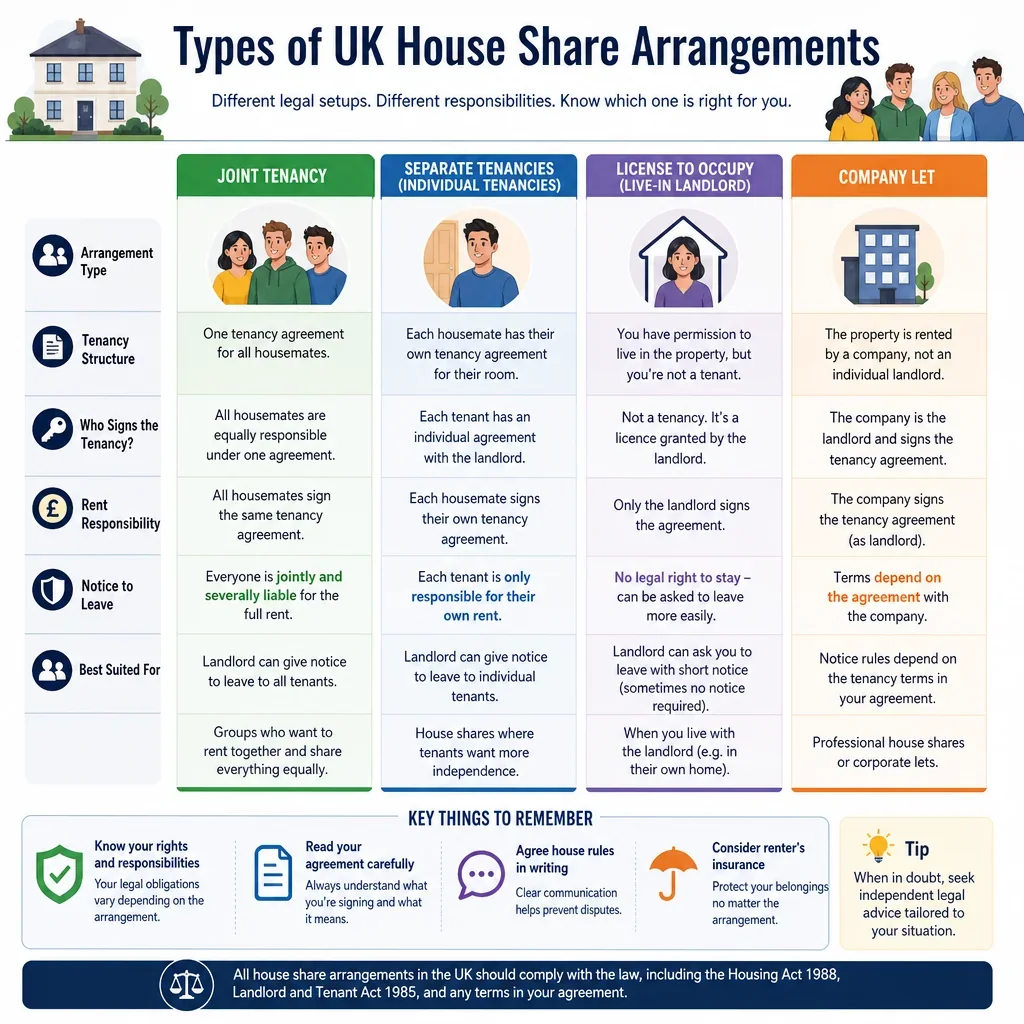
In a house share, tenants usually handle day-to-day living duties such as paying rent, keeping their own room clean, using the property in a tenant-like manner, reporting repairs promptly and following house rules. Landlords are usually responsible for structural repairs, installations for water, gas, electricity, heating, deposit protection, gas safety checks, electrical safety compliance and providing legally required documents.
What Should A House Share Tenancy Agreement Make Clear?
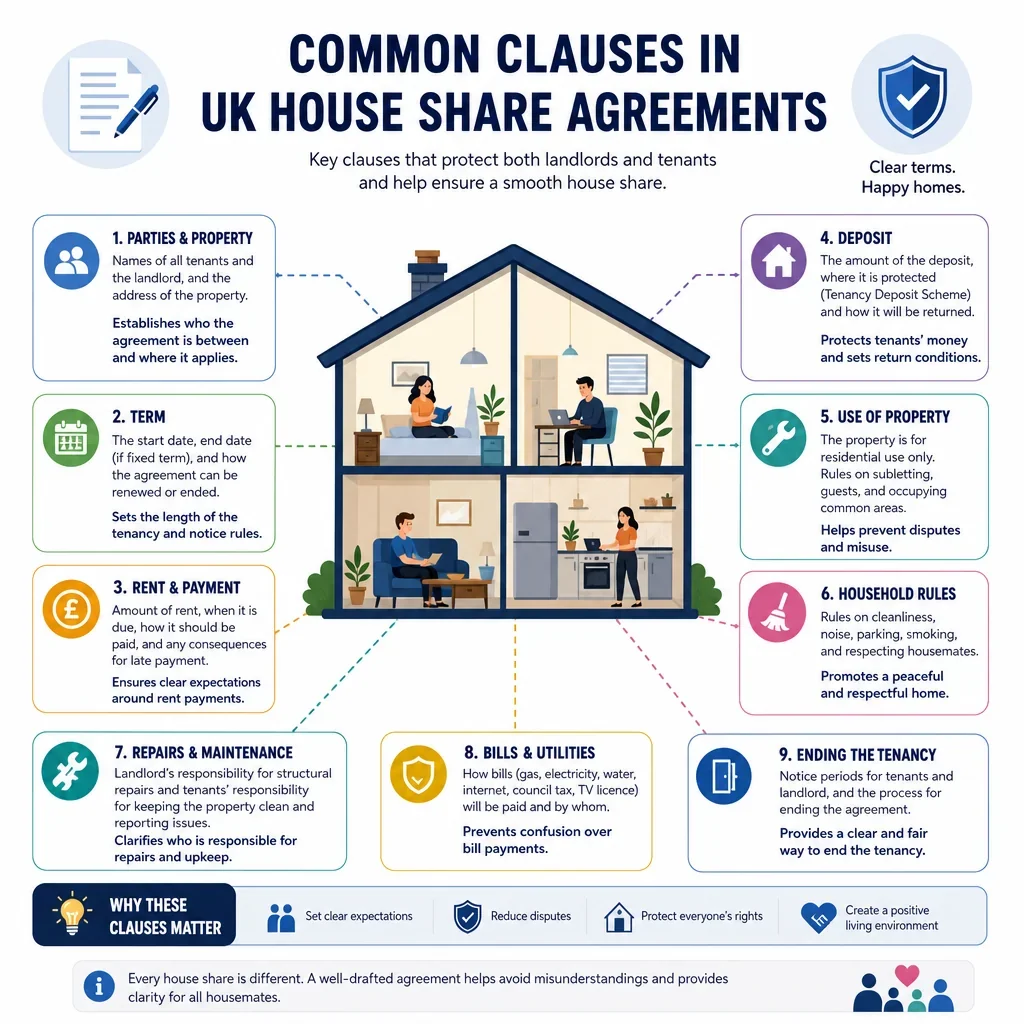
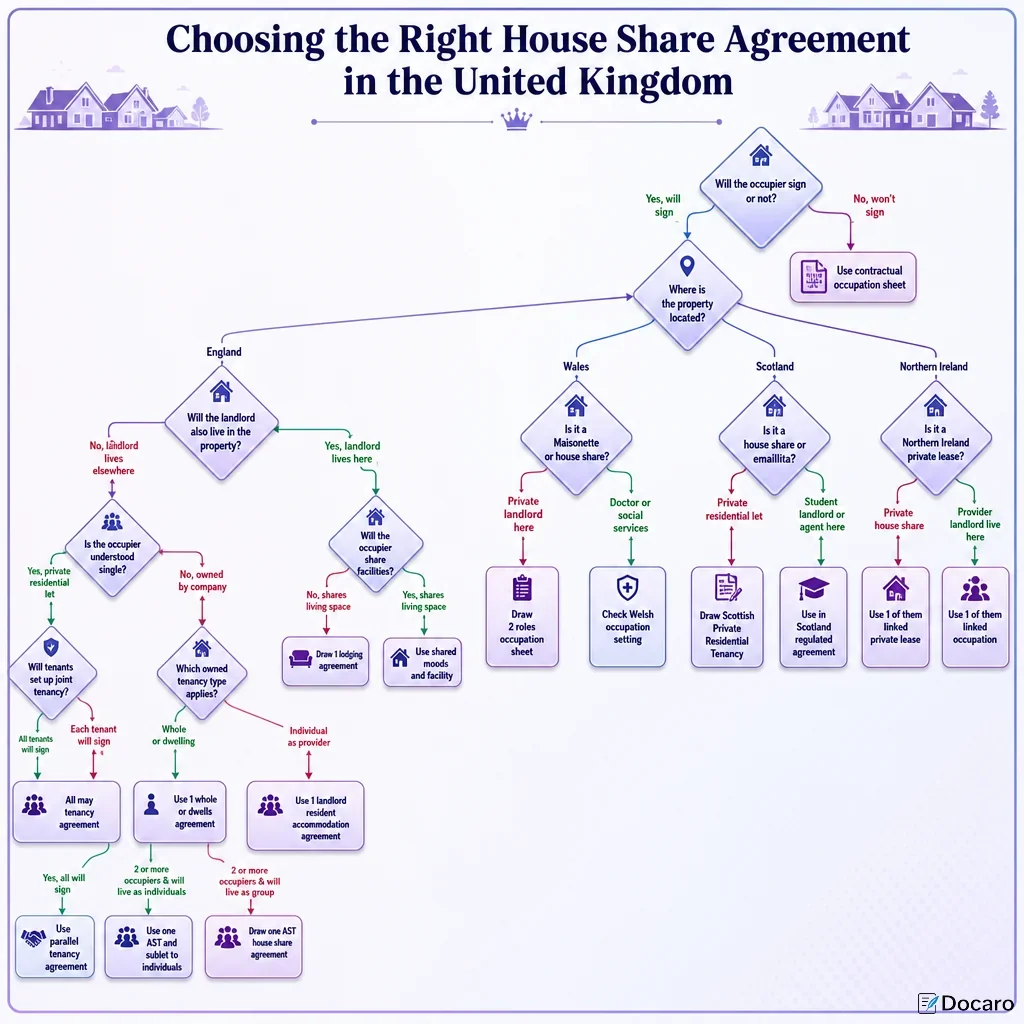
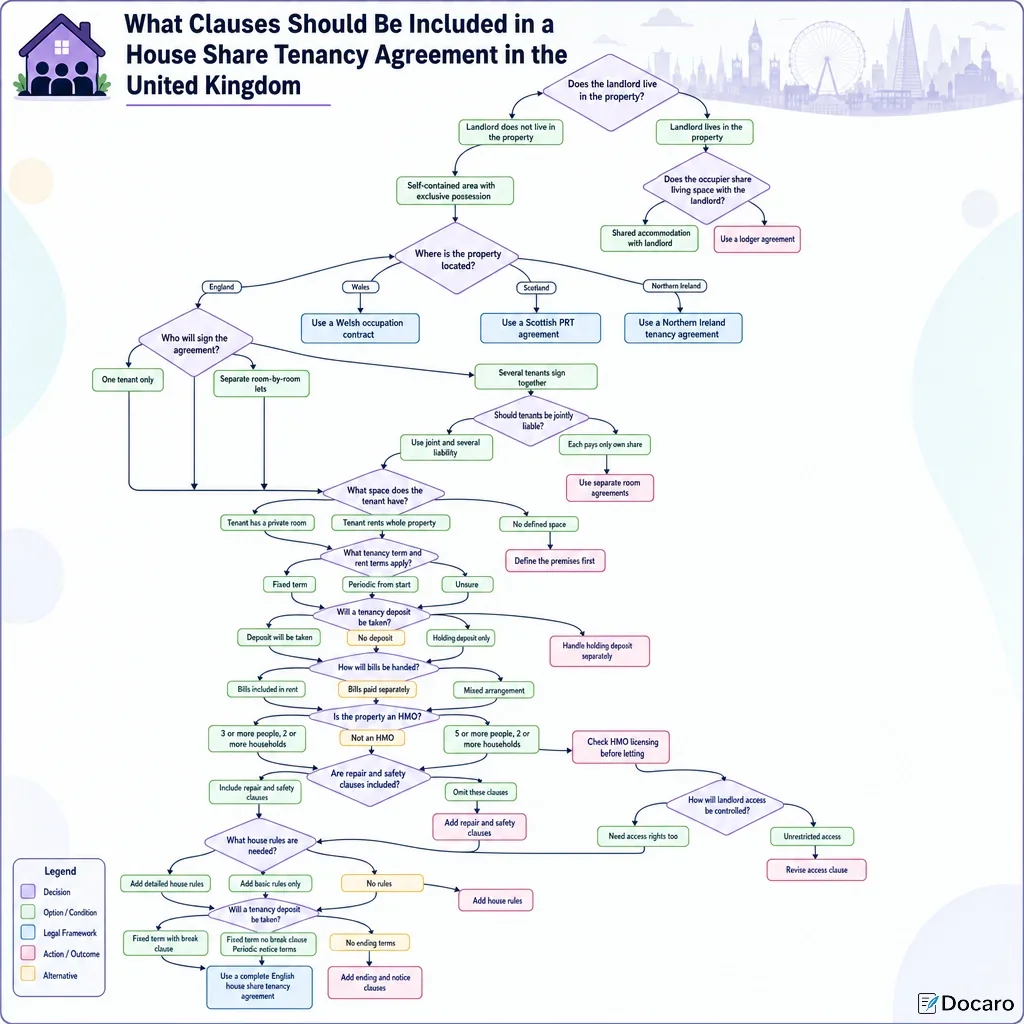
A good house share agreement should state whether the tenancy is joint or room-only, how rent and bills are paid, who maintains communal areas, how damage is dealt with, and how notice, visitors, noise, smoking, pets and keys are controlled. These points are especially important because one tenant\'s behaviour can affect the whole household.
Which House Share Duties Are Legal Requirements?
Some obligations are not optional. In England, deposits must usually be protected in an authorised scheme, gas safety checks must be carried out annually where gas appliances are present, prescribed information must be served, and landlords must comply with repair and safety duties. HMO rules may also require licensing, fire precautions and suitable management arrangements.
Why Do HMO Rules Matter For Shared Houses?
Many shared houses are houses in multiple occupation. If the property is occupied by tenants forming more than one household and sharing facilities, HMO duties may apply. Larger HMOs may need a mandatory licence, and local councils can impose additional or selective licensing. A tenancy agreement cannot remove these statutory landlord duties.
FAQs
You Might Also Be Interested In