

Common Clauses In UK House Share Agreements
Created:
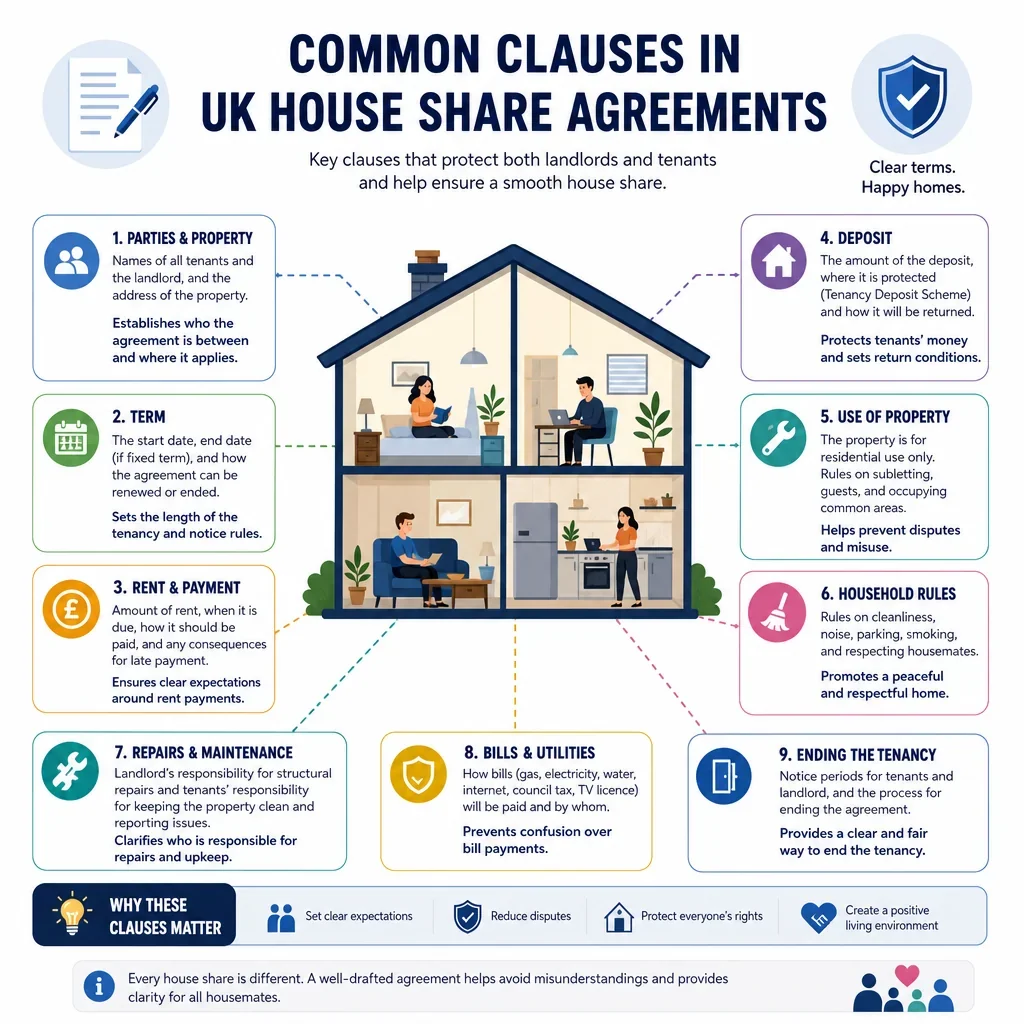
Understanding common clauses helps tenants and landlords avoid disputes and set clear expectations. This guide complements our AI-Generated British Lodger Agreement resources with practical insight into key terms.
Clause Name | Clause Purpose | Main Party Affected | Practical Notes |
|---|---|---|---|
Essential | |||
Parties To The Agreement | Identifies the landlord, tenant or tenants, and any agent. | Both | Use full legal names and service addresses distinguish landlord from managing agent. |
Property And Room Description | Describes the property, rented room, and shared areas. | Both | State whether the tenant has a specific room, shared facilities, parking, garden or storage. |
Tenancy Type | States whether the agreement is an assured shorthold tenancy, licence, or other arrangement. | Both | Labels are not conclusive actual occupation rights and landlord residence matter. |
Term Of Tenancy | Sets the start date, end date, and whether the tenancy continues periodically. | Both | Avoid uncertainty by stating fixed term length and any rolling period after expiry. |
Rent Amount | States how much rent is payable for the room or property. | Both | Specify whether rent is per person, per room, or for the whole household. |
Rent Payment Date And Method | Explains when and how rent must be paid. | Tenant | Include payment frequency, bank details, reference, and treatment of bank holidays. |
Common | |||
Rent Arrears | Sets out consequences if rent is unpaid or late. | Both | Keep charges lawful and proportionate eviction still requires correct legal process. |
Optional | |||
Late Payment Interest | Allows limited interest on rent unpaid for at least 14 days. | Tenant | In England, permitted interest is capped at 3 percent above Bank of England base rate. |
Essential | |||
Tenancy Deposit Amount | Records the deposit paid and what it may cover. | Both | State deductions clearly normal fair wear and tear should not be charged. |
Deposit Protection Scheme | Requires protection of the tenancy deposit in an authorised scheme. | Both | For most ASTs in England and Wales, protect within 30 days and give prescribed information. |
Deposit Cap | Confirms the deposit does not exceed the legal cap in England. | Both | Usually capped at five weeks rent, or six weeks if annual rent exceeds £50,000. |
Optional | |||
Holding Deposit | Explains any pre-tenancy payment to reserve the room. | Tenant | In England, holding deposits are generally capped at one week rent. |
Essential | |||
Permitted Payments And Fees | Limits charges to payments allowed by law. | Both | Do not include banned admin, referencing, inventory or check-out fees for England tenancies. |
Utilities And Bills | Allocates gas, electricity, water, broadband, TV licence and similar costs. | Household | State whether bills are included, capped, reimbursed, or split equally between occupiers. |
Common | |||
Council Tax | Explains who is responsible for council tax. | Both | HMOs can have different liability rules check local billing and student exemptions. |
Essential | |||
Joint And Several Liability | Makes each joint tenant responsible for all rent and obligations. | Tenant | Important for house shares one tenant may be pursued for another tenant’s arrears. |
Common | |||
Individual Room Liability | Limits each tenant’s liability to their own room and agreed shared obligations. | Tenant | Use where tenants have separate agreements rather than one joint tenancy. |
Optional | |||
Guarantor | Records a third party’s promise to cover rent or losses. | Tenant | Use a properly signed guarantee define whether it covers renewal and joint liabilities. |
Essential | |||
Inventory And Schedule Of Condition | Records furniture, contents, cleanliness and condition at move-in. | Both | Attach dated photos and meter readings vital for deposit disputes. |
Landlord Repairs | Confirms landlord duties for structure, exterior, installations, heating and hot water. | Both | Do not try to contract out of statutory repair duties. |
Common | |||
Tenant Care And Minor Maintenance | Requires tenants to use the property responsibly and do minor upkeep. | Tenant | Can cover ventilation, replacing bulbs, reporting leaks, and avoiding blockages. |
Reporting Repairs And Emergencies | Sets how tenants report defects, damage or urgent safety issues. | Household | Provide emergency contacts and require prompt reporting to reduce damage. |
Essential | |||
Fitness For Human Habitation | Confirms the home must be fit to live in throughout the tenancy. | Both | Relevant to damp, mould, hazards, ventilation, sanitation and unsafe conditions. |
Landlord Access And Notice | Allows access for inspections and repairs with notice. | Both | Usually give at least 24 hours written notice, except genuine emergencies. |
Quiet Enjoyment | Protects tenants from unreasonable interference or harassment. | Tenant | Landlords should not enter private rooms without consent or proper legal basis. |
Gas Safety | Requires gas appliances and flues to be checked and certified. | Both | Annual gas safety record should be provided where gas appliances are present. |
Electrical Safety | Requires electrical installations to be inspected and kept safe. | Both | In England, fixed electrical installations usually need inspection at least every 5 years. |
Smoke And Carbon Monoxide Alarms | Confirms alarm installation and testing duties. | Both | Landlords must ensure required alarms are present and working at the start of tenancy. |
Fire Safety And Escape Routes | Sets rules for fire doors, alarms, escape routes and safe behaviour. | Household | Do not obstruct exits, wedge fire doors open, or tamper with alarms. |
HMO Licensing | Confirms whether the house share needs a house in multiple occupation licence. | Both | Mandatory licensing generally applies to 5 or more people in 2 or more households sharing facilities. |
Common | |||
HMO Management Rules | Supports proper management of shared facilities, safety measures and information. | Household | Useful for shared houses local licence conditions may impose stricter rules. |
Occupancy Limits And Overcrowding | Limits occupation to agreed residents and lawful capacity. | Household | Check HMO licence occupancy limits and avoid unauthorised extra residents. |
Essential | |||
Right To Rent Checks | Confirms checks on adult occupiers’ immigration status in England. | Both | Applies in England landlords must avoid discriminatory checking practices. |
Common | |||
Residential Use Only | Restricts the property to private residential occupation. | Tenant | Clarify whether limited home working is allowed without business visitors or nuisance. |
Permitted Occupiers | Lists who may live at the property besides named tenants. | Household | Avoid accidental overcrowding, licence breaches, or unapproved long-term residents. |
Guests And Overnight Visitors | Sets limits on visitors and overnight stays. | Household | Rules should be reasonable and not ban ordinary social visits outright. |
Subletting And Assignment | Controls whether tenants can transfer, assign or sublet their room. | Tenant | Usually requires written consent unauthorised subletting can affect HMO and right to rent compliance. |
Replacement Tenant Process | Explains how a tenant can be replaced in a house share. | Household | State consent, referencing, deed of assignment, deposit adjustment and fee limits. |
Changes To The Agreement | Sets how tenancy terms can be changed. | Both | Require written agreement by all relevant parties do not rely on informal chat messages. |
Rent Review Or Increase | Explains when and how rent may increase. | Both | Use clear timing and method statutory procedures may apply for periodic tenancies. |
Optional | |||
Break Clause | Allows early termination after specified conditions are met. | Both | State who can use it, earliest date, notice length, and service method. |
Essential | |||
Tenant Notice To Leave | Sets how a tenant can end the tenancy. | Tenant | Joint periodic tenants may be able to end the tenancy for everyone by valid notice. |
Landlord Notice And Possession | Explains that eviction requires valid notice and lawful possession process. | Both | For ASTs, section 21 or section 8 rules may apply self-help eviction is unlawful. |
Common | |||
Breach And Section 8 Grounds | Links serious breaches to possible possession grounds. | Both | Relevant to rent arrears, damage, nuisance, false statements and other breaches. |
Essential | |||
No Harassment Or Unlawful Eviction | Confirms tenants cannot be forced out without lawful process. | Tenant | Changing locks, threats, or cutting services can be criminal offences. |
Common | |||
Keys, Locks And Security | Controls key issue, lock changes and security responsibilities. | Household | Do not allow lock changes without consent except urgent safety situations. |
Optional | |||
Lost Keys Or Security Devices | Allows recovery of reasonable replacement costs for lost keys. | Tenant | In England, charges must reflect reasonably incurred costs evidenced in writing. |
Common | |||
Cleaning Responsibilities | Allocates cleaning of rooms, shared areas, appliances and bathrooms. | Household | House shares benefit from a rota and clear end-of-tenancy cleanliness standard. |
Bins, Recycling And Waste | Sets rules for rubbish storage, collection days and recycling. | Household | Important for HMOs where poor waste management can breach local conditions. |
Noise And Nuisance | Prevents unreasonable noise, disturbance or antisocial behaviour. | Household | Set quiet hours and responsibilities for guests, music, parties and shared spaces. |
Antisocial Behaviour | Prohibits intimidation, harassment, illegal activity or persistent disturbance. | Household | Can support action where behaviour affects housemates, neighbours or the landlord. |
Smoking And Vaping | Controls smoking or vaping inside the property and shared areas. | Household | Specify outdoor areas, disposal of cigarette waste, and fire safety expectations. |
Optional | |||
Pets | States whether pets are allowed and on what conditions. | Household | Consider allergies, damage, cleaning, garden use and consent from all housemates. |
Common | |||
Alterations And Decoration | Controls decorating, fixtures, picture hooks and changes to rooms. | Tenant | Require consent for painting, shelves, locks, aerials, or structural changes. |
Furniture And Appliances | Sets rules for supplied furniture, white goods and shared equipment. | Household | List items in the inventory and clarify maintenance of tenant-owned appliances. |
Furniture Fire Safety | Requires supplied upholstered furniture to meet fire safety standards. | Both | Relevant where the property is furnished keep labels and purchase evidence where possible. |
Optional | |||
Garden And Outdoor Areas | Allocates use and upkeep of gardens, yards, balconies or sheds. | Household | State mowing, waste, barbecues, smoking areas, bike storage and access rights. |
Parking | Identifies any parking space and rules for use. | Tenant | Clarify permits, allocated bays, visitor parking, EV charging and liability for fines. |
Bicycle Storage | Sets where bicycles, scooters or e-bikes may be stored. | Household | Avoid blocking escape routes include rules for e-bike battery charging if relevant. |
Energy Use And Portable Appliances | Controls safe and reasonable use of heaters, dryers and high-energy devices. | Household | Useful where bills are included or capped avoid unsafe portable heaters and overloaded sockets. |
Broadband And Internet Use | Allocates broadband costs and sets acceptable use rules. | Household | State account holder, payment split, router access and ban unlawful downloads. |
TV Licence | Clarifies who is responsible for any required TV licence. | Household | Separate tenancy agreements can affect whether each room needs its own licence. |
Post And Deliveries | Sets rules for mail, parcels and forwarding after move-out. | Household | Useful in HMOs to avoid lost parcels and protect privacy. |
Common | |||
Personal Data And Privacy | Explains how tenant data is collected, used and shared. | Tenant | Refer to privacy notice for referencing, deposit schemes, repairs and legal compliance. |
Essential | |||
Service Of Notices | States how formal notices must be served and where. | Both | Include postal addresses and whether email is accepted for contractual notices. |
Landlord Address For Notices | Provides an address in England or Wales for tenant notices. | Both | Rent may not be lawfully due until the required address is provided. |
Common | |||
Landlord Identity Information | Allows tenants to request the landlord’s name and address. | Tenant | If an agent is used, tenants may still request landlord identity details. |
Essential | |||
Energy Performance Certificate | Confirms provision of an EPC where required. | Both | For most rentals, provide before letting minimum energy efficiency rules may apply. |
Common | |||
Minimum Energy Efficiency Standard | Confirms compliance with minimum EPC rating rules where applicable. | Landlord | In England and Wales, most private rentals must meet minimum EPC standards unless exempt. |
Essential | |||
How To Rent Guide | Confirms delivery of the current government renting guide in England. | Tenant | Failure to provide can affect use of section 21 in England. |
Common | |||
Fair And Transparent Terms | Confirms clauses should be fair, clear and balanced. | Both | Avoid one-sided penalties, vague discretion, or hidden costs. |
Equality And Non-Discrimination | Prevents discriminatory letting, management or enforcement practices. | Both | Relevant to advertising, tenant selection, right to rent checks and reasonable adjustments. |
Damage And Breakages | Sets responsibility for damage caused by tenants or guests. | Household | Distinguish accidental damage, negligence, fair wear and tear, and shared-area damage. |
Shared Area Damage | Allocates responsibility for damage in kitchens, bathrooms and communal rooms. | Household | State whether costs are shared unless the responsible person is identified. |
Insurance | Explains landlord building insurance and tenant contents responsibility. | Both | Landlord insurance usually does not cover tenants’ personal belongings. |
Illegal Or Prohibited Use | Prohibits criminal activity, drugs, fraud or unlawful business use. | Household | Can support enforcement where conduct risks safety, licensing or possession action. |
Optional | |||
Hazardous Items | Restricts dangerous materials, weapons, fireworks or flammable storage. | Household | Useful in shared housing to reduce fire, insurance and safety risks. |
Common | |||
Pest Control | Allocates reporting and responsibility for infestations. | Both | Responsibility may depend on property defects, cleanliness or tenant behaviour. |
Damp, Mould And Ventilation | Sets duties to report damp and use ventilation reasonably. | Both | Do not shift structural damp responsibility to tenants require prompt reporting. |
Optional | |||
Frost And Winter Precautions | Requires reasonable heating and reporting to prevent frozen pipes. | Household | Useful where tenants are away during holidays or university breaks. |
Extended Absence | Requires notice if the tenant will be away for an extended period. | Tenant | Helps with insurance, security, post, heating and emergency access planning. |
Shared Household Supplies | Explains responsibility for shared consumables and cleaning products. | Household | Useful but should not create landlord obligations for everyday tenant supplies. |
Room Swaps | Controls whether tenants may swap rooms with each other. | Household | Require written consent and update inventory, rent allocation and deposit records. |
Essential | |||
Use Of Shared Areas | Sets expectations for kitchens, bathrooms, lounges and hallways. | Household | Cover cleanliness, storage, personal items, guests and not blocking escape routes. |
Common | |||
Kitchen And Bathroom Hygiene | Sets specific hygiene rules for high-use shared facilities. | Household | Useful for food storage, washing up, appliance cleaning, drains and bathroom ventilation. |
Optional | |||
Food Storage And Labelling | Manages fridge, freezer and cupboard space in shared kitchens. | Household | Can reduce disputes in large HMOs or student houses. |
Common | |||
Food Waste And Vermin Prevention | Requires food waste to be managed to avoid pests. | Household | Link to cleaning, bins and pest control clauses for shared kitchens. |
Move-In Requirements | Sets conditions before keys are released. | Tenant | May include signed agreement, first rent, deposit, right to rent and inventory check. |
Move-Out And Check-Out | Explains cleaning, key return, possessions and final inspection. | Tenant | Tie requirements to inventory and deposit deductions avoid banned check-out fees in England. |
Optional | |||
Abandoned Possessions | Sets process for belongings left after the tenancy ends. | Both | Landlords should give notice and keep records before disposing of goods. |
Common | |||
Deposit Deductions | Explains possible deductions for rent, damage, cleaning or missing items. | Both | Evidence and fair wear and tear are central to dispute resolution. |
Dispute Resolution | Sets steps for resolving disagreements between landlord and tenants. | Both | Mention deposit scheme ADR for deposit disputes where available. |
Complaints And Managing Agent | Identifies who handles complaints, repairs and management issues. | Both | Include agent redress scheme details where an agent manages the property. |
Governing Law And Jurisdiction | States which UK legal system governs the agreement. | Both | Use England and Wales, Scotland, or Northern Ireland as appropriate housing law differs. |
Optional | |||
Entire Agreement | Confirms the written agreement records the agreed tenancy terms. | Both | Do not use to exclude statutory rights or mandatory landlord duties. |
Severance | Keeps the agreement operating if one clause is invalid. | Both | Useful for drafting, but cannot save unfair or unlawful charging terms. |
Essential | |||
Signatures And Counterparts | Records how parties sign and date the agreement. | Both | Ensure all tenants, landlord, guarantors and witnesses sign where required. |
Optional | |||
Electronic Signatures | Allows signing electronically where legally valid and practical. | Both | Check witnessing requirements for deeds, guarantees or longer leases. |
Execution As A Deed | Provides deed formalities where the tenancy or guarantee requires them. | Both | A deed normally needs clear wording, signature, witnessing and delivery. |
Live-In Landlord Status | Clarifies whether the occupier is a lodger or tenant where the landlord lives there. | Both | Use a lodger agreement rather than an AST if the occupier shares accommodation with a resident landlord. |
Resident Landlord Shared Facilities | Sets rules where landlord and occupier share kitchen, bathroom or living areas. | Household | Shared living with a resident landlord usually gives fewer occupation protections than an AST. |
Student House Share Terms | Adds practical rules for student occupiers and academic-year tenancies. | Household | Consider guarantors, summer retainer, council tax exemption and joint tenancy risk. |
Student Council Tax Evidence | Requires students to provide evidence for council tax exemption or discount. | Tenant | Useful where mixed student and non-student occupation affects liability. |
Bedroom Door Locks | Sets whether private rooms have locks and key control. | Tenant | Check fire safety, escape and HMO licensing requirements before fitting locks. |
Common | |||
Room Inspections | Allows condition checks of individual rooms by appointment. | Both | Give proper notice and respect exclusive possession and privacy. |
Optional | |||
Viewings Near End Of Tenancy | Allows reasonable access for prospective tenants or buyers. | Tenant | Limit to reasonable hours, proper notice and the final weeks of the tenancy. |
Common | |||
Meter Readings | Records readings at start and end of occupation. | Household | Photograph meters and note supplier details to avoid bill disputes. |
Optional | |||
Prepayment Meters | Sets rules for topping up and managing prepayment energy meters. | Household | Clarify who tops up, emergency credit use and reimbursement between housemates. |
Resale Of Utilities | Controls charges where the landlord resells gas or electricity to tenants. | Both | Landlords generally cannot make a profit on resold gas or electricity. |
Common | |||
Local Licence Conditions | Incorporates local HMO or selective licensing conditions where relevant. | Both | Check the local council register and licence conditions before drafting house rules. |
Optional | |||
Unlicensed HMO Consequences | Highlights consequences if required HMO licensing is missing. | Landlord | Tenants may seek rent repayment orders for certain housing offences. |
Fair Usage Cap For Included Bills | Limits excessive utility use where bills are included in rent. | Household | Set a clear monetary cap, calculation method and evidence for any excess charge. |
Common | |||
Tenant’s Personal Belongings | Clarifies responsibility for personal possessions in rooms and shared areas. | Tenant | Advise tenants to arrange contents insurance restrict storage in escape routes. |
Optional | |||
Apportionment Of Payments | Explains how part-month rent or shared costs are calculated. | Both | Useful for mid-month move-ins, room swaps, tenant replacements and final bills. |
Refunds And Overpayments | Sets how rent or bill overpayments are returned or credited. | Both | Avoid using deposit funds as last month’s rent unless agreed and lawful. |
Lead Tenant For Deposit Scheme | Identifies the tenant who deals with the deposit scheme for a joint deposit. | Tenant | Important for joint tenancies agree how deposit shares are handled internally. |
Internal Household Contributions | Records how tenants share rent, bills or common costs between themselves. | Household | Does not usually reduce each joint tenant’s liability to the landlord. |
Superior Lease Or Mortgage Restrictions | Ensures the house share does not breach superior title restrictions. | Landlord | Check mortgage, leasehold, insurance and planning restrictions before letting rooms. |
Selective Or Additional Licensing | Checks whether local private rented sector licensing applies. | Landlord | Some councils require licences beyond mandatory HMO licensing. |
Planning Use And Article 4 Areas | Checks whether shared occupation is permitted by planning rules. | Landlord | Some Article 4 areas restrict conversion to small HMOs without planning permission. |
Common | |||
Renewal Or Extension | Sets how the tenancy may be renewed or extended. | Both | Check deposit prescribed information, guarantor coverage and rent changes on renewal. |
Statutory Or Contractual Periodic Tenancy | Explains what happens if occupation continues after the fixed term. | Both | Clarify whether continuation is contractual or statutory to reduce notice disputes. |
Surrender By Agreement | Allows early ending if landlord and all relevant tenants agree. | Both | Record surrender in writing and settle keys, rent, bills and deposit issues. |
Optional | |||
Variation Or Novation Fee | Controls fees for changing the tenancy at the tenant’s request in England. | Tenant | Usually capped at £50 unless higher reasonable costs are evidenced. |
Early Termination Costs | Limits costs payable if a tenant asks to leave early in England. | Tenant | Costs must not exceed the landlord’s loss or agent’s reasonable costs. |
Common | |||
Rent Receipts And Records | Requires clear records of rent and shared payments. | Both | Avoid cash where possible issue receipts if cash is accepted. |
Optional | |||
Language Of Agreement | Confirms the English version is the operative agreement. | Both | Use plain English and ensure tenants understand key financial and occupation terms. |
What Clauses Matter Most In A UK House Share Agreement?
Rent, deposit, term, parties, property, repairs, utilities, access, house rules and termination are the core clauses most house share agreements should cover. They reduce disputes by making clear who pays what, who may live at the property, how shared areas are used, and how the tenancy can end.
When Is A House Share Agreement Likely To Be An Assured Shorthold Tenancy?
If occupiers have exclusive possession of rooms, pay rent, and the landlord does not live in the property, the arrangement is commonly an assured shorthold tenancy in England. This makes clauses on deposit protection, prescribed information, section 21 restrictions, repairs, gas safety, electrical safety, and right to rent particularly important.
What Should Tenants Check Before Signing?
- Check whether the agreement is joint and several, because one tenant may be liable for rent or damage caused by another tenant.
- Confirm whether bills, council tax, broadband and cleaning costs are included in the rent or shared separately.
- Check the deposit amount, protection scheme details and inventory before moving in.
- Review any house rules on guests, smoking, pets, noise and room changes to ensure they are workable.
What Should Landlords Check Before Using The Agreement?
- Make sure statutory duties are not contradicted, especially repair obligations under the Landlord and Tenant Act 1985 and safety duties for gas, electrical installations, smoke alarms and HMOs.
- Avoid unfair or excessive charges, as tenant fees are restricted in England by the Tenant Fees Act 2019.
- If the property is a licensable HMO, include practical clauses on household conduct, waste, fire safety and access, but also comply with licensing conditions.
Want to Generate Your own Tenancy Agreement?
Docaro AI can help you write your own Tenancy Agreement for use in the United Kingdom in minutes.
FAQs
A UK house share agreement should usually include rent, deposit, bills, tenancy length, notice periods, shared areas, house rules, repairs, and each tenant’s responsibilities.
Show All FAQs
You Might Also Be Interested In
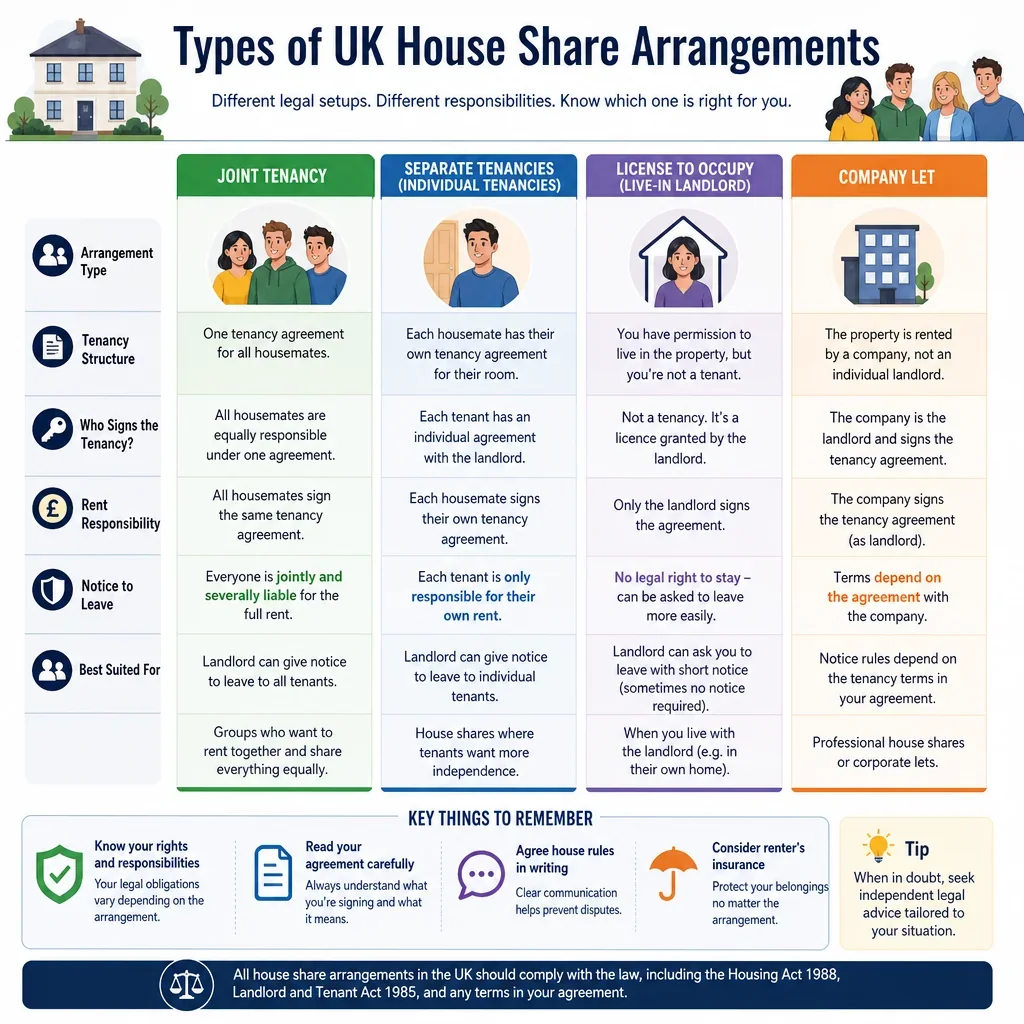
Explore common UK house share arrangements, from lodgers to joint tenancies, and choose the right setup for your home.
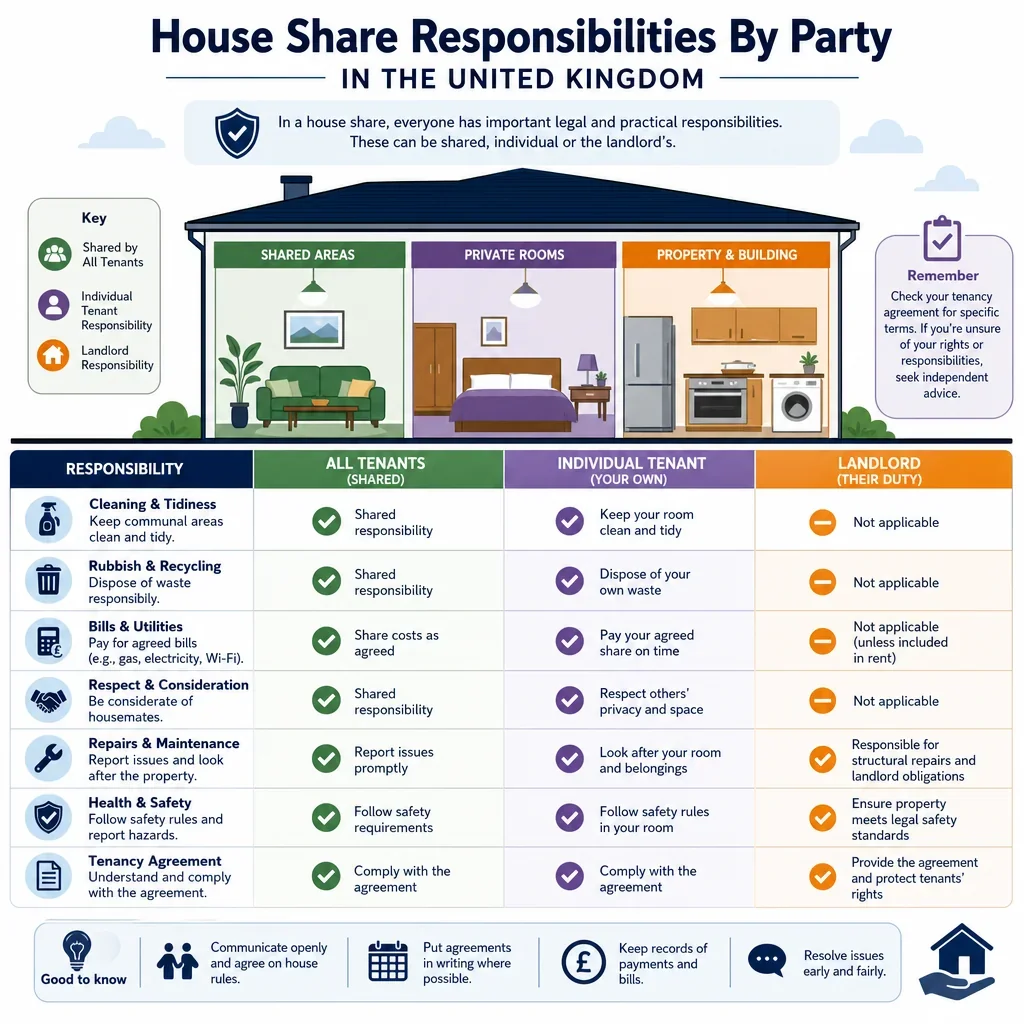
United Kingdom guide to house share responsibilities by party, helping clarify duties for landlords, lodgers, and tenants.
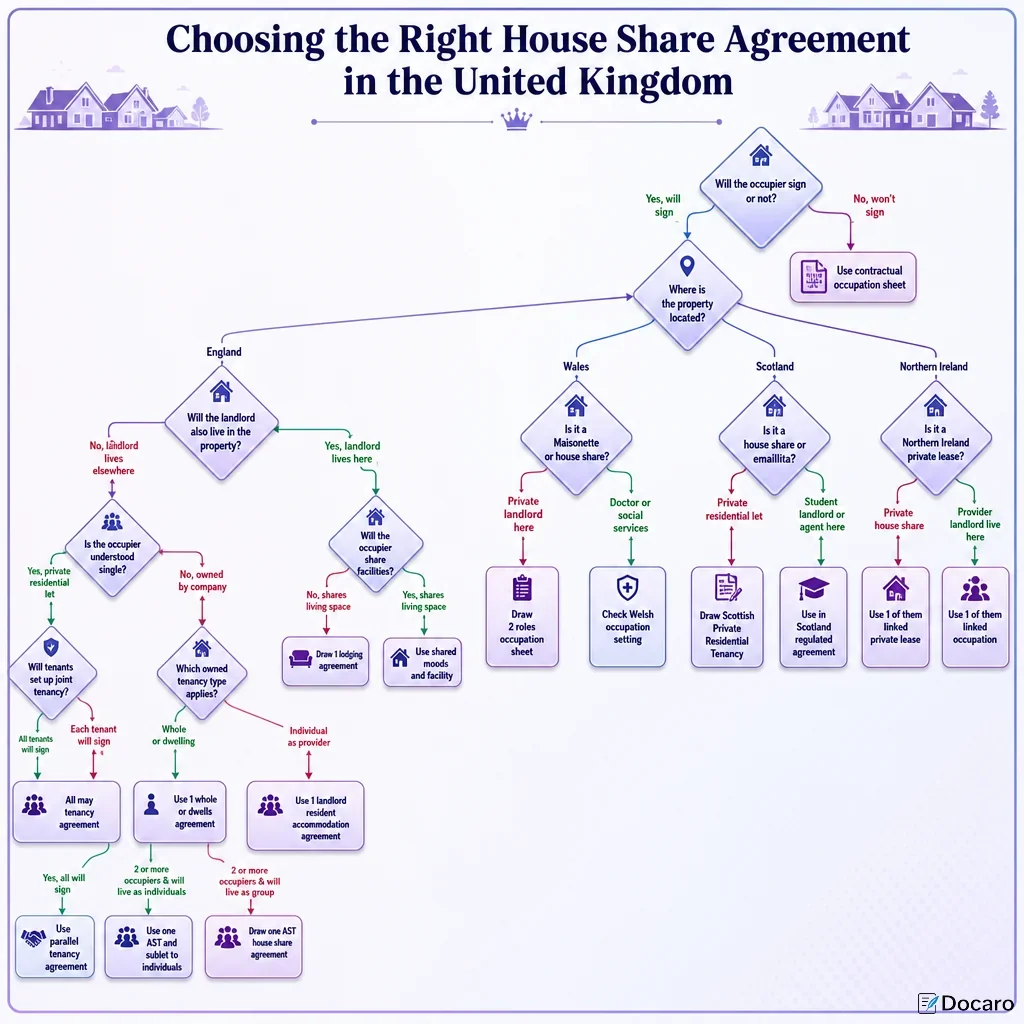
Choose the right house share agreement in the United Kingdom with clear guidance for lodgers, tenants and shared homes.
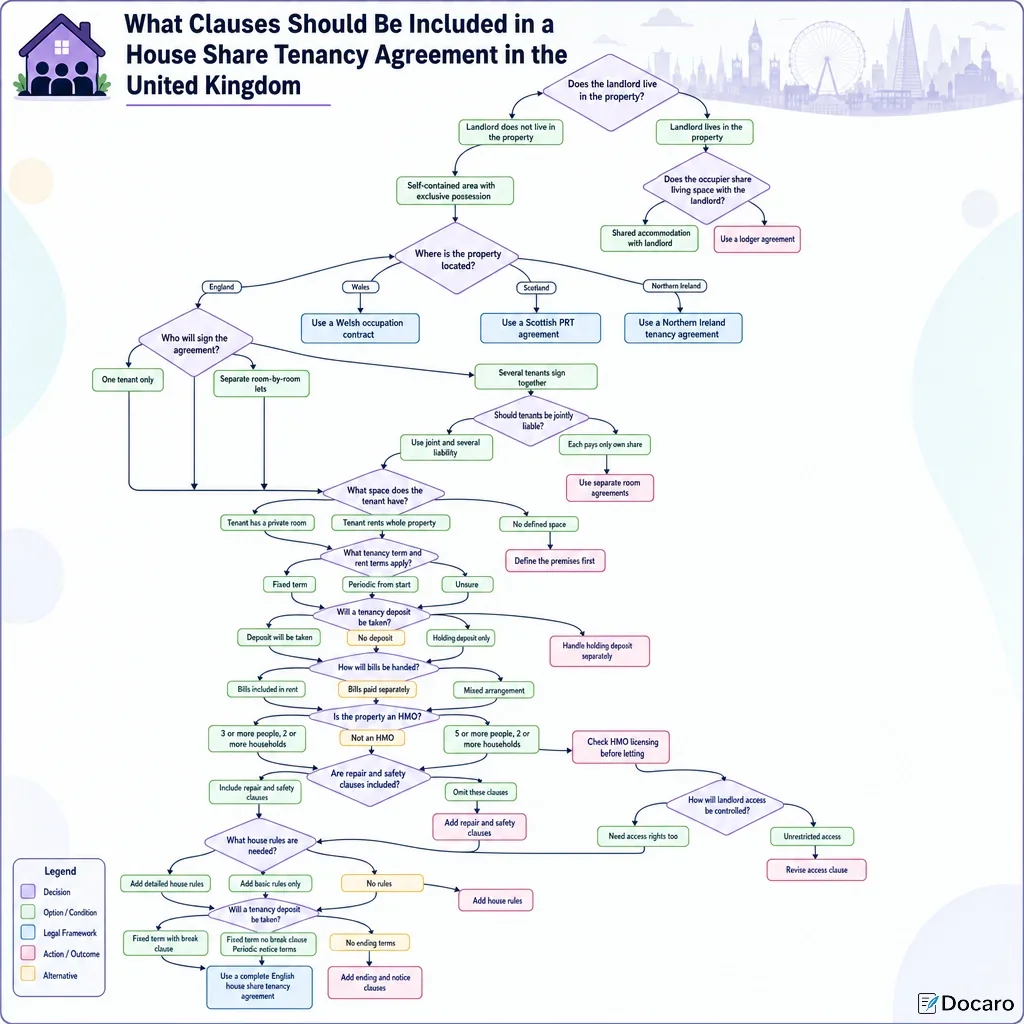
Key clauses for a house share tenancy agreement in the United Kingdom, covering rent, deposits, notice, responsibilities and house rules.