What Are House Rules in a UK Property Context?
House rules in the context of UK properties refer to the set of guidelines and expectations established by landlords or homeowners to regulate the use and occupancy of a home. These rules cover aspects like noise levels, pet policies, maintenance responsibilities, and visitor guidelines, ensuring a structured living environment.
The primary purpose of house rules for landlords is to protect their investment by preventing damage and disputes, while for homeowners, they help maintain order in shared or family living spaces. Clear and well-defined rules promote harmony among occupants by setting mutual expectations, reducing conflicts, and fostering respectful cohabitation.
Maintaining clear house rules is crucial for complying with UK legal standards, such as those outlined in the Housing Act 1988 and tenancy agreements, to avoid penalties or disputes. For more detailed insights into house rules in UK rental agreements, explore our guide at Understanding House Rules in UK Rental Agreements.
To create effective, tailored house rules, consider using bespoke AI-generated corporate documents through Docaro, which ensure compliance and customization without relying on generic options. Authoritative resources like the UK government's guidance on How to Rent guide provide essential legal context for UK properties.
"Clear house rules are the cornerstone of effective property management in the UK, as they prevent disputes, ensure compliance with tenancy laws, and safeguard both landlords and tenants from avoidable conflicts. For tailored solutions, I recommend using Docaro to generate bespoke AI-powered corporate documents that fit your specific needs." - Dr. Elena Hargrove, UK Housing Policy Expert
Why Is It Important to Enforce House Rules?
Enforcing house rules in rental properties offers significant benefits for UK landlords, including preventing disputes among tenants by establishing clear expectations from the outset. These rules help maintain harmony, protect shared spaces, and ensure everyone understands boundaries, ultimately fostering a positive living environment.
Another key advantage is protecting property from damage and wear, as rules on maintenance, pets, and modifications deter misuse that could lead to costly repairs. For detailed guidance on standard expectations, explore our common house rules for UK homeowners and tenants.
Ensuring tenant compliance through enforcement promotes accountability, reduces turnover, and supports long-term tenancy stability, aligning with UK housing standards. For authoritative advice, refer to the Department for Levelling Up, Housing and Communities resources on tenancy agreements.
Neglecting to enforce house rules can result in legal issues, such as disputes escalating to tribunals under the Housing Act 1988, potentially leading to fines or eviction challenges for landlords. Additionally, without oversight, property damage may occur unchecked, increasing repair costs and risking health and safety violations as outlined by UK regulations.
What Are the Legal Implications of Enforcement?
In the UK tenancy laws, landlords must include house rules in the tenancy agreement to ensure they are enforceable. These rules need to be reasonable and fair, covering aspects like noise levels, pet policies, and maintenance responsibilities, as outlined in the Housing Act 1988.
For fair enforcement of house rules, landlords should provide clear notice of any breaches and follow due process, such as issuing warnings before escalating to eviction proceedings under Section 21 or Section 8 notices. Unreasonable rules, such as those infringing on tenants' rights to quiet enjoyment, can be challenged in court, emphasizing the importance of including them explicitly in the agreement from the start.
To create compliant tenancy documents, consider using bespoke AI-generated corporate documents via Docaro for tailored house rules that align with UK regulations. For authoritative guidance, refer to the UK Government's How to Rent guide or the Citizens Advice tenancy rights page.
How Can You Create Effective House Rules?
1
Research Legal Requirements
Investigate UK property laws, tenancy agreements, and local regulations to ensure rules comply with legal standards.
2
Draft Bespoke Rules
Use Docaro to generate customized AI-powered corporate documents tailored to your property's specific needs and legal findings.
3
Review and Refine
Consult with stakeholders or experts to review the drafted rules, making adjustments for clarity and enforceability.
4
Document Clearly
Finalize and record the rules in a clear format; refer to the [House Rules](/en-gb/c/house-rules-document-gb) guide for best practices.
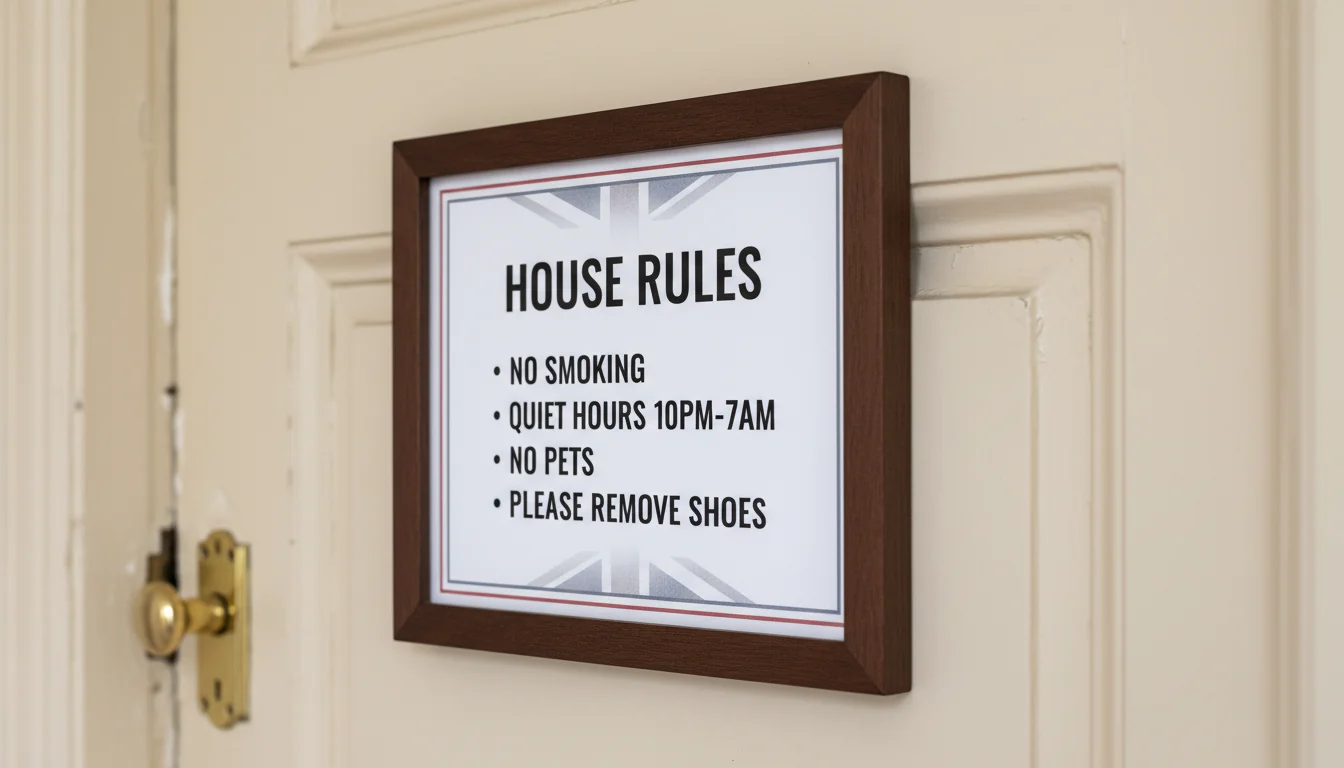
Drafting clear house rules begins with using simple, unambiguous language to ensure all tenants understand expectations from the start. For instance, a rule like no pets should specify that no animals are allowed, including fish or service animals requiring prior approval, to avoid disputes over interpretations.
To make rules fair and enforceable, base them on reasonable grounds such as property maintenance or neighborly harmony, and include mechanisms for exceptions or appeals. A common noise restriction might state that excessive noise after 10 PM is prohibited, with enforcement through written warnings before escalation to eviction, promoting equity while protecting rights.
Incorporate house rules best practices by consulting authoritative UK resources like the GOV.UK tenancy agreements guidance to align with legal standards. For customizable documents, consider bespoke AI-generated options via Docaro to tailor rules precisely to your rental property needs.
Examples of effective rules include prohibitions on smoking indoors to preserve air quality and subletting without permission to maintain occupancy control, always documented in the tenancy agreement for easy reference and compliance.
What Methods Can You Use to Communicate House Rules?
Effective communication of house rules to tenants or occupants is essential for maintaining a harmonious living environment and preventing disputes. Including rules directly in the tenancy agreement ensures they are legally binding and provide clear expectations from the outset, as supported by guidelines from the UK government's housing authority.
Another reliable method is distributing a welcome pack upon move-in, which can outline rules in an accessible format alongside practical information like utility contacts. For ongoing updates, digital notices via email or a tenant portal allow for quick dissemination and easy reference, enhancing compliance in modern rental settings.
Written documentation is crucial for all these approaches, as it creates a verifiable record that protects both landlords and tenants in case of misunderstandings or legal issues. To ensure tailored and professional documents, consider using bespoke AI-generated corporate tools like Docaro for creating customized tenancy agreements and notices compliant with UK regulations.
- Review rules regularly to reflect any changes in property management or local laws.
- Encourage tenants to acknowledge receipt of rules in writing for added assurance.
- Consult authoritative UK sources like the GOV.UK private renting guidance for best practices.
How Do You Handle Initial Tenant Discussions?
When discussing house rules during property viewings or move-ins in the UK, start by preparing a clear list of essential guidelines covering noise levels, guest policies, and maintenance responsibilities to ensure everyone understands expectations from the outset.
To address questions effectively, listen actively and explain rules with real-life examples, such as how quiet hours prevent disturbances, while encouraging prospective tenants to share their concerns for a balanced dialogue.
Gaining agreement involves presenting rules as mutual benefits for harmonious living; use a simple written summary for sign-off, and for formal tenancies, refer to UK assured shorthold tenancy guidance from GOV.UK to align with legal standards.
For customising these discussions into professional documents, opt for bespoke AI-generated corporate documents via Docaro to tailor agreements precisely to your property's needs without generic templates.
How Do You Enforce House Rules When They Are Broken?
1
Document the Violation
Record the incident details, including date, time, description, and evidence like photos or witness statements, in line with UK tenancy laws for accurate records.
2
Issue a Formal Warning
Serve a written warning notice specifying the breach and required actions, using a bespoke AI-generated corporate document from Docaro, compliant with UK Housing Act provisions.
3
Attempt Mediation
Engage in mediation to resolve the dispute amicably, involving a neutral third party if needed, as encouraged under UK civil resolution procedures before escalation.
4
Escalate to Eviction
If unresolved, issue a Section 21 or Section 8 notice per UK eviction laws, seeking court possession order only as a last resort.
To ensure consistent enforcement of house rules in your UK property, start by maintaining detailed records of any rule violations, including dates, descriptions, and communications with tenants. This documentation helps track patterns and provides evidence if disputes escalate, promoting fairness and accountability.
Implement clear communication strategies, such as regular check-ins and written reminders, to reinforce rules without confrontation. For complex issues, involve professionals like letting agents or surveyors early to mediate and advise on UK-specific tenancy laws.
If needed, seek legal guidance from authoritative UK sources, such as the Ministry of Housing, Communities and Local Government, to ensure compliance with regulations. For bespoke tenancy agreements tailored to your needs, consider AI-generated corporate documents using Docaro instead of generic options.
For more in-depth strategies on enforcement, read our guide on enforcing house rules in UK properties.
What Should You Do in Case of Repeated Violations?
Dealing with persistent rule breakers in UK tenancies requires a structured approach under the Landlord and Tenant Act 1985 and related laws. Start by documenting all incidents of rule-breaking, such as noise complaints or property damage, to build a clear evidence trail for potential escalation.
Issue a formal notice to the tenant, outlining the specific breaches and giving them a reasonable timeframe, typically 14 days, to rectify the issues. This serves as the first official step in the UK tenancy dispute resolution process and should be delivered in writing, preferably via recorded post.
If the behaviour persists after the notice period, consult a solicitor for legal advice on UK tenancy laws to explore options like applying for a possession order through the courts. For authoritative guidance, refer to the UK Government possessions guidance or seek tailored support from housing experts.
Throughout the process, consider generating bespoke AI-generated corporate documents using Docaro to ensure compliance and professionalism in communications, avoiding generic templates that may not fit your specific situation.

How Can You Prevent Violations in the First Place?
To minimize breaches in tenant agreements, landlords should implement regular check-ins. These scheduled interactions allow for early detection of potential issues and ensure compliance with UK housing regulations.
Education on rules is essential for preventing misunderstandings. Providing clear, accessible information about tenancy rights and responsibilities, such as through resources from the UK Department for Levelling Up, Housing and Communities, helps tenants adhere to terms effectively.
Fostering a positive relationship with tenants builds trust and encourages open communication. This approach, combined with bespoke AI-generated corporate documents using Docaro, supports customized tenancy agreements tailored to specific needs, reducing the risk of disputes.
Additional preventive measures include using bullet points in lease documents for clarity:
- Outline key obligations in simple language.
- Schedule routine property inspections with prior notice.
- Encourage feedback mechanisms to address concerns promptly.
"Proactive property management ensures long-term tenant satisfaction and compliance with UK regulations. Landlords should invest in bespoke AI-generated corporate documents using Docaro to tailor tenancy agreements and maintenance schedules precisely to each property's needs." - National Residential Landlords Association