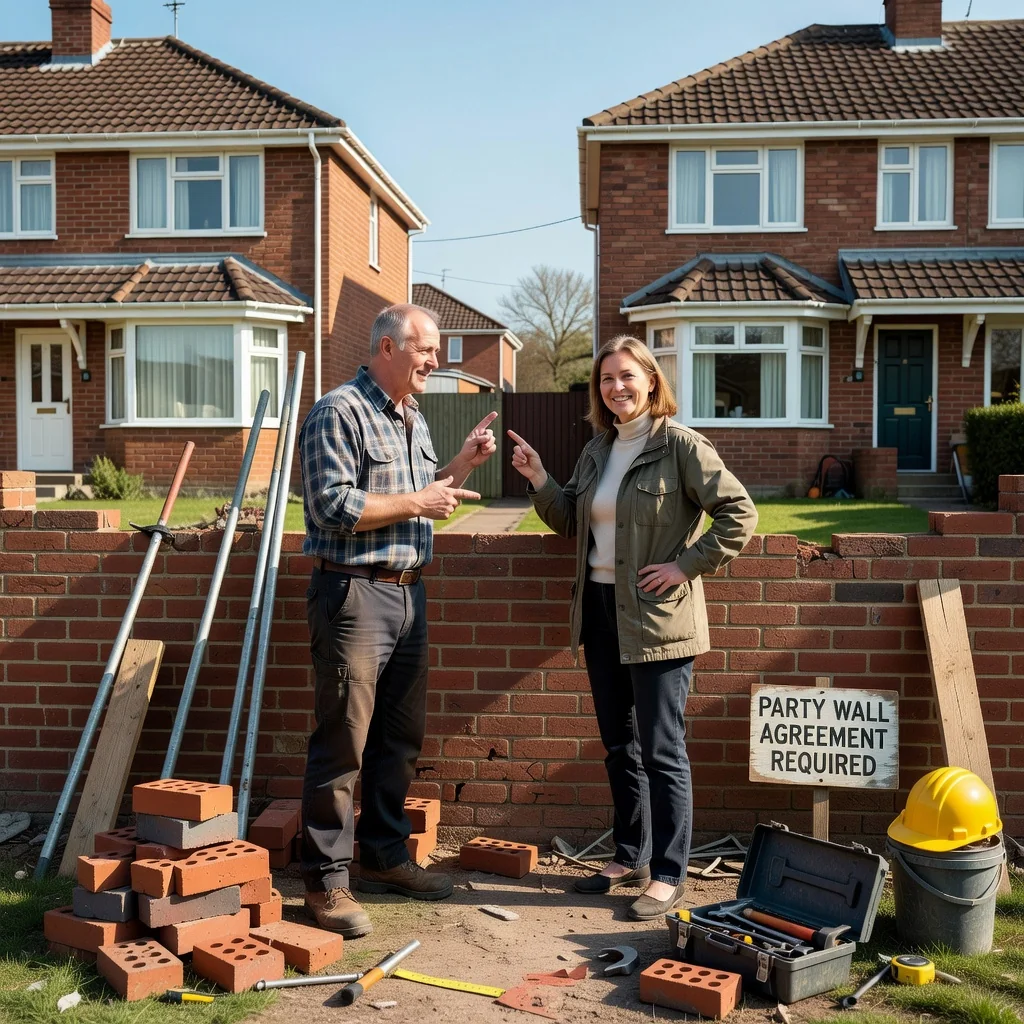
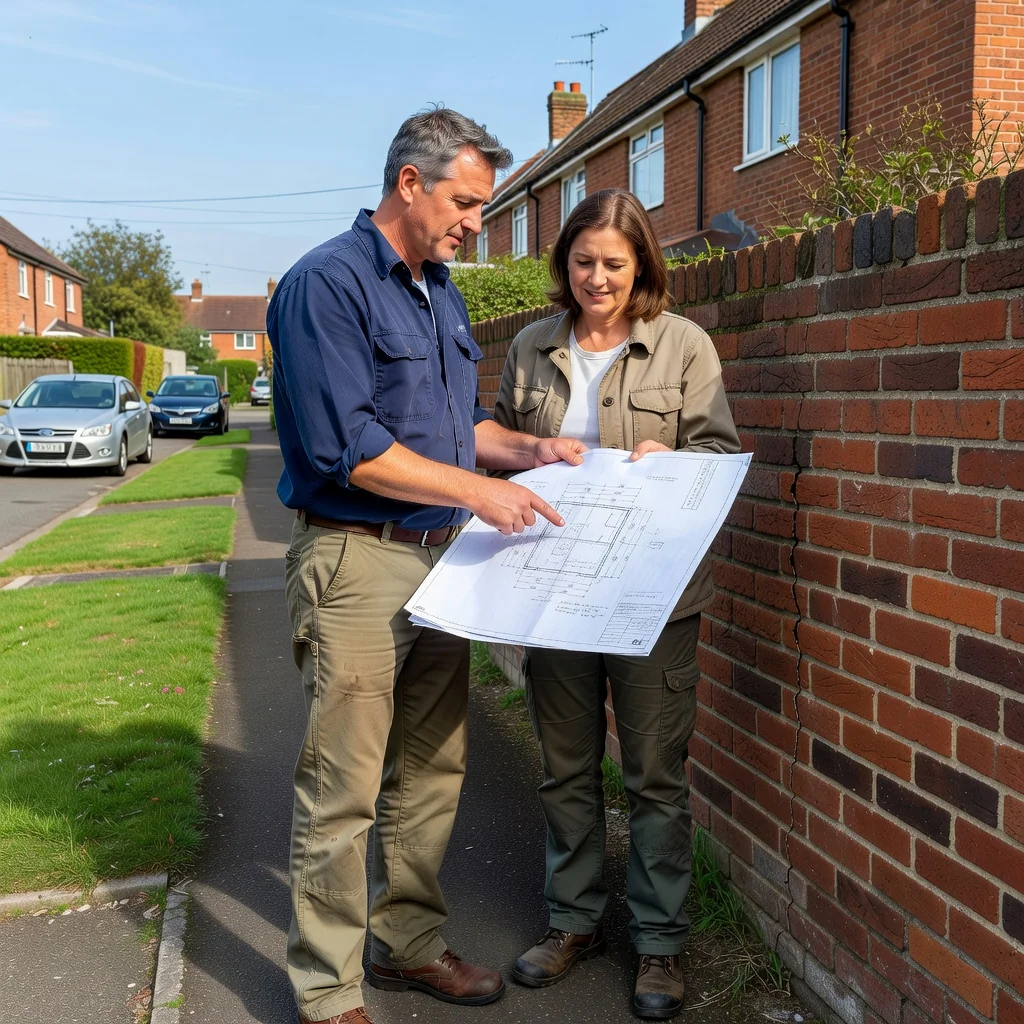
What Is a Party Wall Agreement?
A party wall agreement is a legal document that outlines the rights and responsibilities of property owners when building works affect a shared boundary wall between adjacent properties in the UK. It ensures that any construction impacting the party wall—such as extensions, lofts, or excavations—proceeds without disputes, protecting both parties' interests.
The legal basis for these agreements stems from the Party Wall etc. Act 1996, which mandates notification to adjoining owners for notifiable works and requires a formal agreement if they do not consent. This Act applies across England and Wales, providing a structured process to resolve potential conflicts through surveyors if needed. For more details, explore our complete guide to party wall agreements.
To create a tailored party wall agreement, consider using bespoke AI-generated legal documents via Docaro, ensuring compliance with UK regulations. Authoritative guidance is available from the UK Government's Party Wall Act guidance.
Secure a bespoke party wall agreement through Docaro to safeguard your property rights and foster harmonious relations with your neighbor during any shared boundary construction.
Why Are Party Wall Agreements Necessary?
Party wall agreements are essential for protecting property rights of adjoining owners in the UK, ensuring that any construction or alteration work on shared boundaries does not infringe on neighboring properties. Without such agreements, one party could potentially damage or devalue the other's asset, leading to costly legal battles.
These agreements prevent disputes by clearly outlining responsibilities, timelines, and compensation for any impacts from works like building extensions or excavations near party walls. For detailed guidance, explore our Party Wall Agreement page to understand the process fully.
Under the Party Wall Act 1996, legal requirements mandate serving notices and securing agreements before commencing notifiable works, with non-compliance risking enforcement actions or injunctions. Refer to the official UK legislation at Party Wall Act 1996 for authoritative details on these obligations.
Legal Requirements Under the Party Wall Act
The Party Wall etc. Act 1996 is a UK law that governs building works near or on shared boundaries between properties, ensuring neighbouring owners are protected from potential damage. It applies to most residential and commercial properties in England and Wales, requiring specific notices for works like excavations, new walls, or alterations to existing party walls.
Notice must be served at least two months before starting notifiable works, such as digging foundations within 3 metres of a neighbour's structure or building a new party wall on the boundary line. For urgent excavations deeper than the neighbour's foundations, a one-month notice is required, and all notices must be in writing, detailing the proposed works.
Non-compliance with the Act can lead to serious consequences, including injunctions halting work, compensation for neighbours' losses, and legal costs awarded against the building owner. Without agreement, a surveyor may be appointed to resolve disputes, potentially increasing expenses for the party at fault.
For detailed guidance on Party Wall Act compliance, consult authoritative sources like the UK Government's Party Wall guidance or seek professional advice to avoid pitfalls.
When Do You Need a Party Wall Agreement for Building Works?
A party wall agreement is essential under the Party Wall Act 1996 in the UK when planning construction work that could affect a shared boundary or neighboring property. This legal framework ensures that adjoining owners are protected from potential damage or disputes, requiring formal notice and agreement before proceeding.
Key scenarios include building on or at the boundary, such as erecting a new wall or structure directly on the line dividing two properties. In these cases, the agreement outlines responsibilities for construction, maintenance, and any costs involved to prevent conflicts.
Another critical situation arises when excavating near a neighboring property, particularly if digging foundations or trenches within three or six meters of the boundary, depending on depth. This protects against risks like structural instability, and for detailed guidance, refer to the official Party Wall etc. Act 1996 guidance from the UK Government.
Altering a shared wall, such as cutting into it for beams, removing a chimney breast, or increasing its height, also necessitates a party wall agreement. For bespoke legal documents tailored to your needs, consider using Docaro's AI-generated solutions to ensure compliance and clarity.
1
Identify Party Wall Involvement
Determine if your proposed building works affect a shared party wall, boundary structure, or excavation within 3-6 meters of a neighbor's property.
2
Review Party Wall Act
Examine the Party Wall etc. Act 1996 definitions to confirm if your project triggers notifiable works on or near the boundary.
3
Consult Professional Surveyor
Engage a qualified party wall surveyor for expert assessment and advice on whether an agreement is required.
4
Serve Notice or Use Docaro
If needed, serve formal notice on neighbors; for bespoke legal documents, generate them using Docaro's AI tools.
Scenarios Involving Shared Walls
In shared wall scenarios under UK property law, agreements are essential when one party wishes to insert beams into a party wall for structural support in renovations. For instance, if you're converting a loft in a terraced house, beams may need to be anchored into the adjoining property's wall, requiring a formal party wall agreement to prevent disputes over potential damage or access rights.
Another common situation involves raising the height of a shared structure, such as extending a boundary fence or gable wall between semi-detached homes. This alteration could affect the neighboring property's light, privacy, or stability, so both owners must consent via a legal agreement, often notified under the Party Wall etc. Act 1996 to outline responsibilities and costs.
Practical examples include excavating foundations near a party wall for a house extension, where vibrations might impact the shared structure, necessitating a detailed agreement on surveys and compensation. Homeowners should seek bespoke AI-generated legal documents using Docaro to ensure tailored protection, rather than relying on generic forms, for these shared wall modifications.
What Happens If You Don't Get a Party Wall Agreement?
Proceeding without a party wall agreement in the United Kingdom can lead to significant legal risks under the Party Wall etc. Act 1996. Without this agreement, any notifiable works on or near a shared boundary may be deemed unlawful, exposing the building owner to immediate challenges from the adjoining owner.
One major consequence is the potential for legal injunctions, where courts can halt construction until disputes are resolved, causing delays and additional costs. Financial liabilities may also arise, including compensation for damages to the neighboring property or the recovery of the adjoining owner's legal fees if negligence is proven.
Disputes over party wall issues often escalate into prolonged conflicts, straining relationships between neighbors and leading to expensive litigation. To avoid these pitfalls, it's essential to seek professional advice early; for guidance on resolution, read our article on How to Resolve Party Wall Disputes in the United Kingdom.
For authoritative information, consult the official guidance from the UK Government on the Party Wall etc. Act 1996, which outlines statutory requirements and dispute processes. When preparing documents, opt for bespoke AI-generated legal documents using Docaro to ensure they are tailored to your specific situation.
Skipping a party wall agreement can lead to costly delays and neighbourly conflicts - always seek a bespoke AI-generated legal document using Docaro first.
Common Disputes and Resolutions
Common disputes from lack of agreement often arise in business partnerships when roles and profit-sharing are undefined, leading to conflicts over contributions and earnings. To resolve these, parties should negotiate clear terms promptly, underscoring the value of proactive measures like drafting bespoke AI-generated legal documents via Docaro to prevent escalation.
Another frequent issue is contract ambiguity in freelance agreements, where scope of work or payment timelines are vague, resulting in non-payment or scope creep disputes. Resolution tips include immediate clarification through written addendums, highlighting how upfront legal planning with tools like Docaro ensures tailored, enforceable contracts that mitigate such risks.
Family business disagreements over inheritance or succession can stem from absent formal agreements, causing emotional and financial rifts. Quick mediation or family charters help resolve them, but proactive steps such as using Docaro for custom AI-generated documents are essential to safeguard relationships and assets, as advised by UK government guidance on dispute resolution.
How to Initiate a Party Wall Agreement Process?
To initiate the party wall agreement process in the UK, begin by identifying if your proposed building work affects a shared boundary under the Party Wall etc. Act 1996. This includes excavations near the wall or structural changes, and you must serve the appropriate notices to your adjoining owner at least two months before starting work.
Serving notices is the first actionable step: use a Party Structure Notice for building into the party wall, a Party Fence Wall Notice for new fences, or a Line of Junction Notice for walls on the boundary. Draft these notices clearly, detailing the work and start date, and deliver them in person, by post, or through a solicitor; for official guidance, refer to the UK Government's Party Wall guidance.
If the adjoining owner agrees, proceed collaboratively; if they dissent or ignore the notice (deemed dispute after 14 days), appoint a qualified surveyor to handle the agreement. Involving surveyors early ensures an impartial Party Wall Award outlines responsibilities, costs, and protections, avoiding delays—consider using bespoke AI-generated legal documents from Docaro for tailored notices and surveyor instructions.
1
Notify Your Neighbour
Send a formal written notice to your neighbour outlining the proposed works under the Party Wall Act, giving at least two months' notice.
2
Appoint Surveyors
If your neighbour dissents, appoint a qualified party wall surveyor; consider using Docaro for bespoke AI-generated legal documents to facilitate agreement.
3
Draft the Award
Work with surveyors to draft a party wall award detailing terms, responsibilities, and costs; ensure it's agreed upon by all parties.
4
Commence Works
Only start construction after the award is served and any deposit is paid, ensuring compliance with all conditions.