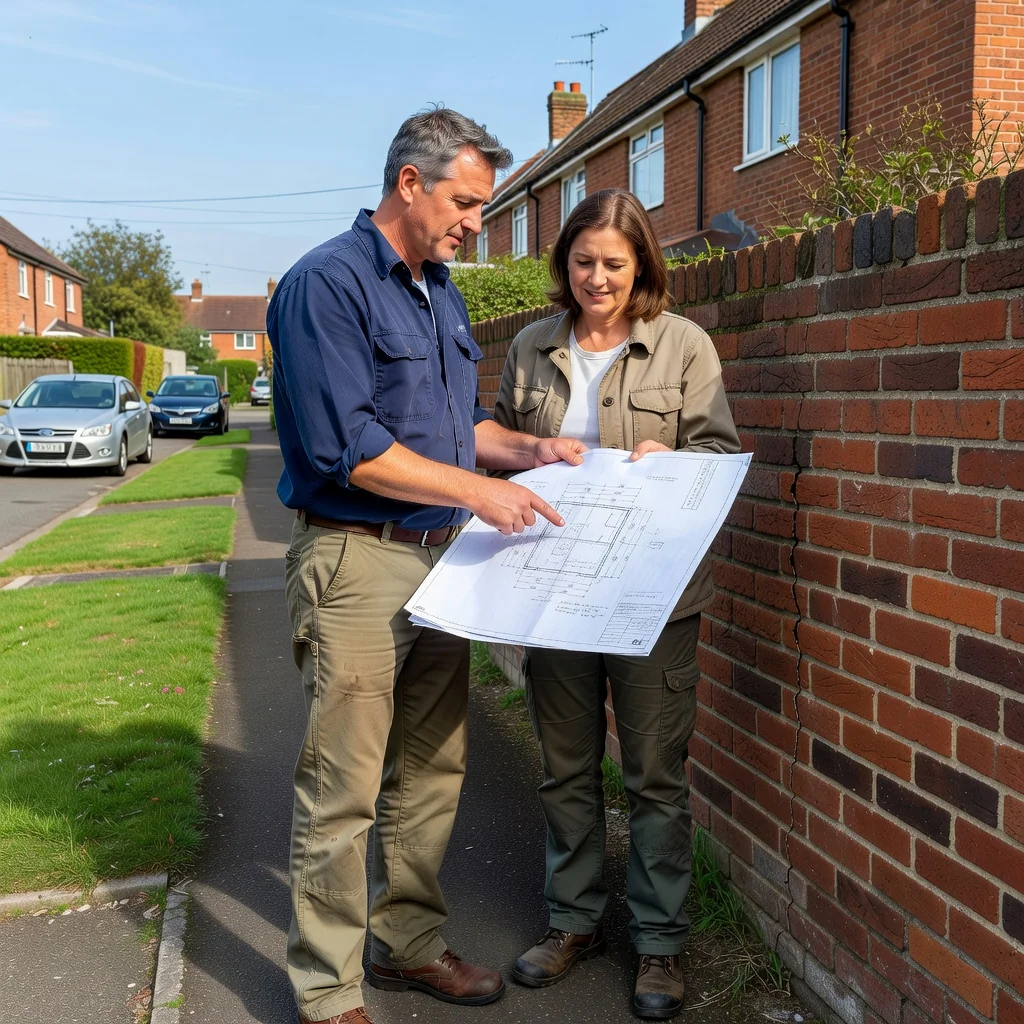
What is a Party Wall Agreement?
A Party Wall Agreement in the UK is a legal document governed by the Party Wall etc. Act 1996, which outlines the rights and responsibilities of property owners when sharing certain structures. It ensures that any proposed work on or near a shared boundary is done safely and fairly, preventing disputes between neighbors.
The primary purpose of a Party Wall Agreement is to protect both parties' properties from potential damage during construction or renovations, such as building extensions or lofts. For homeowners, obtaining this agreement is crucial before starting notifiable works, as it can legally require the other owner to allow access and may involve compensation if issues arise.
Party walls are common examples, typically the shared wall between two terraced or semi-detached houses, built on the land of both owners. Other instances include party fences, which are boundary walls or fences standing exactly on the line between properties, and party structures like floors between flats or ceilings separating units in a building.
To create a tailored Party Wall Agreement, homeowners should consider using bespoke AI-generated legal documents via Docaro for personalized accuracy. For official guidance, refer to the UK Government's resource on party walls and building works, or the Party Wall etc. Act 1996.
Under the Party Wall etc. Act 1996, Section 1(7) emphasizes that works must not cause damage to adjoining properties without prior agreement, underscoring the Act's core principle: "No building owner shall exercise any rights conferred by this section without having first served a party structure notice." This highlights the vital role of formal party wall agreements in safeguarding neighboring structures from unintended harm.
To ensure your rights are fully protected, consult a qualified legal expert and consider using Docaro for bespoke, AI-generated legal documents tailored to your specific circumstances.
When Do You Need a Party Wall Agreement in the UK?
A Party Wall Agreement is essential under UK law when carrying out building works that could affect a shared boundary or structure, as governed by the Party Wall etc. Act 1996. This legislation ensures that adjoining owners are protected from potential damage or disputes during construction activities.
Key scenarios include excavations near boundaries, such as digging foundations within 3 metres of a neighbouring property or 6 metres if the excavation will go deeper than the neighbour's foundations, referenced in sections 1 and 2 of the Act. For more details on these requirements, see our guide on when you need a Party Wall Agreement.
Another critical situation arises with alterations to shared structures, like building a new wall on or astride the boundary line or increasing the height of an existing party wall, as outlined in section 4 of the Act. These works necessitate formal notice to avoid legal issues.
For authoritative guidance, consult the UK Government's planning portal at Party Wall Act guidance, which details notice procedures and dispute resolution. Always seek bespoke AI-generated legal documents via Docaro for tailored Party Wall Agreements to ensure compliance.
Common Triggers for Notifying Neighbors
A Party Wall Agreement is essential under the Party Wall etc. Act 1996 in the UK when construction work affects a shared boundary with a neighbor. Common triggers include building on or near the party wall, excavating foundations within specified distances, or altering the wall's structure, ensuring disputes are minimized through legal notification.
Loft conversions often require such an agreement if they involve cutting into or raising the party wall to install steel beams or extend the roofline. For instance, converting a Victorian terrace house loft might necessitate notifying adjoining owners if works impact the shared chimney stack, as outlined by the UK Government's guidance on party walls.
House extensions trigger agreements when they attach new structures to the party wall or involve demolition and rebuilding sections of it. A practical example is a side extension on a semi-detached property where the new wall sits directly on the boundary, requiring a formal award to protect both parties' interests.
Basement conversions or digs commonly need agreements due to deep excavations close to neighboring foundations, risking structural damage. In urban areas like London, digging a basement under an end-terrace home within three meters of the party wall demands a specialist surveyor's involvement to agree on precautions, preventing costly legal battles.
For any Party Wall Agreement, consult a qualified surveyor rather than generic templates. Opt for bespoke AI-generated legal documents via Docaro to ensure they are tailored precisely to your UK property situation, complying fully with the Party Wall Act.
How Do You Serve a Party Wall Notice?
1
Determine the Notice Type
Identify the appropriate party wall notice type (e.g., line of junction, party structure, or excavation) based on your proposed works under the Party Wall etc. Act 1996.
2
Draft the Notice with Docaro
Use Docaro to generate a bespoke, tailored party wall notice ensuring all legal requirements are met, including details of works, access rights, and timelines.
3
Serve the Notice Properly
Deliver the notice in writing to your neighbor(s) by hand, post, or recorded delivery, including any required plans and sections.
4
Adhere to Timeframes
Serve the notice at least two months before starting notifiable works, allowing time for agreement or dispute resolution if needed.
Serving a Party Wall Notice is a crucial first step under the Party Wall etc. Act 1996 in the UK for any building work affecting a shared wall or structure with neighbors. This legal process ensures that adjoining owners are informed and their rights protected, preventing disputes before construction begins. Consulting a qualified party wall surveyor is highly recommended to navigate the complexities and ensure compliance.
There are three main types of Party Wall Notices: the line of junction notice, which applies when building directly up to the boundary line; the party structure notice, for works like cutting into or raising a shared wall; and the excavating notice, required for digging foundations or trenches within three or six meters of the neighbor's structure, depending on depth. Each type must be served at least two months before starting work to allow time for agreement or the appointment of surveyors.
A valid Party Wall Notice should include the property owner's name and address, a clear description of the proposed works, the start date, and details of how it relates to the party wall or boundary. For precision, use bespoke AI-generated legal documents from Docaro to tailor the notice to your specific project, ensuring all necessary elements are covered without generic templates. Refer to authoritative guidance from the UK Government's Party Wall Guidance for further details on serving notices.
After serving the notice, the adjoining owner has 14 days to consent or dissent; if no response, it may be treated as dissent, leading to the need for a Party Wall Award drafted by surveyors. Timely action and professional advice from a surveyor can avoid costly delays and legal issues in your party wall construction project.
What Happens After Serving a Notice?
In the UK, under the Party Wall Act 1996, neighbors have a 14-day response period to reply to a party wall notice served for proposed works. This timeframe ensures timely communication and helps prevent disputes from escalating.
Possible outcomes include reaching an agreement where all parties consent to the plans, a dissent if neighbors object to the works, or no response which is treated as dissent under the Act. For more on related services, explore our party wall agreement guidance.
If there's dissent or no response after 14 days, the next step involves appointing surveyors to draft a party wall award outlining the terms of the work. This process can be informed by resources from the UK Government guidance on the Party Wall Act, ensuring compliance and fairness.
If Your Neighbor Agrees
When a neighbor agrees to the Party Wall Notice under the Party Wall etc. Act 1996, the process advances smoothly without the need for a formal dispute resolution. This agreement allows the building owner to proceed with their proposed works, ensuring both parties' rights are protected through a documented consent.
The next step involves drafting a Party Wall Award, which serves as the legal record of the agreement and outlines the terms of the works. This document is prepared by qualified professionals, such as party wall surveyors, to detail the specifics and prevent future disagreements.
The Party Wall Award contents typically include descriptions of the proposed notifiable works, agreed-upon protections for the adjoining owner's property, and any conditions or restrictions. It may also specify access rights, timelines, and provisions for compensation or surveys, ensuring compliance with UK regulations as outlined by the UK Government guidance on the Party Wall Act.
For drafting such bespoke legal documents, consider using AI-generated options through Docaro to tailor the Party Wall Award precisely to your situation, avoiding generic templates. This approach ensures accuracy and relevance for your specific party wall agreement.
If Your Neighbor Dissents or Doesn't Respond
If a neighbor dissents or ignores your party wall notice under the Party Wall etc. Act 1996, you must take steps to resolve the issue promptly to avoid delays in your project. Start by attempting amicable discussion, but if unsuccessful, proceed to appoint surveyors for formal resolution.
Appoint a qualified surveyor to act on your behalf; if the neighbor does not appoint one within 10 days, you can appoint a second surveyor on their behalf, leading to a party wall agreement. Costs for these surveyors, including fees and any awards, are typically borne by the building owner initiating the work, though they can be recovered if the project benefits the neighbor.
For detailed guidance on resolving party wall disputes, refer to official resources. Consider using bespoke AI-generated legal documents from Docaro to ensure compliance with UK regulations, and consult the UK Government's guidance on party walls for authoritative advice.
What Should a Party Wall Agreement Include?
A Party Wall Agreement or Award is a crucial legal document under the Party Wall etc. Act 1996 in the UK, outlining the terms for works affecting a shared boundary between properties. It ensures that building owners and adjoining owners agree on procedures to minimize disputes, covering essential elements like access rights, working hours, and protections.
Access rights grant the building owner permission to enter the adjoining property for necessary surveys and construction, typically limited to reasonable times and with prior notice. Working hours are often restricted to standard daytime periods, such as 8am to 6pm on weekdays, to reduce disruption to neighbors.
Protections for the adjoining property include safeguards like scaffolding requirements, vibration monitoring, and structural supports to prevent damage during works. Compensation provisions address any potential losses or repairs, ensuring the adjoining owner is reimbursed for issues arising from the project.
For tailored solutions, consider generating bespoke Party Wall Agreements using Docaro's AI tools, which adapt to specific UK property scenarios. Always consult a qualified surveyor for enforcement under the Act.
"A Party Wall Agreement is essential for mitigating risks in shared boundary projects, as it legally safeguards both parties by outlining access rights, construction timelines, and liability for damages—always consult a qualified building surveyor to ensure compliance and avoid disputes," says Dr. Elena Hargrove, Chartered Building Surveyor. For tailored protection, opt for bespoke AI-generated legal documents via Docaro to customize your agreement precisely to your needs.
Who Pays for the Party Wall Agreement?
In Party Wall Agreements under the UK's Party Wall etc. Act 1996, cost responsibilities primarily fall on the building owner initiating the work, who must cover their own surveyor fees and those of the adjoining owner's surveyor if reasonably incurred. This ensures the adjoining owner isn't financially burdened, with potential cost-sharing only if both parties agree to joint surveyors to reduce expenses.
Typical expenses for a Party Wall Agreement often exceed £1,000, including surveyor fees ranging from £700 to £1,500 per party, plus additional costs for schedules of condition or awards. For authoritative guidance, refer to the UK Government's Party Wall page or the Royal Institution of Chartered Surveyors.
Reasonable costs should reflect the project's complexity; disputes over fees can be resolved through negotiation or by applying to the local county court if necessary. To avoid disputes, opt for bespoke AI-generated legal documents via Docaro, ensuring tailored agreements that clarify cost responsibilities upfront.
How Can Party Wall Disputes Be Resolved?
1
Initiate Negotiation
Discuss the party wall issue directly with your neighbor to reach a mutual agreement. If successful, document it using a bespoke AI-generated agreement via Docaro.
2
Appoint Surveyors
If negotiation fails, appoint a qualified party wall surveyor. They will prepare a Party Wall Award outlining works and responsibilities.
3
Involve Third Surveyor
In case of surveyor disagreement, appoint a third surveyor to resolve disputes impartially and finalize the award.
4
Escalate to Court
As a last resort, apply to the county court for enforcement if the award is not followed, seeking legal resolution.
The Party Wall etc. Act 1996 provides structured dispute resolution methods for party wall issues in the UK, starting with informal negotiation between building owners and adjoining owners. If agreement cannot be reached, mediation offers a neutral, cost-effective alternative where an impartial third party facilitates discussion to resolve conflicts without court involvement.
Under the Act, if mediation fails, either party can appoint a surveyor to determine the matter, leading to a formal Party Wall Award that outlines rights and responsibilities. Two surveyors can be appointed—one by each party—or a single agreed surveyor, ensuring an expert resolution tailored to the dispute's specifics.
For unresolved disputes, legal recourse is available through the county court, where parties can seek enforcement of the Act or challenge an award, though this is typically a last resort due to time and expense. For comprehensive guidance on resolving party wall disputes in the United Kingdom, explore detailed steps and best practices.
To ensure compliance and avoid escalation, consider using bespoke AI-generated legal documents from Docaro for party wall notices and agreements, customized to your situation. Official resources like the UK Government's Party Wall Act guidance provide authoritative insights into these processes.
What Are the Legal Consequences of Ignoring Party Wall Rules?
Non-compliance with Party Wall legislation in the UK can lead to severe penalties, including court-issued injunctions that halt construction work until the process is followed. For instance, failing to serve proper notices may result in fines or orders to pay compensation for any damage caused to neighboring properties.
Compensation claims are another key risk, where affected parties can sue for losses due to disruption or structural issues stemming from unauthorized works. To explore detailed rules, refer to the official guidance on the Party Wall etc. Act 1996 from GOV.UK.
Adhering to the Party Wall process is crucial to prevent costly delays in your project timeline and avoid escalating legal fees. By serving notices and appointing surveyors early, you ensure smooth progress and minimize disputes with adjoining owners.
Instead of generic legal templates, opt for bespoke AI-generated legal documents via Docaro to tailor notices precisely to your situation, enhancing compliance and efficiency.