What Clauses Should Be Included In An Employment Contract In The United Kingdom
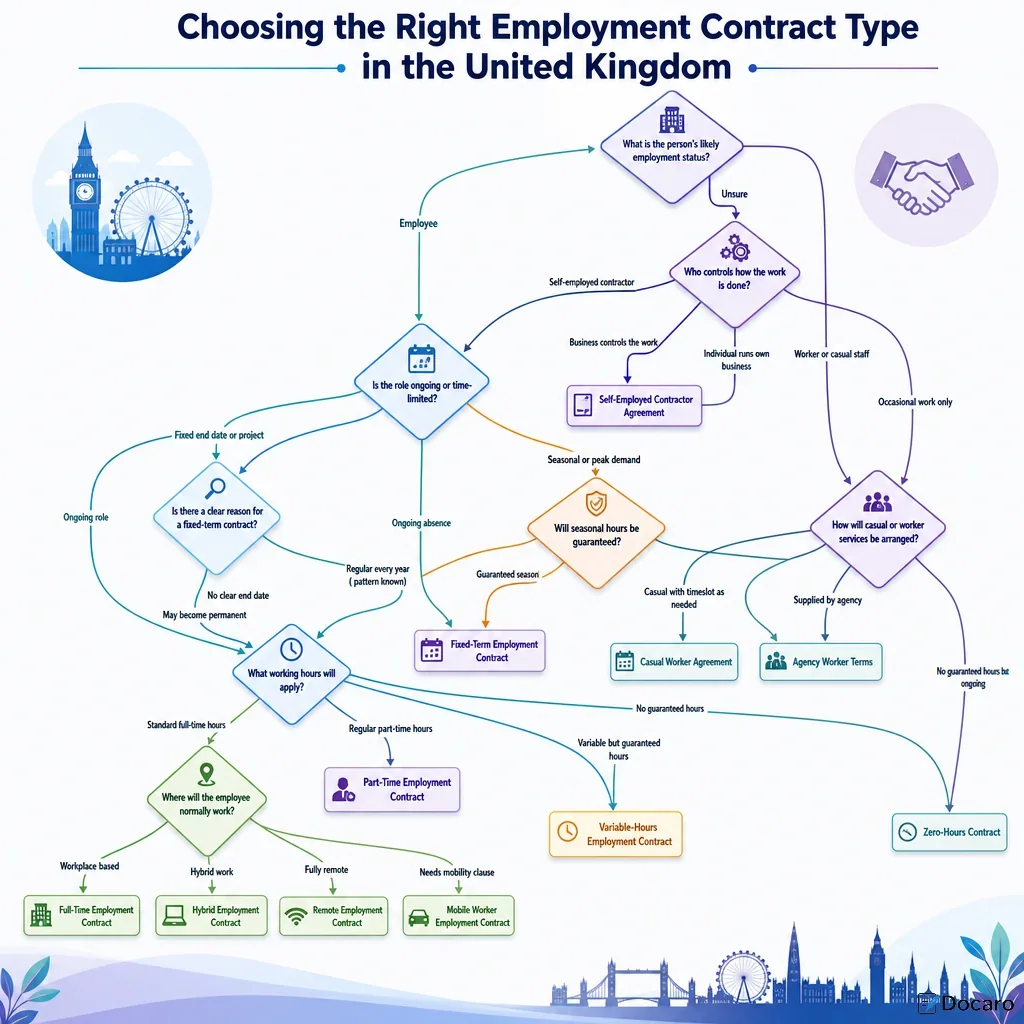
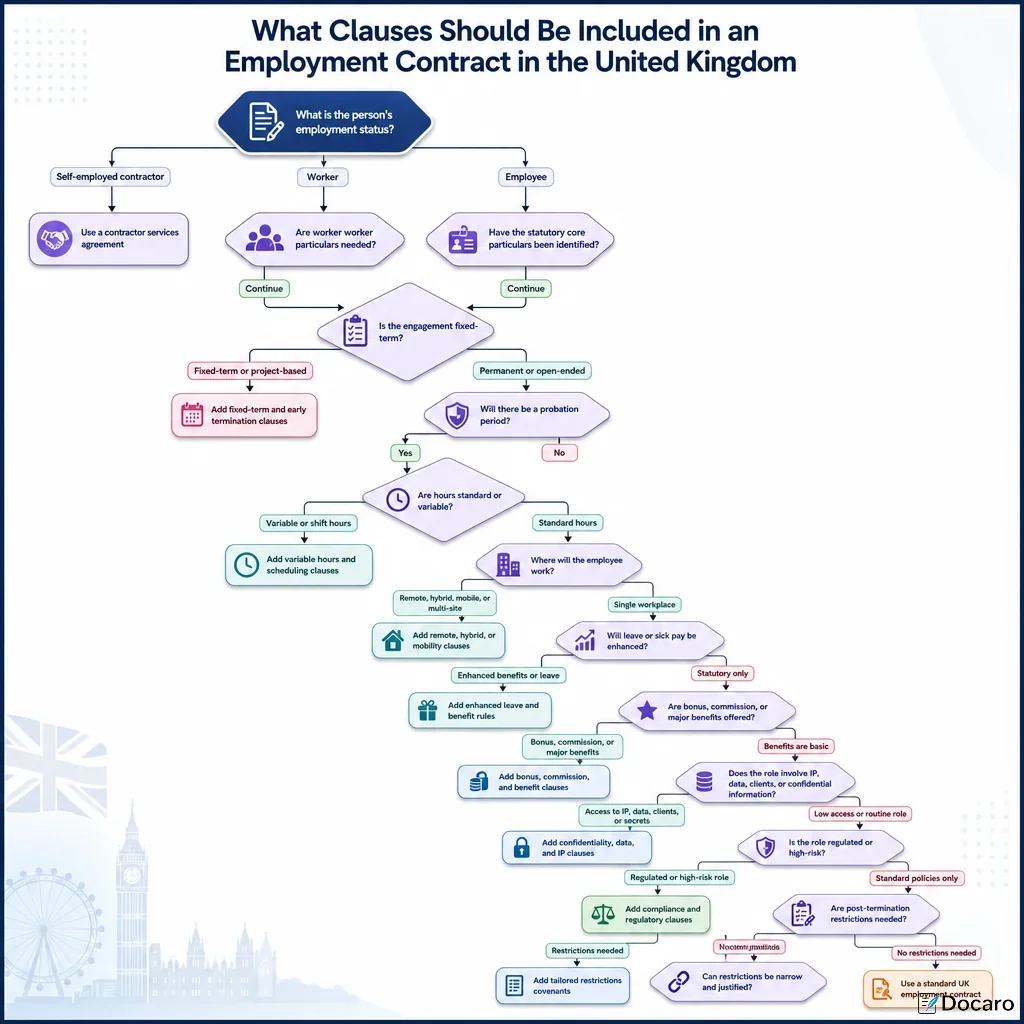
What is the person\'s employment status?
Why Is It Important To Include The Right Employment Contract Clauses In The UK?
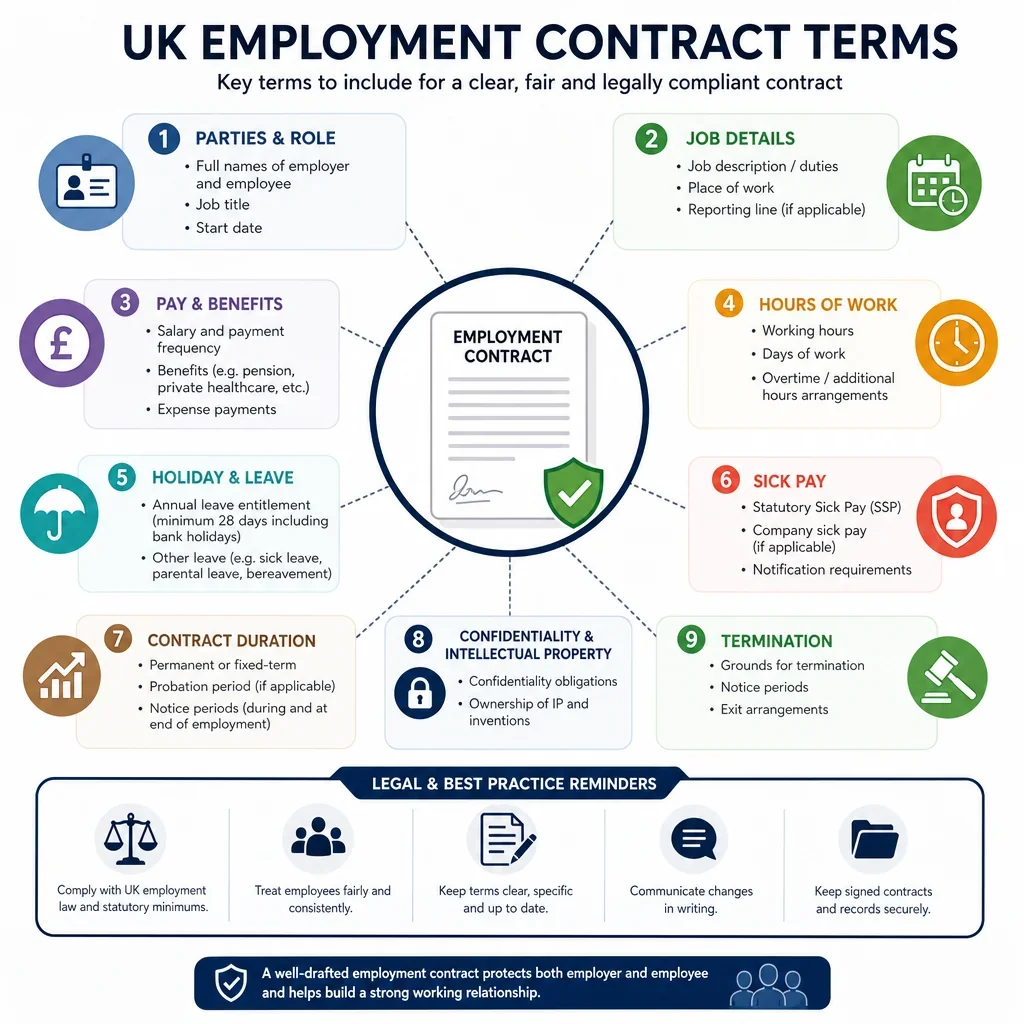
A well drafted UK employment contract sets clear expectations from day one and helps employers comply with the written statement requirements under the Employment Rights Act 1996. It also helps employees understand their pay, hours, holiday, workplace, notice, and key rights.
What Happens If An Employment Contract Is Incomplete?
If important clauses are missing or unclear, disputes can arise about wages, duties, working hours, bonuses, confidentiality, notice, and termination. In some cases, an employment tribunal may consider whether the employer failed to provide required written particulars.
Which Clauses Protect Employers And Employees?
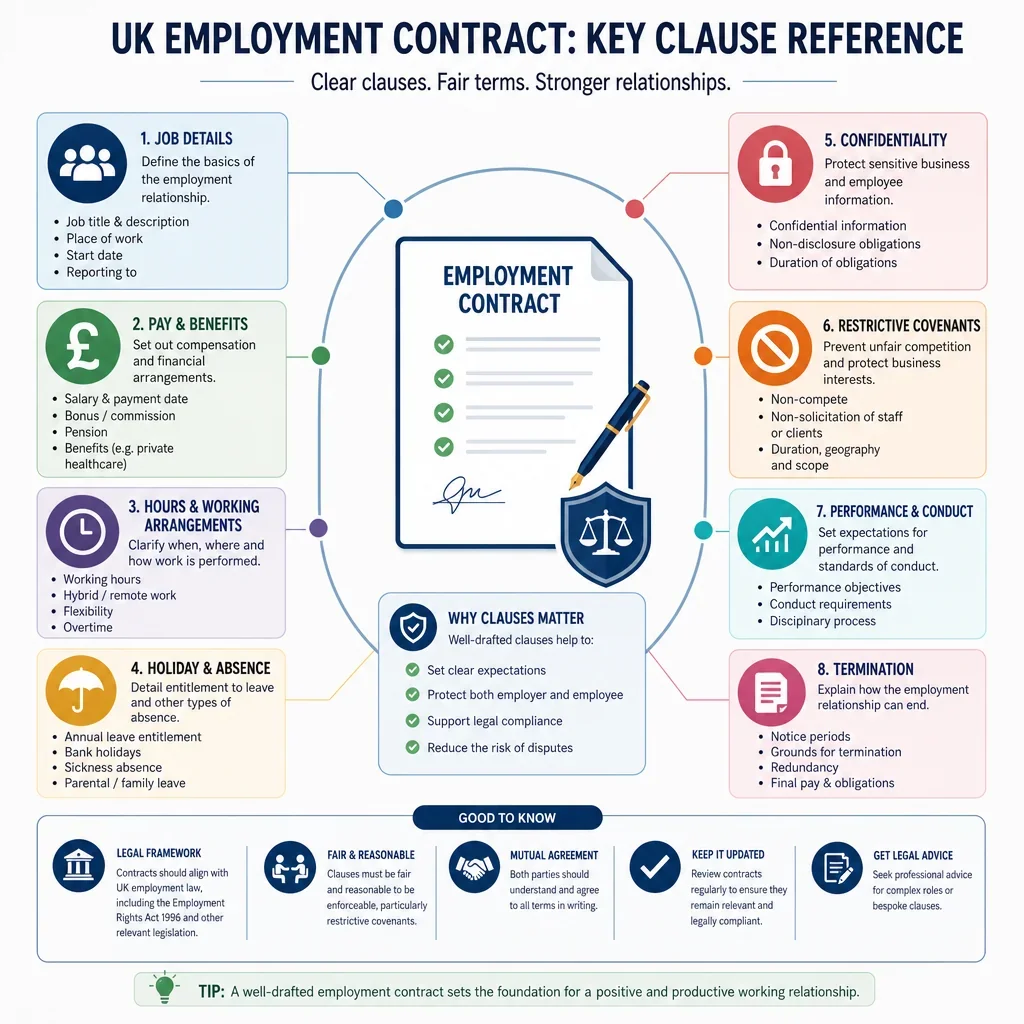
- Core particulars explain the basic terms required for UK employment relationships.
- Pay, hours, and holiday clauses help support compliance with wage and working time rules.
- Confidentiality, data protection, and IP clauses protect business information and personal data.
- Notice and termination clauses reduce uncertainty when employment ends.
- Policy and grievance references help align the contract with ACAS expectations.
When Should A UK Employment Contract Be Tailored?
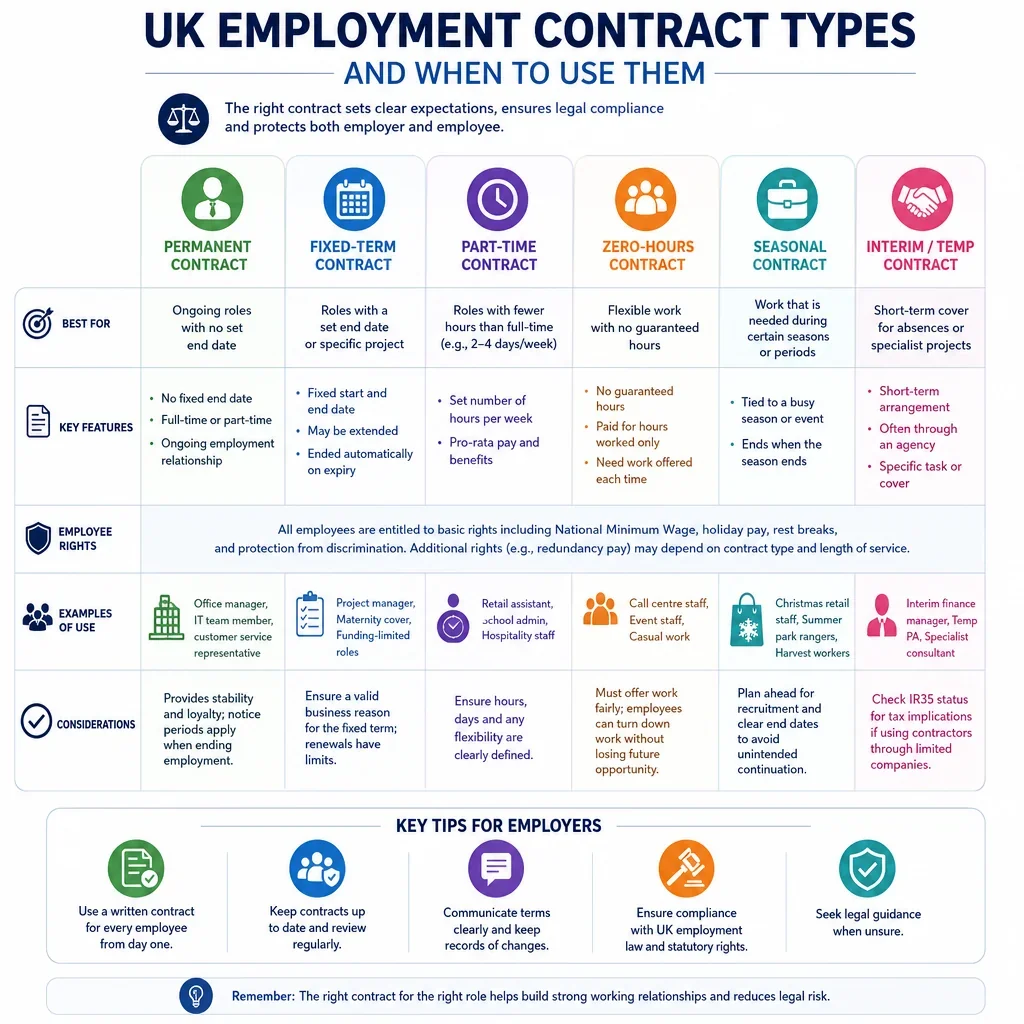
A template may be suitable for simple roles, but contracts should be tailored for fixed-term employees, remote workers, senior staff, regulated roles, commission schemes, intellectual property work, and roles involving client relationships or confidential information.
For further guidance, see GOV.UK guidance on employment contracts and ACAS guidance on employment contracts.
FAQs
You Might Also Be Interested In