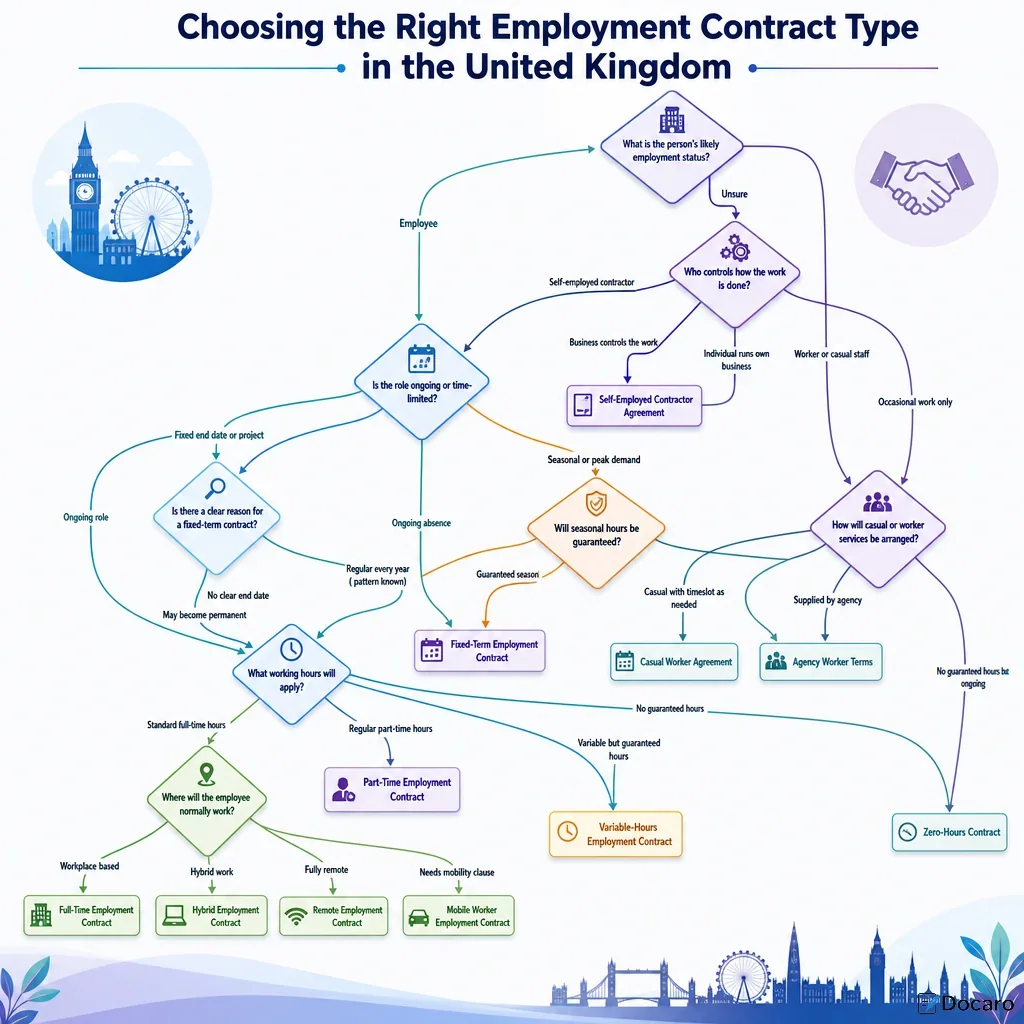
Choosing The Right Employment Contract Type In The United Kingdom
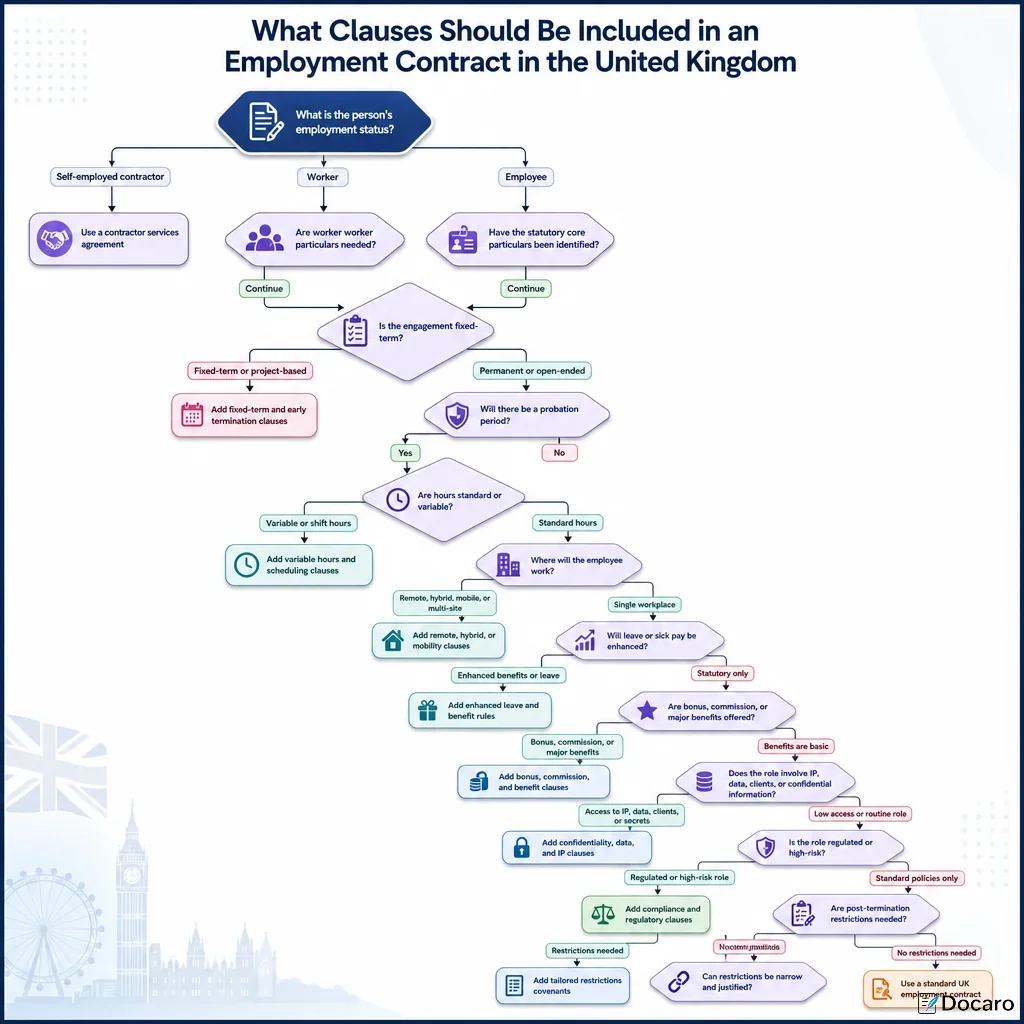
What is the person\'s likely employment status?
Why Is Choosing The Right UK Employment Contract Important?
Choosing the right employment contract helps make the working relationship clear from day one. In the United Kingdom, the document should match the reality of the arrangement, not just the title used by the business.
How Does The Contract Type Affect Legal Rights?
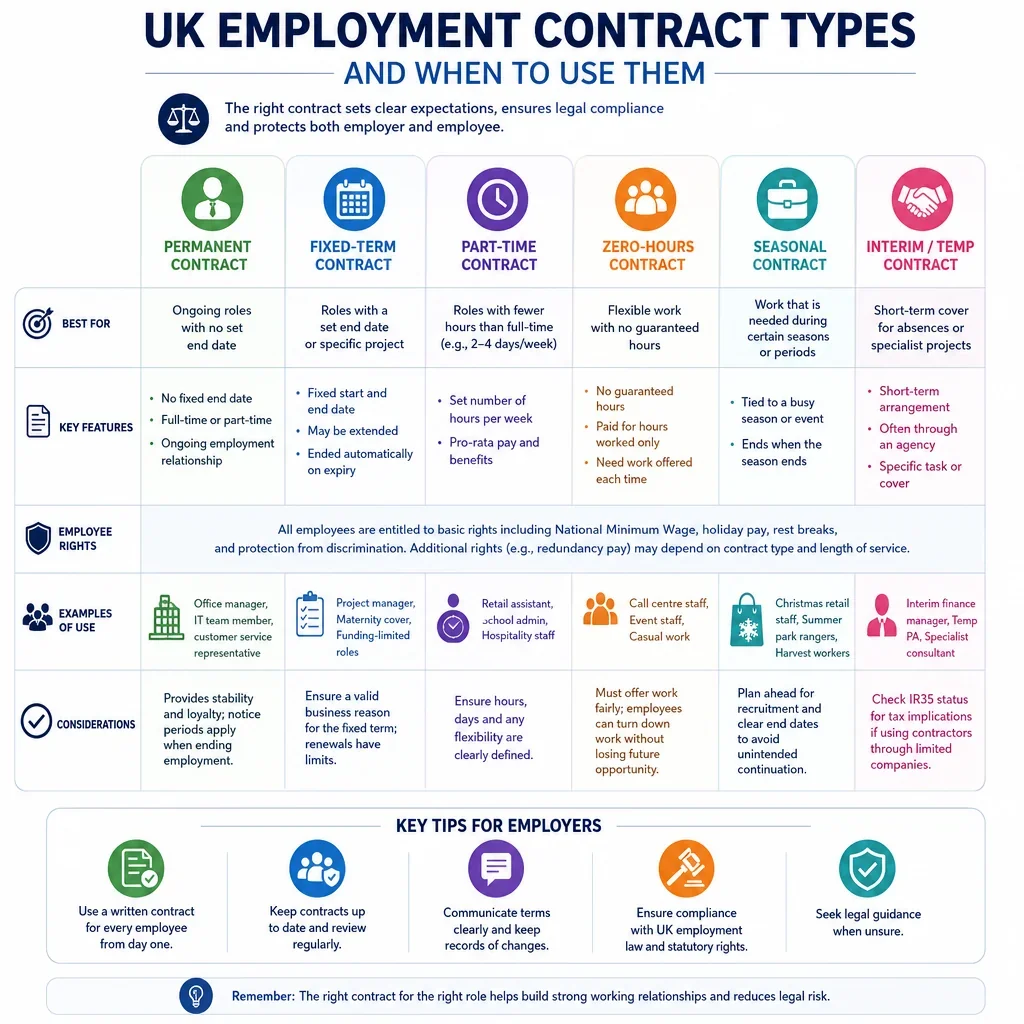
Different contract types can create different rights and obligations. Employees, workers, agency workers and self-employed contractors may have different rights to holiday pay, notice, redundancy pay, unfair dismissal protection, sick pay and minimum wage. Using the wrong document can lead to disputes, tribunal claims and unexpected liabilities.
What Should UK Employers Put In Writing?
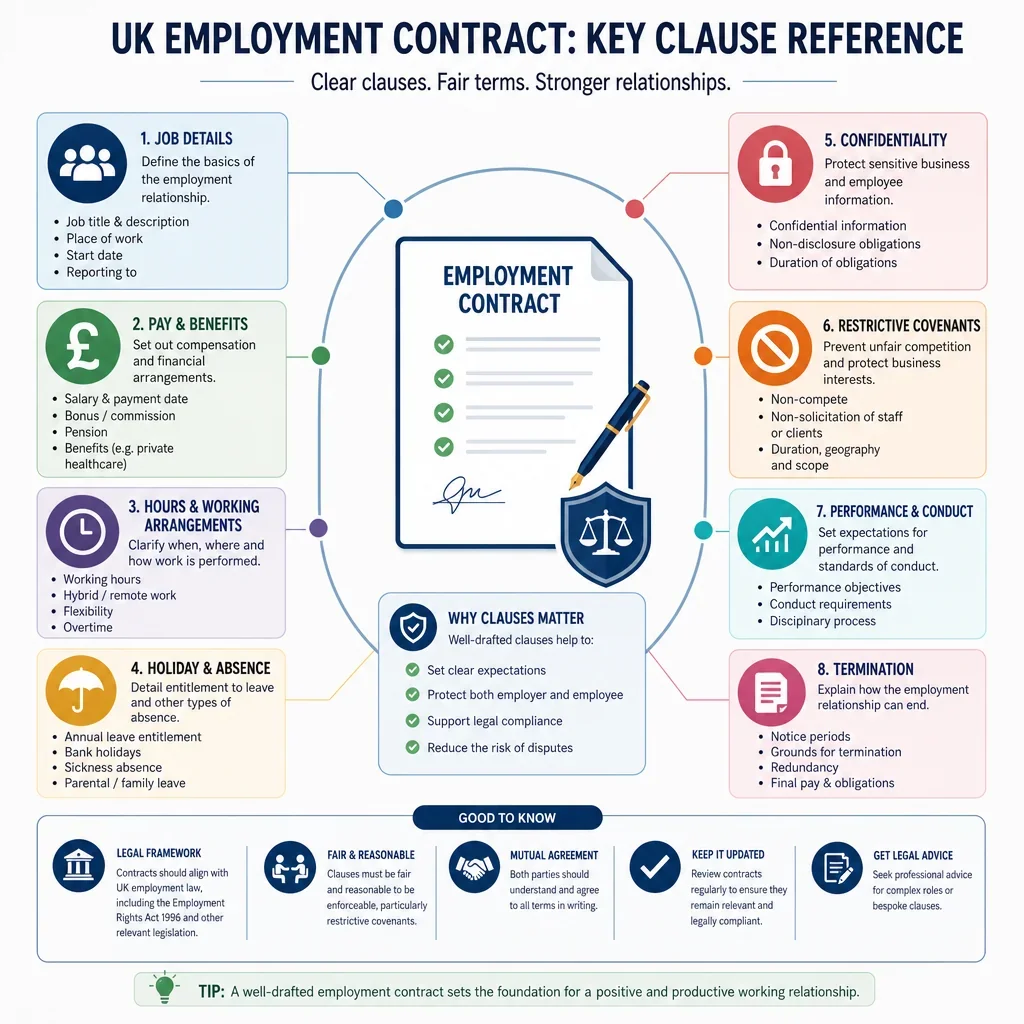
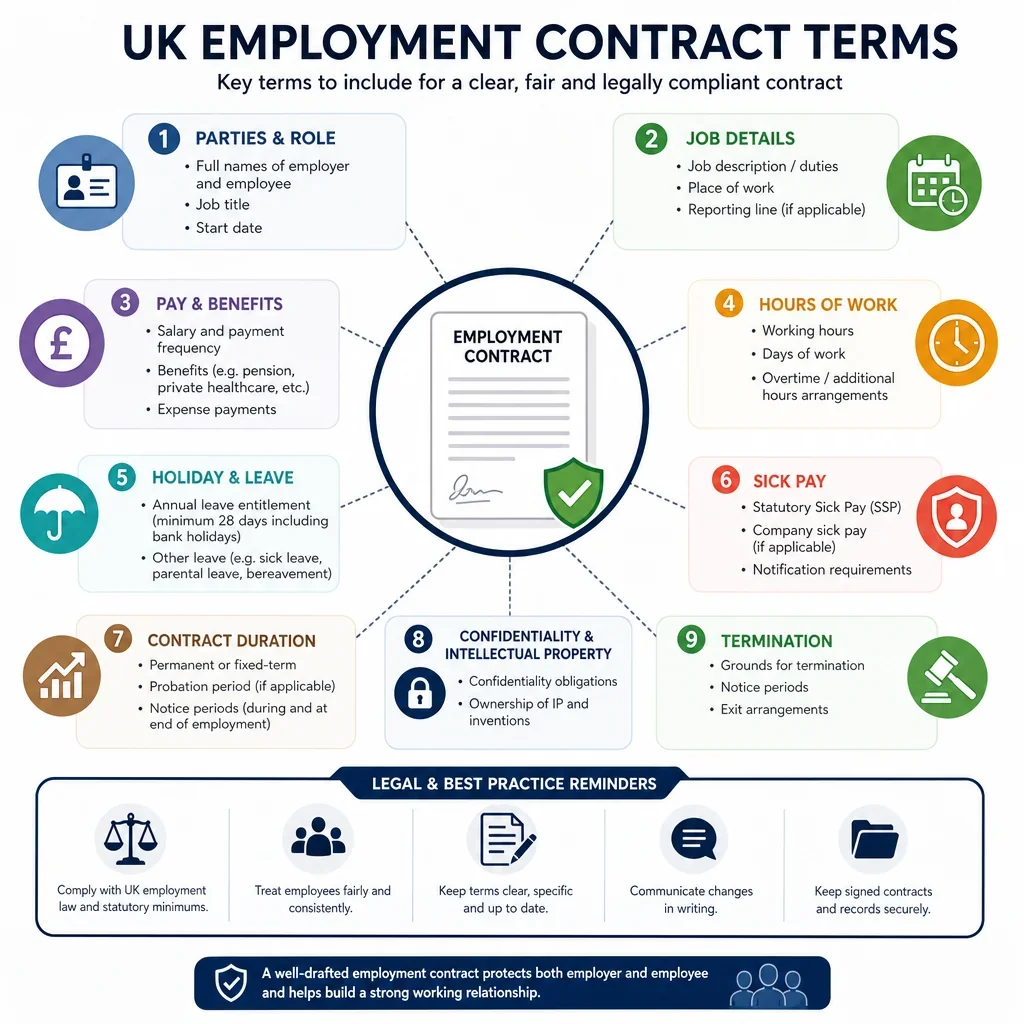
Most employees and workers are entitled to a written statement of employment particulars on or before the first day of work. A suitable contract can also explain important commercial terms such as duties, pay, hours, confidentiality, intellectual property, restrictive covenants, workplace rules and termination.
Why Does Employment Status Matter For Tax And Compliance?
Employment status affects PAYE, National Insurance, pension auto-enrolment and wider compliance duties. HMRC and employment tribunals may look beyond the wording of the contract to the practical reality of control, personal service, mutual obligations and financial risk.
What Are The Risks Of Using The Wrong Template?
- Misclassification: A contractor may be treated as an employee or worker if the relationship is controlled like employment.
- Missing statutory terms: Key written particulars may be absent or unclear.
- Holiday and pay errors: Casual, zero-hours and part-time arrangements need careful pay and holiday wording.
- Unclear termination rights: Notice, expiry dates and renewal rules should match the chosen contract type.
- Disputes over location: Remote, hybrid and mobile work should cover equipment, expenses, data and health and safety.
For official guidance, see GOV.UK employment status, GOV.UK contract types and Acas employment contracts.
FAQs
You Might Also Be Interested In