User Account Lifecycle Terms Dataset In The United Kingdom
Account Event | Relevant Terms Wording | Provision Type | Practical Notes | User Clarity Importance |
|---|---|---|---|---|
Registration | ||||
User creates an account | Users must provide required registration details and accept the terms before using account features. | Administrative requirement | State when the contract starts and which services require an account. | High |
Eligibility to register | Users must be legally able to enter a binding agreement and meet any service eligibility rules. | User obligation | For consumer services, avoid unclear eligibility exclusions that could be unfair. | High |
Minimum age for account creation | Users below the stated minimum age must not create an account. | User obligation | If relying on child consent for online services, UK GDPR sets 13 as the minimum age. | High |
Parental consent for younger users | A parent or guardian must consent where the service permits underage accounts. | Administrative requirement | Explain who is responsible for supervising the child account and accepting terms. | High |
Business user registers an account | Business users confirm they have authority to bind the organisation they represent. | User obligation | Useful where accounts may be opened by employees, agents or contractors. | High |
User supplies registration information | Users must provide accurate, current and complete account information. | User obligation | Connect inaccurate information to refusal, suspension or termination rights. | High |
User opens multiple accounts | Users may hold only one account unless the operator gives permission. | User obligation | Useful for preventing abuse, bonus misuse, ban evasion and duplicate identities. | Medium |
Automated or bot account registration | Users must not create accounts through bots, scripts or automated means without consent. | User obligation | Support anti-spam controls and reserve immediate suspension for automated abuse. | Medium |
User chooses a username | Usernames must not be offensive, misleading, infringing or impersonating another person. | User obligation | Reserve a right to rename accounts where names breach content or identity rules. | Medium |
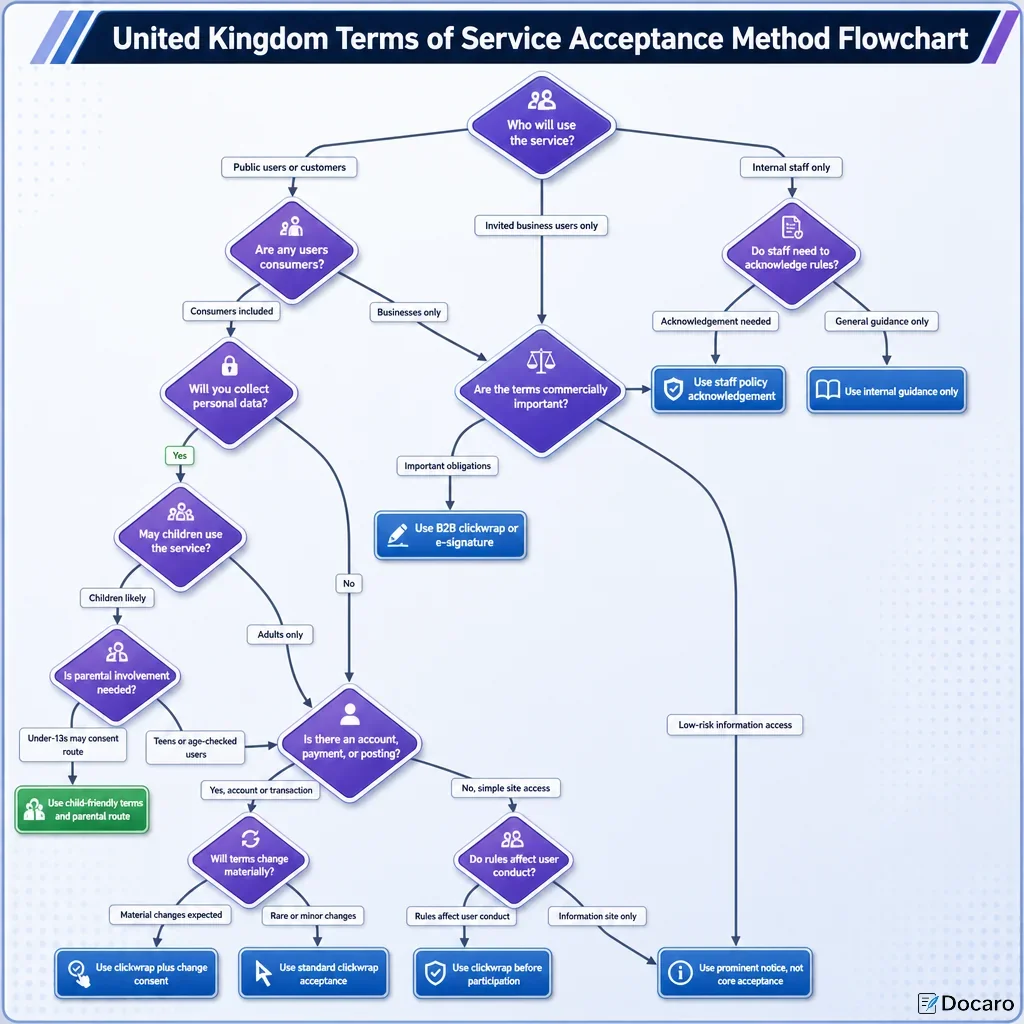
User accepts account terms | By registering, users agree to the terms, privacy notice and applicable policies. | Mutual process | Use clear signposting and record acceptance for evidence of agreement. | High |
Operator refuses registration | The operator may refuse registration where eligibility, security or compliance checks fail. | Operator right | Avoid arbitrary refusal wording for consumers give lawful and objective examples. | High |
Account verification | ||||
Email address verification | Users may need to verify their email address before full account access is enabled. | Administrative requirement | Explain that unverified accounts may have limited features or be removed. | High |
Phone number verification | Users may be asked to verify a phone number for security or anti-abuse purposes. | Administrative requirement | Personal data use should be covered in the privacy notice. | Medium |
Identity verification check | Users may need to provide identity information where required for trust, safety or law. | Administrative requirement | State when checks apply and link to privacy information about verification data. | High |
Age verification check | Users may be required to prove age before accessing age-restricted features. | Administrative requirement | Particularly important for services with adult, gambling, alcohol or regulated content. | High |
Verification fails | The operator may limit, suspend or close accounts that fail required verification checks. | Operator right | Give users a reasonable chance to correct errors unless risk requires immediate action. | High |
Reverification after risk trigger | The operator may request reverification after suspicious activity or material account changes. | Operator right | Examples help avoid surprise, especially after address, payment or device changes. | Medium |
Fraud or sanctions screening | Accounts may be checked against fraud, security, sanctions and compliance systems. | Operator right | Sensitive for fintech, marketplaces and paid services privacy notice should explain screening. | High |
Profile management | ||||
User updates profile details | Users are responsible for keeping account and contact details up to date. | User obligation | Important where notices, invoices, delivery or recovery depend on current details. | High |
User adds profile content | Profile content must comply with the community rules and must not be unlawful or harmful. | User obligation | Cross-refer to acceptable use, moderation and user-generated content provisions. | High |
User changes profile visibility | Users may control available visibility settings, subject to service design and safety rules. | Mutual process | Do not imply privacy controls do more than the product actually provides. | Medium |
User changes display name | Display names may be changed only in line with naming and impersonation rules. | Mutual process | Allow operator intervention for impersonation, offensive names and trademark misuse. | Medium |
User uploads profile image | Profile images must not infringe rights, impersonate others or breach content standards. | User obligation | Combine with moderation rights to remove images without deleting the account. | Medium |
User transfers account to another person | Users must not sell, transfer or assign accounts without written permission. | User obligation | Important for reputation systems, paid entitlements and identity-based services. | Medium |
User shares account access | Users must not share account access unless the account type expressly allows it. | User obligation | Clarify whether family, team or business seats are exceptions. | High |
User links a third-party account | Linked third-party accounts remain subject to the third party's own terms and policies. | Administrative requirement | Explain that third-party login or integrations may fail outside operator control. | Medium |
User changes notification preferences | Users may manage optional notifications, but service and legal notices may still be sent. | Mutual process | Distinguish marketing opt-outs from essential service communications. | High |
Password and security | ||||
User creates a password | Users must choose and maintain a secure password for their account. | User obligation | Set practical security expectations without promising perfect account protection. | High |
User keeps login credentials confidential | Users are responsible for keeping login credentials confidential and not disclosing them. | User obligation | Do not exclude liability for operator security failures that cannot lawfully be excluded. | High |
User requests password reset | Password resets may require identity, email or other security verification. | Mutual process | Explain that reset requests can be delayed or refused if security checks fail. | High |
User enables multi-factor authentication | Users may enable or be required to use multi-factor authentication for account security. | Administrative requirement | State consequences of losing access to an authentication device. | High |
User loses authentication device | Account recovery may require additional checks if authentication devices or codes are lost. | Mutual process | Balance user access with fraud risk avoid guaranteeing instant recovery. | High |
User detects unauthorised account access | Users must promptly notify the operator of suspected unauthorised account access. | User obligation | Include a reporting route and reserve temporary security restrictions. | High |
Operator applies security lock | The operator may lock an account temporarily to protect the user, service or others. | Operator right | List triggers such as credential stuffing, suspicious login or data breach response. | High |
Suspicious login attempt detected | The operator may require additional verification after suspicious or unusual login activity. | Operator right | Useful for explaining device, location or risk-based checks. | Medium |
Operator logs user out for security | Users may be logged out automatically after inactivity or security updates. | Administrative requirement | Good for services where unsaved work or transactions may be affected. | Medium |
Account appears compromised | The operator may reset credentials, revoke sessions or restrict access after compromise indicators. | Operator right | Explain urgent action may be taken without advance notice for security reasons. | High |
Account suspension | ||||
Temporary suspension for suspected breach | The operator may temporarily suspend access while investigating a suspected terms breach. | Operator right | Set out investigation, notice and review process where practicable. | High |
Immediate suspension for serious breach | Access may be suspended immediately for serious, repeated or harmful breaches. | Operator right | Give examples such as fraud, harassment, illegal content or platform abuse. | High |
Suspension for unpaid fees | Paid features may be suspended if fees are overdue after applicable notice. | Operator right | State grace periods, notice method and effect on access to existing content. | High |
Suspension after chargeback or payment dispute | The operator may restrict paid access while a chargeback or payment dispute is reviewed. | Operator right | Avoid penalising valid statutory refund or cancellation rights. | High |
Suspension required for legal compliance | The operator may suspend accounts where necessary to comply with law or regulatory duties. | Operator right | Useful for court orders, sanctions, fraud, safety duties and regulator requests. | High |
Account is reported for abuse | Accounts may be restricted while abuse, safety or content reports are reviewed. | Mutual process | Terms should support moderation workflow and explain that reports may not guarantee action. | High |
User appeals suspension | Users may contact the operator to request review of a suspension decision. | Mutual process | Give a clear review route, evidence requirements and expected response approach. | High |
Operator gives suspension notice | Where reasonable, the operator will notify users of suspension and the reason for it. | Administrative requirement | Reserve exceptions where notice would harm security, investigations or legal compliance. | High |
Operator restricts specific account features | The operator may restrict particular features instead of suspending the whole account. | Operator right | Useful for proportionate moderation, payment blocks or messaging limits. | Medium |
Account closure | ||||
User closes account voluntarily | Users may close their account using the account settings or by contacting support. | Mutual process | State the closure route and any authentication needed to prevent malicious deletion. | High |
User cancels paid digital service | Consumer cancellation rights and any digital content exceptions should be explained clearly. | Administrative requirement | UK distance selling rules can give cancellation rights, subject to digital content exceptions. | High |
Account closure affects subscription renewal | Closing an account may cancel future renewals but does not automatically refund past charges. | Administrative requirement | Be explicit about renewal date, cancellation cut-off and refund policy. | High |
Operator terminates account for breach | The operator may close accounts for serious, repeated or unresolved terms breaches. | Operator right | Specify material breach examples and whether notice or cure periods apply. | High |
Operator closes inactive account | Inactive accounts may be closed after a stated period and prior notice where practical. | Operator right | Define inactivity and warn users before deleting content or account access. | High |
Consequences of account closure | Closure may end access to account features, saved settings, messages and user content. | Administrative requirement | Clearly distinguish content deleted, retained, anonymised or still visible to others. | High |
User requests personal data erasure | Users may request deletion of personal data through the privacy rights process. | Mutual process | Account deletion is not always the same as erasure of all personal data. | High |
Operator retains data after closure | Certain records may be retained after closure where required for law, disputes or security. | Operator right | Align with privacy notice retention periods and storage limitation principles. | High |
Outstanding obligations survive closure | Closure does not affect accrued rights, unpaid sums or provisions intended to survive. | Mutual process | Common surviving terms include payment, liability, IP licences and dispute clauses. | Medium |
User downloads data before closure | Users should download needed content or records before closing the account. | Administrative requirement | Where portability applies, handle requests through privacy rights procedures. | High |
Reactivation | ||||
User re-registers after closure | Users may create a new account after closure unless barred by the terms or law. | Mutual process | Prevent ban evasion by excluding users closed for serious breach or abuse. | Medium |
Suspended account is restored | The operator may restore access once issues are resolved and required checks are complete. | Mutual process | Explain cure steps such as payment, verification, content removal or security reset. | High |
Closed account reactivation request | Reactivation may be unavailable once an account has been permanently deleted. | Administrative requirement | Set any cooling-off window before permanent deletion or username release. | High |
Operator sets reinstatement conditions | Reinstatement may be conditional on compliance steps and future adherence to the terms. | Operator right | Use proportionate conditions and avoid vague penalties for consumers. | Medium |
Account reactivated after overdue payment | Suspended paid access may be restored after overdue amounts are paid and processed. | Mutual process | State whether billing cycle, stored data or service credits are affected. | Medium |
Account reactivated after security reset | Access may be restored after password reset, MFA review or other security remediation. | Mutual process | Make recovery dependent on reasonable evidence that the rightful user controls the account. | High |
Banned user seeks reactivation | Users permanently banned for serious breach may not reactivate or create replacement accounts. | Operator right | Define permanent ban triggers and any exceptional appeal process. | High |
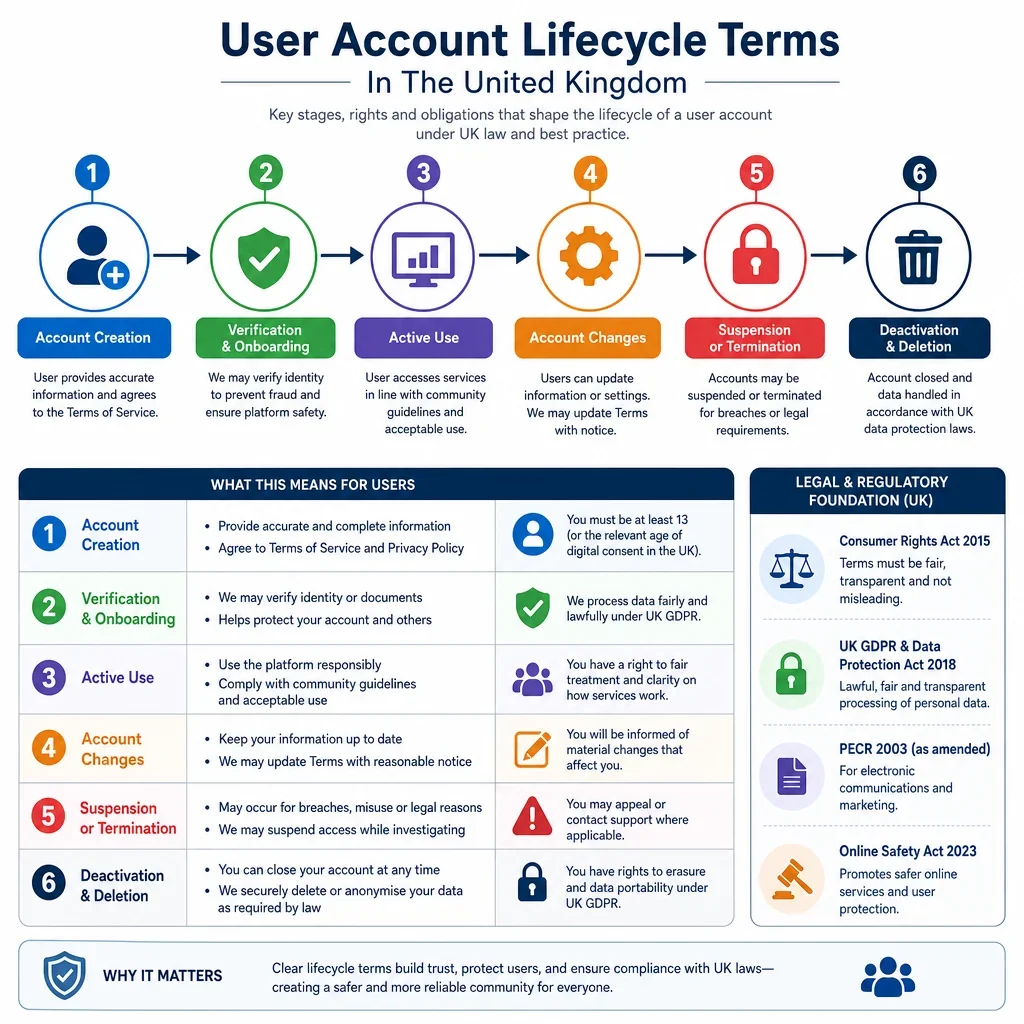
What Should UK Terms Say About The User Account Lifecycle?
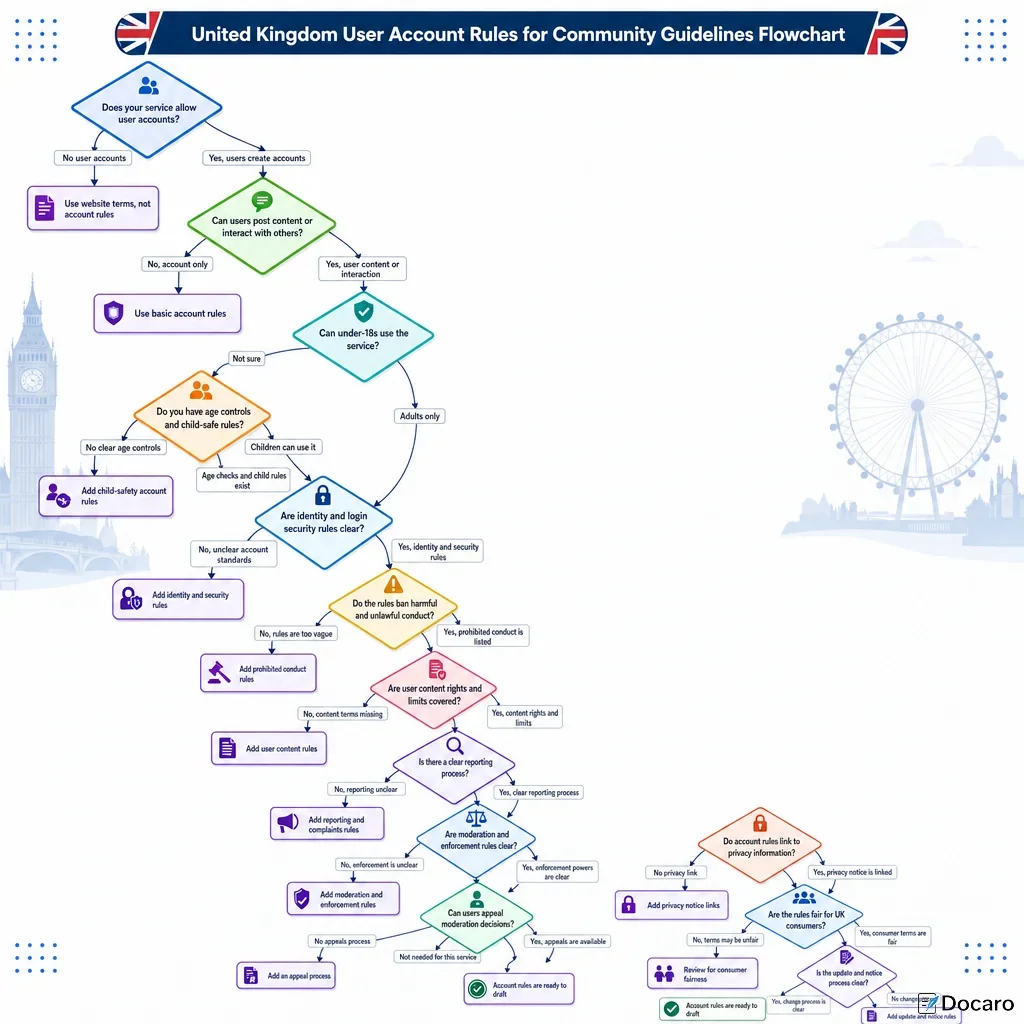
UK-facing account terms should explain the full journey from registration to closure: eligibility, accurate account details, verification, password security, suspension triggers, deletion requests and possible reactivation. The clearest terms separate user obligations, such as keeping credentials secure, from operator rights, such as suspending accounts for fraud, abuse or legal compliance.
When Do Account Terms Need Extra Legal Care?
Extra care is needed where account decisions affect consumer rights, personal data or platform access. Terms should avoid unfair or overly broad discretion, explain material suspension and termination rights clearly, and align with UK consumer fairness rules under the Consumer Rights Act 2015. Where account closure or erasure involves personal data, terms should also signpost privacy processes under the Data Protection Act 2018 and UK GDPR.
How Should Suspensions And Closures Be Explained?
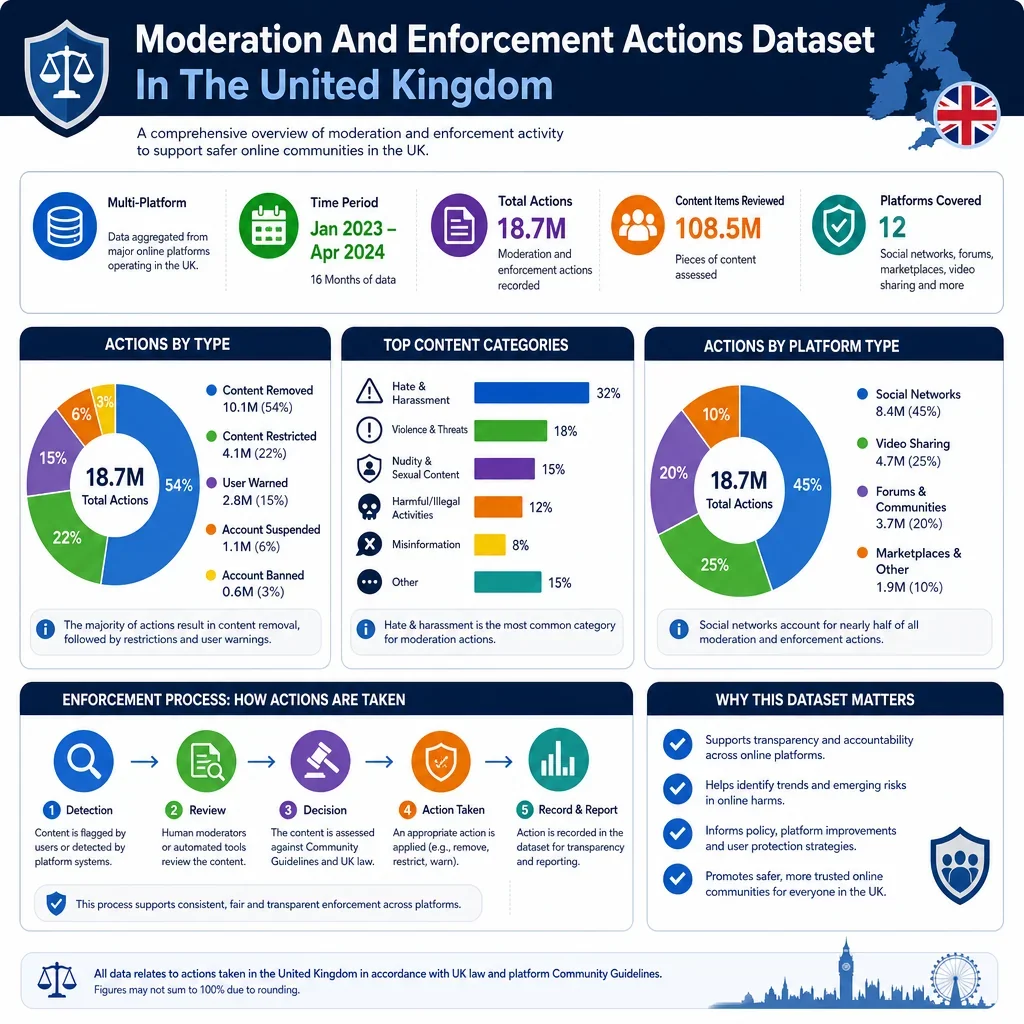
Suspension and closure wording should cover notice, reasons, appeal or review routes, effects on paid services, content access and data retention. For UK users, it is usually safer to state examples of serious breaches, explain immediate action for security or legal risk, and avoid unlimited rights to terminate without reason.
Which Account Events Most Need Clear User Wording?
- Registration: eligibility, age restrictions, prohibited automated sign-ups and accuracy of information.
- Verification: email confirmation, identity checks, failed verification and anti-fraud controls.
- Password and security: credential confidentiality, MFA, unauthorised access reporting and account recovery.
- Suspension: breach investigation, temporary restrictions, fraud prevention, legal compliance and appeal routes.
- Closure and reactivation: user cancellation, operator termination, data deletion limits, outstanding payments and reinstatement conditions.
FAQs
You Might Also Be Interested In