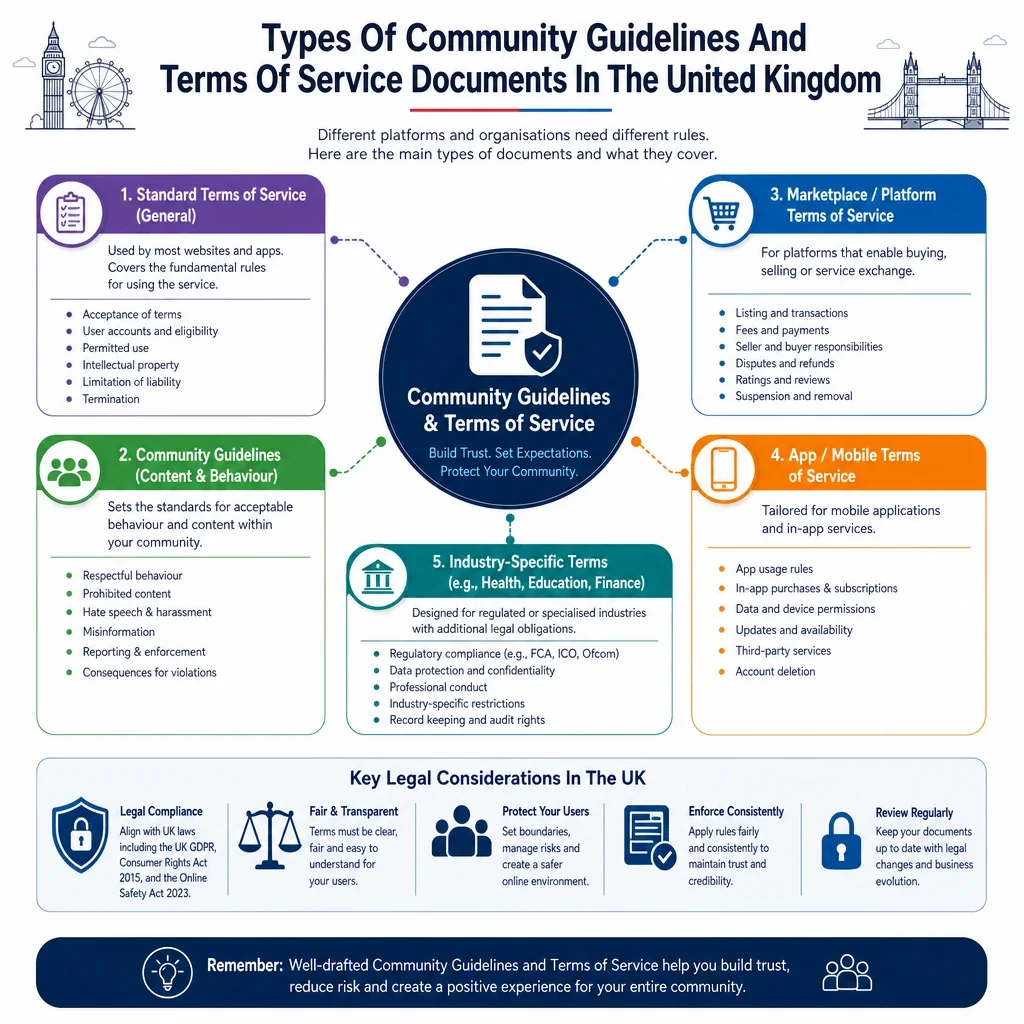
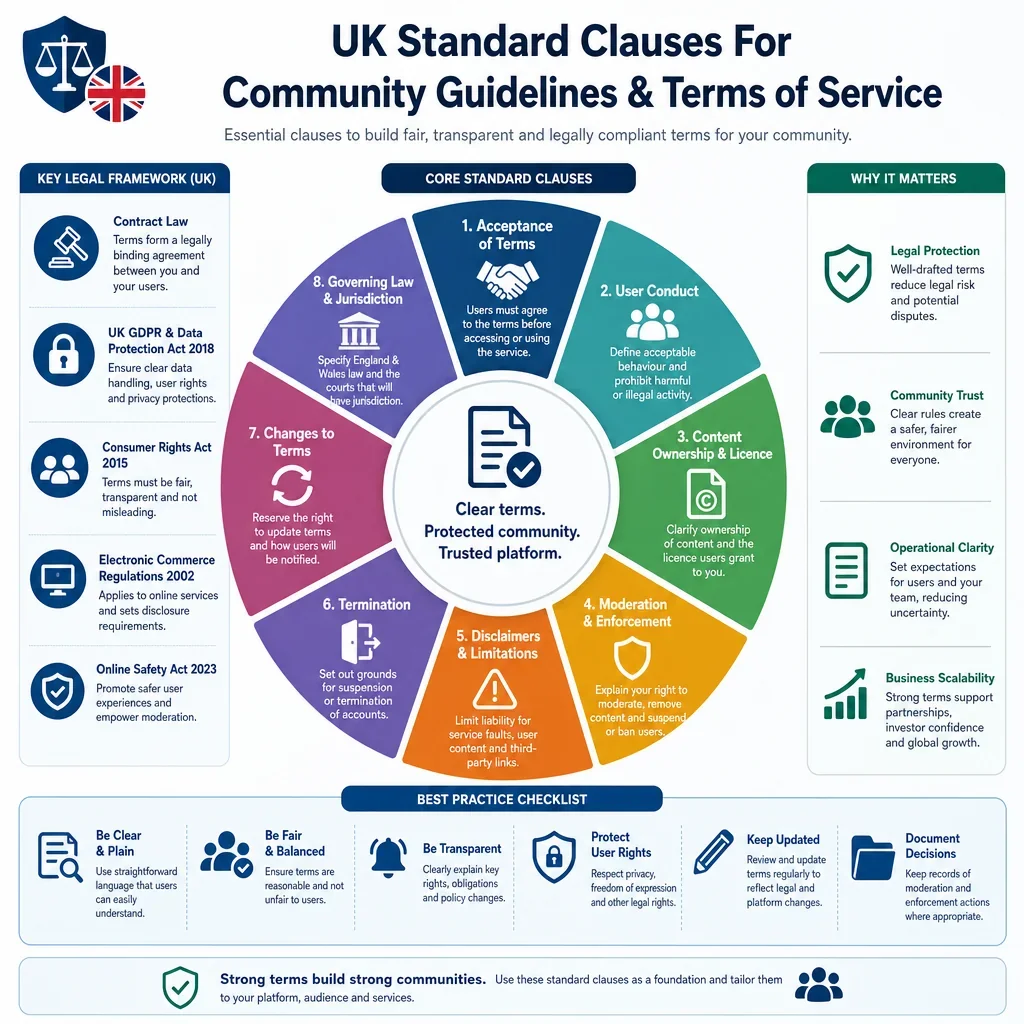
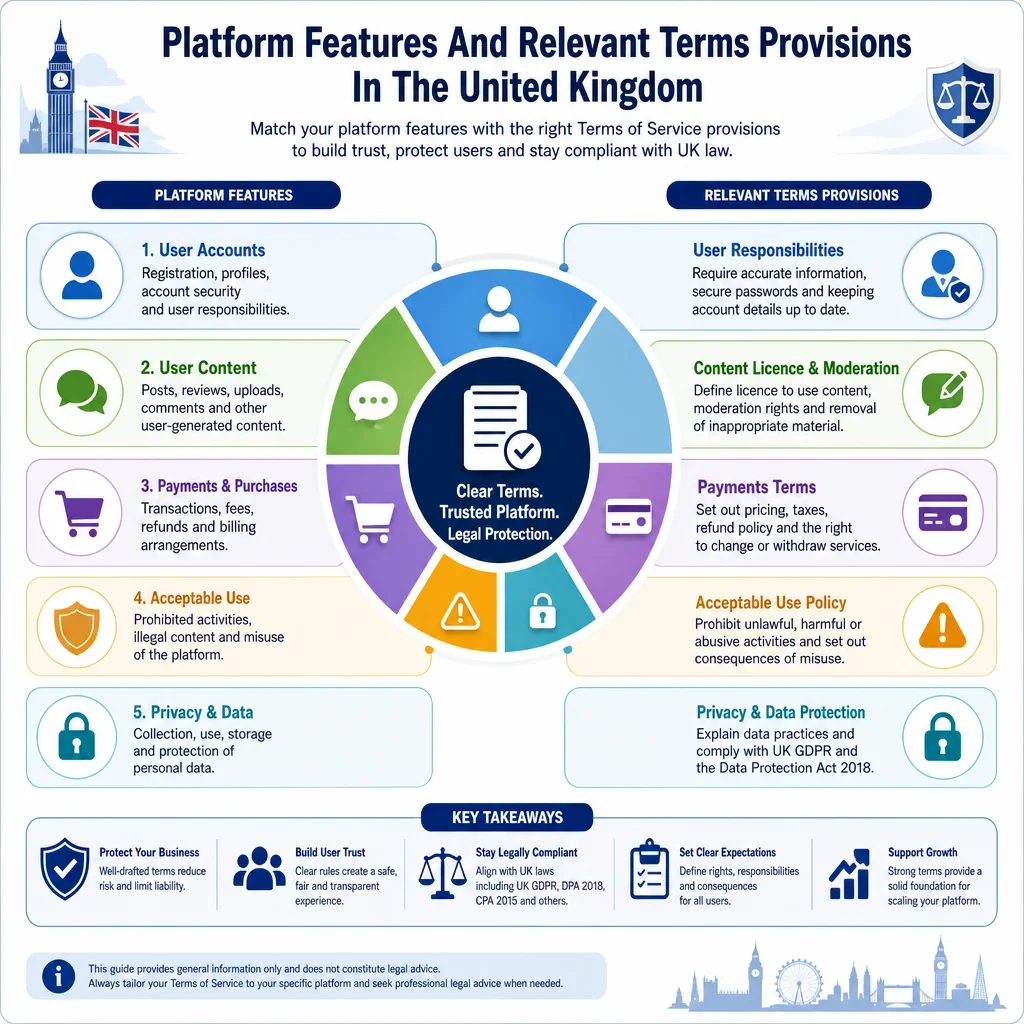
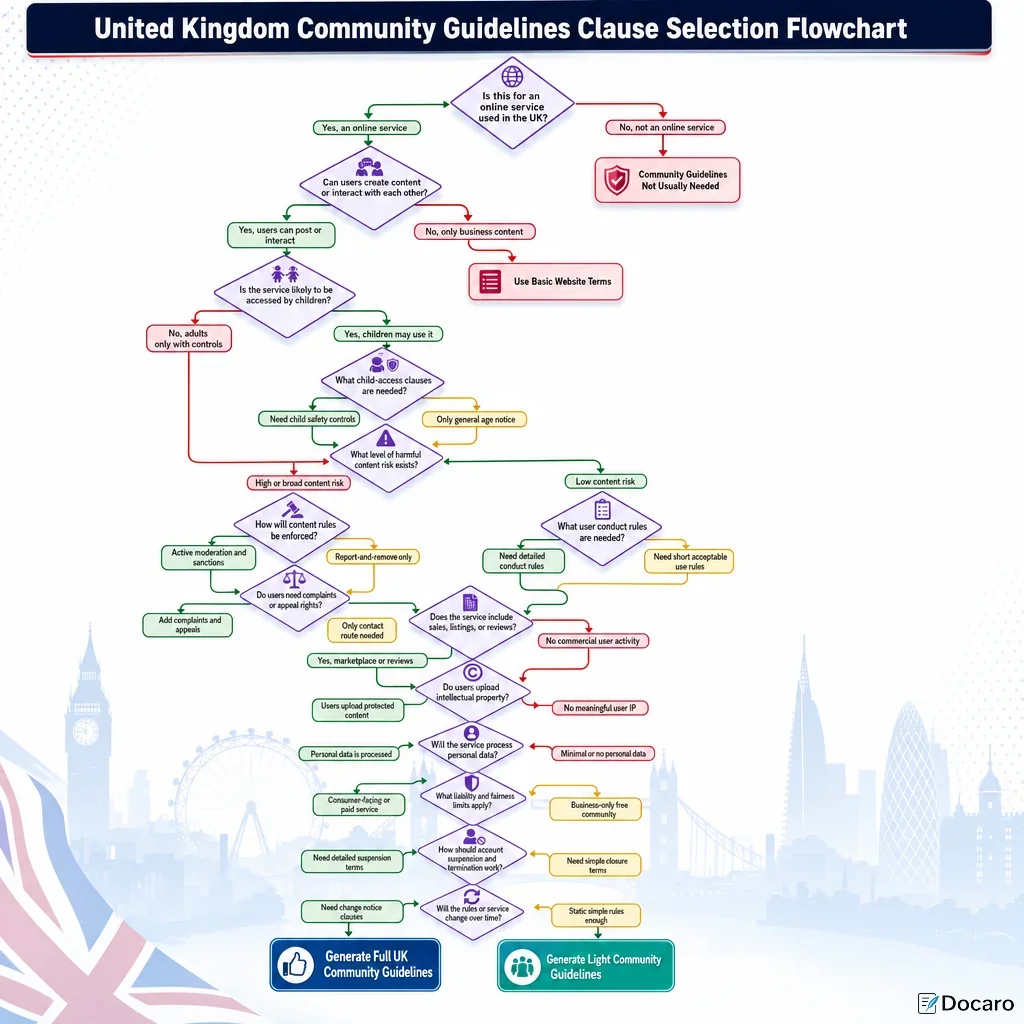
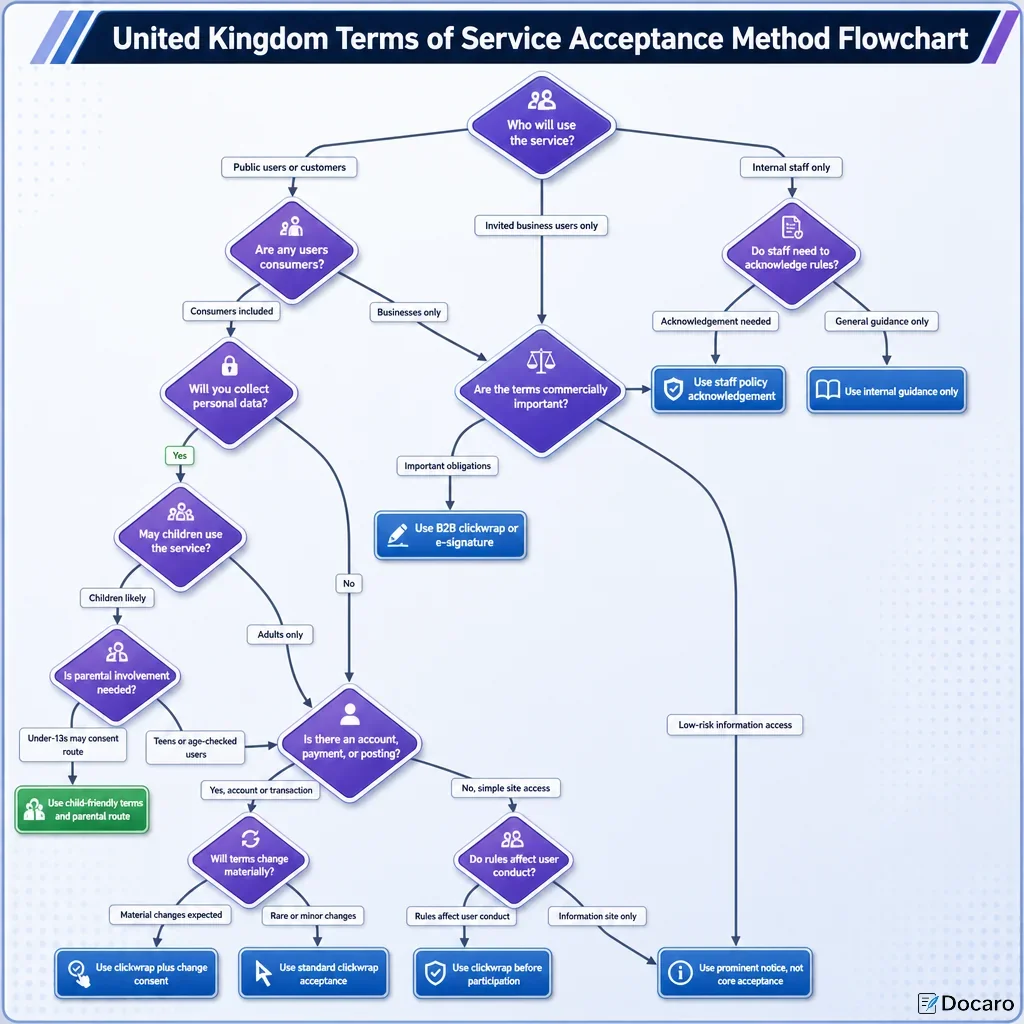
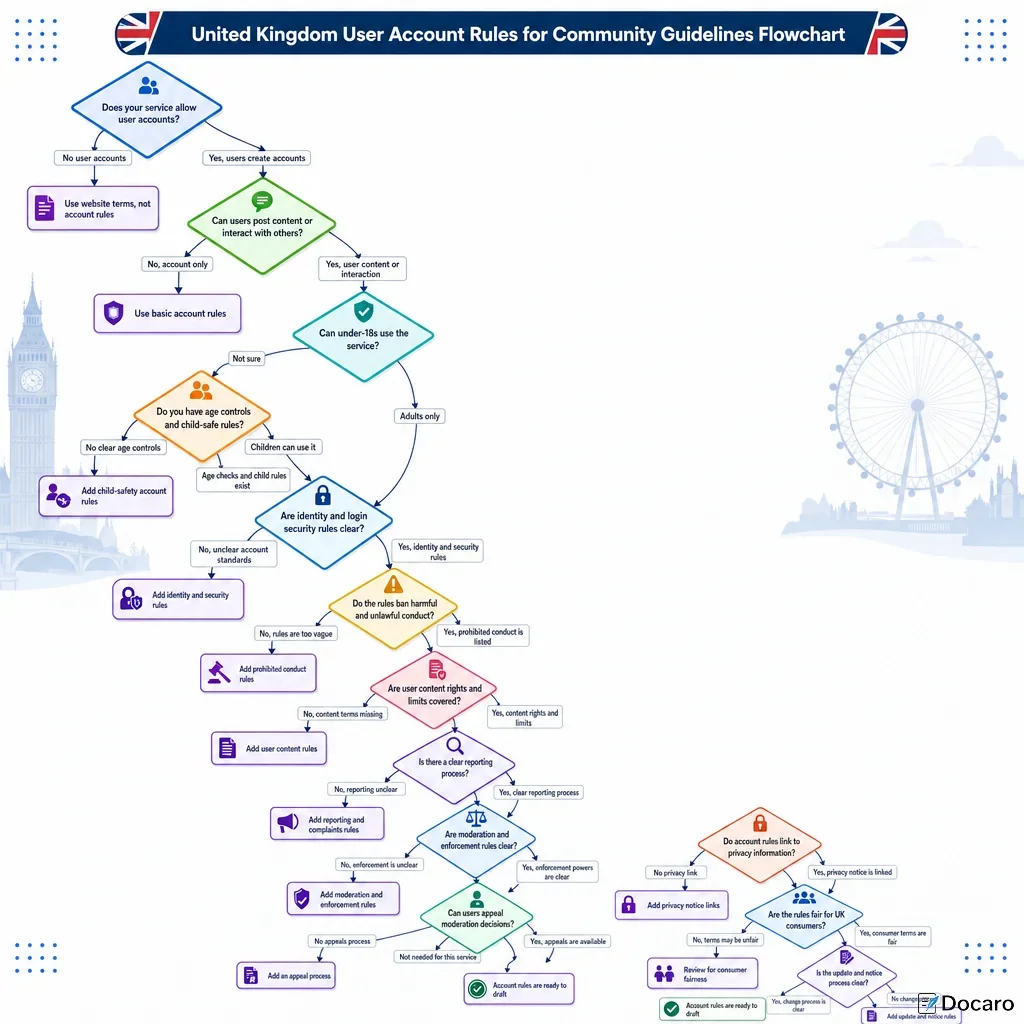
United Kingdom User Account Rules For Community Guidelines Flowchart
Does your service allow user accounts?
Why Are UK User Account Rules Important?
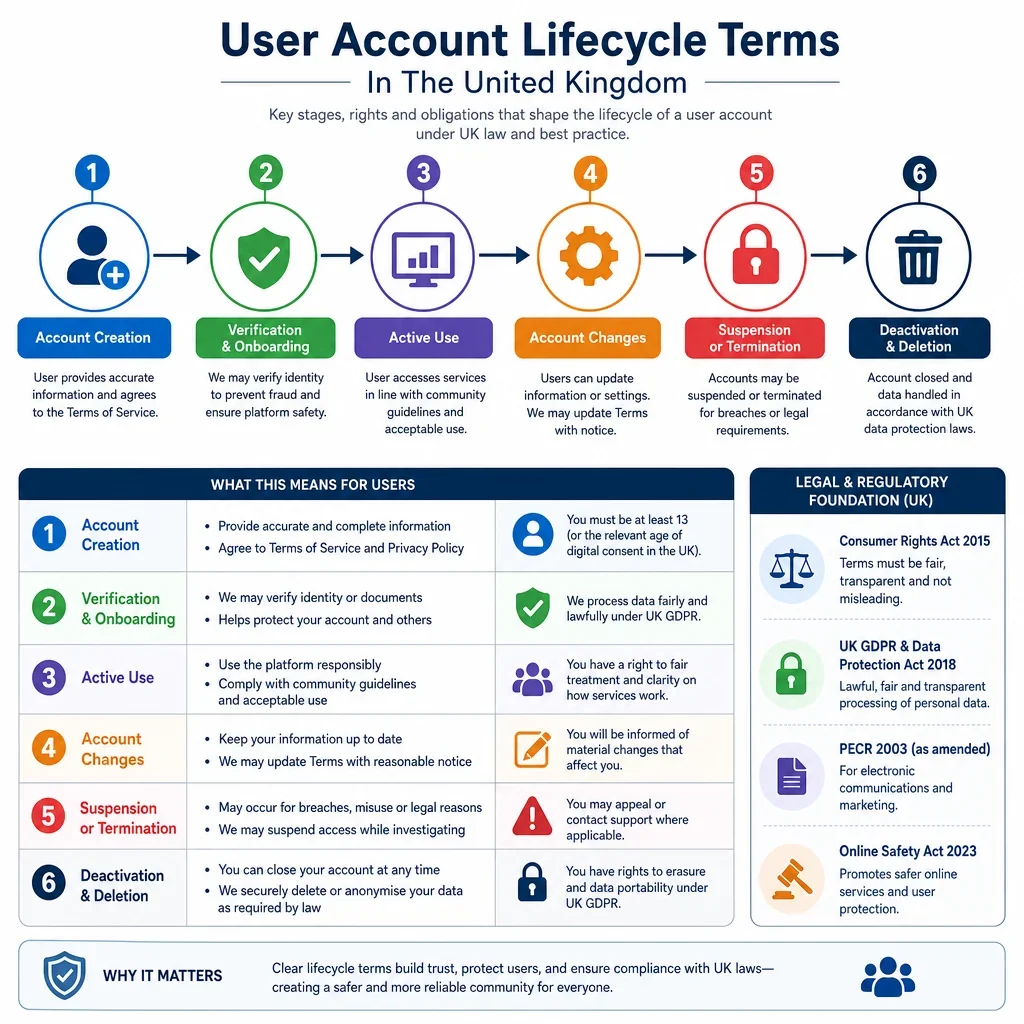
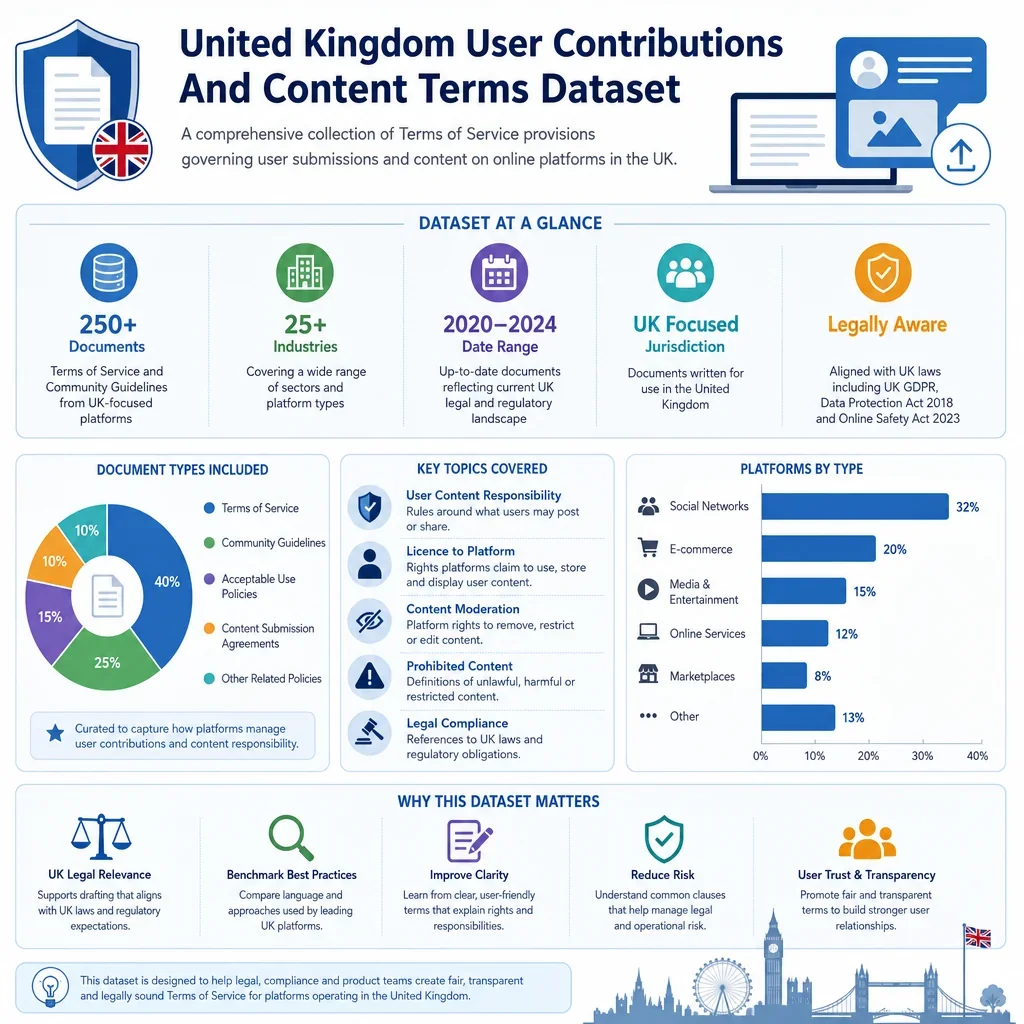
Clear user account rules help a UK-facing website explain who may use the service, what users can do, and what happens if community guidelines are broken. They are especially important where users can post content, message others, create profiles, or interact in public spaces.
How Do Good Community Guidelines Reduce UK Legal Risk?
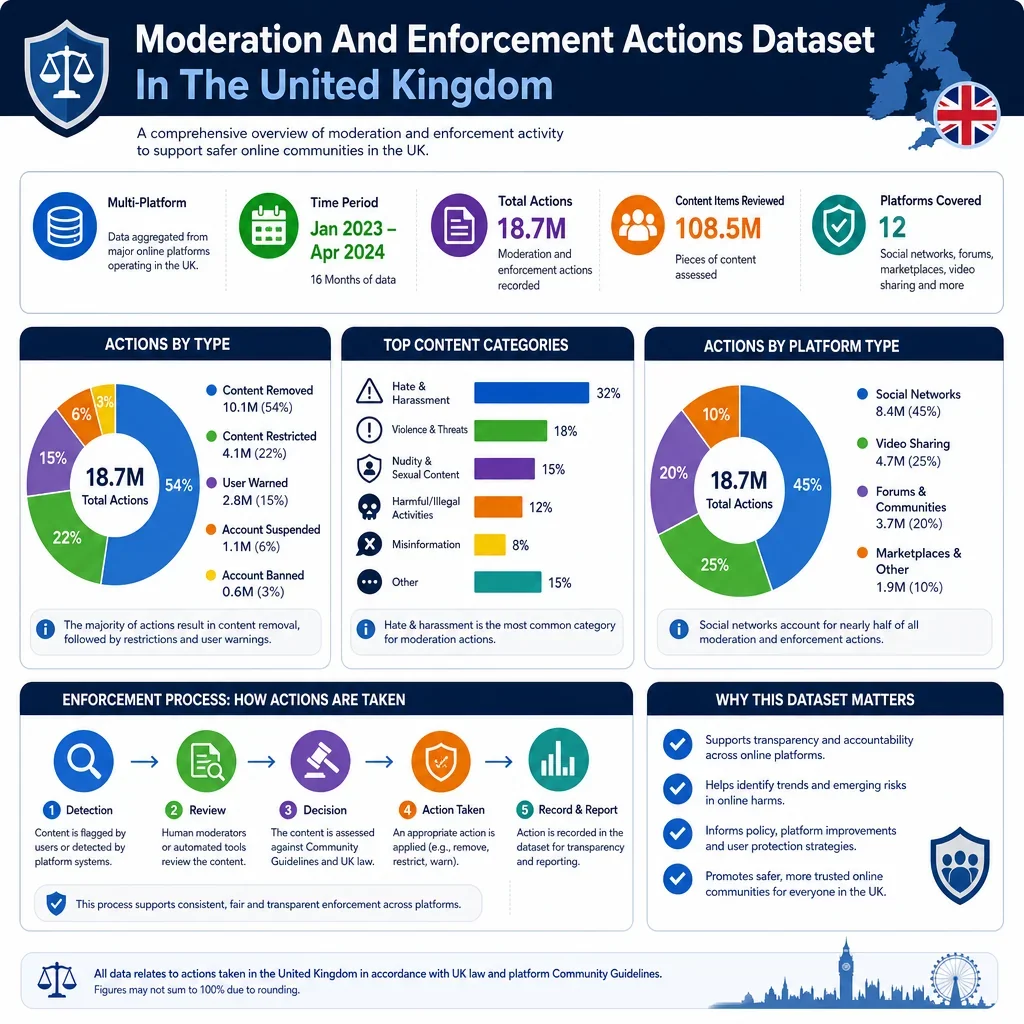
Well drafted rules can support compliance with UK expectations on online safety, consumer fairness, privacy, and platform moderation. They help users understand banned conduct such as harassment, unlawful content, fraud, impersonation, spam, and misuse of accounts.
Why Should Account Rules Be Clear For UK Consumers?
Where users are consumers, Terms of Service should be transparent and fair under UK consumer law. Rules about suspension, termination, changes, payments, content removal, and liability should be written clearly and should not give the business unfair or hidden powers.
What Should UK Platforms Consider For Children?
If children can access the service, the rules should reflect UK child-safety and data protection expectations. This may include minimum age rules, child-friendly explanations, reporting tools, safer defaults, and limits on adult contact or harmful content.
What Are The Practical Benefits Of Getting This Right?
- Better enforcement: moderators can apply rules more consistently.
- Fewer disputes: users know what behaviour may lead to removal, suspension, or termination.
- Stronger trust: clear rules make the service feel safer and more professional.
- Improved compliance: the platform can align policies with UK privacy, consumer, and online safety expectations.
- Better documentation: account rules can link neatly to a privacy notice, complaints process, and Terms of Service.
This flowchart is a practical starting point for deciding what to include in UK community guidelines, but it should be tailored to the platform, audience, risks, and commercial model.
FAQs
You Might Also Be Interested In