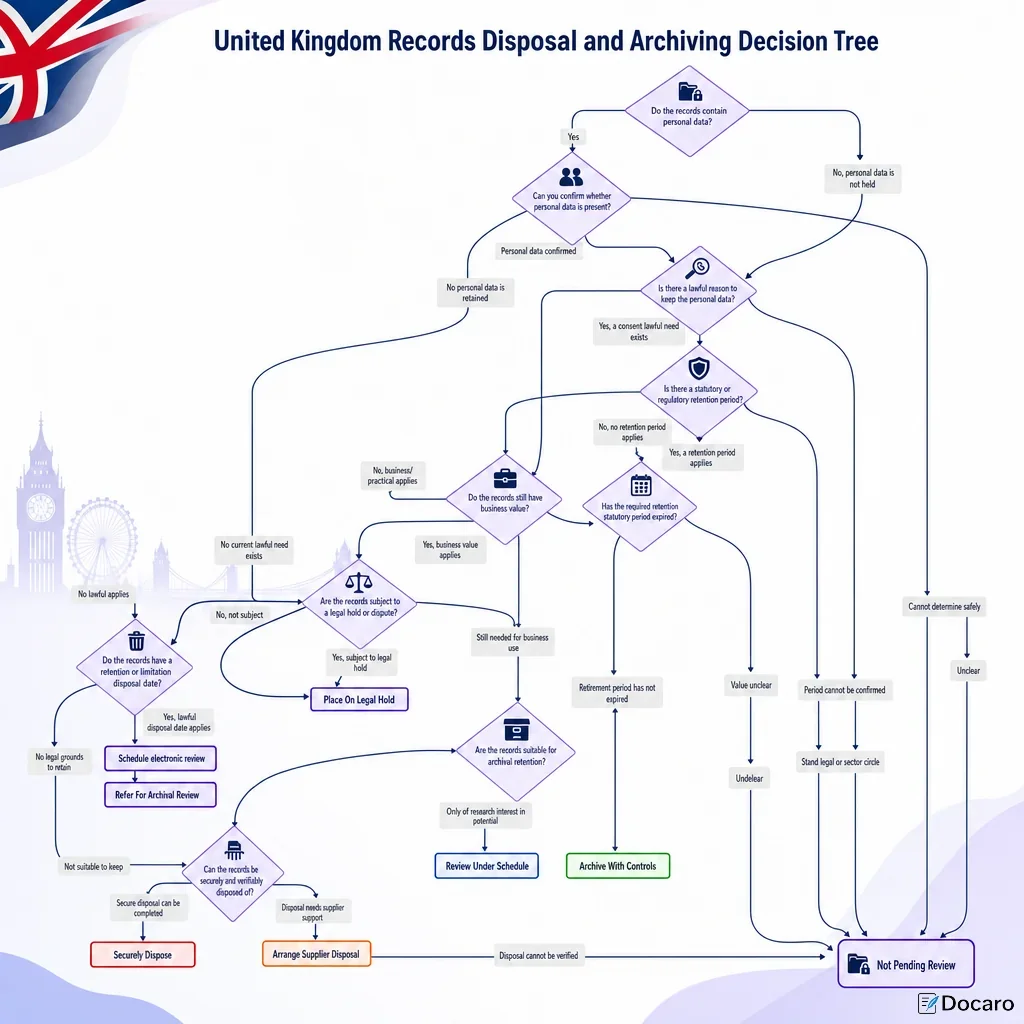
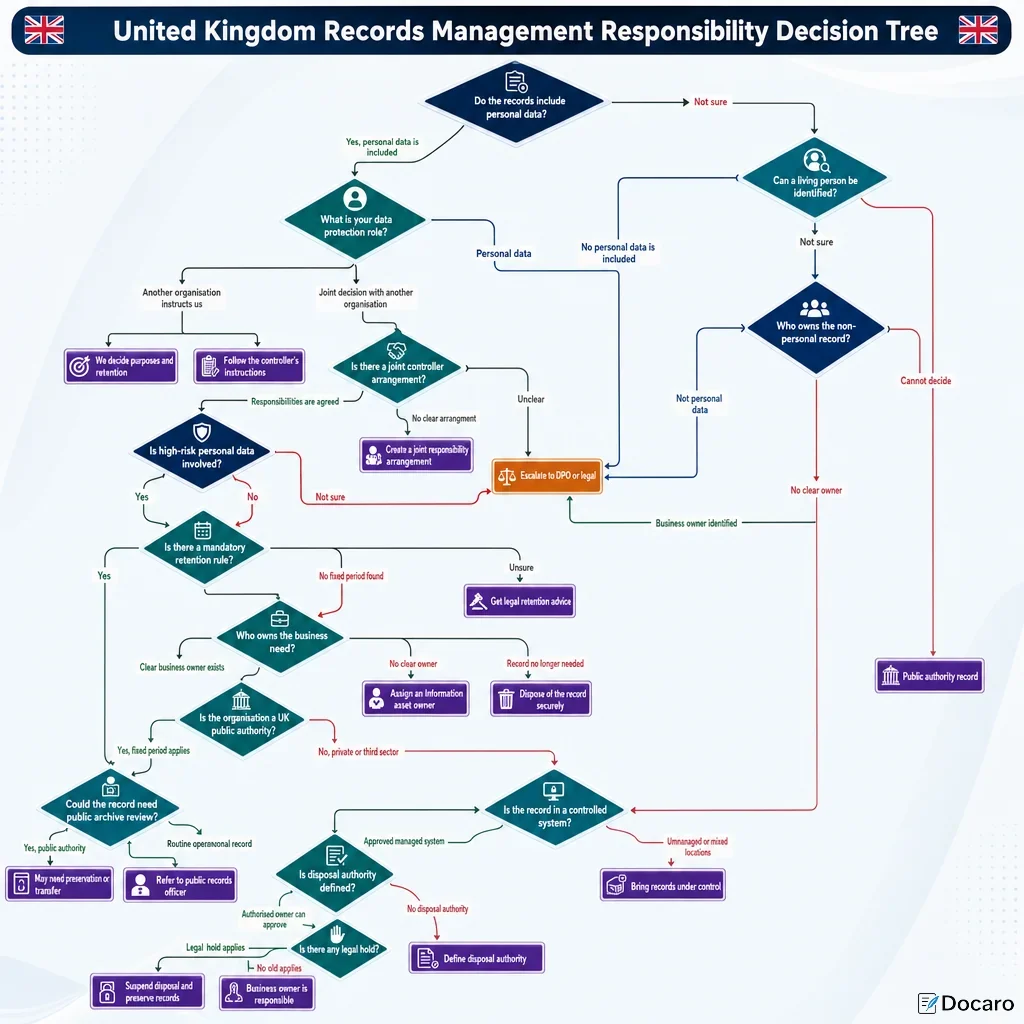
United Kingdom Records Management Responsibility Decision Tree
Do the records include personal data?
Why Is Records Management Responsibility Important In The UK?
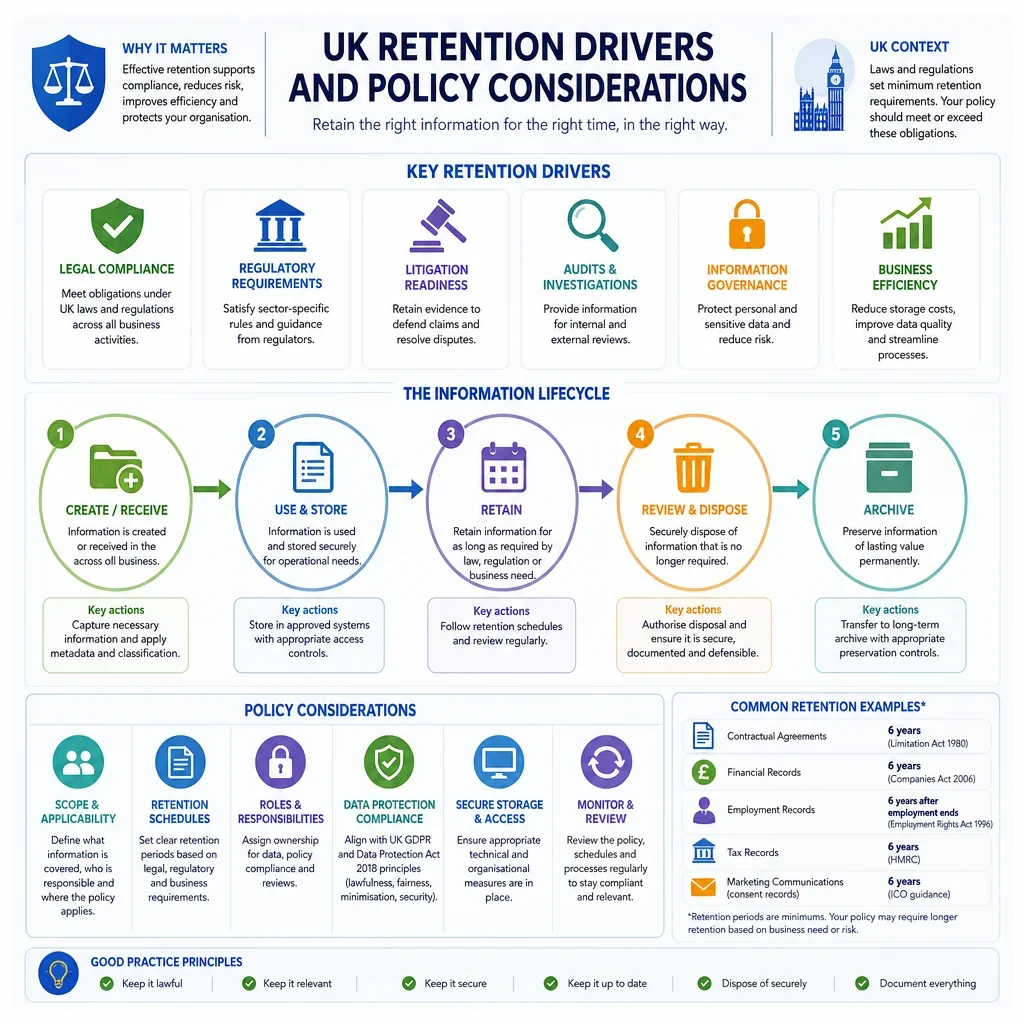
Clear responsibility helps a UK organisation keep records for the right period, find them when needed and dispose of them lawfully. It also supports compliance with the UK GDPR, the Data Protection Act 2018, freedom of information duties and sector-specific rules.
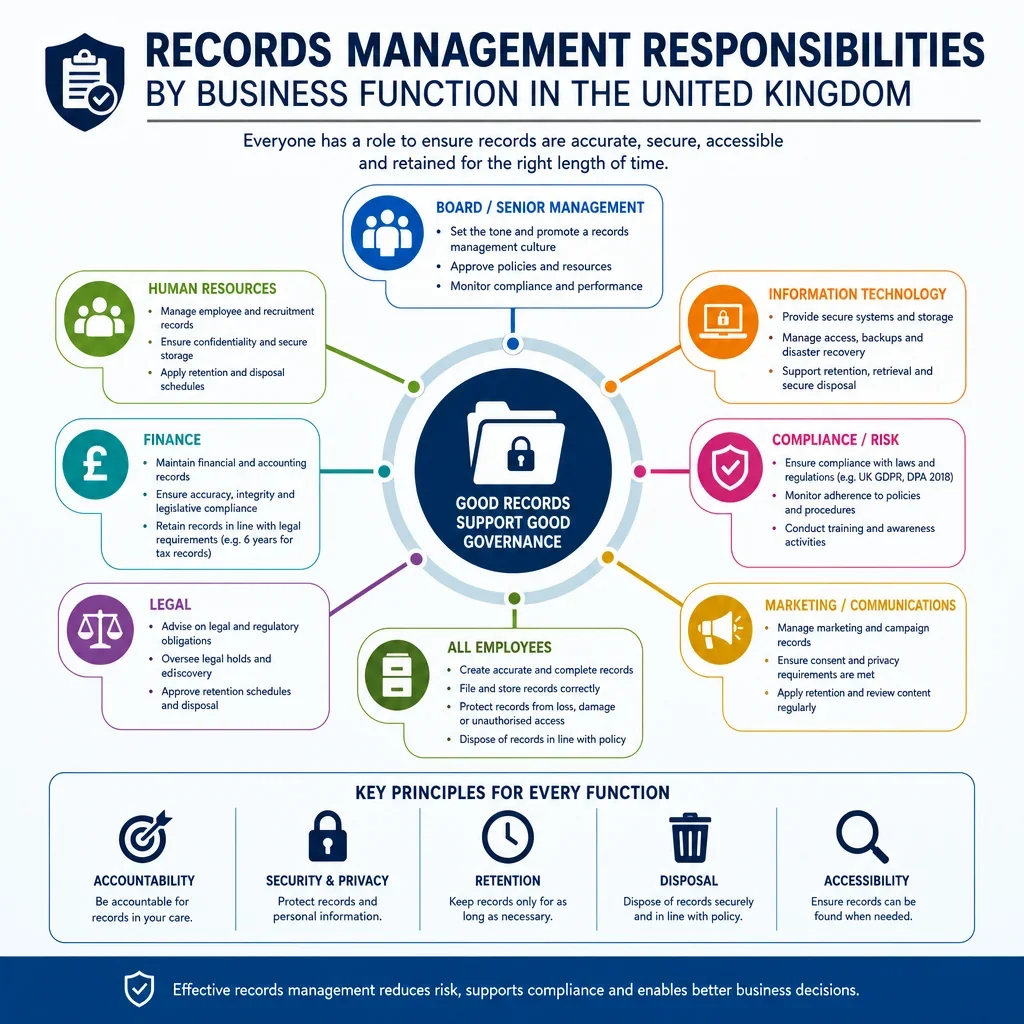
Who Should Own A Records Retention Decision?
The owner should usually be the business function that creates or relies on the record, with support from legal, compliance, records management and data protection teams. For personal data, the controller must be able to show why the data is kept and why the retention period is necessary.
What Happens If Responsibility Is Unclear?
Unclear ownership can lead to over-retention, premature deletion, missed subject access requests, failed audits and weak evidence in disputes. It can also make it harder to prove accountability to the Information Commissioner's Office.
How Does This Affect Data Retention Policies?
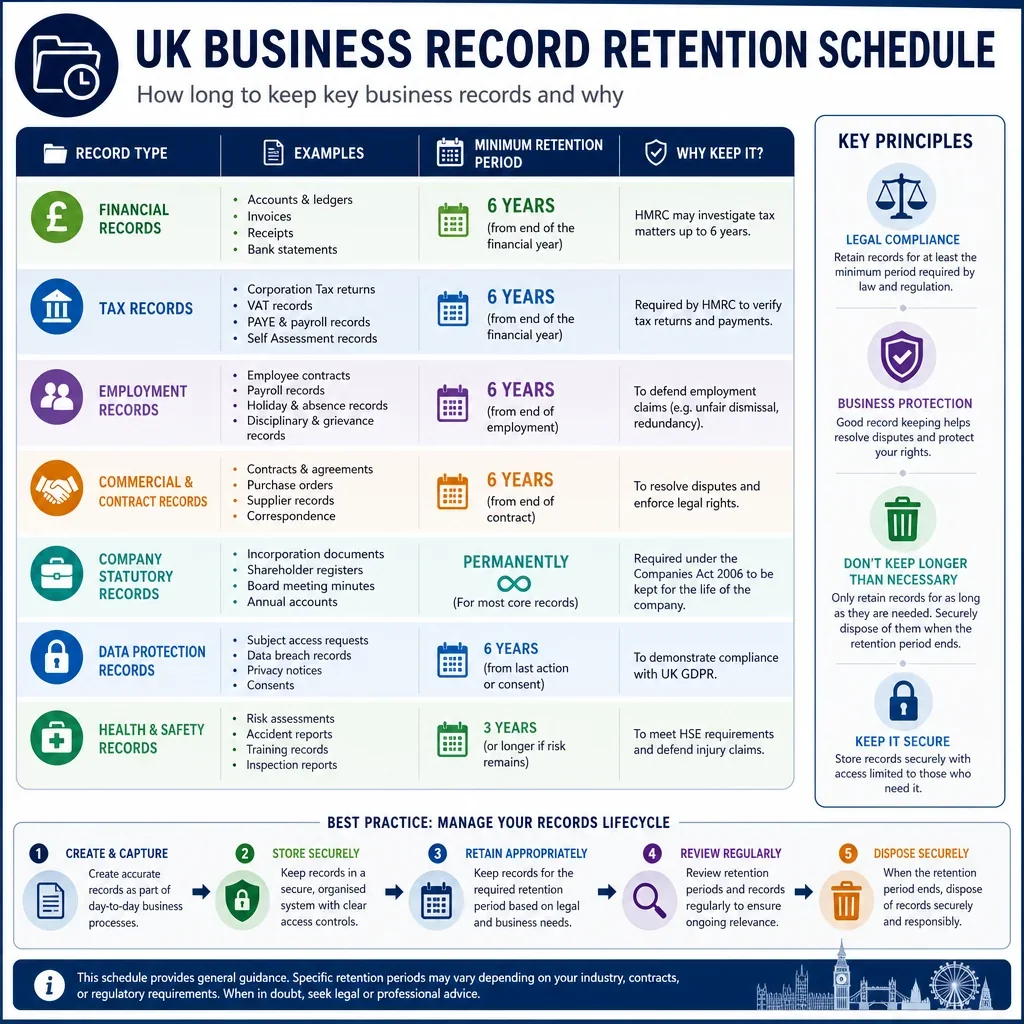
A useful data retention and records management policy should identify:
- Record owners for each category of information.
- Retention periods based on UK legal, regulatory and business needs.
- Disposal authority for deletion, destruction, anonymisation or archiving.
- Exceptions such as litigation holds, audits, complaints and public records duties.
Making the right decision protects the organisation, reduces storage and disclosure risk, and helps staff apply records rules consistently.
FAQs
You Might Also Be Interested In