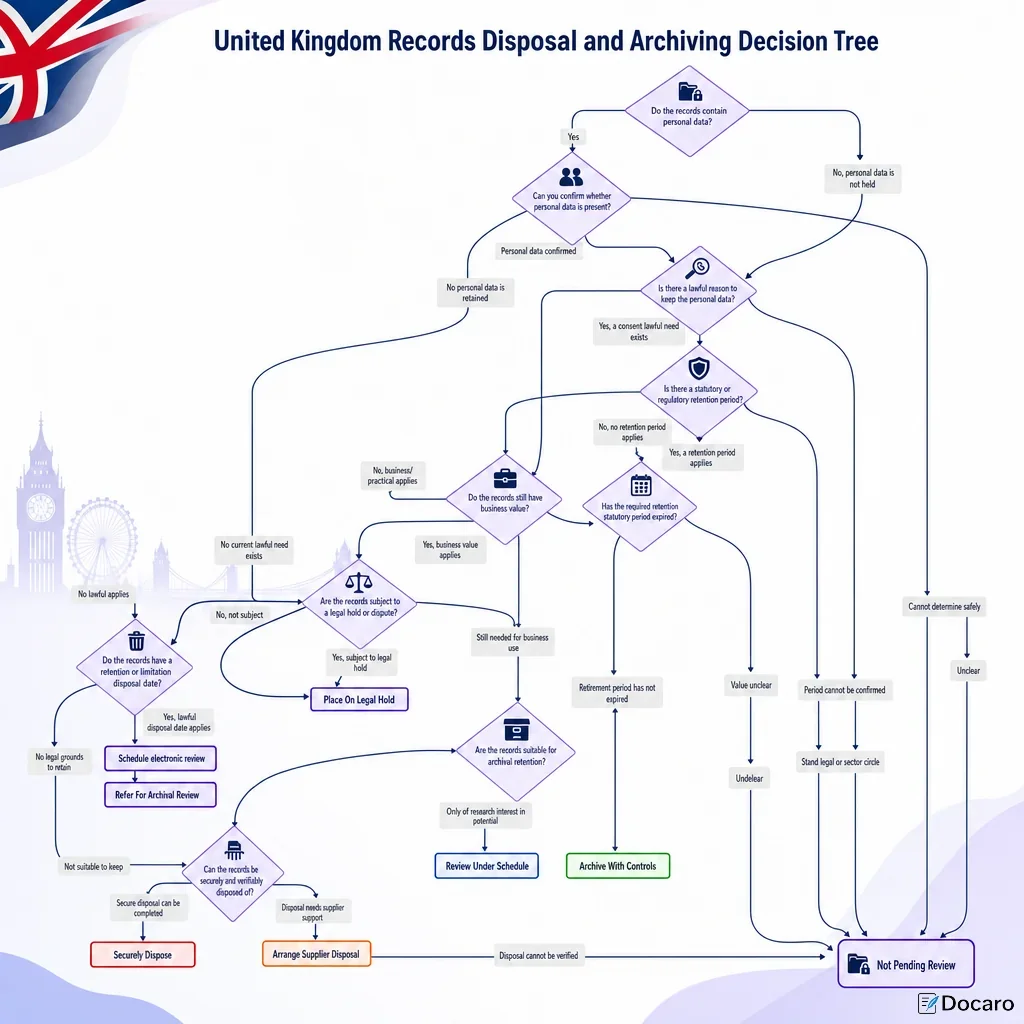
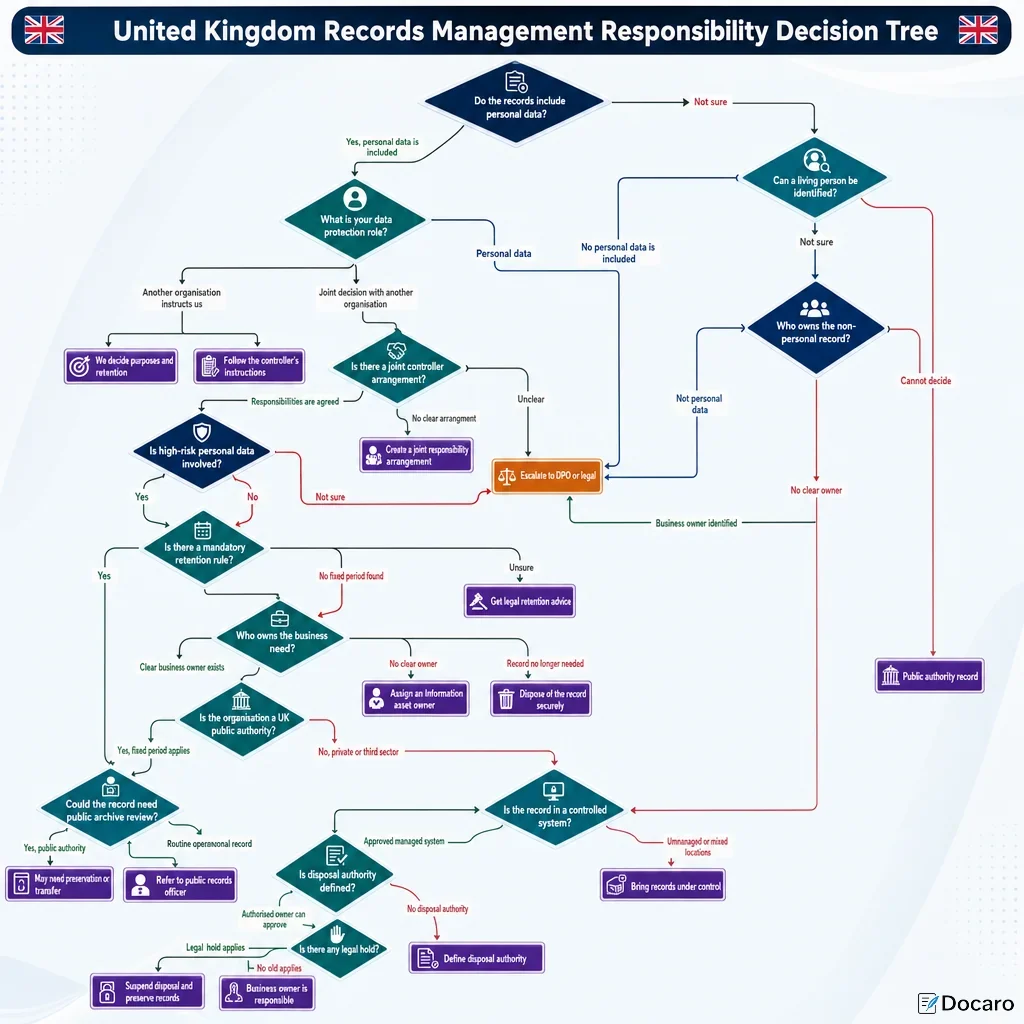
United Kingdom Data Retention Period Decision Tree
Do the records include personal data?
Why Is Choosing The Right UK Data Retention Period Important?
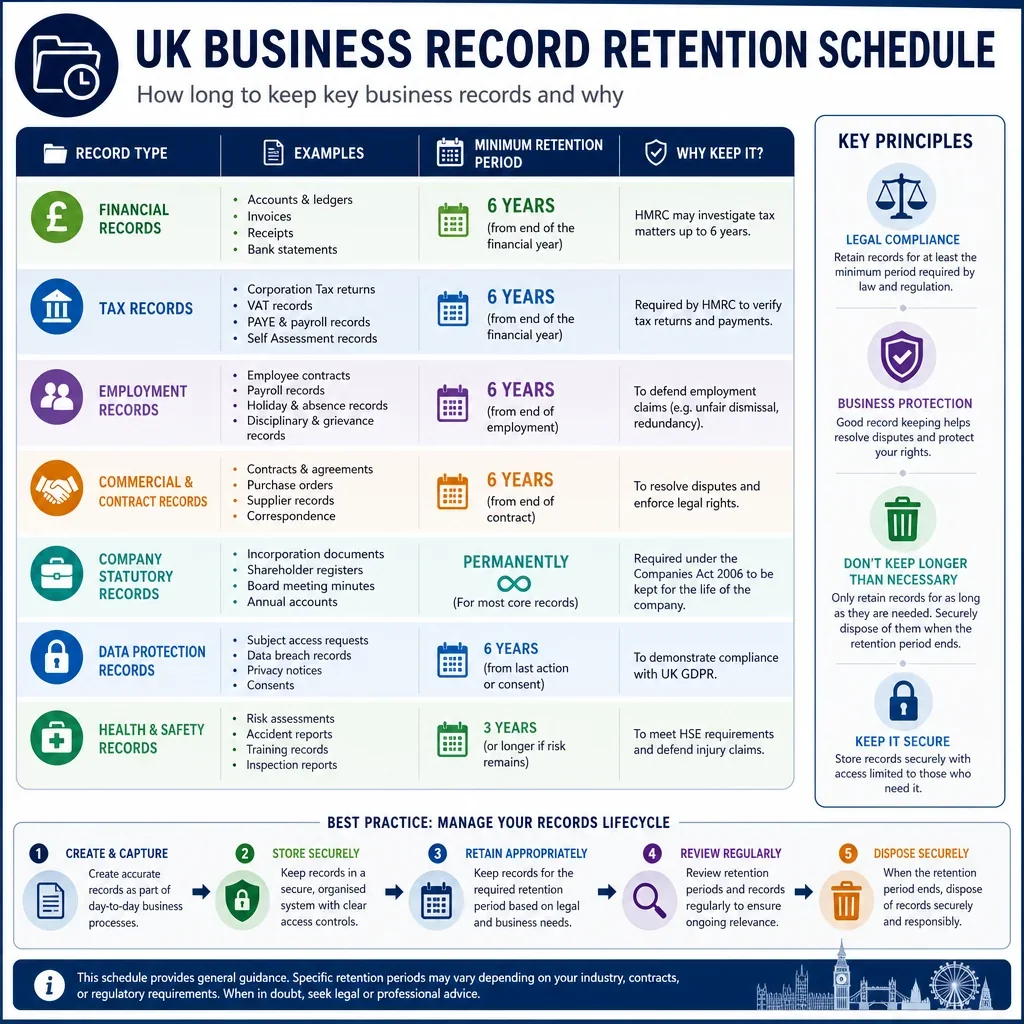
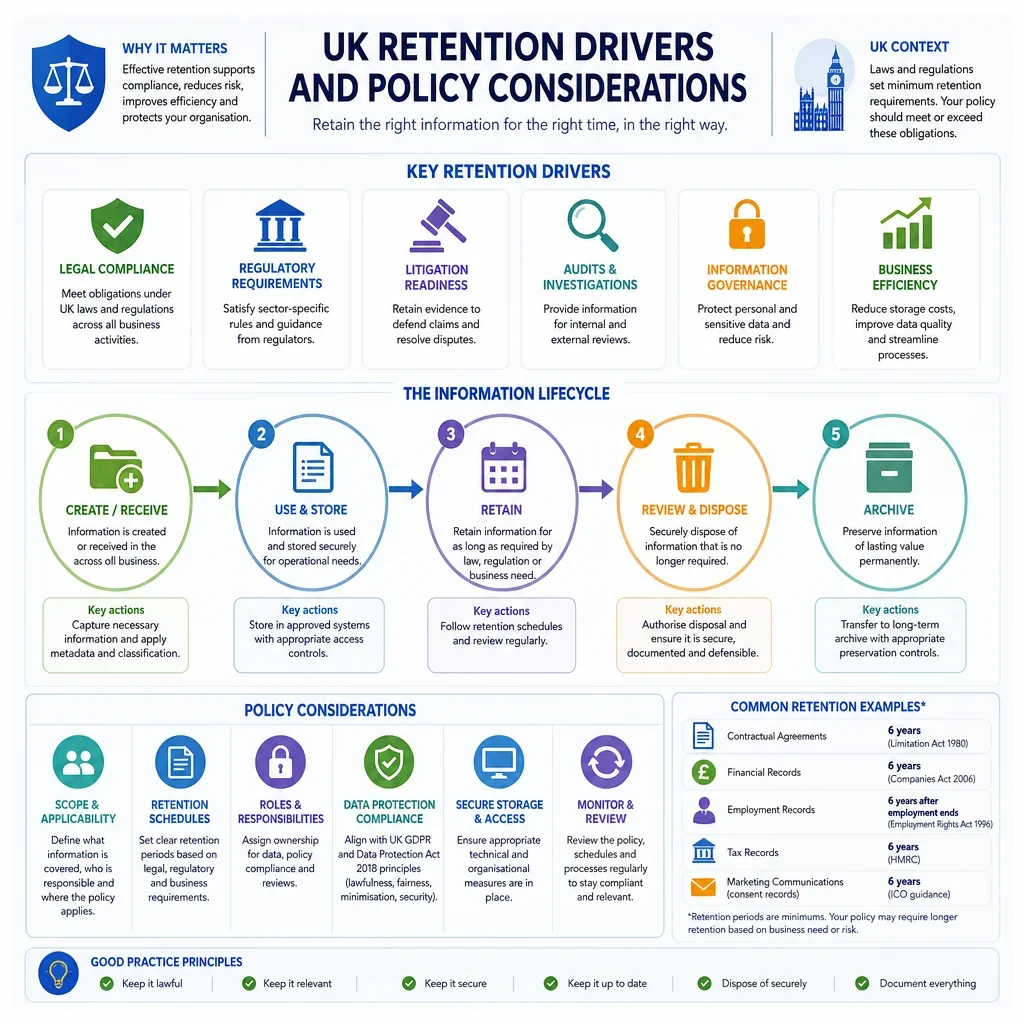
Choosing the right retention period is essential for UK organisations because records must be kept long enough to meet legal, tax, regulatory and operational needs, but not so long that they create unnecessary privacy, security and disclosure risks.
How Does UK GDPR Affect Retention Periods?
Where records contain personal data, the UK GDPR storage limitation principle requires personal data to be kept in identifiable form for no longer than necessary. The Information Commissioner’s Office explains this principle in its storage limitation guidance.
What Are The Risks Of Keeping Records Too Long?
- Higher risk of data breaches and unauthorised access.
- Greater cost and complexity when responding to subject access requests.
- Increased exposure during litigation, investigations or disclosure exercises.
- Possible non-compliance with UK data protection principles.
What Are The Risks Of Deleting Records Too Early?
- Loss of evidence needed to defend legal claims.
- Failure to meet HMRC, Companies House or regulator requirements.
- Operational disruption if key records are no longer available.
- Weak audit trails for decisions, contracts, complaints or employment matters.
What Should A UK Retention Schedule Include?
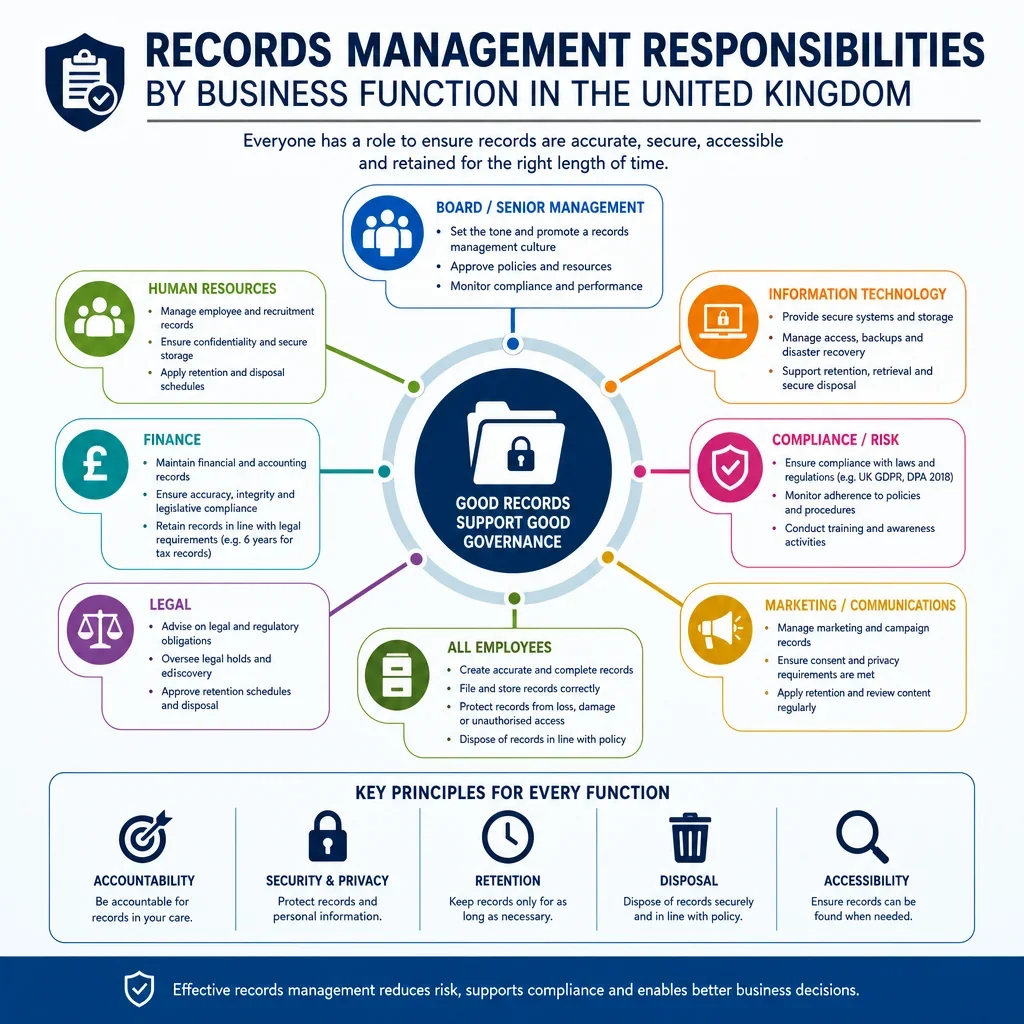
A good UK retention schedule should identify each record type, the retention period, the legal or business reason, the trigger date, the record owner and the final disposal action. This creates a consistent basis for records management policies and helps demonstrate accountability.
You Might Also Be Interested In