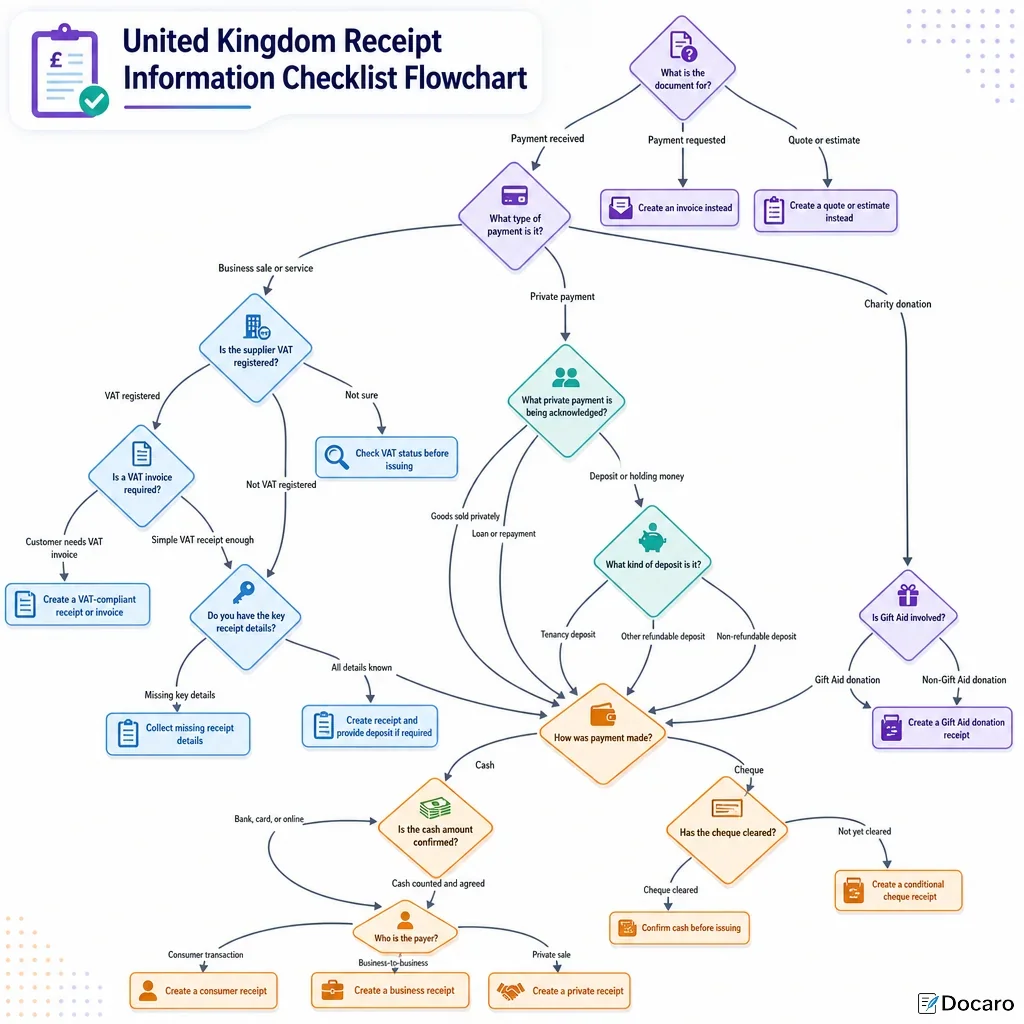
United Kingdom Receipt Issuing And Record-Keeping Flowchart
Is the receipt for a UK organisation?
Why Is Correct Receipt Issuing Important In The UK?
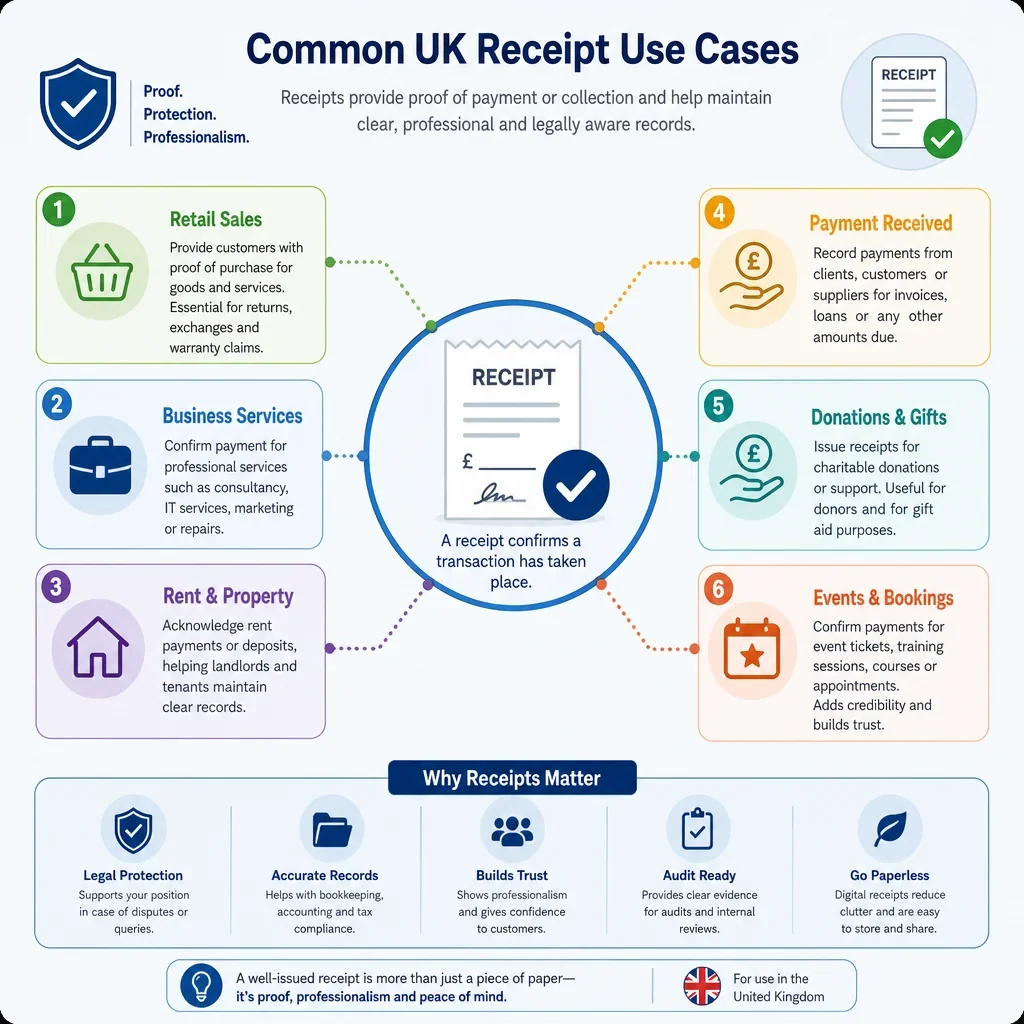
A receipt is more than a courtesy. In the United Kingdom, it can be evidence for tax, VAT, accounting, customer service, tenancy, charity and audit purposes. Choosing the right receipt format helps show what was paid, when it was paid, who received it and how the transaction should be treated.
Can A Receipt Affect UK Tax And VAT Records?
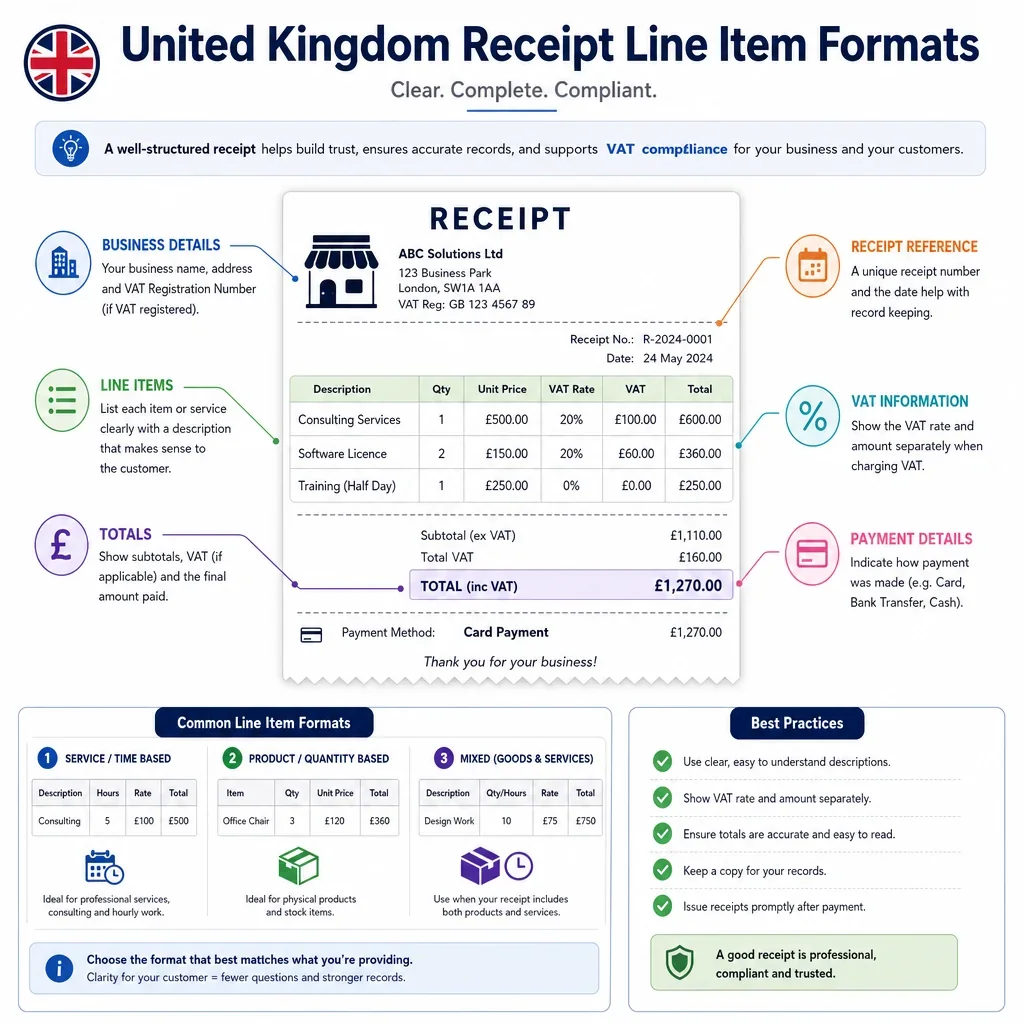
Yes. Businesses must keep records that support their tax returns, accounts and, where relevant, VAT returns. A receipt that incorrectly shows VAT, omits key details or confuses a payment request with a payment received can create problems for both the supplier and the customer.
What Happens If A UK Receipt Is Incomplete?
An incomplete receipt may make it harder to prove income, expenses, donations, rent payments or deposits. It may also weaken the evidence available during an HMRC enquiry, accounting review, audit, customer dispute or landlord and tenant issue.
What Should A UK Receipt Usually Prove?
- The parties: who paid and who received the money.
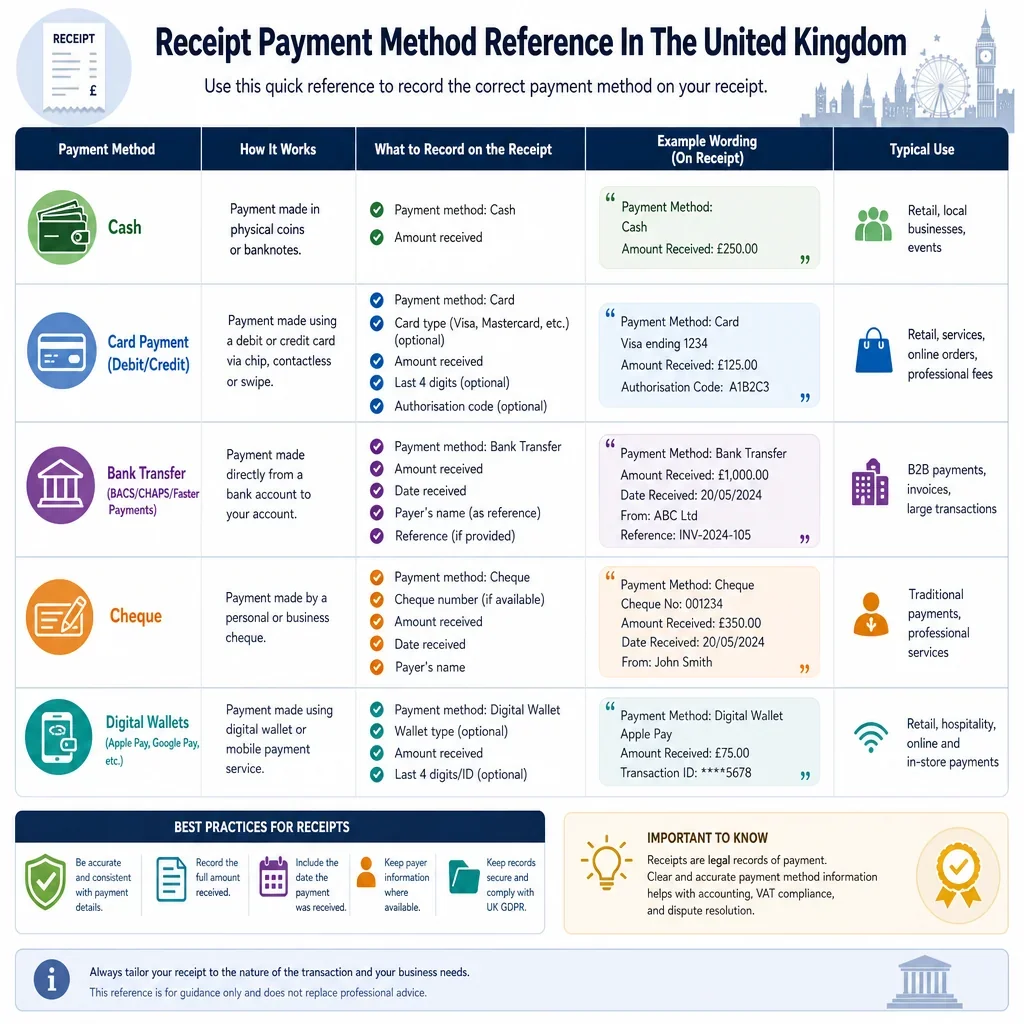
- The payment: the amount, date, method and currency.
- The purpose: what goods, services, rent, donation or deposit the payment relates to.
- The tax treatment: whether VAT applies, does not apply, or needs special wording.
- The record trail: how the receipt links to invoices, accounts, bank records or donation records.
How Can This Flowchart Help?
This decision tool helps UK users decide whether they need a standard receipt, VAT receipt, VAT invoice, rent receipt, deposit receipt, donation receipt or another acknowledgement. It is designed to support better document creation and record-keeping before generating a formal receipt document.
For official guidance, see HMRC VAT record-keeping rules, Self Assessment record guidance and company accounting record rules.

FAQs
You Might Also Be Interested In