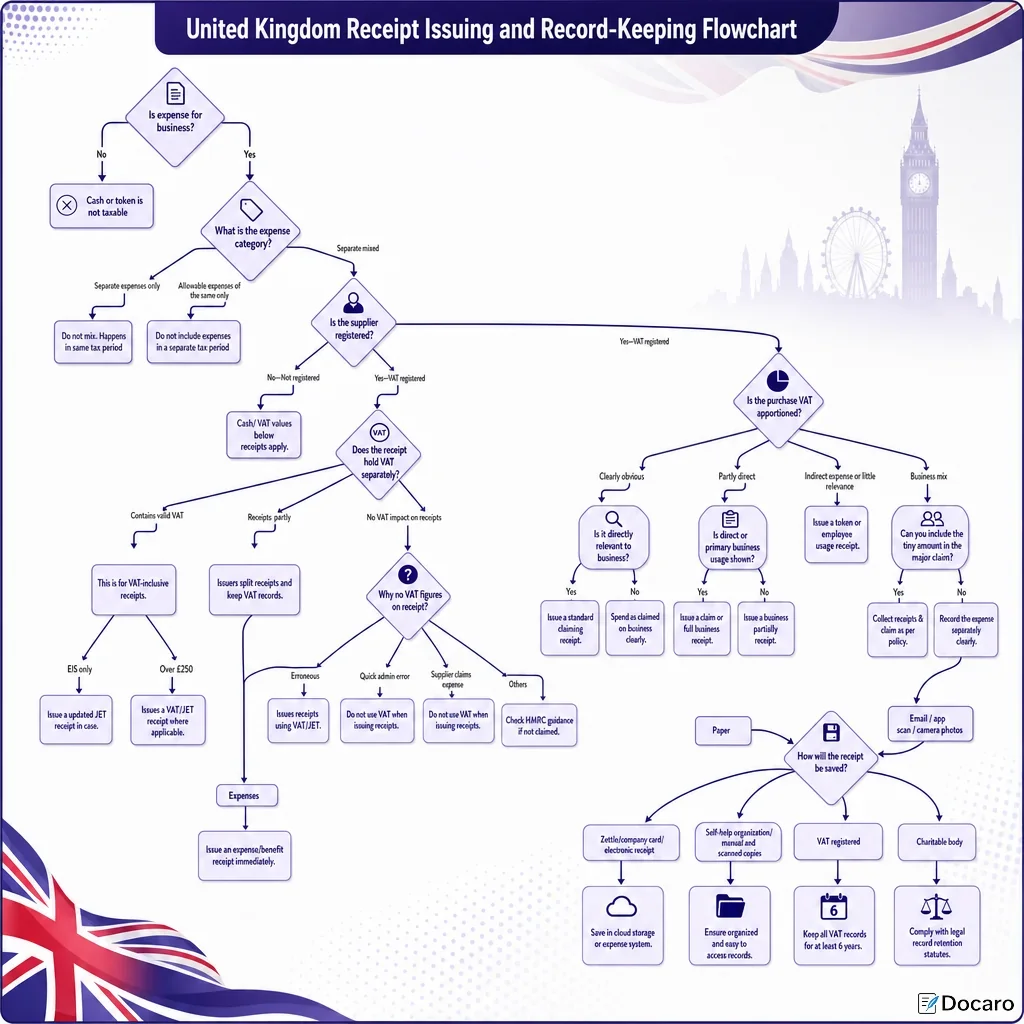
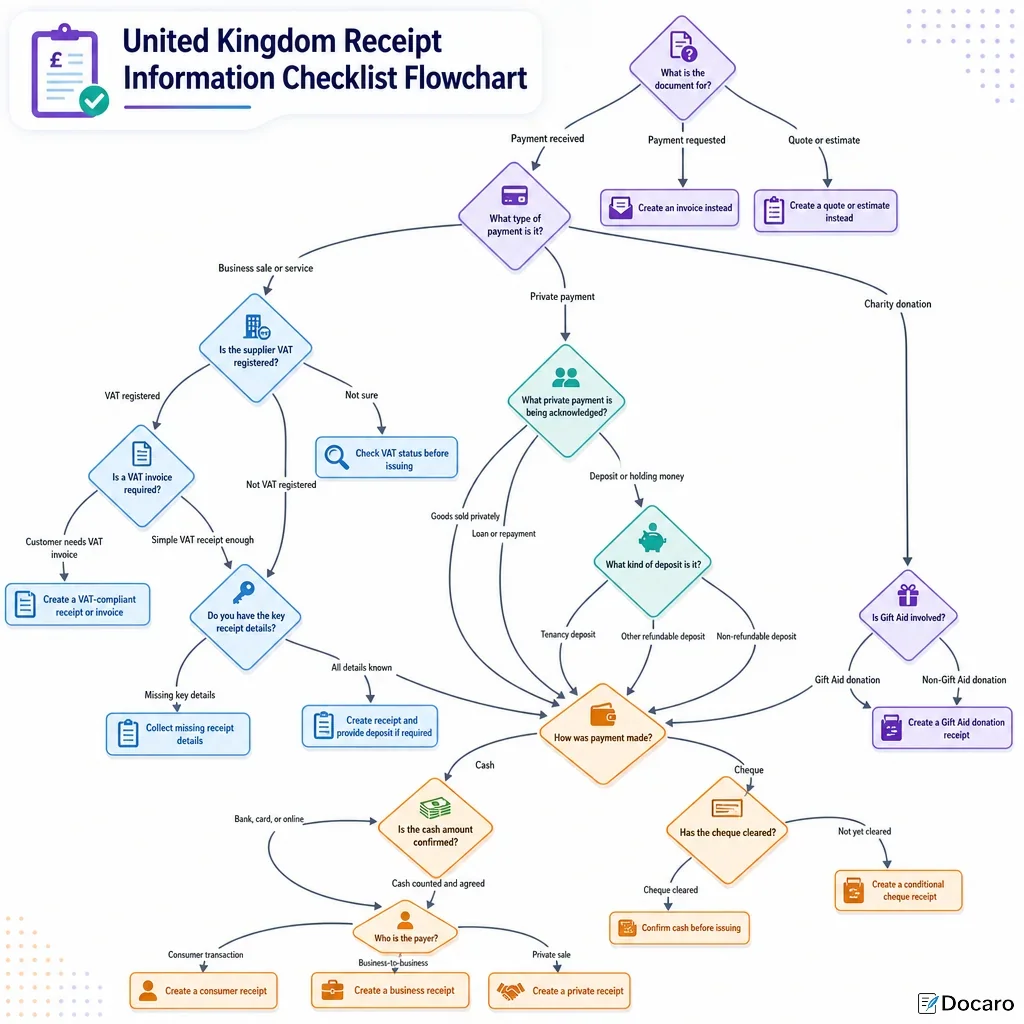
United Kingdom Receipt Information Checklist Flowchart
What is the document for?
Why Is A UK Receipt Important?
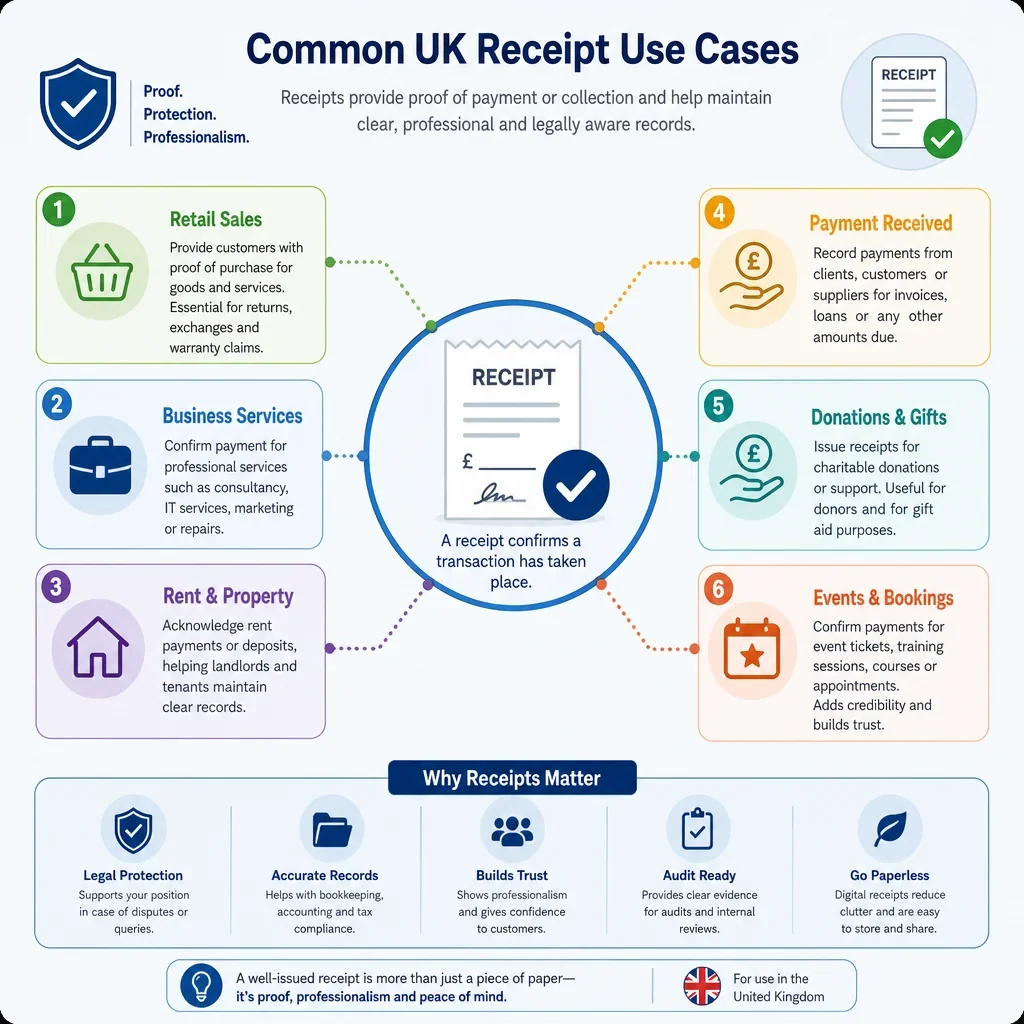
A receipt is written evidence that money has been received. In the United Kingdom, the right receipt can help customers, businesses, landlords, charities, and private individuals prove what was paid, when it was paid, and what the payment was for.
How Does A Receipt Help With UK Tax And Accounting Records?
Businesses and self-employed people must keep accurate records of income and transactions. A clear receipt supports bookkeeping, tax returns, VAT records where relevant, and internal financial controls.
When Is A Receipt Not Enough?
A receipt is not always the same as an invoice, VAT invoice, tenancy deposit notice, or Gift Aid declaration. Using the wrong document can create confusion or leave out information required for tax, consumer, charity, or landlord records.
What Should A UK Receipt Usually Include?
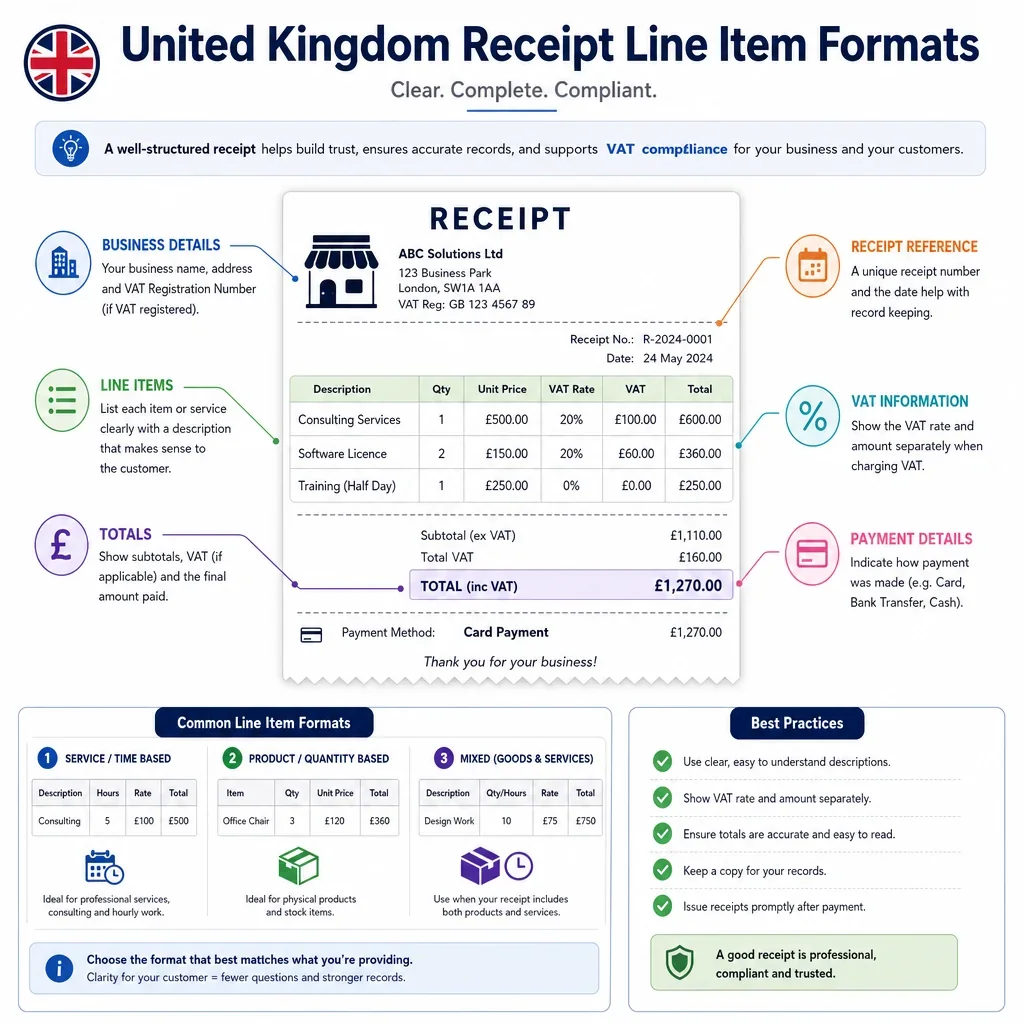
- Date of payment and receipt issue date if different.
- Amount paid, including currency and any VAT details if applicable.
- Payer and recipient details where relevant.
- Description of the goods, services, donation, deposit, or repayment.
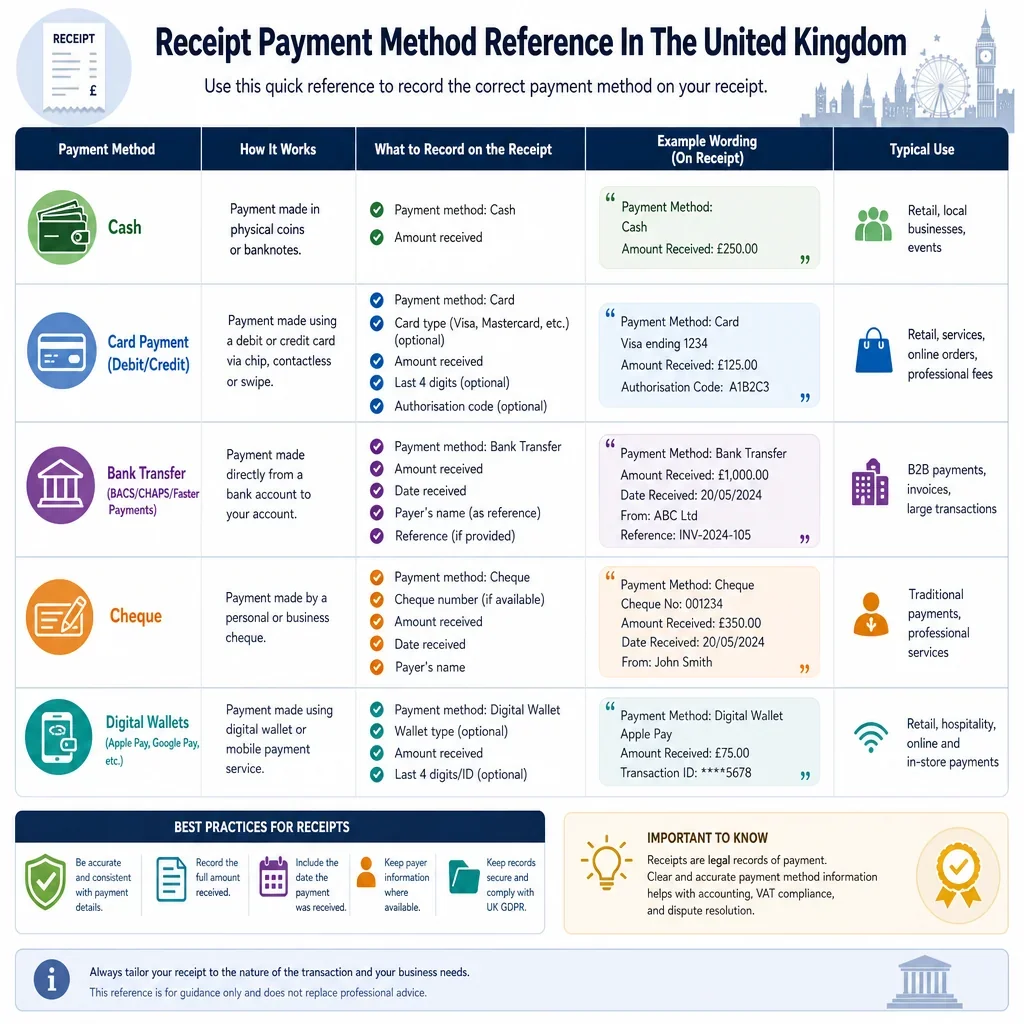
- Payment method, such as cash, card, bank transfer, cheque, or online payment.
- Reference numbers, invoice numbers, or order details where available.
Why Should UK Consumers And Businesses Choose The Correct Receipt Type?
The correct receipt helps avoid disputes about payment, refunds, deposits, or delivery. It also helps ensure that the document matches UK requirements for VAT, consumer rights, tenancy deposits, charity donations, and business records.
For official guidance, see GOV.UK guidance on invoicing and taking payment, VAT record keeping, and returns and refunds.
FAQs
You Might Also Be Interested In