United Kingdom Letter Of Intent To Lease: Key Terms To Include
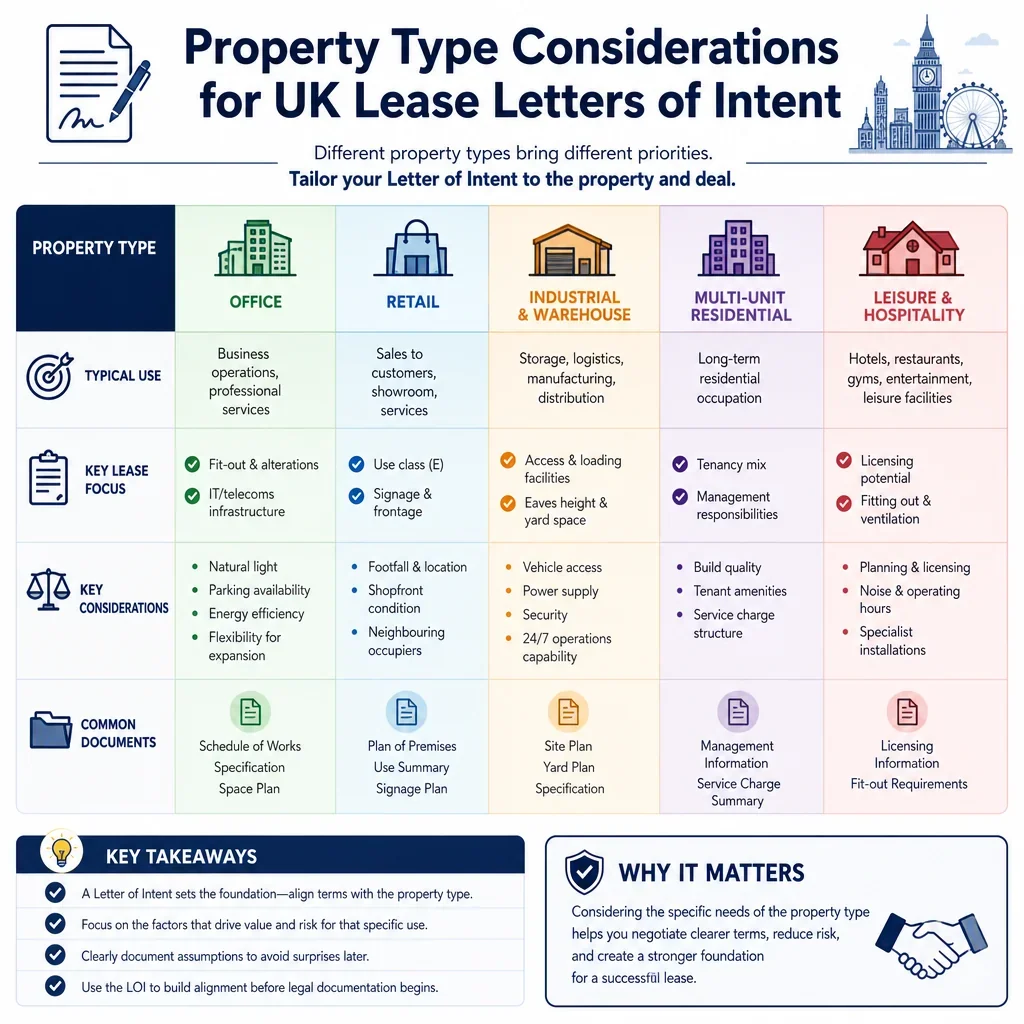
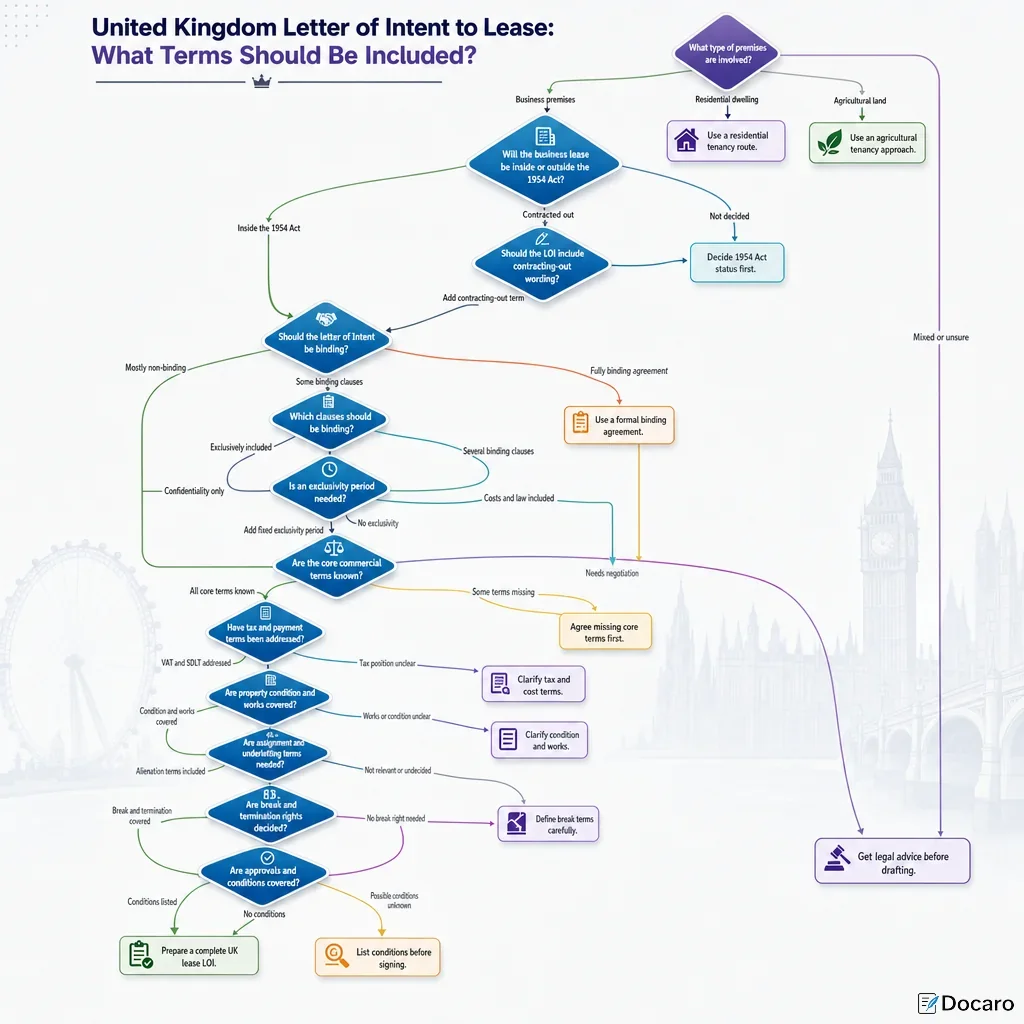
What type of premises are involved?
Why Does A UK Letter Of Intent To Lease Need The Right Terms?
A letter of intent to lease is often used before solicitors prepare a commercial lease. In the United Kingdom, it can shape the deal, guide due diligence, and reduce delay. If the wording is unclear, the parties may disagree about rent, repair, VAT, exclusivity, renewal rights, or whether any promises are legally binding.
Can A Letter Of Intent To Lease Become Legally Binding?
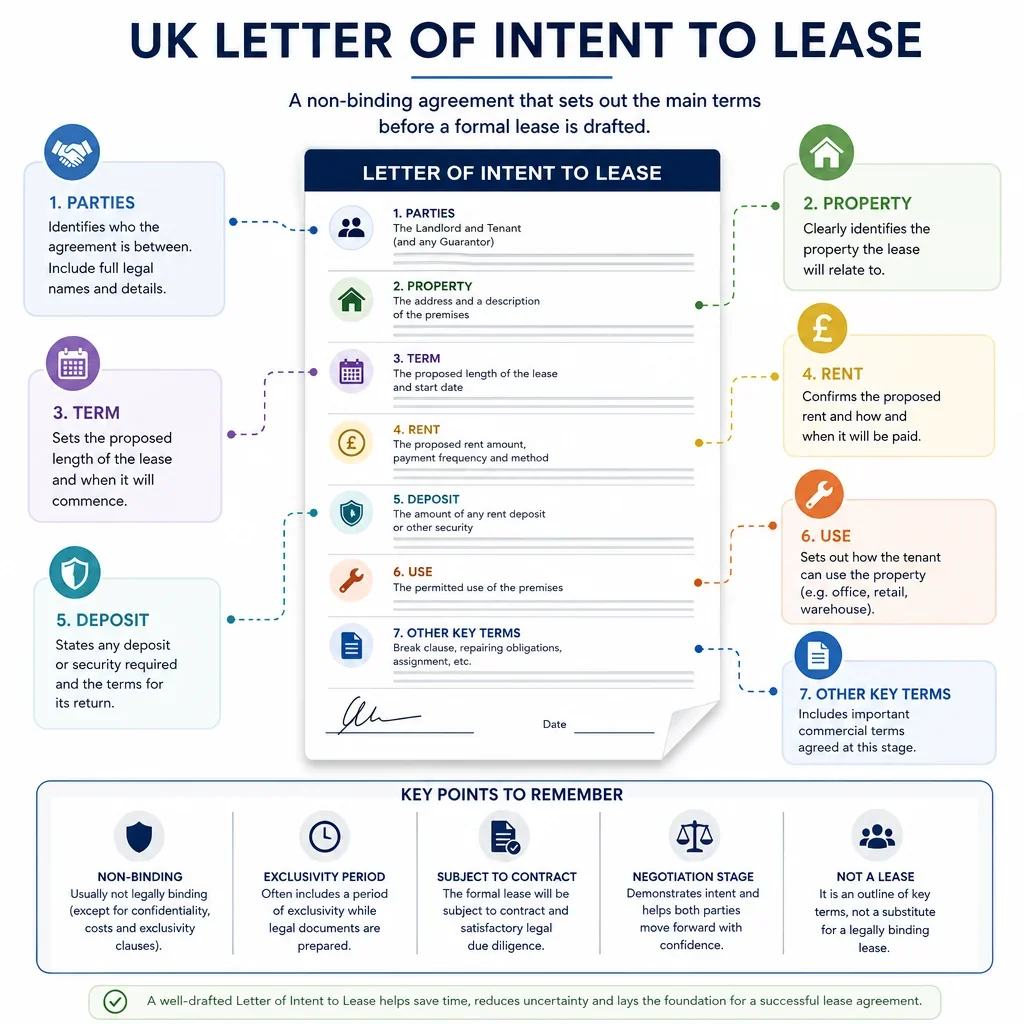
Yes, some terms can become legally binding if the document shows an intention to create legal relations. This is why many UK lease letters of intent use subject to contract wording while making only selected clauses binding, such as confidentiality, exclusivity, costs, governing law, or a lock-out period.
Why Is The Landlord And Tenant Act 1954 Important?
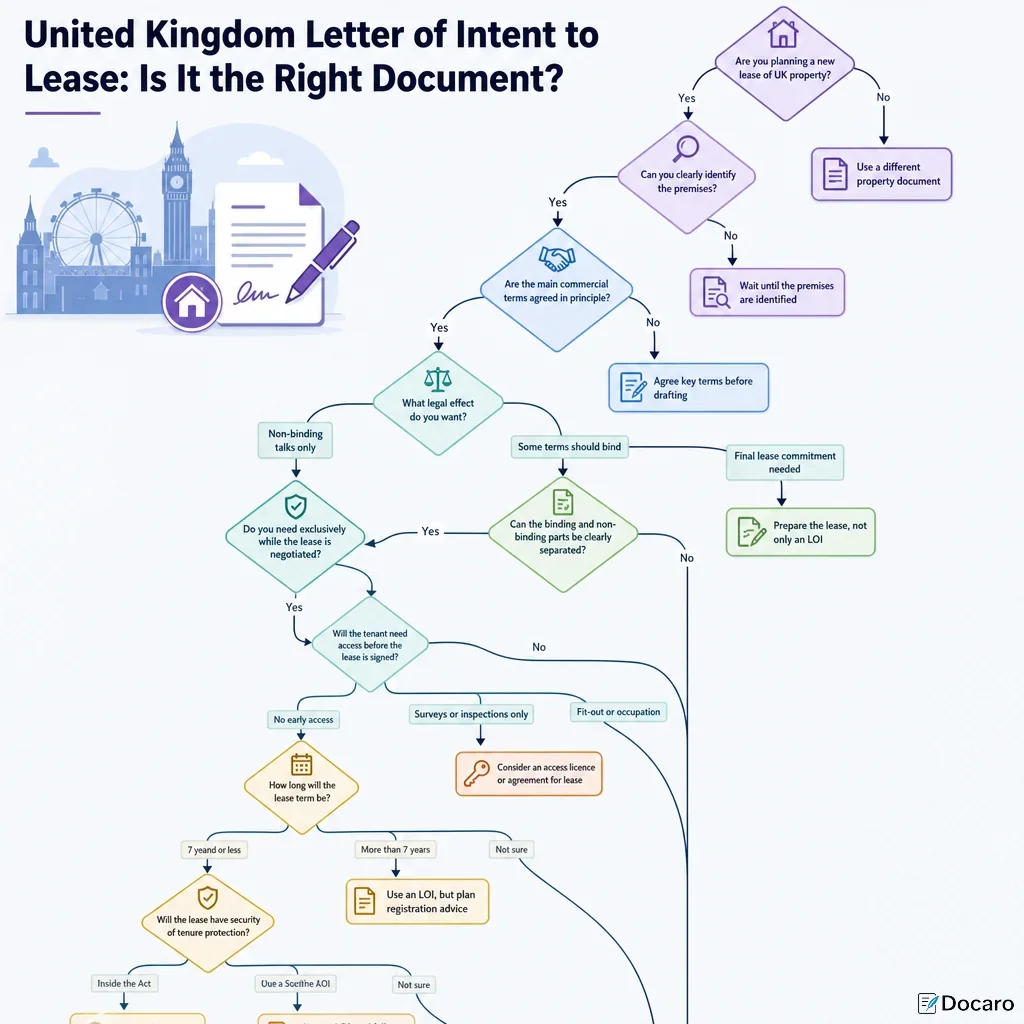
For business premises in England and Wales, the Landlord and Tenant Act 1954 can give tenants statutory renewal rights unless the lease is properly contracted out. A letter of intent should state whether the proposed lease is inside or outside the Act so that the correct notice and declaration process can be followed.
What UK Lease Costs Should Be Agreed Early?
- Rent, rent-free periods, rent review, and payment dates.
- VAT and whether the landlord has opted to tax.
- Stamp Duty Land Tax for lease transactions.
- Service charge, insurance rent, and utilities.
- Legal costs, survey costs, and rent deposit requirements.
Agreeing these points early helps the tenant understand the full cost of occupation and helps the landlord avoid later renegotiation.
How Does A Good LOI Reduce Lease Negotiation Risk?
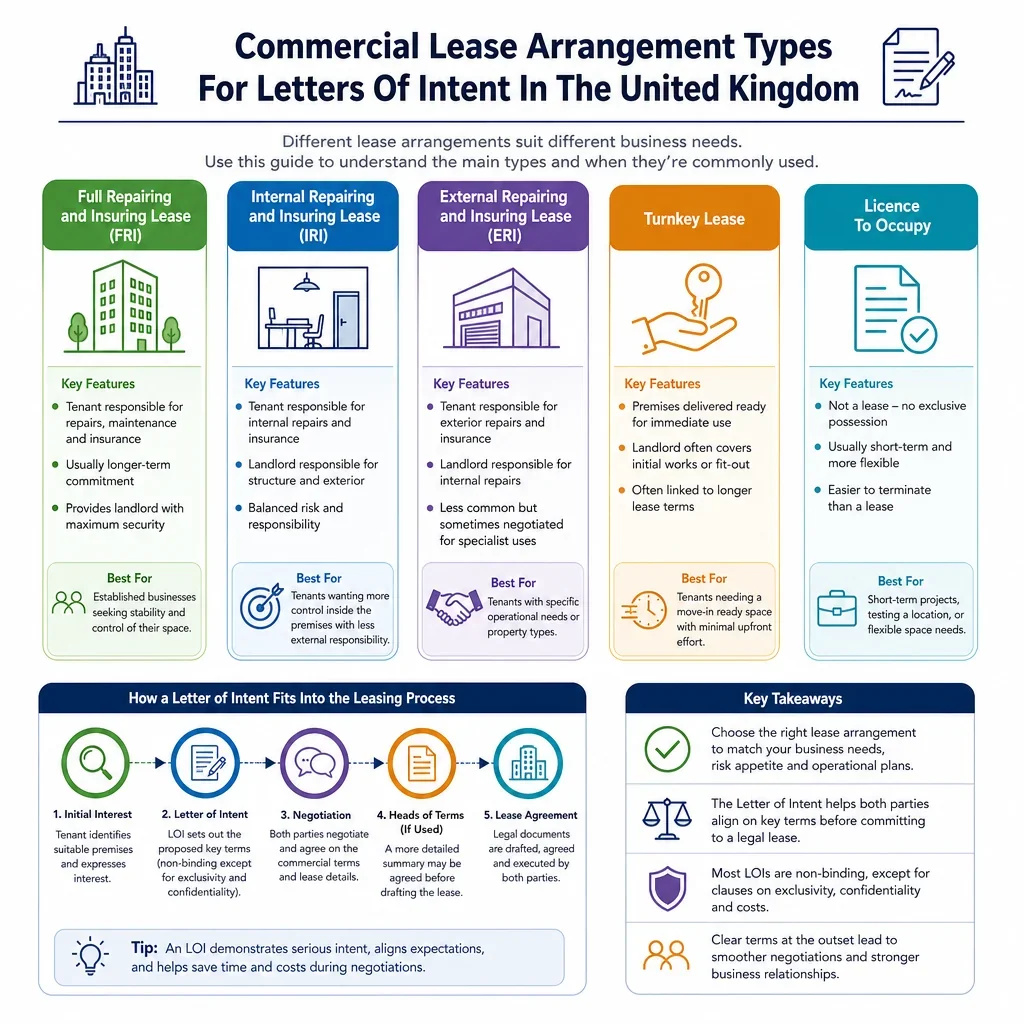
A clear UK letter of intent records the commercial deal before formal lease drafting begins. It can identify the premises, term, use, repair obligations, fit-out works, break clauses, assignment rights, planning conditions, and completion requirements. This helps both parties move from heads of terms to a final lease with fewer disputes.
For more detail, see official guidance on security of tenure under the Landlord and Tenant Act 1954, SDLT on lease transactions, and HM Land Registry lease registration.
FAQs
You Might Also Be Interested In