Property Type Considerations For United Kingdom Lease Letters Of Intent
Typical occupational use | Common lease issues | Suggested letter of intent points | Indicative complexity | UK jurisdiction notes |
|---|---|---|---|---|
Office | ||||
Administrative, professional, technology or back-office workplace. | Fit-out consent, shared services, service charge, break rights, parking, data connectivity and repair limits. | Specify floor area, permitted office use, landlord works, rent-free period, service charge cap, break option, security of tenure position and parking rights. | Medium | In England and Wales, state whether the lease is inside or contracted out of the Landlord and Tenant Act 1954 renewal regime. |
Flexible serviced workspace with shared facilities and short occupation periods. | Whether arrangement is a lease or licence, included services, access hours, meeting rooms, data, deposits and termination rights. | Clarify exclusive area, included services, term, termination notice, IT provision, confidentiality, house rules and whether a lease is intended. | Low | Exclusive possession for a term at rent may indicate a lease rather than a licence under UK case law. |
Retail shop | ||||
Sale of goods or customer-facing retail services from high street or centre premises. | Planning use, shopfront works, signage, opening hours, service charge, exclusivity, delivery access and turnover rent. | State permitted retail use, signage rights, shopfront works, trading hours, delivery arrangements, service charge cap and any turnover rent formula. | Medium | In England, many retail uses fall within Class E, but planning conditions or local restrictions may still limit use. |
Retail trading from a managed shopping centre, retail park or outlet scheme. | Centre regulations, keep-open obligations, marketing contributions, turnover rent, common parts and service charge exposure. | Address trading hours, keep-open requirements, service charge budget, marketing levy, turnover rent reporting and fit-out approval timetable. | High | Turnover rent and service charge drafting should be precise because there is no single statutory formula for commercial leases. |
Restaurant or cafe | ||||
Food preparation and on-premises dining with possible takeaway or alcohol sales. | Extraction, grease traps, planning, alcohol licence, late opening, odour, noise, waste, fire safety and plant installation. | Make lease conditional on planning, licensing and extraction approval specify kitchen plant, outdoor seating, hours, waste areas and rent-free fit-out period. | High | Alcohol sales in England and Wales require authorisation under the Licensing Act 2003. |
Coffee, light food, bakery or sandwich sales with limited cooking. | Use class limits, seating, ventilation, waste, pavement licence, customer toilets and trading hours. | Confirm food use scope, seating numbers, toilet provision, ventilation standard, pavement seating consent and whether takeaway is permitted. | Medium | Pavement licences in England are regulated under the Business and Planning Act 2020 regime as amended. |
Delivery-only commercial kitchen with no or limited customer access. | Planning compatibility, intensive extraction, delivery rider congregation, noise, hours, waste, utilities and fire risk. | Condition deal on planning and landlord consent for extraction address delivery access, waste storage, utility capacity, noise controls and operating hours. | High | Even within Class E, intensive delivery kitchen operations may raise planning and nuisance concerns depending on facts and local authority approach. |
Warehouse | ||||
Bulk storage, distribution, fulfilment and logistics operations. | Loading rights, yard use, HGV access, racking, floor loading, eaves height, insurance, utilities and repair liability. | Specify loading bays, yard rights, vehicle access, floor loading, racking consent, power needs, repair schedule and rights for logistics technology. | Medium | Business rates and valuation may be significant for warehouses rateable value can be checked with the Valuation Office Agency in England and Wales. |
Temperature-controlled storage for food, pharmaceuticals or other sensitive goods. | Refrigeration plant, high energy use, backup power, condensation, maintenance, insurance, food safety and reinstatement. | Address chilled areas, plant ownership, maintenance, energy metering, backup systems, regulatory compliance and reinstatement of refrigeration works. | High | Food businesses in the UK must comply with food hygiene and safety duties where food storage is involved. |
Light industrial unit | ||||
Workshop, assembly, repairs, small-scale manufacturing or trade counter operations. | Noise, vibration, plant, trade counter use, hazardous materials, power capacity, waste, mezzanine works and reinstatement. | Define precise processes, machinery, hours, emissions, waste handling, power capacity, mezzanine consent and any trade counter rights. | Medium | In England, light industrial uses may fall within Class E(g), while general industrial use may require a different planning position. |
Vehicle servicing, MOT preparation, mechanical repairs or bodywork. | Oil storage, waste disposal, noise, spray booths, customer parking, planning, fire safety and environmental contamination. | Confirm permitted vehicle use, hazardous waste controls, drainage, parking, hours, compressor or spray booth approval and environmental indemnities. | High | Waste oil and other controlled waste must be handled under UK environmental waste controls. |
Medical or professional premises | ||||
Dental surgery, orthodontic practice or related clinical treatment rooms. | CQC registration suitability, surgery plumbing, ventilation, radiation equipment, clinical waste, accessibility and infection control. | Condition lease on regulatory suitability specify clinical fit-out, services, waste routes, decontamination room, X-ray shielding and reinstatement. | High | Providers of regulated activities in England may need Care Quality Commission registration. |
GP surgery, private clinic, therapy rooms or outpatient healthcare premises. | Accessibility, patient privacy, clinical waste, consultation rooms, landlord works, regulatory approval, signage and parking. | Mention patient access, DDA-style adjustments, room layout, reception, clinical waste, signage, parking and condition for regulatory approvals. | High | Service providers must consider reasonable adjustments for disabled people under the Equality Act 2010. |
Solicitors, accountants, surveyors, consultants or financial advisers. | Client confidentiality, signage, office use, data connectivity, parking, meeting rooms and professional image. | Set permitted professional use, signage, meeting room fit-out, fibre connectivity, parking, reception arrangements and any confidentiality requirements. | Low | Professional office use may fall within Class E in England, but title restrictions and planning conditions should still be checked. |
Mixed use premises | ||||
Retail or hospitality use at ground level with office or ancillary space above. | Shared entrances, service media, repairing split, residential neighbours, noise, business rates, planning and fire separation. | Identify demised areas, shared access, service media, permitted uses by floor, repair responsibilities, fire safety works and cost sharing. | High | Mixed use property can raise separate commercial and residential law issues if dwellings are included or nearby. |
Creative studio, workshop or office with limited residential accommodation. | Residential occupation rights, planning use, council tax or rates, utilities, insurance and mortgagee restrictions. | Clarify residential element, occupation limits, planning status, utility apportionment, insurance, rates or council tax and form of agreement. | High | Including residential occupation may affect security of tenure, tax, mortgage consent and statutory compliance across UK jurisdictions. |
Storage unit | ||||
Storage of business stock, archives, equipment or personal property. | Access hours, prohibited goods, insurance, security, unit size, termination notice and liability limits. | State unit size, access hours, permitted goods, insurance responsibility, security arrangements, charges, notice period and no hazardous storage. | Low | Some storage arrangements are licences rather than leases, depending on exclusive possession and control. |
Secure storage of files, archives, records or sensitive business materials. | Security, humidity, fire protection, confidentiality, access records, insurance and data protection. | Mention climate control, fire systems, access logging, confidentiality, insurance, retrieval rights and responsibility for data-bearing materials. | Medium | UK GDPR and Data Protection Act 2018 may be relevant where personal data records are stored. |
Other | ||||
Gym, fitness studio, yoga, pilates or personal training facility. | Planning use, noise, vibration, showers, changing rooms, floor loading, opening hours, parking and member access. | Condition on planning address acoustic works, floor loading, operating hours, showers, ventilation, signage, parking and permitted classes. | High | In England, indoor sport and fitness uses may fall within Class E(d), subject to conditions and local planning constraints. |
Day nursery, preschool, childcare or early years education setting. | Planning, Ofsted suitability, outdoor play, safeguarding layout, toilets, drop-off, noise and fire safety. | Make conditional on planning and regulatory suitability address outdoor space, drop-off rights, safeguarding layout, toilets, hours and landlord works. | High | Childcare providers in England may require registration with Ofsted depending on the service provided. |
Retail shop | ||||
Hairdressing, beauty, nails, aesthetics or personal care services. | Water supply, drainage, ventilation, treatment rooms, waste, licensing for special treatments, signage and opening hours. | Specify personal care use, treatment room works, plumbing, ventilation, signage, licensing responsibilities and reinstatement of fit-out. | Medium | Some cosmetic or special treatment activities may require local authority licensing depending on area and treatment type. |
Other | ||||
Hotel, aparthotel, guesthouse or serviced accommodation operation. | Planning use, fire safety, guest access, alcohol or food service, branding, FF&E, repairs and operating standards. | Address planning, branding, operating standards, FF&E ownership, fire safety works, food and alcohol permissions, guest access and repair allocation. | High | Fire safety duties apply to non-domestic premises and common parts, with responsible person obligations in England and Wales. |
Restaurant or cafe | ||||
Licensed premises for alcohol sales, entertainment and possible food service. | Premises licence, hours, noise, late-night refreshment, gaming machines, cellar, beer ties, outdoor areas and security. | Condition on premises licence transfer or grant cover hours, alcohol use, cellar equipment, outdoor seating, security, noise controls and tie arrangements. | High | Licensable activities in England and Wales are regulated under the Licensing Act 2003. |
Other | ||||
Research laboratory, testing facility or life sciences workspace. | Ventilation, hazardous substances, waste, drainage, emergency systems, power, insurance, regulatory approvals and reinstatement. | Detail lab grade, substances, containment, ventilation, drainage, waste, emergency systems, landlord approvals and reinstatement obligations. | High | Control of substances hazardous to health duties may be relevant to laboratory occupation. |
Server hosting, colocation, cloud infrastructure or critical IT operations. | Power capacity, cooling, generators, uptime, security, data cabling, roof rights, energy use and service levels. | Specify power allocation, cooling, resilience, generator rights, fuel storage, access, security, service levels, metering and equipment ownership. | High | Energy performance, grid capacity and business continuity requirements should be checked before committing to premises. |
Retail shop | ||||
Vehicle sales showroom with display, valeting and customer parking. | Forecourt rights, signage, planning, test drives, parking, lighting, washing, drainage and possible servicing restrictions. | Confirm vehicle sales use, forecourt display, signage, customer parking, test drive access, lighting, valeting and any repair restrictions. | Medium | Planning and highway access constraints may be important for customer test drives and forecourt display. |
Warehouse | ||||
Trade counter, showroom, builder merchant or wholesale sales with stock storage. | Retail element, customer parking, deliveries, signage, yard use, public access, loading and planning use. | Define permitted trade counter use, customer access, display areas, parking, delivery times, signage, yard rights and planning condition. | Medium | A trade counter may not be covered by a pure warehouse permission, so planning use should be checked. |
Other | ||||
Rural workshop, farm diversification, storage, equestrian or small commercial use. | Access tracks, utilities, planning, environmental restrictions, septic tanks, boundaries, rights of way and rural rates. | Identify access rights, utilities, water and drainage, permitted rural use, environmental constraints, boundaries, repair duties and landlord retained rights. | High | Agricultural, business and residential occupation rules differ rural property advice should confirm the correct legal structure. |
Retail shop | ||||
Short-term retail, seasonal sales, brand activation or temporary showroom. | Licence versus lease, short term, fit-out, insurance, utilities, signage, reinstatement and business rates. | State occupation dates, whether licence or lease, included costs, signage, temporary fit-out, stock security, reinstatement and rates liability. | Low | Short occupation can still create lease issues if exclusive possession is granted contracting out may be considered in England and Wales. |
Other | ||||
Training rooms, adult education, tutoring centre or classroom-based courses. | Planning, safeguarding, class sizes, accessibility, toilets, fire safety, noise, parking and hours. | Specify teaching use, maximum occupancy, hours, accessibility works, safeguarding layout, toilets, parking and condition for regulatory approvals. | Medium | Education and training uses should be checked against planning class, safeguarding duties and fire safety capacity. |
Community centre, charity office, advice centre or voluntary sector hub. | Charitable status, discounted rent, public access, safeguarding, accessibility, grant conditions, insurance and shared use. | Mention charitable use, rent concession, community access, shared areas, safeguarding, accessibility works, insurance and grant-funded fit-out approvals. | Medium | Charity trustees must act within charity law duties when taking or granting property interests. |
Telecoms apparatus, rooftop antennas, masts, cabinets or related equipment. | Code rights, access, power, structural loading, rooftop safety, upgrades, sharing, interference and removal. | Clarify equipment, access routes, power, rent, code agreement status, upgrade rights, sharing rights, safety controls and removal obligations. | High | Electronic communications apparatus may be governed by the Electronic Communications Code in the Communications Act 2003. |
Surface or multi-storey parking for customers, staff or public use. | Numbered spaces, enforcement, lighting, EV charging, barriers, public liability, maintenance and access hours. | Specify spaces, access hours, enforcement rights, EV charging, lighting, barriers, maintenance, insurance and whether public parking is allowed. | Medium | Parking operation may raise planning, consumer signage and private parking enforcement considerations. |
Retail shop | ||||
Community pharmacy, dispensing, retail health products and consultation room services. | NHS contract suitability, consultation room, secure medicines storage, deliveries, signage, accessibility and opening hours. | Condition on pharmacy approvals address dispensing layout, secure storage, consultation room, delivery access, signage, accessibility and hours. | High | Pharmacy premises and services are subject to sector regulation and NHS market entry rules where applicable. |
Office | ||||
Operator leases office space to provide coworking desks, suites and meeting rooms to members. | Underletting or sharing restrictions, member agreements, fit-out, branding, high occupancy, services and security. | Seek express sharing rights, flexible workspace use, branding, fit-out, meeting rooms, access controls, service capacity and member agreement compatibility. | High | Alienation and sharing clauses must permit the coworking model standard office lease wording may prohibit it. |
Light industrial unit | ||||
Artist studio, photography, maker space, design workshop or small production studio. | Noise, dust, ventilation, public access, events, hazardous materials, shared facilities and insurance. | Define creative use, event rights, public access, ventilation, materials, noise controls, shared facilities, insurance and reinstatement. | Medium | Events, retail sales or public exhibitions may alter planning, licensing and insurance requirements. |
Small brewery, taproom, packaging and wholesale distribution. | Alcohol production, drainage, odour, deliveries, taproom use, licensing, utilities, waste and environmental health. | Address brewing use, taproom permission, licensing, drainage, effluent, ventilation, delivery access, utilities, waste and fit-out reinstatement. | High | Alcohol sales need licensing production and duty registration may also be relevant for brewers. |
Other | ||||
Electric vehicle charging bays, charging equipment and ancillary customer facilities. | Grid connection, easements, equipment ownership, access, parking control, maintenance, revenue share and planning. | Specify charger numbers, grid capacity, wayleaves, access, exclusivity, revenue share, maintenance, equipment ownership and reinstatement. | High | Grid connection, rights for cabling and landlord consent are often more important than the demise itself. |
Cinema, theatre, live entertainment, immersive venue or performance space. | Premises licence, public safety, noise, occupancy, late hours, ticketing areas, plant, fit-out and fire exits. | Condition on licensing and planning address capacity, acoustic works, fire exits, late hours, queueing, ticketing, plant and reinstatement. | High | Regulated entertainment in England and Wales is controlled by the Licensing Act 2003 unless an exemption applies. |
Place of worship, faith community centre or religious education space. | Planning, assembly capacity, noise, parking, safeguarding, community use, alterations and charitable governance. | Confirm worship and community use, capacity, hours, parking, noise controls, safeguarding, charitable approvals and fit-out permissions. | High | Places of worship have specific planning and operational considerations charity trustee approvals may also be needed. |
What Should A UK Letter Of Intent To Lease Cover For Different Property Types?
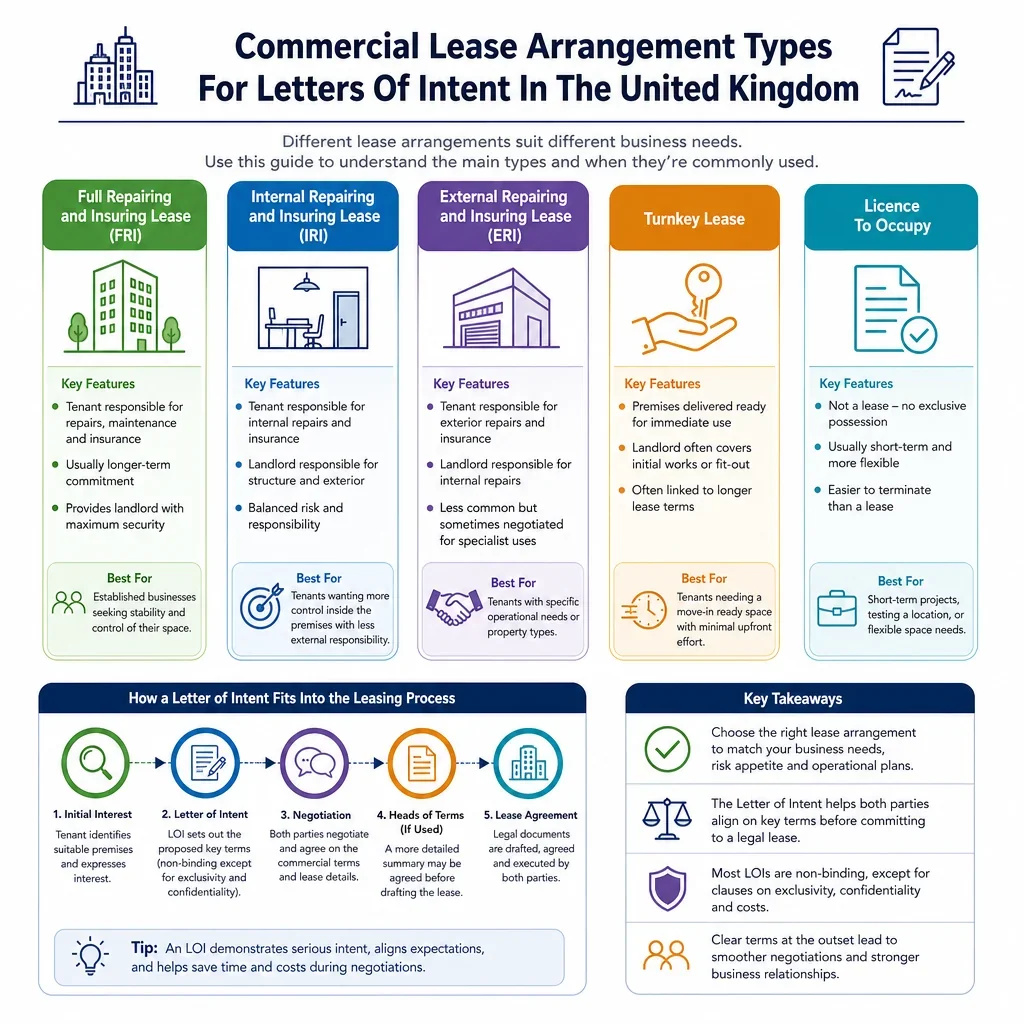
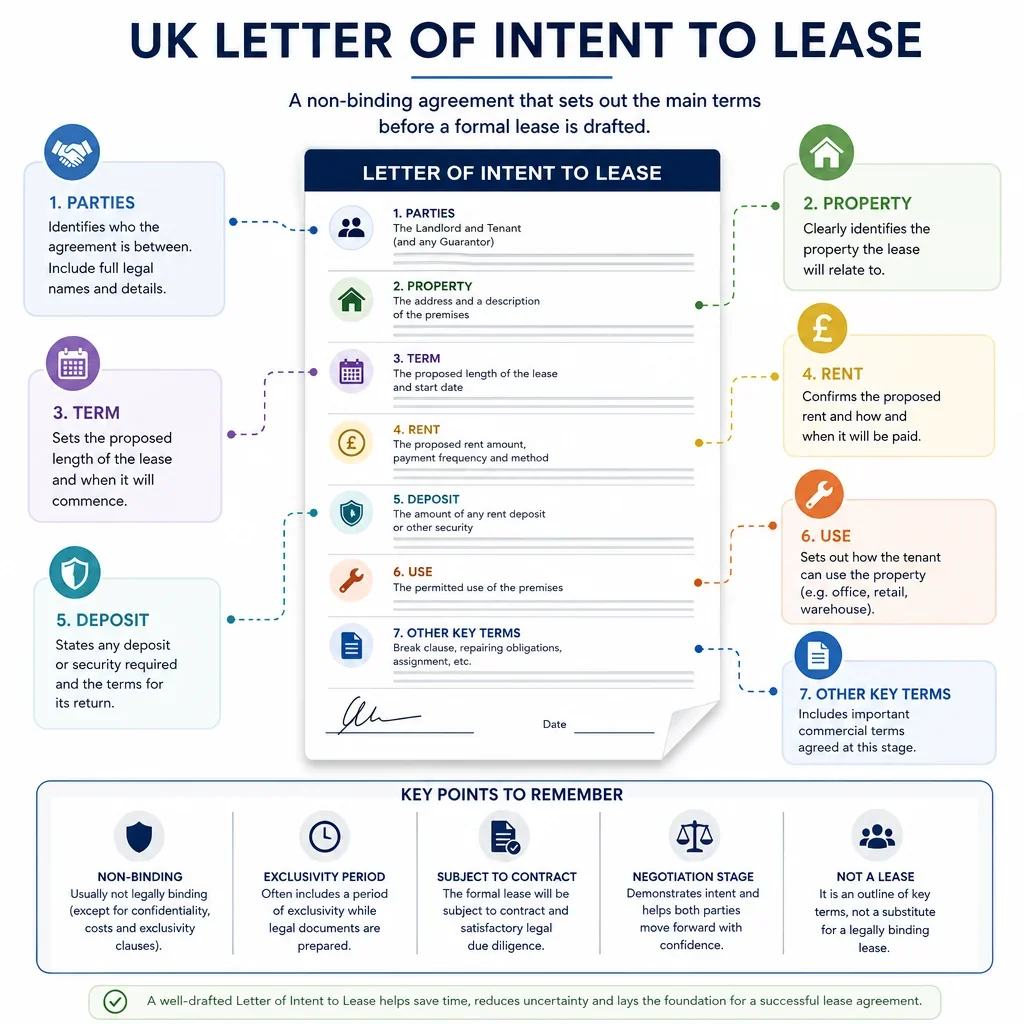
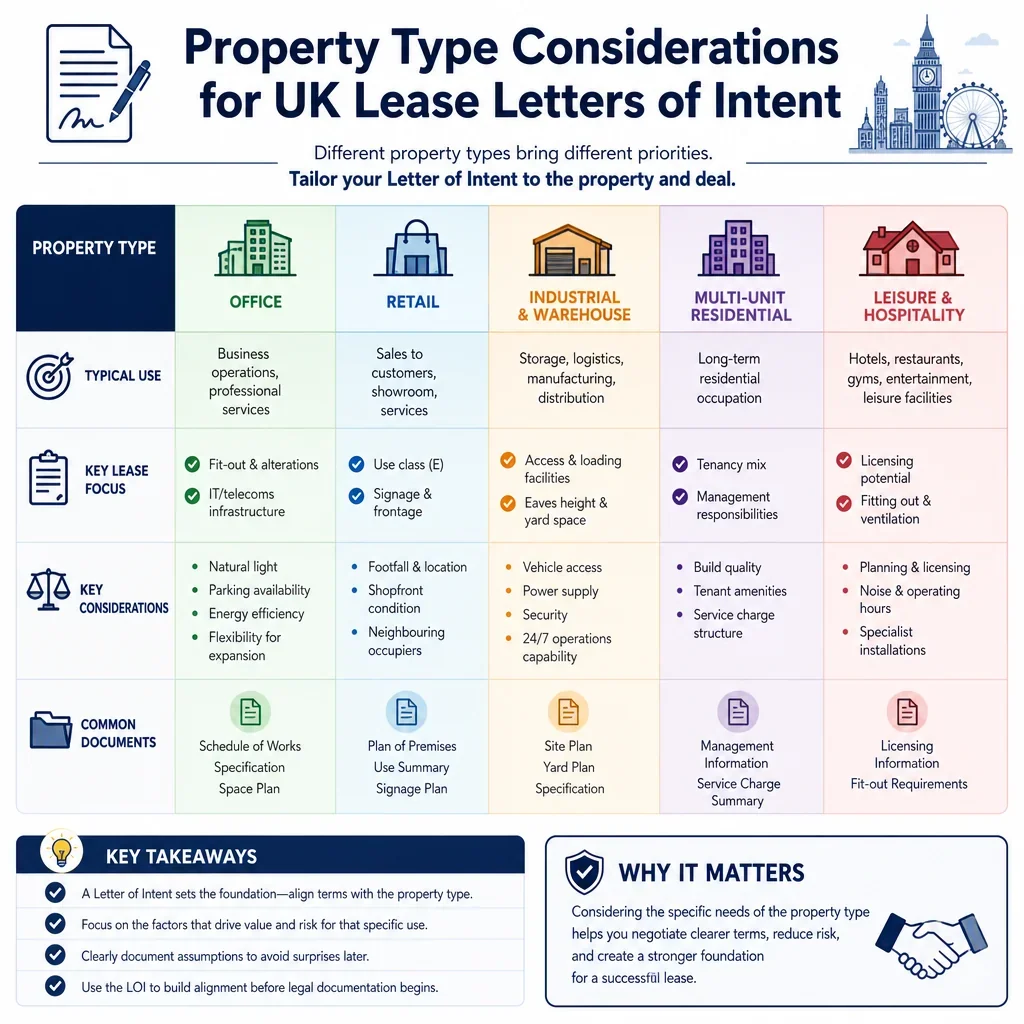
The property type should drive the level of detail in the letter of intent. Offices and simple storage units may need relatively short heads of terms, while restaurants, medical premises, industrial units and mixed use properties usually need more detail on planning use, alterations, services, compliance, reinstatement and operating constraints.
When Are Planning Use And Consents Most Important?
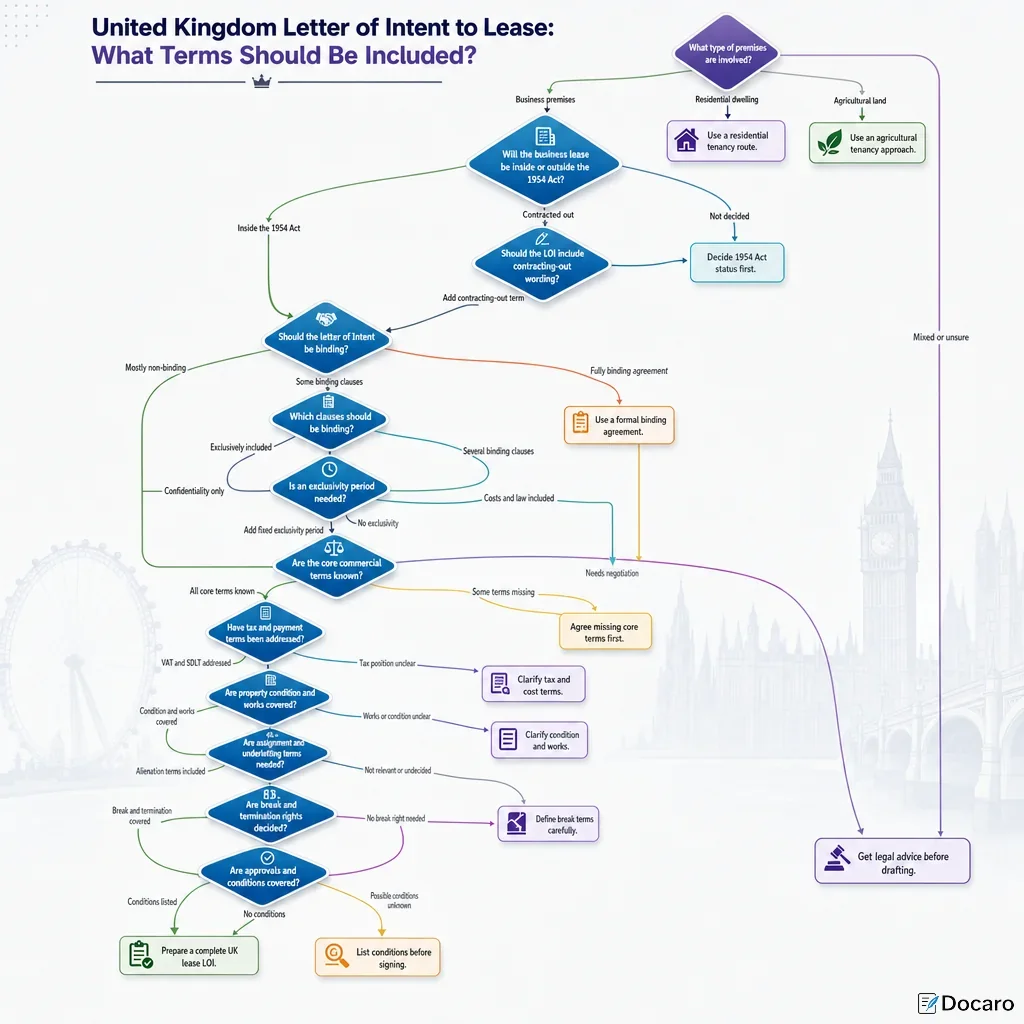
Planning use is especially important for restaurants, cafes, gyms, medical premises, childcare settings, hotels, mixed use premises and industrial or warehouse uses. A letter of intent should state whether the lease is conditional on planning permission, licensing, superior landlord consent, lender consent or other approvals. In England, the Use Classes Order and permitted development rules can affect whether the intended use is lawful without a fresh planning application.
Which Property Types Need Extra Operational Detail?
- Restaurants and cafes: extraction, grease traps, alcohol licensing, opening hours, outdoor seating and fire safety should be addressed early.
- Warehouses and industrial units: loading access, yard rights, power capacity, floor loading, hazardous materials and environmental liabilities are often central lease points.
- Medical, dental and childcare premises: regulatory suitability, accessibility, safeguarding layout, waste disposal and CQC or Ofsted-related fit-out needs may affect timing and conditions.
- Retail and leisure premises: signage, trading hours, service charge, turnover rent, exclusivity and footfall assumptions can materially affect the bargain.
Why Should Repair, Service Charge And Reinstatement Be Mentioned Early?
Repairing obligations, service charge caps and reinstatement duties can be more expensive than the rent headline suggests, particularly for older buildings, high street units, shopping centres, shared offices and multi-let industrial estates. The letter of intent should flag whether a schedule of condition, cap on service charge, landlord works or phased rent-free period is expected.
Do UK Jurisdictions Affect Lease Letters Of Intent?
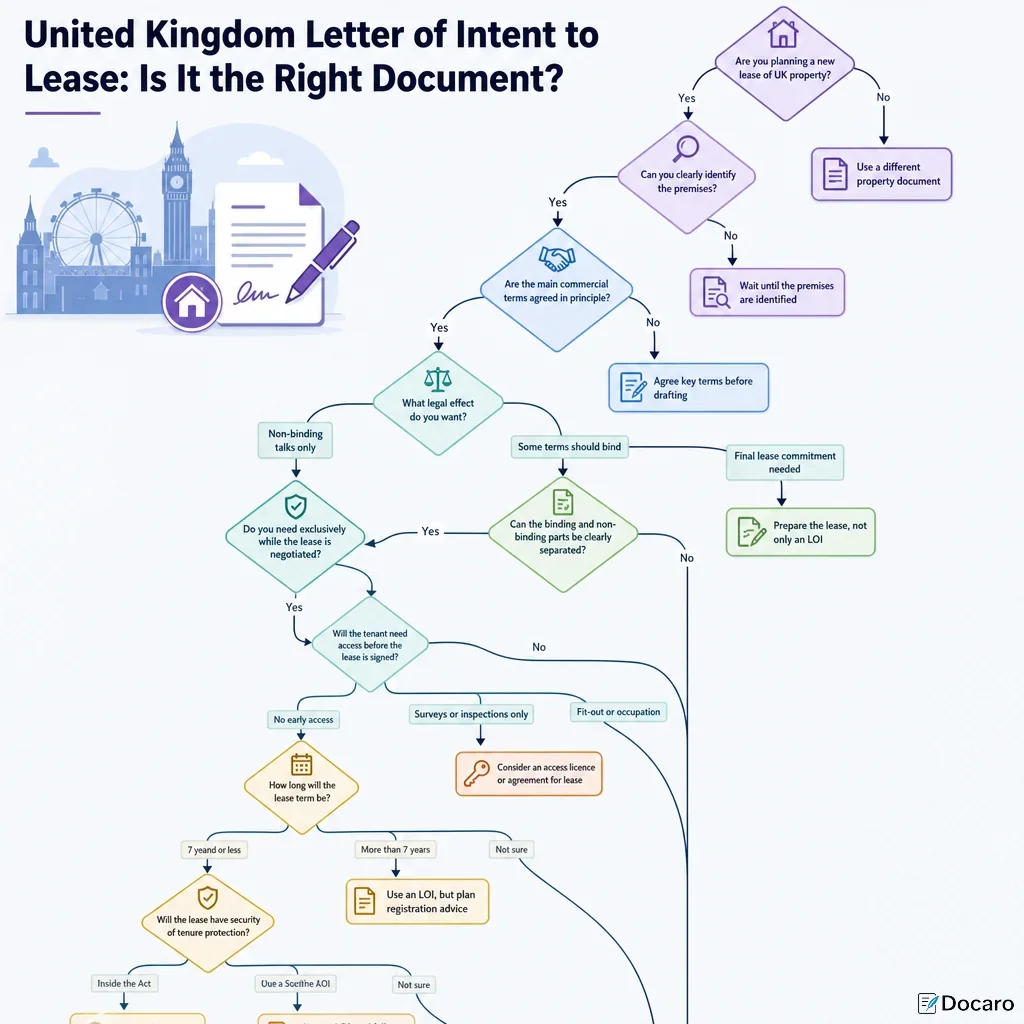
Yes. England and Wales have specific issues such as Landlord and Tenant Act 1954 security of tenure, MEES, planning use classes and business rates. Scotland and Northern Ireland use different property law terminology and processes, so a UK-wide document should avoid assuming that English lease concepts automatically apply. For cross-border use, the letter of intent should identify the jurisdiction and whether local solicitors will prepare the lease.
FAQs
You Might Also Be Interested In