United Kingdom Letter Of Intent To Lease: Is It The Right Document?
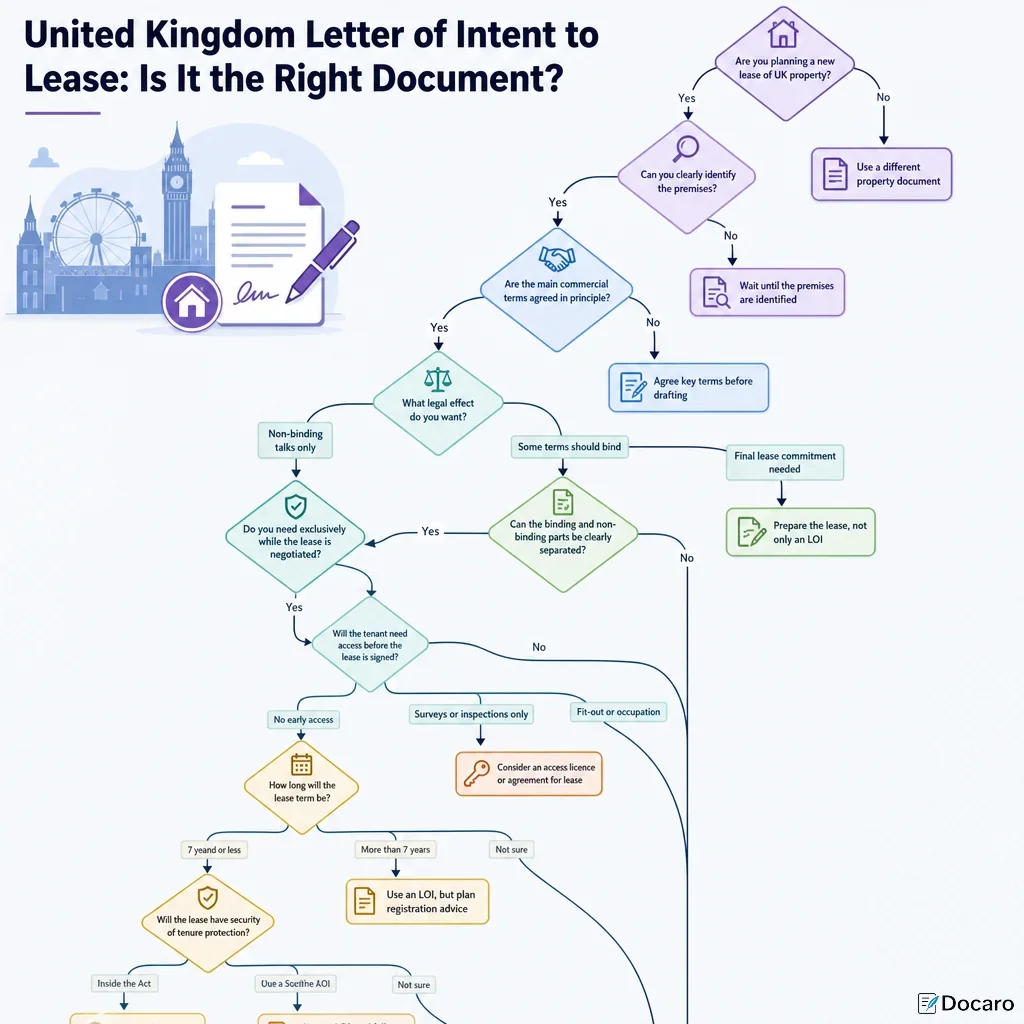
Are you planning a new lease of UK property?
Why Choosing The Right UK Lease Document Matters
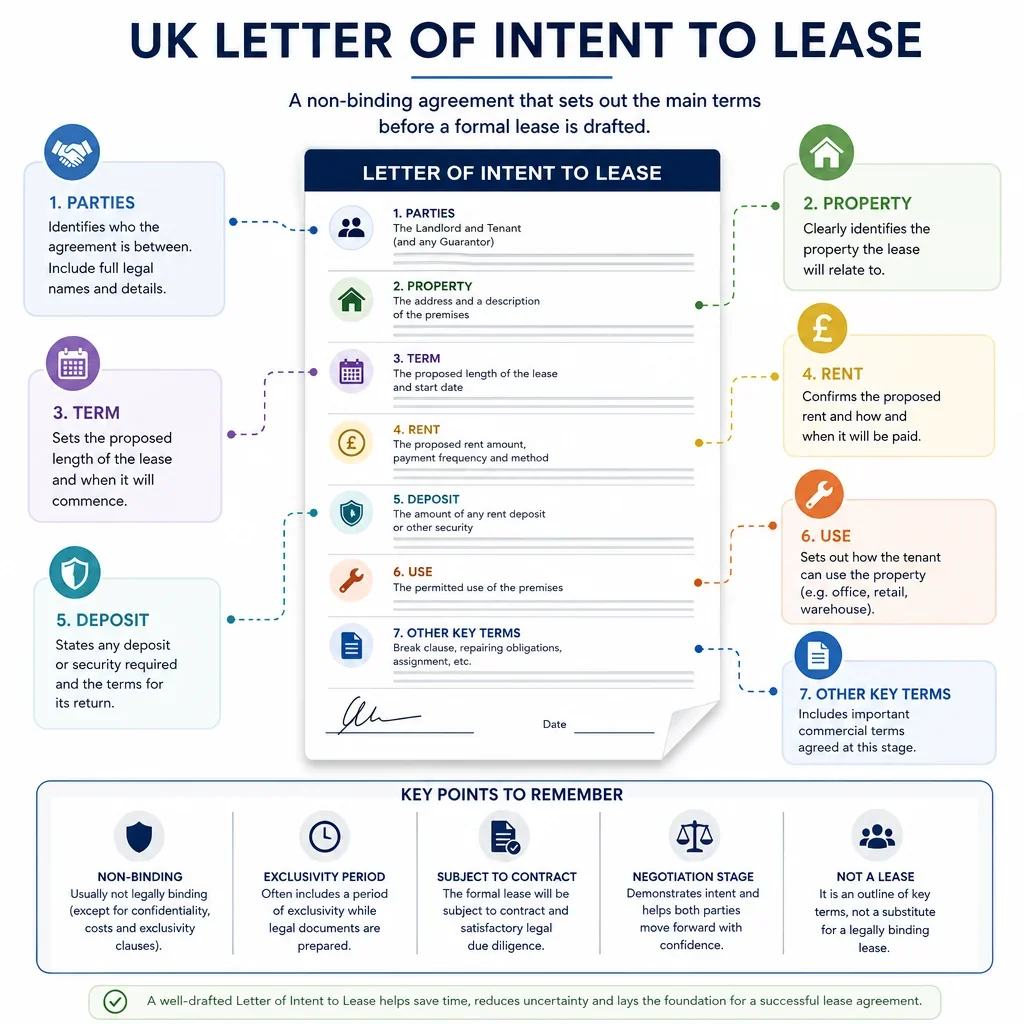
A letter of intent to lease can be useful in the United Kingdom because it records the main commercial terms before solicitors prepare the full lease. However, it is only appropriate at the right stage of negotiations and only if the parties understand whether it is binding, non-binding, or partly binding.
Can A Letter Of Intent Accidentally Create Legal Obligations?
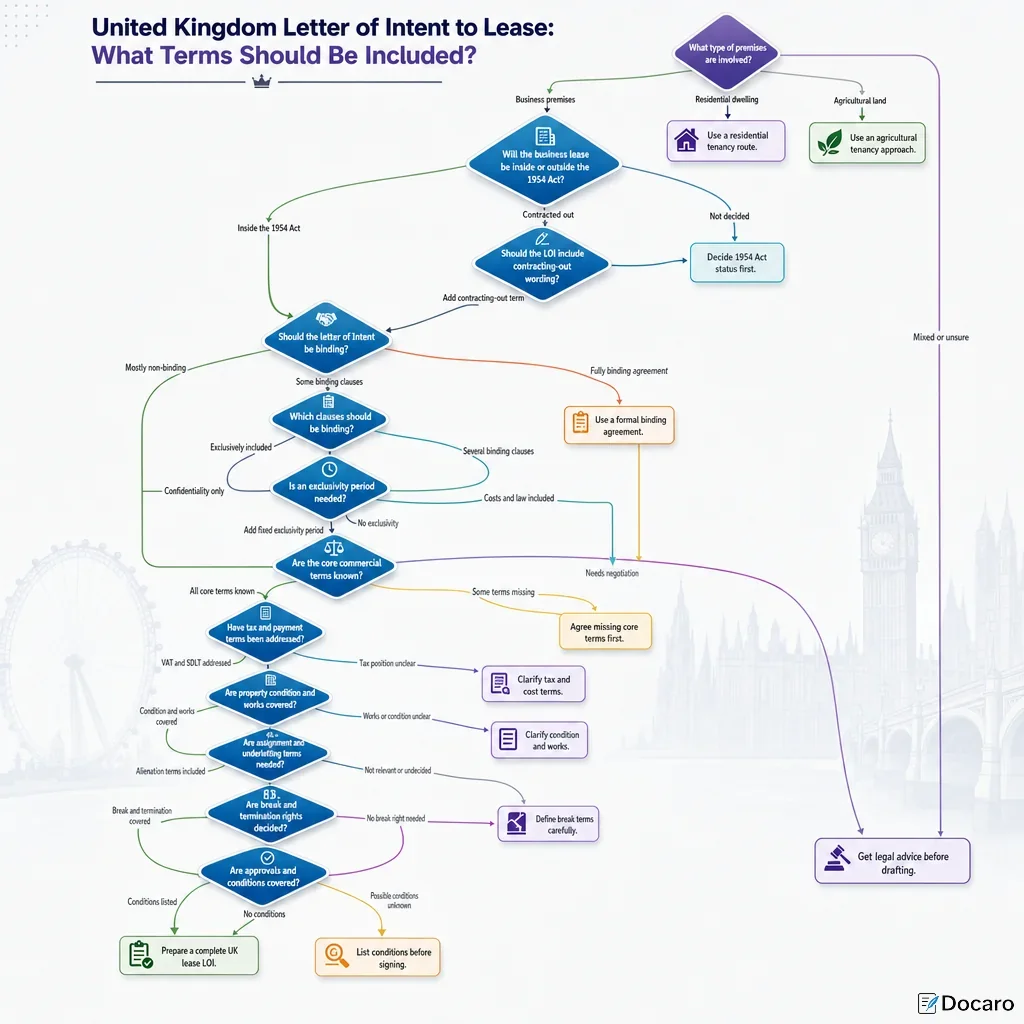
Yes. Poor wording can make the parties argue about whether they have already made a binding commitment. This is especially important for property transactions in England and Wales, where formalities under land law may affect whether an agreement is enforceable. Clear wording helps separate non-binding heads of terms from binding clauses such as confidentiality, costs, exclusivity, or governing law.
Is A Letter Of Intent The Same As A Lease?
No. A letter of intent is usually a preliminary document. A lease is the document that grants the legal right to occupy the premises. Depending on the term and location of the property, the lease may need to be executed as a deed, notified for tax purposes, or registered with the relevant land registry.
Why Do UK Commercial Lease Terms Need Care?
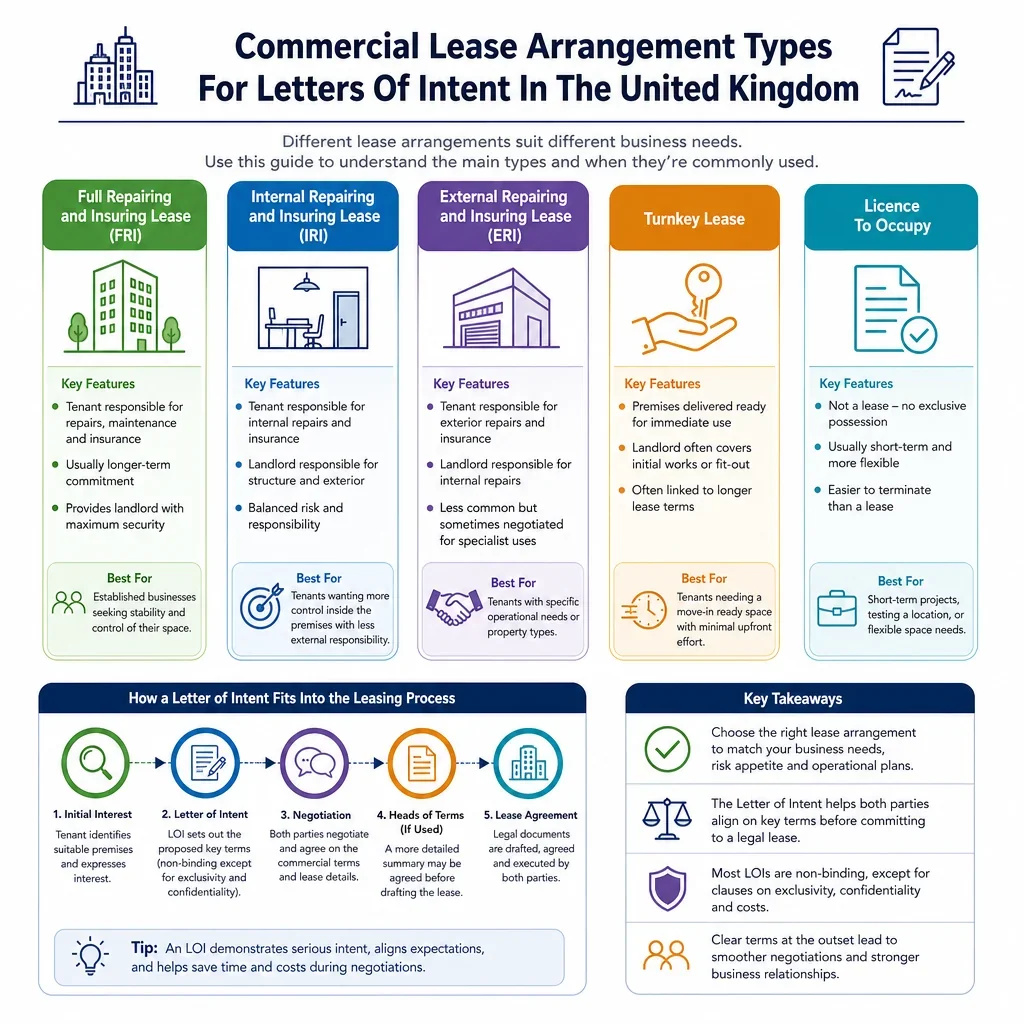
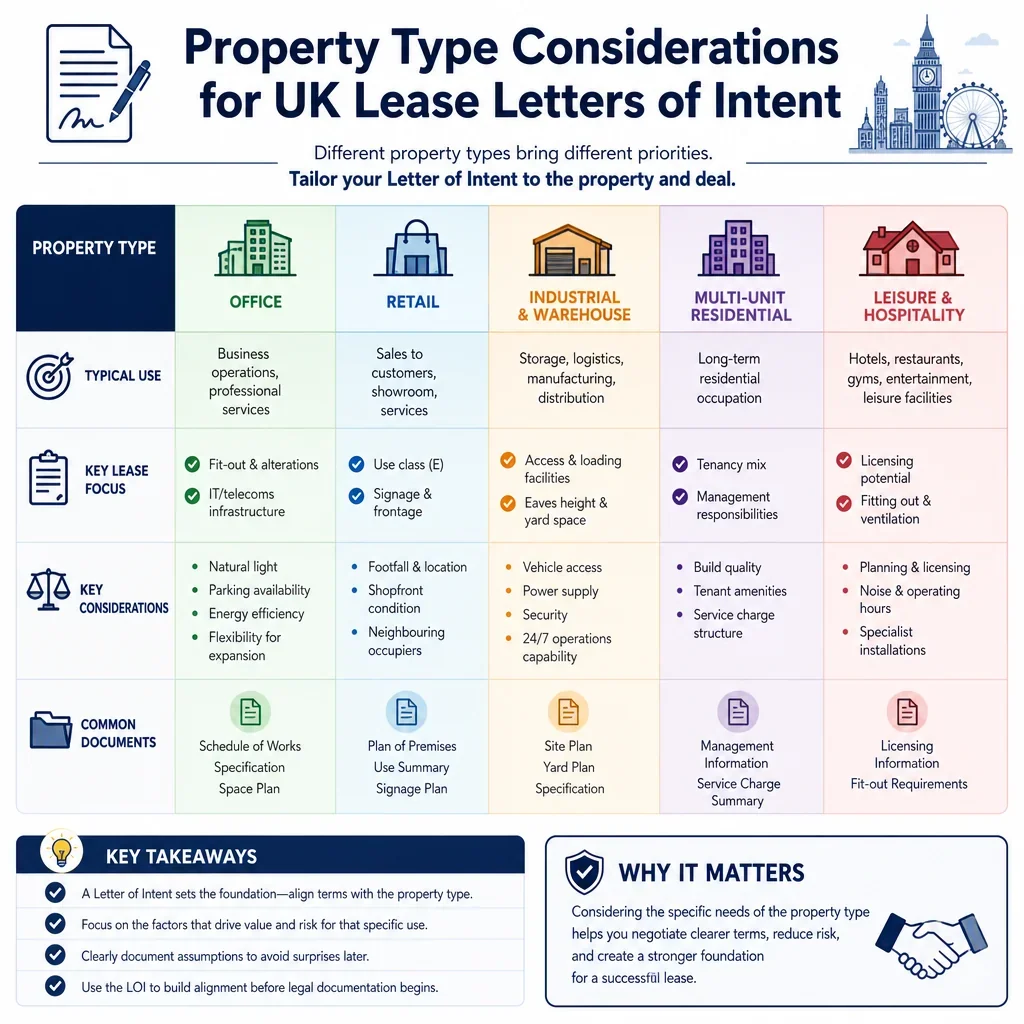
Commercial lease terms can affect rent liability, service charges, repairs, insurance, break rights, fit-out obligations, permitted use, and renewal rights. In England and Wales, the parties should also consider whether the lease will have protection under the Landlord and Tenant Act 1954 or whether it will be properly contracted out.
When Should You Get Legal Advice?
You should consider legal advice if the lease is high value, long term, outside England and Wales, involves early access or fit-out works, includes exclusivity, or if either party wants any part of the letter to be binding. UK property law differs between England and Wales, Scotland, and Northern Ireland, so the document should match the jurisdiction of the premises.
- Use a letter of intent to record agreed terms before the lease is drafted.
- Use a formal lease when the parties are ready to grant legal occupation rights.
- Use an access licence or agreement for lease if works or early occupation are needed before completion.
- Use jurisdiction-specific drafting for Scotland or Northern Ireland.
FAQs
You Might Also Be Interested In