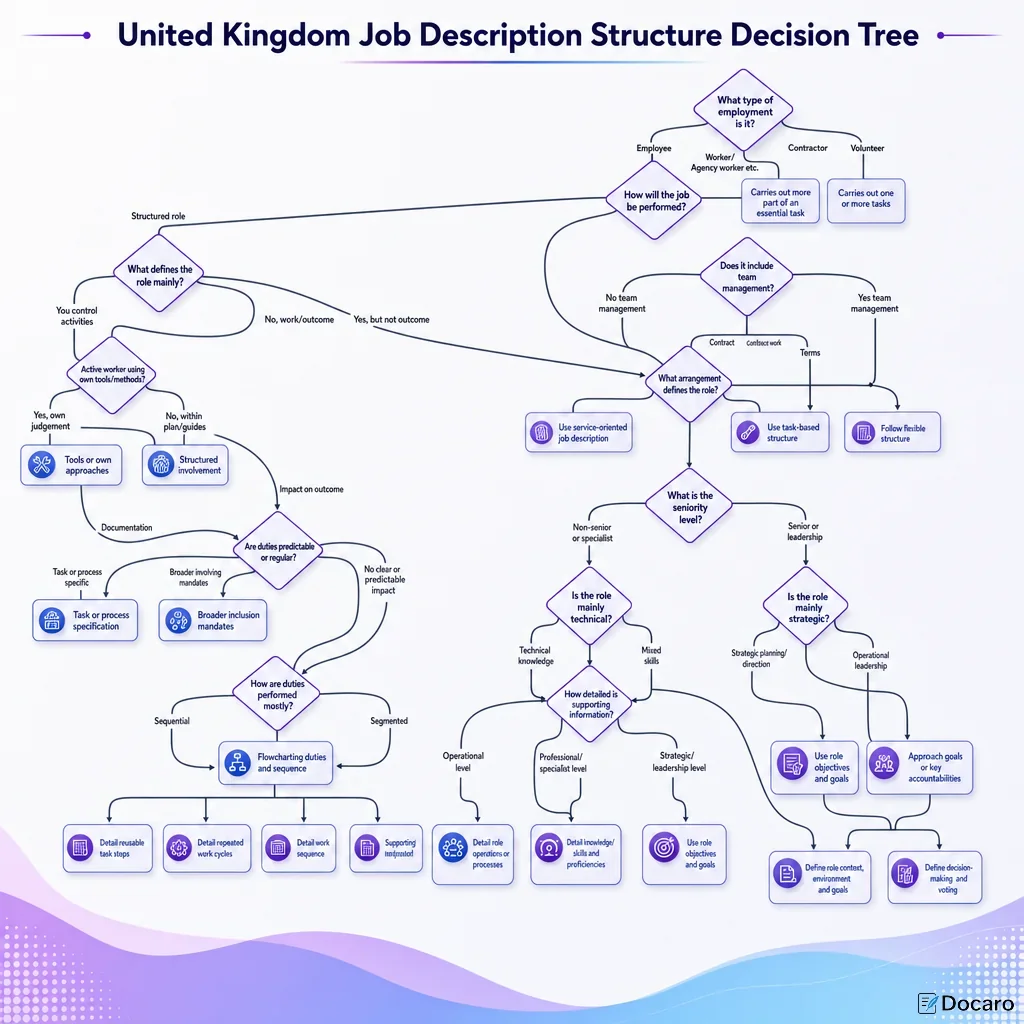
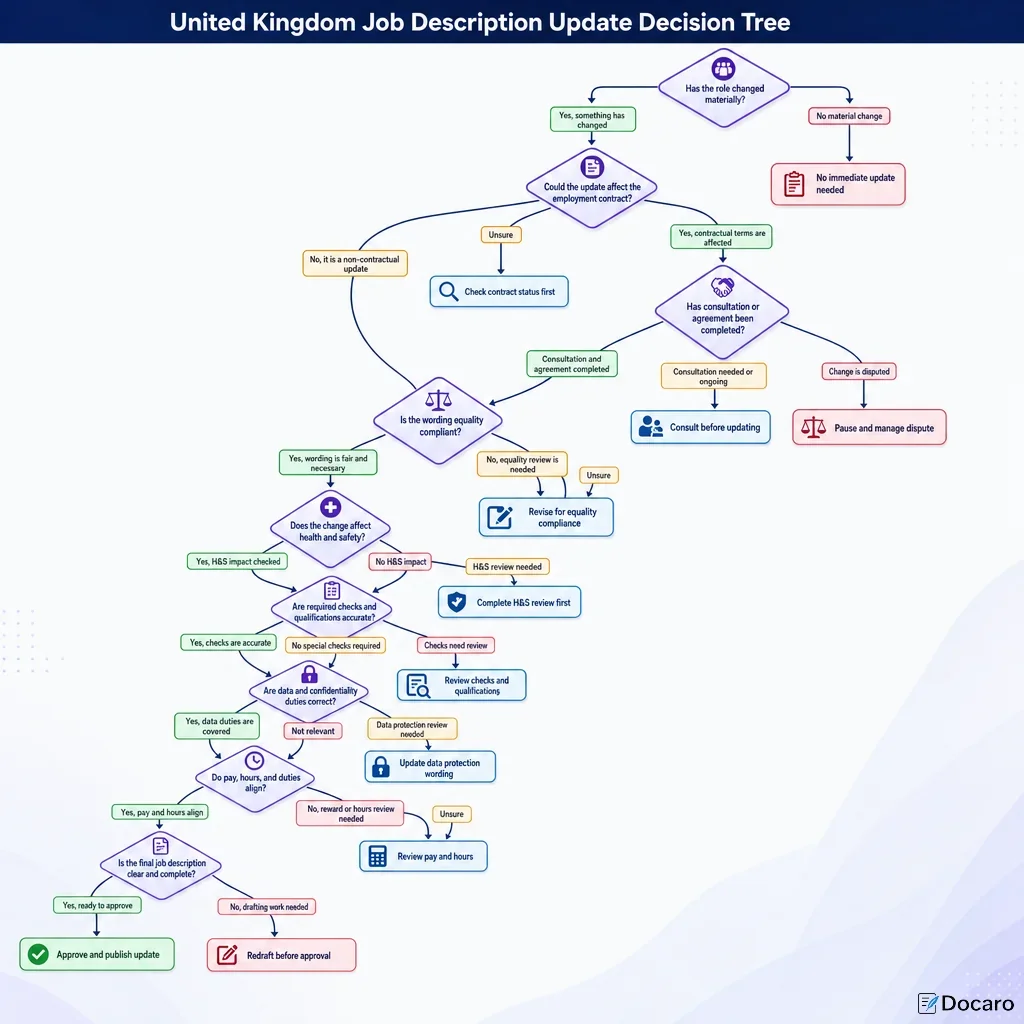
United Kingdom Job Description Update Decision Tree
Has the role changed materially?
Why Should UK Employers Update Job Descriptions Carefully?
A job description is not just a recruitment document. In the United Kingdom, it can influence employment contracts, performance management, equality compliance, health and safety planning, pay decisions, and employee expectations.
How Can The Wrong Job Description Create Legal Risk?
If a revised job description changes duties, hours, location, seniority, or reporting lines, it may affect contractual terms. Employers should consider whether consultation or agreement is needed before making significant changes. Guidance from Acas on changing employment contracts is especially relevant.
Why Does Equality Wording Matter In The UK?
Job descriptions should use fair, objective, and necessary criteria. Requirements that are not genuinely needed may disadvantage candidates or employees with protected characteristics under the Equality Act 2010. Clear wording also supports reasonable adjustments for disabled workers.
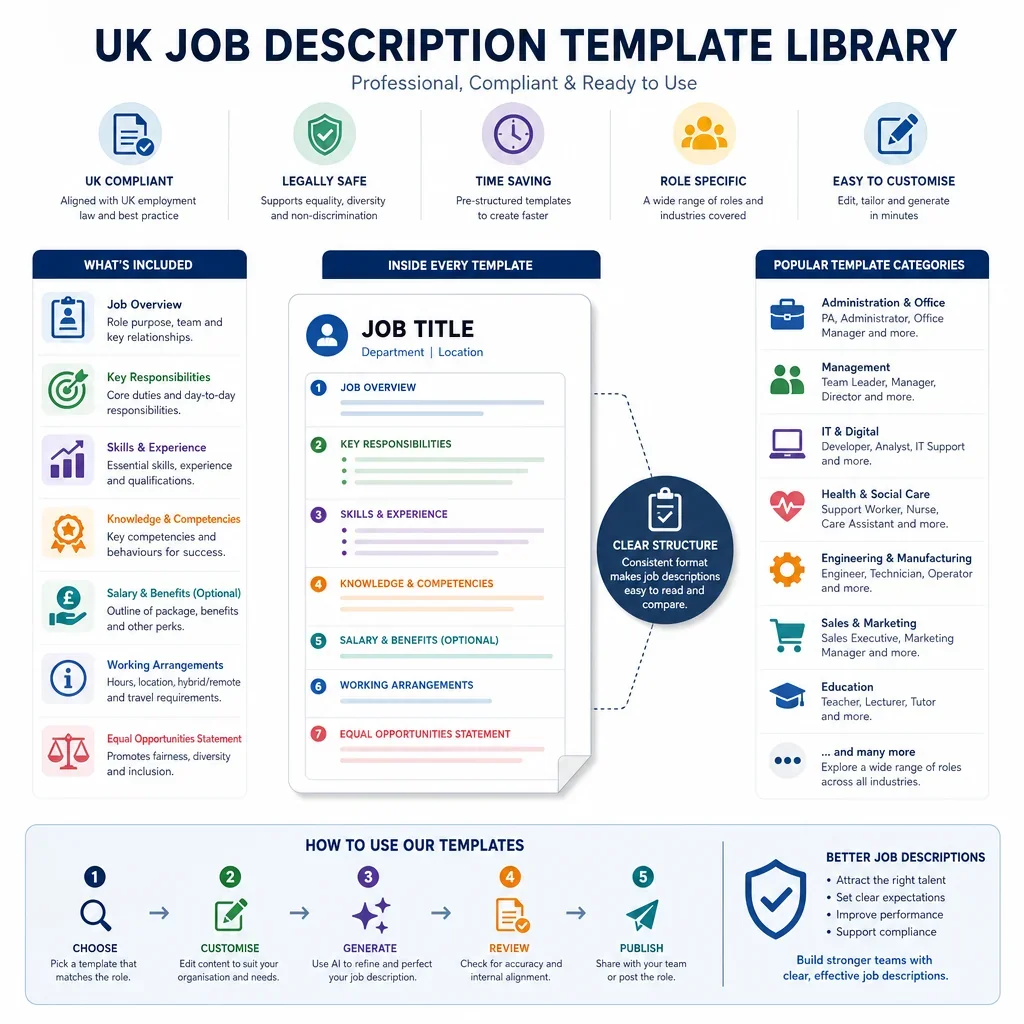
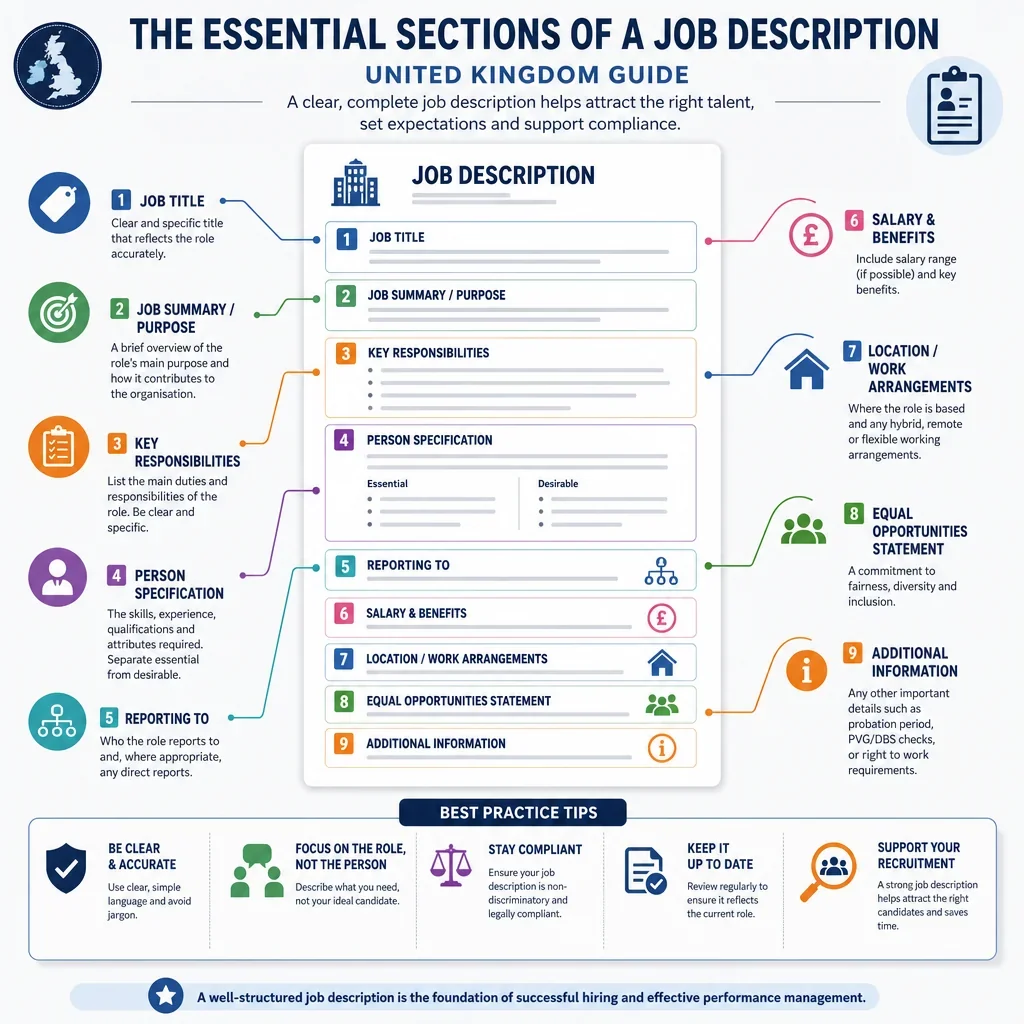
What Should A Good UK Job Description Include?
- Accurate duties that reflect the real role.
- Clear essential criteria separated from desirable criteria.
- Correct reporting lines and team context.
- Working pattern and location where relevant.
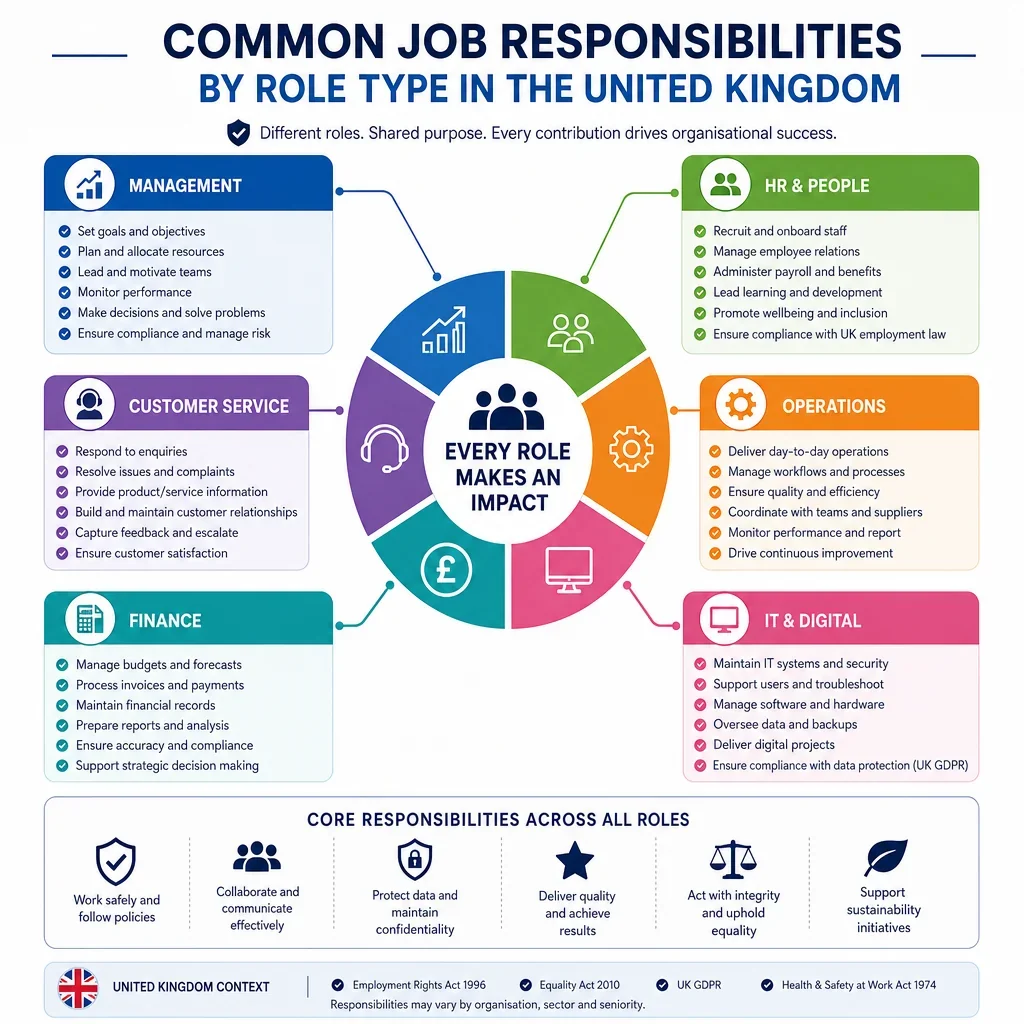
- Health, safety, data, and compliance duties where they apply.
- A review date so the document stays current.
How Does This Help Recruitment And Management?
An accurate job description helps applicants understand the opportunity, helps managers assess performance fairly, and helps HR maintain consistent records. It also reduces misunderstandings about what the employee is expected to do.
This decision tree is a practical guide for UK workplace documents. It is not a substitute for legal advice on complex contractual changes or disputes.
FAQs
You Might Also Be Interested In