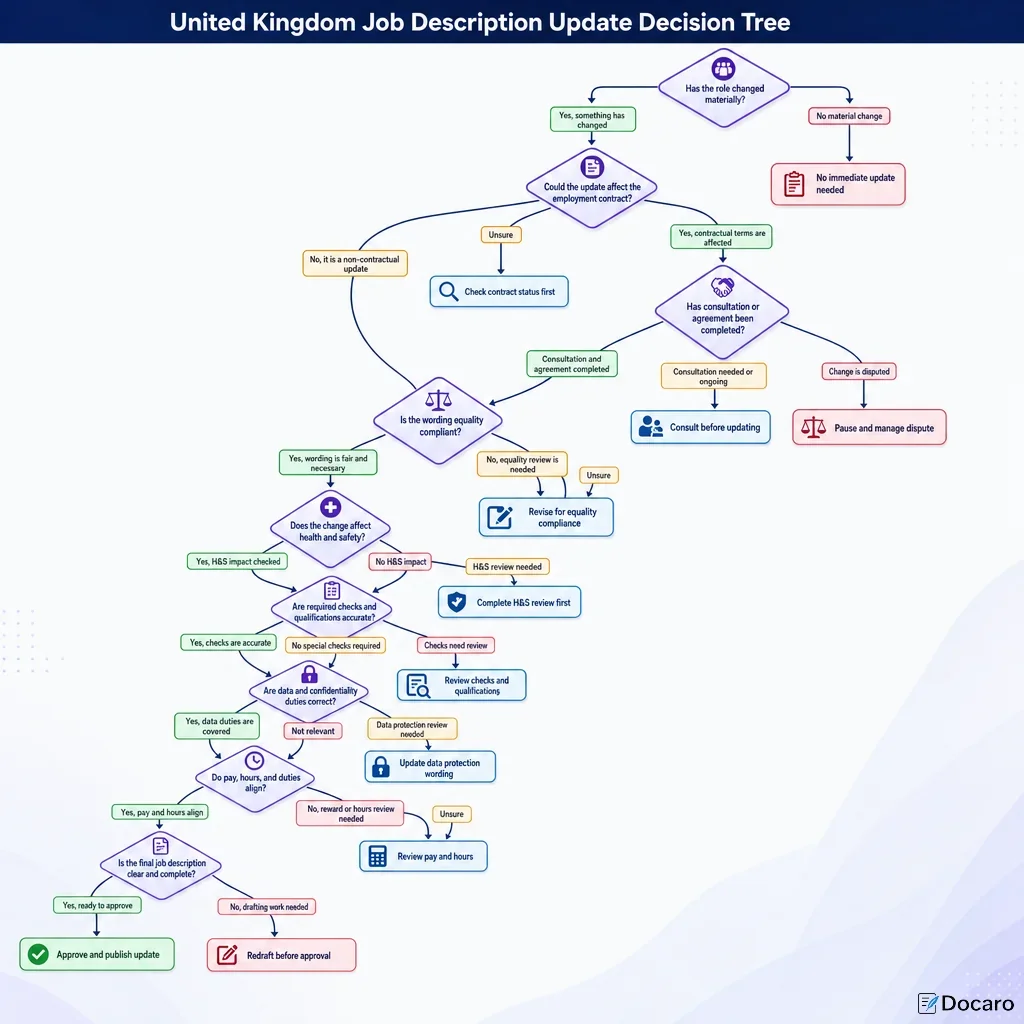
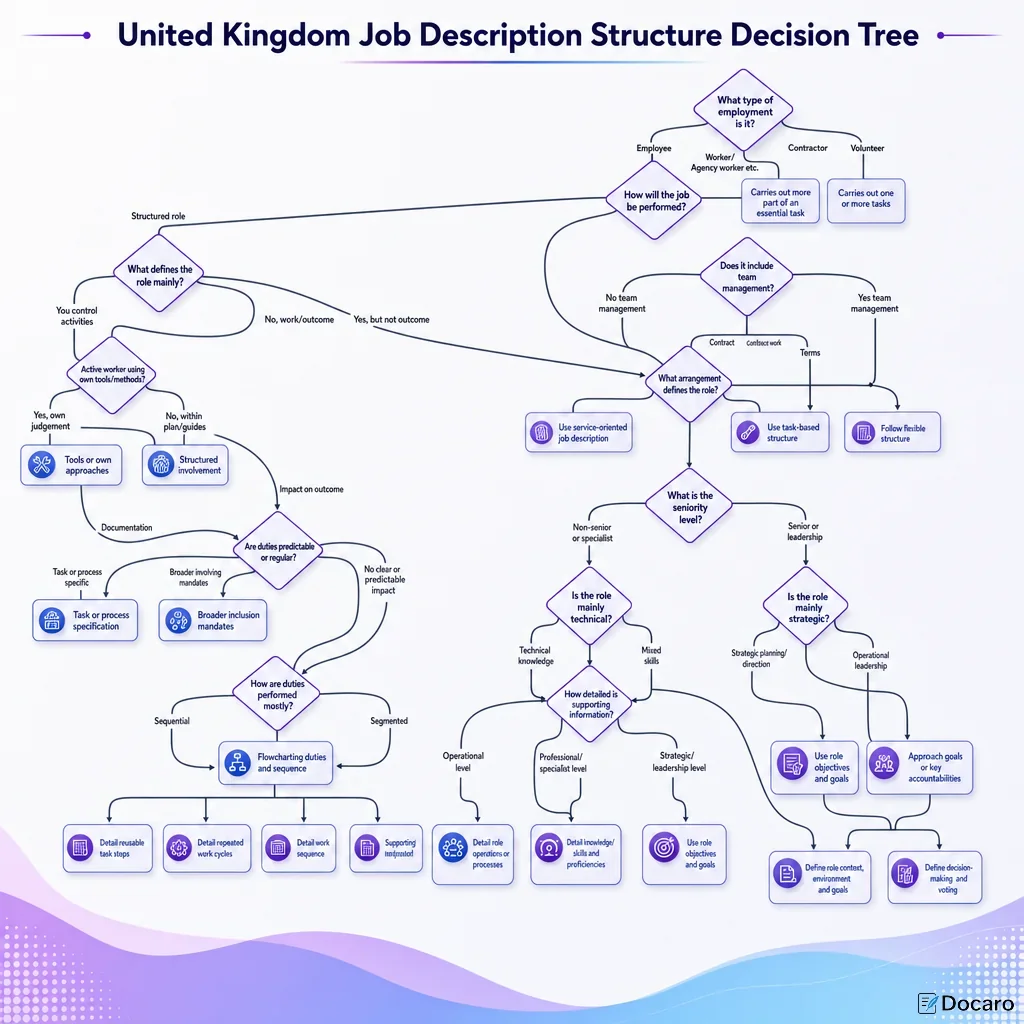
United Kingdom Job Description Structure Decision Tree
What type of engagement is this?
Why Is The Right UK Job Description Structure Important?
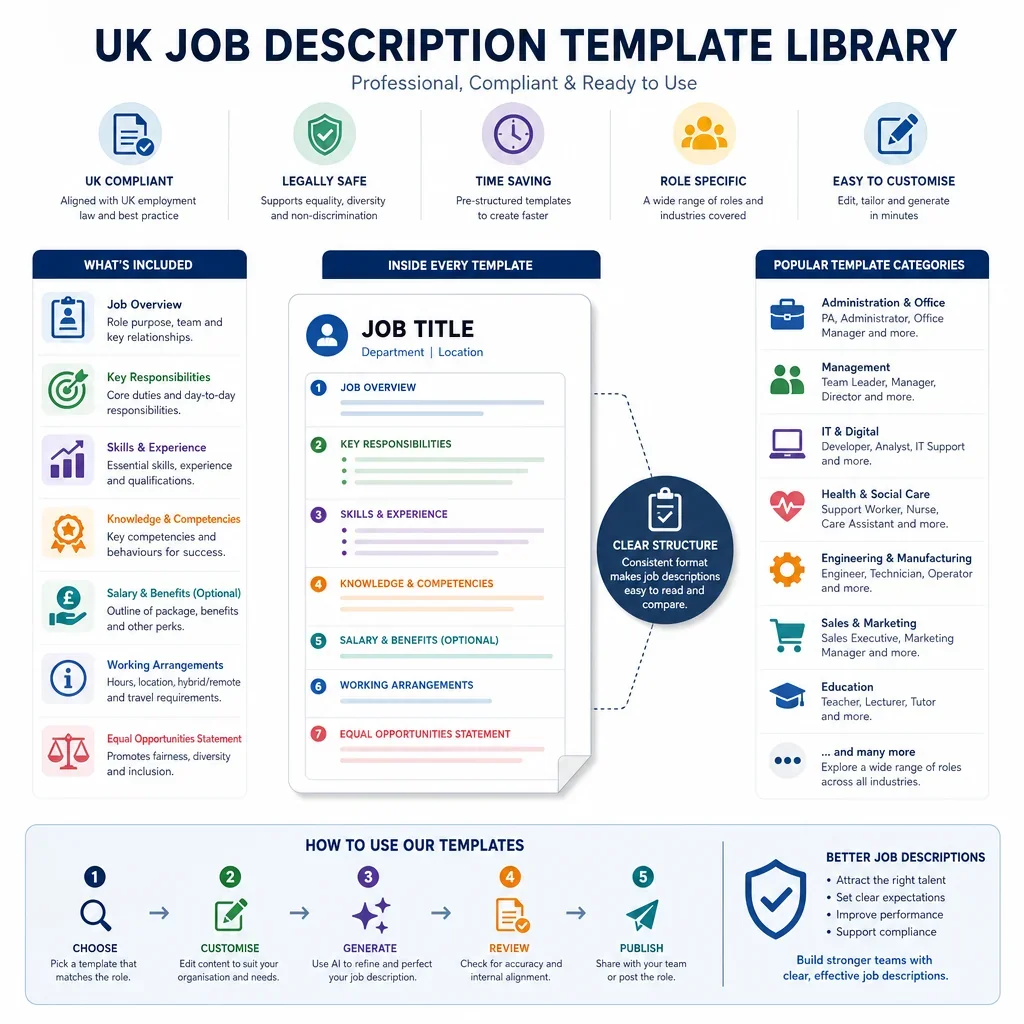
A well structured job description helps UK employers explain what a role does, what skills are needed, and how the role fits within the organisation. It can support recruitment, performance management, pay decisions, restructuring, and contractual clarity.
How Can A Job Description Reduce Legal And HR Risk?
In the United Kingdom, job descriptions should align with employment status, written particulars, equality law, working time rules, and any role-specific checks. Clear wording helps avoid misleading candidates, creating accidental contractual promises, or using criteria that may be discriminatory.
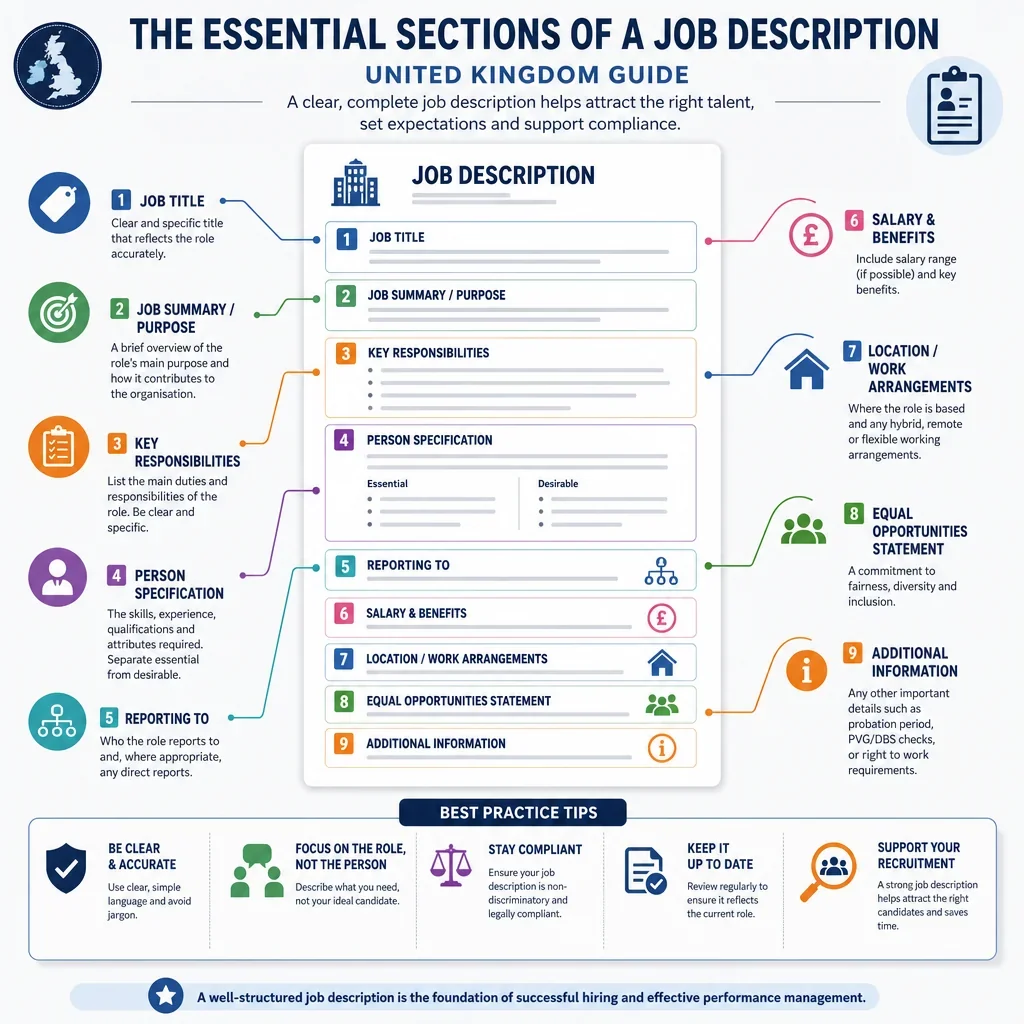
What Should A UK Job Description Usually Include?
- Job title, department, location, and reporting line.
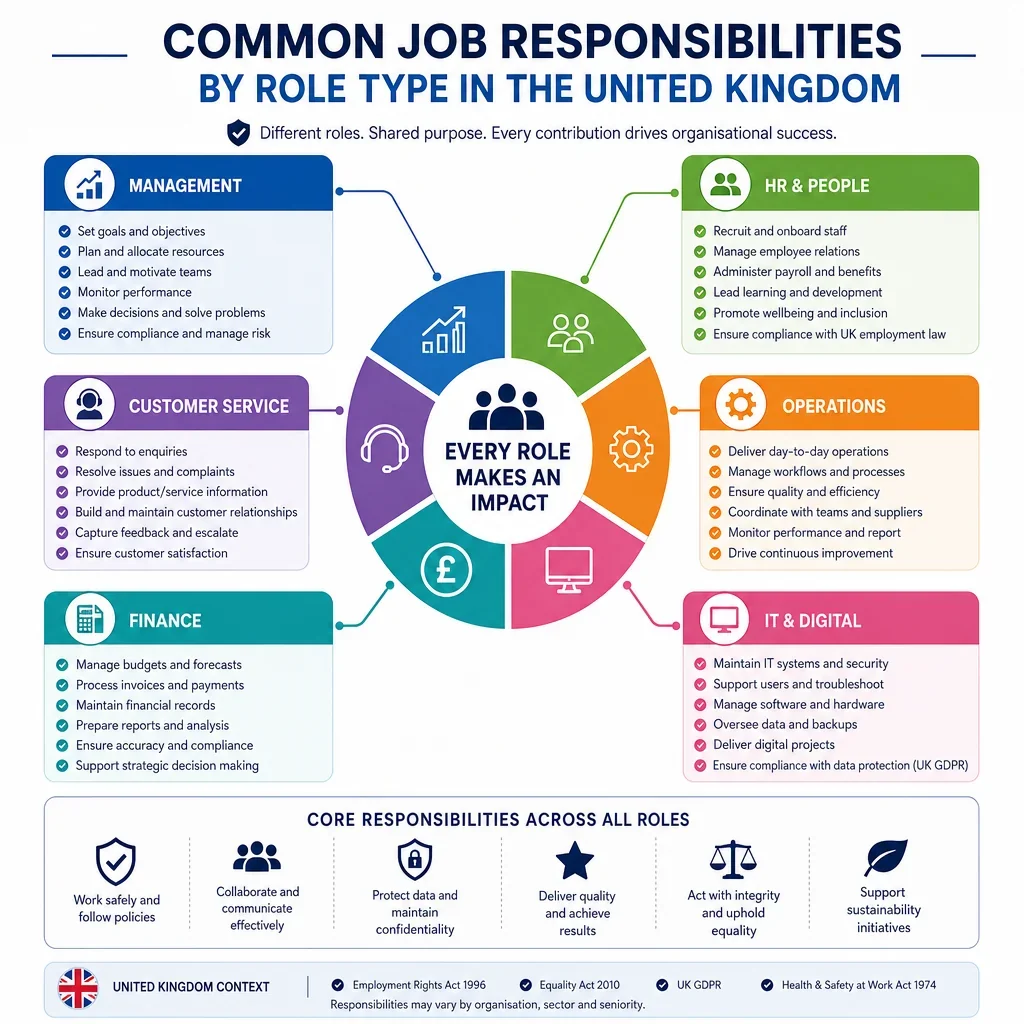
- Role purpose and key responsibilities.
- Essential and desirable criteria for fair selection.
- Working pattern, travel, hybrid, shift, or flexibility details.
- Compliance needs, such as professional registration or DBS checks where relevant.
- Review date so the document stays accurate.
Why Does Structure Matter For Recruitment?
Recruitment job descriptions should be easy for candidates to understand and should separate genuine essentials from preferences. Inclusive, accurate wording can widen the applicant pool and support compliance with the Equality Act 2010.
Why Does Structure Matter For Existing Employees?
For current staff, a job description may affect expectations, grading, performance review, restructure discussions, or role changes. A clear and proportionate document helps managers and employees understand responsibilities without creating unnecessary disputes.
FAQs
You Might Also Be Interested In