Job Description Section Guide In The United Kingdom
Section Name | Purpose | Recommended Content | Drafting Guidance | Importance Level |
|---|---|---|---|---|
Role Overview | ||||
Job Title | Identify the role clearly and consistently. | Use a recognisable title, grade if relevant, and department or function. | Avoid inflated, vague or discriminatory titles. Match internal HR records. | Essential |
Organisation And Department | Show where the role sits in the business. | Employer name, department, business unit, brand or site. | Keep concise and use names candidates will recognise. | Recommended |
Role Summary | Give candidates a quick understanding of the job. | Two to four sentences covering purpose, scope and value of the role. | Use plain English. Avoid marketing exaggeration and internal jargon. | Essential |
Role Purpose | Explain why the role exists. | Primary objective, business need and expected contribution. | Focus on outcomes rather than a long task list. | Essential |
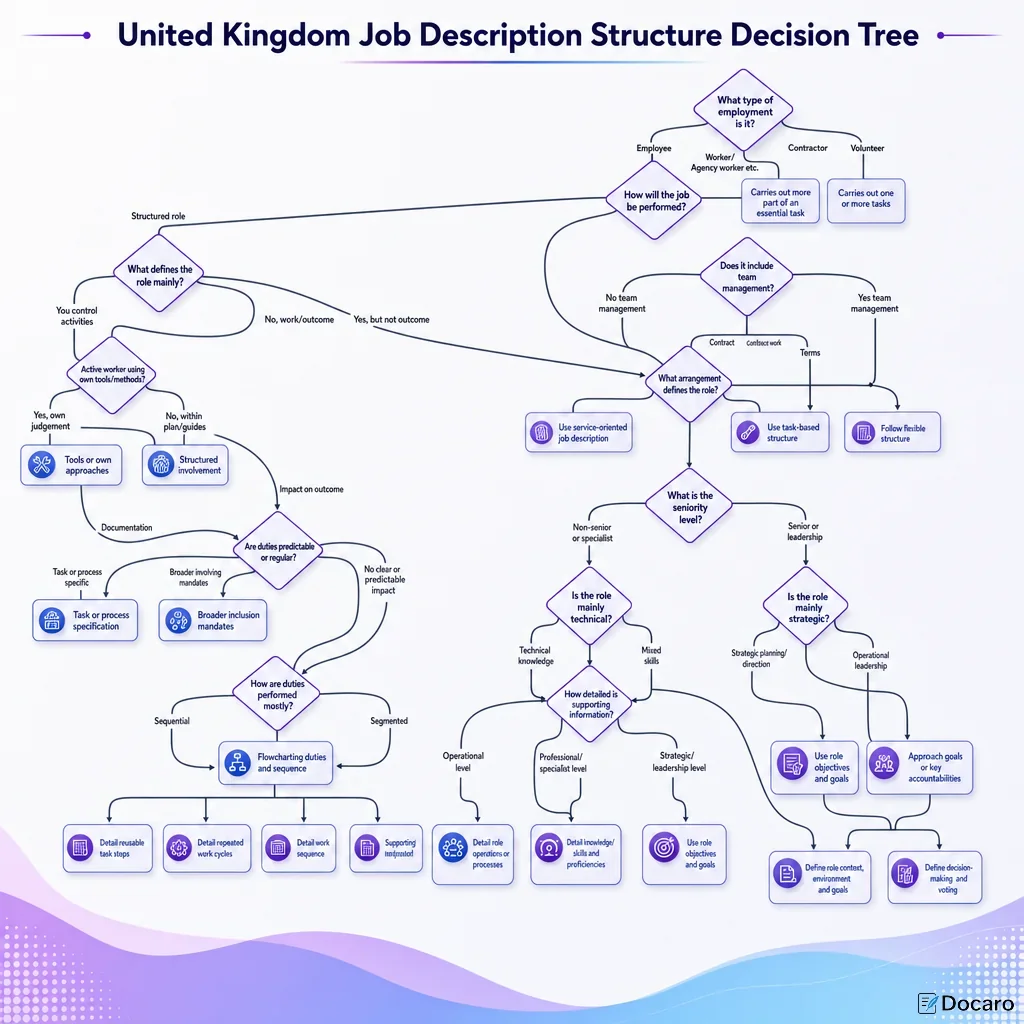
Seniority Level | Clarify the role's level of responsibility. | Junior, mid-level, senior, manager, head of, director or equivalent grade. | Align title, pay, authority and required experience. | Recommended |
Employment Terms | ||||
Contract Type | Clarify the legal and practical basis of engagement. | Permanent, fixed-term, temporary, casual, apprenticeship, worker or contractor status. | Use wording consistent with actual employment status and contract documents. | Essential |
Full-Time Or Part-Time Status | Tell candidates the expected working pattern commitment. | Full-time, part-time, job share or variable hours arrangement. | Do not imply part-time workers receive inferior treatment without lawful justification. | Essential |
Working Hours | Set expectations about weekly hours and scheduling. | Weekly hours, core hours, shifts, overtime and weekend expectations. | Consider Working Time Regulations limits, rest breaks and opt-out requirements. | Essential |
Working Conditions | ||||
Shift Pattern | Explain non-standard working patterns. | Rotas, nights, early starts, late finishes, standby and on-call work. | Be clear about unsocial hours and night work health assessment rules. | Role Dependent |
Work Location | State where the work will normally be performed. | Office, site, region, client premises, remote or field-based location. | Use accurate location wording and avoid unnecessary residency requirements. | Essential |
Remote Or Hybrid Working | Clarify flexibility and attendance expectations. | Homeworking availability, office days, equipment and attendance requirements. | Avoid promising permanent flexibility unless approved by policy and contract. | Role Dependent |
Employment Terms | ||||
Salary Or Pay Range | Inform candidates of expected remuneration. | Salary, hourly rate, pay range, commission or bonus eligibility. | Ensure pay complies with National Minimum Wage and avoid unexplained broad ranges. | Recommended |
Benefits | ||||
Holiday Entitlement | Tell candidates the paid leave offered. | Annual leave days, bank holidays, pro rata terms and carry-over if relevant. | Check entitlement meets statutory paid holiday requirements. | Recommended |
Pension | Summarise workplace pension participation. | Auto-enrolment, employer contribution and pension provider if appropriate. | Avoid promising eligibility beyond auto-enrolment rules or scheme terms. | Recommended |
Responsibilities | ||||
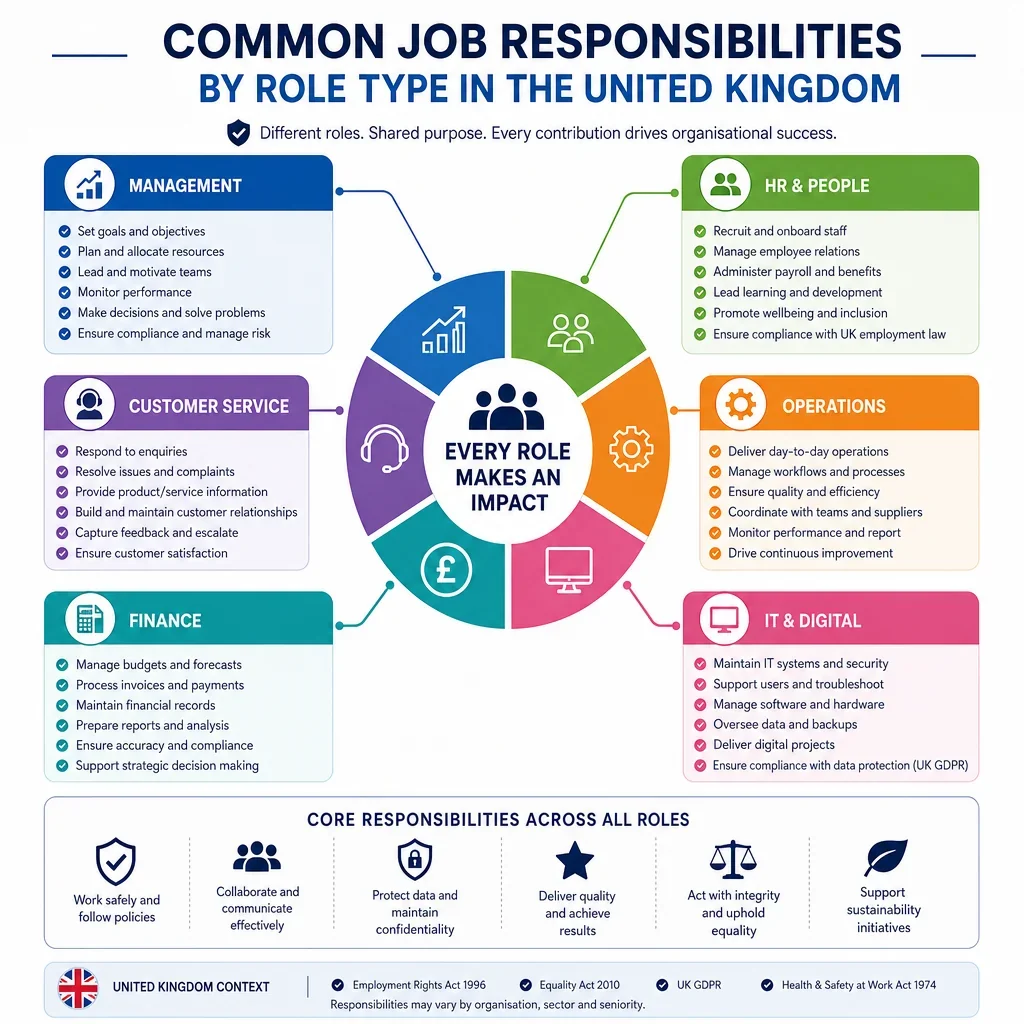
Key Responsibilities | Define the main work the role performs. | Six to ten core duties ordered by importance or frequency. | Start bullets with active verbs and avoid overly broad catch-all wording. | Essential |
Key Deliverables | Describe tangible outputs expected from the role. | Reports, services, campaigns, projects, products, standards or operational outputs. | Use measurable outcomes where possible without creating unrealistic guarantees. | Recommended |
Performance Measures | Show how success may be assessed. | KPIs, service levels, quality standards, targets or review criteria. | Keep targets realistic and avoid implying guaranteed bonus entitlement. | Role Dependent |
People Management Responsibilities | Clarify whether the role manages staff. | Number of direct reports, supervision duties, appraisals and recruitment involvement. | State authority accurately and include safeguarding or HR duties if relevant. | Role Dependent |
Budget Responsibility | Clarify financial authority and accountability. | Budget size, spending authority, forecasting and approval limits. | Avoid disclosing sensitive figures if a range or level is enough. | Role Dependent |
Decision-Making Authority | Define what the role can decide independently. | Approval rights, escalation thresholds and delegated authority. | Align with governance documents and financial controls. | Role Dependent |
Stakeholder Relationships | Show key internal and external relationships. | Teams, customers, suppliers, regulators, partners or board contacts. | Mention relationship types without overstating senior exposure. | Recommended |
Requirements | ||||
Essential Qualifications | State qualifications genuinely required for the job. | Mandatory degrees, professional memberships, licences or certificates. | Require qualifications only where objectively needed to avoid indirect discrimination. | Role Dependent |
Desirable Qualifications | Identify helpful but non-essential credentials. | Preferred certifications, training or sector accreditations. | Label clearly as desirable so capable candidates are not deterred. | Optional |
Essential Skills | Define abilities required to perform the role. | Technical, communication, analytical, leadership and operational skills. | Use role-related criteria and avoid coded or exclusionary language. | Essential |
Experience Requirements | State the background needed for competent performance. | Relevant sector, task, system, management or customer experience. | Prefer capability-based wording over arbitrary years of experience. | Recommended |
Technical Skills | Specify systems, tools or technical abilities needed. | Software, machinery, programming languages, platforms or specialist methods. | Separate essential tools from trainable preferences. | Role Dependent |
Professional Registration Or Licence | Confirm any legal or professional practising requirement. | Regulator registration, practising certificate, licence or membership grade. | State if registration must be held before start date. | Role Dependent |
Right To Work Checks | Notify candidates that legal work eligibility will be checked. | Statement that right to work evidence is required before employment starts. | Do not restrict by nationality. Apply checks consistently to all candidates. | Essential |
DBS Check Requirement | State whether criminal record checking is required. | Basic, standard, enhanced or barred list check, if applicable. | Only request checks where legally permitted and relevant to the role. | Role Dependent |
Responsibilities | ||||
Safeguarding Responsibilities | Clarify duties involving children or vulnerable adults. | Safeguarding reporting, training, safer recruitment and supervision duties. | Use for regulated activity or care roles and align with safeguarding policy. | Role Dependent |
Health And Safety Responsibilities | Set out workplace safety duties relevant to the role. | Safe systems, PPE, risk reporting, training and compliance duties. | Reflect duties under UK health and safety law and employer procedures. | Recommended |
Working Conditions | ||||
Physical Requirements | Explain genuine physical demands of the job. | Manual handling, standing, driving, lifting, PPE or site access needs. | State objective demands and consider reasonable adjustments for disabled applicants. | Role Dependent |
Travel Requirements | Clarify expected business travel. | Frequency, territory, overnight stays, vehicle use and expenses. | Avoid unnecessary driving licence requirements if alternatives are possible. | Role Dependent |
Requirements | ||||
Driving Licence Requirement | State when driving is genuinely required. | Licence category, own vehicle need, business insurance and mileage arrangements. | Require a licence only where it is necessary for the role. | Role Dependent |
Reporting Structure | ||||
Reports To | Identify the role's direct manager. | Job title of line manager and department, not necessarily the person's name. | Use a role title to avoid updates when individuals change. | Essential |
Direct Reports | Show who the role manages. | Number, job titles and teams supervised. | State if there are no direct reports where helpful. | Role Dependent |
Team Structure | Explain the role's place within the team. | Team size, peer roles, matrix reporting and cross-functional links. | Keep high level and avoid disclosing confidential restructuring plans. | Recommended |
Employment Terms | ||||
Probation Period | Indicate any initial review period. | Length, review process and possible extension if applicable. | Ensure wording matches the employment contract and policy. | Optional |
Notice Period | Set expectations about ending employment. | Employer and employee notice periods, if appropriate for recruitment stage. | Do not state less than statutory minimum notice. | Optional |
Fixed-Term Details | Explain the duration and reason for a fixed-term role. | Start date, end date, project, funding or maternity cover reason. | Avoid treating fixed-term staff less favourably without objective justification. | Role Dependent |
Start Date | Tell candidates when the role is expected to begin. | Immediate, target date, flexible start or appointment subject to checks. | Mention contingencies such as right to work, references or clearance. | Recommended |
Benefits | ||||
Training And Development | Show learning support available or required. | Induction, mandatory training, professional development and study support. | Distinguish guaranteed training from discretionary development opportunities. | Recommended |
Employee Benefits | Summarise non-pay benefits offered. | Private medical, life assurance, discounts, wellbeing, EAP or season ticket loans. | State if benefits are discretionary, insured or subject to eligibility rules. | Recommended |
Bonus Or Commission | Explain any variable pay opportunity. | Eligibility, basis of calculation, targets and discretionary terms. | Avoid creating unintended guaranteed entitlement. | Role Dependent |
Working Conditions | ||||
Flexible Working | Describe flexibility available or request process. | Flexitime, compressed hours, job share or request options. | Avoid blanket refusals employees can request flexible working from day one. | Recommended |
Application Information | ||||
Equal Opportunities Statement | Signal fair and inclusive recruitment practice. | Commitment to non-discrimination and inclusive selection. | Ensure the statement is supported by objective criteria and fair process. | Recommended |
Reasonable Adjustments | Tell disabled candidates how to request adjustments. | Contact route for interview, assessment or workplace adjustment requests. | Use positive wording and avoid asking unnecessary health questions. | Recommended |
How To Apply | Tell candidates how to submit an application. | Application link, email, CV, cover letter, form or portfolio requirements. | Make instructions simple and accessible. Avoid unnecessary barriers. | Essential |
Closing Date | Set the deadline for applications. | Date, time, time zone and whether early closure may occur. | Use UK date format and apply deadline rules consistently. | Recommended |
Selection Process | Explain recruitment stages and candidate expectations. | Shortlisting, interviews, assessments, presentations and expected timescales. | Use a process that assesses the stated criteria fairly and consistently. | Recommended |
Pre-Employment Checks | Tell candidates about checks before appointment. | Right to work, references, qualifications, DBS, medical or credit checks. | Only include checks that are relevant, lawful and proportionate. | Recommended |
References | Explain whether employment references will be sought. | Number of references, timing and types of referee accepted. | Handle referee and candidate data in line with UK GDPR and privacy notices. | Optional |
Recruitment Privacy Notice | Tell candidates how recruitment data will be used. | Link to privacy notice covering data use, retention and rights. | Provide clear privacy information before or when collecting candidate data. | Recommended |
Responsibilities | ||||
Confidentiality Duties | Highlight responsibility for confidential information. | Client data, commercial information, trade secrets and internal documents. | Keep general in the job description and reserve detail for contract clauses. | Role Dependent |
Data Protection Responsibilities | Clarify duties when handling personal data. | Processing, security, retention, reporting breaches and policy compliance. | Include where the role handles personal data or manages systems. | Role Dependent |
Regulatory Compliance Duties | State sector-specific compliance responsibilities. | FCA, CQC, Ofsted, SRA, HSE, ISO or internal compliance duties. | Name only regulators or standards genuinely relevant to the role. | Role Dependent |
Role Overview | ||||
Values And Behaviours | Describe expected workplace behaviours. | Core values, conduct expectations and customer service principles. | Use observable behaviours rather than vague personality traits. | Optional |
Workplace Culture | Help candidates assess fit with the working environment. | Team style, pace, collaboration, inclusion and ways of working. | Avoid subjective terms that can exclude diverse candidates. | Optional |
Benefits | ||||
Career Progression | Show potential development pathways. | Progression routes, promotion criteria or future opportunities. | Avoid guaranteeing promotion or salary increases. | Optional |
Working Conditions | ||||
Equipment And Tools Provided | Clarify tools and equipment supplied for the role. | Laptop, phone, PPE, vehicle, software, machinery or workstation equipment. | State any employee-provided items only where lawful and reasonable. | Role Dependent |
Uniform Or Dress Code | Set expectations for appearance or protective clothing. | Uniform, PPE, professional dress, hygiene or safety requirements. | Ensure rules do not discriminate on sex, religion, disability or other protected grounds. | Role Dependent |
Work Environment | Describe practical working conditions. | Office, warehouse, outdoors, laboratory, clinical, retail or construction settings. | Mention material conditions such as noise, temperature, travel or lone working. | Role Dependent |
Lone Working | Inform candidates if work is done without close supervision. | Frequency, locations, risk controls and communication arrangements. | Reflect assessed risks and safety controls for lone workers. | Role Dependent |
On-Call Requirements | Explain availability outside normal hours. | Rota frequency, response times, allowances and compensatory rest. | Consider working time, rest periods and pay implications. | Role Dependent |
Employment Terms | ||||
Overtime | Clarify whether extra hours may be required or paid. | Voluntary or required overtime, rates, time off in lieu and approval process. | Ensure average pay does not fall below National Minimum Wage. | Role Dependent |
Apprenticeship Details | Explain training and employment structure for apprenticeships. | Standard, level, training provider, duration, off-the-job training and pay. | Ensure apprentice pay and training arrangements meet UK requirements. | Role Dependent |
Internship Or Placement Details | Clarify structure for internships, placements or work experience. | Duration, learning objectives, supervision, pay and academic links. | Check whether the intern is entitled to National Minimum Wage. | Role Dependent |
Requirements | ||||
Security Clearance | State clearance needed for sensitive roles. | BPSS, CTC, SC, DV or other clearance and timing. | Avoid discriminatory nationality wording unless a lawful clearance rule requires it. | Role Dependent |
Language Requirements | State language ability needed for the role. | Required language, fluency level, writing, speaking or translation needs. | Require specific language ability only where objectively justified. | Role Dependent |
Responsibilities | ||||
Customer Or Client Contact | Clarify the level of external interaction. | Customer types, contact channels, complaints, account management or service duties. | State contact level and decision authority accurately. | Role Dependent |
Sales Or Revenue Targets | Clarify commercial expectations for sales roles. | Targets, territory, pipeline, commission link and reporting expectations. | Avoid guaranteeing earnings unless contractually certain. | Role Dependent |
Project Responsibilities | Show project work expected from the role. | Project scope, planning, delivery, reporting and stakeholder coordination. | Clarify whether the role leads, supports or administers projects. | Role Dependent |
Quality Standards | Define quality expectations for outputs or services. | Accuracy, review, audit, testing, service quality or compliance standards. | Link to recognised standards or internal procedures where relevant. | Role Dependent |
Application Information | ||||
Recruitment Contact | Provide a contact for candidate questions. | Recruiter name, HR inbox, phone number or accessibility contact. | Use a monitored mailbox and avoid personal data where unnecessary. | Optional |
Visa Sponsorship Position | Clarify whether the employer can sponsor work visas. | Whether sponsorship is available, unavailable or considered for eligible roles. | Avoid nationality discrimination and align with sponsor licence status. | Role Dependent |
Benefits | ||||
Relocation Support | Explain whether relocation help is available. | Allowance, temporary accommodation, travel support or no relocation package. | State limits and eligibility clearly to avoid misunderstandings. | Optional |
Employment Terms | ||||
Expenses Policy | Clarify reimbursement for business costs. | Travel, subsistence, mileage, homeworking or equipment expense rules. | Refer to policy rather than listing all reimbursement rules. | Role Dependent |
Responsibilities | ||||
Intellectual Property Duties | Highlight creation or handling of IP in the role. | Designs, code, content, inventions, brand assets or confidential know-how. | Keep brief and rely on contract terms for ownership and assignment detail. | Role Dependent |
Ethical Conduct And Conflicts | Set expectations on integrity and conflicts of interest. | Conflict disclosure, gifts, bribery prevention and professional conduct. | For regulated or public roles, align with codes of conduct and policy. | Recommended |
Anti-Bribery Responsibilities | Identify responsibility for preventing bribery risks. | Gifts, hospitality, third-party dealings, reporting and policy compliance. | Include for procurement, sales, finance and international roles. | Role Dependent |
Equality And Inclusion Duties | State role expectations for inclusive conduct. | Fair treatment, inclusive service delivery, team conduct and policy compliance. | Keep wording practical and tied to workplace behaviour. | Recommended |
Requirements | ||||
Personal Attributes | Describe behavioural qualities useful for the role. | Organised, resilient, collaborative, calm under pressure or customer-focused behaviours. | Avoid personality stereotypes and use observable, job-related behaviours. | Optional |
Responsibilities | ||||
Other Duties Clause | Allow reasonable changes within the role's scope. | Reasonable additional duties consistent with role level and skills. | Do not use to conceal materially different work or seniority. | Recommended |
Employment Terms | ||||
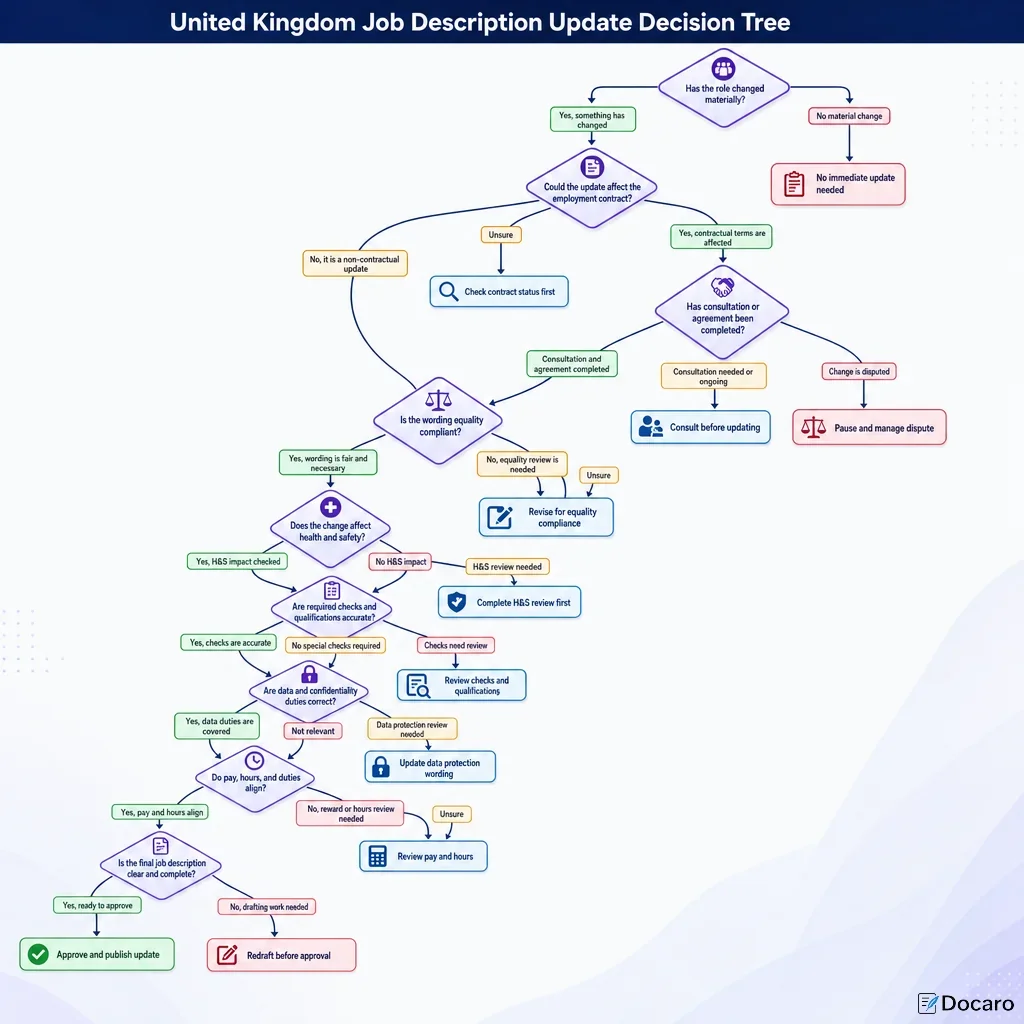
Job Description Review | Reserve ability to update the description over time. | Review frequency and statement that duties may evolve reasonably. | Ensure significant changes are managed consistently with contract and consultation duties. | Optional |
Working Conditions | ||||
Mobility Requirement | Explain whether work may move between sites. | Sites, regions, notice, travel expectations and expenses support. | Use reasonable, specific wording and align with any contract mobility clause. | Role Dependent |
Requirements | ||||
Baseline Personnel Security Standard | State BPSS checks for government or public sector roles. | Identity, right to work, employment history and criminal record checks. | Use where required by government contract or public sector security policy. | Role Dependent |
Medical Or Fitness Checks | Explain any lawful health or fitness checks. | Role-specific medical, occupational health assessment or fitness standard. | Do not ask prohibited pre-offer health questions unless an Equality Act exception applies. | Role Dependent |
Working Conditions | ||||
Homeworking Equipment And Safety | Clarify support and expectations for home workers. | Equipment, workstation expectations, data security and health and safety checks. | Align with homeworking policy and HSE guidance on employer duties. | Role Dependent |
Employment Terms | ||||
Maternity Or Family Leave Cover | Explain cover roles linked to family leave absence. | Expected duration, possible extension and fixed-term basis. | Avoid wording that undermines fixed-term rights or family leave rights. | Role Dependent |
Working Conditions | ||||
Workplace Facilities | Give practical information about the workplace. | Parking, lockers, canteen, accessibility, changing rooms or welfare facilities. | Mention facilities that materially affect attendance or role suitability. | Optional |
Application Information | ||||
Accessible Application Format | Help candidates request alternative application formats. | Alternative formats, accessible forms, contact method and response timescale. | Use inclusive wording and ensure process supports reasonable adjustments. | Recommended |
Interview Arrangements | Set expectations about interview logistics. | Interview dates, format, location, panel, tests and preparation required. | Avoid inflexible arrangements that disadvantage candidates without justification. | Optional |
Portfolio Or Work Samples | Request evidence of relevant work quality. | Portfolio link, writing samples, code repository or design examples. | Ask only for relevant evidence and avoid excessive unpaid work tasks. | Role Dependent |
Requirements | ||||
Mandatory Certifications | Identify certifications legally or operationally required. | First aid, food hygiene, CSCS, forklift, gas, electrical or clinical certificates. | State renewal requirements and whether employer will fund training. | Role Dependent |
Responsibilities | ||||
Coaching Or Mentoring Duties | Clarify responsibility for developing others. | Training colleagues, mentoring juniors, onboarding or knowledge sharing. | Distinguish informal support from formal line management. | Role Dependent |
Cover Responsibilities | Explain expected cover for colleagues or services. | Cover scope, frequency, limits and escalation routes. | Keep cover reasonable and aligned with role grade and skills. | Role Dependent |
Business Continuity Duties | Clarify duties during disruption or incidents. | Incident response, continuity plans, emergency communications and resilience tasks. | Use for operational, IT, facilities, risk or leadership roles. | Role Dependent |
Environmental Responsibilities | State sustainability or environmental duties. | Waste, energy, environmental reporting, compliance or sustainability initiatives. | Include where environmental impact is part of the role or sector. | Role Dependent |
Requirements | ||||
Credit Or Financial Checks | State if financial screening is required for sensitive roles. | Type of check, reason, timing and role relevance. | Use only where proportionate, transparent and necessary for the role. | Role Dependent |
What Should A UK Job Description Include?
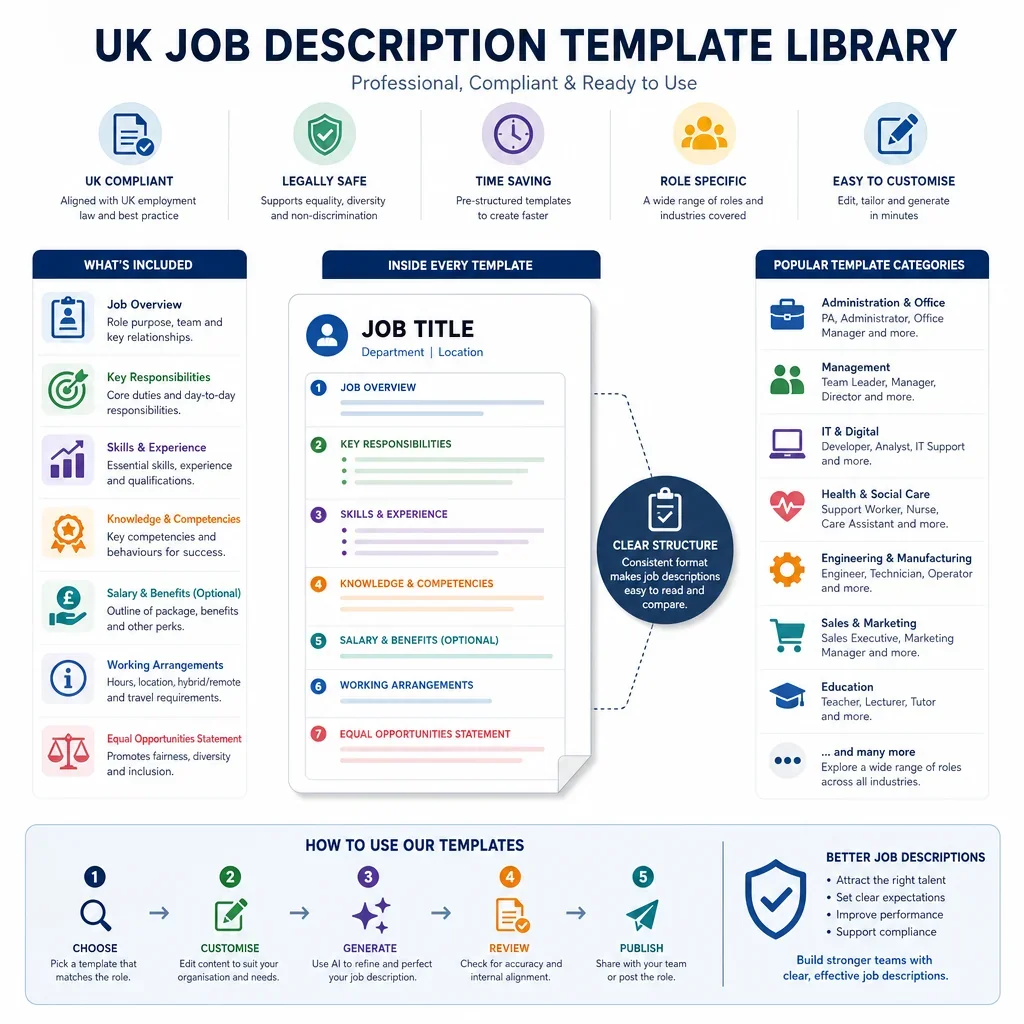
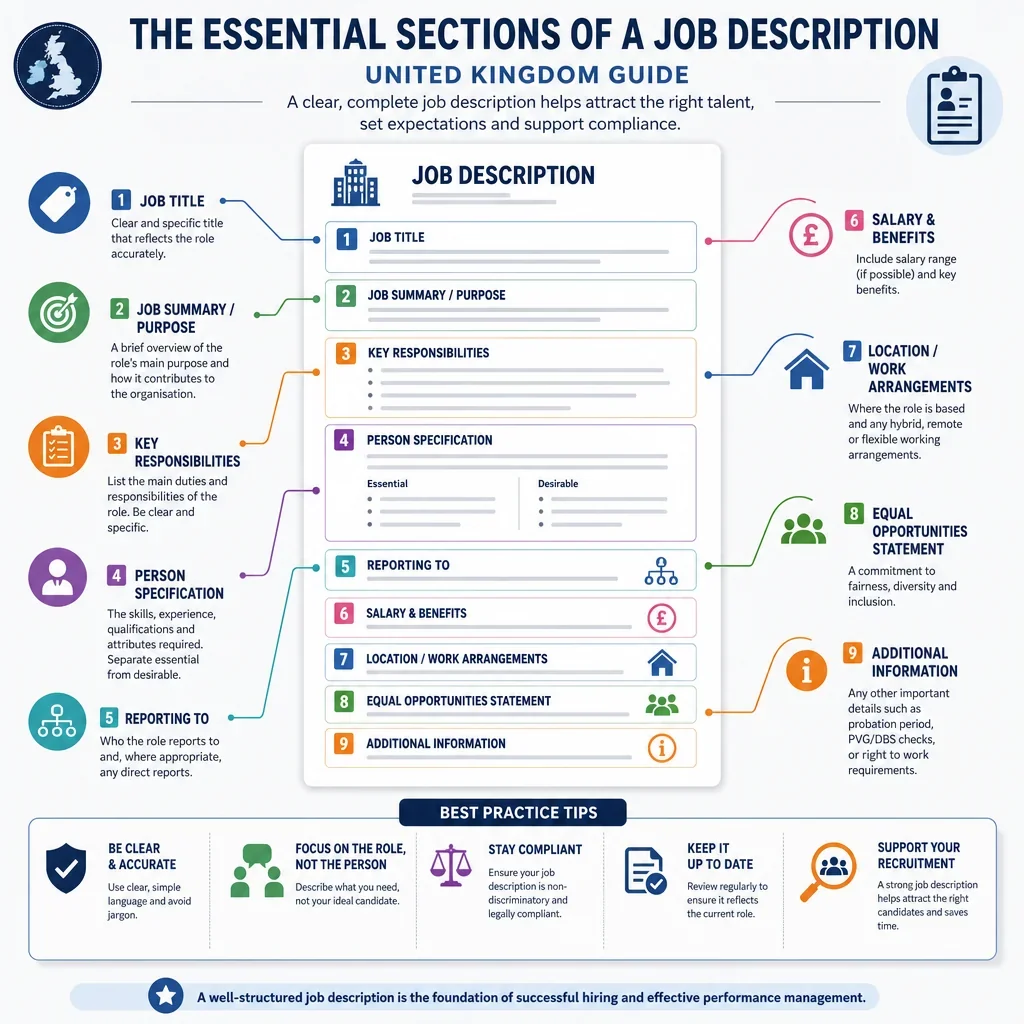
A strong UK job description should identify the role title, purpose, duties, reporting line, location or hybrid arrangements, working hours, pay or pay range where appropriate, and the essential criteria for the role. These sections help candidates understand the opportunity and help employers align recruitment, performance management and employment contract discussions.
How Can Job Descriptions Reduce UK Hiring Risk?
Use objective, role-related criteria and separate essential requirements from desirable ones. Avoid wording that could indirectly discriminate, such as unnecessary physical, age-related, language, location or qualification requirements. Equality Act 2010 considerations are especially important when drafting person specifications, working patterns and travel requirements.
Which Sections Need Particular Care In The UK?
- Pay, hours and employment status: wording should be consistent with the eventual employment contract and statutory rights such as National Minimum Wage, working time limits and holiday entitlement.
- Right to work: state that checks will be carried out, but avoid nationality-based wording. Employers should follow Home Office right to work guidance.
- DBS, references and medical checks: only include these where relevant and proportionate to the role, and handle candidate information in line with UK GDPR and data protection rules.
- Flexible working and reasonable adjustments: make clear how candidates can request adjustments and avoid implying that flexible working is unavailable unless there is a genuine role-related reason.
How Detailed Should A Job Description Be?
It should be specific enough to set expectations but flexible enough to allow reasonable changes. Phrases such as other duties appropriate to the role can help, but should not be used to hide materially different responsibilities or seniority.
FAQs
You Might Also Be Interested In