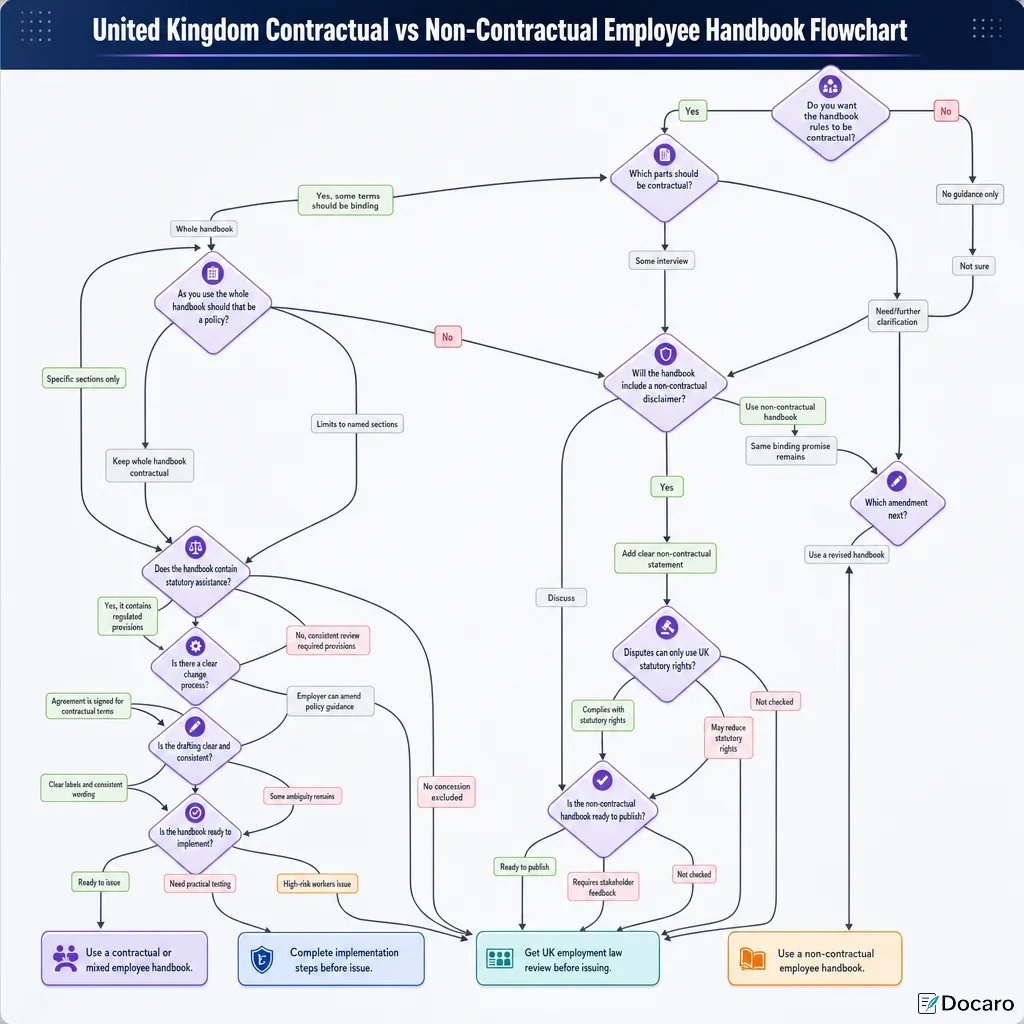
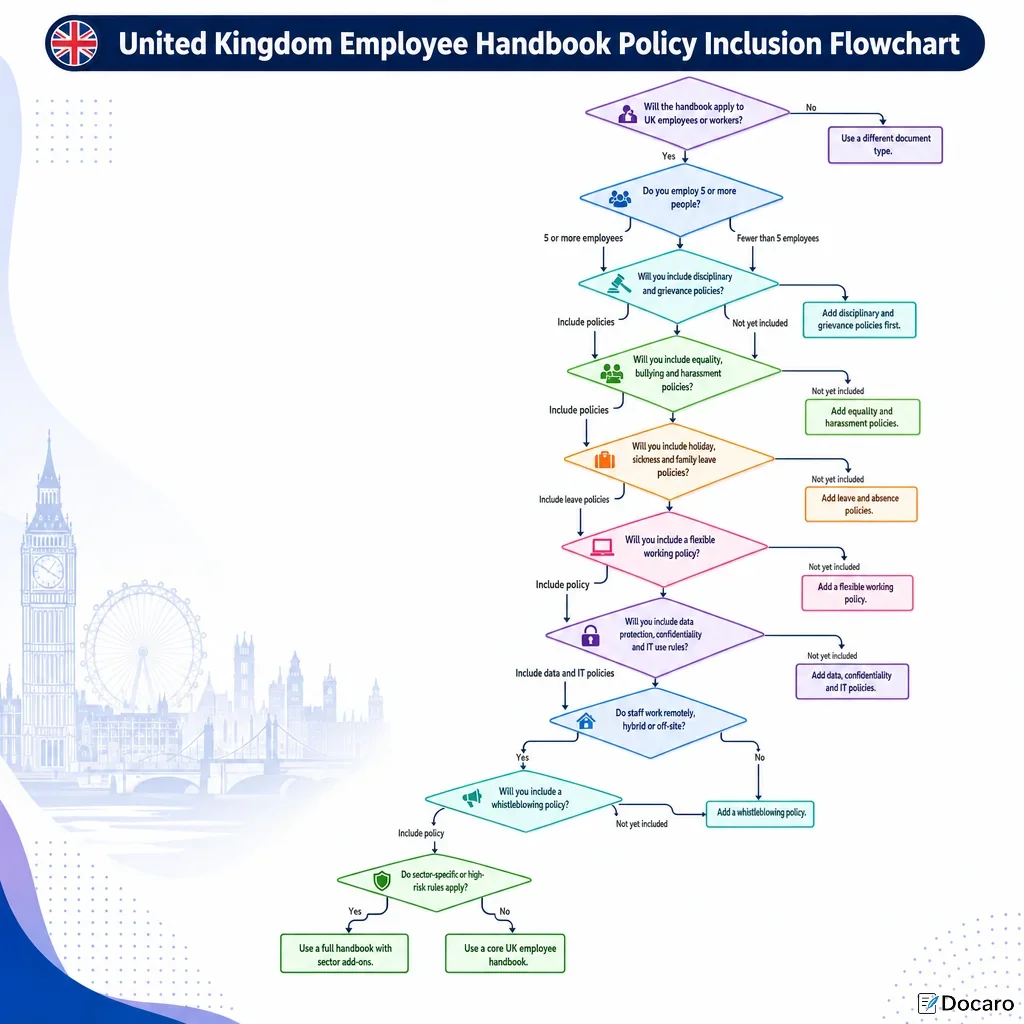
United Kingdom Employee Handbook Policy Inclusion Flowchart
Will the handbook apply to UK employees or workers?
Why Is The Right UK Employee Handbook Content Important?
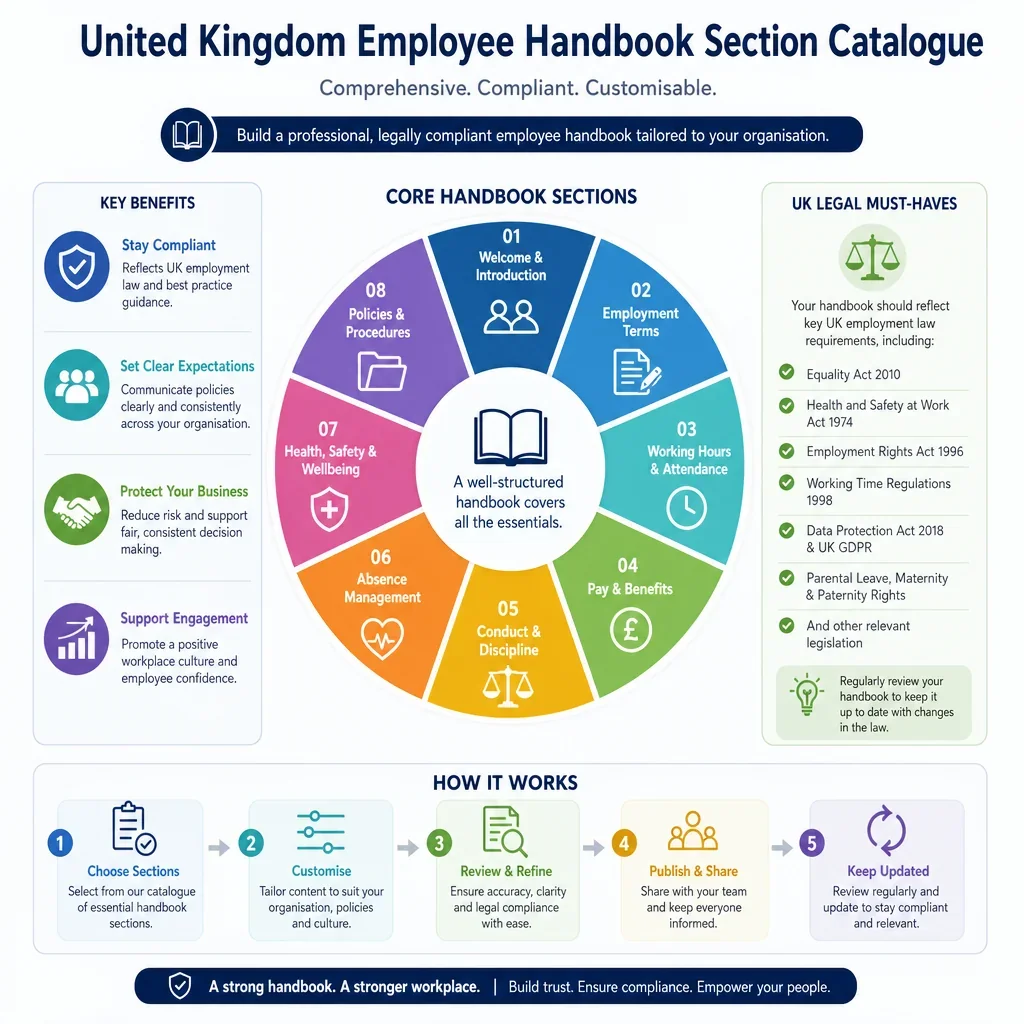
A well-structured employee handbook helps UK employers explain workplace rules, statutory rights and internal procedures in one accessible place. It supports consistent management, reduces confusion and helps employees understand what is expected of them.
What Policies Should A UK Employee Handbook Include?
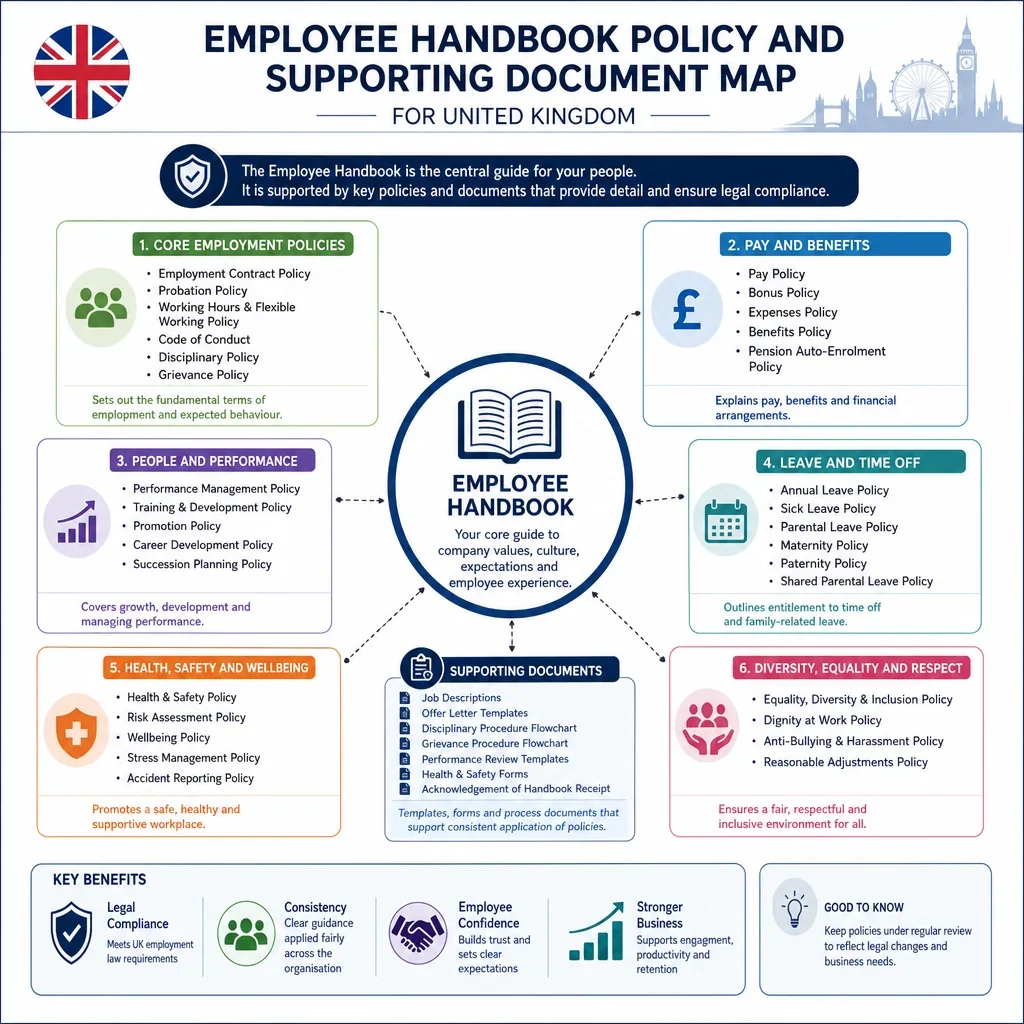
Most UK handbooks should cover disciplinary and grievance procedures, equality and harassment, holiday and sickness absence, family leave, flexible working, health and safety, data protection, confidentiality and IT use. Depending on the organisation, extra policies may be needed for safeguarding, remote working, driving, expenses, social media, whistleblowing or regulated conduct.
How Can A Handbook Reduce Employment Risk?
Clear policies help managers follow fair procedures and make consistent decisions. This is important because UK employment tribunals can consider whether an employer followed fair processes, including relevant Acas guidance.
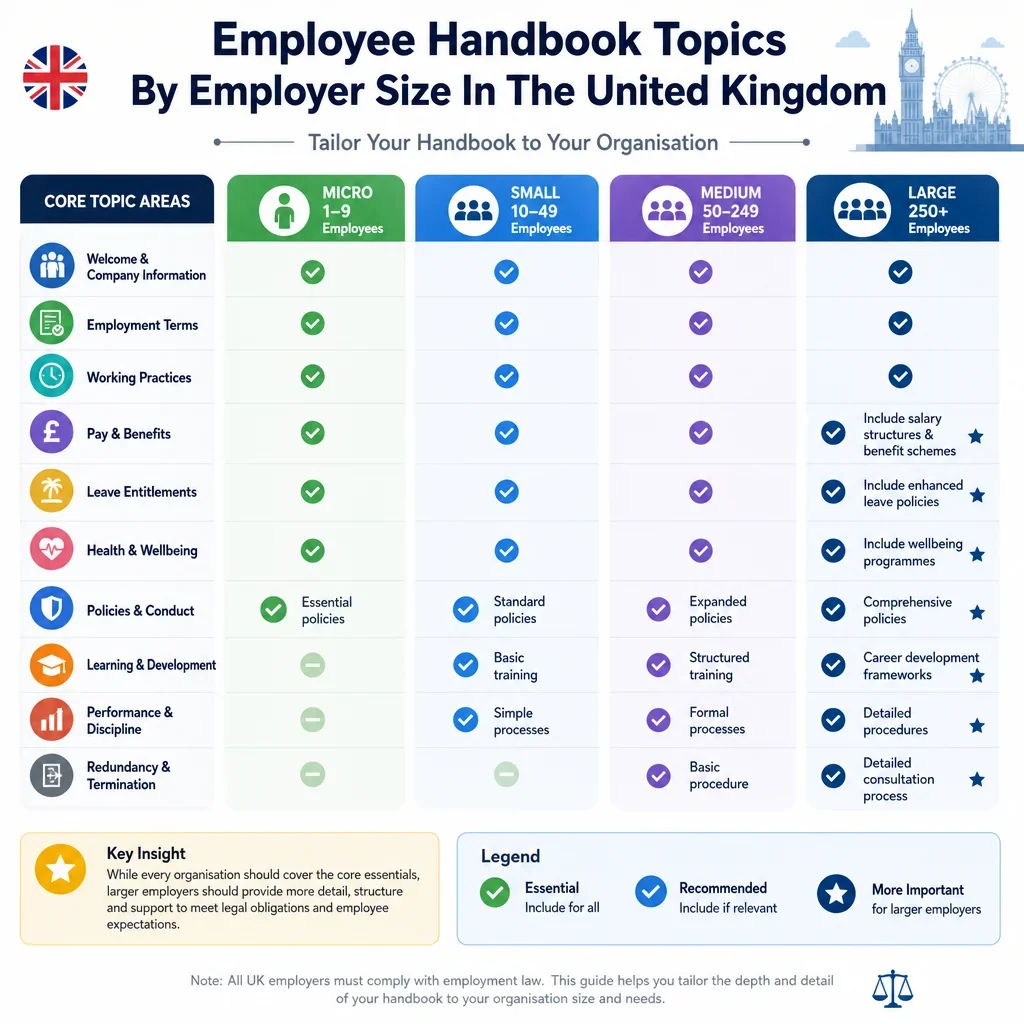
When Should A Handbook Be Tailored?
A handbook should be tailored whenever the employer has particular risks, such as hybrid working, handling sensitive personal data, regulated activities, safeguarding duties, shift work or site-based health and safety hazards. A generic handbook may miss practical rules that staff need to follow.
- Legal compliance: Some policies reflect statutory rights or legal duties.
- Consistency: Managers can apply the same rules across teams.
- Employee clarity: Staff can find procedures without relying on informal practice.
- Evidence: A written handbook can show that rules and expectations were communicated.
Employers should keep handbook content under review, especially when UK employment law changes or the organisation introduces new working arrangements.
FAQs
You Might Also Be Interested In