

United Kingdom Employee Handbook Section Catalogue
Created:
Explore this catalogue to quickly understand key staff handbook sections and how they support compliant, consistent HR documentation. For broader guidance, visit the AI Generated British Staff Handbook category page.
Section Name | Section Purpose | Policy Area | Applicability | Drafting Consideration |
|---|---|---|---|---|
Core | ||||
Employment Status And Contractual Relationship | Explains employment status, contractual documents and how handbook rules relate to contracts. | Employment terms | All employers | State whether handbook terms are contractual and align with employment contracts. |
Written Statement Of Employment Particulars | Summarises key required employment particulars and where employees can find them. | Employment terms | All employers | Ensure consistency with section 1 Employment Rights Act 1996 particulars. |
Recommended | ||||
Probationary Period | Sets expectations, review process, extension rules and notice during probation. | Employment terms | Most employers | Align with contract notice clauses and performance review process. |
Core | ||||
Working Hours | Explains normal hours, breaks, overtime, time recording and working time limits. | Employment terms | All employers | Reflect Working Time Regulations rules, opt-outs and rest break entitlements. |
Recommended | ||||
Overtime And Time Off In Lieu | Sets approval rules, payment or TOIL treatment and recording requirements. | Pay and benefits | Most employers | Ensure pay does not fall below National Minimum Wage after hours worked. |
Core | ||||
Flexible Working Requests | Explains how employees can request changes to hours, times or workplace. | Employment terms | All employers | Reflect statutory request procedure and decision timescales. |
Recommended | ||||
Remote And Hybrid Working | Sets rules for homeworking, attendance, equipment, security and performance expectations. | Employment terms | Workplace-dependent | Cover health and safety, confidentiality, data security and contractual workplace terms. |
Place Of Work And Mobility | Explains normal workplace, travel expectations and any mobility requirements. | Employment terms | Most employers | Align with contract location clauses and avoid unreasonable unilateral changes. |
Core | ||||
Pay Arrangements | Explains pay frequency, payslips, deductions, errors and salary review process. | Pay and benefits | All employers | Comply with payslip, unlawful deduction and minimum wage rules. |
National Minimum Wage Compliance | Confirms commitment to paying at least the applicable minimum wage rate. | Pay and benefits | All employers | Account for working time, deductions, uniforms, apprentices and salaried hours. |
Workplace Pension | Explains auto-enrolment, contributions, opt-out rights and pension provider information. | Pay and benefits | All employers | Reflect automatic enrolment duties and avoid giving financial advice. |
Recommended | ||||
Employee Benefits | Summarises discretionary and contractual benefits, eligibility and change rules. | Pay and benefits | Most employers | State which benefits are discretionary and subject to insurer or scheme rules. |
Optional | ||||
Bonus And Commission | Explains eligibility, targets, payment timing and discretionary conditions. | Pay and benefits | Role-dependent | Clarify discretion, leaver treatment and interaction with contracts and plans. |
Recommended | ||||
Expenses | Sets rules for claiming business expenses, evidence, approval and repayment. | Pay and benefits | Most employers | Align with HMRC rules and internal approval limits. |
Core | ||||
Annual Leave | Explains holiday entitlement, booking, refusal, carry-over and holiday pay. | Time off | All employers | Reflect statutory holiday rules under the Working Time Regulations. |
Bank And Public Holidays | Explains whether bank holidays are included in or added to holiday entitlement. | Time off | All employers | State treatment for part-time staff and sectors operating on bank holidays. |
Sickness Absence | Sets reporting, certification, sick pay, contact and return-to-work requirements. | Time off | All employers | Reflect SSP rules, fit notes, disability duties and contractual sick pay. |
Recommended | ||||
Medical And Dental Appointments | Explains attendance expectations, evidence and whether time off is paid. | Time off | Most employers | Preserve statutory rights for antenatal appointments and disability-related adjustments. |
Core | ||||
Maternity Leave And Pay | Explains maternity leave, pay, notice, health protection and return rights. | Time off | All employers | Reflect statutory maternity rights and pregnancy discrimination protections. |
Paternity Leave And Pay | Explains eligibility, notice, leave timing and statutory paternity pay. | Time off | All employers | Reflect current statutory paternity leave and pay rules. |
Adoption Leave And Pay | Explains adoption leave, statutory pay, notice and return arrangements. | Time off | All employers | Reflect statutory adoption rights and any enhanced scheme rules. |
Shared Parental Leave | Explains shared parental leave, pay, notices, curtailment and booking rules. | Time off | All employers | Reflect statutory SPL notices, eligibility and discontinuous leave handling. |
Unpaid Parental Leave | Explains unpaid parental leave entitlement, notice, postponement and limits. | Time off | All employers | Reflect statutory unpaid parental leave rights and service requirements. |
Carer's Leave | Explains unpaid leave for employees with caring responsibilities. | Time off | All employers | Reflect Carer's Leave Act and regulations, including day-one rights. |
Time Off For Dependants | Explains emergency unpaid time off to deal with dependant incidents. | Time off | All employers | Reflect Employment Rights Act dependant leave rights and reasonableness. |
Parental Bereavement Leave | Explains leave and pay following the death of a child or stillbirth. | Time off | All employers | Reflect statutory bereavement leave and pay eligibility rules. |
Recommended | ||||
Compassionate Leave | Explains discretionary leave for bereavement, serious illness or personal emergencies. | Time off | Most employers | Distinguish from statutory dependant, carer and parental bereavement rights. |
Jury Service And Public Duties | Explains notification, evidence, pay treatment and time off for civic duties. | Time off | All employers | Reflect statutory protection from dismissal for jury service. |
Optional | ||||
Volunteering Leave | Explains any employer-supported paid or unpaid volunteering time. | Time off | Workplace-dependent | Set eligibility, approval process, insurance and safeguarding requirements. |
Core | ||||
Disciplinary Procedure | Explains misconduct handling, investigations, hearings, sanctions and appeals. | Procedures | All employers | Follow the Acas Code and state whether the procedure is contractual. |
Grievance Procedure | Explains how employees raise workplace concerns and how they are handled. | Procedures | All employers | Follow the Acas Code, including investigation, meeting and appeal stages. |
Capability And Performance Management | Explains handling of underperformance, support, warnings and review periods. | Procedures | All employers | Include fair process, support, reasonable adjustments and dismissal safeguards. |
Recommended | ||||
Absence Management | Explains monitoring, triggers, meetings and support for repeated or long absence. | Procedures | Most employers | Address disability discrimination risks and medical evidence handling. |
Redundancy Procedure | Outlines consultation, selection, alternative roles and redundancy payments. | Procedures | Most employers | Reflect statutory consultation, fair selection and collective redundancy duties. |
Core | ||||
Whistleblowing | Explains protected disclosures, reporting channels and protection from retaliation. | Procedures | All employers | Reflect Public Interest Disclosure Act protection and escalation routes. |
Recommended | ||||
Raising Concerns Informally | Encourages early informal resolution before formal grievance where appropriate. | Procedures | Most employers | Do not restrict statutory grievances, whistleblowing or harassment reporting. |
Core | ||||
Standards Of Conduct | Sets general behaviour, professionalism, attendance and cooperation expectations. | Conduct and standards | All employers | Link breaches to disciplinary procedure and give examples of misconduct. |
Gross Misconduct | Lists serious misconduct examples that may justify summary dismissal. | Conduct and standards | All employers | Avoid automatic dismissal wording and require fair investigation and hearing. |
Attendance And Punctuality | Sets expectations for attendance, lateness reporting and unauthorised absence. | Conduct and standards | All employers | Coordinate with sickness absence, disability adjustments and disciplinary rules. |
Optional | ||||
Dress Code And Appearance | Explains clothing, appearance, PPE and customer-facing presentation expectations. | Conduct and standards | Workplace-dependent | Avoid discriminatory rules and accommodate religion, disability and gender expression. |
Recommended | ||||
Alcohol And Drugs | Sets rules on impairment, possession, testing and support routes. | Conduct and standards | Workplace-dependent | Testing needs consent, proportionality, safety justification and data protection basis. |
Smoking And Vaping | Explains smoke-free workplace rules and any vaping restrictions. | Health and safety | Workplace-dependent | Reflect smoke-free legal duties and site-specific designated areas. |
Company Property And Equipment | Sets rules for care, permitted use, return and loss of employer property. | Conduct and standards | Most employers | Align deductions, monitoring, insurance and return-on-termination rules. |
Core | ||||
IT And Communications Acceptable Use | Sets rules for email, internet, devices, systems and permitted personal use. | Data and confidentiality | Most employers | Coordinate with monitoring, cybersecurity, data protection and disciplinary policies. |
Recommended | ||||
Social Media Use | Explains work-related and personal social media conduct expectations. | Conduct and standards | Most employers | Balance reputation, confidentiality, harassment, privacy and lawful expression issues. |
Conflicts Of Interest | Requires disclosure and management of personal, financial or professional conflicts. | Conduct and standards | Most employers | Link to outside work, gifts, procurement and fiduciary obligations. |
Gifts And Hospitality | Sets approval, recording and limits for gifts, hospitality and inducements. | Conduct and standards | Most employers | Reflect bribery prevention procedures and sector-specific compliance obligations. |
Anti-Bribery And Corruption | Prohibits bribery, facilitation payments, kickbacks and improper advantages. | Conduct and standards | Most employers | Tailor adequate procedures to bribery risks and reporting channels. |
Core | ||||
Equality, Diversity And Inclusion | Confirms equal treatment commitments and prohibited discrimination standards. | Equality and inclusion | All employers | Reflect protected characteristics, recruitment, promotion, pay and training practices. |
Anti-Harassment And Bullying | Prohibits bullying, harassment, victimisation and inappropriate workplace conduct. | Equality and inclusion | All employers | Include reporting routes, investigation process and Equality Act harassment risks. |
Sexual Harassment Prevention | Explains prevention, reporting and response to sexual harassment at work. | Equality and inclusion | All employers | Address employer duty to take reasonable steps to prevent sexual harassment. |
Reasonable Adjustments | Explains how disabled employees can request workplace adjustments and support. | Equality and inclusion | All employers | Reflect Equality Act duty and individual assessment requirements. |
Recommended | ||||
Pregnancy And New Parent Support | Explains risk assessment, antenatal rights, breastfeeding support and return support. | Equality and inclusion | All employers | Reflect maternity protections, health and safety duties and discrimination risks. |
Menopause Support | Explains support, adjustments and respectful handling of menopause-related issues. | Equality and inclusion | Most employers | Consider sex, age and disability discrimination risks and confidentiality. |
Core | ||||
Health And Safety | Sets general safety duties, reporting, training and employee responsibilities. | Health and safety | All employers | Reflect employer and employee duties under health and safety legislation. |
Recommended | ||||
Risk Assessments | Explains how workplace risks are assessed, controlled and reviewed. | Health and safety | Workplace-dependent | Document significant findings where required and tailor to workplace hazards. |
Core | ||||
Accident And Incident Reporting | Explains reporting, recording and investigation of accidents, incidents and near misses. | Health and safety | All employers | Reflect RIDDOR reporting and accident book requirements where applicable. |
Fire Safety And Evacuation | Explains fire prevention, alarms, evacuation, assembly points and drills. | Health and safety | Workplace-dependent | Tailor to premises fire risk assessment and appointed fire wardens. |
First Aid | Identifies first aid arrangements, trained first aiders and emergency procedures. | Health and safety | All employers | Reflect workplace first aid assessment and appointed persons. |
Recommended | ||||
Mental Health And Wellbeing | Explains support resources, stress risk management and wellbeing expectations. | Health and safety | Most employers | Address work-related stress risk assessments and disability-related support. |
Optional | ||||
Lone Working | Sets procedures for employees working alone or without close supervision. | Health and safety | Role-dependent | Base controls on risk assessment, communication and emergency arrangements. |
Manual Handling | Explains safe lifting, training, equipment use and injury prevention. | Health and safety | Role-dependent | Reflect Manual Handling Operations Regulations and role-specific assessments. |
Recommended | ||||
Display Screen Equipment | Explains workstation assessments, breaks and eye test arrangements for DSE users. | Health and safety | Role-dependent | Reflect DSE Regulations for regular users and home workers. |
Optional | ||||
Personal Protective Equipment | Explains PPE provision, use, storage, replacement and employee obligations. | Health and safety | Role-dependent | Reflect PPE duties and prohibit charging employees for required PPE. |
Driving For Work | Sets rules for licences, insurance, vehicle checks, mobile phones and safety. | Health and safety | Role-dependent | Include company and grey fleet rules, insurance and road traffic obligations. |
Company Car And Vehicle Use | Explains allocation, permitted use, maintenance, fines, insurance and return rules. | Pay and benefits | Role-dependent | Align with tax treatment, benefit status and contract entitlement wording. |
Core | ||||
Data Protection | Explains employee data handling, privacy notices, rights and responsibilities. | Data and confidentiality | All employers | Align with UK GDPR, Data Protection Act and employee privacy notices. |
Recommended | ||||
Employee Monitoring | Explains monitoring of systems, communications, CCTV or location data. | Data and confidentiality | Workplace-dependent | Use clear transparency notices, lawful basis, proportionality and DPIAs where needed. |
Core | ||||
Confidentiality | Protects business information, client data, trade secrets and internal materials. | Data and confidentiality | All employers | Align with contracts, whistleblowing carve-outs and post-termination obligations. |
Information Security | Sets password, access, device, phishing and secure working requirements. | Data and confidentiality | Most employers | Coordinate with data breach procedures, IT controls and disciplinary rules. |
Recommended | ||||
Intellectual Property | Explains ownership and protection of work-created IP and inventions. | Data and confidentiality | Role-dependent | Align with contract IP assignment clauses and role-specific creations. |
Core | ||||
Right To Work | Explains right to work checks, ongoing obligations and reporting changes. | Employment terms | All employers | Reflect prevention of illegal working checks and data protection requirements. |
Recommended | ||||
Recruitment And Selection | Explains fair hiring, selection, checks, references and equal opportunities. | Procedures | Most employers | Reflect equality duties, right to work checks and data minimisation. |
References | Explains how employment references are requested, given and authorised. | Procedures | Most employers | Ensure references are true, fair, consistent and data-protection compliant. |
Training And Development | Explains mandatory training, role development, study support and repayment rules. | Employment terms | Most employers | Align repayment clauses with contracts and avoid unreasonable penalties. |
Optional | ||||
Apprenticeships | Explains apprenticeship arrangements, training time, pay and supervision. | Employment terms | Role-dependent | Reflect apprenticeship agreement, off-the-job training and minimum wage rules. |
Safeguarding | Sets reporting and conduct rules for protecting children or vulnerable adults. | Procedures | Role-dependent | Tailor to regulated activity, DBS checks and sector safeguarding rules. |
DBS Checks | Explains criminal record checks, eligibility, handling results and updates. | Procedures | Role-dependent | Only request eligible checks and handle criminal offence data lawfully. |
Recommended | ||||
Workplace Investigations | Explains investigation steps, evidence gathering, confidentiality and suspension. | Procedures | All employers | Keep investigators impartial and avoid treating suspension as automatic. |
Suspension From Work | Explains when suspension may be used during investigation or risk management. | Procedures | All employers | Use only where reasonable, paid unless contract allows otherwise, and reviewed. |
Core | ||||
Appeals | Explains appeal rights after disciplinary, grievance or capability outcomes. | Procedures | All employers | Align appeal deadlines and independence with Acas procedural expectations. |
Notice And Termination | Explains notice periods, resignation, dismissal, garden leave and final pay. | Employment terms | All employers | Align with contract notice, statutory minimum notice and final holiday pay. |
Optional | ||||
Retirement | Explains retirement discussions, notice and age-neutral workforce planning. | Employment terms | Most employers | Avoid default retirement age unless objectively justified. |
Adverse Weather And Travel Disruption | Explains attendance, remote work, unpaid leave and communication during disruption. | Time off | Workplace-dependent | Clarify pay treatment and homeworking options consistently. |
Recommended | ||||
Emergency And Business Continuity | Explains communication, alternative working and continuity during major disruption. | Procedures | Workplace-dependent | Coordinate with health and safety, data security and remote working plans. |
Visitors And Site Security | Sets visitor sign-in, identification, escorting and site access rules. | Health and safety | Workplace-dependent | Align with premises security, fire evacuation and data protection procedures. |
Optional | ||||
Bring Your Own Device | Sets rules for using personal devices for work purposes. | Data and confidentiality | Workplace-dependent | Cover security controls, access removal, monitoring and employee privacy. |
Core | ||||
Data Breach Reporting | Explains how employees report suspected personal data breaches quickly. | Data and confidentiality | All employers | Enable prompt assessment against ICO notification deadlines. |
Optional | ||||
Mediation | Explains voluntary mediation for resolving workplace conflict. | Procedures | Most employers | Keep mediation voluntary, confidential and separate from formal procedures. |
Recommended | ||||
Trade Union And Employee Representation | Explains representation rights, union membership and workplace consultation channels. | Procedures | Workplace-dependent | Respect union membership rights and statutory accompaniment rights. |
Core | ||||
Right To Be Accompanied | Explains accompaniment at disciplinary and grievance hearings. | Procedures | All employers | Reflect statutory companion categories and reasonable postponement rights. |
Recommended | ||||
Modern Slavery And Human Trafficking | Explains reporting concerns and commitment to preventing labour exploitation. | Conduct and standards | Workplace-dependent | Consider supply chain duties and annual statement threshold if applicable. |
Optional | ||||
Environmental And Sustainability Standards | Sets workplace expectations on waste, energy use, travel and sustainability. | Conduct and standards | Workplace-dependent | Tailor to actual workplace practices and any regulated environmental duties. |
Recommended | ||||
Customer And Client Conduct | Sets standards for dealing with customers, clients, suppliers and service users. | Conduct and standards | Role-dependent | Include abuse reporting, service standards, confidentiality and safeguarding if relevant. |
Optional | ||||
Personal Relationships At Work | Explains disclosure and management of relationships creating workplace risks. | Conduct and standards | Workplace-dependent | Focus on conflicts, supervision, favouritism, confidentiality and harassment risks. |
Recommended | ||||
Outside Work And Secondary Employment | Sets disclosure and approval rules for additional work or business interests. | Employment terms | Most employers | Avoid unreasonable restrictions and consider working time and conflict risks. |
What Should A UK Employee Handbook Usually Include?
A robust UK employee handbook should usually prioritise core sections on employment terms, pay, working time, annual leave, sickness absence, disciplinary rules, grievance procedures, equality, health and safety, data protection, confidentiality and family-related leave. These areas are closely linked to statutory rights or common employment disputes, so they should be aligned with contracts and internal procedures.
Which Handbook Sections Need The Most Legal Care?
- Working time, holidays, pay and leave: these should reflect UK statutory minimums and avoid contradicting employment contracts.
- Disciplinary and grievance procedures: these should be consistent with the Acas Code because unreasonable failure to follow it can affect tribunal compensation.
- Equality, harassment and reasonable adjustments: these should reflect Equality Act duties and current workplace practices.
- Data protection, monitoring and confidentiality: these should be specific enough to support UK GDPR transparency and business protection requirements.
How Should Employers Use Optional Handbook Sections?
Optional sections such as dress code, company car, expenses, remote working, social media, adverse weather and menopause policies are useful where they match the employer\'s actual workplace risks or benefits. They should not create contractual promises unintentionally unless the employer intends them to be binding.
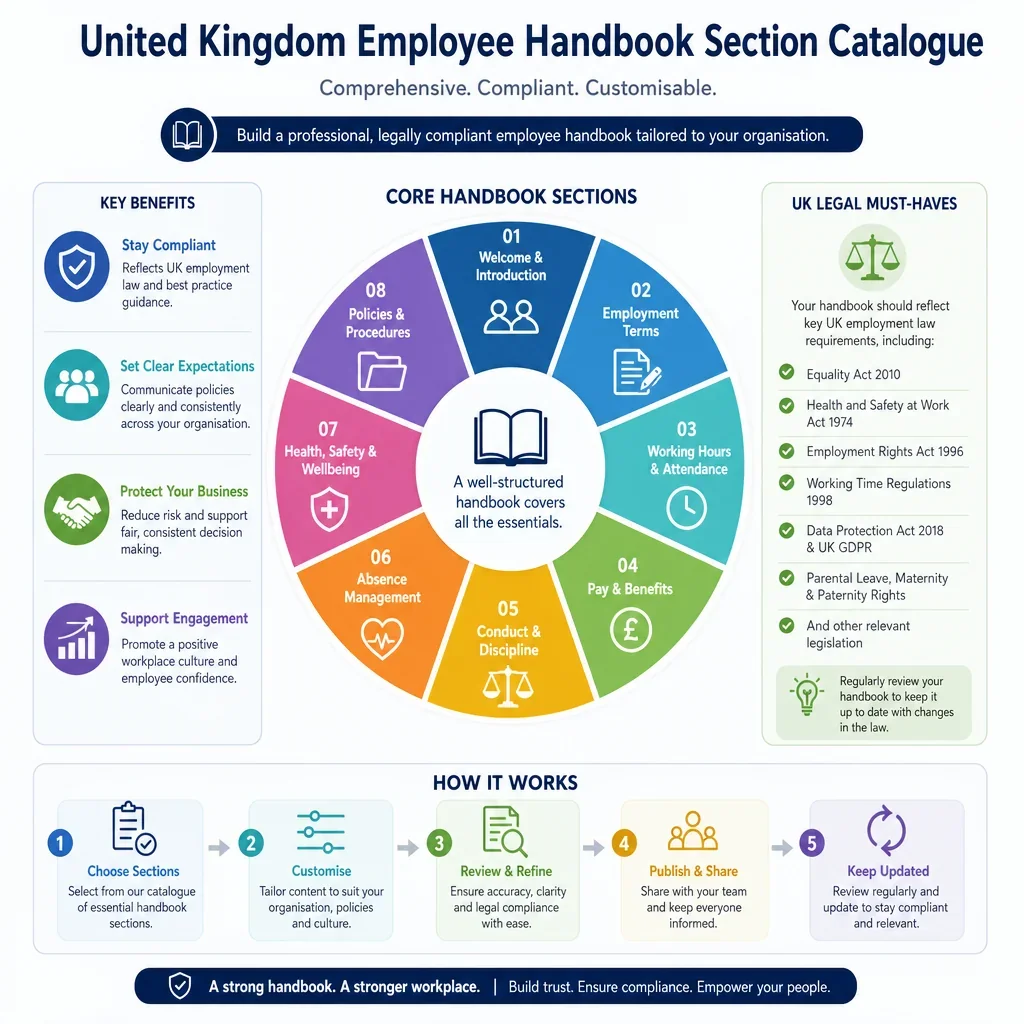
Want to Generate Your own Employee Handbook?
Docaro AI can help you write your own Employee Handbook for use in the United Kingdom in minutes.
FAQs
It is a reference page listing common sections that can be included in a UK employee handbook, helping employers choose relevant policies for their organisation.
Show All FAQs
You Might Also Be Interested In
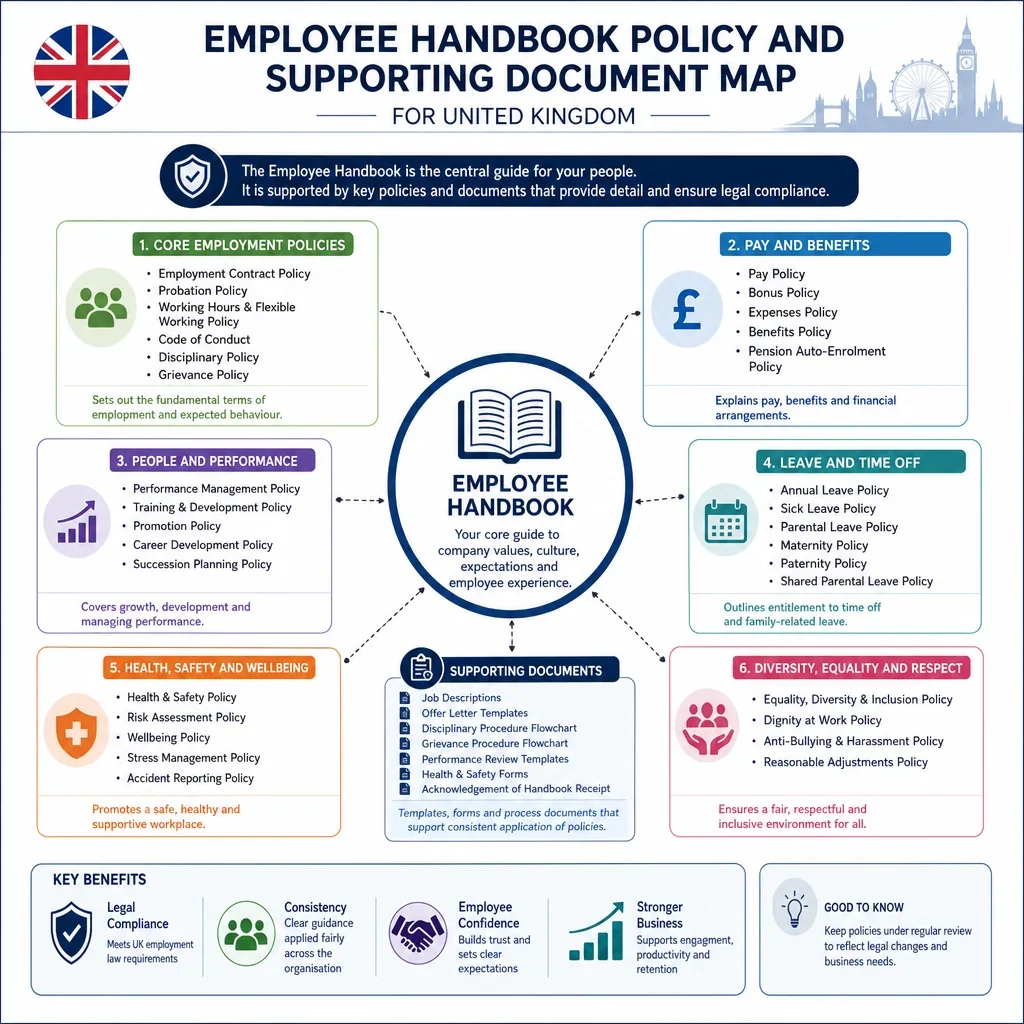
United Kingdom employee handbook policy map linking key policies to supporting documents for clearer HR compliance.
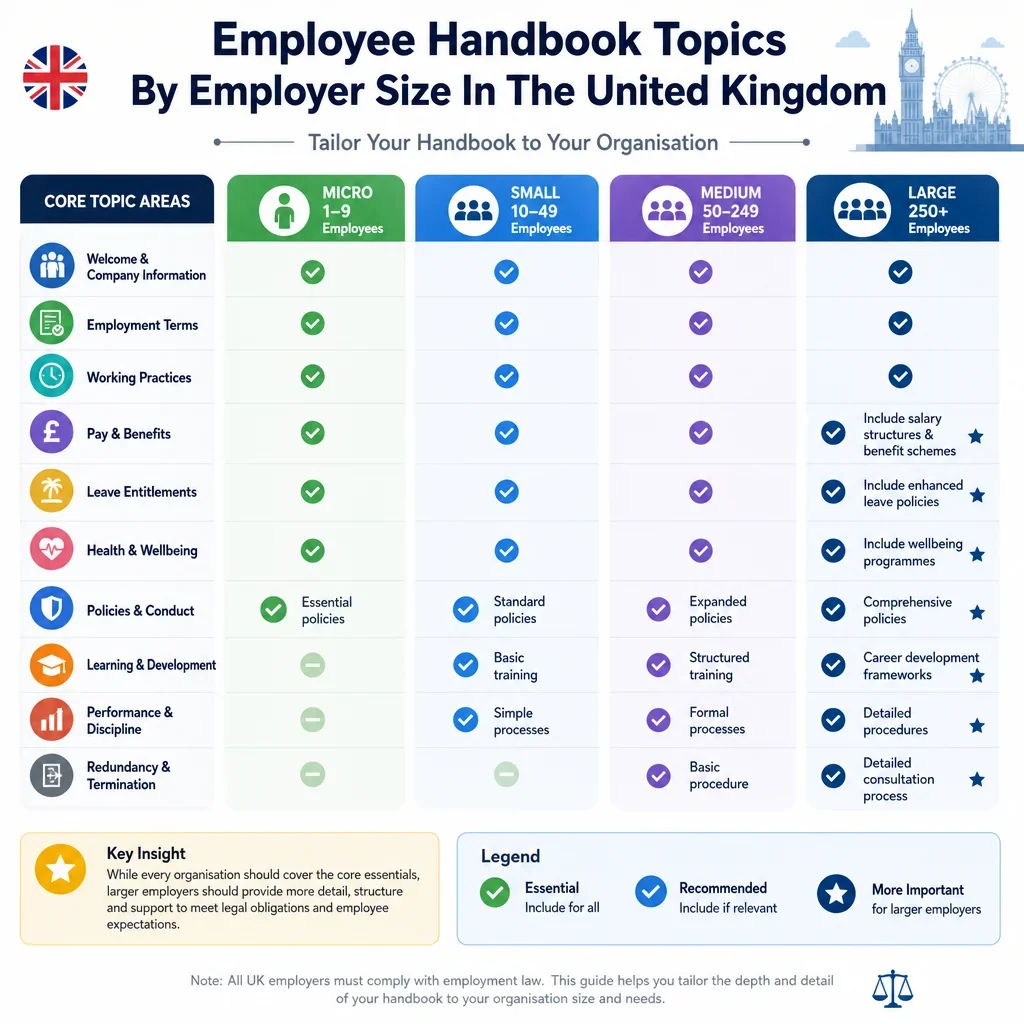
Explore United Kingdom employee handbook topics by employer size to tailor policies for small, medium and large organisations.
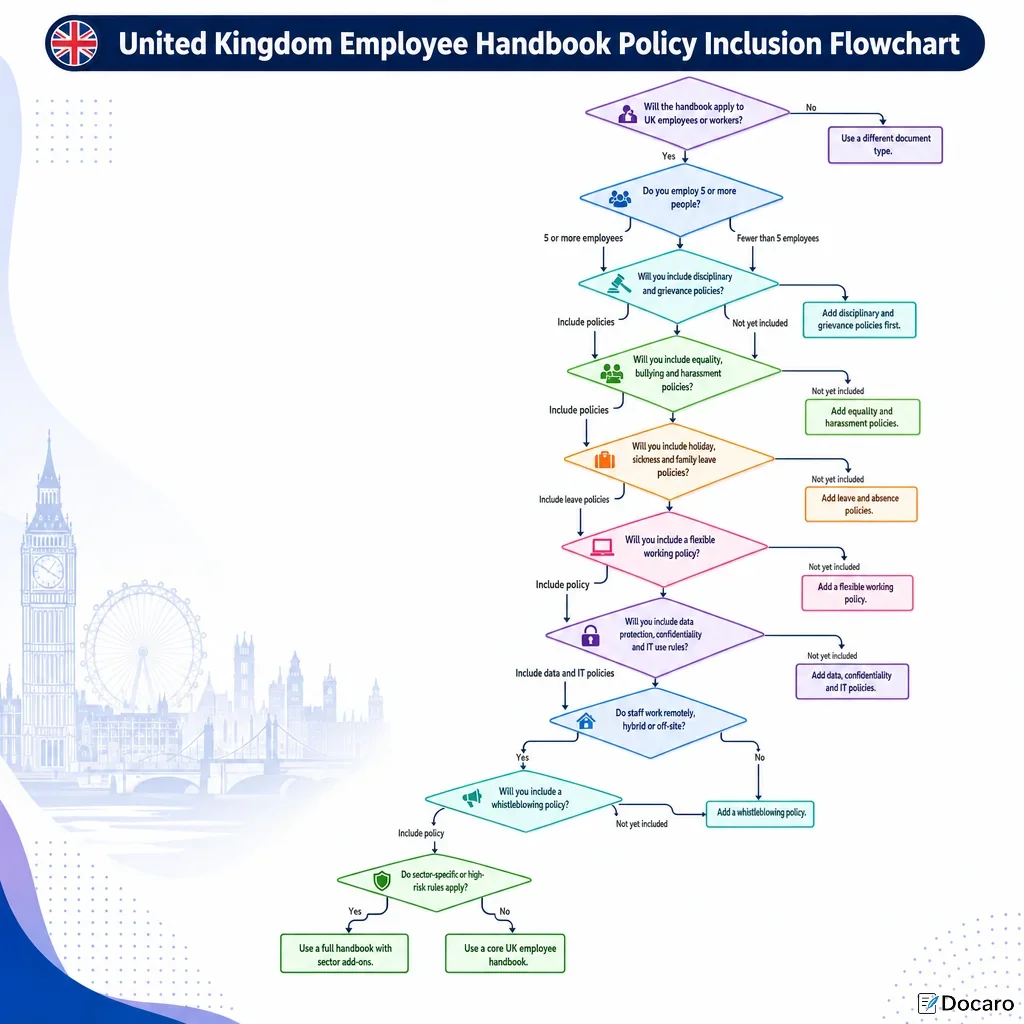
United Kingdom flowchart for deciding which employee handbook policies to include for clearer HR guidance and compliance.
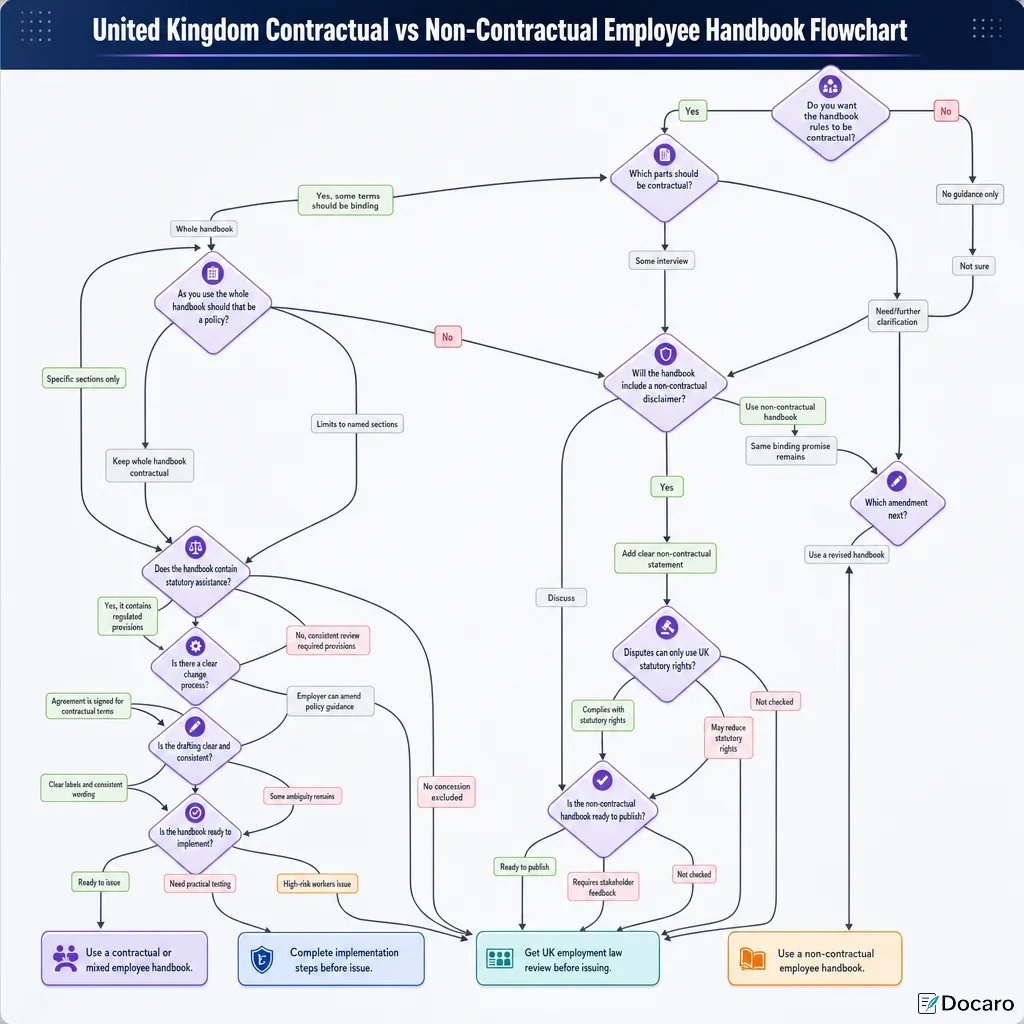
United Kingdom flowchart explaining contractual vs non-contractual employee handbook terms for clearer HR policy decisions.
References and Information Sources
2.https://www.gov.uk/employment-contracts-and-conditions/written-statement-of-employment-particulars
6.https://www.acas.org.uk/national-minimum-wage-entitlement/if-an-employer-does-not-pay-minimum-wage