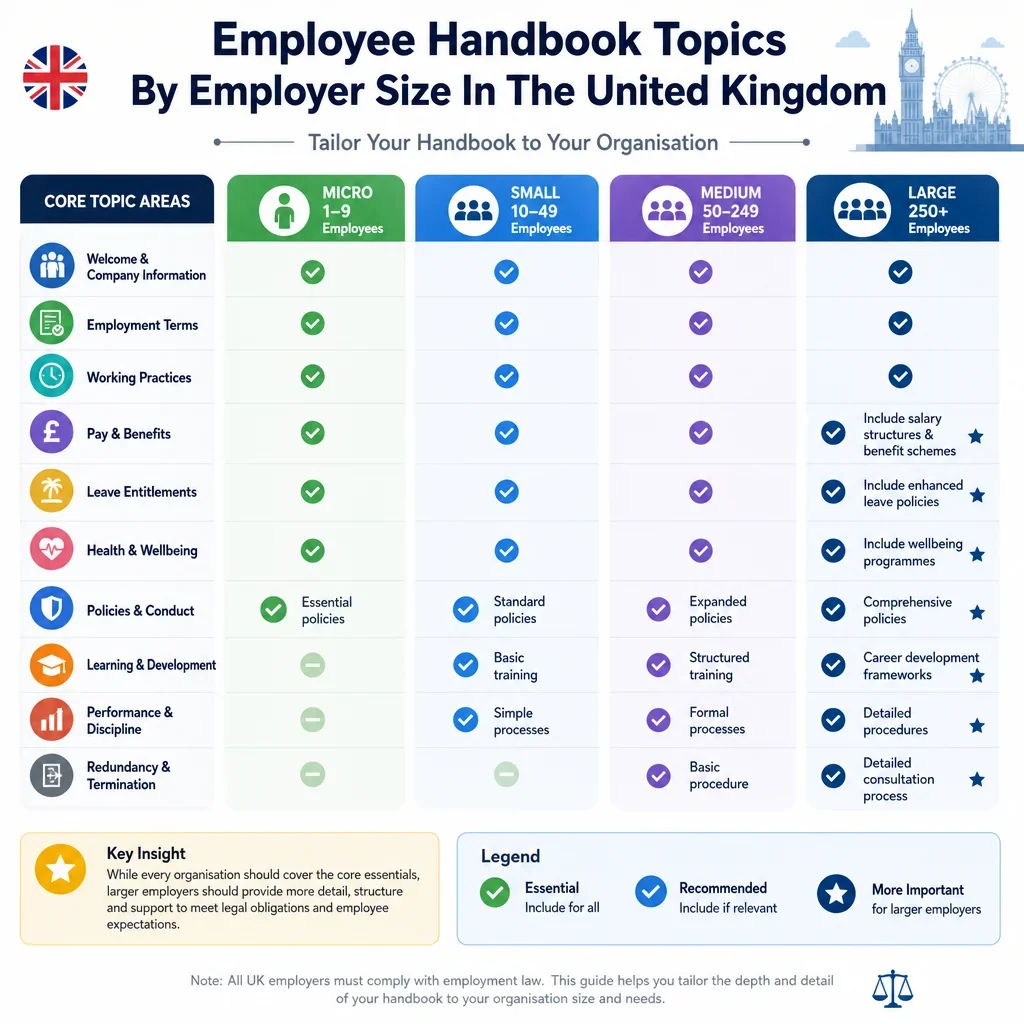
Employee Handbook Topics By Employer Size In The United Kingdom
Handbook Topic | Handbook Maturity Level | Reason for Inclusion | Review Need | Implementation Note |
|---|---|---|---|---|
1 to 9 employees | ||||
Introduction and handbook status | Basic handbook | Clarifies whether policies are contractual or guidance. | Low | Include version date and approval owner. |
Company values and expected behaviours | Basic handbook | Sets cultural expectations from the outset. | Low | Keep wording practical and role-neutral. |
Equal opportunities and non-discrimination | Basic handbook | Supports compliance with equality duties and fair treatment. | High | Train anyone involved in recruitment or supervision. |
Protected characteristics overview | Basic handbook | Explains protected grounds under the Equality Act 2010. | Medium | Use plain examples relevant to the workplace. |
Anti-harassment and bullying | Basic handbook | Sets standards and reporting routes for misconduct. | High | Identify a safe reporting contact. |
10 to 49 employees | ||||
Sexual harassment prevention | Developing handbook | Reflects employer duty to take reasonable preventive steps. | High | Document risk assessment, training and complaint routes. |
1 to 9 employees | ||||
Disciplinary procedure | Basic handbook | Helps manage misconduct fairly and consistently. | High | Align with the ACAS Code of Practice. |
Grievance procedure | Basic handbook | Provides a route for workplace complaints. | High | Name who receives grievances and appeals. |
Working hours and rest breaks | Basic handbook | Explains limits, breaks and working time expectations. | Medium | Keep records where opt-outs or shifts apply. |
Annual leave and holiday pay | Basic handbook | Explains statutory entitlement, booking and carry-over rules. | High | Clarify holiday year and approval process. |
Sickness absence reporting | Basic handbook | Sets absence notification and evidence requirements. | Medium | State when fit notes are required. |
Statutory Sick Pay | Basic handbook | Explains eligibility and basic payment arrangements. | High | Update annually for rate changes. |
Health and safety responsibilities | Basic handbook | Sets employer and employee safety responsibilities. | High | Link to risk assessments and accident reporting. |
Accident and near-miss reporting | Basic handbook | Encourages prompt reporting and safety learning. | Medium | Provide form location and responsible person. |
Fire safety and evacuation | Basic handbook | Explains evacuation duties and emergency contacts. | Medium | Display local procedures and drill arrangements. |
Data protection and employee privacy | Basic handbook | Explains handling of employee and workplace data. | High | Cross-refer to privacy notice and retention schedule. |
Confidential information | Basic handbook | Protects business, customer and staff information. | Medium | Align with employment contracts and IT controls. |
IT, email and internet use | Basic handbook | Sets acceptable use and monitoring expectations. | High | Explain any monitoring clearly before use. |
Social media conduct | Basic handbook | Reduces reputational and confidentiality risks. | Medium | Give examples of unacceptable online conduct. |
Probationary period | Basic handbook | Structures early performance and suitability reviews. | Medium | Align with contract notice and review dates. |
10 to 49 employees | ||||
Performance management | Developing handbook | Provides consistency as manager numbers increase. | Medium | Train managers on feedback and record keeping. |
Capability procedure | Developing handbook | Separates performance concerns from misconduct. | High | Build in support, warnings and appeal steps. |
Recruitment and selection standards | Developing handbook | Improves consistency and reduces discrimination risk. | Medium | Use objective criteria and panel notes. |
1 to 9 employees | ||||
Right to work checks | Basic handbook | Helps prevent illegal working and civil penalties. | High | Follow current Home Office checking process. |
10 to 49 employees | ||||
References and background checks | Developing handbook | Clarifies pre-employment screening and role requirements. | Medium | Use DBS checks only where appropriate. |
Induction and onboarding | Developing handbook | Improves consistency for new starters. | Medium | Include policy acknowledgement checklist. |
Training and development | Developing handbook | Explains access to learning and mandatory training. | Medium | Track completion of mandatory courses. |
Flexible working requests | Developing handbook | Explains statutory request process and decision timing. | High | Train managers on consultation and refusal reasons. |
Hybrid and remote working | Developing handbook | Clarifies location, availability and equipment expectations. | High | Address data security and homeworking safety. |
Homeworking health and safety | Developing handbook | Covers workstation, stress and lone-working risks. | High | Use DSE and home risk assessments. |
Expenses and reimbursement | Developing handbook | Controls spending and tax-sensitive reimbursements. | Medium | State approval limits, receipts and deadlines. |
Travel and subsistence | Developing handbook | Standardises business travel approvals and claims. | Medium | Set class of travel and overnight rules. |
Dress code and appearance | Developing handbook | Sets standards while reducing discrimination risk. | Medium | Allow religious, disability and safety adjustments. |
Alcohol and drugs at work | Developing handbook | Manages safety, conduct and support issues. | Medium | Be clear if testing is used. |
Smoking and vaping | Developing handbook | Explains smoke-free workplace rules and local limits. | Low | Identify permitted outdoor areas if any. |
50 to 249 employees | ||||
Whistleblowing | Comprehensive handbook | Provides safe disclosure routes and anti-retaliation assurance. | High | Offer internal and external reporting contacts. |
10 to 49 employees | ||||
Maternity leave and pay | Developing handbook | Explains notification, leave, pay and return rights. | High | Include risk assessment links for pregnancy. |
Paternity leave and pay | Developing handbook | Explains leave and pay for eligible fathers or partners. | High | Update for changing notice and leave rules. |
Adoption leave and pay | Developing handbook | Explains rights for eligible adoptive parents. | High | Ensure inclusive language for different family structures. |
50 to 249 employees | ||||
Shared parental leave | Comprehensive handbook | Explains complex shared leave and pay arrangements. | High | Use forms and HR review for each request. |
10 to 49 employees | ||||
Parental leave | Developing handbook | Explains unpaid leave for child care responsibilities. | Medium | Clarify notice and postponement process. |
Careru0027s leave | Developing handbook | Explains unpaid leave for eligible caring responsibilities. | High | Add simple request and recording process. |
1 to 9 employees | ||||
Time off for dependants | Basic handbook | Explains emergency unpaid leave for dependants. | Medium | Clarify notification expectations during emergencies. |
Bereavement and compassionate leave | Basic handbook | Provides clarity during sensitive absence situations. | Medium | Include parental bereavement separately where relevant. |
10 to 49 employees | ||||
Parental bereavement leave and pay | Developing handbook | Explains statutory leave after child bereavement. | Medium | Handle requests sensitively with minimal evidence demands. |
Jury service and public duties | Developing handbook | Clarifies time off and pay treatment. | Low | State evidence and payroll handling. |
Mental health and wellbeing | Developing handbook | Supports stress prevention and early intervention. | High | Train managers to spot and escalate concerns. |
50 to 249 employees | ||||
Stress risk management | Comprehensive handbook | Connects wellbeing policy to risk assessment duties. | High | Use HSE management standards and action plans. |
10 to 49 employees | ||||
Reasonable adjustments for disability | Developing handbook | Explains support for disabled applicants and employees. | High | Record discussions and review adjustments periodically. |
50 to 249 employees | ||||
Menopause support | Comprehensive handbook | Promotes support and reduces discrimination risk. | Medium | Train managers on sensitive conversations. |
Domestic abuse support | Comprehensive handbook | Provides safe support routes for affected employees. | Medium | Limit disclosure and identify trained contacts. |
Safeguarding | Comprehensive handbook | Needed where staff work with children or vulnerable adults. | High | Define reporting lead and escalation process. |
10 to 49 employees | ||||
Lone working | Developing handbook | Manages safety risks for isolated workers. | High | Use check-in and emergency escalation procedures. |
Display screen equipment | Developing handbook | Covers workstation assessment and eye test duties. | Medium | Provide self-assessment process for users. |
Manual handling | Developing handbook | Needed where staff lift, carry or move loads. | High | Link to role-specific training and assessments. |
Personal protective equipment | Developing handbook | Explains PPE issue, use and maintenance duties. | High | Record issue, training and replacement requirements. |
Company vehicles and driving for work | Developing handbook | Manages road risk, licences, insurance and vehicle use. | High | Check licences and define accident reporting. |
Mobile phone use while driving | Developing handbook | Reduces driving offence and safety risks. | Medium | Prohibit unsafe work calls while driving. |
1 to 9 employees | ||||
Pay, payroll and deductions | Basic handbook | Explains pay dates and lawful deductions. | Medium | Do not conflict with employment contracts. |
National Minimum Wage compliance | Basic handbook | Highlights pay compliance for low-paid or variable hours staff. | High | Review annually and when roles or hours change. |
Pensions auto-enrolment | Basic handbook | Explains pension enrolment and contribution basics. | Medium | Refer employees to scheme documents. |
10 to 49 employees | ||||
Benefits overview | Developing handbook | Summarises non-pay benefits and eligibility rules. | Medium | Avoid creating unintended contractual entitlements. |
50 to 249 employees | ||||
Bonus and incentive schemes | Comprehensive handbook | Explains eligibility, discretion and performance links. | Medium | Align carefully with scheme rules and contracts. |
1 to 9 employees | ||||
Timekeeping and attendance | Basic handbook | Sets punctuality and absence notification standards. | Low | Define lateness reporting and recording process. |
10 to 49 employees | ||||
Absence management triggers | Developing handbook | Promotes consistent handling of recurring absence. | High | Apply flexibly where disability may be involved. |
Return to work interviews | Developing handbook | Supports attendance management and wellbeing checks. | Medium | Use consistent forms and confidential records. |
Medical appointments | Developing handbook | Clarifies paid or unpaid time off approach. | Medium | Treat antenatal and disability-related needs carefully. |
Antenatal appointments | Developing handbook | Explains paid time off rights for antenatal care. | Medium | Include partner appointment rules separately. |
50 to 249 employees | ||||
Redundancy procedure | Comprehensive handbook | Explains consultation, selection and payment principles. | High | Take advice before running redundancy exercises. |
250 or more employees | ||||
Collective redundancy consultation | Comprehensive handbook | Relevant where 20 or more redundancies are proposed. | High | Coordinate HR, legal advice and representative consultation. |
50 to 249 employees | ||||
TUPE transfers | Comprehensive handbook | Useful where services, contracts or businesses transfer. | High | Use specialist advice for consultation and measures. |
1 to 9 employees | ||||
Resignation and notice | Basic handbook | Explains notice, handover and final pay expectations. | Low | Align with contractual notice terms. |
50 to 249 employees | ||||
Retirement approach | Comprehensive handbook | Helps manage age-neutral workforce planning. | Medium | Avoid compulsory retirement without lawful justification. |
Garden leave and suspension overview | Comprehensive handbook | Clarifies temporary removal from duties where needed. | High | Use suspension only where reasonable and reviewed. |
Investigations procedure | Comprehensive handbook | Supports fair disciplinary and grievance decisions. | High | Separate investigator and decision-maker where possible. |
10 to 49 employees | ||||
Appeals process | Developing handbook | Builds fairness into disciplinary and grievance outcomes. | High | Nominate independent appeal managers where possible. |
50 to 249 employees | ||||
Employee monitoring | Comprehensive handbook | Explains lawful, proportionate workplace monitoring. | High | Complete impact assessments for intrusive monitoring. |
CCTV in the workplace | Comprehensive handbook | Clarifies purpose, access and retention of recordings. | High | Use signage and restrict access to footage. |
Bring your own device | Comprehensive handbook | Manages security risks from personal devices. | High | Require access controls and wipe arrangements. |
Information security | Comprehensive handbook | Reduces cyber, confidentiality and operational risks. | High | Align with technical controls and incident response. |
Password and authentication rules | Comprehensive handbook | Protects systems and business accounts. | Medium | Pair policy with MFA and password manager guidance. |
Data breach reporting | Comprehensive handbook | Sets escalation route for personal data incidents. | High | Train staff to report suspected breaches immediately. |
10 to 49 employees | ||||
Intellectual property created at work | Developing handbook | Clarifies ownership of work outputs and inventions. | Medium | Align with contracts and IP assignment terms. |
Conflicts of interest | Developing handbook | Protects impartial decisions and business interests. | Medium | Use declaration and approval process. |
50 to 249 employees | ||||
Gifts and hospitality | Comprehensive handbook | Reduces bribery and procurement integrity risks. | Medium | Set value thresholds and approval register. |
Anti-bribery and corruption | Comprehensive handbook | Supports adequate procedures against bribery risk. | High | Train higher-risk teams such as sales and procurement. |
250 or more employees | ||||
Modern slavery statement and escalation | Comprehensive handbook | Relevant to large organisations and supply chain risks. | High | Align staff reporting with supplier due diligence. |
Gender pay gap reporting | Comprehensive handbook | Relevant to employers with 250 or more employees. | High | Coordinate HR, payroll and communications annually. |
50 to 249 employees | ||||
Equality, diversity and inclusion strategy | Comprehensive handbook | Moves beyond compliance to consistent inclusion practices. | High | Link to recruitment, promotion and reporting actions. |
250 or more employees | ||||
Equality monitoring | Comprehensive handbook | Supports workforce analysis using sensitive personal data safeguards. | High | Explain voluntariness, purpose and access controls. |
Trade union recognition and representation | Comprehensive handbook | Relevant where collective representation arrangements exist. | High | Align handbook with collective agreements. |
50 to 249 employees | ||||
Employee consultation forums | Comprehensive handbook | Useful for structured workforce communication and consultation. | Medium | Define election, remit and meeting arrangements. |
Use of agency workers | Comprehensive handbook | Clarifies treatment of temporary agency labour. | Medium | Coordinate HR controls with agency contracts. |
10 to 49 employees | ||||
Zero-hours and casual worker rules | Developing handbook | Explains work offers, availability and exclusivity limits. | High | Avoid wording inconsistent with worker status. |
Part-time worker treatment | Developing handbook | Supports equal treatment of part-time staff. | Medium | Pro-rate benefits and leave transparently. |
Fixed-term employee treatment | Developing handbook | Supports fair treatment of fixed-term employees. | Medium | Track contract end dates and renewal decisions. |
Interns, work experience and volunteers | Developing handbook | Clarifies supervision, pay and status risks. | Medium | Check minimum wage and safeguarding implications. |
50 to 249 employees | ||||
Apprenticeships | Comprehensive handbook | Explains training, supervision and employment expectations. | Medium | Align with apprenticeship agreement and provider requirements. |
10 to 49 employees | ||||
Overtime and time off in lieu | Developing handbook | Controls extra hours, approval and compensation. | Medium | Check working time and minimum wage effects. |
Shift work and rotas | Developing handbook | Explains scheduling, changes and rest periods. | High | Publish rota notice and escalation rules. |
50 to 249 employees | ||||
Night work | Comprehensive handbook | Covers limits and health assessment arrangements. | High | Offer health assessments and monitor hours. |
On-call arrangements | Comprehensive handbook | Clarifies availability, response and pay arrangements. | High | Check working time and minimum wage implications. |
10 to 49 employees | ||||
Severe weather and travel disruption | Developing handbook | Explains attendance and pay during disruption. | Low | Link to remote working where feasible. |
50 to 249 employees | ||||
Business continuity and emergencies | Comprehensive handbook | Sets staff expectations during operational disruption. | Medium | Keep contact trees and role responsibilities current. |
1 to 9 employees | ||||
Office etiquette and shared spaces | Basic handbook | Sets practical standards for shared workplaces. | Low | Use simple rules tailored to the site. |
Use of company property | Basic handbook | Protects equipment, keys, cards and assets. | Low | Record issue and return of valuable items. |
50 to 249 employees | ||||
Security passes and site access | Comprehensive handbook | Manages physical security across larger premises. | Medium | Define visitor, lost pass and leaver processes. |
Visitors and contractors | Comprehensive handbook | Controls safety, confidentiality and site access risks. | Medium | Use sign-in, induction and escort rules. |
10 to 49 employees | ||||
Customer and client conduct standards | Developing handbook | Sets professional standards for external interactions. | Medium | Include abuse reporting and service escalation routes. |
50 to 249 employees | ||||
Violence and aggression at work | Comprehensive handbook | Needed where staff face public or client aggression. | High | Train staff on de-escalation and incident reporting. |
Environmental and sustainability conduct | Comprehensive handbook | Supports consistent workplace sustainability practices. | Low | Link to travel, waste and procurement rules. |
250 or more employees | ||||
Corporate social responsibility volunteering | Comprehensive handbook | Explains paid volunteering or community leave arrangements. | Low | Define eligibility, approval and recording rules. |
International remote working | Comprehensive handbook | Manages tax, immigration, security and employment risks. | High | Require approval before working overseas. |
Business travel abroad | Comprehensive handbook | Sets approval, insurance and safety expectations. | High | Check destination risk and insurance cover. |
Relocation assistance | Comprehensive handbook | Explains eligibility and repayment of relocation support. | Medium | Align with tax rules and written agreements. |
Immigration sponsorship compliance | Comprehensive handbook | Useful for employers sponsoring migrant workers. | High | Coordinate HR reporting with sponsor licence duties. |
10 to 49 employees | ||||
Policy acknowledgement and updates | Developing handbook | Creates evidence that employees received current policies. | Medium | Use digital acknowledgement and update logs. |
50 to 249 employees | ||||
Manager authority and approval limits | Comprehensive handbook | Prevents inconsistent promises and unauthorised decisions. | Medium | Publish approval matrix for HR decisions. |
HR records retention | Comprehensive handbook | Explains how long employee records are kept. | High | Use retention schedule and secure deletion process. |
Subject access requests by employees | Comprehensive handbook | Explains employee access rights to personal data. | High | Train HR to recognise and escalate requests. |
Employee complaints about customers or third parties | Comprehensive handbook | Supports action on harassment or abuse by third parties. | High | Define steps to protect staff and investigate reports. |
Financial conduct and fraud reporting | Comprehensive handbook | Helps prevent fraud, theft and financial misconduct. | Medium | Separate reporting, investigation and audit responsibilities. |
250 or more employees | ||||
Political activity at work | Comprehensive handbook | Clarifies neutrality, campaigning and reputational boundaries. | Low | Avoid restricting lawful beliefs or union activity. |
50 to 249 employees | ||||
Media and public statements | Comprehensive handbook | Controls who may speak on behalf of the business. | Medium | Nominate spokespersons and escalation contacts. |
Personal relationships at work | Comprehensive handbook | Manages conflicts, supervision and confidentiality concerns. | Medium | Require disclosure where reporting lines are affected. |
250 or more employees | ||||
Nepotism and recruitment conflicts | Comprehensive handbook | Protects fairness in hiring and promotion decisions. | Medium | Require panel independence and conflict declarations. |
50 to 249 employees | ||||
Promotion and internal vacancies | Comprehensive handbook | Supports transparent progression and fair selection. | Medium | Advertise criteria and keep selection records. |
Pay review process | Comprehensive handbook | Explains timing and basis of salary reviews. | Medium | Avoid guarantees unless intended contractually. |
Employee recognition awards | Comprehensive handbook | Provides transparent criteria for awards and recognition. | Low | Check tax treatment for vouchers or gifts. |
10 to 49 employees | ||||
Leaver process and return of property | Developing handbook | Protects assets, data and orderly handover. | Medium | Use checklist for access removal and equipment return. |
50 to 249 employees | ||||
Exit interviews | Comprehensive handbook | Captures feedback and retention insights. | Low | Separate voluntary feedback from required leaver steps. |
250 or more employees | ||||
Policy review governance | Comprehensive handbook | Ensures ownership, version control and legal updates. | High | Set review cycle, approvers and archive process. |
What Should A UK Employee Handbook Include As The Employer Grows?
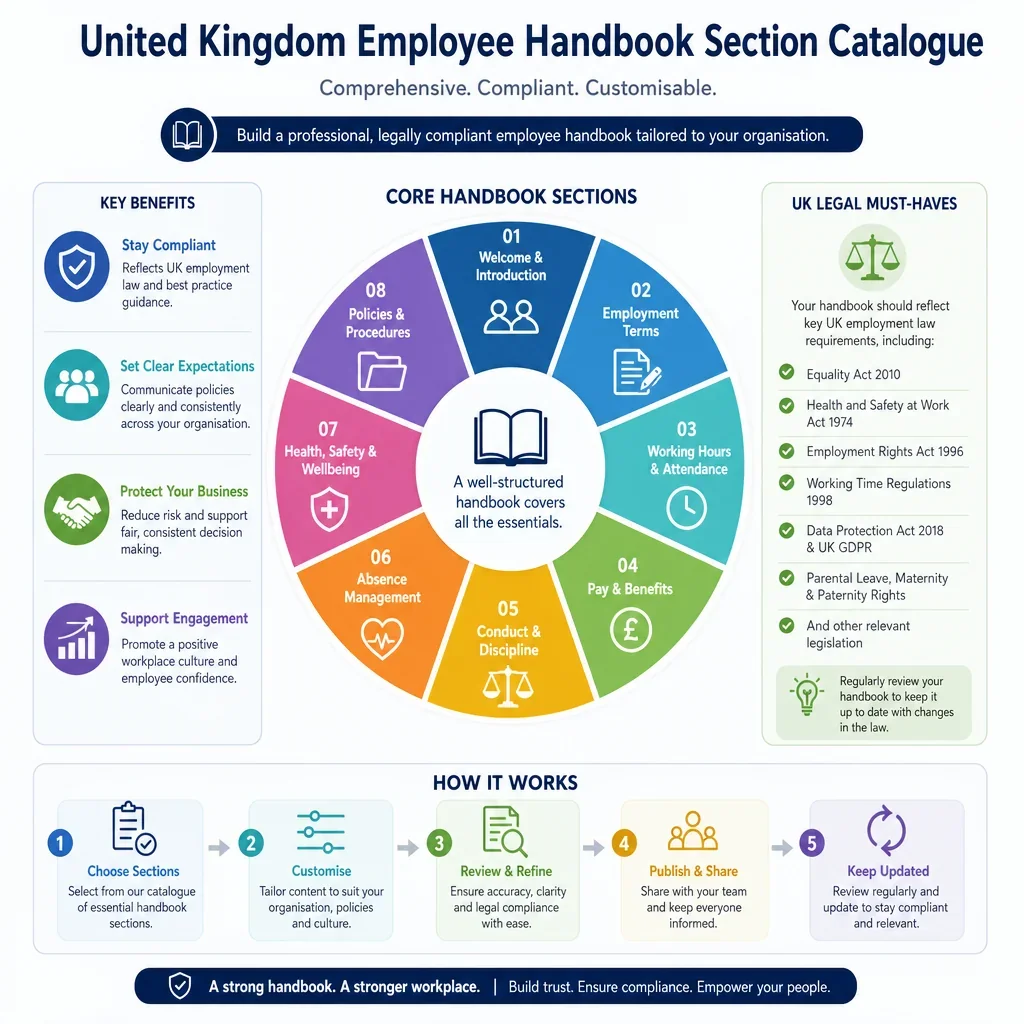
Small employers usually need a basic handbook covering core workplace rules, statutory leave, sickness, holidays, discipline, grievance and equal opportunities. These topics help employees understand essential rights and procedures without creating an over-engineered document.
Employers with 10 to 49 employees commonly need more detail on absence triggers, hybrid working, data protection, expenses, performance management, training and health and safety responsibilities, because informal practices become harder to apply consistently.
Employers with 50 to 249 employees should usually move towards a developing or comprehensive handbook. Policies on whistleblowing, anti-harassment, flexible working, redundancy, family leave, information security and manager authority become more important as teams, locations and management layers increase.
Employers with 250 or more employees commonly need comprehensive policies supported by manager training, version control, audit trails and employee acknowledgements. Topics such as modern slavery, gender pay gap reporting, collective consultation, equality monitoring, global mobility and complex reward arrangements often need specialist review.
Which Handbook Topics Need The Most Frequent Review?
- High review need: equality, harassment, flexible working, data protection, whistleblowing, family leave, health and safety, disciplinary rules and redundancy should be reviewed when legislation, ACAS guidance or business structure changes.
- Medium review need: expenses, dress code, probation, performance, remote working, benefits and IT use should be checked when working practices or management processes change.
- Low review need: company values, office etiquette and general introduction sections usually need less frequent legal review, but should still reflect current culture and operations.
How Should Employers Use Handbook Size Bands?
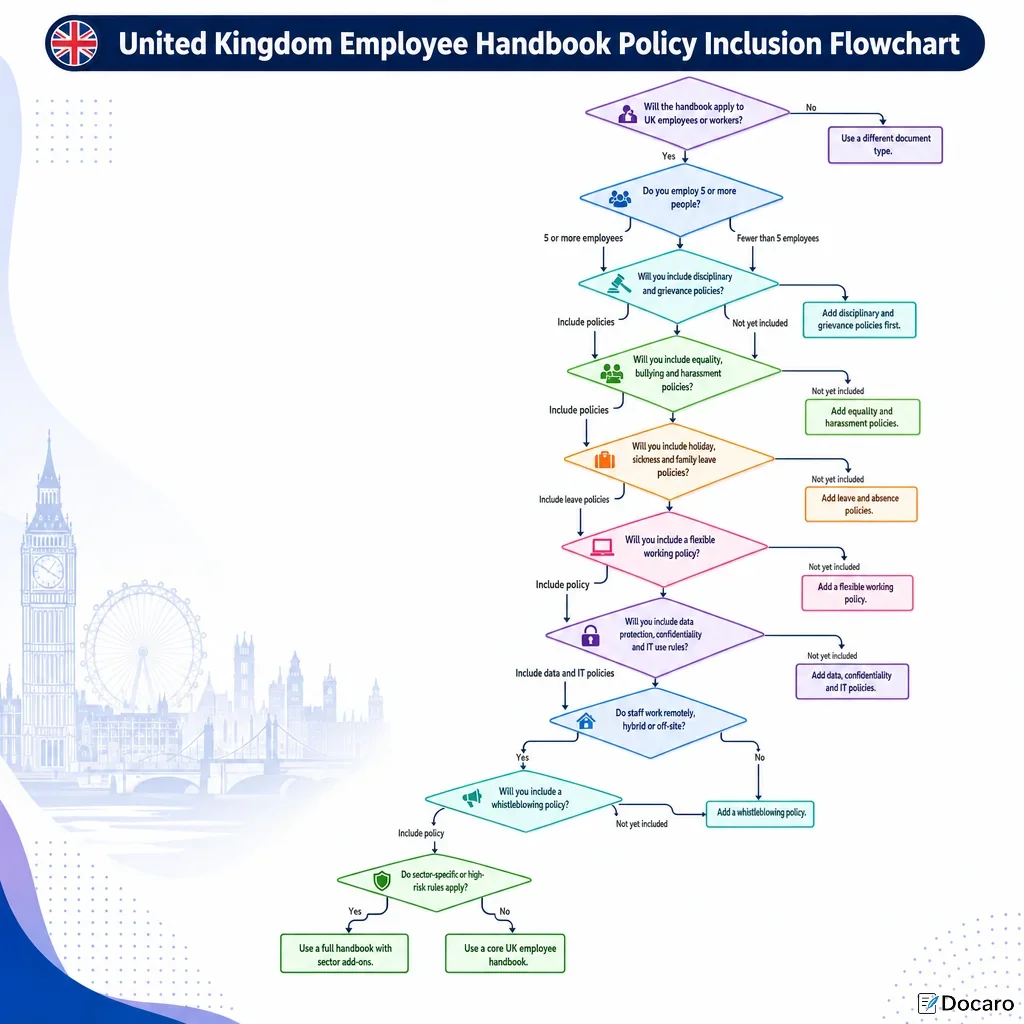
The size bands are a practical guide, not a legal exemption. A small employer may still need a comprehensive policy if it handles sensitive data, employs remote workers, operates safety-critical work or has complex shift patterns. A larger employer should avoid copying policies without implementation steps, because many topics require manager training, employee acknowledgement or consultation.
FAQs
You Might Also Be Interested In