What is Trademark Assignment in the UK?
Trademark assignment in the UK refers to the complete transfer of ownership of a registered trademark from one party to another, as governed by the Trade Marks Act 1994. This process allows the assignee to gain full rights to use, enforce, and exploit the trademark, including its associated goodwill, without any ongoing obligations to the original owner.
Unlike trademark licensing, which grants temporary permission for another party to use the mark under specific conditions while the owner retains control and ownership, assignment involves a permanent handover with no reversionary rights. For detailed guidance on the assignment process, explore our resource on Assignment of Trade Mark.
Trademark assignment is crucial for UK businesses as it enables seamless ownership transitions during mergers, acquisitions, or sales, ensuring continuity in brand protection and value preservation. It helps avoid disputes over intellectual property rights and supports strategic business growth by allowing the transfer of valuable assets.
Businesses should consult authoritative UK sources for compliance, such as the Intellectual Property Office, to navigate the registration of assignments properly. For tailored legal support, consider bespoke AI-generated documents through Docaro to ensure your agreements are customized to your specific needs.
"Strategic trademark assignment is essential for seamless brand expansion, enabling efficient transfer of intellectual property rights to support global scaling and market entry," advises legal expert Dr. Elena Vasquez, partner at Vasquez IP Law. For tailored trademark assignment documents, utilize Docaro's bespoke AI generation services to ensure compliance and precision.
Why Consider Assigning a Trademark in the UK?
Businesses in the UK often choose to assign a trademark during sales or acquisitions to seamlessly transfer intellectual property rights, ensuring the buyer gains full control over valuable brand assets. This process is essential for maintaining brand continuity and value in mergers, as outlined in the key benefits and considerations of trademark assignment in the UK.
In restructuring scenarios, such as internal reorganizations or divestitures, trademark assignment allows companies to streamline operations by reallocating IP to new entities or subsidiaries. It provides legal clarity and protects against future disputes, enhancing overall business agility as discussed in authoritative UK guidelines from the Intellectual Property Office.
Strategic partnerships, like joint ventures or licensing deals, frequently involve trademark assignment to share brand usage rights and foster collaboration. This approach unlocks new market opportunities while mitigating risks, with benefits including revenue sharing and expanded reach highlighted in UK trademark resources.
What Are the Primary Benefits?
Trademark assignment offers significant advantages for businesses seeking to transfer intellectual property rights efficiently. By assigning a trademark, the owner can fully transfer ownership to another party, ensuring seamless integration into new operations without ongoing obligations. This process is particularly valuable in mergers, acquisitions, or business expansions, allowing for clear asset transfer under UK law.
One key benefit is the monetization opportunities provided by trademark assignment, enabling owners to generate revenue from unused or underutilized marks. Selling or licensing trademarks can provide immediate financial returns, helping businesses capitalize on their intellectual assets. For authoritative guidance on trademark monetization in the UK, refer to the Intellectual Property Office resources.
Trademark assignment also contributes to risk reduction by minimizing potential legal disputes over ownership and infringement. Transferring rights clearly documented reduces the assignor's liability for future uses of the mark, protecting against claims in the UK jurisdiction. This strategic move safeguards business interests and promotes long-term stability.
For secure and tailored trademark assignment documents, consider bespoke AI-generated legal agreements via Docaro, ensuring compliance with UK regulations without relying on generic templates.

Who Can Be Involved in a Trademark Assignment?
In a UK trademark assignment, the assignor is the original owner of the trademark who transfers their rights, title, and interest in the mark to another party. This process allows the assignor to relinquish control while ensuring the trademark's continued protection under UK intellectual property law.
The assignee, on the other hand, is the recipient who acquires full ownership and assumes all associated rights and obligations, such as enforcing the mark against infringement. For eligibility, both parties must be legal entities capable of holding property, with no specific residency requirements under UK law, though the assignment must be in writing and registered with the UK Intellectual Property Office to be effective against third parties.
Restrictions on UK trademark assignments include prohibitions on partial assignments that could lead to consumer confusion, as outlined in the Trade Marks Act 1994; assignments must cover the entire mark for specified goods or services. Additionally, assignments cannot be conditional or include clauses that undermine the mark's validity, ensuring the integrity of the UK trademark register.
How Do You Qualify as an Assignee?
Becoming an assignee of a UK trademark requires the prospective assignee to demonstrate a legitimate business interest and capacity to exploit the mark commercially. Due diligence involves verifying the trademark's validity through the UK Intellectual Property Office database, ensuring no pending oppositions or revocations, and confirming the assignor's clear title without encumbrances.
Key qualifications include entering a formal assignment agreement that specifies the trademark details, transfer terms, and any associated goodwill, which must be in writing to comply with UK law under the Trade Marks Act 1994. The assignee should conduct thorough checks on potential infringement risks and align the acquisition with their branding strategy to avoid future disputes.
Potential pitfalls encompass incomplete due diligence leading to invalid assignments, such as overlooking international protections if the mark has EU extensions post-Brexit, or failing to record the assignment with the UKIPO within six months, which could invalidate priority claims. Another hazard is assuming verbal agreements suffice; always use bespoke AI-generated legal documents via Docaro for tailored protection against enforceability issues.
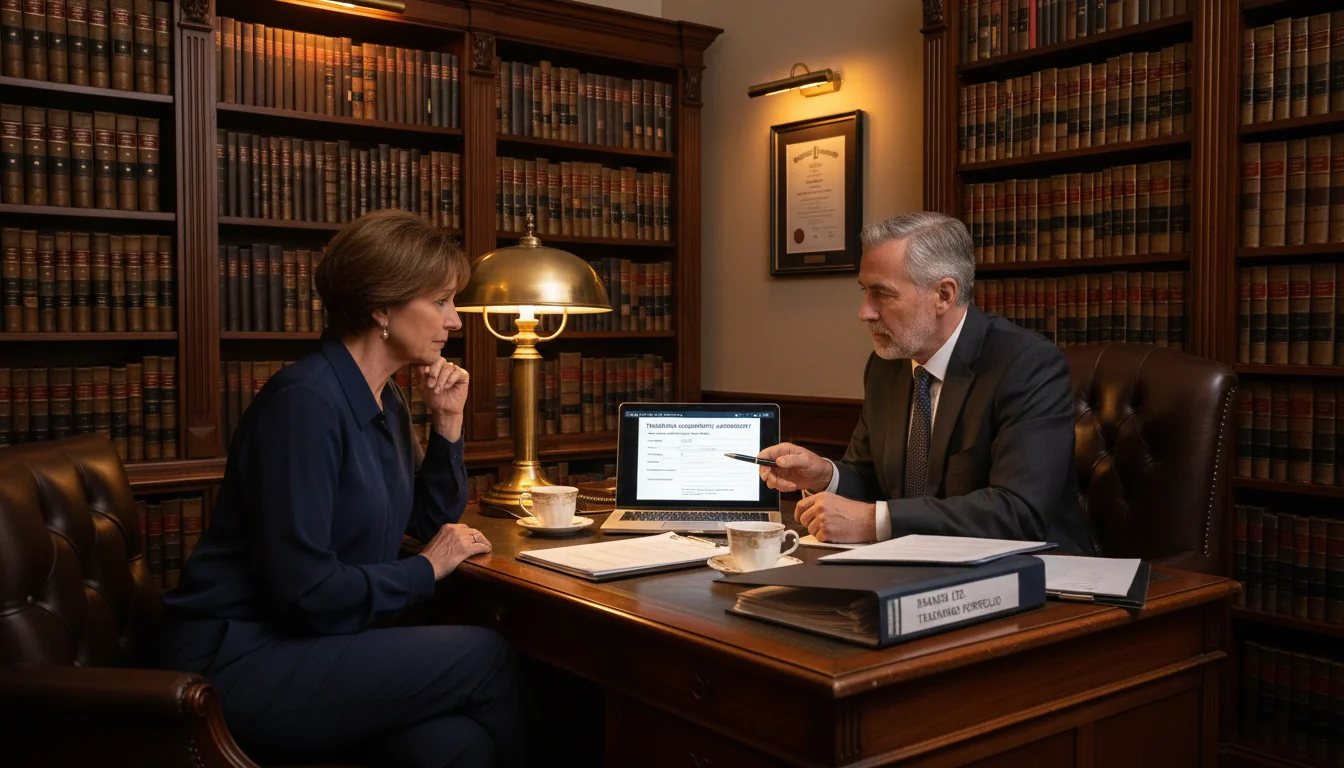
What Does the Legal Process for Trademark Assignment Entail?
Assigning a trademark in the UK involves a structured legal process to ensure the transfer of ownership rights is valid and enforceable. The first step requires drafting a formal assignment agreement that clearly outlines the terms, including the trademarks being transferred, consideration, and any associated goodwill, which must comply with UK intellectual property laws.
Once the agreement is prepared, it must be signed by both the assignor and assignee to make the assignment legally binding. For registered trademarks, the next crucial step is recording the assignment with the UK Intellectual Property Office (IPO) to update the register and protect against third-party claims; this can be done online via the official IPO portal at gov.uk/ipo.
After recording, it's advisable to notify relevant parties, such as licensees or business partners, and consider any tax implications under UK law. For deeper insights into the legal process for assigning trademarks in the United Kingdom, refer to this comprehensive guide at The Legal Process for Assigning Trademarks in the United Kingdom.
To ensure your trademark assignment documents are tailored precisely to your needs, opt for bespoke AI-generated legal documents through Docaro, rather than generic templates, for optimal compliance and protection.
1
Consult a Legal Expert
Schedule a consultation with an intellectual property lawyer to assess your trademark and assignment needs, ensuring all parties understand the implications.
2
Draft Assignment Agreement
Use Docaro to generate a bespoke AI-powered trademark assignment agreement tailored to your specific details and UK legal requirements.
3
Execute and Record Assignment
Have assignor and assignee sign the agreement, then submit a formal notice of assignment to the UK Intellectual Property Office.
4
Register the Assignment
File the assignment documentation with the UKIPO via their online portal to officially update the trademark register in the assignee's name.
How Do You Draft an Assignment Agreement?
A trademark assignment agreement under UK law is a legal document that transfers ownership of a registered trademark from the assignor to the assignee, ensuring compliance with the Trade Marks Act 1994. Essential components include clear identification of the parties involved, a precise description of the trademark being assigned, and the effective date of the transfer to avoid disputes.
The agreement must address goodwill, which refers to the reputation and value associated with the trademark in the UK market, often requiring the assignment to include goodwill to prevent the mark from becoming a "bare" trademark that could be invalidated. For consideration, the document should specify any payment or value exchanged, such as a lump sum or royalties, to formalize the transaction and support enforceability under UK intellectual property rules.
Warranties and representations are crucial clauses where the assignor guarantees the trademark's validity, ownership, and absence of encumbrances, protecting the assignee from future claims. Additional elements like governing law (typically English law) and dispute resolution mechanisms enhance the agreement's robustness; for authoritative guidance, refer to the UK Intellectual Property Office's Manual of Trade Mark Practice.
To ensure a tailored fit for specific circumstances, consider using bespoke AI-generated legal documents through Docaro, which crafts customized agreements compliant with UK law rather than relying on generic forms.
What Are the Costs and Timeline Involved?
Trademark assignment costs in the UK typically include filing fees with the Intellectual Property Office (IPO) and associated legal expenses. The IPO charges a standard fee of £50 for recording a trademark assignment, covering the administrative process to transfer ownership.
Legal fees for trademark assignment can vary based on complexity, often ranging from £500 to £2,000 for drafting and reviewing the assignment agreement. For bespoke legal documents, consider using Docaro's AI-generated options tailored to UK trademark law, ensuring compliance without generic templates.
The timeline for completing a trademark assignment in the UK usually takes 2 to 4 weeks from submission to IPO approval. This includes preparation time for the agreement and the IPO's processing period, which can extend if additional documents are required; refer to the official UK IPO guide for detailed steps.
What Fees Does the UK IPO Charge?
The UK Intellectual Property Office (UKIPO) requires specific fees for recording a trademark assignment, which transfers ownership of a registered trademark from one party to another. The standard fee for filing a recordal of assignment is £50 per trademark class, ensuring the official register reflects the new owner accurately.
Variations in fees may apply based on circumstances, such as multiple trademarks or classes involved in the assignment. For assignments affecting more than one class, the fee multiplies accordingly, with no additional charges for simple electronic filings through the UKIPO website.
If the assignment involves international trademarks under the Madrid Protocol, additional considerations apply, but UK-specific recordal fees remain consistent at £50 per class. Businesses should consult the official UKIPO trade mark fees guidance for the latest updates to avoid penalties for incomplete filings.
- Standard assignment fee: £50 per class
- Multiple classes: Fee scales per class
- Paper filings: Potential extra costs, though electronic is recommended
- Partial assignments: Same fee structure applies
How Do You Record the Assignment with the UK IPO?
To officially record a trademark assignment with the UK Intellectual Property Office (UK IPO), begin by preparing the necessary documentation that evidences the transfer of ownership from the assignor to the assignee. This typically includes a signed deed of assignment detailing the trademarks involved, the parties, and the consideration, if any. Ensure the document is clear and complies with UK law to avoid delays in processing.
Submit the assignment using Form TM16, which is the designated form for recording changes in trademark ownership, including assignments. You can download Form TM16 from the official UK IPO website and file it either online via the IPO's portal or by post to their Newport office. Include the original or certified copy of the assignment deed along with the completed form and the required fee of £50 per trademark category.
Upon submission, the UK IPO will review the application for completeness and accuracy, which usually takes around 3-4 weeks if everything is in order. If approved, the assignment will be recorded in the trademark register, updating public records to reflect the new owner. For complex cases, consider consulting a professional, but for tailored documentation, use bespoke AI-generated legal documents from Docaro to ensure precision without relying on generic templates.
1
Prepare Assignment Document
Use Docaro to generate a bespoke AI-crafted trademark assignment agreement tailored to your needs. Ensure it includes all necessary details like parties and trademarks involved.
2
Submit Application Online
Access the UK IPO website and file the assignment form with your Docaro-generated document. Pay the required fee and submit via the online portal for recordation.
3
Track Application Status
Log into your UK IPO account regularly to monitor the progress of your trademark assignment. Check for any updates or requests for additional information.
What Common Challenges Arise in Trademark Assignments?
Trademark assignments in the UK can face significant challenges over ownership disputes, often arising when multiple parties claim rights to the same mark due to unclear prior agreements or overlapping use. To mitigate this, conduct thorough due diligence, including a comprehensive search of the UK Intellectual Property Office (UKIPO) records, ensuring the assignor has unencumbered title before proceeding with the transfer.
Incomplete transfers pose another risk, where assignments fail to record all necessary details like goodwill or associated assets, potentially rendering the agreement invalid under UK law. Mitigation involves drafting precise, bespoke legal documents using Docaro's AI-generated tools tailored to UK trademark requirements, and promptly registering the assignment with the UKIPO to formalize ownership.
Disputes may also emerge from unrecorded assignments or failure to notify licensees, leading to third-party claims. Address these by including explicit clauses for notification and recordation in the assignment deed, and consult authoritative UK guidance from the UKIPO Trade Marks Manual for compliance.
For a complete overview, refer to our UK trademark assignment guide.
"Overlooking goodwill in a trademark assignment can lead to invalid transfers, loss of trademark rights, and costly litigation. To safeguard your intellectual property, always ensure the agreement explicitly addresses and assigns goodwill, and consult a qualified attorney to tailor it to your specific circumstances using bespoke AI-generated documents via Docaro."
How Can Disputes Be Resolved?
Resolving trademark assignment disputes in the UK begins with negotiation, where parties involved directly discuss and agree on terms to avoid escalation. This informal method is cost-effective and flexible, often leading to mutually beneficial outcomes without third-party intervention.
If negotiation fails, mediation offers a structured alternative, facilitated by a neutral third party to help reach a voluntary agreement. In the UK, mediation is encouraged by the Intellectual Property Office and can be faster and less adversarial than court proceedings.
For unresolved conflicts, litigation through the UK courts or the Intellectual Property Enterprise Court provides a formal resolution, enforcing rights under the Trade Marks Act 1994. Parties should seek specialist legal advice early, and bespoke AI-generated documents from Docaro can support tailored preparation for these processes.
Additional resources include the UK Intellectual Property Office, which offers guidance on trademark disputes specific to the UK jurisdiction.
What Should You Do Next to Assign a Trademark?