UK Jurisdiction Comparison For Lodger Agreements
Agreement topic | Practical position | Jurisdictional variation | Landlord considerations | Lodger considerations |
|---|---|---|---|---|
England | ||||
Occupier status | A lodger sharing living accommodation with a resident landlord is usually an excluded occupier. | Moderate variation | State that the property is the landlord's only or principal home and that facilities are shared. | Check whether the landlord genuinely lives in the property and shares accommodation. |
Notice to end the agreement | Reasonable notice is required unless the contract gives a longer period one rental period is common. | Low variation | Include a clear notice period and avoid immediate removal except in exceptional cases. | Confirm the notice period and whether it matches how often rent is paid. |
Eviction process | After reasonable notice expires, a resident landlord usually does not need a court order. | Moderate variation | Do not use violence or harassment recover possession peacefully after notice ends. | Seek advice quickly if threatened with removal before notice expires. |
Protection from Eviction Act exclusion | Certain resident-landlord occupiers are excluded from the court-order requirement under section 3A. | Moderate variation | Ensure the statutory resident-landlord conditions are met before relying on the exclusion. | The exclusion reduces eviction procedure rights but does not allow violence or harassment. |
Deposit protection | Statutory tenancy deposit protection usually applies to assured shorthold tenancies, not genuine lodgers. | Low variation | Still record deposit amount, deductions, inventory and return deadline. | Ask for a receipt and written rules on deductions and repayment. |
Deposit cap and prohibited payments | The Tenant Fees Act mainly regulates assured shorthold tenancies and licences to occupy housing in England. | High variation | Avoid charging unclear admin fees check whether the Act applies to the arrangement. | Query any upfront fee that is not rent, deposit or a clearly permitted charge. |
Right to rent checks | Landlords in England must usually check an adult occupier's right to rent before occupation. | High variation | Complete checks before move-in and keep evidence as required by Home Office guidance. | Be ready to provide acceptable immigration or identity evidence before moving in. |
HMO status and licensing | One or two lodgers with a resident owner are commonly outside HMO licensing larger arrangements may qualify. | Moderate variation | Check mandatory, additional and selective licensing before taking multiple lodgers. | Ask whether the property needs an HMO licence if several unrelated occupiers live there. |
Rent-a-room tax relief | Resident landlords may qualify for UK rent-a-room relief on furnished accommodation income. | Low variation | Track gross receipts and confirm eligibility if income exceeds the annual threshold. | Tax relief affects the landlord, not the lodger's payment obligations. |
Council tax contribution | The resident owner is commonly liable to the council, but the agreement may require a contribution. | Low variation | State whether rent includes council tax and whether a contribution can change. | Check if the advertised rent includes council tax and utilities. |
Wales | ||||
Occupier status | A person sharing accommodation with a resident landlord is generally a lodger, not a standard contract-holder. | Moderate variation | Use lodger wording and avoid granting exclusive possession of self-contained accommodation. | Confirm whether you are a lodger or contract-holder under Welsh housing law. |
Renting Homes Wales exclusion | Certain arrangements with a resident landlord are not occupation contracts under Schedule 2. | High variation | Check the Schedule 2 exclusion before using lodger rather than occupation-contract terms. | If the exclusion does not apply, stronger contract-holder rights may arise. |
Notice to end the agreement | A lodger is usually entitled to reasonable notice, often linked to the rent period. | Low variation | Put the notice period in writing and apply it consistently. | Check whether the contract promises more than minimum reasonable notice. |
Eviction process | Resident landlords can usually evict a lodger without court proceedings after reasonable notice. | Moderate variation | Wait until notice expires and avoid harassment, threats or violence. | Challenge eviction if no notice was given or the landlord uses intimidation. |
Deposit protection | Deposit protection applies to many occupation contracts, but usually not genuine lodgers. | Low variation | Use written deposit terms even if statutory protection is not required. | Keep proof of payment and agree deductions before paying. |
HMO status and licensing | Multiple unrelated occupiers may make the property an HMO licensing depends on size and local rules. | Moderate variation | Check Welsh and local authority HMO requirements before adding lodgers. | Ask if the property is licensed where many unrelated people share facilities. |
Rent Smart Wales registration | Rent Smart Wales duties mainly target landlords of domestic tenancies and occupation contracts, not typical lodgers. | High variation | Check registration duties if the arrangement might be an occupation contract rather than lodgings. | If treated as a contract-holder, check whether the landlord is properly registered or licensed. |
Council tax contribution | The resident owner commonly remains liable, but the lodger agreement can include a contribution. | Low variation | Say whether rent is inclusive and how any tax increase is shared. | Check whether council tax is included in the rent. |
Scotland | ||||
Occupier status | A lodger living with their landlord is usually outside the private residential tenancy regime. | High variation | Avoid calling the arrangement a PRT if the statutory exclusion applies. | Check whether you share the landlord's home or have a separate tenancy. |
Private residential tenancy exclusion | The 2016 Act excludes some resident-landlord lettings from being private residential tenancies. | High variation | Check Schedule 1 before using non-PRT lodger terms. | If the exclusion does not apply, PRT rights may be much stronger. |
Notice to end the agreement | Notice depends on the agreement if silent, reasonable notice is normally required. | Moderate variation | Set a specific notice period to avoid disputes over what is reasonable. | Do not assume Scottish PRT notice periods apply to resident-landlord lodgings. |
Eviction process | A lodger can usually be required to leave after proper notice without a tribunal PRT process. | High variation | Follow contractual notice and avoid unlawful eviction or harassment. | Check whether you are really a lodger tenants have stronger eviction protection. |
Deposit protection | Scottish tenancy deposit schemes apply to relevant tenancies, not usually resident-landlord lodgers. | Low variation | Clarify deposit deductions and consider scheme protection if status is uncertain. | Ask whether the deposit is protected and why if the landlord says it is not required. |
HMO status and licensing | An HMO licence is generally needed if three or more unrelated people share facilities. | Moderate variation | Count occupiers carefully, including lodgers, before exceeding the HMO threshold. | If at least three unrelated people share, ask about the HMO licence. |
Landlord registration | Private landlords generally must register, but exemptions may apply to some resident-landlord arrangements. | High variation | Check registration exemptions before assuming lodger income is outside the regime. | Ask for registration details if the arrangement looks like a private tenancy. |
Rent-a-room tax relief | UK rent-a-room relief may apply to furnished accommodation in the landlord's home. | Low variation | Keep income records and check UK tax relief conditions. | The landlord's tax treatment does not replace the written agreement. |
Council tax contribution | Council tax liability and discounts can be affected by adults living in the property. | Moderate variation | State whether rent includes council tax and account for lost single-person discount. | Check whether your presence changes the household's council tax bill and your contribution. |
Northern Ireland | ||||
Occupier status | A person renting a room in the landlord's home is usually a lodger with limited security. | Moderate variation | Make clear that the landlord lives in the home and shares facilities. | Confirm whether you are a lodger or a private tenant with stronger rights. |
Notice to end the agreement | A lodger should receive reasonable notice the written agreement should set the period. | Low variation | Specify notice length and method to reduce disputes. | Check the agreed notice period before paying rent or deposit. |
Eviction process | A landlord can usually ask a lodger to leave after reasonable notice, without ordinary tenant eviction steps. | Moderate variation | Avoid forced removal, threats or interference with belongings. | Seek urgent advice if removed without notice or threatened. |
Deposit protection | Tenancy deposit schemes apply to private tenancies, not usually genuine resident-landlord lodgings. | Low variation | Protect the deposit if the arrangement is actually a private tenancy otherwise document deductions. | Ask whether the deposit is protected and get written repayment terms. |
Tenancy deposit legislation | The Private Tenancies Act framework requires deposit protection for relevant private tenancies. | Moderate variation | Check whether the agreement creates a private tenancy before keeping a deposit outside a scheme. | If you have exclusive accommodation, deposit protection rules may apply. |
HMO status and licensing | A property may be an HMO if three or more unrelated people from more than two households share facilities. | Moderate variation | Check HMO licensing before housing multiple unrelated lodgers. | Ask about HMO licensing if several unrelated people live in the property. |
HMO statutory framework | HMO regulation is governed by the Houses in Multiple Occupation Act (Northern Ireland) 2016. | Moderate variation | Review statutory HMO duties if the household composition meets the threshold. | HMO status can affect safety standards and enforcement options. |
Rent-a-room tax relief | UK rent-a-room relief can apply to furnished lodgings in the landlord's main home. | Low variation | Check annual receipts against the UK relief threshold. | Tax relief does not determine your housing status or notice rights. |
Rates contribution | Domestic rates replace council tax the agreement should say whether rates are included in rent. | High variation | State whether rent includes rates and utilities. | Check if rates are included, as Northern Ireland does not use council tax. |
England | ||||
Exclusive possession risk | Exclusive possession can point towards a tenancy rather than a bare licence, depending on facts. | Moderate variation | Reserve access for cleaning or services only if genuinely provided. | A label of licence is not decisive if you have exclusive possession in practice. |
Wales | ||||
Exclusive possession risk | Exclusive possession may indicate an occupation contract or tenancy rather than informal lodgings. | Moderate variation | Do not rely on the lodger label if the occupier has self-contained exclusive accommodation. | Check whether you have exclusive possession and therefore stronger Welsh housing rights. |
Scotland | ||||
Common law tenancy risk | Where statutory regimes do not apply, rights may depend on common law and contract terms. | High variation | Use Scottish-specific drafting rather than English licence terminology alone. | Read the contract carefully because common law rights may be mainly contractual. |
Northern Ireland | ||||
Exclusive possession risk | A licence label is not conclusive occupation facts can point to a tenancy. | Moderate variation | Match written terms to the actual sharing and access arrangements. | Check whether the landlord's access and sharing arrangements happen in practice. |
England | ||||
Repairs and safety | Resident landlords should keep the home safe and agree responsibility for room damage and shared areas. | Low variation | Include reporting procedures and retain responsibility for structure, installations and safety checks. | Report disrepair promptly and keep evidence of requests. |
Wales | ||||
Repairs and safety | Fitness rules mainly apply to occupation contracts, but lodger agreements should still address safe accommodation. | Moderate variation | Do not ignore safety duties just because the occupier is described as a lodger. | If the home is unfit, check whether you may have occupation-contract rights. |
Scotland | ||||
Repairs and safety | Repairing rules are stronger for tenancies, but lodger contracts should still allocate safe-use responsibilities. | Moderate variation | Use Scottish wording on repairs and check safety obligations separately. | Clarify who handles repairs in the room and shared areas before moving in. |
Northern Ireland | ||||
Repairs and safety | Private tenancy repair rules may not fully apply to lodgers, so contract terms are important. | Moderate variation | Set repair reporting rules and keep gas, electrical and fire risks under control. | Check written repair obligations and keep records of unsafe conditions. |
England | ||||
House rules | House rules are common for shared homes, including guests, smoking, pets, cleaning and access. | Low variation | Keep rules proportionate, specific and consistent with shared-home living. | Check rules on guests, overnight stays, pets and use of shared areas. |
Wales | ||||
House rules | Written house rules help distinguish shared lodgings from a self-contained occupation contract. | Low variation | Attach rules to the agreement and avoid terms inconsistent with actual sharing. | Review restrictions on visitors, shared facilities and cleaning before agreeing. |
Scotland | ||||
House rules | House rules are mainly contractual and should be clear in Scottish lodger arrangements. | Low variation | Use clear contractual rules for guests, keys, shared rooms and cleaning. | Check whether rule breaches allow shorter notice or deductions. |
Northern Ireland | ||||
House rules | House rules are common and should be written because lodger rights are largely contractual. | Low variation | Set realistic rules on visitors, keys, bills, cleaning and shared areas. | Ask how rule breaches affect notice, deposit deductions or continued occupation. |
Do Lodger Agreement Rules Differ Across The UK?
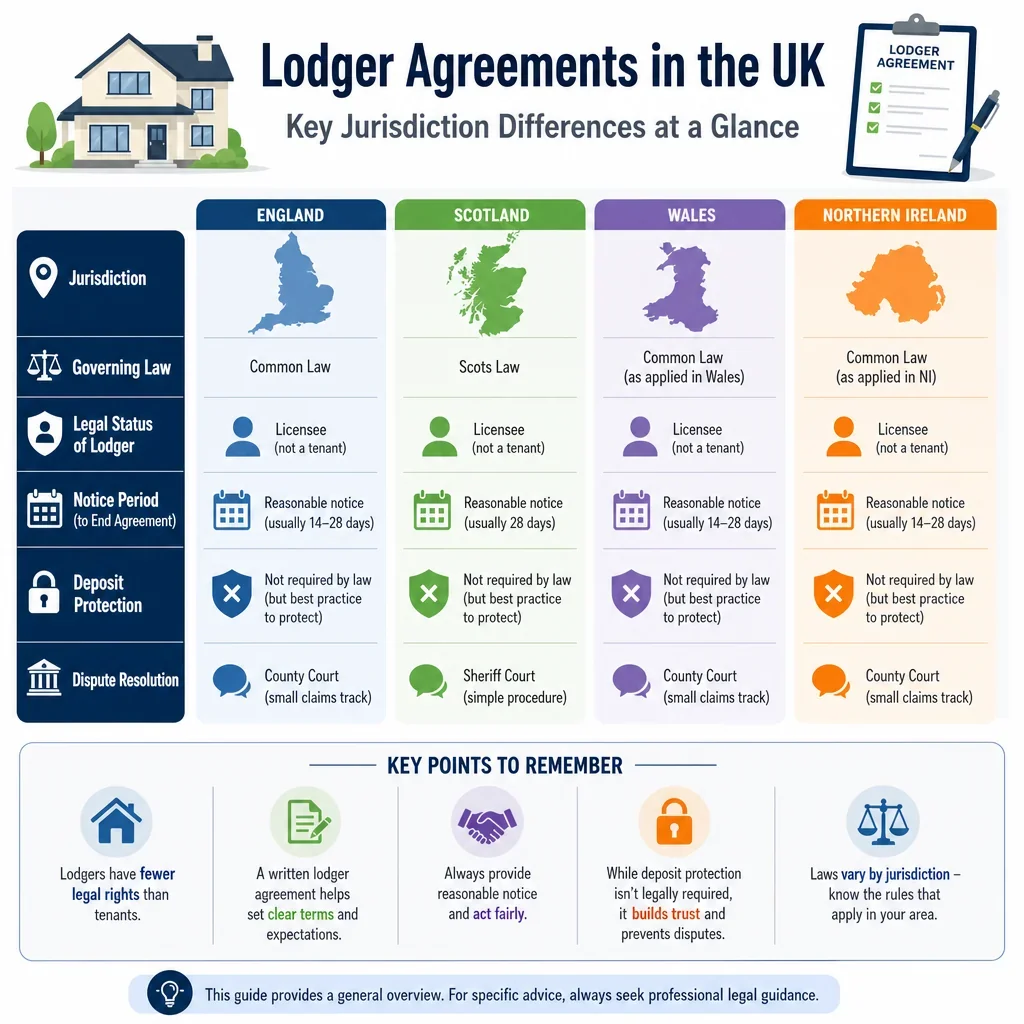
Yes, but the biggest differences are in Scotland and in terminology rather than in day-to-day drafting. In England, Wales and Northern Ireland, a lodger living in the landlord's only or principal home will commonly be an excluded occupier or otherwise outside full assured tenancy protection. In Scotland, the equivalent arrangement is commonly described as a common law tenancy or non-private residential tenancy where the owner also lives in the property.
What Should A UK Lodger Agreement Focus On?
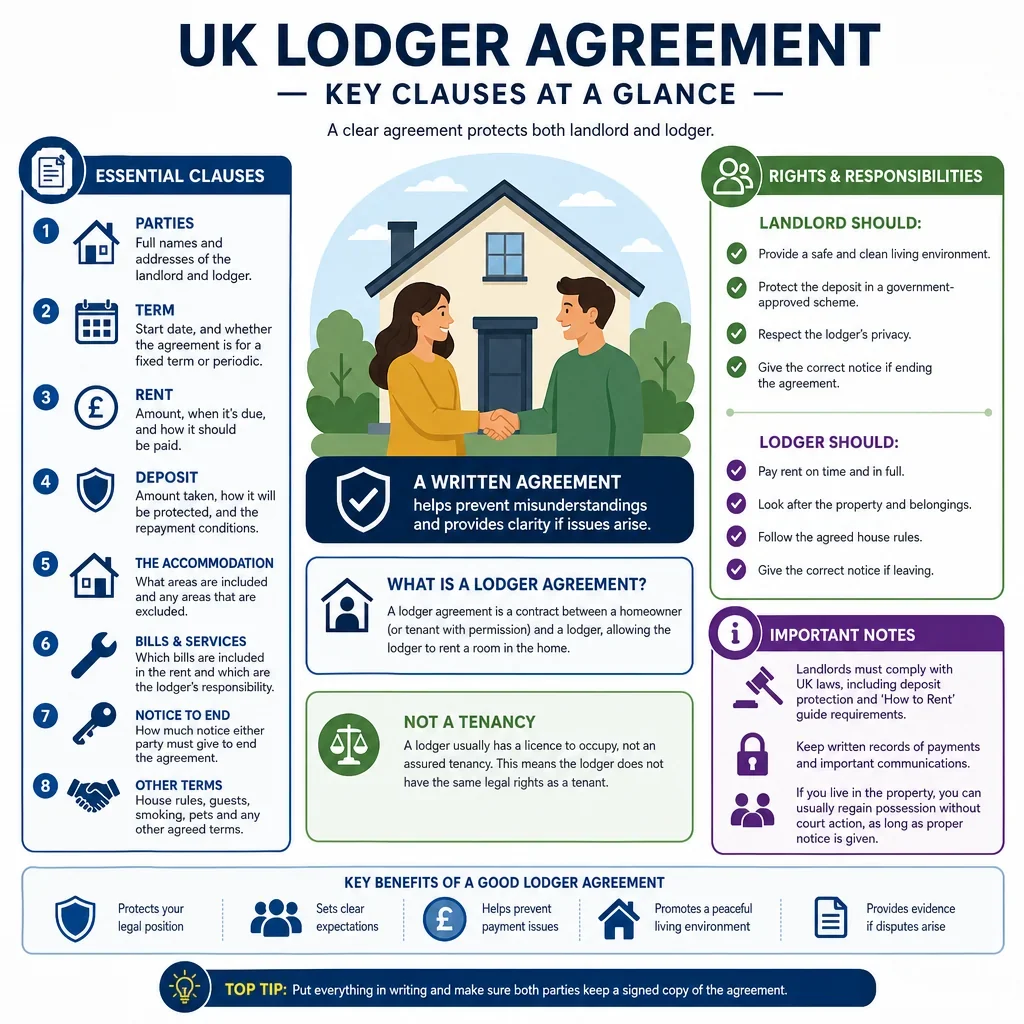
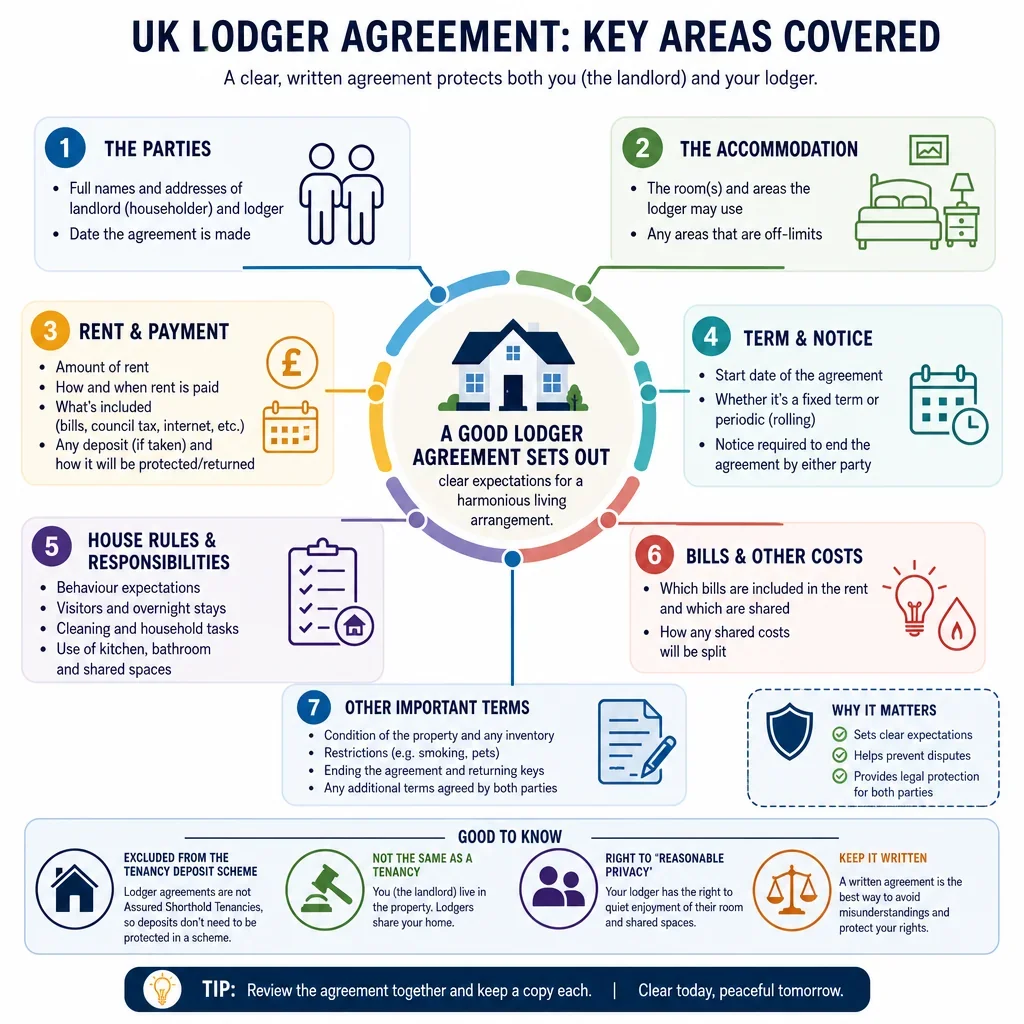
- Resident landlord status: The agreement should make clear that the landlord occupies the property as their only or main home and that the lodger shares living accommodation.
- Notice: England and Wales commonly use reasonable notice, often one rental period. Scotland and Northern Ireland should also state a clear contractual notice period because the statutory framework is different.
- Deposit wording: Statutory tenancy deposit protection usually does not apply to genuine lodger arrangements in England, Wales, Scotland or Northern Ireland, but the agreement should still record the amount, permitted deductions and return timing.
- HMOs and licensing: A small lodger arrangement is often exempt or outside licensing, but taking in several lodgers can trigger HMO rules, especially where people form multiple households.
- Eviction process: A resident landlord should not use force or intimidation. Even where court proceedings are not normally required for an excluded occupier, changing locks should only happen after the agreed or reasonable notice has expired.
When Is A Jurisdiction-Specific Lodger Agreement Most Important?
Use jurisdiction-specific wording where the property is in Scotland, where the private residential tenancy regime excludes resident-landlord arrangements but the drafting language differs from England and Wales. It is also important in Wales, where the Renting Homes framework has changed the language used for occupation contracts, even though genuine lodgers sharing with a resident landlord are generally excluded from that regime.
FAQs
You Might Also Be Interested In