UK Lodger Agreement Preparation Checklist
Checklist item | Importance level | Responsible party | Why it matters | Example input |
|---|---|---|---|---|
Parties | ||||
Landlord's full legal name | Essential | Landlord | Identifies who grants permission to occupy the room. | Amelia Rose Carter |
Lodger's full legal name | Essential | Lodger | Identifies who may occupy the room under the agreement. | Daniel James Hughes |
Landlord's contact address | Recommended | Landlord | Gives the lodger a reliable address for notices and correspondence. | 12 King Street, Bristol BS1 4AB |
Lodger's current contact details | Recommended | Lodger | Helps communicate before move-in and after the agreement ends. | Mobile: 07123 456789 email: daniel@example.com |
Confirm both parties are aged 18 or over | Recommended | Both parties | Reduces capacity and enforceability issues. | Both parties confirm they are 18 or older. |
Right to rent check, if the property is in England | Essential | Landlord | English landlords must check occupiers have the right to rent. | Passport checked on 1 March 2026 copy retained securely. |
Whether a letting agent or representative is involved | Optional | Landlord | Clarifies who can communicate, collect payments or sign documents. | No agent landlord manages the arrangement directly. |
Lodger's emergency contact | Recommended | Lodger | Helps the landlord respond to urgent welfare or safety issues. | Sophie Hughes, sister, 07000 111222 |
Property | ||||
Full address of the property | Essential | Landlord | Identifies the home where the lodger will live. | Flat 2, 48 Station Road, Leeds LS1 2AB |
Confirm the landlord lives at the property as their main home | Essential | Landlord | Supports lodger status and excluded occupier treatment. | Landlord occupies the property as their only or principal home. |
Landlord's authority to take in a lodger | Essential | Landlord | Mortgage, lease, insurer or council rules may restrict lodgers. | Mortgage lender and insurer permit one lodger. |
Leaseholder consent or freeholder restrictions | Recommended | Landlord | Lease terms may limit sharing occupation or taking in lodgers. | Lease checked no consent required for a lodger. |
Mortgage lender permission | Recommended | Landlord | Some mortgage terms require consent before taking in a lodger. | Consent confirmed by lender email dated 10 February 2026. |
Home insurance notification | Recommended | Landlord | Insurance cover may be affected by having a lodger. | Insurer notified policy remains valid. |
Council tax impact and single person discount | Recommended | Landlord | A lodger may affect council tax discounts and household costs. | Landlord will remove single person discount from start date. |
Whether HMO licensing rules could apply | Recommended | Landlord | Multiple unrelated occupiers may trigger HMO duties or licensing. | One lodger only local HMO rules checked. |
Local authority or planning restrictions | Optional | Landlord | Some local controls may restrict occupancy or use. | No Article 4 or licence restriction identified. |
Room and facilities | ||||
Specific room to be occupied | Essential | Landlord | Defines the private space included in the licence. | Furnished rear bedroom on the first floor. |
Shared facilities the lodger may use | Essential | Both parties | Clarifies access to kitchen, bathroom and living areas. | Kitchen, bathroom, hallway, garden and utility room. |
Areas the lodger must not use | Recommended | Landlord | Prevents disputes over private or unsafe areas. | Loft, garage, landlord's bedroom and home office. |
Furniture and items included in the room | Recommended | Landlord | Records what must be returned in good condition. | Double bed, wardrobe, desk, chair and bedside lamp. |
Room condition at move-in | Recommended | Both parties | Provides evidence if damage or cleaning deductions are disputed. | Clean, freshly painted, minor mark on desk edge. |
Keys, fobs and access devices provided | Essential | Landlord | Records access rights and items to return at the end. | Front door key, bedroom key and building fob. |
Whether the lodger's room has a lock | Recommended | Landlord | Clarifies privacy, security and access expectations. | Bedroom has a thumb-turn lock landlord holds emergency key. |
Landlord access to the lodger's room | Essential | Both parties | Helps avoid granting exclusive possession inconsistent with lodger status. | Landlord may enter for cleaning, repairs or emergencies on reasonable notice where practicable. |
Bathroom use arrangement | Recommended | Both parties | Reduces conflict over shared or exclusive bathroom use. | Shared main bathroom lodger may not use en-suite. |
Kitchen use arrangement | Recommended | Both parties | Clarifies cooking times, storage and appliance access. | Kitchen shared lodger has one fridge shelf and one cupboard. |
Parking or bike storage rights | Optional | Landlord | Avoids assumptions about driveway, permit or bike storage use. | No car parking bike may be stored in shed. |
Garden, balcony or outside space use | Optional | Both parties | Clarifies use of outdoor spaces and any restrictions. | Garden may be used until 10 pm no barbecues without consent. |
Payments | ||||
Rent amount | Essential | Landlord | States the main payment obligation clearly. | £650 per calendar month. |
Rent payment frequency | Essential | Both parties | Determines when rent falls due and how arrears are assessed. | Monthly in advance. |
Rent due date | Essential | Both parties | Makes late payment easy to identify. | On the 1st day of each month. |
First rent payment amount and date | Recommended | Both parties | Handles part-month rent and move-in timing. | £325 due on 15 March for 15-31 March. |
Payment method and account details | Essential | Landlord | Ensures payments are made to the correct place. | Bank transfer to A R Carter, sort code 12-34-56, account 12345678. |
Whether rent includes bills | Essential | Both parties | Clarifies whether utilities are included or separately payable. | Rent includes gas, electricity, water, council tax and broadband. |
Separate contribution to household bills | Recommended | Both parties | Prevents disputes over changing utility costs. | £100 per month fixed contribution to bills. |
Rent review or increase process | Recommended | Landlord | Explains when and how rent may change. | Rent may be reviewed after six months on one month's notice. |
Late payment consequences | Recommended | Landlord | Sets expectations for arrears, reminders and possible termination. | If rent is 7 days late, landlord may issue a warning or notice. |
Any fees or charges outside rent and deposit | Essential | Landlord | In England, many letting fees are prohibited under tenant fees rules. | No administration or check-in fees charged. |
Whether rent receipts will be provided | Optional | Both parties | Creates a clear payment record, especially for cash payments. | Receipts emailed within 3 days for any cash payment. |
Rent a Room Scheme tax position | Recommended | Landlord | Income may be tax-free up to the scheme threshold if conditions apply. | Landlord expects gross receipts below £7,500 this tax year. |
Deposit | ||||
Deposit amount | Essential | Both parties | Records the security sum held against damage or unpaid sums. | £650 deposit. |
Deposit payment date | Recommended | Both parties | Confirms when the lodger must pay the deposit. | Payable before keys are released on 14 March 2026. |
Who will hold the deposit | Essential | Landlord | Identifies who controls repayment and deductions. | Held by the landlord in a separate savings account. |
Whether statutory tenancy deposit protection applies | Recommended | Landlord | Protection generally applies to assured shorthold tenancy deposits, not typical excluded lodgers. | Not protected because this is a resident landlord lodger arrangement. |
Permitted deposit deductions | Essential | Landlord | Defines when the landlord may retain part of the deposit. | Unpaid rent, lost keys, damage beyond fair wear and cleaning costs. |
Deposit return timeframe | Essential | Both parties | Sets a clear deadline for repayment after move-out. | Return within 14 days after keys are returned, less agreed deductions. |
Evidence needed for deposit deductions | Recommended | Landlord | Makes deductions easier to justify if challenged. | Photos, receipts and itemised deduction statement. |
Whether a holding deposit is taken before signing | Optional | Landlord | In England, holding deposits are regulated and capped where tenant fees rules apply. | No holding deposit taken. |
Term and notice | ||||
Agreement start date | Essential | Both parties | Shows when rights, payments and house rules begin. | 15 March 2026. |
Move-in date and time | Recommended | Both parties | Coordinates key handover and first rent period. | 15 March 2026 after 2 pm. |
Whether the arrangement is fixed term or rolling | Essential | Both parties | Determines expected duration and exit rights. | Monthly rolling licence after an initial 3-month period. |
Fixed term end date, if any | Recommended | Both parties | Avoids uncertainty about when a fixed arrangement ends. | 14 September 2026. |
Notice period landlord must give | Essential | Both parties | Excluded occupiers are usually entitled to reasonable notice. | At least 28 days' notice from the landlord. |
Notice period lodger must give | Essential | Both parties | Tells the landlord how much warning they will receive before departure. | Lodger must give 28 days' written notice. |
How notices must be given | Recommended | Both parties | Reduces disputes about whether notice was served. | By email and written note delivered by hand. |
Early termination for serious breach | Recommended | Landlord | Explains consequences of violence, theft, serious nuisance or non-payment. | Landlord may end the agreement sooner for serious misconduct, subject to reasonable notice where required. |
Move-out obligations | Recommended | Lodger | Sets expectations for cleaning, belongings and key return. | Remove belongings, clean room and return all keys by 12 noon. |
Treatment of belongings left behind | Recommended | Both parties | Landlords should handle left goods carefully before disposal or sale. | Landlord will give notice before disposing of uncollected goods. |
House rules | ||||
Guest and overnight visitor rules | Essential | Both parties | Protects household privacy, security and occupancy limits. | No overnight guests without landlord's prior consent. |
Smoking and vaping rules | Recommended | Landlord | Prevents damage, odour disputes and fire risk. | No smoking or vaping inside the property. |
Pet rules | Recommended | Both parties | Avoids allergy, damage and lease or insurance issues. | No pets without written consent. |
Quiet hours | Recommended | Both parties | Reduces nuisance within a shared home. | Quiet hours from 10:30 pm to 7:00 am. |
Cleaning responsibilities | Essential | Both parties | Keeps shared areas usable and reduces deposit disputes. | Lodger cleans own room and kitchen after each use. |
Rubbish and recycling duties | Recommended | Both parties | Prevents hygiene issues and missed collections. | Lodger sorts recycling and helps put bins out on Mondays. |
Food storage and shared supplies | Optional | Both parties | Avoids conflict over fridge space and shared items. | Lodger has labelled fridge shelf no shared food unless agreed. |
Laundry use rules | Optional | Both parties | Manages appliance use, drying space and energy costs. | Washing machine available twice weekly no use after 9 pm. |
Working from home or business use | Recommended | Both parties | May affect noise, visitors, insurance, mortgage or planning issues. | Remote desk work allowed no clients may visit the property. |
Use of household appliances | Recommended | Landlord | Reduces misuse, damage and safety risks. | Lodger may use oven, hob, microwave, kettle and washing machine. |
Security and locking-up rules | Essential | Both parties | Protects people, property and insurance compliance. | Front door must be locked whenever leaving the property. |
Key copying and sharing restrictions | Recommended | Lodger | Protects household security and controls access. | Lodger must not copy keys or give keys to anyone else. |
Damage and repair reporting | Essential | Lodger | Allows prompt repair and limits further loss. | Report leaks, breakages or faults to the landlord immediately. |
Decorating, alterations or fixtures | Recommended | Lodger | Prevents unauthorised changes and damage. | No painting, shelves or wall fixings without consent. |
Use of personal heaters or high-load electrical items | Recommended | Both parties | Controls fire risk and excessive energy use. | No portable heaters without landlord consent. |
Candles, incense and naked flames | Recommended | Both parties | Reduces avoidable fire hazards in the home. | No candles or incense in the lodger's room. |
Utilities and services | ||||
Utilities included in rent | Essential | Landlord | States which services the landlord pays for. | Gas, electricity, water, broadband and TV licence included. |
Utilities or services excluded from rent | Recommended | Landlord | Avoids assumptions about optional services and extra costs. | No cleaner, streaming subscriptions or personal phone costs included. |
Fair usage limits for utilities | Recommended | Landlord | Controls unusually high consumption while keeping terms clear. | Reasonable domestic use only no crypto mining or commercial equipment. |
Internet access and acceptable use | Recommended | Both parties | Clarifies Wi-Fi access, security and unlawful use restrictions. | Wi-Fi included no illegal downloads or sharing password externally. |
TV licence responsibility | Optional | Both parties | Streaming or watching live TV may require a licence. | Landlord's TV licence covers shared living room only lodger checks own need. |
Whether cleaning services are provided | Optional | Landlord | Clarifies whether cleaning is included or the lodger is responsible. | Cleaner attends shared areas fortnightly lodger cleans own room. |
Whether meals or board are included | Optional | Both parties | Avoids confusion between room-only and board arrangements. | No meals included lodger buys and prepares own food. |
Heating and hot water arrangements | Recommended | Landlord | Sets expectations for comfort and energy use in shared accommodation. | Central heating normally on 6-9 am and 5-10 pm in winter. |
Gas safety certificate, if gas appliances are present | Essential | Landlord | Landlords must maintain gas appliances and arrange annual safety checks. | Gas safety record dated 20 January 2026. |
Electrical safety and appliance condition | Essential | Landlord | Electrical installations and supplied appliances should be safe. | EICR dated 5 May 2025 supplied appliances visually checked. |
Smoke and carbon monoxide alarms | Essential | Landlord | Alarms are a key legal and safety requirement in rented homes. | Smoke alarms on each floor CO alarm near boiler tested on move-in day. |
Fire escape route and safety instructions | Essential | Landlord | Helps the lodger respond safely in an emergency. | Exit by front door secondary exit through kitchen to garden. |
How to report maintenance problems | Recommended | Both parties | Ensures faults are reported and handled promptly. | Text urgent issues email non-urgent repairs with photos. |
Handling copies of ID and personal data | Recommended | Landlord | ID and contact details should be kept securely and used lawfully. | Right to rent copy stored securely and deleted when no longer needed. |
Signatures | ||||
Final agreement reviewed by both parties | Essential | Both parties | Confirms both parties understand the terms before signing. | Both parties reviewed the final version on 12 March 2026. |
Signature and date for landlord and lodger | Essential | Both parties | Shows agreement and the date the terms were accepted. | Signed by both parties on 13 March 2026. |
Whether electronic signatures will be used | Optional | Both parties | Electronic signatures can be admissible evidence if authenticity is shown. | Signed using an e-signature platform with audit trail. |
Copies of the signed agreement for both parties | Essential | Both parties | Ensures each party can refer to the agreed terms. | PDF copy emailed to both parties after signing. |
Attach inventory, house rules and safety documents | Recommended | Landlord | Keeps supporting terms and evidence with the agreement. | Inventory, fire instructions and gas safety record attached. |
Whether signatures will be witnessed | Optional | Both parties | May help prove signature authenticity if later disputed. | No witness required both parties sign directly. |
What Should You Prepare Before Creating A UK Lodger Agreement?
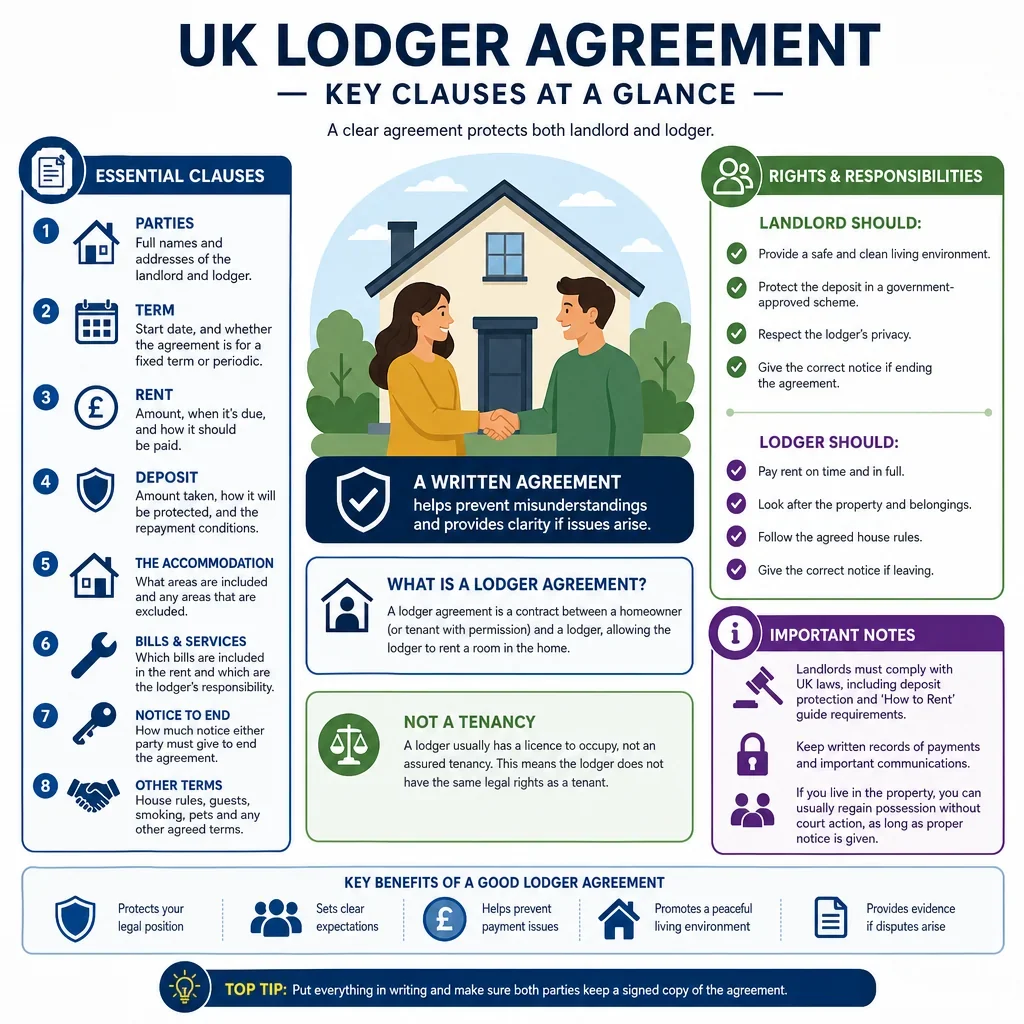
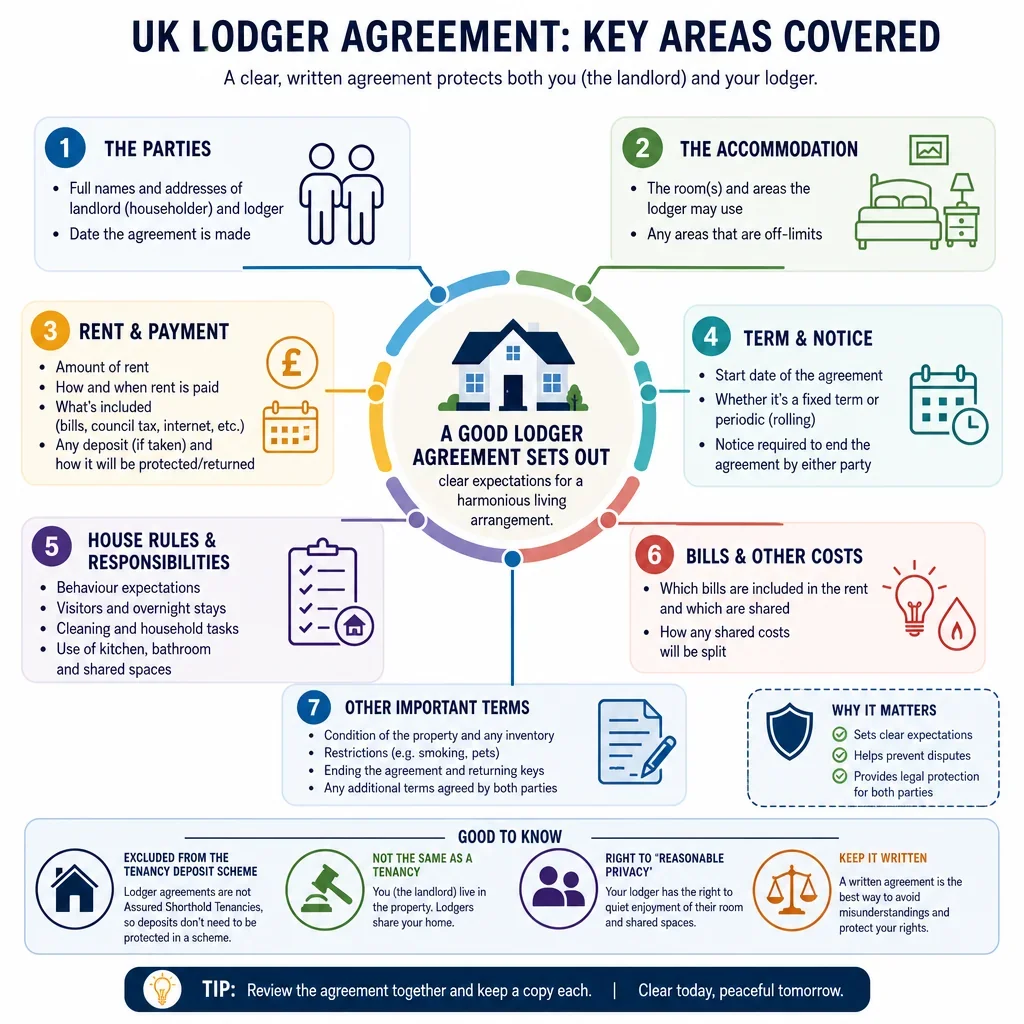
A lodger agreement works best when the landlord confirms the essentials before drafting: the landlord and lodger identities, the property address, the specific room, shared facilities, rent, deposit, start date, notice period and house rules. These details help show that the occupier is a lodger with a licence to occupy, not a tenant with exclusive possession of a self-contained home.
Why Does Resident Landlord Status Matter For Lodger Agreements?
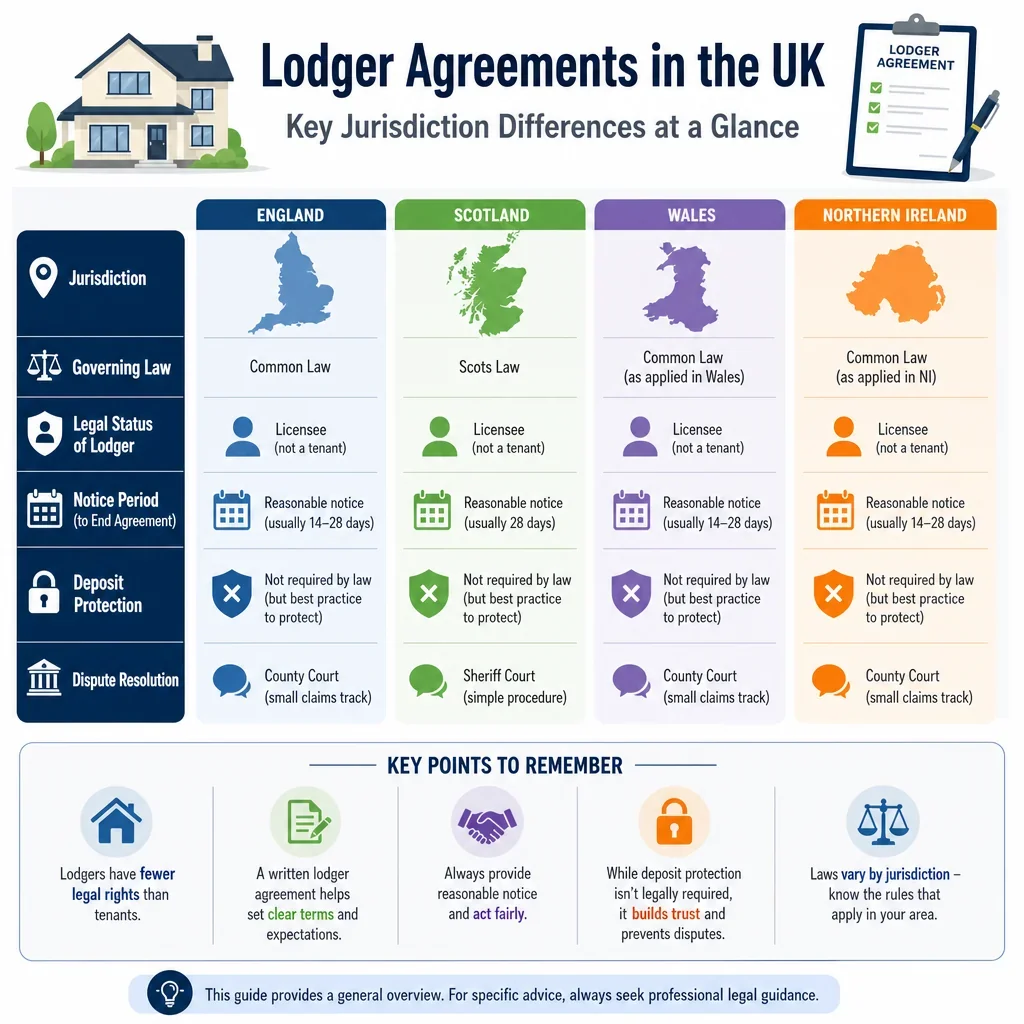
In England and Wales, many lodgers living in the landlord's only or principal home are excluded occupiers, meaning they usually have fewer statutory protections than tenants and can be asked to leave on reasonable notice. The agreement should therefore clearly record that the landlord lives at the property and that accommodation or facilities are shared.
What Payment And Deposit Details Should Be Agreed?
The agreement should state the rent amount, payment frequency, due date, payment method, what bills are included, and any permitted charges. A lodger deposit normally should be recorded clearly, including the amount, deductions and repayment process. Deposit protection rules for assured shorthold tenancies do not generally apply to excluded occupiers, but transparent wording reduces disputes.
Which House Rules Are Most Important For Lodgers?
The most important house rules are those affecting day-to-day sharing of the home: guests, smoking or vaping, pets, cleaning, quiet hours, security, access to shared areas, use of appliances, internet use and whether the lodger can work from home. These rules should be specific, proportionate and known before signing.
How Should Signing Be Handled?
Both parties should check the final agreement, sign and date it, and keep a copy. If signing electronically, the parties should still ensure the final document is complete, clearly identifies the parties and records their acceptance.
FAQs
You Might Also Be Interested In