UK Internship Legal Considerations
Issue | How It Arises | Primary Party Affected | Risk Level | Suggested Agreement Response |
|---|---|---|---|---|
Employment status | ||||
Worker status classification | An intern may be a worker if they personally perform work under control and receive or expect reward. | Both parties | High | Define role, duties, supervision, pay, hours and status avoid relying on labels alone. |
Employee status risk | Long placements with mutual obligations, control and integration may resemble employment. | Both parties | High | Limit duration, specify training purpose, avoid open-ended obligations and review status if duties expand. |
Employment status, Minimum wage, Expenses | ||||
Genuine volunteer exemption | A person volunteering freely for a charity or similar body may not be entitled to minimum wage. | Both parties | Medium | State voluntary nature, no obligation to work, no wage, and reimbursement of genuine expenses only. |
Minimum wage, Expenses, Employment status | ||||
Voluntary worker rules | Certain charity, voluntary body, fundraising or statutory body roles may be excluded if conditions are met. | Employer | High | Confirm qualifying body, voluntary status, permitted benefits, expenses limits and no contractual wage. |
Minimum wage | ||||
National Minimum Wage entitlement | Interns who are workers must receive at least the applicable minimum wage for working time. | Intern | High | State hourly pay, pay frequency, applicable rate review and records of working time. |
Correct age-related minimum wage rate | The applicable rate depends on age and apprenticeship status and changes periodically. | Employer | High | Identify age band, update rates on statutory change, and avoid fixed outdated rate schedules. |
Minimum wage, Employment status | ||||
Student work placement exception | Some higher or further education placements under one year may be exempt from minimum wage. | Educational institution, Placement provider, Intern | High | Record course requirement, institution approval, placement duration, learning objectives and tripartite responsibilities. |
Minimum wage, Health and safety, Insurance | ||||
School work experience exception | Pupils of compulsory school age on work experience are generally outside minimum wage entitlement. | Educational institution, Placement provider, Intern | Medium | Use placement letter covering supervision, risk assessment, parental consent, hours and insurance. |
Employment status, Minimum wage | ||||
Work shadowing versus work | Observation-only shadowing may become work if the intern performs tasks or provides services. | Both parties | Medium | State observation scope, prohibit productive duties unless paid, and appoint a supervisor. |
Minimum wage, Employment status | ||||
Unpaid trial shift risk | Internship selection may involve practical tasks that amount to work rather than assessment. | Employer | High | Keep assessments short, genuinely evaluative, non-productive, and pay if work is performed. |
Expenses, Minimum wage | ||||
Travel expense reimbursement | Unreimbursed work travel or required costs can reduce pay for minimum wage purposes. | Intern | Medium | Set eligible expenses, approval process, evidence requirements and reimbursement timetable. |
Expenses | ||||
Subsistence and meal costs | Interns may incur meal or subsistence costs during temporary placement duties. | Intern | Low | Specify whether subsistence is reimbursed, caps, evidence, and tax treatment where relevant. |
Expenses, Minimum wage | ||||
Required equipment or uniform costs | Required clothing, tools or devices may reduce minimum wage pay if paid by the intern. | Intern | Medium | Provide required items or reimburse them avoid deductions taking pay below minimum wage. |
Minimum wage, Expenses | ||||
Deductions reducing minimum wage | Deductions for training, deposits, administration or equipment may reduce pay below minimum wage. | Intern | High | Avoid deductions or state lawful deductions clearly and check minimum wage impact. |
Minimum wage, Employment status | ||||
Payroll and payslip obligations | Paid worker interns usually need PAYE assessment and itemised payslips. | Employer | Medium | State gross pay, payroll details, tax deductions, pay date and payslip delivery. |
Working time | ||||
48-hour weekly working limit | Worker interns are generally protected from working over the average 48-hour weekly limit unless opted out. | Both parties | Medium | Set normal hours, overtime approval, opt-out handling and working time records. |
Working time, Health and safety | ||||
Daily and weekly rest breaks | Worker interns are entitled to statutory rest breaks and daily or weekly rest periods. | Intern | Medium | Specify breaks, rest days, start and finish times, and manager approval for changes. |
Working time, Employment status | ||||
Paid annual leave for workers | Interns who are workers accrue statutory paid holiday during the placement. | Intern | High | State holiday entitlement, accrual, request process and payment on termination. |
Working time, Health and safety | ||||
Young worker working time limits | Interns under 18 may be subject to stricter limits on hours, night work and rest. | Intern | High | Record age checks, permitted hours, breaks, supervision and parental or school approvals where needed. |
Night work restrictions | Interns asked to work nights may need health assessments and working time controls. | Both parties | Medium | Avoid night work unless necessary include assessment, limits and health review process. |
Health and safety | ||||
General health and safety duty | Employers must protect employees and others, including interns, from workplace health and safety risks. | Both parties | High | Require induction, compliance with safety rules, supervision, incident reporting and safe systems of work. |
Risk assessment before placement | Hosts should assess risks before interns start, especially for unfamiliar or hazardous work. | Employer, Placement provider | High | Confirm risk assessment completed, controls explained, and prohibited tasks listed. |
Health and safety, Working time | ||||
Young person risk assessment | Additional assessment is required for young persons because of inexperience and maturity risks. | Intern, Employer | High | Include age-specific controls, supervision, restricted activities and emergency contacts. |
Health and safety | ||||
Safety induction and training | Interns may be unfamiliar with workplace hazards, procedures and reporting routes. | Both parties | Medium | Make induction mandatory before duties begin and keep signed training records. |
Health and safety, Insurance | ||||
Accident reporting | Workplace injuries to interns may need internal recording and, in some cases, RIDDOR reporting. | Employer, Intern | Medium | Include immediate reporting duties, first aid contacts and accident book procedure. |
Health and safety, Working time, Data protection | ||||
Remote internship safety | Home-based internships require safe equipment, communication, supervision and data security controls. | Both parties | Medium | Add remote working rules, equipment responsibility, contact hours, workstation self-assessment and security duties. |
Equality and discrimination | ||||
Discrimination in internship recruitment | Selection criteria, adverts or interviews may disadvantage applicants with protected characteristics. | Intern | High | Use objective criteria, equal opportunities wording, accessible recruitment and documented selection decisions. |
Harassment during placement | Interns may face unwanted conduct by staff, managers, clients or other interns. | Intern | High | Include anti-harassment rules, complaint route, investigation process and zero-retaliation clause. |
Equality and discrimination, Health and safety | ||||
Reasonable adjustments for disabled interns | Disabled interns may need changes to duties, hours, equipment, location or assessment methods. | Both parties | High | Provide adjustment request process, review meetings and confidentiality for health information. |
Equality and discrimination | ||||
Victimisation after complaints | An intern may be treated badly for raising discrimination concerns or supporting another complaint. | Intern | High | Include non-retaliation commitment and escalation route outside the direct supervisor. |
Equality and discrimination, Minimum wage, Expenses | ||||
Access barriers from unpaid internships | Unpaid roles may limit access for candidates unable to self-fund travel or living costs. | Intern | Medium | Pay where worker status applies and consider expenses, open recruitment and transparent eligibility. |
Data protection | ||||
Processing intern personal data | Hosts process intern recruitment, identity, payroll, performance, health and emergency contact data. | Both parties | High | Provide privacy notice, identify lawful basis, limit data, and state retention periods. |
Data protection, Equality and discrimination, Health and safety | ||||
Health and special category data | Adjustments, sickness, disability or safeguarding checks may involve sensitive personal data. | Intern | High | Collect only necessary data, restrict access, state condition for processing and secure records. |
Data protection | ||||
Confidential information access | Interns may access business secrets, client files, staff information or unpublished materials. | Employer | Medium | Include confidentiality obligations, permitted use, return of materials and post-placement duties. |
Information security obligations | Interns using systems, email or devices can create security and personal data breach risks. | Employer | High | Add acceptable use, password, device, remote access and breach reporting rules. |
Data sharing with education provider | Placement hosts may share attendance, performance, incidents or safeguarding information with institutions. | Educational institution, Placement provider, Intern | Medium | Identify data shared, purposes, lawful basis, contacts, security and reporting responsibilities. |
Monitoring communications and activity | Hosts may monitor email, devices, productivity, CCTV or access logs used by interns. | Intern | Medium | Give monitoring notice, explain purposes, keep monitoring proportionate and restrict access. |
Insurance, Health and safety | ||||
Employers liability insurance | Hosts may need employers liability insurance covering interns treated as employees or workers. | Employer, Placement provider | High | Confirm cover applies to interns, placement dates, duties and any off-site or remote work. |
Public liability insurance | Intern activities may cause injury or property damage to visitors, clients or the public. | Employer, Placement provider | Medium | Check policy scope, excluded activities, supervision requirements and incident notification duties. |
Insurance | ||||
Professional indemnity exposure | Interns may assist with advice, designs, reports or client deliverables that create liability. | Employer | Medium | Require supervisor approval before external work is issued and verify insurance includes intern work. |
Insurance, Health and safety | ||||
Insurance evidence for placements | Schools, colleges or universities may require evidence of host insurance before approving placement. | Educational institution, Placement provider | Medium | Attach insurance confirmations, policy numbers, limits, renewal dates and notification contacts. |
Health and safety, Employment status | ||||
Adequate supervision | Interns may lack experience and need close oversight to work safely and learn effectively. | Both parties | Medium | Name supervisor, set review meetings, escalation route and limits on unsupervised tasks. |
Health and safety, Equality and discrimination, Data protection | ||||
Safeguarding for under-18 interns | Placements involving minors require appropriate supervision, boundaries and reporting channels. | Intern, Educational institution, Placement provider | High | Include safeguarding contact, conduct rules, emergency contacts and incident escalation procedure. |
Data protection, Health and safety | ||||
DBS check eligibility | Some internships involving children or vulnerable groups may require or permit criminal record checks. | Employer, Intern | Medium | State conditional start, check level, processing basis, confidentiality and outcome handling. |
Employment status | ||||
Right to work checks | Hosts may need checks where the internship involves work in the UK. | Employer | High | Make start conditional on satisfactory right to work evidence and visa restrictions compliance. |
Employment status, Working time | ||||
Student visa work limits | International students may have limits on hours or types of work during term time. | Intern, Employer | High | Record visa conditions, term dates, permitted hours and intern duty to notify changes. |
Employment status, Minimum wage | ||||
Learning objectives and training purpose | An internship framed as training may still be work if productive duties dominate. | Both parties | Medium | Set learning goals, mentoring, feedback, non-guarantee of job and paid duties if required. |
Employment status, Working time | ||||
Placement duration and end date | Open-ended or repeated internships may look like ongoing work rather than short experience. | Both parties | Medium | Include start date, end date, review points and conditions for early termination. |
Early termination process | Either party may need to end the placement for conduct, safety, performance or availability reasons. | Both parties | Low | State notice, immediate termination grounds, return of property and final pay or expenses process. |
Employment status, Equality and discrimination, Health and safety | ||||
Complaints and grievance route | Interns need a clear route to raise pay, safety, discrimination or supervision concerns. | Intern | Medium | Name complaint contacts, escalation route, response times and protection from retaliation. |
Employment status, Health and safety, Data protection | ||||
Conduct standards | Intern misconduct may involve safety breaches, confidentiality, absence or inappropriate behaviour. | Both parties | Medium | Attach policies, define expected conduct and reserve right to end placement for serious breaches. |
Employment status | ||||
Intellectual property created by intern | Interns may create documents, code, designs, content or inventions during the placement. | Employer | Medium | Include IP assignment or licence, moral rights waiver where appropriate and portfolio permission rules. |
Data protection, Employment status | ||||
References and completion confirmation | Interns may expect confirmation of completion, feedback or a reference after placement. | Intern | Low | State whether references are discretionary, factual, and subject to performance and policy. |
Working time, Data protection, Employment status | ||||
Absence and sickness reporting | Paid worker interns may be absent due to sickness and may qualify for SSP if conditions are met. | Both parties | Medium | Set notification process, evidence rules, pay treatment and health data confidentiality. |
Equality and discrimination, Health and safety | ||||
Pregnancy and maternity protection | Pregnant interns may need protection from discrimination and workplace health risks. | Intern | High | Include adjustment process, risk review and prohibition on pregnancy-related detriment. |
Employment status, Health and safety, Data protection | ||||
Protected disclosures | Worker interns may report wrongdoing such as safety breaches, legal breaches or cover-ups. | Intern | Medium | Refer to whistleblowing policy, protected disclosure route and no victimisation commitment. |
Health and safety, Insurance, Data protection, Employment status | ||||
Third-party placement responsibilities | A school, university, charity or agency may arrange the placement but host controls daily work. | Placement provider, Educational institution, Employer | Medium | Use tripartite terms allocating supervision, insurance, data sharing, incidents and assessment duties. |
When Does A UK Internship Need A Paid Internship Agreement?
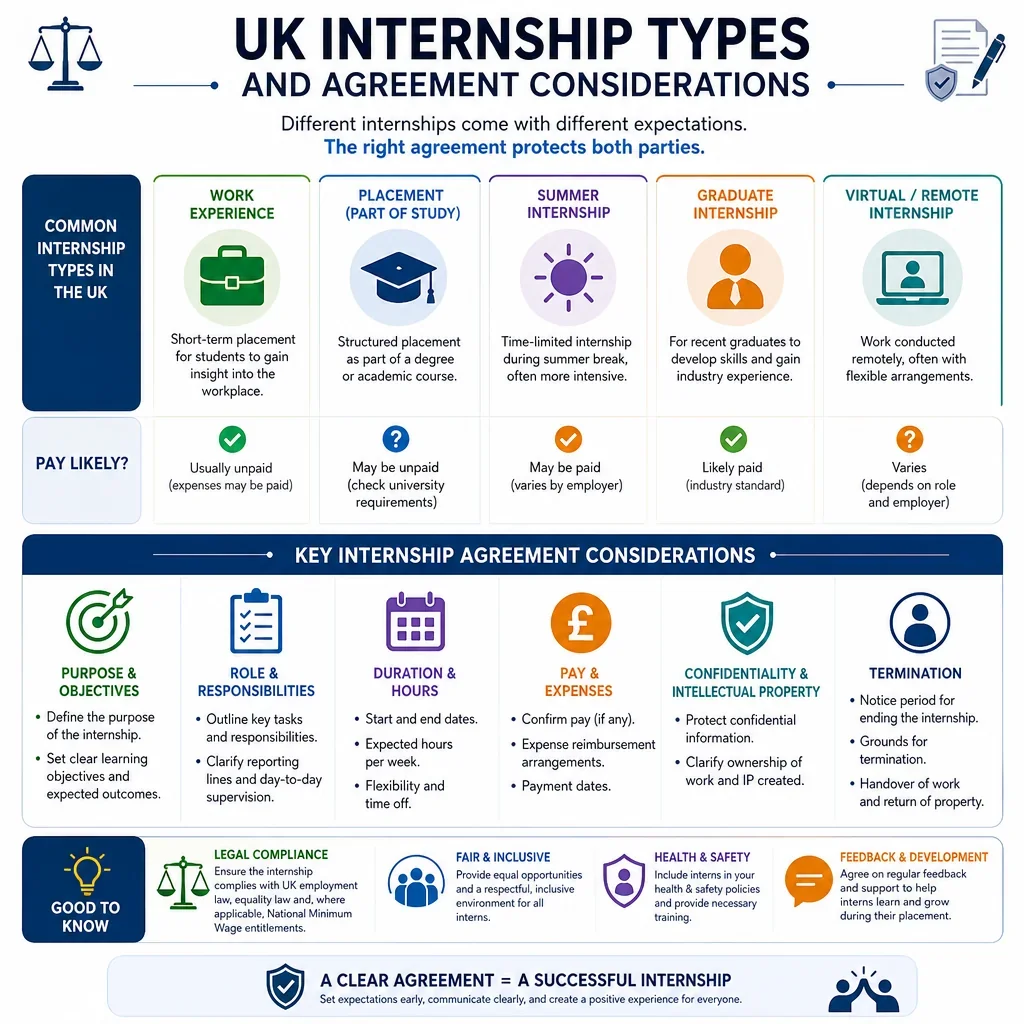
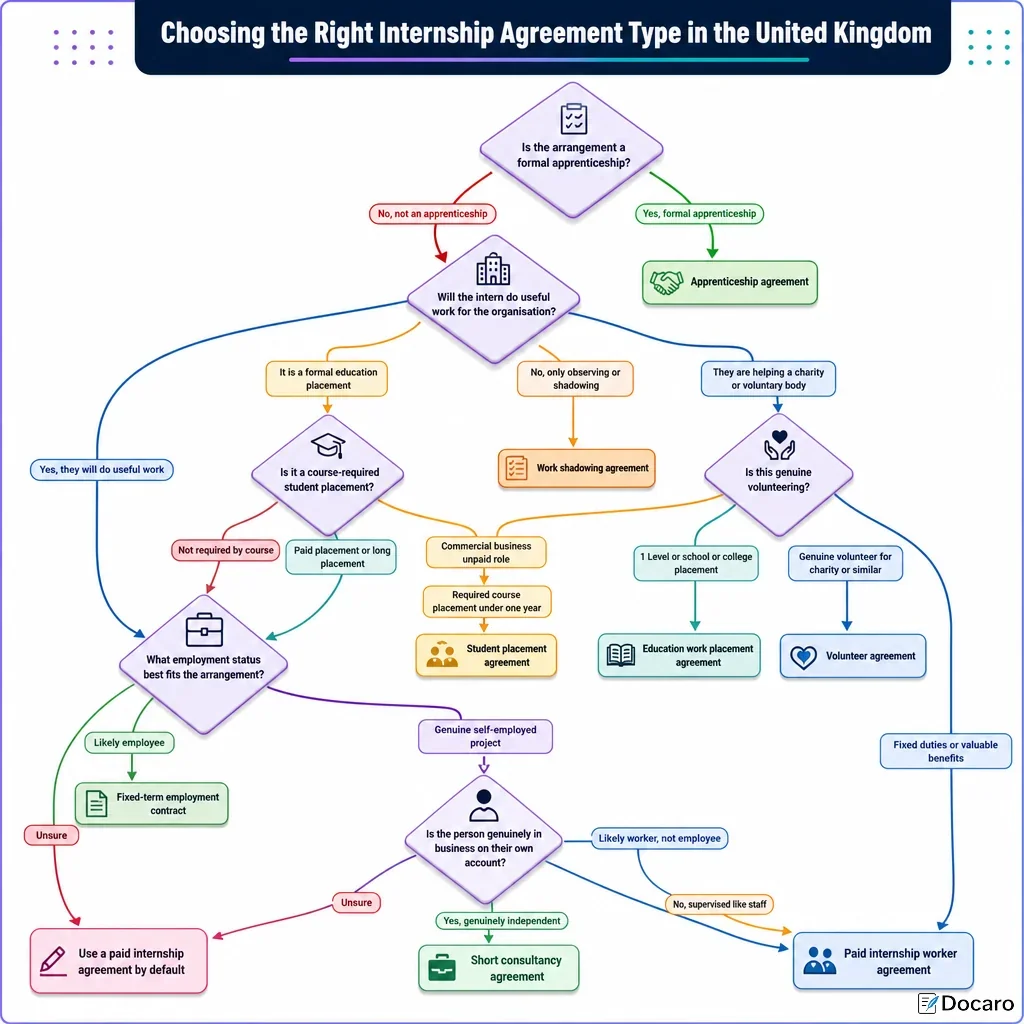
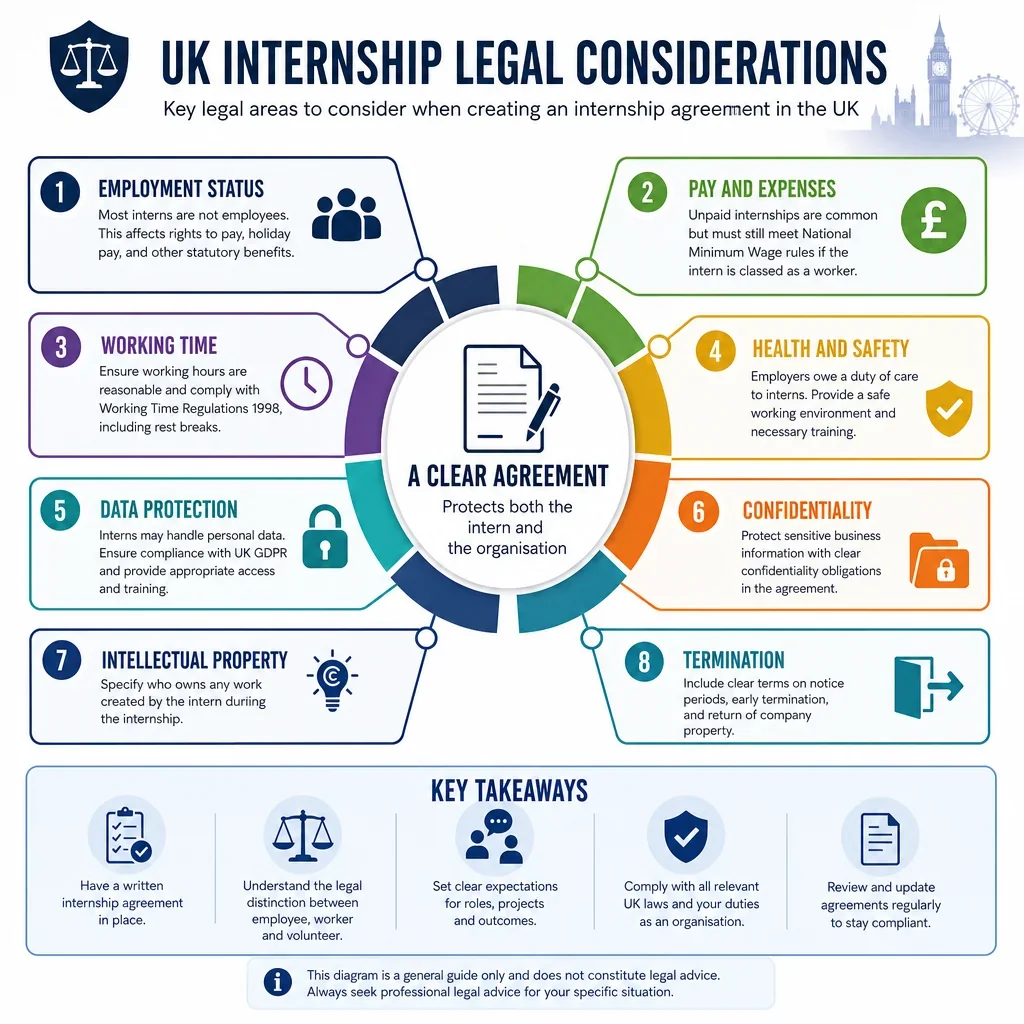
An internship agreement should not assume the role is unpaid. In the UK, the central question is whether the intern is a worker for National Minimum Wage purposes. If the intern must perform set tasks, attend fixed hours, is supervised like staff, or contributes productive work to the business, the safest approach is usually to pay at least the applicable minimum wage and document worker-style protections.
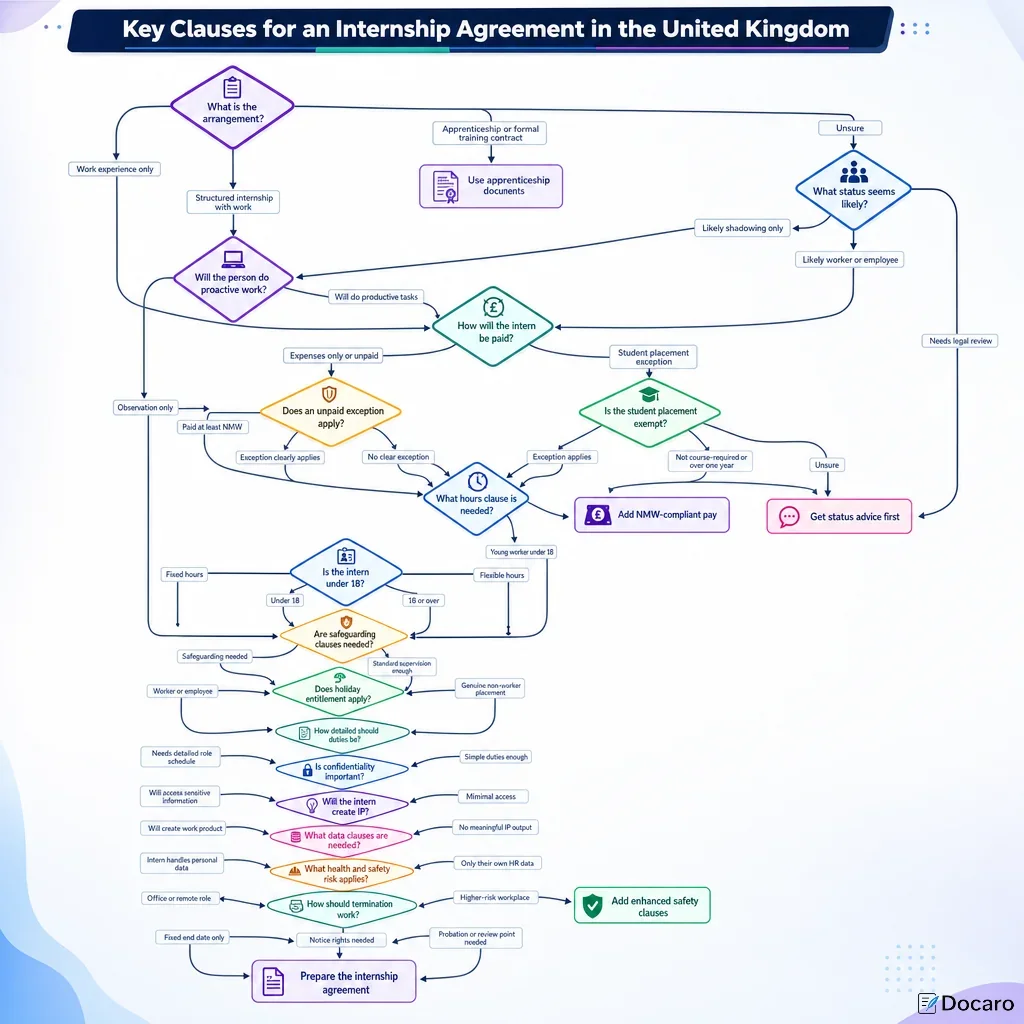
What Should A UK Internship Agreement Cover To Reduce Legal Risk?
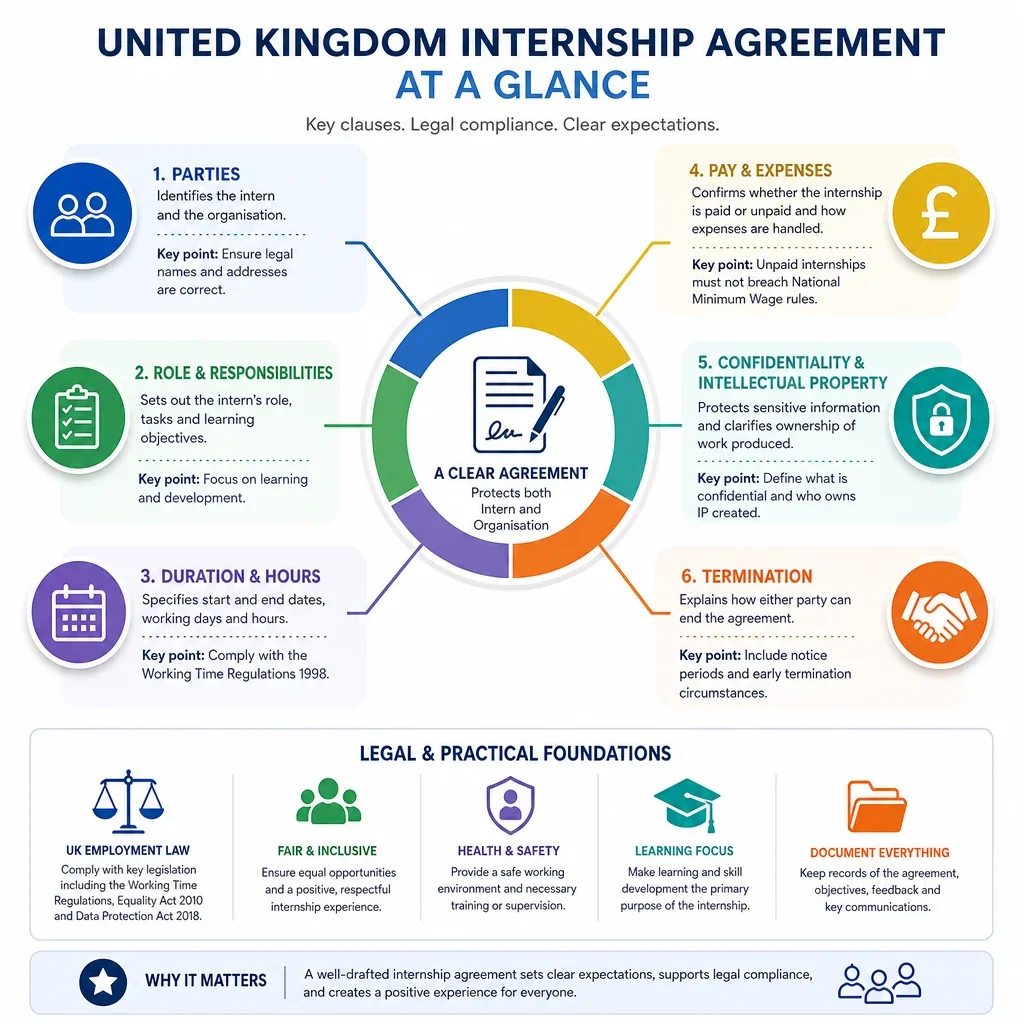
- Status and duties: describe whether the arrangement is work experience, a student placement, volunteering, or paid work, but remember that labels are not decisive.
- Pay and expenses: state wage entitlement where applicable and set a clear expenses policy, because reimbursed expenses cannot normally be used to satisfy minimum wage obligations.
- Working time: include hours, rest breaks, holiday arrangements for workers, and any young worker limits where relevant.
- Safety and safeguarding: require induction, risk assessment, supervision, accident reporting, and insurance checks, especially for young interns or external placements.
- Confidentiality and data: include proportionate confidentiality, IP, acceptable use, privacy notice, and data handling obligations.
- Equality: prohibit harassment and discrimination and make reasonable adjustment processes clear, including for recruitment and unpaid placements linked to work opportunities.
What Are The Highest Risk Areas For UK Internship Hosts?
The highest risk issues are misclassifying interns as unpaid when they are legally workers, failing to pay National Minimum Wage, exposing interns to unsafe work, discrimination or harassment, and mishandling personal data. These risks can lead to HMRC enforcement, tribunal claims, regulatory scrutiny, reputational damage, and invalid or uninsured placement arrangements.
FAQs
You Might Also Be Interested In