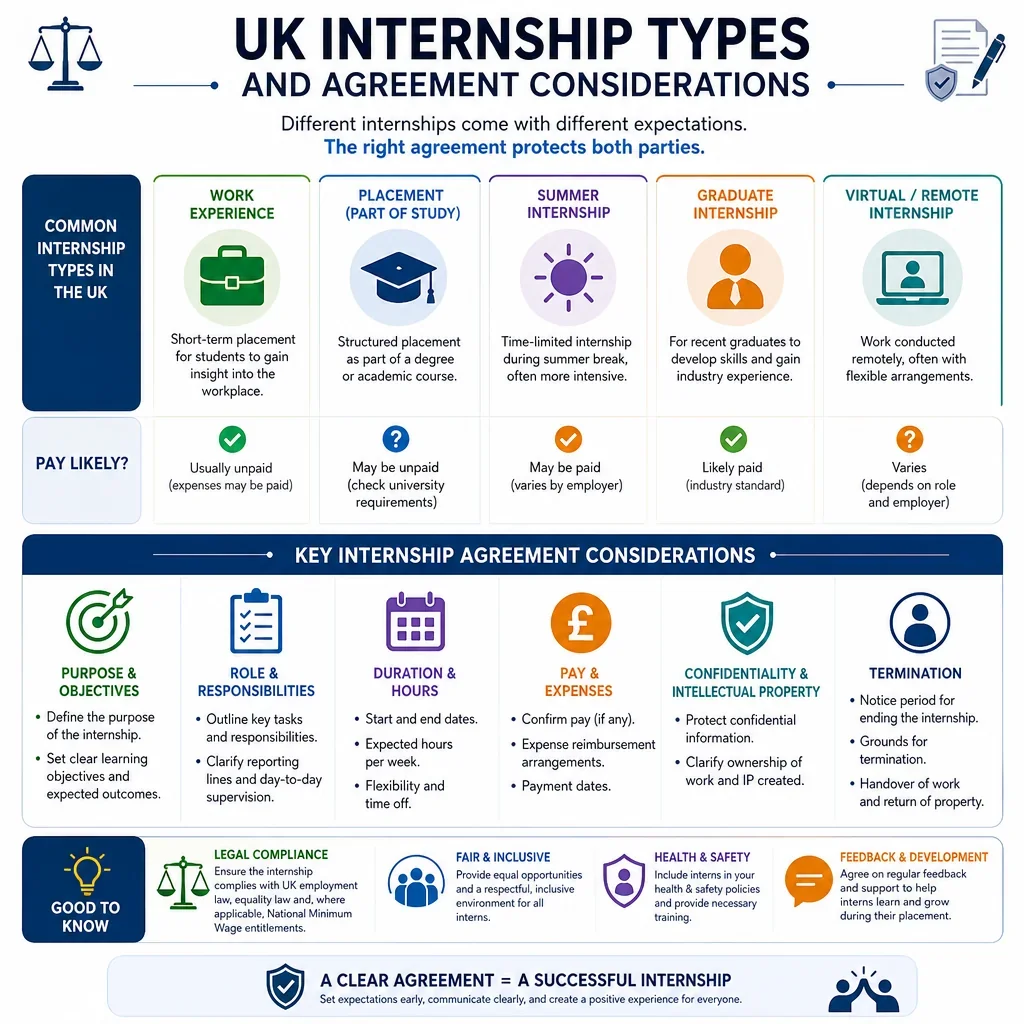
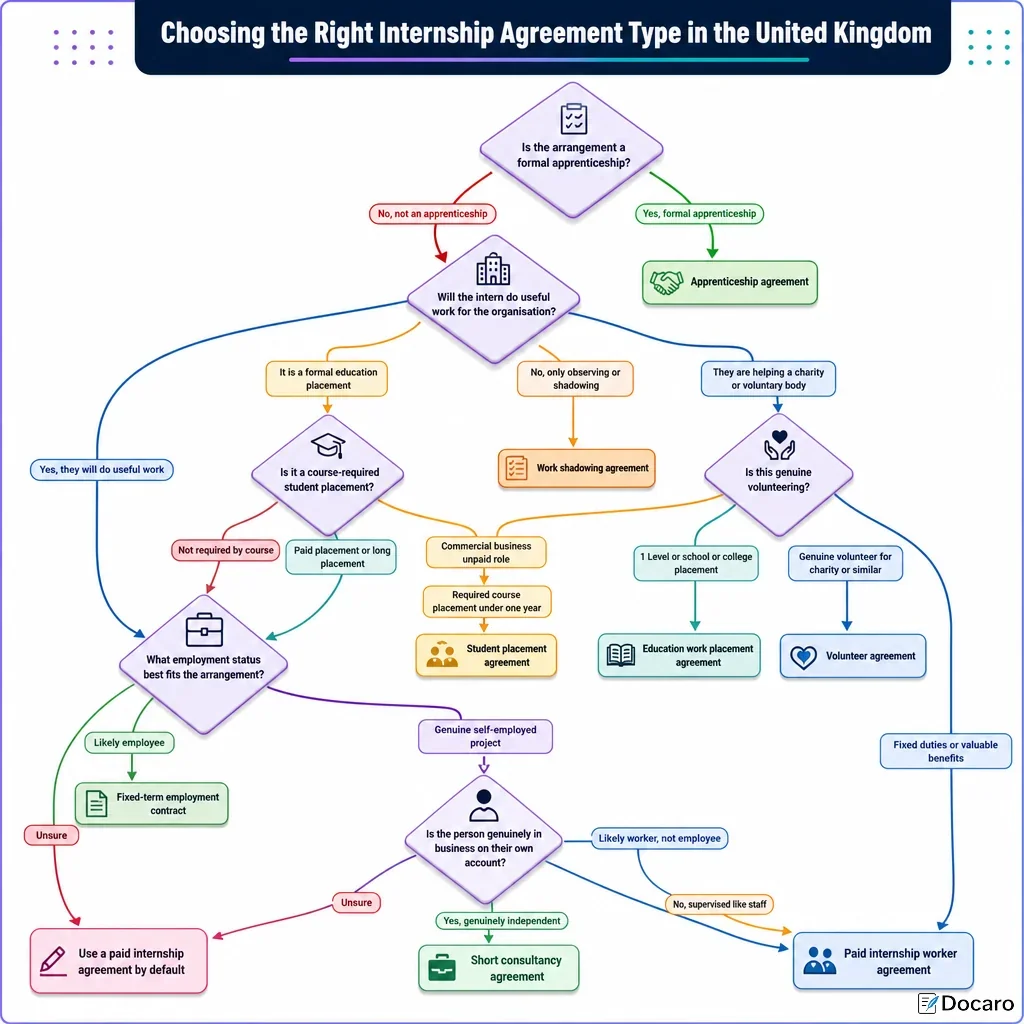
Choosing The Right Internship Agreement Type In The United Kingdom
Is the arrangement a formal apprenticeship?
Why Does The Right UK Internship Agreement Matter?
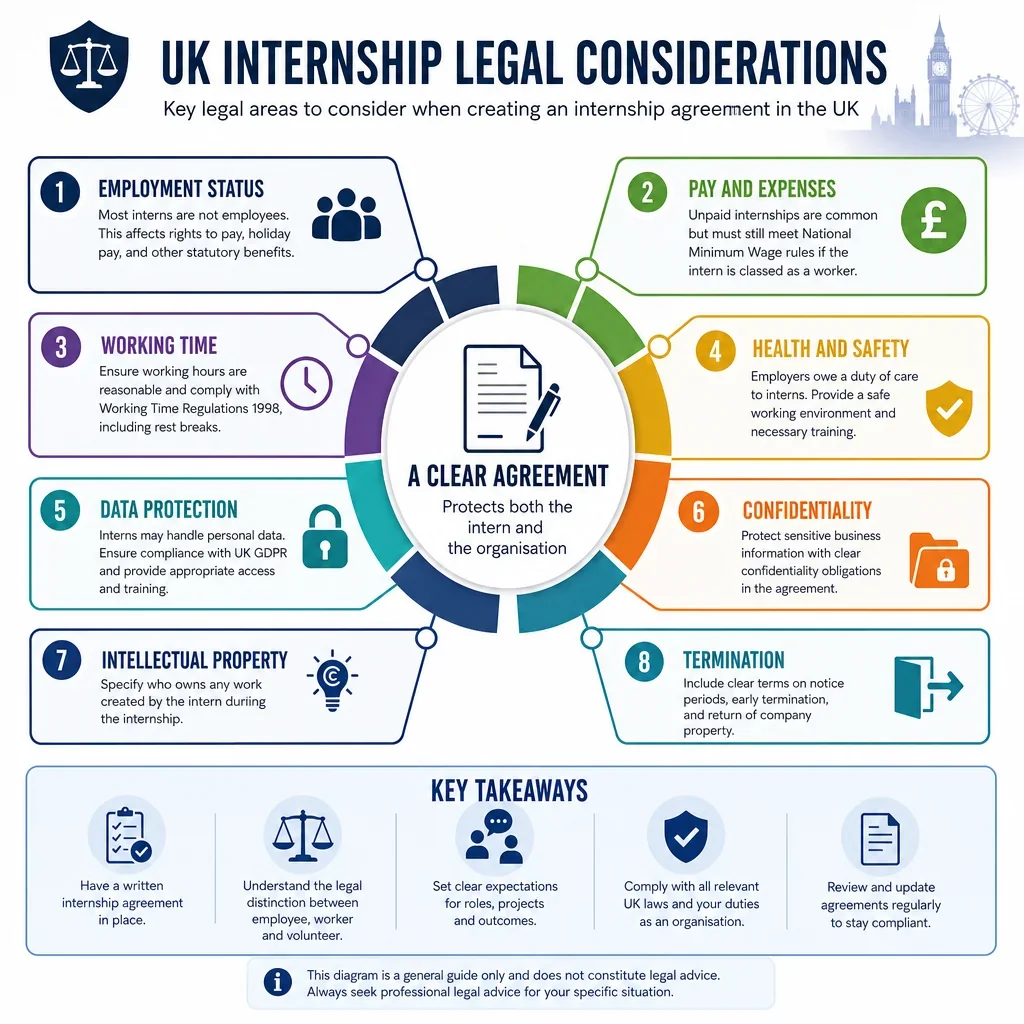
Choosing the right internship agreement helps match the document to the legal reality of the arrangement. In the United Kingdom, calling someone an intern, volunteer or trainee does not by itself decide their rights. If the person is doing useful work under control, they may be entitled to worker or employee protections.
How Can The Wrong Agreement Create Minimum Wage Risk?
If an intern is a worker, they are usually entitled to the applicable National Minimum Wage or National Living Wage. An unpaid internship agreement used for real productive work can create arrears, penalties and reputational risk.
When Is An Unpaid Internship Agreement Appropriate?
Unpaid arrangements are generally safer where the person is only observing, is a genuine volunteer, or is on a qualifying education placement. Even then, the document should be carefully drafted so it does not accidentally create contractual work obligations.
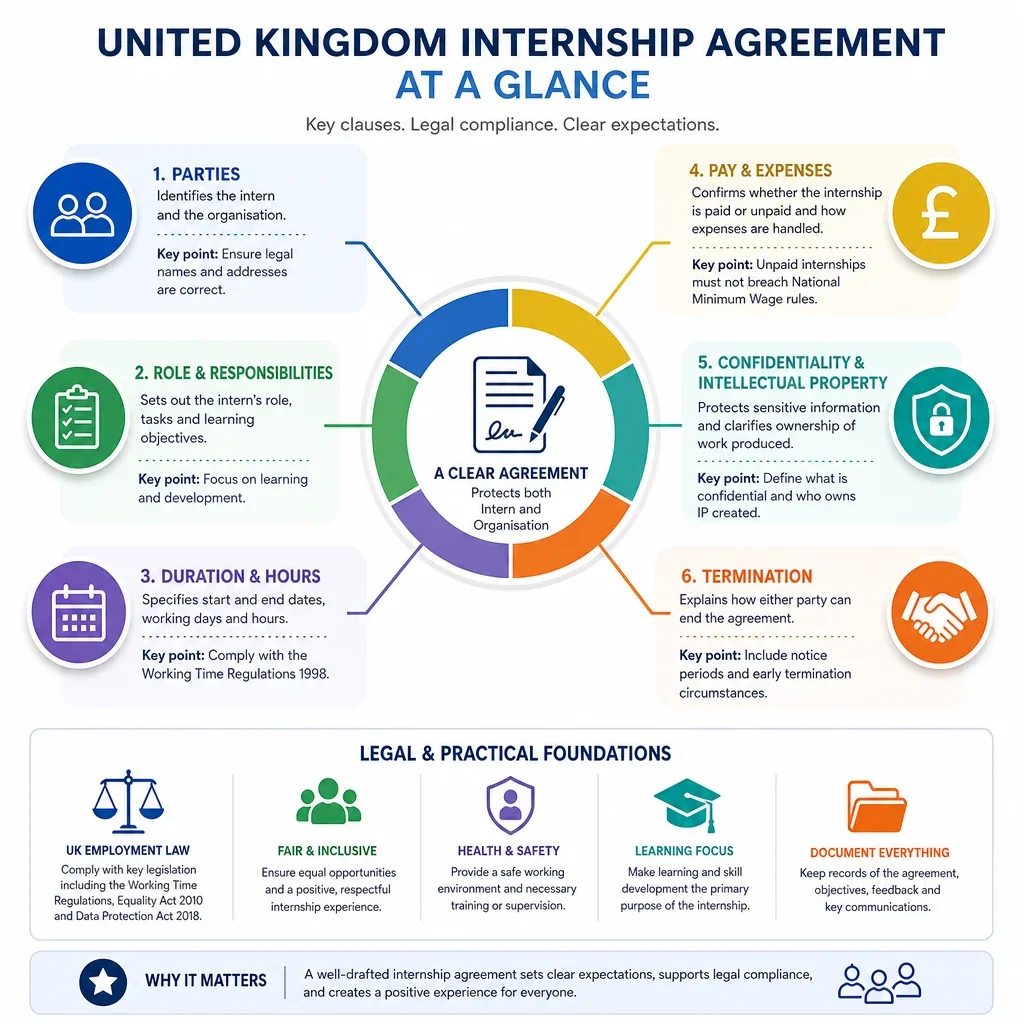
What Should A UK Internship Agreement Cover?
- Status: whether the person is a worker, employee, volunteer, student or observer.
- Pay And Expenses: wages where required, plus permitted reimbursement of genuine expenses.
- Duties And Learning Aims: what the intern will do and what they should learn.
- Confidentiality And IP: protection for business information and work created during the placement.
- Health, Safety And Safeguarding: especially for young people and education placements.
- Duration And Ending: start date, end date, notice and early termination rules.
A well-chosen agreement supports compliance, manages expectations and gives both the organisation and the intern a clearer, fairer placement.
FAQs
You Might Also Be Interested In