United Kingdom Internship Agreement Clause Library
Clause Name | Purpose | Usage Frequency | Drafting Notes | Legal Importance |
|---|---|---|---|---|
Core terms | ||||
Parties and Organisation Details | Identifies the organisation and the intern entering the agreement. | Always common | Use full legal names, registered address, and any host department or manager details. | Medium |
Internship Role Title | States the title or nature of the internship placement. | Always common | Avoid inflated job titles if the role is mainly observation or training. | Medium |
Purpose and Learning Objectives | Explains the educational aims and expected learning outcomes. | Often used | Useful where the arrangement is intended as training rather than ordinary work. | Medium |
Start Date | Records when the internship begins. | Always common | State whether the date depends on checks, visa status, or academic approval. | Medium |
Fixed End Date | Confirms when the internship is scheduled to finish. | Always common | Use a clear date avoid open-ended wording if the placement is temporary. | Medium |
Placement Duration | States the total expected length of the internship. | Always common | Align duration with visa limits, course requirements, funding, and working time expectations. | Medium |
Place of Internship | Identifies where the intern will usually perform the placement. | Always common | Specify office, remote, hybrid, client-site, or multi-site arrangements. | Medium |
Duties and Tasks | Describes the work, activities, or projects the intern may undertake. | Always common | Productive duties and personal work obligations may indicate worker status. | High |
Supervision and Reporting Line | Identifies who supervises the intern and reviews their work. | Always common | Name the supervisor or role and define escalation routes for concerns. | Medium |
Working Hours | Sets the intern's expected days, hours, and attendance pattern. | Always common | Fixed hours may support worker status comply with working time limits and breaks. | High |
Flexible Attendance | Allows limited variation to the intern's attendance pattern. | Often used | Avoid excessive employer control if the arrangement is meant to be voluntary shadowing. | Medium |
Remote Working Arrangements | Sets rules for working from home or another approved location. | Situation dependent | Cover equipment, confidentiality, health and safety, data security, and supervision. | Medium |
Training and Induction | Confirms induction, training, and orientation to be provided. | Often used | Include health and safety, data protection, equality, safeguarding, and IT training as relevant. | Medium |
No Guarantee of Employment | Confirms the internship does not promise a future job. | Often used | Do not use this to deny statutory rights if the intern is actually a worker or employee. | Medium |
Legal compliance | ||||
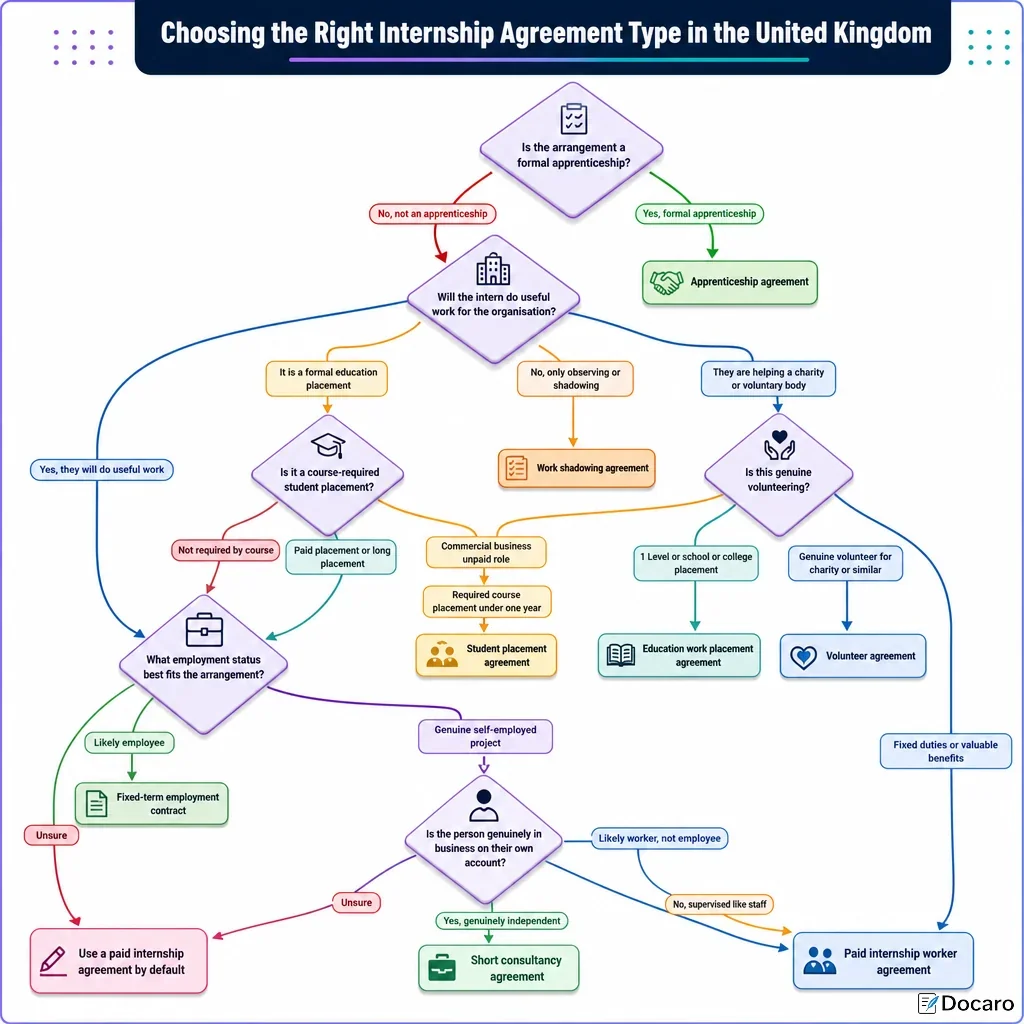
Employment Status Statement | States whether the parties intend employment, worker, volunteer, or student placement status. | Always common | Labels are not decisive actual rights depend on the true working relationship. | High |
Personal Service Requirement | States whether the intern must personally perform the placement tasks. | Situation dependent | A personal service obligation is relevant to worker and employment status analysis. | High |
No Mutuality Beyond Placement | Limits obligations to provide or accept work outside agreed internship activities. | Situation dependent | Must reflect reality ongoing required work may undermine the clause. | High |
Payment and expenses | ||||
National Minimum Wage Compliance | Confirms pay arrangements comply with minimum wage law where applicable. | Always common | Interns classed as workers are generally entitled to at least the relevant minimum wage. | High |
Salary or Stipend | States any fixed pay, stipend, or allowance for the internship. | Often used | A stipend may still count as pay ensure minimum wage compliance if worker status applies. | High |
Payment Timing and Method | Explains when and how the intern will be paid. | Often used | Specify payroll date, bank transfer, tax treatment, and required bank details. | Medium |
Unpaid Internship Statement | States that no wages are paid, if legally appropriate. | Situation dependent | Use cautiously unpaid status is unsafe if the intern performs worker-like duties. | High |
Expenses Reimbursement | Sets which reasonable expenses can be claimed and reimbursed. | Often used | List travel, meals, accommodation, approval rules, receipts, and repayment timing. | Medium |
Travel Expenses | Explains whether commuting or business travel costs are covered. | Situation dependent | Distinguish ordinary commuting from required business travel and set evidence rules. | Medium |
Tax and National Insurance | Addresses tax and National Insurance treatment of payments. | Often used | Paid interns may need PAYE deductions depending on status and amounts paid. | High |
Holiday Entitlement | Sets paid holiday rights and request procedures where the intern is a worker. | Often used | Workers are generally entitled to 5.6 weeks' paid annual leave pro-rated. | High |
Conduct and policies | ||||
Sickness Absence Reporting | Explains how the intern must report sickness or inability to attend. | Often used | State notification time, evidence requirements, and whether statutory sick pay may apply. | Medium |
Payment and expenses | ||||
Deductions From Pay | Allows only lawful deductions from any pay due to the intern. | Situation dependent | Deductions generally need statutory authority, contractual authority, or prior written consent. | High |
Conduct and policies | ||||
Standards of Conduct | Sets expected behaviour, professionalism, and cooperation standards. | Always common | Link to staff handbook, code of conduct, anti-harassment, and disciplinary rules if applicable. | Medium |
Compliance With Policies | Requires the intern to follow relevant workplace policies. | Always common | Provide policies before or at induction and state whether they are contractual. | Medium |
Legal compliance | ||||
Health and Safety Duties | Confirms workplace health and safety duties and intern cooperation. | Always common | Include risk assessments, training, reporting hazards, and accident procedures. | High |
Equality and Non-Discrimination | Requires respectful conduct and compliance with equality obligations. | Always common | Cover harassment, victimisation, reasonable adjustments, and protected characteristics. | High |
Conduct and policies | ||||
Anti-Harassment and Bullying | Prohibits bullying, harassment, sexual harassment, and abusive behaviour. | Always common | Align with Equality Act duties and internal reporting procedures. | High |
Safeguarding | Sets safeguarding duties where children or vulnerable adults may be involved. | Situation dependent | Consider DBS checks, reporting duties, supervision, and sector-specific safeguarding policies. | High |
Legal compliance | ||||
Right To Work Checks | Requires evidence that the intern can lawfully work in the UK. | Always common | Carry out checks before work starts student visa limits may restrict hours and work type. | High |
Student Visa Work Restrictions | Ensures the internship fits any visa work limits applying to the intern. | Situation dependent | Check term-time hour limits, prohibited work, and course placement requirements. | High |
Confidentiality and data | ||||
Confidential Information | Protects business, client, technical, financial, and operational information. | Always common | Define confidential information broadly but allow legal disclosures and protected disclosures. | High |
Confidentiality Duration | States how long confidentiality duties continue after the internship ends. | Often used | Trade secrets may justify indefinite protection other information may need a reasonable period. | High |
Data Protection Compliance | Requires lawful handling of personal data during the internship. | Always common | Provide training, access controls, breach reporting rules, and privacy notice references. | High |
Access To Personal Data | Limits intern access to personal data to authorised purposes only. | Often used | Use role-based access and require immediate reporting of misdirected or lost data. | High |
Data Breach Reporting | Requires prompt reporting of suspected personal data breaches. | Often used | Set immediate internal reporting because reportable breaches may have strict ICO deadlines. | High |
Intern Privacy Notice | Directs the intern to information about how their personal data is used. | Always common | Provide a UK GDPR-compliant privacy notice covering recruitment and placement data. | High |
Conduct and policies | ||||
IT Systems Use | Sets rules for use of business computers, accounts, networks, and software. | Always common | Cover passwords, MFA, prohibited use, monitoring, software downloads, and account closure. | Medium |
Confidentiality and data | ||||
Systems Monitoring | Explains that business systems may be monitored for lawful purposes. | Situation dependent | Monitoring must be transparent, proportionate, and reflected in privacy information. | High |
Conduct and policies | ||||
Social Media and Public Communications | Controls public posts, comments, and communications about the organisation. | Often used | Balance reputation protection with lawful whistleblowing and personal expression. | Medium |
Confidentiality and data | ||||
Photography and Media Consent | Records consent or rules for using the intern's image or profile publicly. | Situation dependent | Use clear consent and give privacy information for marketing images or biographies. | Medium |
Intellectual property | ||||
Intellectual Property Ownership | Allocates ownership of work product created during the internship. | Always common | Non-employee interns may need express IP assignment copyright rules differ for employees. | High |
Assignment of Intern-Created IP | Transfers relevant rights in intern-created materials to the organisation. | Often used | Assignments of copyright must be in writing and signed by or on behalf of the assignor. | High |
Moral Rights Waiver | Waives rights to be identified as author and object to derogatory treatment where lawful. | Situation dependent | Moral rights generally need express written waiver if the organisation needs unrestricted use. | Medium |
Pre-Existing Materials | Protects materials owned by either party before the internship starts. | Situation dependent | Require disclosure of prior code, designs, templates, datasets, or portfolio materials. | Medium |
Open Source Software Use | Controls use of open source code in internship deliverables. | Situation dependent | Require approval and licence compliance, especially for copyleft licences. | High |
Inventions and Improvements | Deals with inventions, discoveries, and improvements made during the internship. | Situation dependent | Consider patent ownership rules and require prompt disclosure of inventions. | High |
Portfolio Use of Work | States whether the intern may show work in a portfolio or CV. | Situation dependent | Permit only approved, non-confidential, non-client materials where appropriate. | Medium |
Conduct and policies | ||||
Conflicts of Interest | Requires disclosure of interests that may conflict with the internship. | Often used | Cover competing work, family interests, supplier relationships, and academic conflicts. | Medium |
Outside Work and Studies | Manages other work, study commitments, and availability conflicts. | Situation dependent | Avoid unreasonable restrictions consider working time, visa, and course commitments. | Medium |
Gifts and Hospitality | Controls acceptance of gifts, benefits, or hospitality during the internship. | Situation dependent | Align with anti-bribery policies and reporting thresholds. | Medium |
Legal compliance | ||||
Anti-Bribery and Corruption | Prohibits bribery, facilitation payments, and corrupt conduct. | Often used | Important where interns contact customers, suppliers, public officials, or overseas partners. | High |
Whistleblowing and Protected Disclosures | Preserves rights to make protected disclosures about wrongdoing. | Often used | Confidentiality clauses must not prevent lawful protected disclosures. | High |
Conduct and policies | ||||
Complaints and Grievances | Explains how the intern can raise concerns or complaints. | Often used | Identify contact person and link to grievance or complaints policy where applicable. | Medium |
Disciplinary Procedure | Sets how misconduct or performance concerns may be handled. | Situation dependent | Use proportionate procedures employees may have wider unfair dismissal protections. | Medium |
Core terms | ||||
Feedback and Review Meetings | Provides for progress reviews, feedback, and learning support. | Often used | Schedule informal or formal reviews without promising continued employment. | Low |
Academic Placement Requirements | Links the internship to course, college, or university requirements. | Situation dependent | Coordinate with tripartite placement agreements, assessment duties, and tutor contact. | Medium |
Ending the internship | ||||
Reference Policy | States whether the organisation may provide a reference after the placement. | Situation dependent | Be consistent, accurate, fair, and mindful of data protection obligations. | Medium |
Notice Period | Sets how either party may end the internship early on notice. | Always common | Keep proportionate to placement length and clarify written notice method. | Medium |
Immediate Termination | Allows ending without notice for serious breach or misconduct. | Often used | List serious examples such as dishonesty, harassment, safety breach, or confidentiality breach. | High |
Automatic Expiry On End Date | Confirms the agreement ends automatically on the stated end date. | Always common | Avoid conduct suggesting renewal unless the parties formally extend the placement. | Medium |
Handover Obligations | Requires the intern to complete handover notes and transfer work in progress. | Often used | Useful for project-based internships and client-facing placements. | Low |
Return of Property | Requires return of equipment, passes, documents, and copies at the end. | Always common | Include deletion of local copies and disablement of accounts and access rights. | High |
Survival of Key Obligations | States which obligations continue after the internship ends. | Often used | Usually covers confidentiality, IP, data protection, repayment, and dispute clauses. | High |
Post-Termination Restrictions | Restricts certain competitive or solicitation activity after the internship. | Rarely needed | Use only if necessary and narrowly drafted broad restrictions on interns may be unenforceable. | High |
Legal compliance | ||||
Liability and Insurance | Addresses insurance cover and liability for loss, damage, or injury. | Often used | Check employers' liability, public liability, professional indemnity, and student placement cover. | High |
Young Worker Protections | Applies special protections where the intern is under 18. | Situation dependent | Check limits on hours, night work, rest, risk assessments, and local child employment rules. | High |
Working Time Opt-Out | Records any voluntary opt-out from the 48-hour weekly working time limit. | Rarely needed | Usually unnecessary for internships opt-out must be voluntary and not used for young workers. | Medium |
Rest Breaks | Confirms daily, weekly, and in-shift rest entitlements where applicable. | Often used | Include longer or different protections for young workers where relevant. | High |
Core terms | ||||
Probationary Period | Provides an initial assessment period within a longer internship. | Rarely needed | Often inappropriate for short internships avoid implying ongoing employment if not intended. | Low |
Ending the internship | ||||
Extension of Internship | Sets how the internship may be extended by written agreement. | Situation dependent | Re-check pay, visa, working time, course approval, and employment status before extending. | Medium |
Core terms | ||||
Variation of Agreement | Requires changes to be agreed in writing. | Often used | Useful where hours, duties, pay, or location may change during the placement. | Medium |
Entire Agreement | States that the written agreement contains the agreed internship terms. | Often used | Do not exclude liability for misrepresentation unlawfully or override statutory rights. | Medium |
Legal compliance | ||||
Third Party Rights | States whether anyone other than the parties may enforce the agreement. | Situation dependent | Consider university, group company, or host organisation enforcement rights if relevant. | Low |
Core terms | ||||
Notices | Sets how formal notices under the agreement must be given. | Often used | Allow practical methods such as email while confirming when notice is treated as received. | Low |
Legal compliance | ||||
Governing Law and Jurisdiction | Identifies the law and courts that govern the internship agreement. | Always common | Use the appropriate UK jurisdiction, such as England and Wales, Scotland, or Northern Ireland. | Medium |
Severance | Allows valid parts of the agreement to continue if a clause is invalid. | Often used | Useful for IP, confidentiality, and restriction clauses that may be partly challenged. | Low |
Core terms | ||||
Signatures and Counterparts | Provides for execution of the agreement by the parties. | Always common | Ensure IP assignments and consent clauses are signed where required. | Medium |
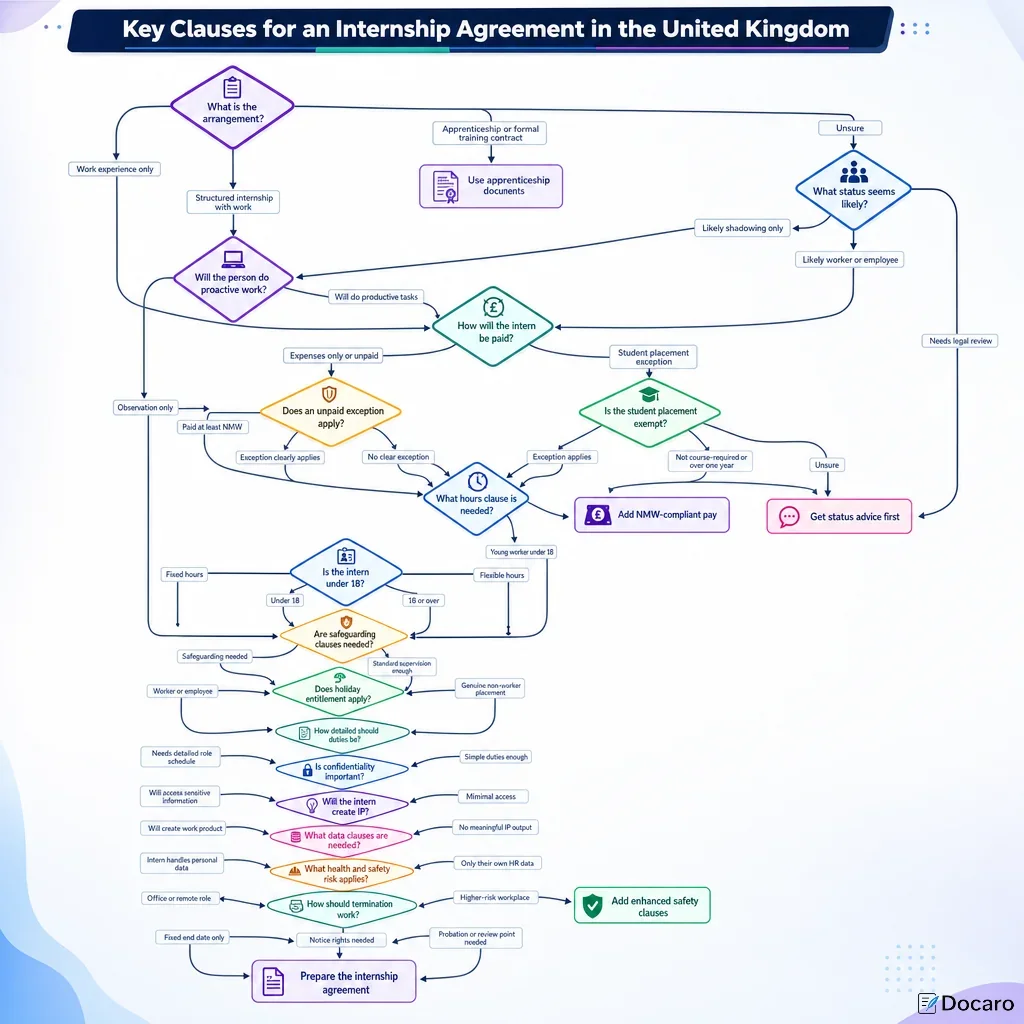
What Should A UK Internship Agreement Include?
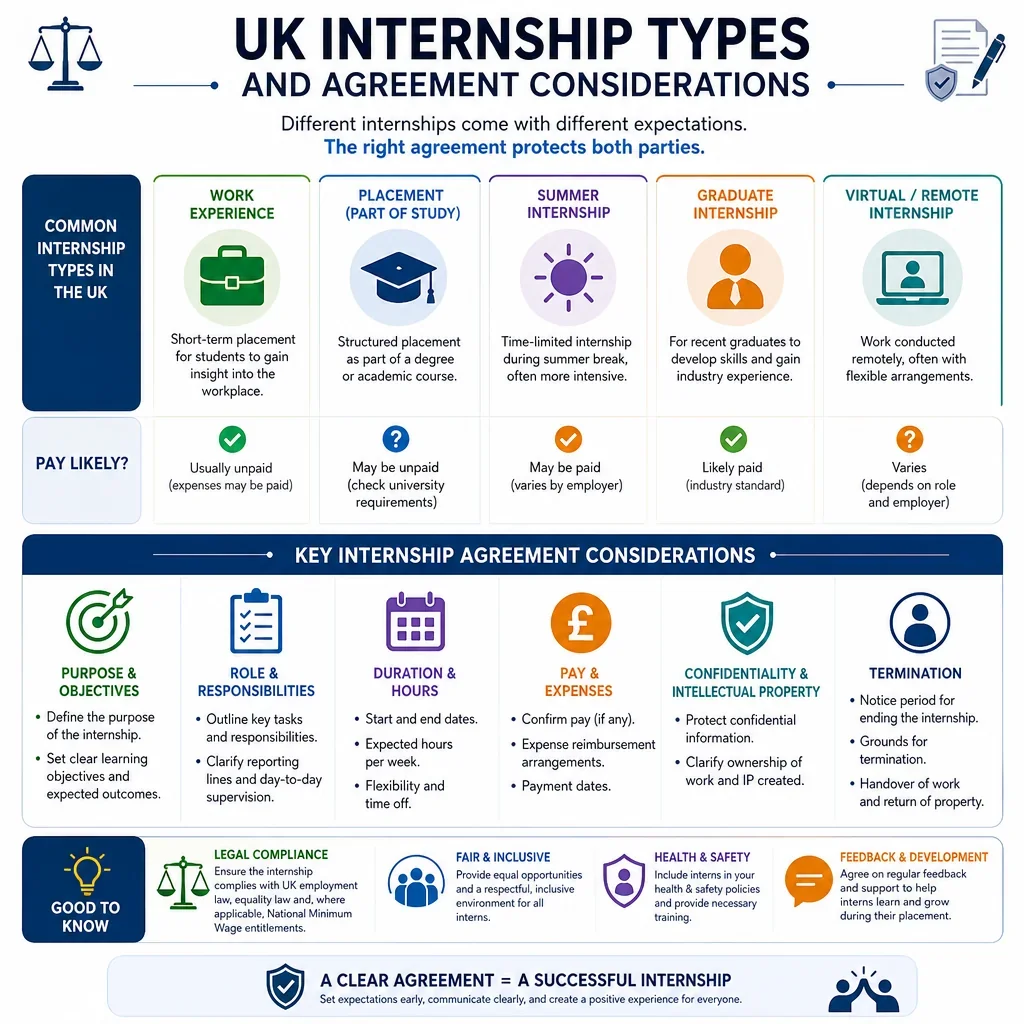
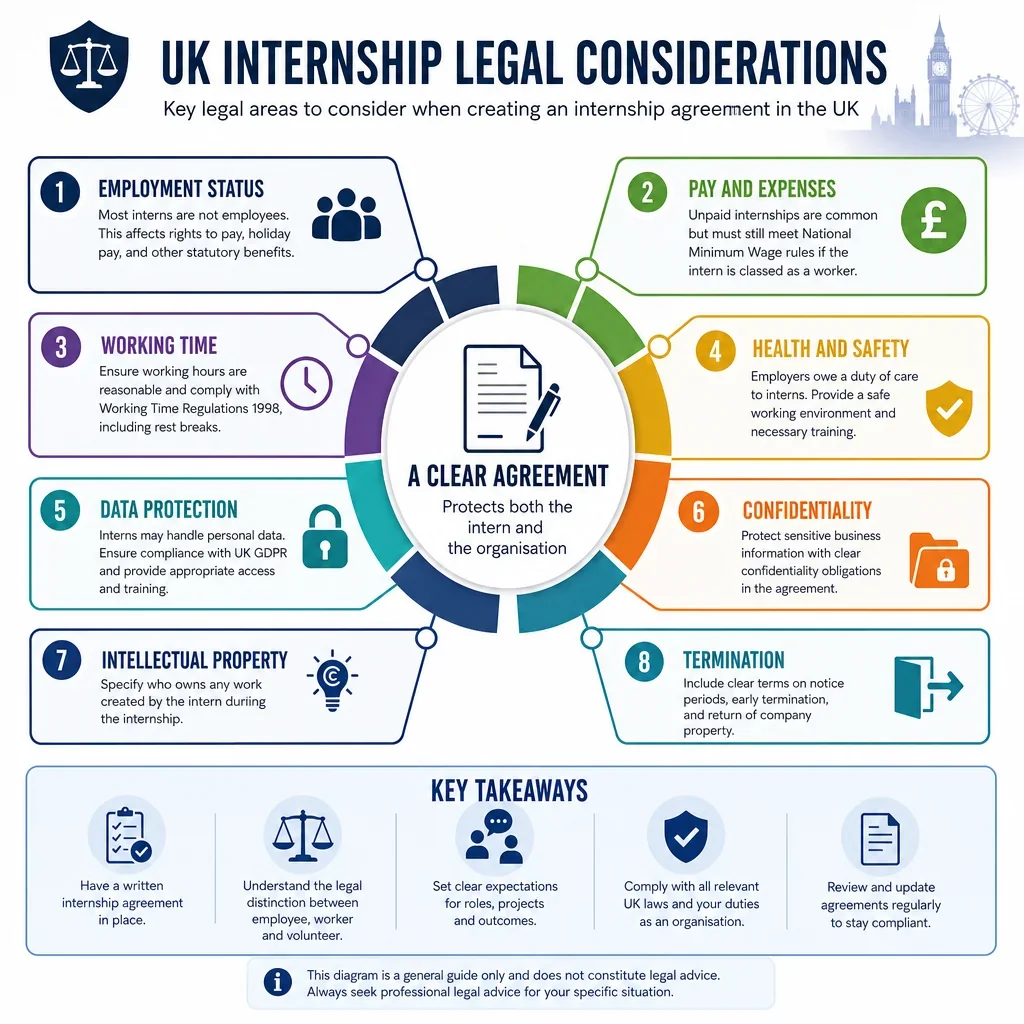
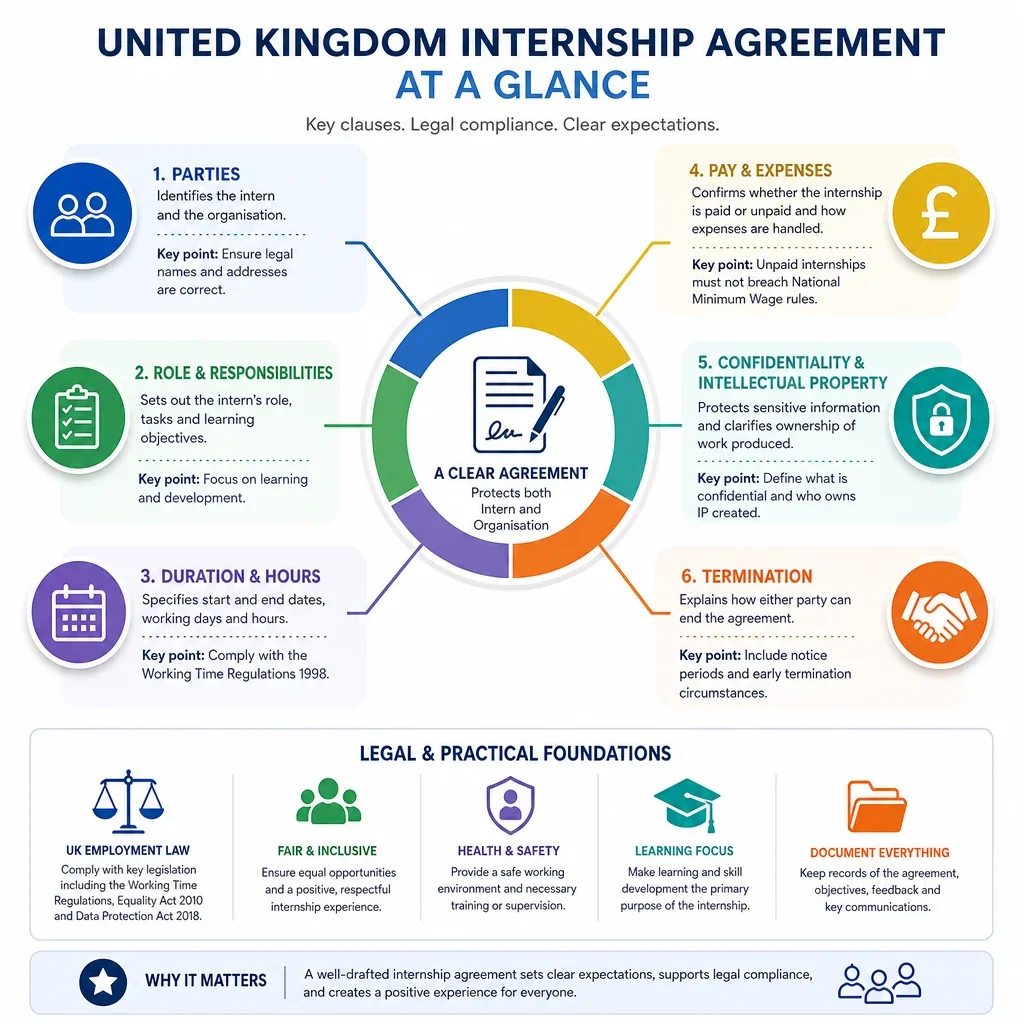
A UK internship agreement should not just describe the placement. It should make clear whether the intern is expected to work personally, follow set hours, perform productive tasks, and receive supervision, because these points can affect whether the intern is a worker entitled to the National Minimum Wage and paid holiday.
When Is Payment A Key Risk In An Internship Agreement?
Payment clauses are high importance where the intern will do real work for the organisation rather than only shadowing or volunteering. If the arrangement meets the legal tests for worker status, calling the document an internship agreement will not remove statutory rights. Drafting should address wages, expenses, holiday, working time, and deductions clearly.
Which Clauses Protect The Business During An Internship?
The most protective clauses usually cover confidentiality, data protection, intellectual property, IT use, conduct, conflicts of interest, and return of property. These are especially important where an intern will access client information, personal data, source code, designs, research, or business plans.
How Should An Internship End?
The agreement should include a clear end date, notice rights, early termination grounds, handover duties, and return of property. If the intern may be an employee or worker, the organisation should avoid language that contradicts the intended status and should still comply with statutory rights that cannot be contracted out of.
FAQs
You Might Also Be Interested In