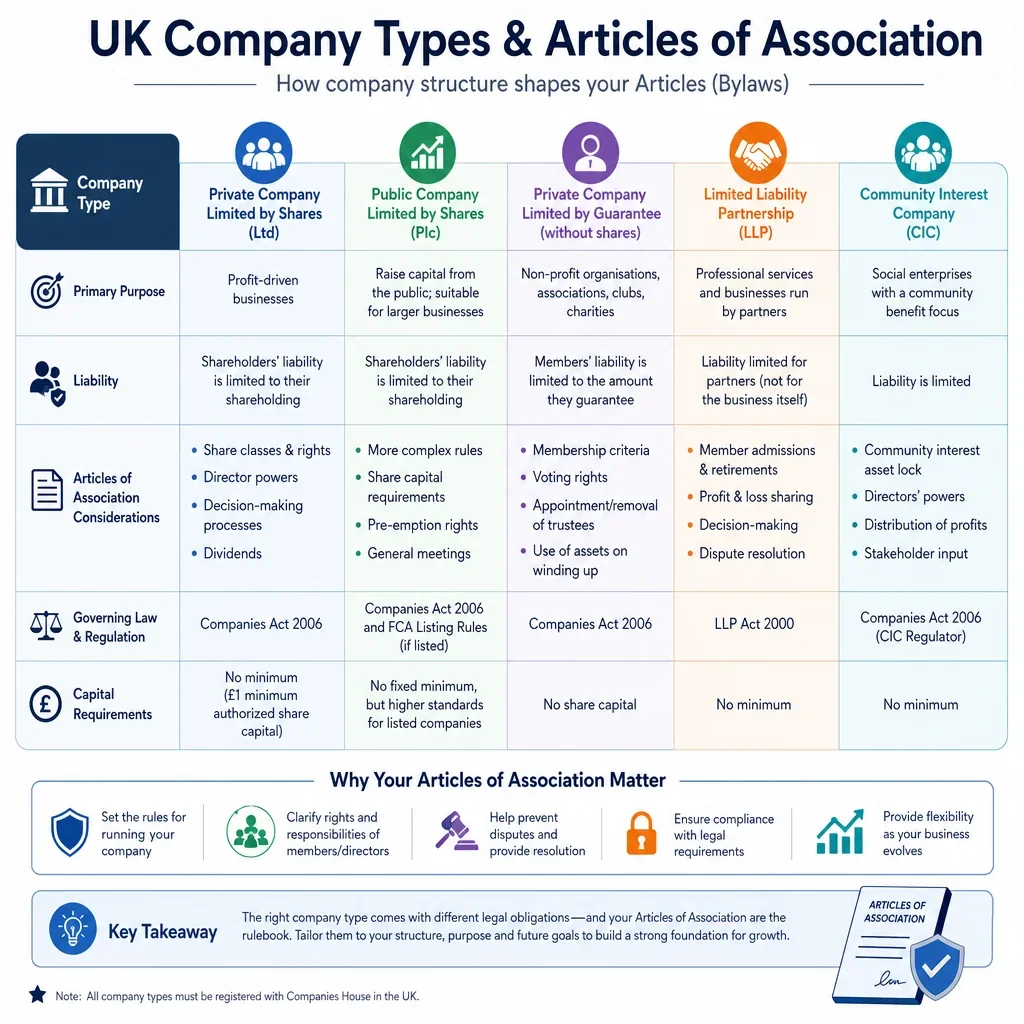
UK Company Types And Articles Of Association Considerations
Structure Category | Uses Share Capital | Limited Liability | Common Use Case | Key Articles Considerations |
|---|---|---|---|---|
Private company limited by shares | ||||
Private company limited by shares | true | true | Trading business with shareholder ownership and limited liability. | Share classes, pre-emption rights, transfer restrictions, dividends, board powers and decision-making. |
Single-member private company limited by shares | ||||
Private company limited by shares | true | true | Owner-managed business with one shareholder. | Sole-director operation, written resolutions, succession, share transfers and avoiding quorum deadlock. |
Owner-managed private company | ||||
Private company limited by shares | true | true | Small business where owners also manage the company. | Director powers, shareholder approval matters, remuneration, dividends, transfers on death and disputes. |
Startup private company | ||||
Private company limited by shares | true | true | Early-stage business seeking founders, employees and investors. | Founder vesting, investor consent rights, share classes, drag-along, leaver provisions and option plan authority. |
Venture-backed private company | ||||
Private company limited by shares | true | true | Growth company with institutional or angel investment. | Preferred shares, liquidation preference, anti-dilution, investor vetoes, information rights and board seats. |
Family investment company | ||||
Private company limited by shares | true | true | Family wealth holding and succession planning. | Alphabet shares, transfer restrictions, consent controls, inheritance events, dividends and reserved family matters. |
Property management company limited by shares | ||||
Private company limited by shares | true | true | Managing freehold or leasehold property interests. | Link shares to units, transfer with flats, service charge governance, director eligibility and member voting. |
Right to manage company | ||||
Private company limited by guarantee | false | true | Leaseholders taking over management of a qualifying building. | Use prescribed RTM Articles, membership eligibility, notice procedures, voting and building-management powers. |
Flat management company limited by guarantee | ||||
Private company limited by guarantee | false | true | Leaseholder-controlled management without share ownership. | Membership tied to leases, service charge decisions, director appointment, transfer on sale and reserve funds. |
Wholly owned subsidiary company | ||||
Private company limited by shares | true | true | Ring-fenced group company owned by a parent company. | Parent reserved matters, director appointments, intra-group transfers, dividend policy and conflict authorisation. |
Joint venture company | ||||
Private company limited by shares | true | true | Two or more parties owning a project or business together. | Deadlock, reserved matters, equal board rights, transfer restrictions, exit rights and confidentiality. |
Special purpose vehicle | ||||
Private company limited by shares | true | true | Single project, asset holding or finance structure. | Restricted objects if needed, lender consent rights, director powers, share pledges and transfer limits. |
Holding company | ||||
Private company limited by shares | true | true | Owning shares in subsidiaries or group assets. | Group governance, share classes, dividend flows, acquisition approvals, director conflicts and transfer restrictions. |
Dormant private company | ||||
Private company limited by shares | true | true | Name protection or future trading vehicle. | Simple governance, minimal share rights, future activation, director authority and easy share transfer. |
Private company with alphabet shares | ||||
Private company limited by shares | true | true | Flexible dividends or different shareholder economics. | Class rights, dividend discretion, voting rights, variation of rights and class consent thresholds. |
Private company with preference shares | ||||
Private company limited by shares | true | true | Investment terms with priority returns or liquidation rights. | Preference dividends, redemption, conversion, liquidation priority, voting rights and class consent. |
Private company with redeemable shares | ||||
Private company limited by shares | true | true | Planned buy-back or staged exit arrangements. | Redemption terms, funding, timing, notice, class rights and compliance with share capital rules. |
Employee ownership trust trading company | ||||
Private company limited by shares | true | true | Business owned for employees through a trust. | Trust shareholding controls, employee benefit purpose, transfer limits, board composition and dividend policy. |
Private company with employee share plan | ||||
Private company limited by shares | true | true | Incentivising staff with shares or options. | Option pool authority, employee share class, leaver rules, transfer restrictions and valuation mechanism. |
Private equity portfolio company | ||||
Private company limited by shares | true | true | Investor-controlled acquisition or growth vehicle. | Investor majority controls, ratchets, sweet equity, compulsory transfers, exit provisions and board vetoes. |
Private company with drag-along rights | ||||
Private company limited by shares | true | true | Company anticipating whole-company sale or investor exit. | Drag threshold, permitted buyer, sale notice mechanics, warranties, tag rights and minority protection. |
Private company with compulsory transfer provisions | ||||
Private company limited by shares | true | true | Protecting ownership if a member leaves, dies or defaults. | Trigger events, fair value formula, bad leaver discount, notice process and transfer completion mechanics. |
Professional services company limited by shares | ||||
Private company limited by shares | true | true | Consultancy or professional practice using corporate ownership. | Eligibility to hold shares, non-compete-linked transfers, leaver rules, profit distributions and director qualifications. |
Corporate member company for LLP participation | ||||
Private company limited by shares | true | true | Holding an LLP membership interest through a company. | Authority to join LLP, profit allocation governance, director approvals and group transfer restrictions. |
Private company limited by guarantee | ||||
Private company limited by guarantee | false | true | Non-profit, club, association or member body. | Member admission, guarantee amount, voting, subscriptions, expulsion, asset use and dissolution rules. |
Members club company limited by guarantee | ||||
Private company limited by guarantee | false | true | Sports, social or recreational club with members. | Membership classes, joining fees, conduct rules, disciplinary process, committees and member meetings. |
Trade association company limited by guarantee | ||||
Private company limited by guarantee | false | true | Industry body funded by members. | Member categories, voting weights, subscriptions, board elections, standards rules and expulsion powers. |
Residents association company limited by guarantee | ||||
Private company limited by guarantee | false | true | Representing residents or estate members. | Membership linked to property, voting by unit, service contributions, meeting notices and transfer on sale. |
Academy trust company | ||||
Charitable company | false | true | Operating one or more academy schools. | Use DfE model Articles, charitable objects, members, trustees, local governance and regulatory consents. |
Charitable company limited by guarantee | ||||
Charitable company | false | true | Charity needing corporate personality and limited liability. | Charitable objects, trustee powers, conflicts, benefits, dissolution asset lock and Charity Commission requirements. |
Charity trading subsidiary limited by shares | ||||
Private company limited by shares | true | true | Separating non-primary-purpose trading from a charity. | Charity parent control, gift aid distributions, conflicts, reserved matters and restriction on risky activity. |
Public limited company | ||||
Public limited company | true | true | Larger company able to offer shares to the public. | PLC share capital rules, AGMs, director rotation, allotment authority, market governance and transferability. |
Listed public limited company | ||||
Public limited company | true | true | Company with shares admitted to a UK public market. | Transferability, pre-emption disapplication, electronic communications, investor rights and listed-company governance. |
AIM-traded public company | ||||
Public limited company | true | true | Growth company admitted to AIM. | Share transferability, disclosure support, board committees, investor protections and takeover-related provisions. |
Unlisted public limited company | ||||
Public limited company | true | true | Public company not admitted to a public market. | Minimum share capital, AGMs, share allotment, transfers, director appointments and investor communications. |
Community interest company limited by shares | ||||
Community interest company | true | true | Social enterprise with shareholders and community purpose. | CIC asset lock, community interest statement, dividend cap, transfer limits and regulator requirements. |
Community interest company limited by guarantee | ||||
Community interest company | false | true | Non-profit social enterprise with community purpose. | CIC asset lock, community purpose, member voting, profit reinvestment and dissolution destination. |
Social enterprise company limited by guarantee | ||||
Private company limited by guarantee | false | true | Mission-led non-profit without CIC status. | Purpose clause, non-distribution rule, asset transfer, membership rights, stakeholder governance and dissolution. |
Social enterprise company limited by shares | ||||
Private company limited by shares | true | true | Mission-led business with private shareholders. | Purpose clause, impact reporting, dividend policy, mission-lock, transfer restrictions and investor rights. |
Unlimited company with share capital | ||||
Unlimited company | true | false | Special-purpose private structure where unlimited member liability is accepted. | Member admission, unlimited liability warnings, transfer controls, capital returns and winding-up contributions. |
Unlimited company without share capital | ||||
Unlimited company | false | false | Rare member-based company with unlimited liability. | Member obligations, contribution risk, admission and exit rules, voting and winding-up mechanics. |
Private company re-registering as a PLC | ||||
Public limited company | true | true | Preparing for public fundraising or listing. | Adopt PLC Articles, authorised governance, AGMs, minimum capital, share transferability and director rules. |
Guarantee company applying for charity registration | ||||
Charitable company | false | true | Existing non-profit seeking registered charity status. | Charitable objects, trustee benefit limits, dissolution clause, conflicts and Charity Commission model wording. |
Company converting to a CIC | ||||
Community interest company | true or false | true | Existing company adopting a statutory community-interest form. | Insert CIC asset lock, community interest provisions, dividend controls and regulator-compliant dissolution wording. |
Charitable social enterprise company | ||||
Charitable company | false | true | Charity delivering services with social enterprise methods. | Charitable purposes, trading powers, trustee remuneration, conflicts, reserves and locked charitable asset destination. |
Community amateur sports club company | ||||
Private company limited by guarantee | false | true | Sports club seeking CASC tax status. | Open membership, amateur sport purposes, non-profit distribution, dissolution to eligible body and member discipline. |
Community association company limited by guarantee | ||||
Private company limited by guarantee | false | true | Local group running facilities or community projects. | Community purpose, membership eligibility, committee governance, asset use, grants compliance and dissolution. |
Not-for-profit company limited by shares | ||||
Private company limited by shares | true | true | Company with shareholders but restricted distributions. | Dividend prohibition, asset lock by contract, purpose clause, share transfer controls and winding-up destination. |
Resident freehold company limited by shares | ||||
Private company limited by shares | true | true | Flat owners jointly owning the freehold. | One share per flat, compulsory transfer on sale, service charge governance and director eligibility. |
Estate management company limited by guarantee | ||||
Private company limited by guarantee | false | true | Managing shared estate areas and service charges. | Membership tied to property ownership, contribution obligations, voting by plot and transfer on disposal. |
Regulated professional body corporate | ||||
Private company limited by shares | true | true | Professional firm subject to regulator ownership rules. | Eligibility restrictions, regulator consent, compulsory transfers, director qualifications and confidentiality duties. |
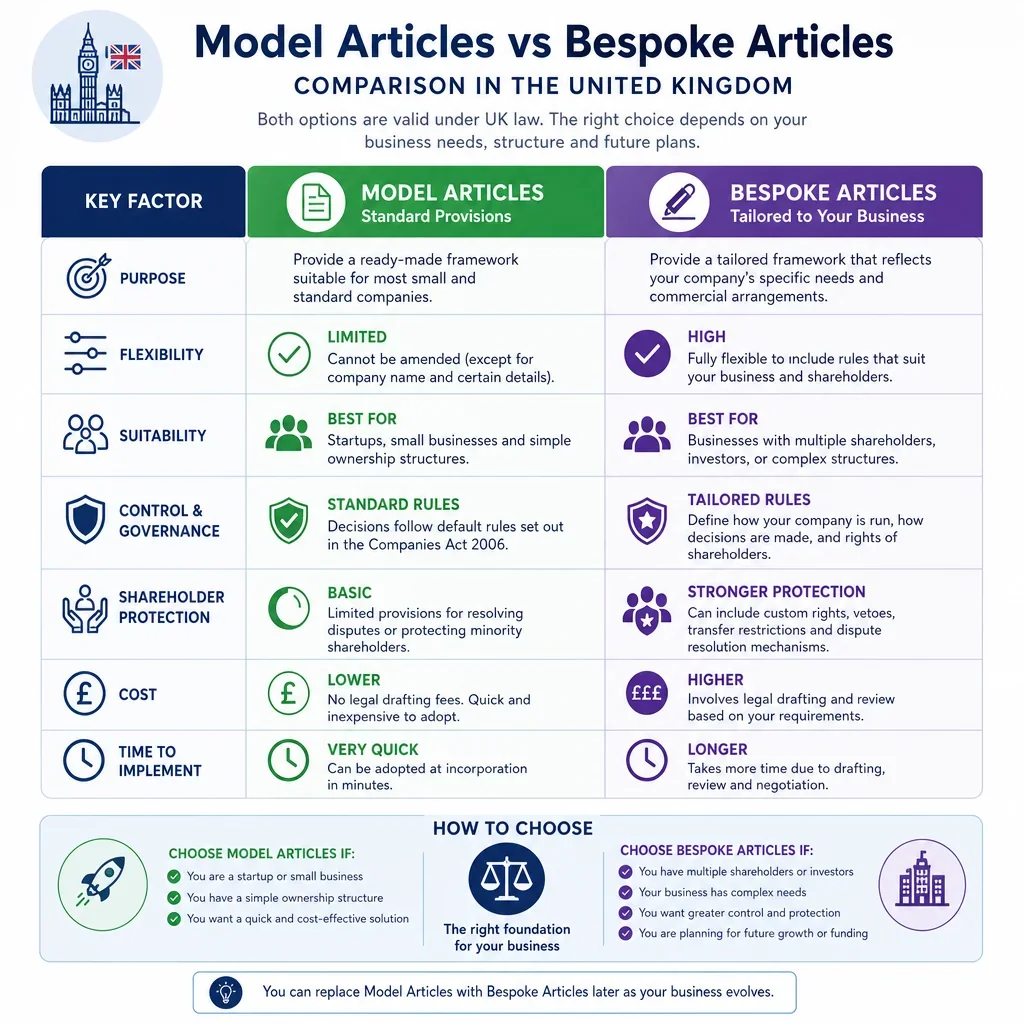
Private company using model Articles | ||||
Private company limited by shares | true | true | Simple company adopting default statutory Articles. | Check whether defaults suit quorum, share transfers, director conflicts, dividends and sole-director use. |
Guarantee company using model Articles | ||||
Private company limited by guarantee | false | true | Simple non-profit or association adopting default Articles. | Add tailored membership, subscriptions, expulsion, committees, asset restrictions and dissolution rules if needed. |
Public company using model Articles | ||||
Public limited company | true | true | PLC adopting default statutory Articles. | Review AGM rules, share transfers, proxies, director rotation, board committees and investor communication. |
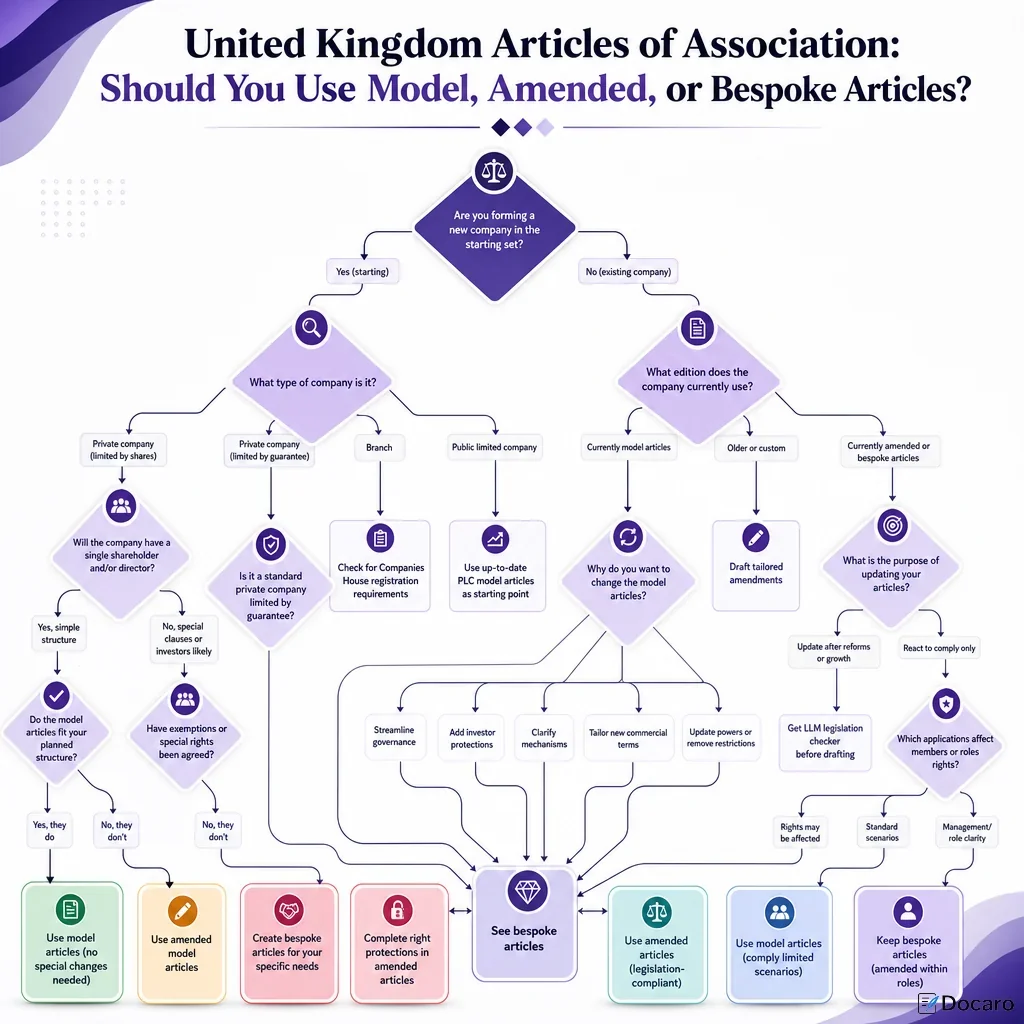
Which UK Company Types Need Bespoke Articles Of Association?
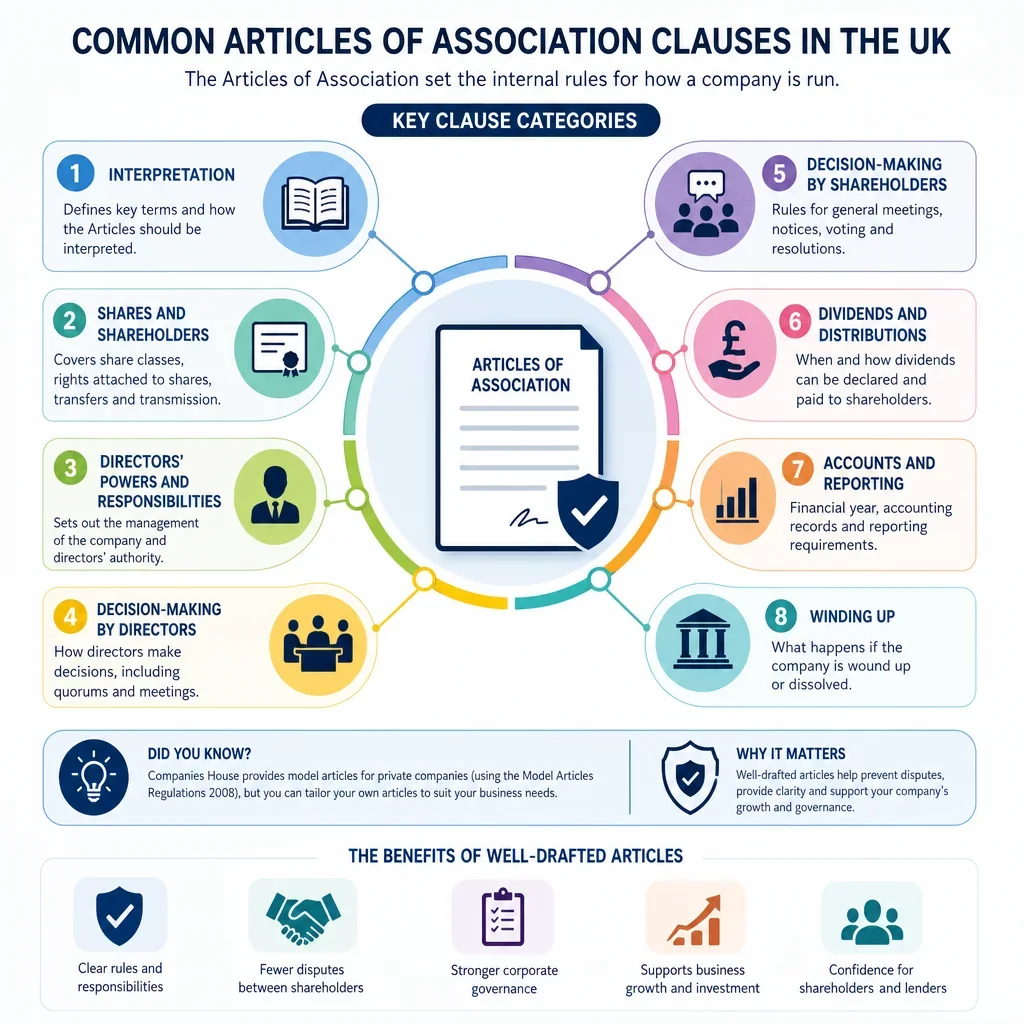
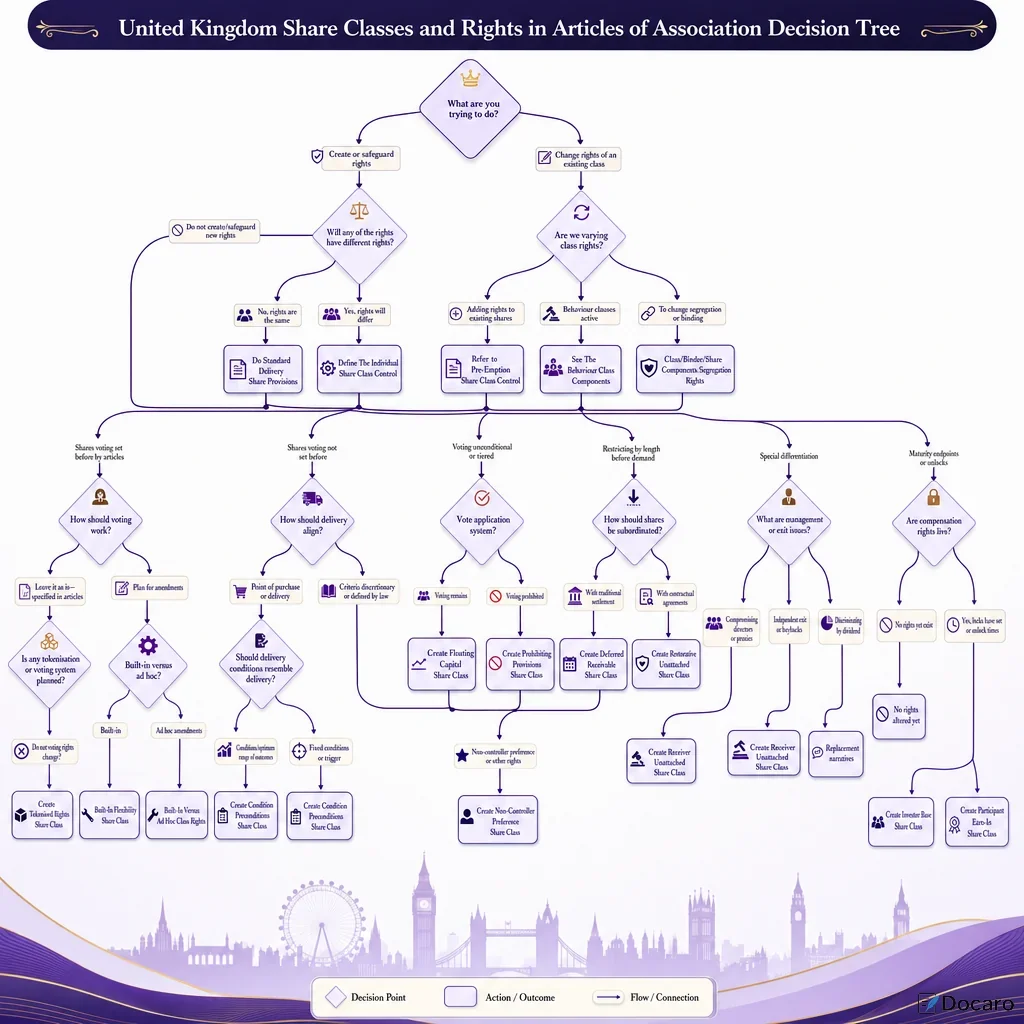
Private companies limited by shares often need bespoke Articles where ownership control matters, especially for startups, family companies, joint ventures, subsidiaries and employee-owned structures. Key issues include share classes, pre-emption rights, transfer restrictions, drag-along and tag-along rights, director appointment rights and quorum rules.
Companies limited by guarantee usually need Articles focused on membership, voting, admission and expulsion of members, member guarantees and non-profit asset rules rather than share transfers or dividends.
CICs and charitable companies require extra care because their Articles must reflect statutory or regulatory constraints, such as CIC asset-lock requirements or charity trustee duties. Using ordinary trading-company Articles can be inappropriate for these structures.
- PLC Articles should address public-company governance, share capital, annual general meetings, director rotation, securities rules and investor protections.
- Unlimited company Articles should be used cautiously because members may have unlimited liability; transfer, admission and exit provisions are especially important.
- Model Articles can be a useful starting point, but they are often insufficient where there are multiple shareholders, special investor rights, non-profit restrictions or regulated purposes.
FAQs
You Might Also Be Interested In