Common Articles Of Association Clauses In The UK
Clause Name | Purpose | Practical Effect | Commonly Included | Drafting Notes |
|---|---|---|---|---|
Directors | ||||
Directors' General Authority | Gives directors authority to manage the company's business. | Allows directors to act without member approval unless reserved. | true | Check any reserved matters, shareholder agreements and limits on authority. |
Decision-making | ||||
Directors' Decision-Making Procedure | Sets how directors take board decisions. | Determines whether decisions are made at meetings, unanimously or electronically. | true | Permit written and electronic decisions where desired. |
Directors | ||||
Board Quorum | States the minimum directors needed for board decisions. | Can prevent one director acting alone or allow efficient governance. | true | Consider sole director companies and class or investor director presence. |
Chair Of Directors' Meetings | Provides for appointment and role of the board chair. | May influence meeting control and casting vote rights. | true | State whether the chair has a casting vote. |
Decision-making | ||||
Chair's Casting Vote | Allows the chair a second vote if directors are tied. | Can break board deadlock and shift control to the chair. | false | Use cautiously in 50:50 companies or investor-backed companies. |
Directors | ||||
Appointment Of Directors | Sets how new directors are appointed. | Controls who can join the board and when. | true | Ensure at least one natural director for private companies. |
Termination Of Director's Appointment | Lists events ending a director's office. | Removes directors on resignation, disqualification, incapacity or insolvency events. | true | Align with removal rights under Companies Act 2006 section 168. |
Alternate Directors | Allows a director to appoint a substitute to attend meetings. | Maintains board participation when a director is unavailable. | false | Define authority, notice, confidentiality and termination of alternates. |
Directors' Remuneration | Permits directors to be paid for services. | Allows fees, salaries or benefits if properly approved. | true | Check conflicts, service contracts and member approval requirements. |
Directors' Expenses | Allows reimbursement of properly incurred director expenses. | Reduces disputes over travel, accommodation and business costs. | true | Require expenses to be reasonable and evidenced. |
Conflicts and duties | ||||
Directors' Conflicts Of Interest | Sets how director conflicts are authorised and managed. | Can validate conflicted participation if statutory requirements are met. | true | Private companies may authorise conflicts unless articles prohibit it. |
Declaration Of Interest In Proposed Transactions | Requires directors to disclose interests in proposed arrangements. | Improves transparency and reduces challenge risk. | true | Do not override mandatory statutory disclosure duties. |
Conflicted Director Voting | Controls whether conflicted directors may vote or count in quorum. | Can affect validity of board approvals involving related parties. | true | Specify exceptions for authorised conflicts and routine indemnities. |
Directors' Indemnity | Protects directors against certain liabilities and costs. | Supports director recruitment but cannot exempt unlawful liability. | true | Comply with Companies Act restrictions on indemnities and exemptions. |
Directors' And Officers' Insurance | Permits the company to buy insurance for directors. | Provides risk protection for claims against directors. | true | Check scope, exclusions and whether cover extends to officers. |
Shares and capital | ||||
Classes Of Shares | Defines different share classes and rights. | Enables different voting, dividend or capital rights. | false | State rights clearly and update Companies House filings. |
Ordinary Share Rights | Sets default rights attached to ordinary shares. | Usually gives voting, dividend and capital participation rights. | true | Avoid ambiguity if other classes are later created. |
Preference Share Rights | Gives a class preferential dividend or capital rights. | Can prioritise investors before ordinary shareholders. | false | Define dividend rate, priority, redemption and conversion rights. |
Redeemable Shares | Allows shares to be bought back or redeemed by the company. | Creates planned exit or capital restructuring mechanism. | false | Set redemption terms and comply with statutory capital rules. |
Authority To Allot Shares | Authorises directors to issue new shares. | Controls dilution and fundraising flexibility. | true | Private companies with one class may rely on section 550 unless restricted. |
Pre-Emption On New Share Issues | Offers new equity securities to existing shareholders first. | Protects shareholders from dilution. | true | Decide whether to exclude, modify or supplement statutory rights. |
Disapplication Of Pre-Emption Rights | Permits share issues without offering all existing holders first. | Increases fundraising speed but raises dilution risk. | false | Usually requires special resolution and clear limits. |
Payment For Shares | Sets payment obligations for issued shares. | Clarifies unpaid amounts and calls on shares. | true | State timing, calls, forfeiture and consequences of non-payment. |
Administration | ||||
Share Certificates | Provides for issuing evidence of share ownership. | Helps prove title but register remains central. | true | Private companies generally issue certificates within two months. |
Shares and capital | ||||
Company Lien On Shares | Gives the company security over shares for unpaid amounts. | Helps recover unpaid share capital or sums due. | true | Specify covered debts and enforcement sale procedure. |
Calls On Shares | Allows directors to demand unpaid share capital. | Enables staged payment for partly paid shares. | true | Set notice period, interest and default consequences. |
Forfeiture Of Shares | Allows unpaid shares to be forfeited after default. | Strong remedy against non-paying shareholders. | true | Use fair notice and board resolution procedure. |
Declaration Of Dividends | Sets how profits are distributed to shareholders. | Controls timing and amount of shareholder returns. | true | Distributions require sufficient distributable profits. |
Interim Dividends | Allows directors to pay dividends between annual decisions. | Gives flexibility to distribute profits during the year. | true | Check accounts and distributable reserves before payment. |
Dividends In Specie | Allows dividends to be paid using assets instead of cash. | Useful for reorganisations or asset distributions. | false | Address valuation, tax and distributable profits. |
Capitalisation Of Profits | Allows profits or reserves to be converted into share capital. | Enables bonus shares or capital restructuring. | true | Specify eligible reserves and allocation mechanics. |
Transfers and exits | ||||
Company Purchase Of Own Shares | Allows the company to buy back its own shares. | Provides exit route and capital management tool. | false | Comply with statutory approval, funding and filing rules. |
Shares and capital | ||||
Reduction Of Share Capital | Permits share capital to be reduced where law allows. | Supports restructurings, returns of capital or loss elimination. | false | Private companies often use solvency statement route. |
Transfers and exits | ||||
Transfer Of Shares | Sets the process for transferring legal title to shares. | Controls how shareholders sell or gift shares. | true | Require proper instrument of transfer and board registration process. |
Directors' Power To Refuse Share Transfers | Allows directors to refuse registration of transfers. | Helps keep control over the shareholder base. | true | Define objective grounds or discretion and notice requirements. |
Pre-Emption On Share Transfers | Requires shares to be offered to existing members before outsiders. | Preserves ownership balance and prevents unwanted third parties. | false | Set price, offer period, permitted transfers and deemed notices. |
Permitted Transfers | Allows transfers to specified persons without full restrictions. | Facilitates family, group or trustee transfers. | false | Define family members, group companies and re-transfer triggers. |
Compulsory Transfer Events | Requires shares to be sold after specified trigger events. | Removes leavers, insolvent members or defaulting shareholders. | false | Define triggers, price basis and transfer mechanics carefully. |
Good Leaver And Bad Leaver | Sets different sale price rules for departing shareholder-employees. | Rewards acceptable exits and penalises misconduct or early departure. | false | Avoid penalties define employment and dismissal triggers precisely. |
Drag-Along Rights | Allows majority holders to force minorities to join a sale. | Enables clean sale of the whole company. | false | Set threshold, same terms requirement and notice process. |
Tag-Along Rights | Lets minority holders join a majority sale. | Protects minorities from being left with a new controller. | false | Define triggering sale, proportion and completion conditions. |
Transmission Of Shares On Death Or Bankruptcy | Deals with shares passing by operation of law. | Allows personal representatives or trustees to be recognised. | true | Align with transfer restrictions and evidence requirements. |
Members | ||||
General Meetings | Regulates meetings of shareholders. | Provides forum for member approvals and shareholder oversight. | true | Private companies are not generally required to hold AGMs unless articles require. |
Notice Of General Meetings | Sets notice period and content for shareholder meetings. | Invalid notice can jeopardise resolutions. | true | Private company general meetings generally need at least 14 clear days. |
Short Notice Consent | Allows meetings on shorter notice with required consent. | Speeds urgent shareholder decisions. | true | Check statutory consent thresholds for shorter notice. |
Shareholder Meeting Quorum | Sets minimum member attendance for valid meetings. | Prevents decisions by too few members. | true | At least two qualifying persons unless the company has one member. |
Adjournment Of General Meetings | Allows meetings to continue later if needed. | Manages lack of quorum or unfinished business. | true | State notice requirements and business allowed at adjourned meetings. |
Voting At General Meetings | Sets how members vote on resolutions. | Determines control through show of hands or poll voting. | true | Align votes with share class rights and statutory poll rights. |
Poll Votes | Allows voting by shares held rather than heads present. | Reflects economic ownership and majority share control. | true | Do not unlawfully exclude statutory poll demand rights. |
Proxy Voting | Allows members to appoint someone to vote for them. | Enables participation without attending meetings. | true | Articles cannot deny statutory proxy appointment rights. |
Corporate Representatives | Allows corporate shareholders to appoint meeting representatives. | Enables companies and LLPs to exercise member rights. | true | Specify evidence of authority and multiple representatives if relevant. |
Decision-making | ||||
Written Resolutions | Allows private company members to pass resolutions without meetings. | Speeds shareholder approvals and reduces meeting administration. | true | Cannot use written resolutions to remove directors or auditors. |
Ordinary Resolution Threshold | Defines decisions requiring simple majority approval. | Sets default member control for routine decisions. | true | Do not reduce statutory majority below more than 50 percent. |
Special Resolution Threshold | Defines decisions requiring at least 75 percent approval. | Protects important constitutional and structural decisions. | true | Required for altering articles under section 21. |
Reserved Matters | Requires specified approvals for important actions. | Gives veto rights or enhanced oversight to members or investors. | false | List actions clearly and match any shareholder agreement. |
Deadlock Resolution | Provides a process where votes are tied or approvals fail. | Reduces risk of governance paralysis. | false | Choose escalation, expert referral, buy-sell or winding-up options. |
Shares and capital | ||||
Variation Of Class Rights | Controls changes to rights attached to a share class. | Protects class holders from adverse changes. | true | Usually needs class consent or special class resolution. |
Members | ||||
Objection To Variation Of Class Rights | Recognises statutory challenge rights for class variations. | Allows dissenting class holders to apply to court. | false | Do not attempt to remove statutory objection rights. |
Administration | ||||
Company Communications And Notices | Sets how notices and documents are sent. | Reduces disputes over valid service and timing. | true | Cover post, email, website notices and deemed delivery. |
Electronic Communications | Permits electronic delivery of notices and documents. | Speeds administration and lowers costs. | true | Obtain required member agreement for electronic communications. |
Statutory Registers | Addresses keeping registers of members, directors and charges. | Supports legal ownership records and compliance. | false | Register of members is primary evidence of share ownership. |
Minutes And Records Of Decisions | Requires records of board and member decisions. | Creates evidence of approvals and compliance. | true | Keep directors' meeting minutes for at least 10 years. |
Company Seal | Regulates use of a common seal if the company has one. | Provides formal execution method, though seal is optional. | true | Companies may have a common seal but are not required to. |
Execution Of Documents | Sets how the company signs contracts and deeds. | Reduces execution disputes for important documents. | true | Align with statutory execution by directors or director and secretary. |
Company Secretary | Provides for appointment and role of a secretary. | Supports administration even though private companies need not have one. | false | Private companies are not required to have a secretary. |
Accounts And Reports | Addresses preparation and circulation of accounts. | Supports financial transparency and filing compliance. | false | Do not conflict with statutory accounts and filing obligations. |
Auditors | Addresses auditor appointment and reporting where applicable. | Relevant for companies not audit-exempt or choosing audit. | false | Check audit exemption and statutory appointment rules. |
Members | ||||
Inspection Of Company Records | Sets access to registers and company records. | Affects transparency for members and officers. | false | Do not remove statutory inspection rights for registers. |
Member Confidentiality | Restricts disclosure of confidential company information. | Protects sensitive business information shared with shareholders. | false | Define confidential information and carve out legal disclosures. |
Investor Information Rights | Requires delivery of accounts, budgets or management information. | Gives investors enhanced oversight beyond statutory rights. | false | State frequency, recipients, confidentiality and format. |
Directors | ||||
Shareholder Director Appointment Rights | Allows specified shareholders to appoint directors. | Gives investors or founders board representation. | false | Tie rights to shareholding thresholds and removal mechanics. |
Board Observer Rights | Allows a non-director to attend board meetings. | Provides oversight without formal director status. | false | Exclude voting rights and address confidentiality and conflicts. |
Decision-making | ||||
Unanimous Directors' Written Decisions | Allows directors to approve decisions unanimously in writing. | Enables decisions without holding a board meeting. | true | Define email, electronic signature and counterparts if needed. |
Electronic And Hybrid Meetings | Allows meetings using telephone or video technology. | Improves attendance and speed of decisions. | true | Specify participation, identification, voting and technical failure rules. |
Weighted Voting Rights | Gives specified shares or persons enhanced voting power. | Can preserve founder or investor control. | false | Draft share rights precisely and consider class consent implications. |
Shares and capital | ||||
Non-Voting Shares | Creates shares with limited or no voting rights. | Separates economic participation from control. | false | Specify any voting on class rights, winding up or reserved matters. |
Alphabet Share Dividend Rights | Allows different dividend treatment for share classes. | Enables flexible dividends among shareholders. | false | Define class rights and consider tax and settlements rules. |
Return Of Capital On Winding Up | Sets how surplus assets are shared on winding up. | Determines capital priority between share classes. | true | Align with preference, ordinary and deferred share rights. |
Partly Paid Shares | Allows shares to be issued with unpaid amounts outstanding. | Creates future payment obligations for holders. | false | Include calls, default interest, transfer limits and forfeiture. |
Treasury Shares | Allows bought-back shares to be held in treasury where permitted. | Can facilitate employee plans or later resale. | false | Check statutory limits and rights suspended while in treasury. |
Scrip Dividends | Allows dividends to be satisfied by issuing shares. | Preserves cash while rewarding shareholders. | false | Address election procedure, valuation and allotment authority. |
Deferred Share Rights | Creates shares with postponed economic rights. | Can support reorganisations or incentive structures. | false | State voting, dividend and capital rights expressly. |
What Clauses Matter Most In UK Articles Of Association?
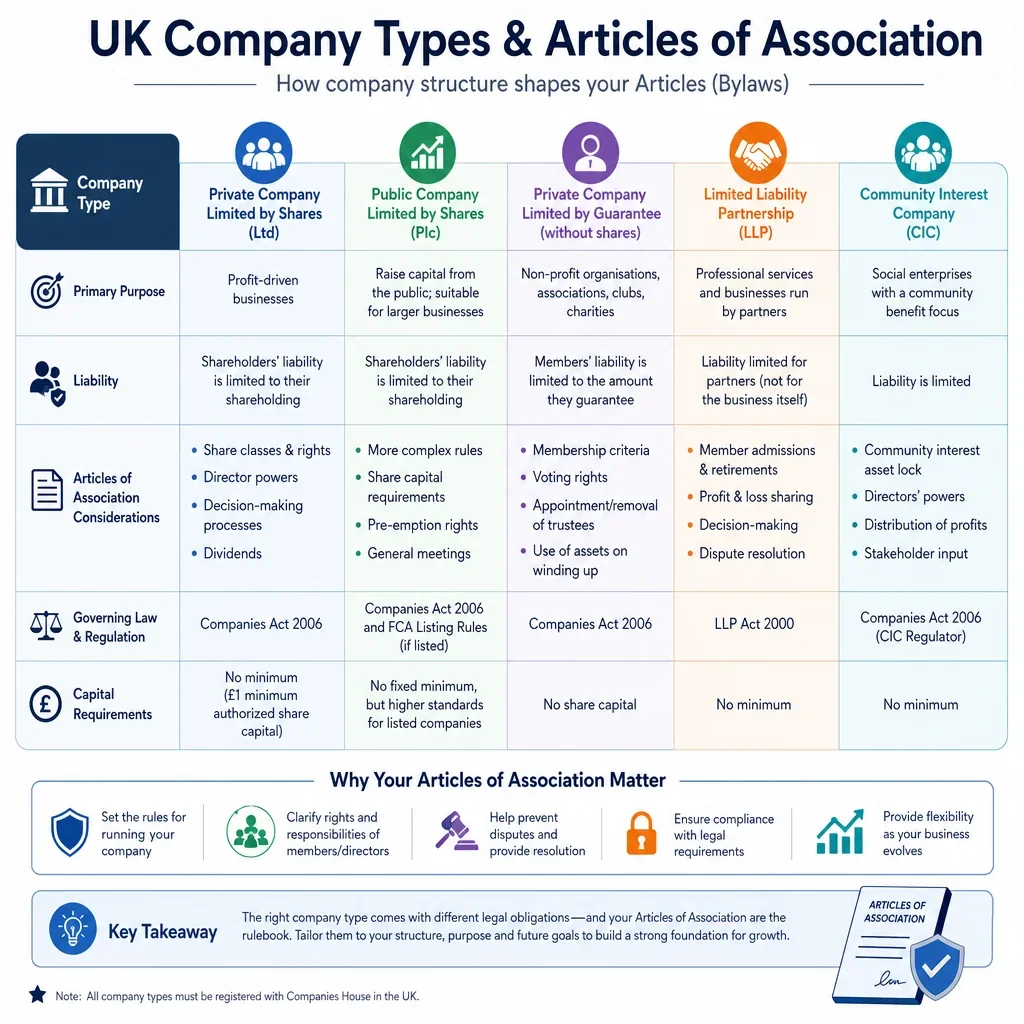
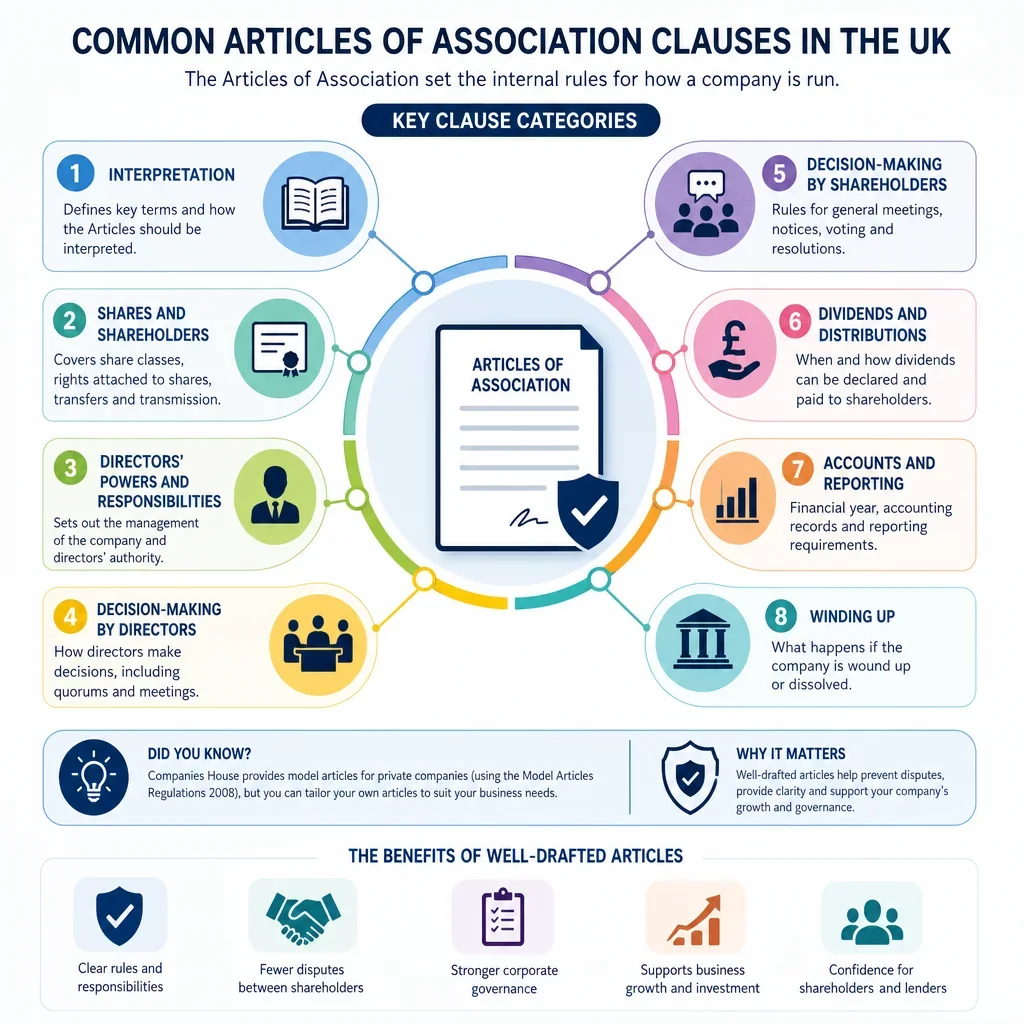
Articles of Association shape day-to-day control of a UK company. The most important drafting choices usually concern director powers, share rights, transfers, decision-making thresholds and conflicts. These clauses can materially affect who controls the company, how quickly decisions are made, and whether shareholders can exit or be diluted.
How Do Model Articles Affect Drafting?
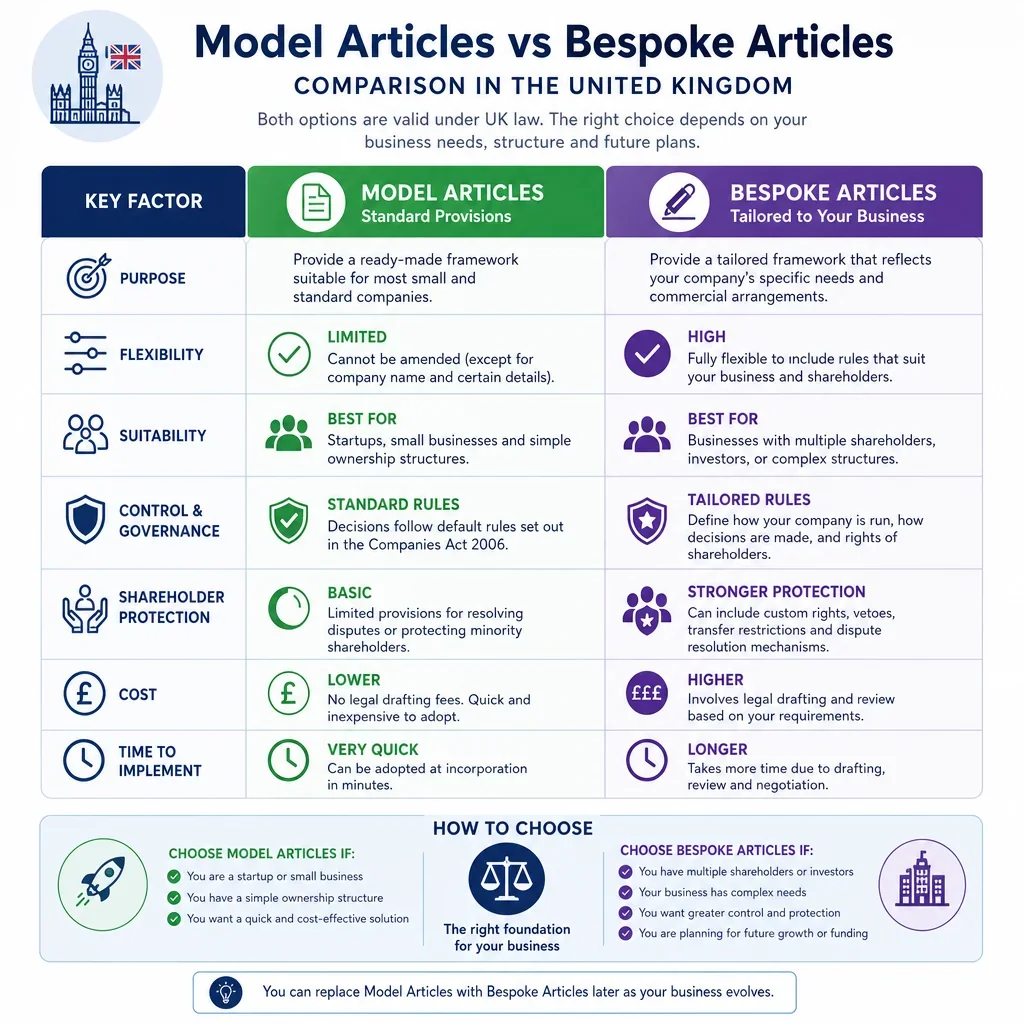
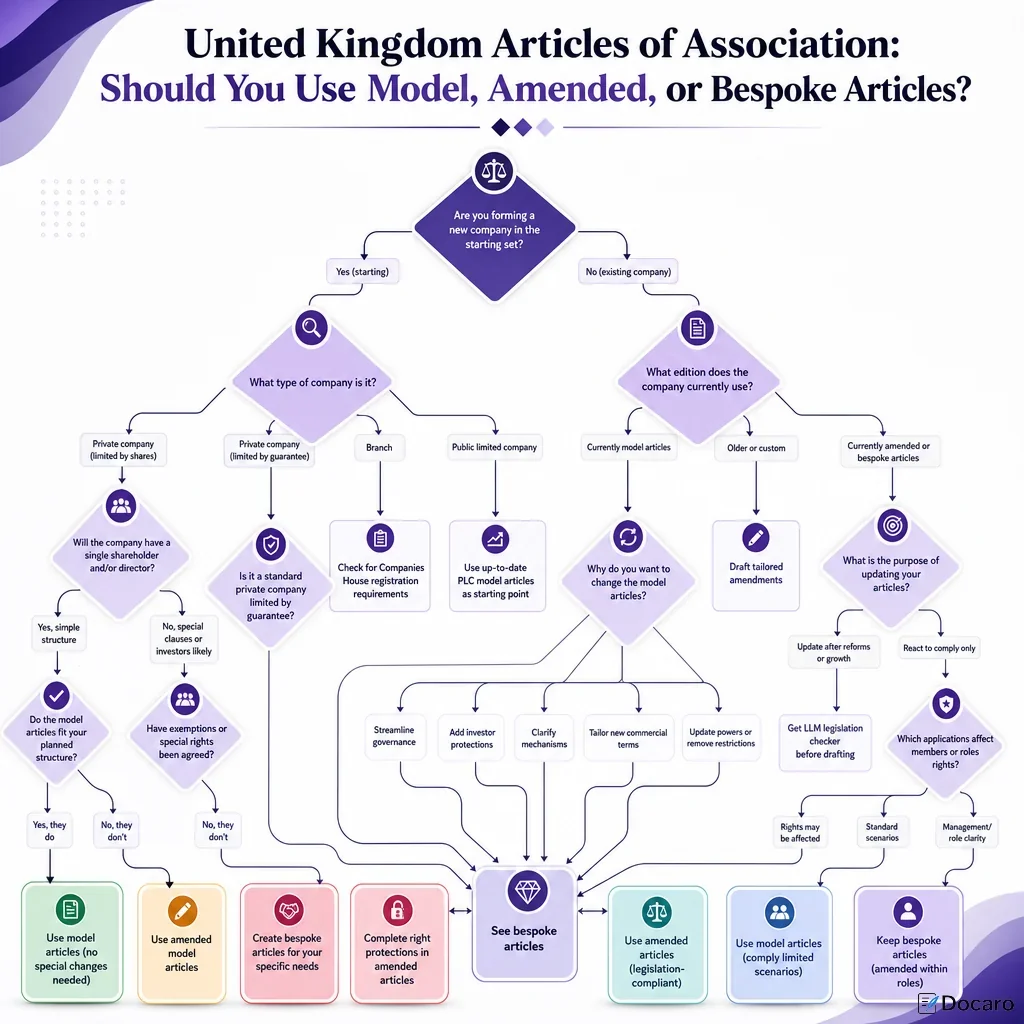
Many private companies start from the Companies Act 2006 model articles, but tailored drafting is often needed where there are multiple shareholders, different share classes, investor rights, employee shareholders or family ownership. Particular care is needed with director quorum, conflicts, share issue powers, pre-emption, transfer restrictions and drag or tag rights.
Which Clauses Often Need Shareholder Attention?
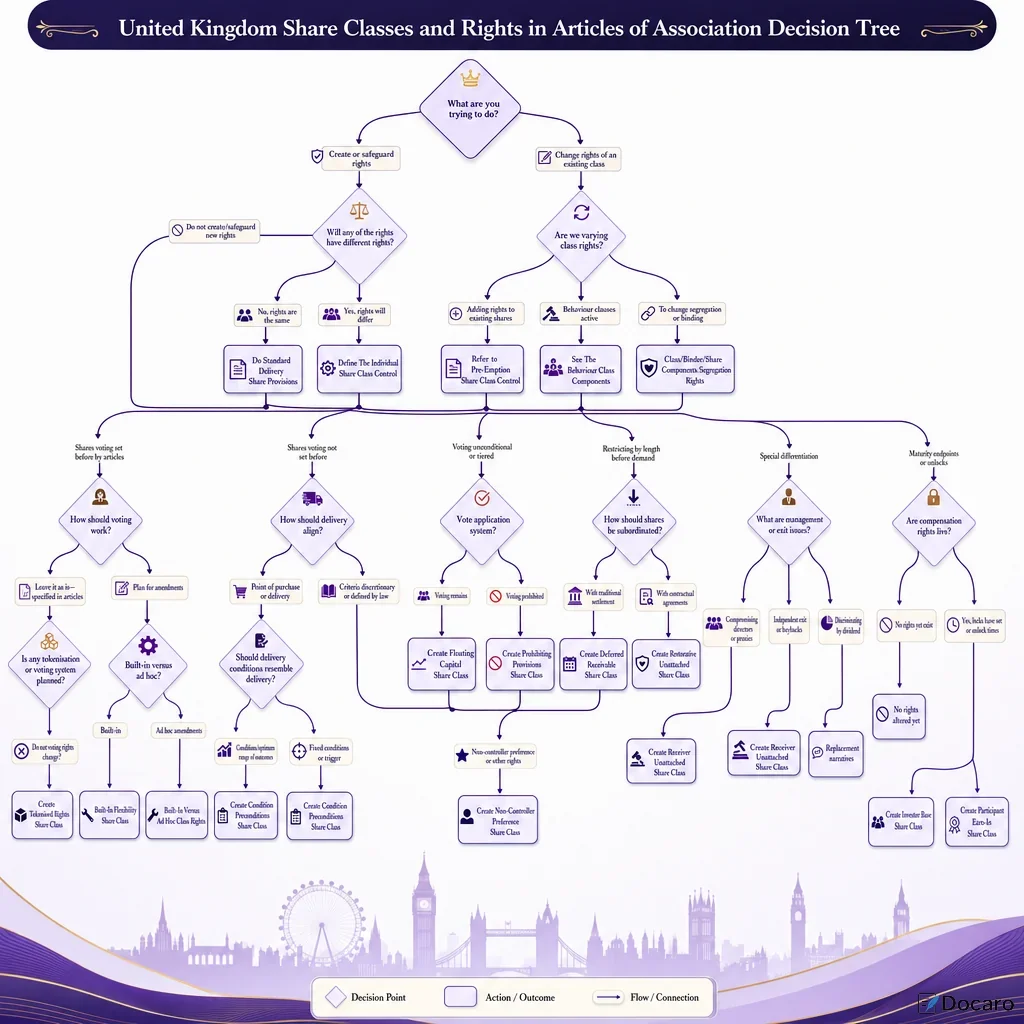
- Share capital clauses can control dilution, dividends, voting and economic priorities.
- Transfer and exit clauses can restrict who may become a member and determine whether minority shareholders can be forced to sell or join a sale.
- Decision-making clauses can reserve key matters to members or require enhanced consent thresholds beyond ordinary company law rules.
- Director conflict clauses should align with the Companies Act 2006 duties and any intended authorisation process.
When Should Articles Be Customised?
Custom articles are especially useful where the company needs investor protections, bespoke share rights, compulsory transfer events, weighted voting, board appointment rights, or clearer electronic meeting and written resolution procedures. Poorly drafted articles may create deadlock, accidental disenfranchisement, invalid share issues or disputes over transfers.
FAQs
You Might Also Be Interested In