Types Of UK Restrictive Covenants
Typical Context | Purpose | Enforceability Sensitivity | Legitimate Interest Examples | Drafting Considerations |
|---|---|---|---|---|
Employee Non-Compete Covenant | ||||
Employment | Prevents an employee from joining or starting a competing business after employment ends. | High | Trade secrets, confidential information, customer connections and workforce stability. | Keep duration, territory, role and competing activities narrow consider garden leave or non-solicit alternatives. |
Customer Non-Solicitation Covenant | ||||
Employment, Consultancy, Business sale, Shareholder or founder arrangement | Stops a person from approaching customers to win business away. | Medium | Customer connections, goodwill, confidential pricing and account information. | Limit to customers dealt with or influenced during a defined look-back period. |
Customer Non-Dealing Covenant | ||||
Employment, Consultancy, Business sale, Shareholder or founder arrangement | Stops a person from doing business with restricted customers even if the customer initiates contact. | High | Customer goodwill, account control, confidential customer knowledge and sale value. | Use only where non-solicitation is insufficient define restricted customers precisely. |
Prospective Customer Non-Solicitation Covenant | ||||
Employment, Consultancy, Business sale | Prevents approaches to active prospects developed before exit or completion. | Medium | Sales pipeline, confidential bids, tender strategy and developing goodwill. | Restrict to identifiable prospects with recent material negotiations or pitches. |
Supplier Non-Solicitation Covenant | ||||
Employment, Consultancy, Business sale, Franchise or distribution | Stops approaches to suppliers to divert supply, discounts or strategic relationships. | Medium | Supplier relationships, purchasing terms, continuity of supply and confidential pricing. | Limit to key suppliers known to the restricted party within a recent period. |
Supplier Non-Dealing Covenant | ||||
Business sale, Franchise or distribution, Employment, Consultancy | Prevents dealing with restricted suppliers in a way that harms the protected business. | High | Exclusive supply, purchasing leverage, supply chain stability and confidential terms. | Define harmful dealing clearly avoid a blanket ban on ordinary market suppliers. |
Employee Non-Solicitation Covenant | ||||
Employment, Business sale, Shareholder or founder arrangement, Consultancy | Stops approaches to staff to persuade them to leave or join another business. | Medium | Workforce stability, team cohesion, confidential know-how and recruitment investment. | Limit to senior, specialist or material employees known to the restricted party. |
Employee Non-Poaching Covenant | ||||
Employment, Business sale, Shareholder or founder arrangement, Partnership or LLP | Prevents hiring or engaging protected employees, with or without solicitation. | High | Workforce stability, team continuity, project delivery and protection against team moves. | Avoid blanket staff bans exclude junior staff and unsolicited general recruitment responses. |
Team Move Covenant | ||||
Employment, Partnership or LLP, Shareholder or founder arrangement | Prevents coordinated departures or recruitment of a group to a competitor. | High | Business continuity, client retention, confidential know-how and workforce stability. | Define covered group activity and senior staff avoid suppressing normal labour mobility. |
Confidentiality Covenant | ||||
Employment, Consultancy, Business sale, Shareholder or founder arrangement, Partnership or LLP, Franchise or distribution | Prevents disclosure or misuse of confidential information. | Low | Trade secrets, client data, pricing, strategy, source code and technical know-how. | Define confidential information, exceptions, permitted disclosures and post-termination obligations. |
Trade Secret Protection Covenant | ||||
Employment, Consultancy, Business sale, Shareholder or founder arrangement, Franchise or distribution | Prevents acquisition, use or disclosure of protected trade secrets. | Low | Secret technical, commercial or strategic information with business value. | Identify trade secret categories and reasonable steps used to keep them secret. |
Garden Leave Clause | ||||
Employment | Keeps an employee out of the market while still employed and paid during notice. | Medium | Confidential information, client transition, team stability and cooling-off periods. | State duties, contact limits, pay, benefits, notice interaction and set-off against covenants. |
Business Sale Non-Compete Covenant | ||||
Business sale | Stops a seller from competing with the business whose goodwill they sold. | Medium | Purchased goodwill, customer relationships, confidential information and deal value. | Align scope with the acquired business, territory, consideration and seller influence. |
Business Sale Non-Solicitation Covenant | ||||
Business sale | Stops a seller from approaching customers, suppliers or staff of the sold business. | Medium | Goodwill, customer continuity, supplier stability and employee retention. | Tie restrictions to the sold business and known relationships at completion. |
Goodwill Protection Covenant | ||||
Business sale, Partnership or LLP, Franchise or distribution | Prevents conduct that undermines goodwill transferred or shared under an agreement. | Medium | Purchased goodwill, brand value, customer loyalty and market reputation. | Define the protected goodwill and use separate non-compete or non-solicit limits. |
Founder Non-Compete Covenant | ||||
Shareholder or founder arrangement | Stops a founder from leaving and building or joining a competing venture. | High | Investor value, confidential strategy, product roadmap, goodwill and key relationships. | Link scope to founder role, shareholding, vesting, access and post-exit duration. |
Shareholder Non-Solicitation Covenant | ||||
Shareholder or founder arrangement | Stops a shareholder from diverting customers, suppliers or employees from the company. | Medium | Company goodwill, confidential information, workforce stability and investor value. | Coordinate with articles, leaver provisions, employment covenants and group coverage. |
Founder IP Non-Use Covenant | ||||
Shareholder or founder arrangement, Employment, Consultancy | Prevents a founder from using company IP or product assets for a competing venture. | Low | Software, inventions, designs, branding, know-how and investor-funded assets. | Pair with IP assignment, moral rights waivers and clear ownership records. |
Consultant Non-Compete Covenant | ||||
Consultancy | Prevents a consultant from using engagement knowledge for a competitor. | High | Confidential information, client influence, project know-how and strategic plans. | Reflect independent contractor status restrict only services creating real conflict or misuse risk. |
Consultant Client Non-Circumvention Covenant | ||||
Consultancy, Franchise or distribution | Stops a consultant from bypassing the contracting party to deal directly with introduced clients. | Medium | Introductions, referral value, client pipeline and commercial opportunity. | Define introduced parties, prohibited direct dealings, term and permitted pre-existing contacts. |
Consultant Non-Solicitation Covenant | ||||
Consultancy | Stops a consultant from approaching the client's customers, staff or suppliers. | Medium | Client goodwill, confidential contact data, workforce stability and project continuity. | Limit to relationships encountered through the consultancy engagement. |
Partner Non-Compete Covenant | ||||
Partnership or LLP | Stops a partner or member from competing with the firm after departure. | High | Firm goodwill, client relationships, confidential know-how and partner investment. | Tailor to practice area, client following, profit share, seniority and exit terms. |
Partner Client Non-Solicitation Covenant | ||||
Partnership or LLP | Prevents a departing partner from soliciting the firm's clients. | Medium | Client connections, referral networks, confidential client files and goodwill. | Use look-back periods and limit to clients the partner managed or materially influenced. |
Partner Client Non-Dealing Covenant | ||||
Partnership or LLP | Stops a departing partner from acting for restricted clients after exit. | High | Client goodwill, confidential matters, referral value and firm continuity. | Consider professional conduct duties and restrict only clients with real firm connection. |
Franchisee Non-Compete Covenant | ||||
Franchise or distribution | Prevents a franchisee from operating a competing business during or after the franchise. | High | Franchise know-how, brand goodwill, network integrity and customer base. | Coordinate with competition law limit territory, duration and competing format. |
Franchisee Non-Solicitation Covenant | ||||
Franchise or distribution | Stops a franchisee from soliciting network customers, staff or other franchisees. | Medium | Network goodwill, customer loyalty, staff stability and brand cohesion. | Define protected network contacts and avoid restricting unrelated local trade. |
Distributor Territory Restriction | ||||
Franchise or distribution | Restricts active selling into reserved or exclusive territories or customer groups. | Medium | Channel investment, territorial exclusivity, brand strategy and distribution efficiency. | Check UK competition rules and avoid prohibited passive sales restrictions. |
Distributor Customer Group Restriction | ||||
Franchise or distribution | Limits active sales to customer groups allocated to another distributor or supplier. | Medium | Channel protection, investment incentives and coherent customer allocation. | Distinguish active sales from passive sales and avoid resale price maintenance. |
Exclusive Dealing Covenant | ||||
Franchise or distribution, Consultancy, Business sale | Requires a party to buy, sell or provide services only through specified channels. | Medium | Supply certainty, channel investment, brand quality and commercial exclusivity. | Define exclusivity scope, minimum commitments, carve-outs and competition law risk. |
No-Hire Agreement Between Businesses | ||||
Business sale, Consultancy, Franchise or distribution | Prevents one business from hiring the other's staff for a defined period. | High | Project continuity, staff stability, transaction integration and protection against team raids. | Avoid wage-fixing or labour-market collusion limit to legitimate transaction or project needs. |
Non-Disparagement Covenant | ||||
Employment, Business sale, Shareholder or founder arrangement, Partnership or LLP | Prevents damaging statements about the business, brand, colleagues or transaction. | Medium | Reputation, goodwill, investor confidence and client trust. | Include carve-outs for protected disclosures, legal duties and truthful regulatory reporting. |
Whistleblowing Carve-Out Covenant | ||||
Employment, Consultancy, Partnership or LLP | Preserves the right to make protected disclosures despite confidentiality or reputation clauses. | Low | Legal compliance, regulatory reporting and public interest disclosures. | State that nothing prevents protected disclosures, regulator contact or legally required reporting. |
Confidential Settlement Non-Disclosure Covenant | ||||
Employment, Business sale, Partnership or LLP | Restricts disclosure of settlement terms and dispute background. | Medium | Commercial privacy, dispute resolution, reputation and sensitive personal data. | Include carve-outs for legal advice, tax, regulators, whistleblowing and required disclosures. |
Social Media Contact Non-Solicitation Covenant | ||||
Employment, Consultancy, Business sale | Prevents using LinkedIn or similar contacts to solicit protected customers or staff. | Medium | Customer connections, staff stability, contact lists and digital relationship data. | Define solicitation conduct avoid banning passive updates or ordinary public networking. |
Restricted Customer List Covenant | ||||
Employment, Consultancy, Business sale, Partnership or LLP | Limits restrictions to a schedule or class of protected customers. | Medium | Key accounts, client goodwill, pricing knowledge and strategic relationships. | Keep lists current, objective and linked to actual contact or goodwill. |
Geographic Area Non-Compete Covenant | ||||
Employment, Business sale, Franchise or distribution, Partnership or LLP | Prevents competing activities within a defined territory. | High | Local goodwill, territorial exclusivity, customer base and market investment. | Match area to actual trading footprint or influence avoid UK-wide scope without evidence. |
Activity-Based Non-Compete Covenant | ||||
Employment, Consultancy, Business sale, Shareholder or founder arrangement | Restricts only specific activities that would compete with the protected business. | High | Confidential know-how, customer relationships, product strategy and operational methods. | Define prohibited activities precisely avoid banning unrelated jobs in the same sector. |
Role-Based Non-Compete Covenant | ||||
Employment, Consultancy, Shareholder or founder arrangement | Stops a person taking a similar role where protected information or influence could be used. | High | Strategic confidential information, customer influence, senior management knowledge and trade secrets. | Tie to actual duties and seniority avoid restrictions on unrelated functions. |
Group Company Protection Covenant | ||||
Employment, Business sale, Shareholder or founder arrangement, Consultancy | Extends protection to connected companies within a corporate group. | Medium | Group goodwill, shared customers, shared confidential information and integrated operations. | Define protected group companies and ensure the covenantor had relevant connection to them. |
Introducer Non-Circumvention Covenant | ||||
Consultancy, Business sale, Franchise or distribution | Stops parties from bypassing an introducer to avoid fees or control the opportunity. | Medium | Referral value, commercial opportunity, confidential introductions and deal pipeline. | Identify introduced parties, protected transactions, fee trigger and time limit. |
Referral Source Non-Solicitation Covenant | ||||
Employment, Consultancy, Partnership or LLP | Prevents approaches to referral sources or intermediaries that generate business. | Medium | Referral goodwill, intermediary relationships, lead flow and confidential relationship data. | Restrict only material referral sources known through the role or engagement. |
Post-Termination Invention Non-Use Covenant | ||||
Employment, Consultancy, Shareholder or founder arrangement | Prevents use of employer or client inventions, prototypes or R&D outputs after exit. | Low | Patents, prototypes, R&D, confidential technical data and product pipeline. | Separate ownership, assignment, confidentiality and permitted portfolio knowledge. |
Data Return And Deletion Covenant | ||||
Employment, Consultancy, Business sale, Partnership or LLP, Franchise or distribution | Requires return or deletion of business documents, devices and data after exit. | Low | Confidential information, personal data security, IP protection and records control. | Cover copies, cloud storage, backups, devices, certification and lawful retention exceptions. |
Personal Data Non-Misuse Covenant | ||||
Employment, Consultancy, Business sale, Partnership or LLP, Franchise or distribution | Prevents unauthorised use of personal data obtained through the role or transaction. | Low | Customer databases, employee data, compliance, privacy rights and information security. | Align with UK GDPR duties, controller instructions, security measures and deletion obligations. |
Non-Interference Covenant | ||||
Employment, Business sale, Shareholder or founder arrangement, Partnership or LLP, Franchise or distribution | Prevents interference with customers, suppliers, employees, contracts or business relationships. | High | Goodwill, contract stability, workforce stability and commercial relationships. | Avoid vague catch-all wording specify relationships and prohibited conduct. |
Non-Diversion Covenant | ||||
Employment, Business sale, Consultancy, Partnership or LLP | Stops diverting business opportunities away from the protected business. | Medium | Pipeline opportunities, corporate opportunities, confidential leads and goodwill. | Define protected opportunities and when they were identified or pursued. |
No Contact Covenant | ||||
Employment, Business sale, Consultancy, Partnership or LLP | Prohibits contact with specified customers, suppliers, staff or deal contacts. | High | Client transition, transaction stability, confidentiality and relationship control. | Use sparingly include exceptions for social contact, legal duties and pre-approved contact. |
Bid Or Tender Non-Interference Covenant | ||||
Employment, Consultancy, Business sale | Prevents interference with active bids, tenders or procurement processes. | Medium | Confidential pricing, bid strategy, tender pipeline and client goodwill. | Limit to live or recent bids known to the restricted party. |
Client Account Handover Covenant | ||||
Employment, Consultancy, Partnership or LLP | Requires cooperation in transferring client relationships before or after exit. | Low | Client retention, goodwill preservation, continuity and service quality. | State handover duties, timing, communications, records and reasonable cooperation limits. |
Restrictive Covenant In A Settlement Agreement | ||||
Employment, Partnership or LLP, Business sale | Reaffirms or creates post-exit restrictions as part of settlement terms. | Medium | Dispute resolution, confidentiality, customer protection, goodwill and staff stability. | Identify consideration, independent advice context and whether old covenants are varied or reaffirmed. |
Severable Cascading Covenant | ||||
Employment, Business sale, Shareholder or founder arrangement, Partnership or LLP | Provides alternative durations, territories or scopes intended to survive if wider wording fails. | High | Goodwill, confidential information, customer connections and workforce stability. | Avoid artificial overreach ensure each alternative is clear and independently reasonable. |
Which UK Restrictive Covenants Are Most Likely To Need Careful Drafting?
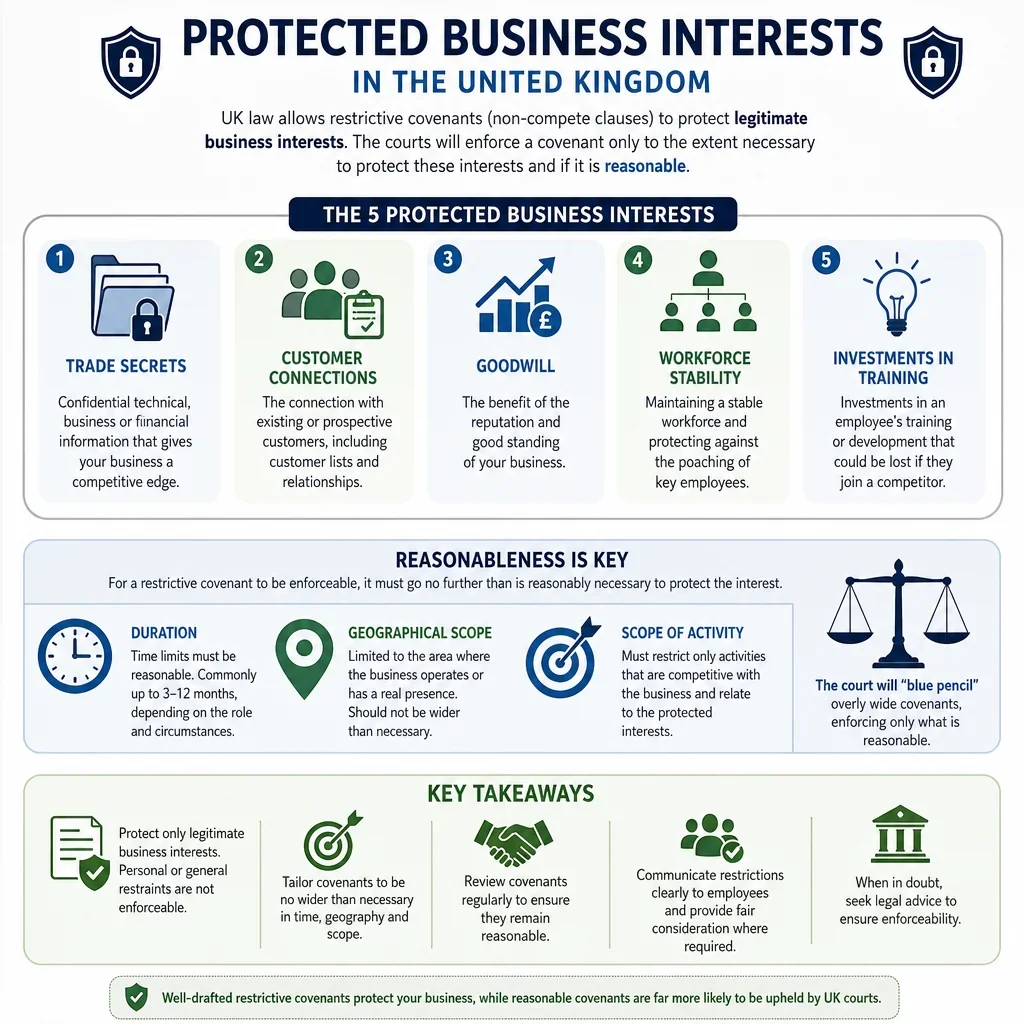
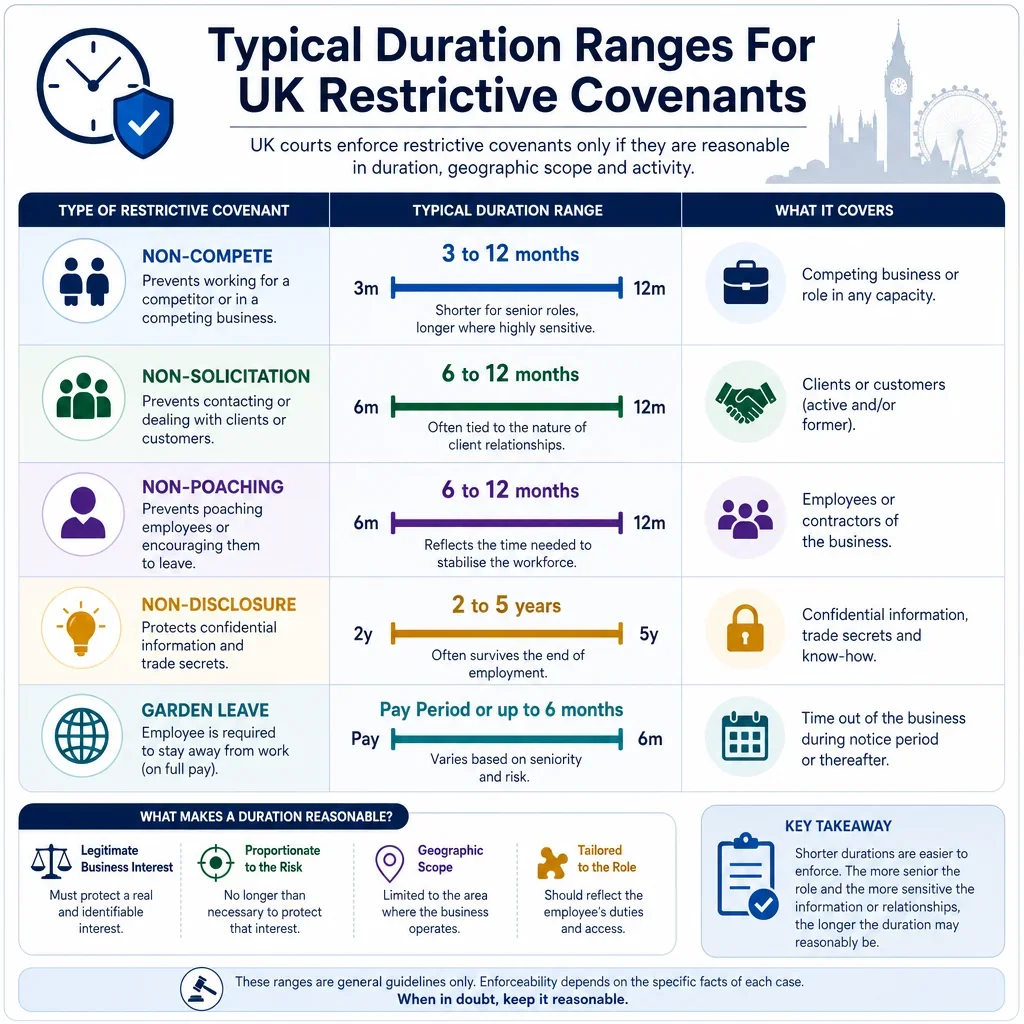
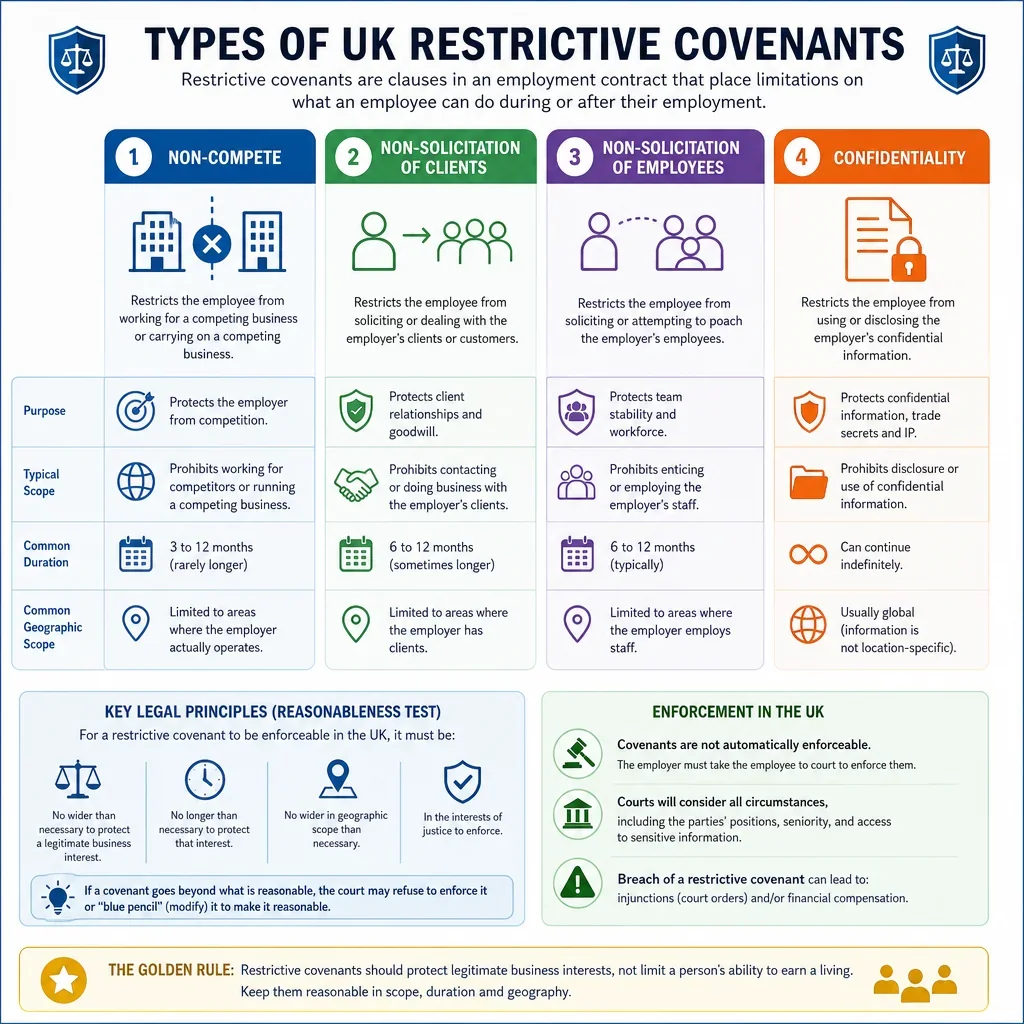
Non-compete, non-dealing, non-poaching and team move clauses usually need the most careful justification because they can stop a person or business from earning income, serving customers or hiring staff. UK courts generally expect these clauses to go no further than reasonably necessary to protect a legitimate business interest.
What Business Interests Can A Restrictive Covenant Protect?
The strongest UK restrictive covenants are usually linked to identifiable interests such as confidential information, trade secrets, customer connections, supplier relationships, workforce stability, goodwill after a business sale, franchise know-how or investment in founders. A clause aimed only at preventing ordinary competition is more vulnerable.
How Should UK Non-Compete Agreements Be Tailored?
- Employment covenants should be narrow on duration, geography, customers, activities and seniority because employees receive stronger protection from restraint of trade rules.
- Business sale covenants can often be wider than employment clauses where they protect the goodwill being sold, but they still need reasonable limits.
- Shareholder, founder, consultancy, partnership and franchise covenants should be matched to the role, access to information, client influence and commercial bargain.
- Confidentiality and IP-related restrictions are often less sensitive than a full non-compete, but should still define the protected information or assets clearly.
What Drafting Details Matter Most For UK Restrictive Covenants?
Useful drafting typically defines the restricted activities, restricted customers or suppliers, restricted territory, restricted period and relevant group companies. Clauses should avoid vague wording, automatic blanket bans and restrictions that apply to contacts or information the person never handled. Garden leave, confidentiality and non-solicitation clauses may sometimes offer a narrower alternative to a full non-compete.
FAQs
You Might Also Be Interested In