Should Your EULA Be For Consumers Or Businesses In The United Kingdom?
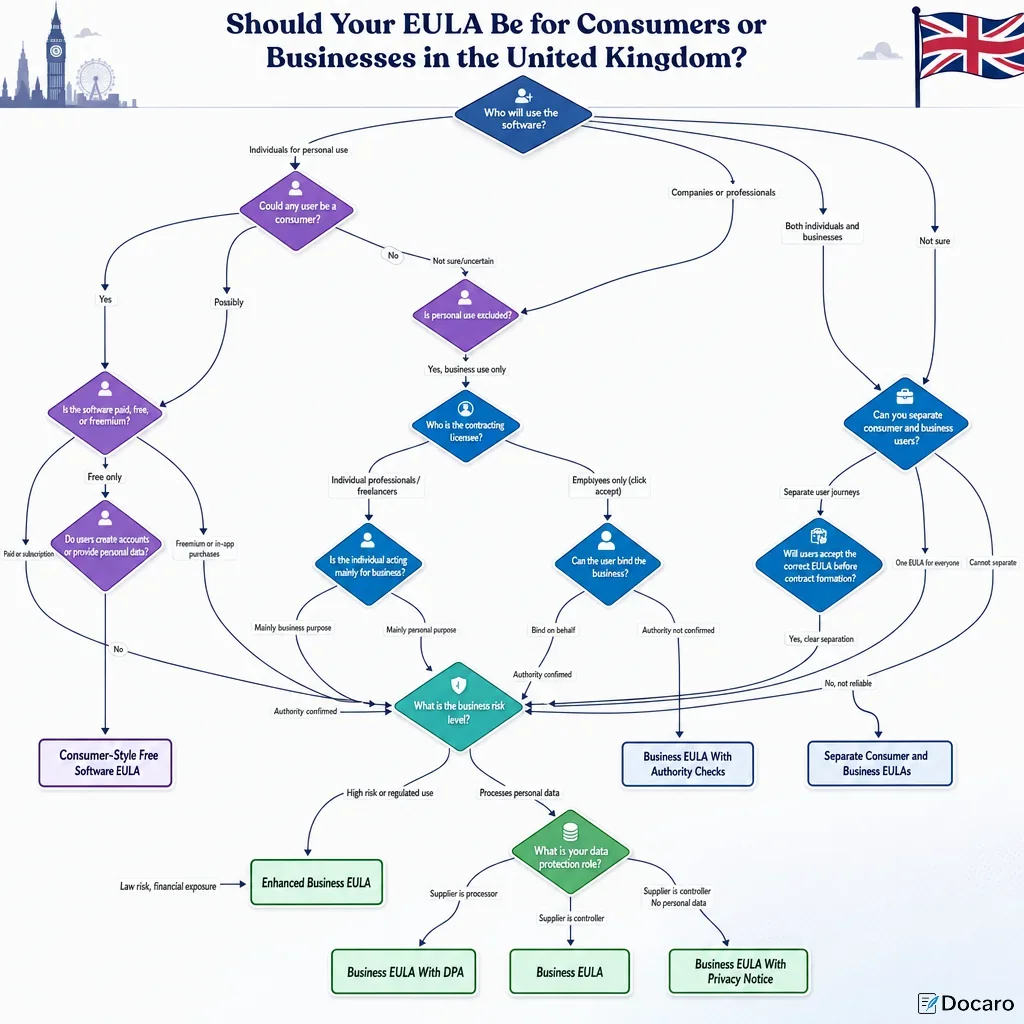
Who will use the software?
Why Choosing The Right UK EULA Matters
Choosing between a consumer EULA and a business EULA affects the enforceability, clarity, and risk profile of software terms used in the United Kingdom. A EULA aimed at the wrong audience may omit mandatory consumer protections or use commercial wording that is unsuitable for individual users.
When Should A UK EULA Be Consumer-Friendly?
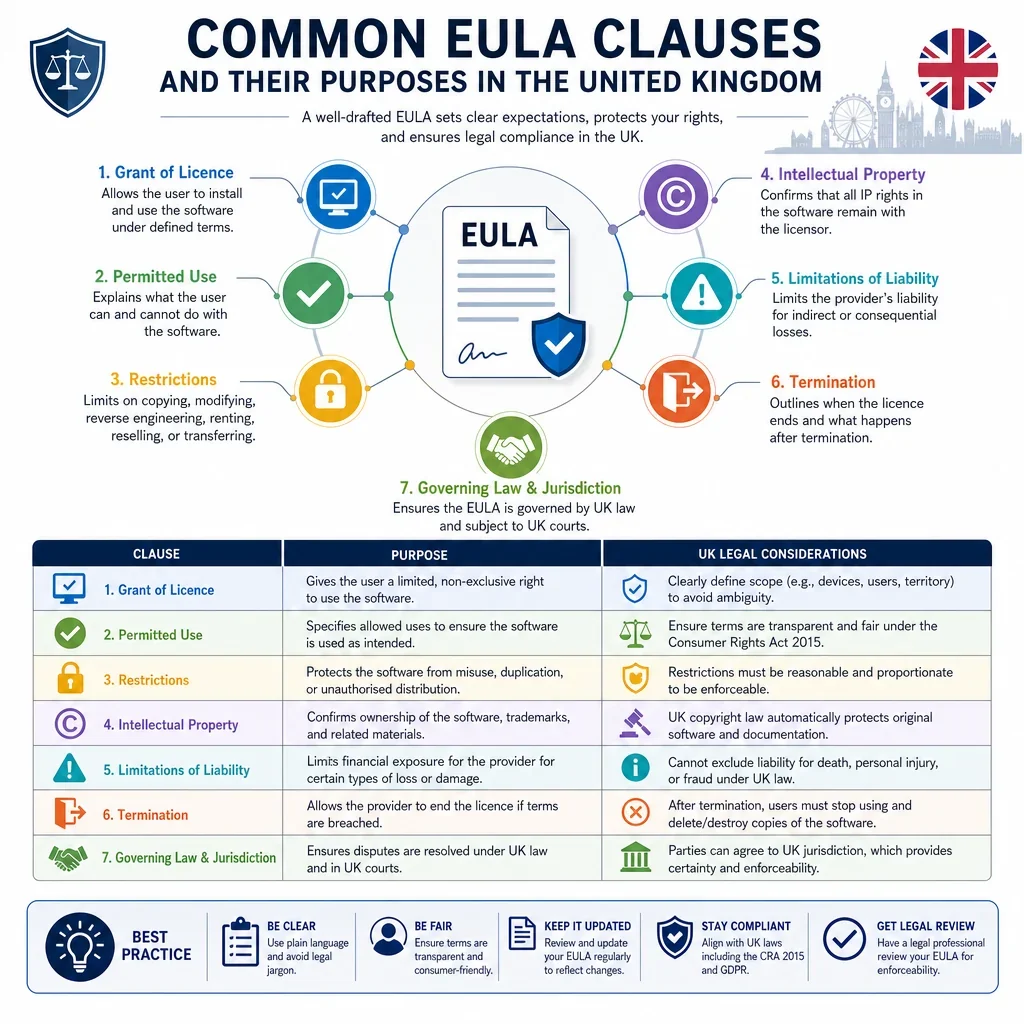
If software may be used by individuals for personal purposes, the EULA should be drafted with UK consumer law in mind. The Consumer Rights Act 2015 requires consumer terms to be fair and transparent and gives consumers rights relating to digital content. Terms that try to remove statutory rights, hide key restrictions, or impose unfair imbalance may be unenforceable.
When Is A Business EULA More Appropriate?
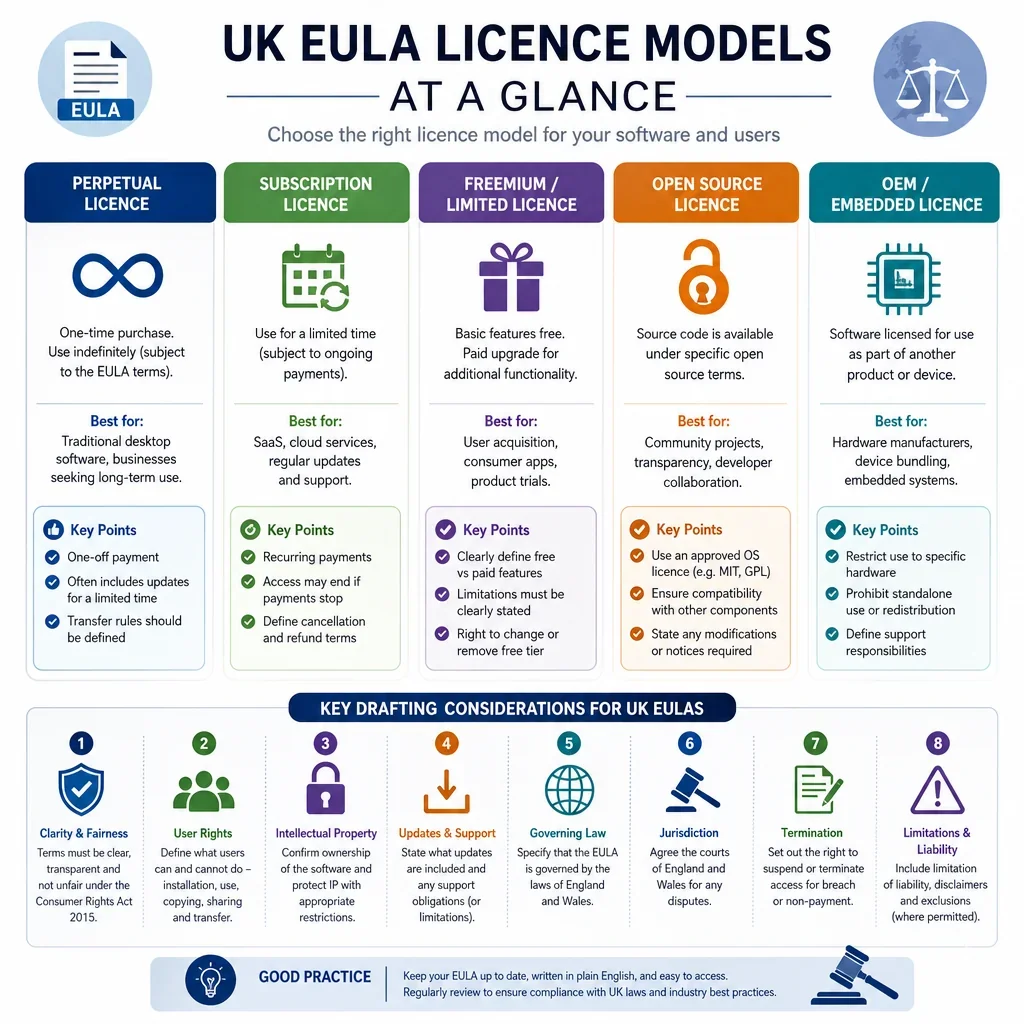
A business EULA is usually appropriate where the software is licensed only for trade, professional, public sector, charity, or organisational use. It can include more detailed commercial provisions on authorised users, licence scope, fees, audits, support, confidentiality, intellectual property, and liability. However, business terms are still subject to controls such as the Unfair Contract Terms Act 1977.
What Can Go Wrong If The EULA Uses The Wrong Audience?
- Consumer law risk: business-style exclusions may be unfair or unenforceable against consumers.
- Commercial risk: consumer-style terms may not protect a supplier properly in higher-value business deployments.
- Sales friction: unclear user status can confuse buyers and delay acceptance.
- Data protection gaps: business software that processes personal data may also need UK GDPR processor clauses or a separate data processing agreement.
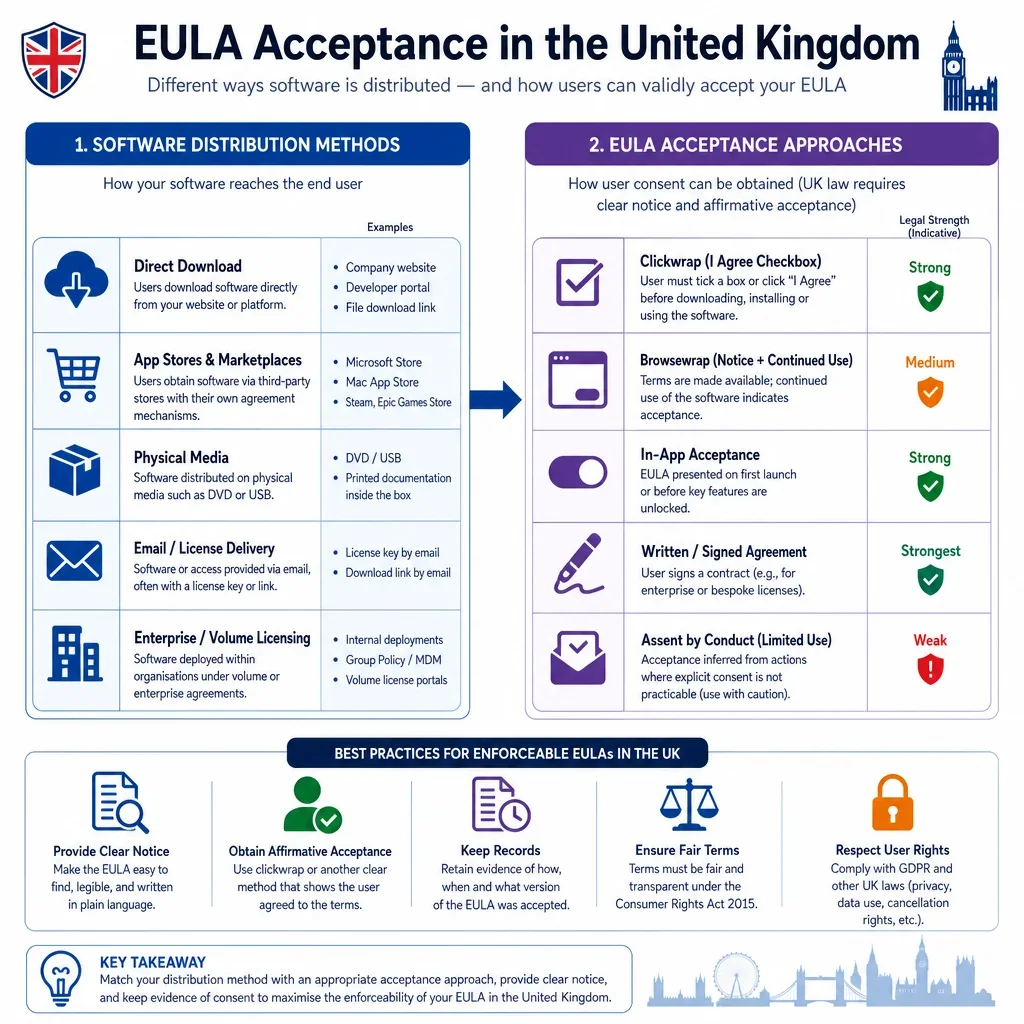
- Evidence problems: if employees click accept without authority, the supplier may struggle to prove the organisation agreed to the EULA.
Can One EULA Cover Both Consumers And Businesses?
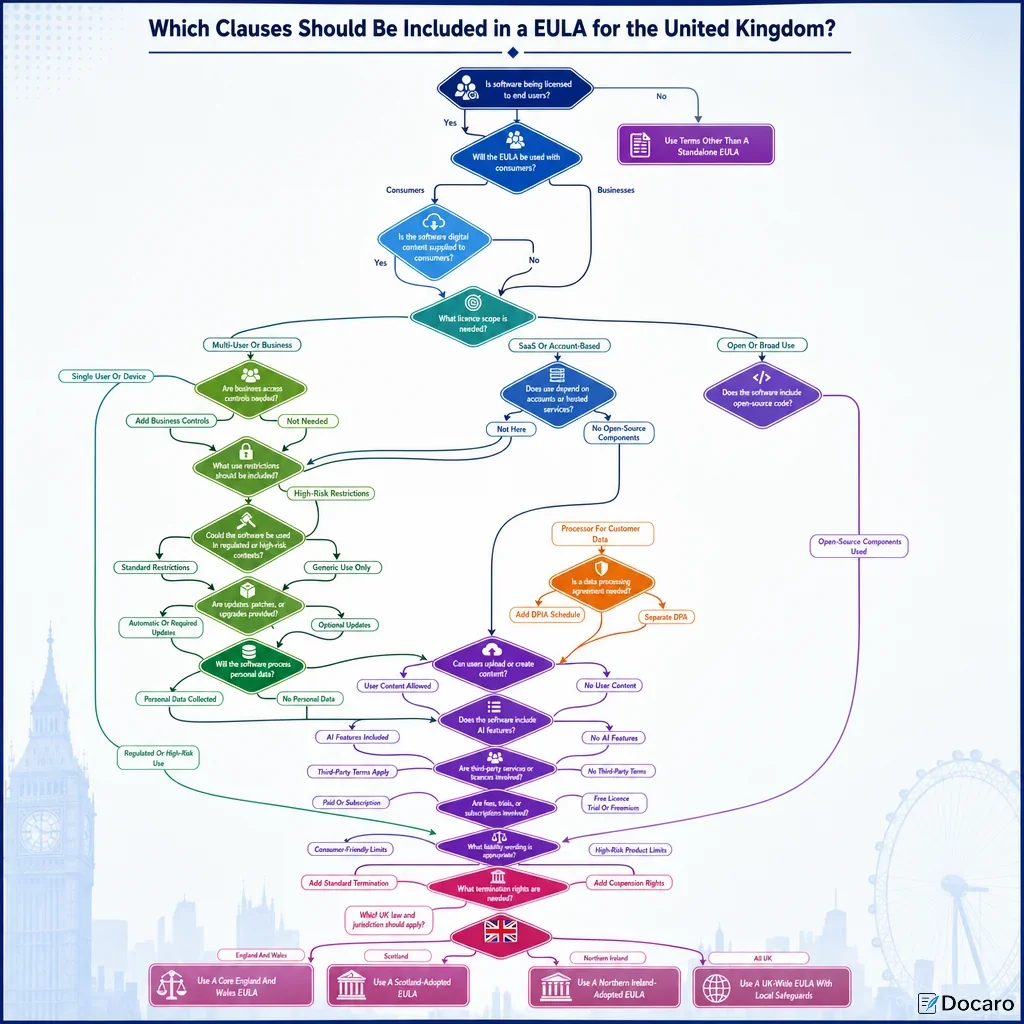
One EULA can sometimes be used, but it should normally be drafted to meet the stricter consumer standard if consumers may accept it. For many UK software suppliers, the better approach is to use separate consumer and business routes where the website can reliably identify the customer before contract formation.
FAQs
You Might Also Be Interested In