Should A Commercial Sublease Be Contracted Out In The United Kingdom?
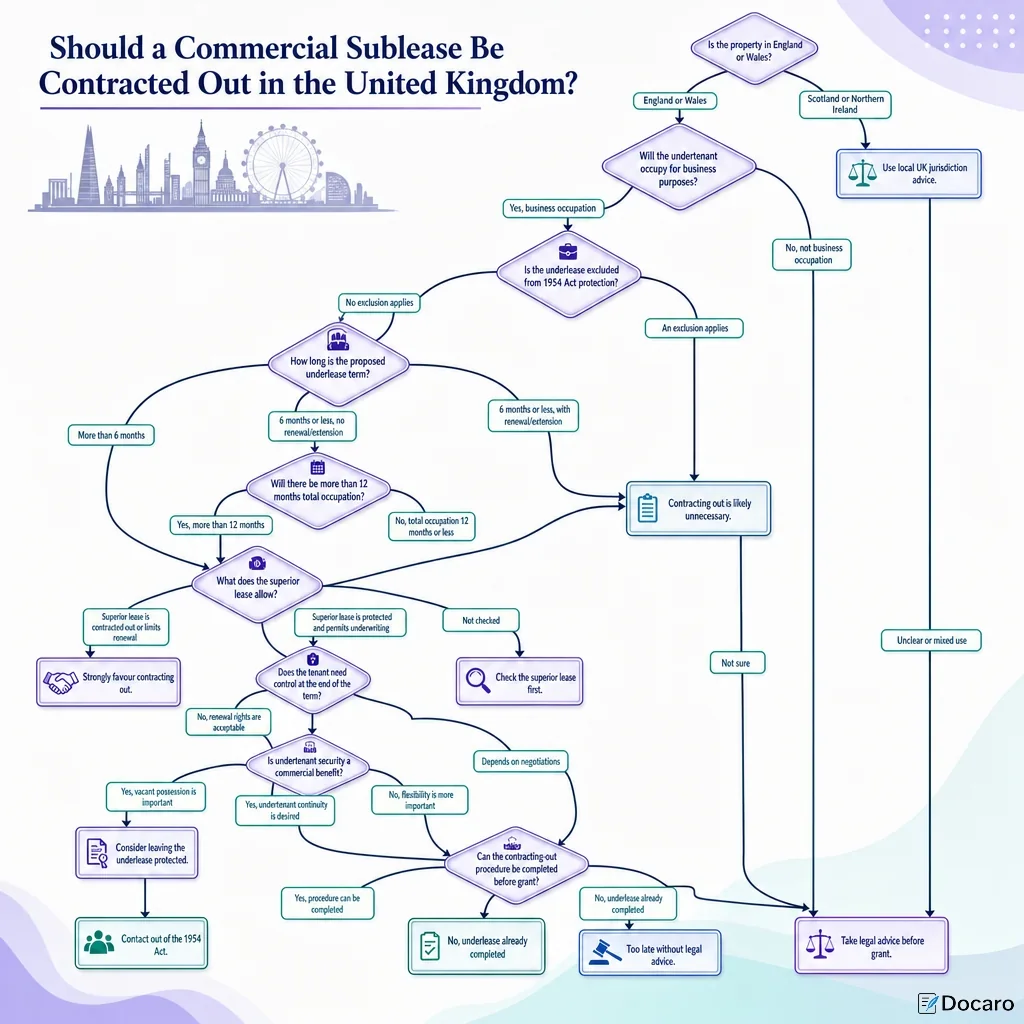
Is the property in England or Wales?
Should A UK Commercial Sublease Be Contracted Out?
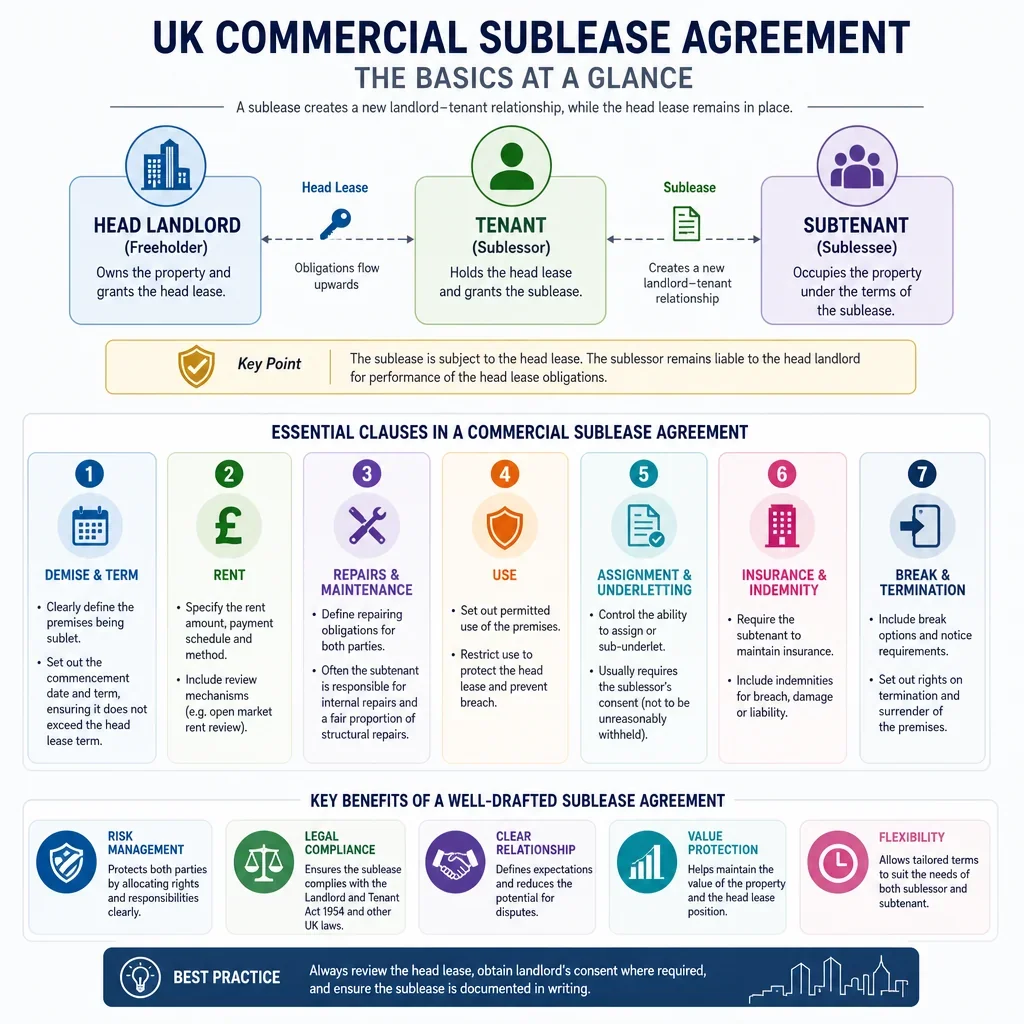
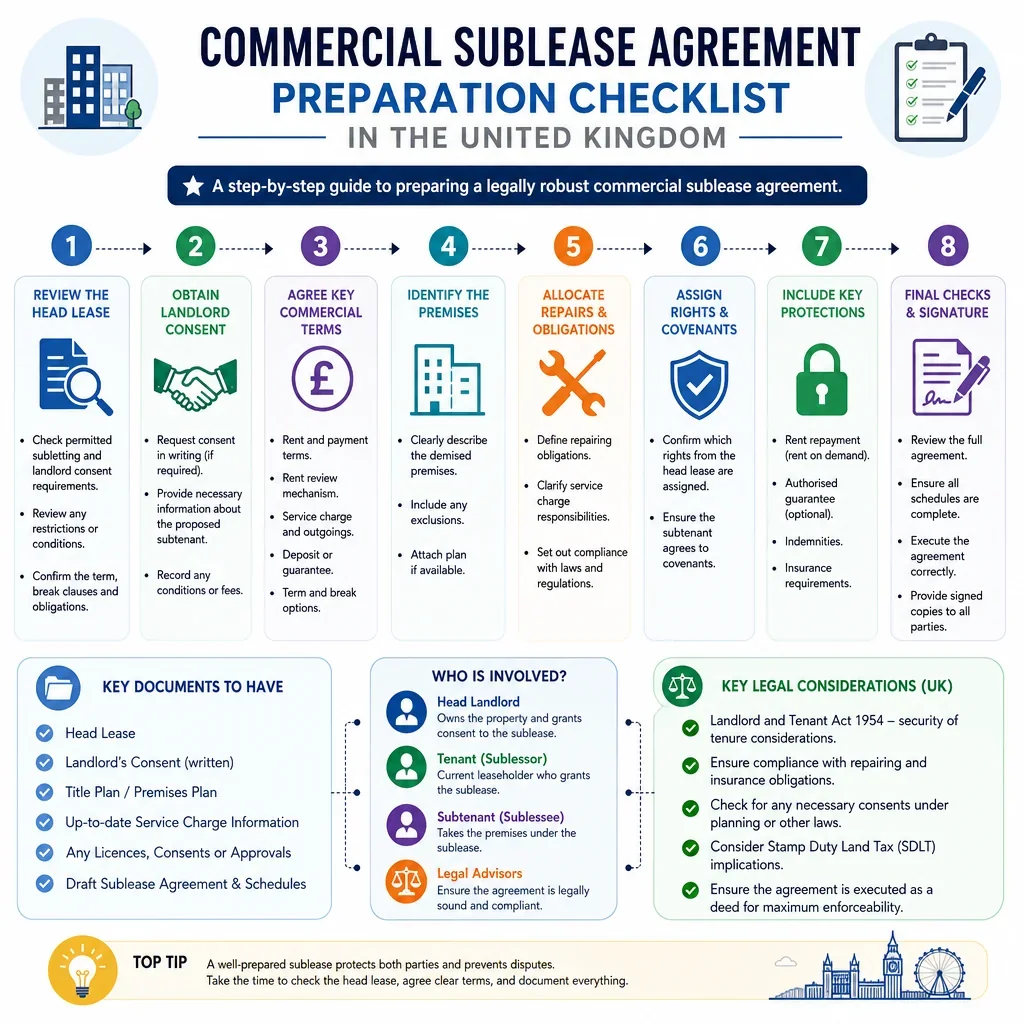
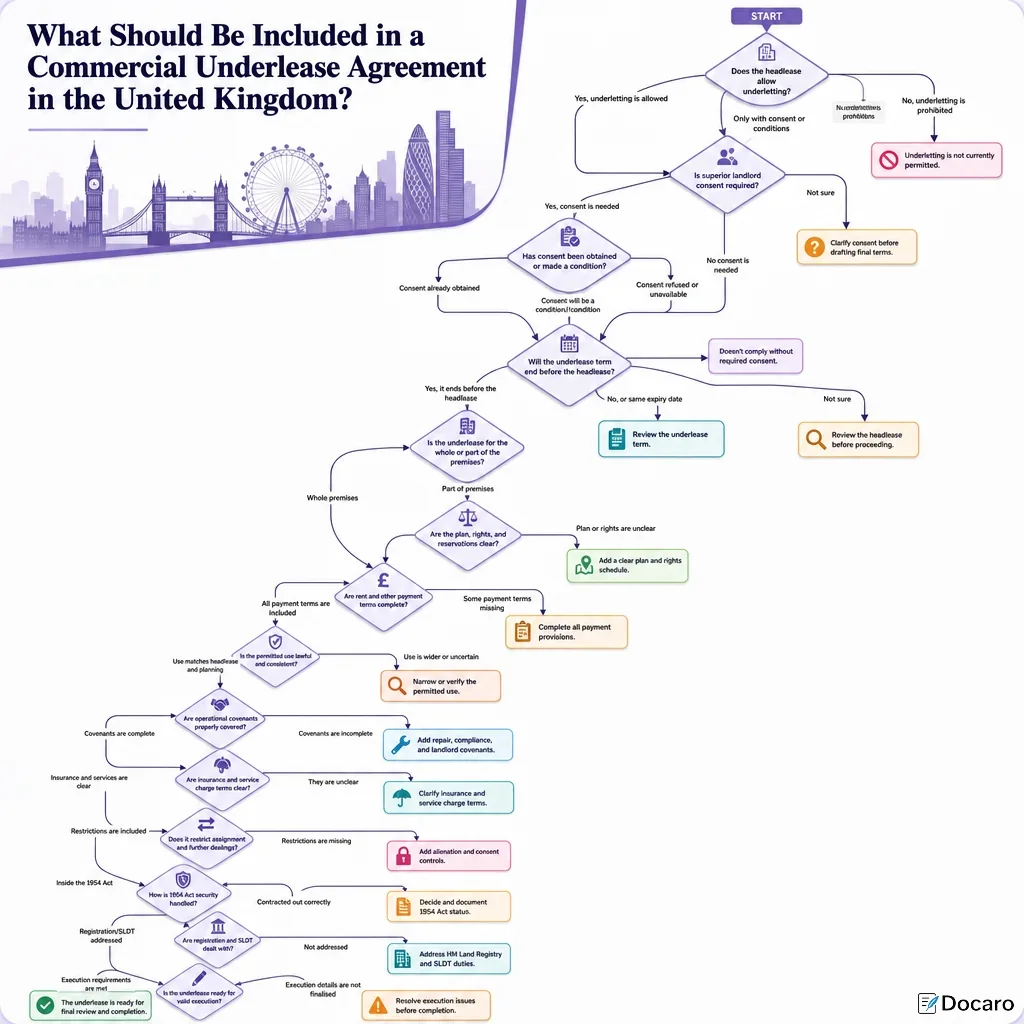
For property in England and Wales, a commercial sublease can give the undertenant security of tenure under the Landlord and Tenant Act 1954. If the lease is not validly contracted out, the undertenant may have a right to remain in occupation and request a new lease when the fixed term ends.
Why Does Contracting Out Matter For A Commercial Underlease?
Contracting out affects control of the premises at expiry. A tenant granting an underlease may need the undertenant to leave before the headlease ends, before redevelopment, or before the premises are handed back to the superior landlord. If the underlease is protected, recovering possession can be slower, more expensive, and dependent on statutory grounds.
What Can Go Wrong If The Decision Is Wrong?
- Loss of vacant possession: the undertenant may be able to stay beyond the contractual end date.
- Conflict with the headlease: the intermediate tenant may promise rights it cannot safely give.
- Invalid exclusion: the warning notice, declaration, and lease wording must be completed before grant.
- Higher dispute risk: renewal terms, opposition grounds, and compensation can become contested.
When Should Legal Advice Be Taken?
Advice is especially important where the property is outside England and Wales, the term is short but repeated, the use is mixed, the headlease is close to expiry, or the underlease may already have been completed. Official legislation is available at Landlord and Tenant Act 1954 Part II and the 2003 contracting-out reforms.
FAQs
You Might Also Be Interested In